Looking Closer at 2,3-Dihydropyran: Why This Chemical Still Matters
Tracing the Path: Historical Development
Chemistry tends to favor molecules that pull their weight across different industries, and 2,3-dihydropyran ticks that box. Its discovery runs back to early investigations into heterocyclic chemistry, where pioneers kept running into oxygen-rich rings while exploring sugar transformations and the behavior of unsaturated compounds. Squeezing an extra hydrogen into pyran’s structure opened doors for both sugar chemists and organic syntheses. Some of the most established tricks in the synthetic toolbox—like protecting sugars so they don’t get scrambled in multi-step reactions—come from having reliable dihydropyrans. Laboratories interested in natural product synthesis or pharmaceutical work spent decades fine-tuning ways to make this stuff cheaply, safely, and pure enough for finicky downstream chemistry.
Getting Under the Hood: Product Overview
2,3-Dihydropyran stands out as an unsaturated heterocycle, and makes itself useful by forming cyclic acetals and ethers through relatively straightforward chemistry. The colorless, volatile liquid finds a place in processes that call for protecting groups, especially those involving alcohols. It’s a little like wax seals for wine bottles—crucial in transit, useful in keeping flavors (or chemical groups) safe, but meant to come off later without a fuss. The industry didn’t pick it up by accident; chemists worked out pretty early that, unlike more stubborn or unpredictable protecting group reagents, dihydropyran is forgiving and doesn’t overreact. That reliability, established across a century of trial and error, explains why it keeps showing up in labs and production plants.
The Science Beneath: Physical & Chemical Properties
Anyone working with 2,3-dihydropyran knows not to ignore its flammability and volatility. It boils at a relatively low temperature, carries a pleasant but strong odor, and dissolves well in common organic solvents. It’s not particularly water-friendly, reflecting its place among classic ether-formers. With a six-membered ring and an oxygen atom, the molecule bears both electron-rich and electron-poor sites, which translates into wide-ranging reactivity. This tension within its own molecular structure makes it a prime candidate for ring-opening reactions and for temporary modifications of more sensitive molecules. It’s not complicated at a glance, but it delivers subtle chemistry where chemists need fine control.
Sorting Out the Details: Technical Specs & Labeling
In the real world of stocking shelves, shipping, and labeling, 2,3-dihydropyran’s bottle carries hazard warnings you can’t overlook: flammable liquid, avoid heat and open flames, keep ventilation in mind. Regulatory frameworks call for labels that highlight its volatile nature and risk of skin or eye irritation. These requirements didn't come from nowhere; accident reports and incident logs have prompted sharper guidance over the years, as the community learned from spills and mishandlings. Clear labeling, batch identification, and purity checks matter not just for legal compliance, but also for the daily reality of crowded bench tops and unpredictable workflows. Chemists learn quickly not to push luck with compounds carrying this kind of risk profile.
Pushing Past the Basics: Preparation Methods
Making 2,3-dihydropyran in the lab often starts with easily available precursors like tetrahydrofurfuryl alcohol or 3,4-dihydro-2H-pyran. Industrial routes usually center on dehydration strategies, sometimes using acidic catalysts to coax the right ring closure. While early methods tended to be messy or relied on suboptimal starting points, modern refinements cut down on byproducts and speed up purification. Careful temperature control prevents runaway reactions and dimerization. Anyone who’s tried to scale up from a gram to a kilogram knows that what works under a fume hood doesn't always cooperate in a bigger flask. Over the last few decades, efforts to trim costs and waste have led to better catalysts, tighter control of moisture, and tweaks in purification steps so material comes out at the desired grade.
Digging Into the Chemistry: Reactions & Modifications
2,3-Dihydropyran’s main role shows up as a protecting group agent for alcohols. Chemists mix it with an alcohol and an acid catalyst, forming a tetrahydropyranyl ether, which resists a whole suite of transformations that would otherwise chop or rearrange the original alcohol. Eventually, they remove the group with dilute acid, freeing the target molecule—no leftover mess, no loss of structure. This concept remains a staple across synthetic organic chemistry, from peptide work to the creation of complicated natural products. Dihydropyran also features in Diels-Alder reactions and other pericyclic events, offering a versatile foundation for rearrangements and ring expansions. You’ll also see it acting as an intermediate for more involved chemical modifications, making it a convenient stepping stone more often than a final product.
Sifting Through Names: Synonyms & Product Names
This compound pops up under names like pyran, dihydropyran, or simply DHP in older literature, but its most defined structure is 2,3-dihydro-4H-pyran. The naming conventions can seem a little muddled, especially before chemists nailed down which atoms got the double bond, but suppliers and technical references have settled on consistent terms over the last few decades. Classic textbooks sometimes use ‘dihydropyran’ loosely, which creates confusion for newcomers, but up-to-date sources clarify the double bond’s location and reduce mix-ups in ordering or inventory. In catalogs and literature reviews, sticking to the full IUPAC name tends to smooth out these bumps.
Taking Safety Seriously: Operational Standards
Anyone handling dihydropyran knows it evaporates quickly and, once airborne, can ignite easily. Good practice means working inside fume hoods, grounding containers, and using flame-resistant gear, particularly during large-scale operations. Long sleeves, eye protection, and gloves become second nature. Spills and splashes call for immediate cleanup, and—drawing from years in labs myself—ignoring even a small careless moment can end in emergency showers or, at worst, a visit from a fire marshal. Ventilation systems and regular safety drills become part of the work routine, not just nice-to-haves. Despite its benefits, chemists recognize the cost of shortcuts, which is why training and attention to detail stay at the heart of safe daily practice.
Where It Matters: Application Areas
2,3-Dihydropyran finds its strongest use in organic synthesis, especially among chemists demanding absolute control over their product’s structure. Drug development pipelines tap into its shielding power when building antibiotics, antivirals, and more, since its protecting group survives aggressive steps and then slips away without fuss. Natural products and sugars rely on it too, as it helps navigate tangled backbones and keep functional groups in check until the final step. Even for industries that process flavors, fragrances, or specialty polymers, dihydropyran occasionally acts as an intermediate, smoothing out processes with unruly or sensitive molecules. Its flexibility across research and manufacturing makes it more of a workhorse than a show pony—deliver results, step back when the big moment comes.
Growing Our Understanding: Research & Development
Ongoing work around 2,3-dihydropyran looks at greener, safer synthetic routes and stronger protocols for recycling or neutralizing waste. Research groups across academia and industry keep tweaking catalysts, solvent systems, and downstream purification strategies. Having worked with both classic glassware and more automated reactors, I’ve seen researchers move toward continuous-flow setups that cut exposure and speed up productivity. Environmental health studies evaluate emissions, even in small quantities, since volatile organic compounds increasingly fall under regulatory scrutiny. Developing countries, eager to catch up technologically, also experiment with new methods that balance lower costs with safety and quality, highlighting the need for global solutions that don’t just shift problems around.
Unpacking Toxicity: What’s Known, What Needs Attention
Research on 2,3-dihydropyran’s toxicity gives a mixed picture. It doesn’t carry the catastrophic risk of some industrial chemicals, but short-term exposure causes headaches, eye and skin irritation, and sometimes breathing troubles. Chronic effects remain fuzzier; large-scale epidemiological work is limited, especially outside North America and Western Europe. Lab rats and workplace exposure records build our fragmented understanding, driving chemists to take precautions that go beyond regulatory minimums. Even with decades of practical use, new generations of chemists should stay alert for long-term findings, especially as regulations shift and more sensitive analytical tools catch lower-level or chronic effects.
What Lies Ahead: Future Prospects
Looking forward, 2,3-dihydropyran’s story isn’t close to over. Chemistry continues to lean on trusted reagents that balance cost, safety, and efficiency, and this molecule’s role as a protecting group keeps it relevant in research and manufacturing. Environmental pressures push for sustainable production and disposal, prompting ongoing updates to production methods, solvent choices, and risk management. As biocatalysts and enzyme engineering improve, possible alternatives could emerge, but for now, dihydropyran holds a spot on producers’ shelves worldwide. The future will force chemists to balance tradition with innovation—taking what works, leaving what no longer fits, and always watching for safer, smarter ways to get the job done.
What is 2,3-Dihydropyran used for?
Bridging Lab Work and Real Products
Ask any organic chemist about 2,3-dihydropyran and the reaction is usually a nod of recognition. This clear liquid has a distinct smell, but its real value shows up behind the scenes in labs. In my own experience messing around with protecting groups as a student, few chemicals could save a synthesis as cleanly as 2,3-dihydropyran, especially during carbohydrate or peptide work. The ability for chemists to shield alcohol groups from unwanted reactions really changed how efficiently we could build up complex molecules.
Simple Molecule, Powerful Role
This compound’s strength comes from its reactivity with alcohols. Mix it with alcohol in the presence of a mild acid, and you get a tetrahydropyranyl (THP) ether. That small step turns a vulnerable alcohol into a robust, stable group. Most folks outside research don’t realize that a huge chunk of modern drug design and diagnostics technology relies on these precise steps. Without protecting groups like those formed by 2,3-dihydropyran, making certain antibiotics or antivirals could hit roadblocks.
Unseen Impact in Pharmaceuticals
Protected alcohols let chemists push through multi-step syntheses without the worry of side reactions. I’ve come across chemists who call 2,3-dihydropyran their 'lifesaver,' especially in the synthesis of natural products or complicated active ingredients for medicine. In recent years, labs working on HIV or cancer drugs used this tool to construct tough molecular architectures, all because THP ethers could be put in and then cleanly removed at the end of the process.
Not Just for Medicine
2,3-Dihydropyran filters out of research and into industry. Fragrance and flavor labs work with delicate molecules that need protecting groups to keep flavors from degrading during processing. Some companies, trying to streamline production, switched to it thanks to the ease with which it can be added and then later removed. The chemical isn’t flashy, but its ability to keep things intact until the job is done has practical effects on the end products people use every day.
Risks, Regulations, and Responsible Use
Every useful chemical carries risks. 2,3-Dihydropyran, like most reactive chemicals, can irritate skin or lungs, and it’s flammable. Chemists learn respect for substances like this quickly. Proper training, solid engineering in fume hoods, and responsible disposal routines keep risks down. As a teaching assistant, I saw students gain confidence and develop a healthy caution handling it, and safety data sheets from regulators give clear instructions, so industry and academic labs stay on track.
Keeping an Eye on the Future
There’s a push for greener chemistry worldwide. While 2,3-dihydropyran works well, researchers are looking for alternatives that go easier on the planet. Solvent choice, waste minimization, and recyclable protecting groups are a hot research topic. Some progress appeared in journals over the past year, but nothing has eclipsed the reliability and flexibility 2,3-dihydropyran brings to synthesis. As regulations and consumer awareness sharpen, companies and chemists will continue searching for the next leap while still relying on convenience and effectiveness where it counts.
Reliable Results, Hidden Influence
Most people never hear about 2,3-dihydropyran. Its role—weaving through pharmaceutical synthesis, flavor creation, and academic research—stays largely invisible to the public. Chemists see it as a trusty tool for protecting sensitive alcohols and building complicated molecules. Confidence in the chemical’s reliability, widespread adoption in the lab, and ongoing care with safety sum up its impact today. Whenever you pop a pill or savor a new flavor, these quiet helpers behind the scenes keep science moving forward.
What is the chemical formula of 2,3-Dihydropyran?
Understanding the Structure
2,3-Dihydropyran carries the chemical formula C5H8O. Every chemist who has held a pipette knows these six atoms pack a punch for their weight. The molecule itself looks like a six-membered ring—five carbons and one oxygen—missing two hydrogens from being fully saturated. The difference from regular pyran sits right in the partial reduction at the 2 and 3 positions, which sets up its reactivity in labs and applications.
Not Just a Formula on Paper
Too many chemicals out there disappear into a haze of names, but 2,3-Dihydropyran grabs attention because it’s served as a helper for decades in organic synthesis. With a background in chemistry, I recall the first day my professor showed us how it easily forms acetals with alcohols. Protection and deprotection—these aren’t just textbook exercises. They save hard-won molecules from being chewed up by acids or bases at the wrong time.
Connecting to Real Work in the Lab
The C5H8O structure lets it react smoothly with alcohols, which locks up reactive groups and gives you control. Say you’re working on a sugar. Sugars tend to fall apart quickly if you don't protect their hydroxyl groups. 2,3-Dihydropyran steps in as a guardian. Without its protective chemistry, making complex medicines would become like juggling glass in the dark.
Safety and Handling Concerns
No one likes surprises in the lab. Over time, I grew to respect the volatility of 2,3-Dihydropyran. It's a colorless liquid, but its vapors can irritate the nose, eyes, and lungs. Overexposure can lead to real problems, and in poorly ventilated spaces, flammability becomes a serious risk. Chemists need to lean on good habits: using fume hoods, wearing gloves, and double-checking storage containers for leaks. These may sound like small steps, but they keep the workplace safe and productive. Data from materials safety sheets and firsthand experience underline its need for careful attention, and it pays off by reducing incidents that could sideline important research for weeks.
Environmental Responsibility
Disposing of organic chemicals gets most people worried, especially with tighter regulations. 2,3-Dihydropyran is not eco-friendly in large amounts. Spills or improper disposal can hurt aquatic life. Sustainable chemistry sometimes calls for alternatives, but often the old chemistry just needs better containment and disposal. Labs can set up waste segregation streams and partner with licensed disposal services. If every researcher treats waste streams with respect, chemical footprints shrink. Over time, these efforts improve lab safety and keep regulatory fines at bay.
Looking to the Future
The question about the formula leads to bigger ideas about responsibility in science. Every day, students and working scientists use 2,3-Dihydropyran to make new compounds, test theories, and move research forward. In the process, habits around handling, storage, and waste don’t just protect workers; they protect neighborhoods and ecosystems. Staying conscious about these steps, backed by quality data and real experience, helps science run smoother. For me, it always comes back to respect for the molecule—both its power and its risks.
Is 2,3-Dihydropyran hazardous or toxic?
Getting to Know 2,3-Dihydropyran
2,3-Dihydropyran shows up in chemistry labs all over the world. It helps scientists protect alcohol groups when making complex molecules, especially in drug development. Many chemists have reached for a bottle of it during late nights spent building up a reaction step by step. The sharp, almost sweet odor quickly tells you it’s in the room. Even small quantities fill the air—and give a hint about its volatility.
Health Hazards: What Chemists Need to Remember
Anyone who’s handled 2,3-dihydropyran will tell you: this chemical wastes no time irritating your eyes and nose if you open it carelessly. It vaporizes at room temperature—catching your nose and starting a cough if you’re not careful. Inhaling enough can leave you dizzy or with a headache, and splashing it on skin feels like trouble. Liquid contact brings that tell-tale burning, and lab safety training repeats: “Flush with water, seek help if needed.” In my grad school days, a colleague spilled a small amount on his glove. Even that brief exposure gave him red skin for several hours.
Scientific reports back up what experience tells us. 2,3-Dihydropyran counts as hazardous under workplace safety standards in the US and Europe. The Chemical Safety Board and PubChem list it as a possible irritant to eyes, skin, and the respiratory system. Longer exposures raise more serious risks: animal studies published in the 90s suggest that breathing in high vapor concentrations can cause lung damage. No one wants that, especially with better safety gear around.
Environmental and Fire Concerns
Besides personal exposure, spills and vapors pose environmental worries. 2,3-Dihydropyran doesn’t linger in water or soil, breaking down fairly quickly under most conditions, but a spill in a poorly ventilated space can prove dangerous. The chemical combusts with little provocation and burns with a dense smoke that carries toxic fumes. Fire marshals usually increase restrictions in labs containing this solvent, demanding tight storage and clear safety signage.
I remember a rainy afternoon when a bottle, stored on a high shelf, tipped over—thankfully unbroken. Our group leader insisted everyone review our spill procedures, reinforcing that even a modest chemical mishap can quickly turn into an emergency without solid planning.
Staying Safe: Knowledge, Planning, and Protection
Direct experience and good data suggest that 2,3-dihydropyran isn’t the kind of chemical to approach casually. Safety glasses, gloves, and a working fume hood make a difference. Airborne levels should get checked with proper detection equipment. If someone feels lightheaded or notices a spill, quick action matters—alerting co-workers, ventilating the space, and using absorbent materials.
Big chemical suppliers publish comprehensive safety sheets offering advice on storage and handling. Reading those before the first use saves time in the future—and might prevent a visit to the clinic. Disposal calls for approved waste containers and coordination with trained hazardous waste staff. Pouring leftovers down the drain invites environmental issues, not to mention hefty fines.
Balance of Chemistry and Responsibility
Handling 2,3-dihydropyran comes with a certain weight of responsibility. No shortcut replaces a good pair of gloves, a working ventilation fan, clear labeling, and a commitment to double-check storage and responding to spills. The right information and respect for potential hazards go a long way to keeping accidents out of the story—making lab work safer for everyone involved.
How should 2,3-Dihydropyran be stored?
Why Careful Storage Matters
2,3-Dihydropyran brings a lot of value to the lab. Used often as a chemical building block, it plays a part in protecting alcohols and enabling various syntheses in organic chemistry. But, this isn’t a substance to treat lightly—anyone who's worked with it knows it carries serious flammability and health risks. You open a bottle of it and the pungent smell tells you right away: this compound won’t be forgiving if mishandled. Mishaps with volatile chemicals can lead to ruined experiments, damaged facilities, or worse, injuries. So storage doesn’t just protect an investment; it prevents a lot of headaches and actual harm.
Straightforward Storage Steps
A flammable and unstable liquid like 2,3-Dihydropyran demands more than a spot on a shelf. Keeping it in a tightly sealed, clearly labeled glass container is essential. Plastic containers just don’t hold up over time, especially since some plastics react or degrade, risking contamination and leaks. I’ve personally seen a leaking cap ruin an entire storage cabinet.
Room temperature storage doesn’t always work out. This compound prefers a dry, cool place—away from direct sunlight. Heat speeds up its degradation, and moisture in the air can trigger unwanted side reactions. One summer, our lab fridge kept supplies in check, avoiding unexpected polymerization and extending the shelf life for months. Flammable chemicals belong together but apart from oxidizers—store in approved flammable storage cabinets, ideally those grounded for static electricity protection.
Addressing Health and Safety Risks
Breathing in the vapors or accidental skin contact can cause trouble. I once saw a colleague develop a nasty rash even using gloves. Never take shortcuts—chemical-resistant gloves, goggles, and a lab coat give the best line of defense. It’s also wise to keep a spill kit and proper fire extinguisher within reach. In a few companies I’ve worked, basic fire extinguishers sat right next to a stack of chemicals—until an audit made us rethink and rearrange the whole shelf. A little planning saves a lot of scrambling during an emergency.
Ventilation shouldn’t be an afterthought. Even minor vapor leaks build up over time in closed rooms. Work with 2,3-Dihydropyran inside a chemical fume hood. I’ve felt the sting in my nose just from opening a container outside proper ventilation. The headaches don’t wait long to set in, especially after prolonged exposure.
Documentation and Rotating Inventory
It’s easy to forget about a forgotten bottle in the back. Regularly checking inventory means older stock doesn’t go past its prime. A simple chemical logbook—updated each time someone takes or adds a bottle—made a noticeable difference in our lab. No more surprises and fewer expired bottles to dispose of.
SDS sheets (Safety Data Sheets) help everyone know what to do during an emergency or exposure. They answer questions about first aid, fire, and spill procedures—resources that are handy during real-life accidents, not just for paperwork. Training isn’t a one-time deal either. Having annual drills and refreshers kept everyone in our group on their toes, ready for unexpected spills or leaks.
Eye on Solutions
Safe storage of chemicals like 2,3-Dihydropyran goes way beyond compliance. It takes attention to real risks, ongoing training, and carefully chosen containers and locations. I’ve seen labs run smoothly and I’ve seen them shut down for a week because of simple mistakes. Each step—tight sealing, right temperature, proper documentation—carries weight. All it takes is one error to learn how important these best practices are and why they shouldn’t get skipped.
What are common applications of 2,3-Dihydropyran in organic synthesis?
The Role of Protecting Groups in the Lab
Protecting groups pop up in synthetic work every day. Many chemists run into a problem when making complex molecules: functional groups interfere with each other. Alcohols, for example, can be picky about reactions. They form bonds where you don’t want them or break apart when you need them to stay put. Years ago, trying to build up tricky molecules reminded me of juggling. Every time I solved one issue, a new one appeared. Using protective chemistry, especially with 2,3-dihydropyran (DHP), made a huge difference, allowing more control over these reactions.
How 2,3-Dihydropyran Helps Solve Synthetic Problems
2,3-Dihydropyran stands out for making protecting groups quickly. It reacts with alcohols, usually in the presence of a mild acid, to give tetrahydropyranyl (THP) ethers. I used DHP and a drop of p-toluenesulfonic acid to mask a touchy alcohol in a natural product synthesis. By tucking that alcohol away as a stable THP ether, I could push through with oxidation or reduction reactions that would have torn the free alcohol apart. Once the dust settled, a splash of mild acid or water brought the alcohol back, as good as new.
Practical Reasons Chemists Turn to DHP
In academic and industrial labs, DHP works fast, usually at room temperature. THP groups survive most conditions found in multistep synthesis—strong bases, reducing conditions, and plenty of different oxidizers. Few other groups offer the same combination of protection and easy removal. I’ve seen whole project teams rely on DHP to speed things up without having to babysit every reaction. Compared to silyl groups, THP ethers stay affordable and don’t need as many clean-up steps. In process chemistry, this can shrink both time and solvent use, cutting costs noticeably.
Tough Spots in Large-Scale Chemistry
In bigger labs or manufacturing, protecting groups can clog up processes if you’re always switching back and forth. DHP wins points for efficiency, but repeated protection and deprotection can still generate waste. Another factor lies in the conditions: the acid-catalyzed reaction brings hazards if not carefully controlled, especially with sensitive or explosive materials. I’ve worked with scale-up teams who designed safe protocols for using DHP, often switching to greener acid catalysts to push for less environmental impact.
Beyond Alcohols: Fresh Applications on the Horizon
Most chemists know DHP as a tool for alcohols, but some creative researchers push it in new directions. The ring’s reactivity lets it add to other nucleophiles, offering ways into different six-membered ring systems. A few drug discovery labs use DHP intermediates to stitch together unusual scaffolds or design prodrugs that hide a functional group until it reaches a specific environment. Still, careful planning and smart choices about deprotection stay crucial, keeping the whole process manageable and reproducible.
What Makes DHP Stick Around
Organic chemists like reliable, simple tools. DHP delivers a quick fix for alcohol protection, a trouble-free path to masked intermediates, and easy unmasking, all without expensive gear. For all the new high-tech developments in the field, basic reagents like DHP continue to earn their place on the shelf because they work, day in and day out, where precision and reliability matter.
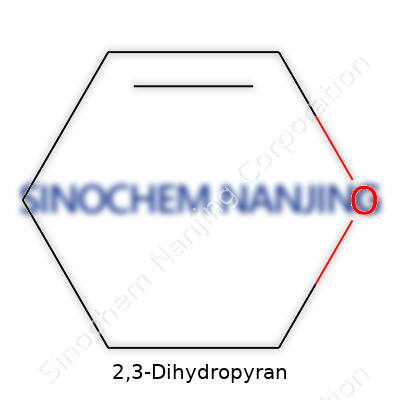
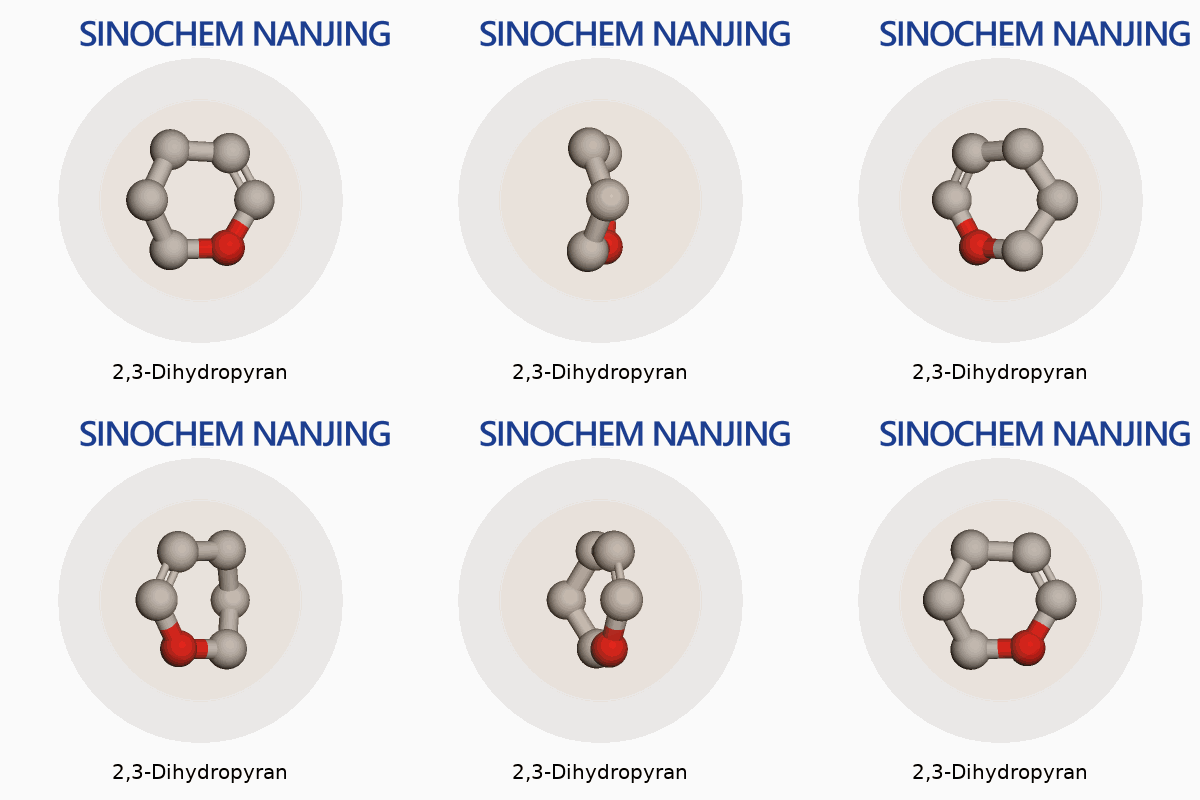
| Names | |
| Preferred IUPAC name | Oxane |
| Other names |
Dihydropyran 2,3-DHP 2,3-Dihydro-4H-pyran |
| Pronunciation | /ˌdaɪ.haɪ.drəˈpaɪ.ræn/ |
| Identifiers | |
| CAS Number | 110-87-2 |
| 3D model (JSmol) | `3d:JSmol{mol: "C1COC=CC1"}` |
| Beilstein Reference | 1095057 |
| ChEBI | CHEBI:5198 |
| ChEMBL | CHEMBL15708 |
| ChemSpider | 7394 |
| DrugBank | DB01984 |
| ECHA InfoCard | 03bda2d7-3ed4-4a87-bd8c-38e3bb4e1b3d |
| EC Number | 201-024-9 |
| Gmelin Reference | 7955 |
| KEGG | C06197 |
| MeSH | D003881 |
| PubChem CID | 12400 |
| RTECS number | HY8575000 |
| UNII | 7NNO0H2CHO |
| UN number | UN1992 |
| CompTox Dashboard (EPA) | DTXSID7033374 |
| Properties | |
| Chemical formula | C5H8O |
| Molar mass | 98.143 g/mol |
| Appearance | Colorless liquid |
| Odor | disagreeable |
| Density | 0.936 g/mL at 25 °C(lit.) |
| Solubility in water | slightly soluble |
| log P | 0.41 |
| Vapor pressure | 5.7 kPa (20 °C) |
| Acidity (pKa) | 16.6 |
| Basicity (pKb) | 6.93 |
| Magnetic susceptibility (χ) | -51.5×10⁻⁶ cm³/mol |
| Refractive index (nD) | 1.424-1.426 |
| Viscosity | 1.16 mPa·s (20 °C) |
| Dipole moment | 1.25 D |
| Thermochemistry | |
| Std molar entropy (S⦵298) | (322.8 J·mol⁻¹·K⁻¹) |
| Std enthalpy of formation (ΔfH⦵298) | –74.0 kJ·mol⁻¹ |
| Std enthalpy of combustion (ΔcH⦵298) | -2702 kJ/mol |
| Hazards | |
| GHS labelling | GHS02, GHS07 |
| Pictograms | `OC1=CC=CC=C1` |
| Signal word | Danger |
| Hazard statements | H226, H319, H302 |
| Precautionary statements | P210, P261, P280, P301+P310, P303+P361+P353, P305+P351+P338, P403+P235 |
| NFPA 704 (fire diamond) | 1-2-0 |
| Flash point | −23 °C |
| Autoignition temperature | 220 °C |
| Explosive limits | 1.8–14.5% |
| Lethal dose or concentration | LD50 (oral, rat): 1120 mg/kg |
| LD50 (median dose) | LD50 (median dose): 3670 mg/kg (rat, oral) |
| NIOSH | WN0U01I20U |
| PEL (Permissible) | PEL (Permissible Exposure Limit) of 2,3-Dihydropyran: "no PEL established |
| REL (Recommended) | 0.5 ppm |
| IDLH (Immediate danger) | IDLH: 2000 ppm |
| Related compounds | |
| Related compounds |
Dihydropyran Tetrahydropyran Pyran Pyranose |



