Understanding 2,3-Dichlorophenol: A Closer Look at Its Evolution, Attributes, and Future
Historical Development
Decades ago, scientists uncovered the industrial utility of chlorinated phenols, and 2,3-Dichlorophenol grew out of this era of chemical curiosity. The mid-20th century marked a turning point, as researchers in Europe and North America sharpened synthesis routes using phenol and chlorine. They explored this compound’s behavior under different lab conditions, blending practical knowledge from organic chemistry with upstream needs in pesticide and dye manufacturing. Step by step, chemical makers refined production and quality control, building on each advance with field experience. Today, companies look back on a legacy full of patents and process tweaks guided both by necessity and raw, hands-on experimentation.
Product Overview
2,3-Dichlorophenol belongs to the family of chlorinated aromatic compounds, sporting a benzene ring with two chlorine atoms at the 2 and 3 positions and a hydroxyl group. This structure gives it a distinct edge in reactivity, often putting it in the mix for lab syntheses, where sturdy intermediates are needed. Some see it as a stubborn contaminant; others value its role in custom synthesis. In any case, it remains a compound with real-world impact, from benchtop reactions to downstream uses.
Physical & Chemical Properties
From handling it in the lab, you learn a few things right away. This compound appears as crystals or a pale solid, offering a slight, medicinal odor, something you don’t forget. Its melting point falls around 56-57°C, and it boils near 208°C under normal pressure. It barely dissolves in water but shows far more solubility in organic solvents like ether or chloroform. The chemical stability holds up under normal storage, but heat or strong bases start to bring out reactive tendencies. Oxygen and sunlight can prompt slow degradation, relevant for both shelf life and environmental concerns.
Technical Specifications & Labeling
Chemical grade means everything for laboratory work or manufacturing. Purity sits high on the list, with many sources providing purities well above 98%. Labels in the warehouse and lab reflect regulatory demands, hazard warnings for toxicity, and any compliance notes, as laid down by agencies across the globe. Many suppliers list CAS number 87-61-6, helping researchers avoid confusion when ordering for technical applications or regulatory filings.
Preparation Method
Making 2,3-Dichlorophenol mainly relies on the direct chlorination of phenol derivatives. Industrial players have learned to control the reaction with efficient catalysts and exacting temperature profiles, improving yield and trimming waste. Some routes use ortho-chlorophenol as a starting block, tweaking conditions to tip the balance in favor of the 2,3-substitution pattern. These steps may sound straightforward, but every batch presents a chance for unexpected byproducts, so routine analysis and process adjustments never stop.
Chemical Reactions & Modifications
Chemists recognize 2,3-Dichlorophenol for its versatility. Its reactive ring allows for further functionalization, sometimes as a launchpad for dyes, pesticides, or fine chemicals. The hydroxyl group activates the ring toward nucleophilic substitution. When exposed to bases, the compound can undergo etherification, a favorite trick for modifying solubility and downstream application. Halogen exchange, coupling reactions, and oxidative treatments have opened up entire families of related compounds. The presence of the two chlorines changes reactivity, letting researchers pick synthetic pathways that match specific targets.
Synonyms & Product Names
2,3-Dichlorophenol also goes by other names such as 2,3-DCP, o,o'-Dichlorophenol, or simply dichlorophenol (with numbers used to avoid confusion). Different catalogues or suppliers use a range of synonyms, so cross-checking identifiers like the CAS number remains the only sure way to match the intended substance, especially in cross-border trade or collaborative research.
Safety & Operational Standards
Routine work with 2,3-Dichlorophenol teaches caution. It can irritate skin, eyes, and respiratory tract, and ingestion carries real health risks. Lab techs wear gloves and goggles, following hazard classifications set by safety regulators from Europe, the United States, and Asia. Ventilated workspaces, safe storage, and spill protocols all come into play, especially for larger volumes. Accurate labeling and meticulous housekeeping cut down on accidental exposure, and waste disposal rules support environmental safety, given its ability to linger in soil or water.
Application Area
This compound’s biggest footprint appears in industrial chemistry. It acts as a building block for other chemicals—manufacturers count on its reactivity to help assemble insecticides, herbicides, and antiseptics. In research settings, chemists may choose it for developing analytical standards or modeling environmental degradation pathways. Water authorities sometimes monitor for 2,3-Dichlorophenol as a pollutant, drawn from wastewater at industrial plants or from its breakdown in old pesticides. Its presence in the environment signals system weaknesses or legacy waste that needs cleanup.
Research & Development
Outside the production line, researchers push to come up with greener synthesis methods or smarter catalyst choices that lower cost, raise output, or cut environmental impact. Analytical chemists publish work on trace detection techniques, exploring both chromatography and sensors. Biochemists look at interactions with living systems, both for toxicity evaluation and degradation studies. Interdisciplinary teams build predictive models, hoping to spot risk hotspots before incidents grow into public concerns.
Toxicity Research
Toxicological studies on 2,3-Dichlorophenol report acute and chronic risks. Short-term exposure in animal models has pointed to liver and kidney effects, while long-term, low-dose contact remains under scrutiny. Scientists track breakdown rates in soils and rivers, trying to predict persistence and bioaccumulation. Regulatory attention rises when contaminants link back to this compound after industrial spills or waste mismanagement, and new research explores better cleanup and bioremediation strategies. Medical cases involving accidental poisoning push hospitals to update emergency protocols, and the knowledge base grows, step by step.
Future Prospects
Real progress often means balancing utility and hazard. For 2,3-Dichlorophenol, a sustainable future calls for innovation on several fronts. Translating green chemistry principles to production can ease environmental loads, while advancing detection makes monitoring more reliable at low concentrations. Ongoing work in toxicology, combined with field data, may guide more refined exposure limits and safety recommendations. Researchers working on alternatives keep an eye out for chemicals that do the job with fewer side effects. Where cleanup remains an issue, public and private groups invest in new remediation and recycling efforts. These changes rarely arrive all at once, but each decision, each experiment, keeps shifting the landscape for both users and neighbors of this complex compound.
What is 2,3-Dichlorophenol used for?
Getting to Know 2,3-Dichlorophenol
2,3-Dichlorophenol isn’t something most people hear about over coffee. It shows up quietly in many chemical processes and has a place in the toolbox of industrial chemists. You can find this compound as a pale solid with a mildly medicinal odor, and it’s part of a bigger family of chlorinated phenols. The industrial world leans on its properties for making other chemicals and keeping certain unwanted bugs from spreading.
Uses in Industry and Manufacturing
Ask anyone who’s set foot in a pesticide production plant, and they might mention 2,3-Dichlorophenol. Companies use it as an intermediate design step—kind of like a checkpoint for building more complicated pesticides and herbicides. The structure of this compound makes it reactive enough to create specialty molecules that wipe out weeds but leave crops alone. It isn’t always the star of the show, but it plays its role behind the scenes.
The story doesn't stop at agriculture. Manufacturers often use 2,3-Dichlorophenol to help build antiseptics and disinfectants. Hospitals, veterinary clinics, and even some cleaning products rely on these potent disinfectant ingredients for their germ-fighting ability. Practical experience has shown that compounds coming from chlorophenols can be harsh on bacteria, helping keep places safer.
Questions About Safety and Environmental Impact
Working around chemicals like 2,3-Dichlorophenol sparked tough discussions between technicians, health experts, and environmental groups. Safely handling and disposing of chlorinated compounds matters because accidental releases have caused trouble. Chronic exposure in factories made some workers sick, with symptoms ranging from breathing problems to long-term effects on organs. Studies by agencies like the Environmental Protection Agency (EPA) warn about the dangers posed by long-lived, persistent compounds in waterways. Fish and other animals often pay the price for industrial shortcuts, so responsible chemical plants have to tighten up their waste practices.
A few years ago, a local river near my hometown suffered a contamination incident tied to a leak at a chemical storage facility. Cleanup wasn’t cheap and left many people feeling uneasy about products we depend on every day. That experience drove home the value of prevention and tougher oversight. Chemical spills linger in memory long after news coverage moves on.
Looking for Solutions and Better Practices
Chemicals like 2,3-Dichlorophenol aren’t going away—they play a practical role in public health and agriculture. The key comes from smart sourcing, reliable containment, and honest communication between manufacturers and regulators. Building better storage tanks, automating safety systems, and backing up emergency response teams can keep people safer. Taking time to train workers and check for leaks often cuts the number of incidents down to nearly zero.
Progress depends on science, as well. Research teams chase cleaner, safer alternatives that target pests and germs without turning up in the soil or our water. Biodegradable options rank higher on everyone’s wish list. Moving industry toward safer chemicals means listening to scientists, not just sales teams.
Local communities deserve a voice in how companies handle 2,3-Dichlorophenol and chemicals like it. After all, families live near factories and draw from rivers. Real trust builds slowly, but it starts with clear information and a shared effort to protect both jobs and the environment.
What are the safety precautions when handling 2,3-Dichlorophenol?
Understanding the Risks
Working with 2,3-Dichlorophenol can feel like dancing on a slippery floor. It’s a compound used in laboratories and sometimes in manufacturing, and it carries hazards that call for respect and concentration. I’ve spent time in chemical labs, so I’m all too familiar with how easy it is for folks to overlook the less flashy chemicals in favor of the ones with big warning labels. This one belongs on your radar.
Let’s break it down: exposure to 2,3-Dichlorophenol comes with risks for skin, eyes, lungs, and even long-term health, since it’s toxic by inhalation, ingestion, and can irritate or burn on contact. It can also harm aquatic life, so sending it down the drain without thinking isn’t just careless, it’s harmful to local waterways and everything living there.
Personal Protective Gear Matters
No fancy terms required—good, solid gloves are a must. I always go for nitrile or neoprene when handling anything with chlorinated aromatics. Vinyl and latex let these types of chemicals slip right through. Safety goggles should be more like a reflex than an exception, and if splashes or vapors seem likely, grab a face shield. Never underestimate the splash factor—even careful hands aren’t perfect every day.
Lab coats or aprons create that extra buffer. If you walk away with a single takeaway, let it be this: bare skin shouldn’t meet 2,3-Dichlorophenol. Closed footwear keeps spills from punishing your feet. I once witnessed someone handle a beaker without the right shoes, and the result was a trip to the nurse’s office after a small spill found its way to the skin. Not dramatic, but totally avoidable.
Engineering Controls—Not Just Fancy Talk
I value a well-lit lab with a fume hood that’s working and checked regularly. Without good ventilation, vapor from the compound sticks around, and nobody wants to breathe that in. The difference between a good and a bad workday in the lab often comes down to how the air flows. Use the fume hood every single time, not just when you remember to.
Proper storage keeps everyone safer. I always stow chemicals like this in a cool, well-ventilated spot, away from substances that can react—especially bases and acids. Label everything clearly. It’s an old-school rule, but essential. Never play guessing games with chemical containers.
Cleanup and Decontamination
Something spills—don’t panic, but don’t ignore it. Absorb the liquid with the right materials. I keep spill kits close, with pads that are up to the task. Scraps of paper towel don’t cut it. Contaminated gear or waste goes into proper disposal containers—the regular trash is out of bounds for a chemical like this. After cleanup, hands go straight into the wash—soap and water, plenty of it.
Training and Awareness
I learned early on that safety sheets aren’t just paperwork. They reveal crucial data like exposure limits, reactivity, and what to do in case of an emergency. Too many accidents have happened because someone didn’t take ten minutes to read an SDS before starting their work. Just as important is regular safety training. Even seasoned lab veterans need refreshers, because habits slip.
Looking Forward
It helps to push for better safety culture at every level. Communication lines need to stay open, and calling out unsafe practices isn’t tattling—it’s looking out for your friends and coworkers. Designing tasks to minimize exposure, swapping in safer compounds when possible, and keeping emergency showers and eyewash stations working smoothly all make a real difference. Safety isn’t just a checklist—it’s a practice, built every day.
What is the chemical formula of 2,3-Dichlorophenol?
Bringing Clarity: The Chemical Side
Ask any chemist about 2,3-Dichlorophenol, and you’ll likely get a straightforward answer: its chemical formula is C6H4Cl2O. This formula reveals that the compound is a derivative of phenol, sporting two chlorine atoms at the 2 and 3 positions on the benzene ring. At first glance, it might look like just another formula in a textbook, but it carries a story far bigger than the sum of its letters and numbers.
Why 2,3-Dichlorophenol Matters Outside a Lab
Almost everyone interacts with chemicals, usually unknowingly, through products, water, or industrial processes. 2,3-Dichlorophenol falls squarely into that category. It often turns up as a side product from manufacturing herbicides and pesticides. Picture a typical industrial community: water treatment facilities check for substances like this because they’re not just hard to filter out, but can carry toxicity far down the line—from local rivers to neighborhoods relying on those water sources.
As someone who grew up near a major industrial hub, I’ve seen how local water supplies can get contaminated with byproducts like dichlorophenols. It’s not a far-off concern for scientists only, but a reality for communities who notice odd tastes in water or reduced fish populations in streams. The chemical’s persistence in the environment, mainly from manufacturing waste or pesticide breakdown, puts pressure on water utility workers and public health officials to constantly monitor and address contamination.
Health and Environmental Risks
The risks tied to 2,3-Dichlorophenol aren’t just theoretical. Research from the World Health Organization points to possible health issues when water gets tainted with chlorinated phenols, including irritations and long-term exposure effects. Because of its ability to linger in soil and water, 2,3-Dichlorophenol can move through food webs, starting with aquatic organisms and reaching larger animals and even people. The United States Environmental Protection Agency lists various chlorophenols among contaminants with enforceable safety limits in drinking water, underlining the compound’s risk factor.
I’ve talked to local fishers who noticed changes in catch quality after chemical dumps—stories that line up with extensive studies linking dichlorophenol contamination to biodiversity loss in streams and lakes. Watching otters and herons leave an area is more than just anecdote—it’s science meeting lived experience, confirming warnings from toxicology reports.
Finding Better Answers
Communities facing environmental toxins need more than just laboratory vigilance. Strong public education helps people understand why compounds like 2,3-Dichlorophenol show up, where they come from, and what steps can reduce risk. Industry leaders also play a key role: they set the bar for chemical discharge and put resources into safer alternatives. Technical fixes, like advanced filtration in water treatment plants, show promise but require funding and political will. In places that took these steps, water quality improved and wildlife began to recover.
Policy makers and citizens alike benefit from practical science. Knowing the formula C6H4Cl2O is the start, not the end. Real change takes place in routine water assessments, open reporting, and a commitment to sustainable chemistry in manufacturing. 2,3-Dichlorophenol’s story stands as a reminder—chemicals in our world always need close attention, science-backed solutions, and community advocacy.
How should 2,3-Dichlorophenol be stored?
Real Risks Behind the Chemical
2,3-Dichlorophenol turns up in many settings—industrial labs, chemical plants, even in some research universities. The thing is, you can’t treat it like household paint or common bleach. My own work in a shared chemical storeroom hammered home the point that real risk comes where there’s routine and carelessness meets a toxic organic. Just one hurriedly closed cap, one splash that goes ignored, and someone ends up with skin irritation—or far worse if inhaled.
Storage Conditions Are Personal Safety
After witnessing a minor spill caused by a cracked jar lid, I learned quickly why this compound demands a well-fitted, vapor-tight container. You don’t simply close the bottle. You listen for that gentle click of the seal, make sure nothing leaks or evaporates. Not just because the material stinks up the place—it’s hazardous to people and the environment. The U.S. Occupational Safety and Health Administration points out that chlorinated phenols can cause everything from rashes to liver issues if handled poorly. For me, solid habits came down to double-checking closures, labeling, and making sure everything sits on a dedicated, chemical-resistant shelf.
Temperature and Ventilation
Heat cranks up volatility, and nobody likes heading into a chemical storeroom that has warmed past a safe point over the summer. I’ve noticed temp swings can warp even thick plastic containers, so keeping 2,3-Dichlorophenol at room temperature—cool, but above freezing—makes sense. Direct sunlight only increases danger, both by raising temperatures and speeding decomposition, so the container belongs in a dark cabinet. Good airflow matters, too. Pros know that a storage cabinet hooked up to local ventilation, possibly with built-in spark-proof fans, cuts down on lingering vapors. The air smells better, and headaches stay away.
Incompatible Materials
Experience dealing with chemical incompatibility shows just how explosive some mixes can get. Storing this substance with strong oxidizers or bases risks an ugly chemical reaction. Signs in our storage area warn everyone to keep chlorophenols far from acids, alkalis, and even simple cleaning agents. A missed detail can mean not just ruined chemicals but damage to building infrastructure and possible emergency response.
Security, Labeling, and Access
People who’ve worked in regulated labs know the headaches of half-labeled bottles or misplaced shipments. I’ve watched staff spend an hour back-tracking a missing chemical because a bottle lost its sticker. Labels on 2,3-Dichlorophenol must be clear, listing contents, date, hazard codes, and the person responsible. Limiting access pays off; only trained personnel should move or measure out the stuff. In practice, this means locked cabinets, access logs, and regular audits by supervisors or lab managers. It goes beyond reducing theft; it prevents mistakes due to inexperience.
Solutions for Safer Storage
For organizations, the real fix comes through good habits and smart investment. High-quality containers, regular staff briefings on hazards, and emergency spill kits right by the door actually lower risk. It’s not about creating fear—it’s about building trust through visible, everyday safety practices. Knowing that the person who used the cabinet before you followed the same steps creates a safety net for everyone down the line. Safety data sheets and ongoing training aren’t busywork; they’re part of the community agreement any workplace with risky chemicals must honor.
What are the potential health effects of exposure to 2,3-Dichlorophenol?
Understanding the Chemical
2,3-Dichlorophenol pops up in places most people don’t expect. Used as a building block for pesticides, dyes, and even antiseptics, it also comes from the breakdown of other chemicals in the environment. I work in regulatory analysis, and too often, I’ve seen how unfamiliar names like this chemical translate into overlooked risks. Many people may never hear of 2,3-Dichlorophenol, but small-scale exposure can happen through contaminated water, food packaging, or job-related contact.
What Actually Happens to Your Health?
Exposure ranges from skin contact to inhalation or swallowing. Short-term contact with 2,3-Dichlorophenol irritates the eyes, nose, and throat. Some workers in industrial plants report headaches, dizziness, and sore throats after handling materials containing this compound. Larger doses can trigger vomiting, diarrhea, or even liver and kidney trouble. I once spoke with chemical plant employees who described a sluggish brain fog and recurring nausea after poor ventilation let vapors build up.
The long-term risks grab less attention but matter just as much. Persistent exposure can break down red blood cells faster than the body can replace them. This isn’t a guess. I’ve reviewed evidence from animal studies where chronic intake led to liver and kidney stress, even at moderate doses. The U.S. Environmental Protection Agency highlights this organ damage as a core health worry, and their scientists keep studying the cancer link. While the evidence doesn’t confirm cancer risk in people, research in rodents hints that repeated, high-level exposure may push that possibility higher.
How Wider Exposure Happens
In my own community, water safety became a topic at a public meeting after a state agency’s report flagged 2,3-Dichlorophenol at trace levels. Runoff from waste dumps and factories sometimes lets it slip into water supplies. People living around those sites, especially kids, may get more exposure without realizing it. Studies tracking biomarker levels in children near landfills have measured higher 2,3-Dichlorophenol in their urine compared to kids in cleaner areas.
Protecting Yourself and Others
Public agencies warn workers to wear protective gear, use proper exhaust hoods, and never skip hand washing after shifts. I’ve seen safety go sideways in older factories, so it’s vital for employers to keep monitoring and updating practices. Even families outside of industrial work should stay alert. Runoff and leaching from improper waste disposal can bring unwanted chemicals to kitchen taps. Water with an odd taste or smell needs testing. Using certified water filters can help cut down the chances that chemicals like 2,3-Dichlorophenol get past your pipes.
Finding Solutions that Last
Anyone with a stake in public health should care about this issue. Governments must stick to vigorous site inspections and prompt spill cleanups. Manufacturers need to adopt greener production whenever possible, swapping out risky chemicals for safer substitutes. People can press local leaders to support this shift instead of waiting until the next contamination crisis. My experience tells me that lasting change starts with better information and a refusal to ignore unknown chemicals just because they seem far away from daily life.
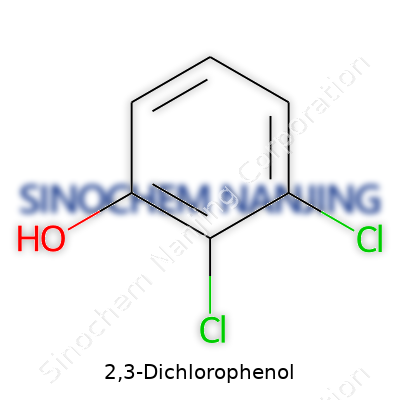
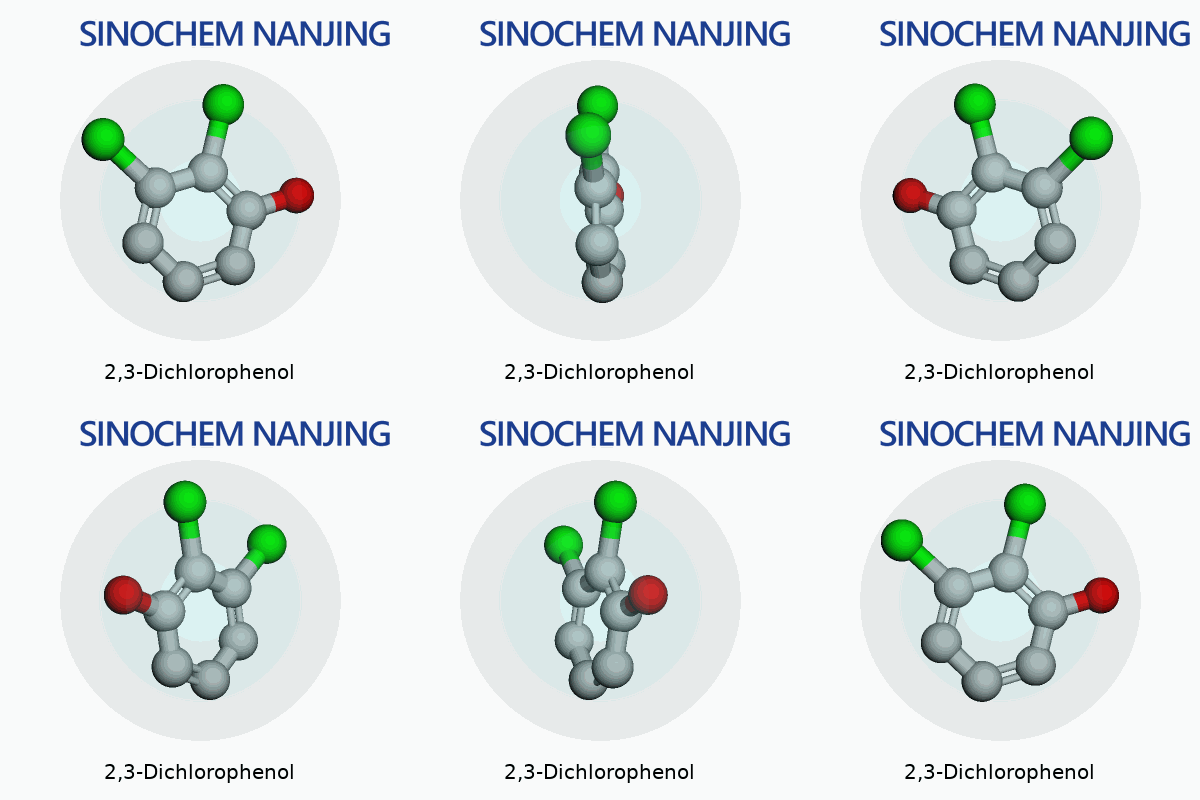
| Names | |
| Preferred IUPAC name | 2,3-dichlorophenol |
| Other names |
2,3-Dichlorophenol 2,3-DCP 2,3-Dichlorbenzenol |
| Pronunciation | /tuː θriː daɪˈklɔːrəʊfiːnɒl/ |
| Identifiers | |
| CAS Number | 576-24-9 |
| Beilstein Reference | 1209228 |
| ChEBI | CHEBI:34641 |
| ChEMBL | CHEMBL37188 |
| ChemSpider | 10797 |
| DrugBank | DB02236 |
| ECHA InfoCard | 100.008.833 |
| EC Number | 3.1.1.37 |
| Gmelin Reference | 84140 |
| KEGG | C01757 |
| MeSH | D002940 |
| PubChem CID | 13621 |
| RTECS number | SN9100000 |
| UNII | 7N3JQ76LJ5 |
| UN number | UN2022 |
| Properties | |
| Chemical formula | C6H4Cl2O |
| Molar mass | 163.00 g/mol |
| Appearance | Colorless to yellow crystalline solid |
| Odor | Phenolic odor |
| Density | 1.4 g/cm³ |
| Solubility in water | soluble (4.56 g/L at 25 °C) |
| log P | 2.66 |
| Vapor pressure | 0.21 mmHg (25°C) |
| Acidity (pKa) | 7.2 |
| Basicity (pKb) | 7.25 |
| Magnetic susceptibility (χ) | -75.0·10⁻⁶ cm³/mol |
| Refractive index (nD) | 1.573 |
| Viscosity | 2.37 mPa·s (at 20 °C) |
| Dipole moment | 2.61 D |
| Thermochemistry | |
| Std molar entropy (S⦵298) | 289.2 J·mol⁻¹·K⁻¹ |
| Std enthalpy of formation (ΔfH⦵298) | -98.9 kJ/mol |
| Std enthalpy of combustion (ΔcH⦵298) | -6490 kJ/mol |
| Pharmacology | |
| ATC code | D08AE06 |
| Hazards | |
| Main hazards | Harmful if swallowed. Causes skin irritation. Causes serious eye irritation. May cause respiratory irritation. Toxic to aquatic life with long lasting effects. |
| GHS labelling | GHS02, GHS06, GHS07 |
| Pictograms | GHS06, GHS05 |
| Signal word | Warning |
| Hazard statements | H302, H315, H319, H332, H400 |
| Precautionary statements | P261, P264, P273, P280, P302+P352, P305+P351+P338, P312, P337+P313 |
| NFPA 704 (fire diamond) | 2,3-Dichlorophenol NFPA 704: "2-2-0 |
| Flash point | 111 °C |
| Autoignition temperature | 640 °C |
| Explosive limits | 2.5% - 12.9% |
| Lethal dose or concentration | LD50 oral rat 2820 mg/kg |
| LD50 (median dose) | The LD50 (median dose) of 2,3-Dichlorophenol is 2820 mg/kg (rat, oral). |
| NIOSH | B030 |
| PEL (Permissible) | 5 ppm (skin) |
| REL (Recommended) | 5 mg/L |
| IDLH (Immediate danger) | 50 ppm |
| Related compounds | |
| Related compounds |
2-Chlorophenol 3-Chlorophenol 4-Chlorophenol 2,4-Dichlorophenol 2,5-Dichlorophenol 2,6-Dichlorophenol 3,4-Dichlorophenol 2,3,4-Trichlorophenol 2,4,6-Trichlorophenol Phenol |



