Understanding 2,2-Dimethylbutane: Chemistry In Practice and Progress
Historical Development
Chemists have long sought simple hydrocarbons both to explore basic chemistry and to use as building blocks for more sophisticated molecules. 2,2-Dimethylbutane entered the scene in the early 20th century as part of a wave of interest in alkanes, a class of compounds central to fuels, solvents, and chemical synthesis. Researchers began separating and characterizing branched-chain isomers, with 2,2-dimethylbutane standing out due to its unique structure: a six-carbon skeleton compacted by two methyl groups attached to the same central carbon. As petroleum refining matured, the need for such branched saturates expanded. Chemists focused on understanding how molecular structure shaped combustion qualities, stability, and reactivity. This history marks 2,2-dimethylbutane not just as a product of oil-field alchemy, but as a touchstone for theory, industrial practice, and innovation.
Product Overview
2,2-Dimethylbutane belongs to the alkane family, recognized by the simple CxHy formula and blessed with chemical stability. Its compact, branched carbon skeleton sets it apart from its straight-chain cousin n-hexane and other isomers like 2,3-dimethylbutane or 3-methylpentane. In practical terms, its molecular design reflects how small tweaks in structure can reboot a molecule’s chemical and physical identity. In labs and refineries, this hydrocarbon shows up both as a point of reference and as a real-life ingredient in gasoline. Its vapor pressure and resistance to knocking make it a proving ground for both testing and blending in fuel formulation.
Physical & Chemical Properties
With six carbons and 14 hydrogens (C6H14), 2,2-dimethylbutane registers a boiling point lower than straight-chain hexane, clocking in at about 49.7°C. It appears as a colorless, highly volatile liquid at room temperature, bringing that familiar faint, gasoline-like odor. The branching from its two methyl groups increases its vapor pressure and lowers its melting point compared to linear alkanes. In day-to-day chemistry, this hydrocarbon’s non-polar nature stands out. It doesn’t dissolve in water, but mixes freely with fats, oils, ethers, and other hydrocarbons. Reactions rarely occur under ordinary conditions—light and heat or specialized reagents are necessary to break its robust C-H and C-C bonds. This low reactivity means it often plays the role of inert solvent or reference material in analytical testing.
Technical Specifications & Labeling
For labs and industry alike, purity guidelines matter. Most suppliers offer 2,2-dimethylbutane with purity levels over 99 percent, often targeted for analytical use like gas chromatography. Product bottles display hazard classifications in line with chemical safety standards—labels warn of flammability and possible health risks if inhaled or ingested. Documentation usually highlights the compound’s volatility and low flash point, both factors driving handling precautions. Distinguishing this compound from its isomers often depends on precise labeling and up-to-date chemical inventories, given the subtlety of difference between branched alkanes in large production settings.
Preparation Method
Cracking and reforming processes at petroleum refineries provide the main commercial source for 2,2-dimethylbutane. Breaking down heavier hydrocarbons in the presence of catalysts at high temperatures creates mixtures containing a cocktail of isomers. Fractional distillation then allows for separation based on boiling point differences. Lab-scale synthesis uses more controlled approaches, sometimes involving alkylation reactions like the coupling of isobutane with 2-chloropropane over strong acids. Over decades, improvements in catalysts and distillation tech have tightened yields, reduced waste, and boosted selectivity for the target isomer. These changes ripple through the supply chain, influencing everything from gasoline blending to the cost structure for laboratory reagents.
Chemical Reactions & Modifications
In the hands of skilled organic chemists, 2,2-dimethylbutane shows a stubborn resistance to reactions—a property that sometimes proves frustrating but often proves useful. Oxidation using powerful agents yields various oxidation products, but the molecule resists milder attackers. Halogenation under ultraviolet light produces a mixture of mono- and polyhalogenated derivatives, often as mixtures demanding careful separation. Cracking this hydrocarbon in strong acid or under high temperatures can cleave its backbone and rearrange the skeleton, but these reactions aren’t routine. Most often, researchers leverage this compound’s inertness, using it as an internal standard for quantifying more reactive alkanes or validating analytical instruments.
Synonyms & Product Names
Walk into a chemistry stockroom and you might spot 2,2-dimethylbutane hiding behind several monikers—neohexane, isomeric hexane, or 2,2-dimethylbutan. All these names point to the same essential structure. The "neo" prefix reflects the compact branching, marking an identity distinct from linear or singly-branched cousins. In gasoline chemistry, you’ll sometimes hear about “isoparaffins”—a family where this molecule belongs. Brand labels sometimes append technical grades or purity descriptions, but the backbone—the six carbon atom skeleton with that telltale double methyl twist—remains the same.
Safety & Operational Standards
Experience around hydrocarbons teaches a healthy respect for safety protocols. 2,2-Dimethylbutane brings high flammability in both liquid and vapor form, with flash points that demand chemical fume hoods and strict exclusion of ignition sources. Breathing the vapor causes dizziness or drowsiness—symptoms that can escalate with heavy exposure. Personal protective gear like gloves, goggles, and lab coats offer frontline defense, but good ventilation and leak prevention form the backbone of lab safety. Spill response procedures stress containment and ventilation, not just for personal health but for facility-wide safety. In industrial environments, best practices have evolved from tragic accidents: grounding containers against static discharge, careful labeling, training drills for emergencies, and frequent inspection of transfer equipment. Living by these lessons not only protects workers but also underpins regulatory compliance.
Application Area
Fuel science turned to branched-chain alkanes for answers to the engine knock conundrum. 2,2-Dimethylbutane ranks high as a reference fuel in octane rating tests, prized for its high resistance to pre-ignition. In practice, engineers and chemists use it to fine-tune blends, test combustion models, and validate new refining strategies. Analytical chemists rely on its chemical stability and predictable volatility as a calibration standard in gas chromatography, tracking purity of samples and calibrating detector response. A handful of labs use it when studying hydrocarbon oxidation, combustion kinetics, and fuel behavior at the molecular level. Beyond the test bench, it finds its way into specialty solvents and sometimes plays a role in physical property investigations, where its well-defined structure and predictable behavior help anchor complex systems.
Research & Development
Academic and industrial labs treat 2,2-dimethylbutane as a baseline for research in catalysis, combustion, and molecular modeling. Over the years, projects have compared its reactivity to other isomers, unraveling how branching patterns reset everything from boiling point to chemical fate under stress. Computational chemists simulate its behavior to build better predictive models, aiding both refinery optimization and climate studies. Environmental scientists track its fate in air and groundwater, probing persistence and transformation under exposure to sunlight, bacteria, or oxidants. Improvements in synthetic routes and purification reflect gradual, cumulative advances—new catalysts to increase selectivity, stronger separation techniques to boost yield, and measurement improvements to stay ahead of quality demands. This molecule connects generations of discovery, each building on the last and feeding practical breakthroughs in process engineering, fuel technology, and analytical science.
Toxicity Research
Toxicologists have scrutinized branched alkanes for acute and chronic effects. 2,2-Dimethylbutane, like its peers, brings modest acute inhalation toxicity; rapid, high-level exposure may irritate airway linings or lead to central nervous system depression. Chronic exposure risks often remain lower compared to aromatics, but repeated high-level contact with vapors can still raise long-term health questions. Animal trials exposed rodents to concentrations many times higher than any typical human setting, producing ill effects mainly at extreme doses. Regulatory standards impose exposure limits to keep air concentrations far below danger zones. Practically, the greatest threat comes from fire or explosive atmospheres in confined spaces, not lingering health effects under regulated conditions. Occupational health professionals continue research into cumulative impacts and subtle behavioral shifts, chasing smaller and subtler signs as detection tools improve.
Future Prospects
The chemistry world faces rapid change—energy transition, tighter emission standards, and a new wave of analytical tools challenge the role of every molecule. While renewable fuels and electrification shrink the total slice of classic hydrocarbon applications, specialty areas are growing. Analytical needs keep 2,2-dimethylbutane in demand for calibration, method validation, and combustion studies. New refinery processes seek alkanes with tailored branching to hit stricter emission and efficiency targets. Research continues to probe its breakdown pathways in the atmosphere, exploring implications for air quality and climate change modeling. Synthetic chemists aren’t done, either, still searching for catalysts and processes that trim waste, save energy, and cut residual contaminants from production. The story of 2,2-dimethylbutane continues because chemistry keeps digging deeper, stretching what’s possible with every run, measurement, and mishap. The lessons it carries—about safety, performance, and innovation—keep passing forward, shaping lab practice and industry standards for the next chapter.
What is 2,2-Dimethylbutane used for?
Not Just a Name in a Lab Book
2,2-Dimethylbutane. Most people spot a name like that and think of a chemistry quiz. Over in real life, this molecule touches quite a few corners of modern industry and research. The clear, colorless liquid belongs to the family of branched-chain alkanes, a group that pops up more often than folks realize. You’ll find 2,2-dimethylbutane mainly as part of a mix—never the lone star, but a reliable part of the supporting cast.
A Key Blending Agent for Performance Fuels
The fuel industry keeps 2,2-dimethylbutane working overtime. Refineries use it as a crucial reference compound when measuring octane numbers. Higher-octane fuels burn smoother and help engines avoid that dreaded knocking. During research and calibration, chemists rely on pure versions of this molecule to set benchmarks for how gasoline should perform. Since smoother engines mean fewer emissions and longer lifespans, even invisible actors like this compound help shape cleaner highways.
Testing Grounds in the Chemistry World
It’s not only about what's under the hood. Many labs turn to 2,2-dimethylbutane as a standard reference in gas chromatography. This technique separates and analyzes chemicals, explaining what’s inside everything from water samples to pharmaceutical ingredients. When separating similar molecules, a reliable yardstick matters. Part of my chemistry coursework involved tuning instruments with reference samples, and nothing gets rid of calibration headaches faster than a dependable standard.
Stepping into the World of Polymers
Manufacturing of synthetic products counts on solvents that won’t add any extra reactivity. 2,2-dimethylbutane fits this bill. During plastic production or resin synthesis, it can help dissolve compounds or clean equipment—without reacting and gumming up the works. Those tiny specs of residue in polymers come from messy solvents; using a clean, straightforward compound like this means sharper quality and fewer flaws in the final batch of bottles, coatings, or adhesives.
Lab Companion for Special Reactions
Sometimes chemists need a solvent that stands back and lets the main players react. In those cases, a substance with no double bonds, no added functional groups, and a decent boiling point does the trick. 2,2-Dimethylbutane helps run certain organic syntheses by keeping things calm and steady. Even in classic experiments—like cracking hydrocarbons to learn about reaction patterns—my work and the results felt clearer using a neat, well-behaved hydrocarbon like this one.
Safety and Responsible Use Matter
Refineries and labs must handle this compound with respect. Breathing in fumes or spilling the liquid brings all the usual health and fire hazards you'd expect from hydrocarbons. Proper ventilation, flame-proof storage, and clear labeling keep things safe. Every chemistry student has seen those "nearly" moments that almost went wrong. Stories like these are reminders that common chemicals demand real attention—no matter how ordinary they seem.
Pushing for Greener Solutions
Environmental questions rise every year. As the world moves toward renewable fuels and safer industrial practices, molecules like 2,2-dimethylbutane come up in discussions. Scientists look for ways to design processes that rely less on volatile solvents and more on eco-friendly ones. It’s not just about swapping out one substance for another. Teams across labs and factories take part in a bigger effort to trim risks, cut waste, and leave a lighter mark on the planet.
The Takeaway: More Than Just a Formula
Every time you drive, trust your tap water, or unwrap new electronics, you cross paths with compounds you’ll never see. 2,2-dimethylbutane might blend into the background, but it stands as a reminder that even small molecules drive big changes behind the scenes.
What is the molecular formula and structure of 2,2-Dimethylbutane?
A Closer Look at the Name
Organic chemistry names can sound intimidating, but they often tell a clear story. Take 2,2-Dimethylbutane. This name spells out the structure directly: a butane backbone, with two methyl groups bonded to the second carbon atom. You won’t need a Ph.D. to figure this out, just some patience and a willingness to play with simple molecular models or good hand-drawn diagrams.
Molecular Formula: Simpler Than Expected
2,2-Dimethylbutane comes with the molecular formula C6H14. No magic here—six carbons, fourteen hydrogens. The compound belongs to a family called alkanes, which are saturated hydrocarbons. For those not deep in chemistry, “saturated” means every carbon is holding as many hydrogens as possible, like a group of friends with no room to spare at the table.
Many folks remember alkanes with this pattern: CnH2n+2. Plug in six for “n” and you get C6H14. This pattern gives a quick check that everything adds up for a compound like 2,2-Dimethylbutane.
Understanding the Structure
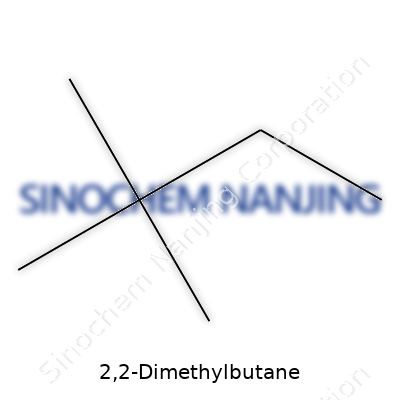
On paper, 2,2-Dimethylbutane stands out from your basic straight-chain hexane. All six carbons don’t line up in a neat row. Instead, carbon number two picks up two methyl (CH3) groups, bulking up the middle of the molecule. Picture four carbons in a row—make that butane backbone. Then, from the second carbon, imagine two small branches sticking out in opposite directions. Those are the methyl groups.
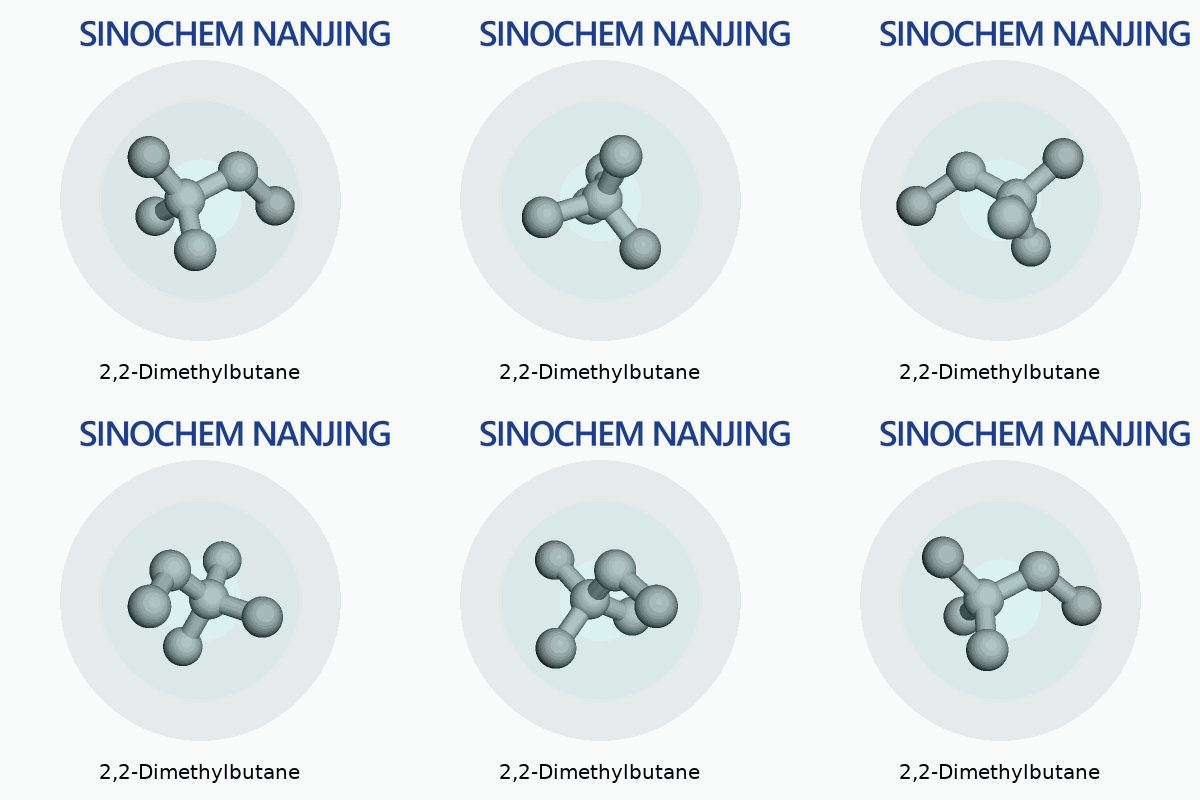
Draw it out: start with the chain, then add a methyl group on top and another on the bottom of carbon two. This layout gives a "cross" or "simple fork" look to the molecule. I’ve used plastic ball-and-stick kits with students for years to help them see where each atom fits. Putting this together in the lab or even just sketching it forces you to really see how those carbons connect—no shortcut replaces getting your hands in the mix.
Why the Structure Matters
Isomers cause headaches for many chemistry learners. Here’s the secret: different ways of arranging the same atoms lead to major shifts in behavior. Hexane, for example, can appear as a straight chain or branch itself out into several isomers, including 2,2-Dimethylbutane. Each form brings its own boiling point, melting point, and uses. C6H14 might always be hexane on paper, but it can look and act entirely different at the level of atoms.
2,2-Dimethylbutane boils at a lower temperature than straight-chain hexane. The branches knock the molecules apart, making it harder for them to cling. Real-world impact? In gasoline, branched alkanes like this one help fuel burn more smoothly and prevent knocking, which lengthens engine life and improves driving experience. High-octane fuels rely on branched alkanes; this knowledge supports safer, more effective energy use on the road.
Beyond the Textbook
I’ve seen frustrated learners who try to memorize formulas and names without making those leaps in understanding. Chemistry isn’t just what sits in the textbook; it’s what lets an engineer tweak a gasoline blend for cleaner air or a doctor choose the right anesthetic ingredient. The clear structure of 2,2-Dimethylbutane shows how small changes on paper lead to bigger results in real-life technology and industry.
Combining hands-on practice, like building models or drawing structures, with real discussion about daily uses helps students and professionals move past memorization. If learners approach molecules as puzzles to solve and real tools for modern problems, chemistry becomes much more than a subject in school.
Is 2,2-Dimethylbutane hazardous or toxic?
Understanding What We Breathe and Touch
2,2-Dimethylbutane shows up in fuel labs, chemical plants, and sometimes as a byproduct in certain manufacturing processes. Its structure looks simple, just six carbons arranged in a tight package. The moment this kind of chemical drifts out of textbooks and into the real world, the discussion about safety matters to everyone—workers, neighbors, and even drivers filling up at the pump.
Danger Hides in the Vapors
This stuff may not be in every household, but spills and leaks can still end up in the environment. Picture a colorless liquid giving off fumes that catch fire incredibly quickly. Engineers and safety officers spend plenty of time worrying about ignition sources. Static electricity, a spark from a tool, even hot exhaust pipes, all can create trouble if this chemical vapor finds them.
Breathing the fumes brings its own set of worries. Exposure can leave a person dizzy or lightheaded. A big enough dose could bring on headaches, lack of coordination, or worse, unconsciousness. These effects land hard on those who spend whole shifts in areas with poor ventilation. The fumes work their way deep into lungs, replacing oxygen, which is especially risky in confined areas. Workers need proper masks and a ventilation plan, not just good intentions.
Skin and Eyes: Direct Contact Isn’t Safe
No one mistakes this chemical for water, but splashes still happen during transfers or spills. Contact with skin generates irritation fast, and sometimes rash and redness show up after washing. In eyes, the results often sting and turn red, forcing workers to flush with water or, in ugly cases, head for the emergency room. The lesson? Short sleeves or absent goggles just don’t cut it around these liquids. Gloves, goggles, and real protective gear protect more than uniforms—they save hospital visits, too.
Long-Term Worries for Health and Planet
I learned early in my time working near chemical drums that many dangers aren’t obvious in a single breath or splash. The risk grows with time. Vapors linger and can build up in small spaces. At higher doses, studies suggest hydrocarbons like 2,2-Dimethylbutane add to risks for the liver and nervous system. Cleanup teams also watch out for runoff. Letting the stuff get into streams or groundwater creates a much longer fight. Aquatic life takes the hit, and eventually, the water supply feels the impact. These issues push for better environmental measurements, regular leak checks, and strict storage rules. Tanks need real monitoring, not guesswork or half-closed eyes on overnight shifts.
Reducing the Hazards at Every Step
Training matters most. I’ve seen plenty of signs where procedures look perfect on paper but make no difference if the people doing the job don’t see why it matters. Real teaching, hands-on with spill kits, emergency showers, and fume detectors works better than printouts. Plants benefit from regular drills, not just memos. There’s also a strong push for substitute chemicals in some industries—safer compounds, where possible, lower risks for everyone and cut back on dangerous waste. Technology can help. Sensors linked to alarms spot vapors early before they drift far. Organizations benefit from a culture that expects, encourages, and rewards smart safety choices at every level, from warehouse up to boardroom.
Trust builds where everyone, from shift crew to management, agrees on the risk and stands behind the solutions. That way, people and the planet both catch a break—and the real hazards of chemicals like 2,2-Dimethylbutane stay under control.
How should 2,2-Dimethylbutane be stored and handled safely?
Why 2,2-Dimethylbutane Demands Respect
2,2-Dimethylbutane—also known as neohexane—packs a punch in terms of flammability. One spark in the wrong place, and things can go sideways fast. Folks in the lab, maintenance teams in refineries, and workers in chemical warehouses all share a responsibility here. This chemical gives off vapors lighter than air, racing upward and spreading out. If there’s an ignition source overhead or across the room, vapors show no mercy.
First Steps: Choosing the Right Location
Not all chemical storerooms fit the bill for keeping 2,2-Dimethylbutane. This chemical must stay far from open flames, static discharge, or anything hot enough to start a fire. Walls and doors should hold up against fire, and shelves ought to be built strong and low enough so that spills don’t put folks at risk or let containers tumble. I once saw a poorly placed drum roll off a shelf in a crowded storeroom. The cleanup and panic could have been avoided.
Sealed and Secure Containers Matter More Than You’d Think
Leaks and broken seals quickly turn into personal safety emergencies. Steel drums and proper chemical-rated bottles keep vapors from escaping. Glass jars invite trouble with even light bumps or chemical fumes eating away at cheap plastic caps. Avoid using containers that show any signs of wear, or else you risk more than a ruined experiment—you risk lives and property.
Ventilation Isn’t Optional
I remember working in an old university lab where the fan in our flammables cabinet croaked. Half the team started coughing—luckily, they got out in time. A proper setup must flush away vapors so they can’t collect. Fume hoods and explosion-proof vents give peace of mind. Airflow isn’t just about comfort; it’s your last line of defense if you slip up.
Personal Protective Gear: The Shield You Need
Latex gloves fall short when dealing with organic solvents. Nitrile gloves, goggles, and flame-resistant coats give better protection if a splash happens. Closed-toe shoes feel like overkill until a spill hits the floor. The chemical smell alone sticks with you, but the burns and rashes teach hard lessons nobody forgets.
Spill Prevention and Fire Response
Every chemical station deserves absorbent pads and sand buckets close by. Clean-up kits, not next door or in the hallway—right there, where you handle the chemicals. Training everyone to use fire extinguishers and knowing the emergency exits saves time in a crisis. Reviewing the Safety Data Sheet helps teams remember exactly what to do if things go south.
Labeling and Record-Keeping
Clearly labeled containers prevent mix-ups. Good labels last through drips and spills. Teams should note who stored what, when, and how much remains. Tracking inventory keeps unnecessary stockpiles from turning into hazards, and lets you spot if something suddenly evaporates or goes astray.
What Everyone Can Do Better
Too many labs treat safety like paperwork. Regular checks, honest hazard discussions, and practical drills go miles further. Insurance pays out for damage; it’s no replacement for a healthy coworker. Remember, respect for 2,2-Dimethylbutane starts with simple, everyday actions. Every careful step keeps people safe and labs running smoothly—no shortcuts, no regrets.
What are the physical properties of 2,2-Dimethylbutane (boiling point, melting point, etc.)?
Getting to Know 2,2-Dimethylbutane
2,2-Dimethylbutane comes from the family of alkanes—these are hydrocarbons made of only carbon and hydrogen, all arranged with single bonds. You might bump into 2,2-Dimethylbutane under the nickname “neohexane.” If you spot its clear, colorless liquid in a lab, you’re looking at a material with a distinctive, gasoline-like smell. Its physical properties don’t just matter to chemists in spotless coats but to the folks working with fuels, solvents, or anyone patching together a better understanding of organic compounds that fuel engines or shape consumer products.
Boiling and Melting Point—A Deep Dive
Now, let’s talk numbers. 2,2-Dimethylbutane boils at about 49.7 °C (121.5 °F). Compared to its straight-chain cousin n-hexane, which boils higher, this point teaches an important lesson: branch out a hydrocarbon, and it becomes easier to vaporize. This trend pops up across hydrocarbons, not just for fun but because molecules with more branches can’t snuggle close together. Less molecular hugging, weaker intermolecular forces, and the next thing you know, it doesn’t take as much heat to get these molecules up and moving as gas.
On the flip side, its melting point lands around -98 °C (-144 °F). Pretty chilly. With all the branching, molecules can’t stack together neatly, and it becomes tougher to pack everything down into a solid. I’ve seen this trend while pouring over charts for various hydrocarbons—more branching always leaves a messier solid structure, meaning lower melting points. Try pouring a few of these compounds into a beaker at room temperature, and more branching always brings out the liquid forms first.
Density, Flash Point, and Solubility
Pour out a hundred milliliters of 2,2-Dimethylbutane, and it’s lighter than water. At 20 °C (68 °F), its density settles around 0.653 grams per cubic centimeter. That’s lighter than a lot of common organic solvents. For comparison, water checks in at 1.0 g/cm³—these hydrocarbons will float right on top if mixed, staying far away from the water below. In practical terms, lighter solvents play a big role in separating ingredients and formulating fuels with the right flow and vaporization characteristics.
2,2-Dimethylbutane carries a flash point of about -24 °C (-11 °F). This means just a little heat sparks a fire risk. Regulations for fuel storage, transportation, and handling owe a lot to chemicals with flash points under room temperature. Nobody wants an unexpected ignition at the refinery or gas station. Those handling this material need proper ventilation, spark-proof tools, and a commitment to safety standards at every step.
Water and 2,2-Dimethylbutane don’t mix. It won’t dissolve in water, and that lines up with its nonpolar character. It does dissolve easily in other nonpolar solvents—think hexane, ether, or even itself. This makes it easier to separate or recover from mixtures, an important trick for chemical engineers and environmental teams dealing with spills or contamination.
Real-World Relevance and Safety Thoughts
Physical properties like these are more than academic trivia, especially for those of us who have spent time in labs or engineering spaces. Understanding boiling and melting points shapes fuel formulation. Density and solubility decide how a leak spreads—and that matters in clean-up efforts. A flash point below freezing keeps all eyes on safety. For folks tinkering with fuels or solvents, research uncovers options to strengthen fire protection. Double-checking proper storage, choosing the right containers, and working only in ventilated areas represent basic responsibilities that save lives and resources.
Plenty of new advances focus on reducing fire risks and improving chemical separation. By leaning on better sensors, smarter containment technologies, and stronger education for everyone who works with chemicals, risks shrink and workplaces offer safer conditions for everyone. These details, grounded in physical properties, guide smart choices every day on the floor and in the field.
| Names | |
| Preferred IUPAC name | 2,2-Dimethylbutane |
| Other names |
Neohexane Diisopropyl 2,2-Dimethylbutan |
| Pronunciation | /ˈtuː tuː daɪˈmɛθəlˌbjuːteɪn/ |
| Identifiers | |
| CAS Number | 75-83-2 |
| Beilstein Reference | 1698734 |
| ChEBI | CHEBI:13615 |
| ChEMBL | CHEMBL140744 |
| ChemSpider | 14118 |
| DrugBank | DB01970 |
| ECHA InfoCard | 100.764.746 |
| EC Number | 206-035-9 |
| Gmelin Reference | 63560 |
| KEGG | C06586 |
| MeSH | D017699 |
| PubChem CID | 6556 |
| RTECS number | EU9650000 |
| UNII | Q3712K5F0G |
| UN number | UN1162 |
| CompTox Dashboard (EPA) | DTXSID4020717 |
| Properties | |
| Chemical formula | C6H14 |
| Molar mass | 86.18 g/mol |
| Appearance | Colorless liquid |
| Odor | gasoline odor |
| Density | 0.649 g/mL at 25 °C |
| Solubility in water | Insoluble |
| log P | 3.42 |
| Vapor pressure | 52.1 kPa (at 20 °C) |
| Acidity (pKa) | pKa ≈ 50 |
| Magnetic susceptibility (χ) | -68.2·10⁻⁶ cm³/mol |
| Refractive index (nD) | 1.372 |
| Viscosity | 0.426 mPa·s (20 °C) |
| Dipole moment | 0.00 D |
| Thermochemistry | |
| Std molar entropy (S⦵298) | 229.5 J·mol⁻¹·K⁻¹ |
| Std enthalpy of formation (ΔfH⦵298) | -175.8 kJ/mol |
| Std enthalpy of combustion (ΔcH⦵298) | –3898.8 kJ·mol⁻¹ |
| Pharmacology | |
| ATC code | V03AW51 |
| Hazards | |
| GHS labelling | No GHS labelling. |
| Pictograms | GHS02 |
| Signal word | Warning |
| Precautionary statements | P210, P233, P240, P241, P242, P243, P261, P264, P271, P301+P310, P303+P361+P353, P304+P340, P305+P351+P338, P312, P331, P332+P313, P337+P313, P362, P370+P378, P403+P235, P405, P501 |
| NFPA 704 (fire diamond) | 1-1-0 |
| Flash point | -49 °C |
| Autoignition temperature | 441 °C |
| Explosive limits | 1.1% - 8.4% |
| Lethal dose or concentration | Lethal dose or concentration: "LD50 (oral, rat): 15000 mg/kg |
| LD50 (median dose) | LD50 (median dose): 5,000 mg/kg (rat, oral) |
| NIOSH | ENB3150000 |
| PEL (Permissible) | 1000 ppm (2950 mg/m3) |
| REL (Recommended) | 3000 mg/m³ |
| IDLH (Immediate danger) | IDLH: 800 ppm |
| Related compounds | |
| Related compounds |
n-Butane Isobutane n-Pentane Isohexane Neohexane |



