2,2-Dimethoxypropane: More Than a Lab Staple
Historical Development
Walk into just about any organic chemistry lab and 2,2-dimethoxypropane often makes an appearance. Chemists first found its value during the growth years of synthetic organic chemistry in the twentieth century, especially as the demand for better ways to manipulate molecular structures picked up. Early researchers searching for reliable protecting groups and drying agents in synthetic routes landed on this molecule, pushing it into both classrooms and professional labs. Over the decades, its role expanded as research on carbohydrate chemistry and nucleoside synthesis became more advanced. As I recall from my own lab days, someone always had a bottle of this clear liquid tucked behind the desiccators—a quiet staple, often underestimated, but never unappreciated.
Product Overview
2,2-dimethoxypropane, known to chemists for its strong ability to capture water, pops up wherever chemists need to drive reactions away from water’s interference. Its reputation as a mild reagent helped it gain popularity, especially when other stronger agents risk damaging delicate molecules. I remember the distinctive, slightly sweet smell in the air when chemists opened a bottle in the lab, often a sign that a careful step in synthesis was underway. Easy to handle but reactive in the right contexts, it often finds itself in the role of a fixer in multi-step reaction schemes.
Physical and Chemical Properties
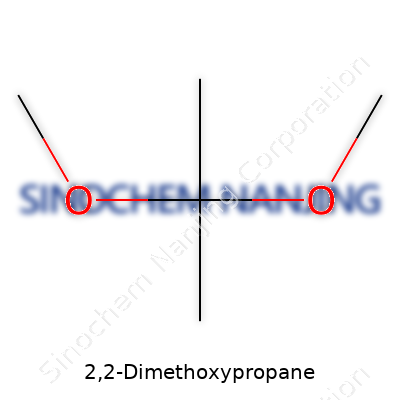
At room temperature, 2,2-dimethoxypropane shows up as a colorless liquid, sporting a moderate boiling point and decent volatility. Chemically, it’s all about the acetals—this compound carries two methoxy groups attached to a central carbon, making it eager to interact with water or other small molecules under the right acid conditions. Its basic formula, C5H12O2, keeps it light and manageable, unlike some of the bulkier classics in organic synthesis. Once used in a reaction, the compound usually evaporates or hydrolyzes, so it rarely hangs around in the final products.
Technical Specifications & Labeling
Labels on bottles of 2,2-dimethoxypropane typically highlight its purity, as even tiny traces of water or other alcohols can mess up sensitive reactions. With purity grades often exceeding 99 percent for research work, chemists keep an eye on the fine print. SDS sheets warn about flammability, skin contact, and the importance of good ventilation. In my early days, I once got a short but sharp coughing fit after being careless opening a fresh bottle—lab lesson learned.
Preparation Method
Making 2,2-dimethoxypropane in bulk follows a straightforward route: start with acetone and treat it with methanol in the presence of an acid catalyst. The reaction balances ease of scale with straightforward purification since distillation pulls out the finished product cleanly. This approach limits waste and avoids harsh conditions, so even academic labs sometimes cook up a fresh batch for teaching purposes. Commercial manufacturers have tuned this synthesis for decades, shaving off any inefficiencies along the way.
Chemical Reactions & Modifications
On the bench, it acts as a water scavenger and a protecting agent—particularly valued for turning unstable aldehydes or ketones into their dimethyl acetal forms. This transformation shields sensitive groups from further reaction, letting chemists tackle complex molecules step by step. In carbohydrate chemistry, protecting the right alcohol groups without scrambling the molecule would feel impossible without reagents like 2,2-dimethoxypropane. Later, a simple acid wash reverses the process. This “temporary shield” tactic lets synthetic plans get far more ambitious than they could with brute force. Chemists also use the compound in transacetalization, juggling protecting groups as needed based on their routes. Watching a well-planned synthesis move forward smoothly always feels satisfying—like watching a skilled carpenter use the perfect tool.
Synonyms & Product Names
Over the years, chemists gave 2,2-dimethoxypropane several names. You hear it called DMP, or acetone dimethyl acetal, depending on who you ask or what catalog you’re reading from. Classroom and industrial texts usually stick with its standardized IUPAC name. I’ve seen some old literature from the ‘70s and ‘80s using the less precise dimethoxypropanes, which only adds to the confusion unless you check the structure closely.
Safety & Operational Standards
Handling this compound safely relies on a few critical points. It lights up easily, giving off plenty of fumes, so open flame stays far away. Get a whiff of it, and your sinuses will notice—proper fume hood use makes a big difference. Gloves and goggles are non-negotiable, since it stings skin and eyes. Companies selling 2,2-dimethoxypropane include all the right warnings, but following standard lab behavior makes accidents rare. Waste goes into solvent drums and never straight down the drain; I once saw a sharp-eyed lab tech catch a rookie about to pour spent reagent away, averting a chemical waste headache.
Application Area
In organic synthesis labs, 2,2-dimethoxypropane solves real problems. Carbohydrate researchers rely on it to protect tricky aldehyde or ketone groups and push forward with elaborate syntheses of sugars, glycosides, and nucleosides. Pharmaceutical chemists pull it in for multi-step drug syntheses, particularly where delicate functionality can’t survive rough treatment. Analytical chemists have found it useful in sample prep, especially when moisture removal or derivatization helps the detection of otherwise hidden compounds. Outside the lab, you may not see it in your medicine cabinet, but plenty of drugs and diagnostics owe their safe manufacture to this silent helper.
Research & Development
Recent years brought some creative twists. Teams working on green chemistry have sought alternatives to traditional acids, aiming for milder catalysts or ways to cut waste production. Some groups explore 2,2-dimethoxypropane for new protecting group strategies, looking to speed up the switch between protected and deprotected forms. Others dig into applications for automated synthesis or parallel chemistry, where traditional techniques can bottleneck the process. The compound’s familiarity and relative safety keep it in the front-running toolkits, letting chemists take risks in new areas without sacrificing reliability. The broader industry sometimes overlooks these “workhorse” reagents, but inventors working on the next generation of therapies pay close attention.
Toxicity Research
Anyone working with organics takes toxicity seriously, and 2,2-dimethoxypropane brings both reassurance and a note of caution. Inhalation or skin contact causes irritation, and accidental ingestion demands urgent medical care. Animal studies reviewed by regulatory agencies have found low acute toxicity, though repeated exposure isn’t recommended. Chronic toxicity data is less robust, driving research to clarify metabolism and potential breakdown products. Many labs now monitor personal exposure and air quality tightly, especially in teaching labs with less experienced workers. I’ve seen more training sessions on personal protection than ever before, reflecting a culture that values health and sustainability alongside research progress.
Future Prospects
Looking ahead, the future of 2,2-dimethoxypropane intertwines with trends pushing for safer, greener chemistry. Researchers chasing eco-friendly processes look for recyclable catalysts and routes that generate less solvent waste. Automation and machine learning in synthetic chemistry open new doors, with this compound providing a reliable stepping stone for creative pathways. As new fields emerge—think biotech or advanced materials—old reagents find new jobs, shaped by smarter design and better process control. The practical use, availability, and track record of 2,2-dimethoxypropane hint it will keep serving the next generation of chemists with the same quiet, essential presence.
What is 2,2-Dimethoxypropane used for?
Where You Find It in Chemistry Labs
People who work in chemistry come across 2,2-dimethoxypropane almost as often as acetone or ethanol. I remember my first time dealing with it in an undergraduate organic synthesis lab. My professor handed me a bottle labeled “DMP” and warned me about the sharp, almost fruity smell. This stuff isn’t just sitting on a shelf collecting dust—it’s used in real reactions that move science forward.
In practice, researchers rely on DMP as a drying agent for reactions where water ruins the outcome. It doesn’t just soak up water like silica gel. DMP grabs hold of water molecules and converts them into acetone and methanol as byproducts. This isn’t just some academic curiosity but a practical tool when you need your reagents bone dry—especially in making complicated molecules for new medicines or advanced materials.
Driving Dehydration and Protecting Groups
Many chemists face headaches from water-sensitive experiments. A tiny bit of moisture can ruin hours or weeks of lab work. DMP steps in during reactions needing dehydration, like when forming acetals from aldehydes or ketones. That’s something you see over and over: run the reaction with DMP and a weak acid, and you get the acetal smoothly. The acetone formed isn’t a problem—it just evaporates out.
In the synthesis of pharmaceuticals, DMP helps set up so-called protecting groups. Chemists use protecting groups to block parts of a molecule from reacting until the right moment. DMP is famous for building up diol acetals, which helps shield sensitive alcohol groups. Without these steps, making medicines such as cholesterol regulators or antiviral agents gets a lot messier.
Keeping Reactions Clean
Lab safety matters to anyone who spends time in chemistry. DMP demands respect—it’s flammable and has a vapor you don’t want filling the air. Simple exhaust fans and eye protection go a long way, but that’s only part of the picture. Good lab technique, fresh bottles, and careful measuring make all the difference between a successful day and a frightening one. In industry, automatic dosing and closed systems keep things even safer.
Why DMP Matters in Everyday Products
The science happening behind closed doors lands on store shelves all the time. Look at the flavors in candy or the scents in cleaning sprays. Complex aroma compounds need delicate chemistry during their manufacture. DMP often steps into those supply chains, helping chemists work around troublesome groups and finish multi-step syntheses. If you’ve enjoyed a cherry flavor that doesn’t fade or a fresher laundry smell, you might owe some thanks to the clean-up work DMP makes possible.
Making Better Chemistry Happen
After making a few hundred grams of a stubborn molecule with and without DMP, you notice the difference. Less water mess. Fewer side products. The process just feels smoother. Chemists celebrate tools that save time, cut waste, and protect fragile building blocks. As green chemistry pushes for less waste and safer processes, some labs look for alternatives, but DMP keeps stepping up for tricky cases. Using it wisely shapes not just research but safer and more effective products all around us.
What is the chemical formula of 2,2-Dimethoxypropane?
Formula Unpacked: C5H12O2
Many laboratories stock 2,2-dimethoxypropane because it solves a specific problem: removing water from reactions. The chemical formula, C5H12O2, says a lot about its makeup. Five carbon atoms and two oxygen atoms wrapped in a simple structure won’t seem flashy. Still, behind this formula lies a tool with everyday utility for chemists. The way this molecule pairs two methoxy groups around a propane core gives it the power to transform workups in organic synthesis. Students or researchers handling carbohydrates, for example, often use 2,2-dimethoxypropane to dry and protect things that would otherwise fall apart in water’s presence.
Why the Formula Matters in the Lab
Let’s put this in perspective. Every step in a laboratory experiment can break if even a teaspoon of water sneaks in. C5H12O2 has a design that lets people sweep water out by reacting with it—producing acetone and methanol instead. This property saves time and raises yields by minimizing side issues many students learn about the hard way. It makes sure the right parts of a molecule stick together, instead of falling apart or changing into something you never wanted. This feature gives chemists control, especially when making acetal protecting groups, a staple job in carbohydrate chemistry and drug synthesis.
Practical Use and Safety Considerations
In my experience running organic reactions, 2,2-dimethoxypropane gave consistency that water-removal agents like sodium sulfate or magnesium sulfate couldn’t always match. Those old-school drying agents simply soak up water; 2,2-dimethoxypropane gets rid of it by converting it to volatile products you can later separate. That clarity matters after you’ve spent hours setting up a reaction—no one likes repeating steps due to unseen water. Its volatility also means you cannot leave it open on a bench for long, since it evaporates quickly and raises flammability risks. I once watched a flask of it disappear into thin air because someone underestimated just how fast it can go. Laboratories handle this by storing it away from heat and using it in ventilated spaces, supporting safety culture built on real past mistakes.
Recognizing Shortcomings and Seeking Improvements
No chemical solves every issue on its own. Overuse of 2,2-dimethoxypropane creates waste, especially acetone, which builds up if ventilation or capture systems aren’t in place. Responsible labs now try to balance effectiveness with waste reduction, recycling what they can or turning to greener drying methods for simple jobs. Education helps too—mentoring young chemists to measure precisely and avoid splashing or contaminating shared areas. Less experienced hands seem to pour first and think later, which leads to more spills, overstocks, and cleanup headaches. If chemical suppliers and safety officers step up education and provide updated guides, everyone enjoys a cleaner, more efficient workspace.
Conclusion: Small Molecule, Big Impact
2,2-Dimethoxypropane proves that even simple molecules shape the outcomes of complex scientific tasks. Understanding its formula and use unlocks better habits in the laboratory and sharper awareness of how a drop of liquid can shift the path of discovery. The story of C5H12O2 isn’t about flashy innovation—it’s about doing the basics right, with safety and foresight.
Is 2,2-Dimethoxypropane hazardous or toxic?
The Real-World Experience of Using 2,2-Dimethoxypropane
Spotting a chemical name like 2,2-Dimethoxypropane on a reagent shelf shouldn’t trigger alarm bells, but that doesn’t mean one can ignore basic safety. As a chemist who’s worked with solvents and reagents in both university labs and manufacturing settings, I’ve learned to respect every bottle, and 2,2-Dimethoxypropane stands out for a few reasons.
Risks Worth Respecting
No matter how familiar a workspace feels, improper handling of volatile organics always brings risk: fires, fumes, and the chance of skin or eye injury. 2,2-Dimethoxypropane releases methanol as a byproduct when exposed to water. Methanol causes headaches, dizziness, and—worse—can lead to blindness or death if swallowed in large doses. Even a whiff of concentrated fumes gets the eyes watering in seconds. It doesn’t help that the chemical itself can irritate the lungs and skin. The mere prospect of a spill or a mishandled reaction brings to mind a mess that stings and lingers for hours.
Not all chemicals need regulatory restriction to show their hazards. Local labs store 2,2-Dimethoxypropane away from heat, open flames, and oxidizing agents for good reason. According to the American Chemical Society, this compound burns easily, even at room temperature. A few years ago, I watched as an unmarked beaker of leftover 2,2-Dimethoxypropane sat perilously close to a Bunsen burner. No fire broke out, but the air stank sharply for hours. The cleaning crew grumbled for days about “that smell.”
Long-Term Concerns and Environmental Impact
Bodily harm after a single exposure feels sharp and urgent, but low-level chronic issues also matter. Repeated contact causes skin dryness, cracking, and sometimes chemical burns. The molecule’s small size means it evaporates fast, spreading in poorly ventilated rooms and lingering in air ducts and on door handles. Anyone cleaning glassware at the end of a shift notices dry, chapped skin unless they remember gloves.
Beyond the lab, environmental persistence creeps into the story. 2,2-Dimethoxypropane breaks down in water—releasing methanol—so that waste disposal matters. Pouring it down a drain risks contaminating water systems and harming local aquatic life. Anyone managing chemical waste knows the value of proper storage, labeled containers, and scheduled pickups.
Better Practices, Safer Spaces
Precaution and preparation make a difference. At home, few people encounter 2,2-Dimethoxypropane, but in labs and factories, eye protection, fume hoods, nitrile gloves, and tightly sealed bottles form the barrier between a safe shift and one punctuated by accidents. I’ve seen researchers tempted to wave away safety warnings for “routine” reactions—until a misplaced pipette sent drops flying and cut a project short for weeks.
Training plays a big role. A clear safety data sheet, regular workshops, and a culture that encourages asking questions help prevent accidents. In my own teaching experience, emphasizing real incidents gets the point across far better than pointing at a rulebook.
The Importance of Awareness
No single chemical deserves a panic response, but none deserves neglect either. 2,2-Dimethoxypropane offers much to an organic chemist looking to dry alcohols or speed up a reaction, yet it pays to respect both its power and its pitfalls. People stay safer, and experiments run smoother, when that respect shapes each step.
How should 2,2-Dimethoxypropane be stored?
What’s at Stake with 2,2-Dimethoxypropane?
2,2-Dimethoxypropane, known for its use as a versatile dehydrating agent, pops up in countless organic labs. Its sharp, unmistakable aroma brings to mind hours handling glassware and solvents in cramped fume hoods. Anyone who has mixed or distilled it will tell you it reacts sharply with water, releasing methanol and acetone. That reaction, while useful in the right flask, also makes this stuff tricky to store safely, especially in places where humidity or temperature get out of hand even for a short time.
If you leave a bottle open or fail to seal it well, you're not just risking wasted material. One summer, condensation crept into a poorly capped container lined up near an air duct. By fall, a sticky mess replaced the clear liquid, with an odd smell hinting at the trouble within. Unstable chemicals like this can break down, leak fumes, or ruin experiments—none of which you want in any lab worth its salt.
Handling Moisture and Air
Dryness proves essential with 2,2-Dimethoxypropane. Even low room humidity can start the hydrolysis process. Using bottles with tight seals and storing them with desiccants helps keep airborne moisture out. I’ve watched good reagents turn useless simply because a bottle sat out too long on a cluttered bench in the middle of a humid week. It’s smart to keep stocks in desiccators or at least use silica gel packs inside storage cabinets to hold down the risk.
Some people think a tightly capped bottle is enough for everything. With volatile organics like this one, that’s gambling with results and safety. Fume hoods and ventilated cabinets keep any slow leaks contained so you don’t smell acetone where you should be smelling coffee. That keeps your workspace healthier and stops vapors from stirring up allergies or long-term issues—something people overlook until symptoms creep up out of nowhere.
The Role of Temperature Control
Heat can speed up unwanted changes, so cool, stable temperatures serve best. Air-conditioned storage or even purpose-built refrigerators designed for flammables can take labs a step closer to real chemical stewardship. Fluctuating heat, such as in window-lit rooms, helps nothing except accidental reactions, which I've watched ruin perfectly good bottles over holiday breaks. No one likes finding out their chemical stocks have evaporated down to sludgy goo over the weekend.
Don’t Ignore Safety Precautions
Proper labeling, regular checks for container integrity, and keeping chemicals away from food prep areas or crowded hallways ought to go without saying. Too often, labs overlook the basics—searching for a needed bottle only to find corroded caps or lost labels. Emergency spill kits and eyes on expiry dates contribute far more to safety than any high-end sensor. I’d rather work in a humble lab with a routine for these checks than somewhere with top-tier gear but careless habits.
Moving Forward: Smart Solutions for Smart Scientists
Committing to safe storage practices for 2,2-Dimethoxypropane pays dividends in lab results, safety, and peace of mind. Combining sealed, labeled bottles with dry, cool, well-ventilated cabinets brings the risk down and keeps people healthy. Occasional training refreshers and spot-checks ensure no shortcuts catch up on the team. Every bottle saved and every accident avoided means more resources for good science—and fewer headaches for everyone involved.
Can 2,2-Dimethoxypropane be used as a dehydrating agent in organic synthesis?
A Practical Tool in the Chemist’s Toolbox
Talk to any organic chemist who spends hours working on delicate transformations, and you’ll often hear a tale or two about moisture creeping in and stubbornly ruining their reactions. Water causes side reactions, stalls conversions, and sometimes turns an entire effort into a gooey mess. In search of reliable dehydration, some stick to old standbys like molecular sieves or simple drying agents. Then there’s 2,2-dimethoxypropane—a compound with a peculiar scent and a knack for pulling water out of systems, especially when forming acetals or ketals.
How It Works on the Bench
DMP (as it’s commonly known) offers a straightforward chemical trick. It reacts with water to form acetone and methanol. In practice, this means you can drop it into a reaction mixture and count on it to bind up stray water that would otherwise attack your sensitive intermediates. The reaction between DMP and water runs fast, especially when acid catalysis gives it a push.
The strength of DMP’s action really shows up in settings like acetal or ketal formation, where the removal of water drives the equilibrium forward. Instead of wrestling with a distillation rig or awkwardly fussing with molecular sieves, just add DMP, and the system cleans itself up. This self-driving aspect has trimmed hours off many graduate students’ workloads, including my own during time spent developing carbohydrate chemistry projects with water-sensitive intermediates.
Safety and Handling—A Few Realities
Working with DMP asks for some respect. Like many chemicals with useful reactivity, it comes with risks. DMP is volatile and flammable. The fumes irritate mucous membranes, so a fume hood isn’t an optional luxury. Methanol generated during reactions poses toxicity hazards. Proper PPE and good ventilation matter. Gloves, goggles, and solid lab habits help prevent accidents—lessons passed down from mistakes and near-misses in almost every lab I’ve worked in.
Why Some Still Hesitate
Despite its utility, not every chemist rushes to use DMP. Some prefer alternatives like Dean-Stark apparatus, especially in large-scale work, to avoid the added cost and waste of organic byproducts. DMP’s use creates acetone and methanol, so the waste stream grows, and proper disposal becomes a priority. In teaching labs or industrial settings aiming for greener chemistry, DMP sometimes loses points in favor of less hazardous or less wasteful dehydration methods.
Optimizing for Sustainability
The call for safer and greener processes runs strong these days. Green chemistry advocates push for methods that cut down on solvent use, create less hazardous waste, or recycle byproducts. Some research teams now look into catalytic systems that dry reactions without additional reagents or that swap out traditional organic solvents for water-tolerant alternatives. Plenty of newer protocols take cues from DMP’s efficiency while sidestepping the drawbacks.
Chemistry thrives on practical solutions. DMP remains a highly effective choice for key dehydration tasks, but it’s smart to keep evolving approaches. Balancing convenience, safety, environmental impact, and cost keeps the field moving forward. In the hands of a watchful, informed chemist, DMP delivers results—so long as one stays alert to both its power and its pitfalls.
| Names | |
| Preferred IUPAC name | 2,2-Dimethoxypropane |
| Other names |
Dimethylacetal Dimethoxy-2-propane Acetonediemthylacetal DMP |
| Pronunciation | /ˌtuː tuː daɪˌmɛθ.ɒk.siˈprəʊ.peɪn/ |
| Identifiers | |
| CAS Number | 77-76-9 |
| Beilstein Reference | 1721394 |
| ChEBI | CHEBI:28235 |
| ChEMBL | CHEMBL1377 |
| ChemSpider | 14339 |
| DrugBank | DB01970 |
| ECHA InfoCard | 100.006.280 |
| EC Number | 200-579-1 |
| Gmelin Reference | 7907 |
| KEGG | C01023 |
| MeSH | D017970 |
| PubChem CID | 10830 |
| RTECS number | UU7875000 |
| UNII | LBK8384PJC |
| UN number | UN2265 |
| CompTox Dashboard (EPA) | DTXSID3023724 |
| Properties | |
| Chemical formula | C5H12O2 |
| Molar mass | 90.12 g/mol |
| Appearance | Colorless liquid |
| Odor | fruity |
| Density | 0.861 g/mL at 25 °C |
| Solubility in water | Decomposes |
| log P | -0.1 |
| Vapor pressure | 6.5 kPa (20 °C) |
| Acidity (pKa) | 18.1 |
| Magnetic susceptibility (χ) | -55.2·10⁻⁶ cm³/mol |
| Refractive index (nD) | 1.377 |
| Viscosity | 0.437 cP (20 °C) |
| Dipole moment | 2.51 D |
| Thermochemistry | |
| Std molar entropy (S⦵298) | 356.1 J·mol⁻¹·K⁻¹ |
| Std enthalpy of formation (ΔfH⦵298) | -437.3 kJ/mol |
| Std enthalpy of combustion (ΔcH⦵298) | -4277.8 kJ/mol |
| Hazards | |
| GHS labelling | GHS02, GHS07 |
| Pictograms | GHS02, GHS07 |
| Signal word | Warning |
| Hazard statements | H225, H319, H335 |
| Precautionary statements | P210, P233, P240, P241, P242, P243, P261, P271, P301+P310, P303+P361+P353, P304+P340, P305+P351+P338, P312, P337+P313, P370+P378, P403+P235, P405, P501 |
| NFPA 704 (fire diamond) | 1-2-0 |
| Flash point | 42 °F |
| Autoignition temperature | 215 °C |
| Explosive limits | Explosive limits: 2.8–19.9% |
| Lethal dose or concentration | Lethal dose or concentration (LD50, oral, rat): **5200 mg/kg** |
| LD50 (median dose) | LD50 (oral, rat): 5200 mg/kg |
| NIOSH | KN3330000 |
| PEL (Permissible) | PEL (Permissible): Not established |
| REL (Recommended) | 1,000 ppm |
| Related compounds | |
| Related compounds |
Acetone Methanol Dimethyl sulfate Methylal |



