Looking Deeper into 2,2,4-Trimethylpentane: The Building Block of Modern Fuels
Historical Development
Some stories help people understand why everyday comforts are possible. The tale of 2,2,4-Trimethylpentane—octane to most—brings together science, global industry, and the endless push for better engines. Back in the 1920s, when cars sputtered and gasoline couldn’t keep up, researchers faced the trouble of engine knocking. This annoying rattle wasn't just a nuisance; it wore out engines and limited how powerful an engine could be. An American chemist, Graham Edgar, tested fuels with different hydrocarbons. He found that blending what chemists would later call “isooctane” dramatically improved knock resistance. Companies like Standard Oil snapped up the process, laying the groundwork for leaded gasoline and launching a global race within refining. Thinking back on that, it’s easy to see how much progress sprang from just figuring out which molecules did the job best.
Product Overview
2,2,4-Trimethylpentane, or isooctane, stands at the front of the hydrocarbon pack for gasoline blending. It doesn’t get the regular consumer attention, but it shapes what happens at the pump every day. ISO-octane isn’t a product you see on store shelves, yet it becomes invisible in your everyday trip to the gas station, helping fuels run smoothly in millions of engines. Even after nearly a century, refiners depend on it as a benchmark for “octane number”—the measure for how well a fuel resists knocking. Engineers and refinery managers alike use it as the “100” mark, meaning it’s a standard no other compound beats for anti-knock performance.
Physical & Chemical Properties
Most folks don’t give much thought to the chemicals in their tank, but 2,2,4-Trimethylpentane tells a story through its makeup. It typically looks like a clear, colorless liquid with a faint gasoline smell. Its boiling point sits around 99°C, and it holds onto a density that’s lower than water. If you splash it out, it evaporates fast, stirs up flammable vapors, and floats on water. Where people work with fuels or solvents, recognizing how quickly these vapors spread is serious business. Swap a lighter hydrocarbon for a heavier one and you see why octane is a favorite—the molecule keeps engines operating with fewer problems, barely catching fire outside of controlled combustion.
Technical Specifications & Labeling
Lab techs and refinery workers spot 2,2,4-Trimethylpentane by its formula: C8H18. In industry, people care about clarity, purity, and whether it meets necessary fuel standards. That means testing for purity, checking for sulfur or metals that would poison a catalyst, and staying mindful of water content. Labels in professional workspaces show all that and more—flammability, necessary protective measures, and chemical handling codes show up on nearly every container. Professionals always look out for the familiar CAS number—540-84-1—which tells everyone in the lab what’s inside.
Preparation Method
Building 2,2,4-Trimethylpentane draws on established refinery methods, mostly tied to catalytic alkylation. This involves combining isobutane with isobutylene, sometimes with acid catalysts like sulfuric or hydrofluoric acid. These reactions are tricky and call for careful controls to avoid byproducts that drop the value of the fuel blend. Engineers keep track of pressure, temperature, and purity of feedstocks, because any slip can foul equipment or throw off the product’s balance. Refineries fine-tune their processes to keep up with growing gasoline demand, as well as stricter global rules on emissions and fuel composition.
Chemical Reactions & Modifications
Octane’s stable structure means it generally resists easy break-up or combustion outside an engine, which is precisely what refiners want. In catalytic reforming, for example, hydrocarbon chains shift, forming branched compounds like 2,2,4-Trimethylpentane. Chemists value it as a reference point for studying how gasoline reacts and breaks down in engines and the environment. It doesn’t react much with acids, bases, or water, but under high heat and certain catalytic conditions, it can form smaller fragments or oxidize. Those properties make it predictable, which in the world of engine testing, is a gift.
Synonyms & Product Names
Chemists love their nicknames and shorthand. In research papers, technical documents, and safety data sheets, you’ll see 2,2,4-Trimethylpentane labeled as isooctane or iso-octane, alongside simpler forms like TMP. These names matter more than casual readers might think, because they help technicians and researchers avoid costly mistakes when grabbing supplies or logging experimental data. The naming convention also underscores its importance as the gold standard for high-octane compounds.
Safety & Operational Standards
Anyone who’s spent time in a chemical plant or refinery knows how much attention goes to safety with volatile liquids. 2,2,4-Trimethylpentane isn’t a household name, but its flammability and vapor hazards make it just as serious as any well-known danger. Vapors spread easily, ignite quickly, and leave little time for clumsy mistakes. Industry guidelines focus on using explosion-proof equipment, proper grounding, and quality protective gear. Storing this chemical involves cool, ventilated environments, far away from open flames and incompatible chemicals. Workers depend on up-to-date training, with spill kits, breathing apparatus, and clear evacuation routes layered into daily operations. Regular drills, strict labeling, and hazard communication go a long way towards keeping everyone safe where bulk chemicals flow in and out of barrels and pipelines.
Application Area
The story of 2,2,4-Trimethylpentane is practically tied to modern traffic, trade, and transportation. Anywhere gasoline is blended, this hydrocarbon plays a key role. From city bus fleets to racing engines, it stretches fuel performance, prevents engine pings, and helps keep emissions in line with the law. People working in research or at refineries may also use isooctane as a solvent or baseline in other hydrocarbon experiments. Its predictable nature lets manufacturers dial in exact blends that fit regional fuel standards—one of a thousand silent rules that keep supply chains and daily life running on time.
Research & Development
Scientists and engineers keep circling back to octane for a reason. Whether in search of more efficient refinery catalysts or cleaner, more powerful engine fuels, research spins off new insights every year. Major attention now falls on greener production, both because of regulation and strong public pressure. Researchers hunt for better catalytic processes that save energy or produce fewer emissions. There’s steady progress with alternative blending—bio-based alkylation, or using renewable feedstocks to lower the carbon footprint. Environmental assessments run in parallel, as regulators ask for full life cycle data that covers everything from raw input to exhaust emissions. Academic work also dives into how small tweaks in structure or blending partners can ramp up octane value even further, sidestepping legislative bans on old additives like tetraethyl lead.
Toxicity Research
Health and toxicity studies of 2,2,4-Trimethylpentane haven’t uncovered the dramatic dangers of some other gasoline components, but it still deserves a healthy dose of respect. Exposure to high concentrations of vapor can cause headaches and dizziness, and liquid contact can irritate skin or eyes. Farther down the line, researchers continue to study long-term impacts, including possible risks of cancer or developmental issues in populations around petroleum sites. Major safety groups set limits on occupational exposure, and laboratories keep pouring over data to improve worker protection. As gasoline moves from refinery to pump, all those layers of handling and regulation add up to fewer accidents—though the world keeps watching for new evidence on health impacts.
Future Prospects
Times change, and even a staple like 2,2,4-Trimethylpentane finds itself at the crossroads. As electric vehicles nudge into markets once dominated by gasoline, some imagine a future with less demand for hydrocarbons like isooctane. Yet emerging economies and freight industries continue depending on fuel blends that maximize power, reliability, and environmental compliance. Engineers and policy makers hash through questions of carbon intensity and air quality, even as researchers hunt for safer and more efficient refinery processes. The push for sustainable chemistry prompts factories to keep upgrading production methods, exploring cleaner catalysts, or finding new ways to use the byproducts. In all, isooctane keeps adapting, holding onto its place in fuels as long as combustion engines remain part of daily life, and its story still unfolds in every tankful on the road.
What is 2,2,4-Trimethylpentane used for?
A Closer Look at an Everyday Chemical
There's a good chance most people haven’t heard about 2,2,4-Trimethylpentane, though nearly every driver counts on it daily. This chemical, better known as iso-octane, plays a central role behind the scenes in our modern energy landscape. Filling up the gas tank, most don’t realize the science and practical efforts that ensure smooth rides and keep engines from knocking themselves apart.
Why Iso-Octane Matters on the Road
Iso-octane shows up every time someone checks the octane rating on gasoline at the pump. That 87, 89, or 91 you see—it’s all about measuring up to iso-octane’s standard. Chemists use 2,2,4-Trimethylpentane as a “gold standard” because it resists knocking better than a lot of other fuels. Engine knock doesn’t just ruin the drive, it cuts engine life and boosts emissions. The shift toward higher compression, more efficient engines makes good octane ratings more important than ever.
Big oil companies blend iso-octane with other hydrocarbons to hit those octane numbers. The more efficiently a fuel burns, the better it is for engines and the less pollution ends up in the air. With regulators pressing for lower tailpipe emissions, the pressure to get every batch of gasoline right grows stronger every year. Every little bit more octane gives car designers freedom to extract more power and better fuel economy without risking engine damage.
Production and the Impact of Demand
Refineries turn out millions of liters of this substance each year. They do it the hard way, using catalytic processes that crack and re-form molecules at industrial scale. Costs, market swings, and environmental concerns all come into play. Anyone who follows news about refineries or fuel prices will spot how sensitive the market can be to shifts in raw material costs or supply chain hiccups. Just as drivers rely on consistent quality fuel, companies rely on stable access to iso-octane for blending.
Environmental and Health Angles Worth Watching
The story of 2,2,4-Trimethylpentane doesn’t end at the gas station. Communities near refineries or transportation routes care about leaks, spills, and emissions. The chemical itself hasn’t drawn controversy like lead additives or benzene, but there’s always risk connected to petrochemical production. Governments and watchdogs push for smarter controls and better transparency. As society pays closer attention to how energy systems impact public health, every compound involved—the heroes and the supporting cast—comes under the microscope.
Innovation and the Path Ahead
As electric cars and alternative fuels keep gaining ground, iso-octane’s role might look different in a decade or two. Yet today, as long as gasoline engines take commuters to work and farmers to their fields, the demand won’t dry up overnight. Cleaner production methods, stronger spill prevention, and stronger community oversight can reduce risks without derailing modern life or straining budgets.
Many of us take reliable, knock-free engines for granted, but behind the scenes, 2,2,4-Trimethylpentane remains an essential piece of the puzzle. The path forward will need both technical expertise and a strong focus on responsibility—an expectation earned in cities and small towns everywhere.
Is 2,2,4-Trimethylpentane hazardous to health?
What Is 2,2,4-Trimethylpentane?
2,2,4-Trimethylpentane goes by another name—iso-octane. It’s a colorless liquid that you rarely see in its pure form unless you’re doing lab work. Most people experience it through gasoline. The octane rating at the pump? That refers to how much 2,2,4-trimethylpentane is in the mix. Engineers value it because it helps engines run smoothly, preventing knocking and improving efficiency.
Health Concerns Around 2,2,4-Trimethylpentane
Anyone who spends time at gas stations or works on cars knows—gasoline fumes are hard to avoid. 2,2,4-Trimethylpentane contributes to those vapors. Breathing in these fumes for a short period can cause headaches, nausea, and dizziness. After years of working with auto shops, I’ve seen workers complain of lightheadedness or tightness in the chest after standing over fuel tanks for too long. Long-term exposure puts stress on the nervous system and can damage the liver and kidneys.
Touching the liquid also matters. People who work with gasoline or solvents often get chemicals on their hands. If 2,2,4-trimethylpentane soaks into your skin, irritation happens fast. Without gloves, those sore red patches don’t take long to show up. Eyes can burn from the vapors, especially in poorly ventilated garages.
Environmental Drift Means More Exposure
Not everyone fills up cars or fixes engines for a living. Still, 2,2,4-trimethylpentane doesn’t stay put at the pump. It can evaporate into the air, especially on hot days. Spilled gasoline seeps into soil, sometimes reaching drinking water. I’ve spent time in towns where runoff from gas stations caused local problems with water quality and bad smells in the air during summer months. These exposures, even at low levels, add up over time.
What the Research Tells Us
Government agencies like the Centers for Disease Control and Prevention document clear risks. Studies on workers in the petroleum industry pinpoint symptoms—fatigue, confusion, and memory trouble showing up over years. Animal tests reveal that high concentrations damage organs. The International Agency for Research on Cancer lists gasoline vapor as possibly carcinogenic, mostly because of chemicals mixed in with iso-octane, not iso-octane alone. Still, the risk doesn’t disappear just because one ingredient poses less danger.
Limiting the Risk—Practical Steps
Wearing gloves and goggles helps a lot if you handle gasoline or solvents regularly. Even at home, filling up lawnmowers or storing fuel in the garage deserves attention. Good ventilation chases away harmful vapors. Never use gasoline as a cleaning agent inside the house; I saw a neighbor do that once and the fumes hung around for days.
Communities can go further. Gas stations benefit from vapor recovery systems. Quick spill cleanup and keeping fuel containers sealed tight keep fumes down. Old tanks under the ground leak over time—regular checks and upgrades mean cleaner soil and water for everyone.
Choosing Safer Alternatives
Cleaner fuels and electric vehicles offer relief. Driving a vehicle that runs on electricity or compressed natural gas, I notice different smells and fewer headaches after a day on the road. Switching to safer products at work and home protects health now and eases the burden on future generations.
Understanding what chemicals like 2,2,4-trimethylpentane can do keeps everyday risks in check. Casual exposure may not bring disaster, but small steps toward safety go a long way, especially in places where fuel and machinery never take a day off.
What are the storage requirements for 2,2,4-Trimethylpentane?
What 2,2,4-Trimethylpentane Is and Why Safety Matters
Gasoline owes a lot to 2,2,4-Trimethylpentane, often called iso-octane. This clear, flammable liquid sets the standard for 'octane ratings' at the pump. Its value in industry is obvious—without it, engines would knock themselves apart in short order. But in storage, what matters is keeping the surroundings, workers, and environment protected from a compound that burns hot and moves fast.
Fire Risk: Keeping Sparks and Heat Out
You never forget the smell of fuel or how a single careless move can cause trouble that spreads fast. Iso-octane evaporates at room temperature and sends vapor into the air. Any flame, cigarette, or electrical arc near an open drum—disaster waits in the wings. Flammable liquids like this call for drum storage in outdoor yards or fire-rated rooms. Think steel cabinets with tight, self-closing doors, and grounding cables on every drum. We saw a facility gutted by fire because one worker plugged in a fan too close to storage. No one thinks it'll happen until it hits home.
Temperature and Ventilation Make the Difference
Heat builds pressure in containers. I’ve found it safer to store iso-octane below 30°C. With direct sunlight off the table, shade and vents become insurance. Vapor collects if air doesn’t move. I stick to well-ventilated spots—those drafty, purposely-designed storage rooms most folks want to avoid on cold mornings. Better cold feet than a warm fire.
Tight Seals, Right Materials
Steel drums last generations if you keep corrosion in check. Iso-octane doesn’t play well with plastic or weak seals. Containers need robust gaskets. Each spring, I check for leaks—even tiny smells hint at cracks that add up. Spills run quick, so secondary containment like spill pallets stay under every drum. They aren’t just a code requirement—they soak up accidents so they don’t reach a drain or, worse, someone's shoes.
Clear Labels, No Guesswork
The easiest way to ruin a shift is guessing what’s inside a barrel. Every drum should scream FLAMMABLE and highlight the risk of static discharge. OSHA rules push this, but real safety comes from coworkers holding each other to that same bar. Label directions should be simple enough that the youngest employee gets the point in seconds. On hard days, I rely more on clear markings than on memory.
Training and Access Control
Not every warehouse hand can recognize what trimethylpentane smells like. Regular drills keep veterans sharp and get rookies asking good questions. Only those who understand the risks should have keys. Limiting access limits temptation. Everyone shares tales of near misses, which proves no one beats chemistry with shortcuts.
Environmental Responsibility
Leaks lost through the ground end up in groundwater, and cleaning solvents from soil costs more than most business owners can bear. The EPA keeps a close eye on things for this reason. Every drop saved matters, and so do records—paperwork showing dates, inspections, and amounts stored. If you can’t prove you manage the risk, regulators will assume you don’t.
Better Safe Than Scrambling
Every step in storing 2,2,4-Trimethylpentane tests discipline. Rules grow from real mistakes. This isn’t about red tape—it’s about coming home in one piece and knowing the building stands tomorrow. Sensible storage keeps every part of the operation running smooth and safe.
How is 2,2,4-Trimethylpentane typically transported?
The Everyday Backbone of Gasoline
2,2,4-Trimethylpentane shows up in all sorts of places—at least for me, pumping gas at the neighborhood station. It’s a key ingredient in high-octane gasoline, and that means it moves across continents. But the road from refinery to fuel tank runs longer than most folks imagine. People don’t see the work behind that steady supply of fuel, or the risks that come with moving flammable liquids, and the wrong move can spell disaster.
Why Transport Choices Matter
I’ve walked by railcars and tanker trucks—those massive metal cylinders tagged with red diamond signs. That’s not just for show. Transporting 2,2,4-Trimethylpentane calls for more than just a big tank and a driver with a license. Federal rules treat it as a hazardous material because one spark spells trouble. I saw a freight yard once locked down after a minor leak, a dozen firefighters already working even before neighbors noticed anything amiss. 2,2,4-Trimethylpentane evaporates fast, and inhaling too much can cause headaches or worse. More than 4 million tank trucks move refined petroleum every day in the U.S. alone, and most follow tough standards for leaks and ventilation—because they have to.
Tanks, Trucks, Trains: Not All Equal
Tank trucks haul this chemical across highways straight to distribution points. I learned early on that drivers check valves and hoses, not just mpg. On longer journeys, rail tank cars step in, hauling thousands of gallons at a time. Trains can carry more at once and offer fewer stops, yet accidents—though rare—tend to go big. Not so long ago, a derailment in a small town brought out HazMat crews from three counties. I watched as they pulled up, set evacuation zones, and got down to work wearing heat-resistant suits.
Ships also play a part, especially for sending large volumes between countries. Specialized marine tankers—double-hulled to lower spill risks—carry bulk quantities across oceans to coastal terminals. These terminals use dedicated pipelines to finish the journey. Some people underestimate just how strict companies need to be about pressure and temperature. A single oversight can create vapor buildups. Companies can’t let their guard down when working with a chemical this volatile.
Constant Vigilance Beats Blind Luck
Any slip means lives could change in seconds. Following the rules for label warnings, route planning, and regular inspection makes all the difference. Transportation Security Administration guidance since 2001 increased spot checks. Tracking systems now follow every load, and drivers use real-time feedback to catch temperature spikes before trouble brews. I once met a freight dispatcher who knew within five minutes if a truck stopped off-route—smart sensors tipped him off. This kind of oversight cuts down on theft and tampering, too.
Raising the Bar for Safety and Sustainability
Moving 2,2,4-Trimethylpentane seems routine, but real people work in those trucks, on those trains, at those depots. Basic training keeps accidents rare, yet nothing replaces respect for what’s in the tank. Stricter rules on tank integrity and leak testing help. Some companies explore alternative fuels or additives to lower flammability, cutting back risk along the supply chain. The public seldom thinks about what fuels daily drives, yet every safe delivery reflects a chain of careful choices. That sense of responsibility should shape not just how we move chemicals, but how we value the hands and minds behind every load delivered without a hitch.
What are the physical and chemical properties of 2,2,4-Trimethylpentane?
Physical Traits That Matter
Pick up a chemistry textbook and you might spot 2,2,4-Trimethylpentane listed as a clear liquid, sometimes called iso-octane. Pouring it reveals how easily it flows—it isn’t thick or syrupy, more like gasoline. The smell makes an impression: sharp, familiar to anyone who ever filled up at a busy gas station. It boils at about 99°C (210°F) or so, sitting right in the range that helps explain why it's a go-to gasoline component. It doesn’t freeze easily, shivering down to around -107°C (-161°F) before it solidifies.
This liquid won’t mix with water, keeps to itself because its structure is pretty non-polar. Drop some in a glass and it floats on top—water and iso-octane don’t want to share space. Its density hovers around 0.6919 grams per cubic centimeter, lighter than water by a good margin. So, in a spill, it’s floating up, not sinking down.
Chemical Makeup and What It Means
Take a closer look at its chemical structure—eight carbons, all arranged with three methyl groups sticking out off the core pentane line. That branchy shape turns out to be a big deal. It resists knocking when burned in an engine, which is the reason it became the standard used to measure the octane rating of fuels. It stands strong under pressure, which helps cars run smoother and keeps engines safe over the long road.
It doesn’t go picking fights with acids or bases, showing a chemical calm rooted in its stable hydrocarbon bonds. Iso-octane handles ordinary lab conditions without breaking down or reacting unless someone brings in a serious oxidizer. In the air, with enough heat and an open flame, it burns just like any other hydrocarbon—releasing energy, water, and carbon dioxide if all goes as planned. There’s that risk, too, of explosive mixtures forming with air, which can’t be overlooked in storage or transport.
Why 2,2,4-Trimethylpentane Holds Its Place
During the early days of car technology, knocking used to be a driver’s constant enemy. Researchers saw that fuels with more branched alkanes ran better than those with straight-chain versions. Using 2,2,4-Trimethylpentane—iso-octane—as the gold standard set a bar for everyone to follow. Blenders still rely on it to create gasoline that fits the demands of modern engines. Understanding how iso-octane behaves in heat, cold, air, and combustion keeps drivers and workers safer and helps avoid unexpected breakdowns.
Looking at the Risks and Next Steps
Liquid fuels add convenience but always bring safety questions. Iso-octane evaporates quickly, turning into vapor that can ignite. Regulations now push for strong containment, proper labeling, and clear handling instructions. Worker training has to cover what to do if vapors escape or a spill happens. Modern lab sensors help keep track of vapor levels, reducing the unseen hazards of daily use.
Seeking Safer, Cleaner Options
With every fill-up, the need for cleaner, smarter fuels grows. Research on new additives, biofuels, or alternative energy keeps climbing, aiming for lower emissions and less toxic exposure. The way 2,2,4-Trimethylpentane shaped fuel standards shows that smart molecular design pays off. Now, the challenge pushes beyond power and into environmental care, calling for fuel choices that protect air, water, and community health.
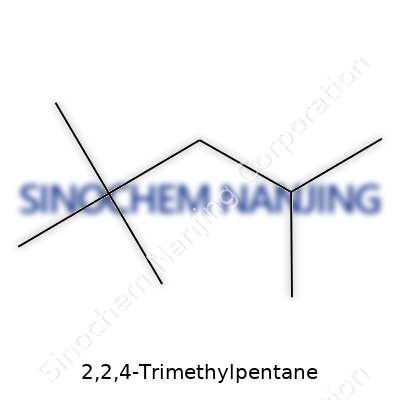
| Names | |
| Preferred IUPAC name | 2,2,4-Trimethylpentane |
| Other names |
Isooctane Iso-octane |
| Pronunciation | /ˌtraɪˌmɛθəlˈpɛnteɪn/ |
| Identifiers | |
| CAS Number | 540-84-1 |
| Beilstein Reference | 1718734 |
| ChEBI | CHEBI:9837 |
| ChEMBL | CHEMBL14278 |
| ChemSpider | 54633 |
| DrugBank | DB01845 |
| ECHA InfoCard | ECHA InfoCard: 01-2119475602-38-xxxx |
| EC Number | 204-661-8 |
| Gmelin Reference | 786 |
| KEGG | C00741 |
| MeSH | D013114 |
| PubChem CID | 6560 |
| RTECS number | RH6800000 |
| UNII | KZX9Z99J1Z |
| UN number | UN1262 |
| CompTox Dashboard (EPA) | DTXSID6020149 |
| Properties | |
| Chemical formula | C8H18 |
| Molar mass | 114.23 g/mol |
| Appearance | Colorless liquid |
| Odor | Gasoline-like |
| Density | 0.692 g/mL at 25 °C |
| Solubility in water | insoluble |
| log P | 2.80 |
| Vapor pressure | 42 mmHg (20°C) |
| Acidity (pKa) | pKa ≈ 50 |
| Basicity (pKb) | Product not basic |
| Magnetic susceptibility (χ) | -8.0 × 10⁻⁶ |
| Refractive index (nD) | 1.391 |
| Viscosity | 0.69 mPa·s (25 °C) |
| Dipole moment | 0.13 D |
| Thermochemistry | |
| Std molar entropy (S⦵298) | 269.9 J·mol⁻¹·K⁻¹ |
| Std enthalpy of formation (ΔfH⦵298) | -249.7 kJ/mol |
| Std enthalpy of combustion (ΔcH⦵298) | −5460 kJ/mol |
| Pharmacology | |
| ATC code | V07AB05 |
| Hazards | |
| GHS labelling | GHS02, GHS07 |
| Pictograms | GHS02,GHS07 |
| Signal word | Warning |
| Precautionary statements | P210, P233, P240, P241, P242, P243, P261, P271, P273, P301+P310, P303+P361+P353, P304+P340, P307+P311, P321, P331, P370+P378, P391, P403+P235, P405, P501 |
| NFPA 704 (fire diamond) | 1-4-0 |
| Flash point | −12 °C (10 °F; 261 K) |
| Autoignition temperature | 415 °C |
| Explosive limits | 1–6 %(V) |
| Lethal dose or concentration | LD50 (oral, rat): 5,000 mg/kg |
| LD50 (median dose) | LD50 (median dose): 5 g/kg (oral, rat) |
| NIOSH | RN3675002 |
| PEL (Permissible) | PEL (Permissible Exposure Limit) of 2,2,4-Trimethylpentane: 300 ppm (1200 mg/m³) |
| REL (Recommended) | 350 mg/m3 |
| IDLH (Immediate danger) | 800 ppm |
| Related compounds | |
| Related compounds |
Isooctane Octane Heptane 3-Methylhexane 2,3,4-Trimethylpentane 2,3-Dimethylpentane |



