1-Penten-3-One: Insights for Industry and Innovation
Historical Development
People have worked with 1-Penten-3-One for decades, seeing it pop up in labs and chemical catalogs with its sharp, spicy scent and a structure that catches the eye of organic chemists. The compound’s presence in nature, especially in some food aromas, stirred curiosity early on. Early research in the mid-20th century uncovered both its natural role in flavor and its promise as a building block for advanced organic chemistry. Chemists began to map out varied synthesis routes, recognizing the balance between the double bond and ketone as particularly reactive for further modifications. Through the years, the importance caught the attention of industries ranging from flavors to pharmaceuticals, leading to broader-scale manufacturing and stricter regulation. Historical texts and patent records from the 1960s onward outline the first industrial methods, moving from small batch syntheses to scalable, reproducible routes that allowed for purity and yield improvements. The knowledge gained through these discoveries not only offered new application areas but demanded higher scrutiny on safety and handling.
Product Overview
1-Penten-3-One belongs to the family of unsaturated ketones, recognized for its five-carbon backbone with a double bond and a ketone group. In daily use, the chemical appeals to both chemists and manufacturers due to its ease of transformation and unique aroma. Packs and bottles bear labels that make it easy for labs to identify and distinguish from similarly named substances. The chemical gets ordered for use in product development, especially in settings that need molecules able to contribute both reactivity and sensory character. Commercial shipments come in tightly sealed containers, always accompanied by a sheet detailing safe use and properties. Users should notice the strong, almost green scent when handling, highlighting its relevance in flavor research.
Physical & Chemical Properties
This fluid presents as a colorless to pale yellow liquid at room temperature, with a distinctly pungent smell—a sensory clue that is hard to miss in the lab. Boiling at around 102-104°C and melting well below the freezing point of water, it moves easily in routine synthetic setups. Its density sits close to 0.85 g/cm³. Chemists appreciate its moderate solubility in water, but it dissolves more readily in organic solvents such as ethanol or ether. The presence of both a double bond and a carbonyl group means this chemical can take part in a range of reactions, including additions and condensations. Its refractive index and spectral signals are familiar territory for analysts confirming its structure during quality checks.
Technical Specifications & Labeling
Shipments usually highlight a minimum purity, often 98% or greater, supporting consistent application in both analytical and preparative settings. Safety labels warn users of its flammability and strong odor, both of which demand proper storage away from heat and open flames. Manufacturers must comply with global chemical safety programs, typically communicating GHS hazard statements right on the packaging. Bottle volumes can range from small vials for research to multi-liter containers for pilot-scale work. Producers print batch numbers, expiry dates, CAS number (which is 616-23-9), and hazard pictograms clearly, supporting traceability and compliance. With documentation provided, users gain confidence in identity and purity before opening the first bottle.
Preparation Method
Industrial routes favor the aldol condensation of propionaldehyde with acetaldehyde, followed by dehydration, to create the double bond and carbonyl alignment characteristic of 1-Penten-3-One. Other syntheses use oxidation of pentenols, but the condensation method stands out for its combination of good yields and scalability. Organic chemists might reach for precious metal catalysts or employ acid or base catalysis to steer the reaction with the right temperature and pressure control. After reaction completion, distillation removes byproducts, polishing the final material to the high-purity grade necessary for downstream uses. Labs regularly confirm purity through NMR or GC-MS before moving to application.
Chemical Reactions & Modifications
Given the reactivity offered by its structure, 1-Penten-3-One acts as a versatile platform for further transformations. It can participate in Michael additions, harnessing its electron-deficient β-position. Hydrogenation smooths out the double bond, yielding pentanones useful in less reactive scenarios. Condensations yield complex flavors or drug precursors, while reactions at the carbonyl provide access to alcohols or imines. Synthetic chemists sometimes exploit its role as a diene component in Diels-Alder chemistry, expanding access to ring systems found in natural products or advanced intermediates. Its chemical flexibility makes it a favorite in development teams looking for tangible results from well-mapped reactions.
Synonyms & Product Names
Over the years, chemical suppliers and journals have used a range of alternate names for 1-Penten-3-One. Common synonyms include Pent-1-en-3-one, α-Ethylvinyl methyl ketone, and 1-Pentene-3-one. Some flavor houses or specialty chemical vendors may list it as Methyl vinyl ketone homolog C5. Proper referencing ensures users are all talking about the same compound, which helps reduce mistakes in procurement or research. International inventories often align under the CAS number 616-23-9 to minimize confusion.
Safety & Operational Standards
Anyone working with 1-Penten-3-One needs to respect its hazards. Its strong odor signals volatility and a low flash point, so good lab ventilation and spark avoidance are basic rules. Skin contact might lead to irritation, calling for gloves, goggles, and quick action on spills. Inhalation can irritate airways, reminding teams that personal protective equipment and fume extraction are not optional. Written operating procedures show up in workplaces handling larger batches, and chemical hygiene plans always put a premium on training and signage. Storage demands tight control—well-sealed containers, away from incompatible chemicals like oxidizers and acids, help prevent unwanted reactions. Spill kits and eyewash stations remain close by, reducing the risks when something goes wrong. Waste containers carry clear labels, with disposal routes aligning to local environmental rules.
Application Area
The compound’s ability to serve as an intermediate unlocks its use in pharmaceutical research, where it gets transformed into molecules with bioactive functions. In fine chemicals, chemists value its direct participation in reactions that furnish building blocks for new drugs, flavors, or polymers. Its aroma, with spicy and green notes, contributes to advanced flavor formulations and fragrance blends, particularly for processed foods and perfumery. Some researchers use 1-Penten-3-One as a probe in organic reaction mechanism studies, tracing labels or intermediates to better understand classic transformations. Specialty polymer chemistry also finds a place for this molecule, exploring ways to graft it onto larger structures for improved material properties. As the chemical industry pushes toward sustainability, 1-Penten-3-One often finds its way onto the list of versatile synthons—compounds that help cut out wasteful steps or make the most out of renewable starting materials.
Research & Development
Academic labs and corporate R&D teams keep finding new angles for 1-Penten-3-One. Novel derivatization patterns attract attention for building chiral molecules, pushing green chemistry agendas, or scaling up routes to high-value targets. Automated reaction platforms allow deeper exploration of its reactivity. Machine learning models mine reaction data, suggesting underused transformations. Multinational projects often use this ketone as a stepping stone in total synthesis campaigns, especially for pharmaceutical or fragrance targets. Publications and conference presentations underline gaps in understanding and point to new modifications or safer handling techniques. Lean experimental design, using less solvent or fewer steps, remains a strong incentive for further optimizing ways to make and use 1-Penten-3-One. At every step, collaboration with toxicologists and regulatory specialists supports broader acceptance and safer use across global markets, ensuring research fuels not just discovery but accessibility and responsible practice.
Toxicity Research
Safety teams pay close attention to exposure studies, measuring both acute and chronic effects. Research suggests moderate skin and respiratory irritation can occur, especially with repeated contact. The volatility makes inhalation a bigger concern than ingestion, with rodent models supporting risk assessments for the workplace. Data show that proper engineering controls, plus adequate personal protective equipment, cut down most exposure risks. There’s always more work to do, though, as scientists examine possible long-term effects, bioaccumulation, or breakdown in the environment. Ongoing reviews keep regulatory bodies up to date, and new toxicity screens ensure that industrial and research use align with the latest health guidance without blocking necessary innovation.
Future Prospects
Growth in green synthesis, self-optimizing reactors, and need for safer, more sustainable chemical platforms gives 1-Penten-3-One fresh importance. Teams are chasing new preparation methods that cut the footprint of waste and energy use. Market demand for complex flavors and safer solvents puts this compound in sight for companies looking to revamp product lines without sacrificing quality. Digital tools, like reaction databases and automated analysis, speed up discovery, making pathways involving this ketone more attractive. Regulatory trends suggest future standards around labeling, transport, and occupational health will get tighter, pushing for greater transparency and more environmentally friendly practices. Researchers continue to share open-access data, so everyone from students to multinationals keeps pace with evolving best practices. The combination of proven reactivity and regulatory attention shows that, far from fading into the background, 1-Penten-3-One has every reason to stay front and center for anyone working where chemistry, health, and innovation intersect.
What is 1-Penten-3-One used for?
Digging Into 1-Penten-3-One
People outside of chemistry circles don’t bring up 1-Penten-3-One in daily conversation, but for folks in science, fragrance, and flavor work, this molecule grabs real attention. It’s an unsaturated ketone with a five-carbon chain, and packs a punch with its green, sharp scent that reminds some of fresh-cut grass, green vegetables, or even cucumbers. The power of 1-Penten-3-One comes from this aroma, and companies have learned to harness it for both industrial and creative uses.
Flavor and Fragrance Uses
Imagine biting into a vegetable and noticing that fresh green snap. Some of that sensation, both taste and smell, comes from natural compounds like 1-Penten-3-One. Because this molecule appears in nature—in fruits, vegetables, and even some fermented foods—flavorists and perfumers value it. You’ll find it in trace amounts in tomatoes, mangoes, and whiskey. Food scientists use it to build natural-tasting, plant-based food flavors, while perfumers add it to blends to capture the scent of leaves, grass, or wet soil.
Common applications include freshening up salad dressings, adding a realistic twist to “garden-inspired” perfumes, or even rounding out the scent profile of laundry detergents aimed at evoking an outdoorsy vibe. The intensity of the green odor means only a drop is needed, often in combination with other notes to balance things out.
Why Synthetics Matter
Modern product formulation often comes down to reliability. Natural extracts can vary from year to year, while synthetics like 1-Penten-3-One deliver a consistent effect. Manufacturers produce it through lab processes, typically by chemical synthesis from smaller molecules, which delivers a high purity product and avoids the unpredictability of harvests or weather patterns.
Synthetics don’t just make sense from a practical point of view—they also help keep pressure off crops. If everyone relied on real plant extracts for flavoring or fragrance, prices would spike, and it could encourage overharvesting. With synthetic 1-Penten-3-One, formulators can keep costs steady and help maintain sustainable sourcing in food and fragrance industries.
Health and Safety Factors
Every chemical in a food or fragrance formula needs careful vetting. For 1-Penten-3-One, safety evaluations look at how much ends up in a finished product. Most uses stick to very low concentrations, since the aroma is strong and too much can smell harsh. Agencies like the Flavor and Extract Manufacturers Association (FEMA) list it as safe for food use when handled properly, which matches my own experience working with regulations in food science and perfumery.
Direct exposure on the skin or in the air at high levels brings some risks—eye and skin irritation, mostly. So factory workers follow clear safety protocols. Finished goods—like a scented candle or a flavored sauce—rarely pose problems for shoppers.
Paths to Better Use
One big issue remains: communicating what’s inside finished products. Folks want cleaner labels and clearer ingredient lists. If companies could share more about how a molecule like 1-Penten-3-One is safe and traceable, trust would rise among consumers buying flavors or fragrances. Scientists and flavorists keep looking for new, more eco-friendly synthesis routes as well. Greener chemistry at the source could make this handy molecule even more sustainable down the line.
1-Penten-3-One might sound like a technical detail, but it shows how science gives us everyday joys—from the snap of a cucumber to the scent of a spring breeze, all from a well-studied, carefully managed molecule.
What are the physical and chemical properties of 1-Penten-3-One?
Getting to Know 1-Penten-3-One
1-Penten-3-one brings something special to the table among organic chemicals. Its simple structure, made up of five carbons and the essential carbonyl group, gives it some key features. In my years fiddling with lab work, I’ve seen firsthand how this molecule slips easily into both the physical and chemical sides of things, turning up in food, fragrance, and even polymer applications.
Physical Properties That Matter
This compound comes as a colorless to slightly yellow liquid. The faint but sharp odor is something you won’t forget—it’s why some folks describe it as pungent and a bit fruity, almost like you walked past a pile of underripe pears that’s starting to ferment. Thanks to its short chain, 1-Penten-3-one boils at around 102°C, which might surprise you if you’re more used to long, sluggish hydrocarbons. That means it evaporates fast, so you catch that aroma as soon as you open the container.
I noticed in the lab that it does not sit heavy in water. Its solubility stays moderate—only about 33 grams per liter at room temperature. It mixes well with organic solvents like ethanol and ether. In practical terms, this means you can use it in a bunch of extractive or blending processes, which comes in handy during flavor and fragrance creation. Its density sits just below water at about 0.82 grams per cubic centimeter, so if you spill it in a beaker, watch how it floats up to the surface.
Where Chemistry Steps In
Chemically, 1-Penten-3-one wears a double bond and a carbonyl alongside each other. That pairing, often called an alpha, beta-unsaturated ketone, brings both reactivity and flexibility. The molecule can act as a good target for nucleophiles, meaning all sorts of reactions—Michael additions, reductions, even simple hydration—are on the menu. I’ve used it for teaching how molecular structure shapes chemical response, and it always delivers solid visual results.
Natural and synthetic chemists both like to harness this structure to build more complex flavors or to install carbonyl functional groups where needed. Because the unsaturation and the ketone group are close, ultraviolet light can snap this molecule apart. That shows up as a problem in storage, so you want to keep it out of strong sunlight. In the lab, its readiness to polymerize if handled with acids or bases adds both danger and opportunity—one wrong move and you have a mess, but managed kindly, you can link molecules for niche polymer resins.
Health, Safety, and Real-World Use
Breathing in the vapor stings the nose, and skin contact can trigger irritation. Safety data points toward moderation and good airflow as basics for anyone handling it. The food industry sometimes uses 1-Penten-3-one in tiny doses to craft or mimic certain fruity smells; it pops up as a trace in ripe fruits, but nature never puts too much in one place. Still, chemists should respect that it’s more reactive than similar molecules like acetone. If spilled, it can run off fast due to its low boiling point and high volatility, so good containment systems do more than just meet regulations—they prevent waste and danger in everyday settings.
Looking Toward Solutions
Handling volatile, reactive compounds calls for some grit: solid, well-ventilated workspaces, careful storage, routine inventory checks. I’ve seen plenty of old bottles sitting in storerooms, slowly oxidizing over time. Better tracking and strict rotation help dodge both risk and waste. For those working in flavors and fragrances, tighter collaboration with safety staff pays off—less downtime, fewer accidents, and more creative freedom. Anyone worried about environmental impact should focus on small batch synthesis and closed-loop systems.
Is 1-Penten-3-One hazardous or toxic?
What is 1-Penten-3-One?
1-Penten-3-one shows up in both food science and chemical labs. It gives off a strong smell—sometimes described as floral or green—and pops up where flavors and fragrances get mixed. In everyday life, most people rarely hear of it. For folks on the production side, or anyone working around flavor agents, 1-Penten-3-one isn’t all that exotic. It’s a tool meant to spark scent and taste, handled alongside many other volatile compounds.
Hazard Potential in the Real World
Reading a safety data sheet for 1-Penten-3-one brings up a string of warnings. Skin and eye contact can lead to irritation. If you breathe in the vapors, coughing and throat discomfort likely follow. Working with my own hands in chemistry labs, I learned that gloves and goggles weren’t just for show—one whiff of a strong chemical, and a mild exposure can mess with your head or lungs. Reports from workers mention dizziness or headaches after being in areas with poor airflow. 1-Penten-3-one doesn’t treat careless behavior kindly.
No one needs panic over trace amounts popping up in food or the air. Concentrations found in consumer products or cooked foods tend to stay far below lab levels. The trouble starts with accidents or loose safety habits. According to the European Chemicals Agency, this compound may cause serious eye irritation, and repeated skin contact increases the risk of dermatitis. Chemical organizations rate it as harmful if swallowed, making ingestion something to avoid at all costs.
Toxicity Data—What Do We Know?
Studies on animal models give some data points. Rats exposed to significant doses show symptoms ranging from lethargy to respiratory trouble, but these doses run much higher than humans would ever face in a typical work setting. Human cases, especially from accidental inhalation during industrial processes, confirmed irritation as a common consequence. There’s little evidence that 1-Penten-3-one builds up in body tissues, so chronic toxicity ranks as unlikely unless exposure is constant and uncontrolled. In food, regulations keep levels tiny and far from any suggested harm.
Staying Safe: Practical Tips
Lab workers and manufacturers stand on the front line. Good ventilation, personal protective equipment, and careful storage can keep 1-Penten-3-one from turning into a workplace threat. From what I’ve seen, most chemical mishaps come from overconfidence. It’s easy to forget basics like label reading and double-checking materials. Places that drill safety measures—like regular air monitoring and clear emergency steps—see fewer health complaints. Home cooks and everyday consumers almost never interact with this stuff raw, so their risk drops close to zero.
Room for Better Oversight
In my view, every hazardous label should come with plain-language explanations. Workers handle 1-Penten-3-one more safely when they understand risk in real-world terms, not just regulatory jargon. More clear research and health surveillance data would help. Companies should focus on regular health checks and safety audits where this chemical gets used most. In the end, the key boils down to respect for every substance—a little more knowledge goes a long way in preventing trouble.
How should 1-Penten-3-One be stored and handled?
Understanding 1-Penten-3-One’s Personality
1-Penten-3-One, known for its sharp, acetone-like odor, easily evaporates if left out, like forgotten nail polish remover. This chemical wants a cool, tightly sealed spot. If left in the open, the smell seeps out and the risk of harmful vapor grows. Keeping it away from sunlight helps, since UV rays can set off unwanted breakdown and toxic byproducts. My time working in lab environments hammered in the lesson: even well-ventilated rooms get aromatic surprises if a lid is left ajar.
Fire and Fume Hazards: Not Overblown
With a flash point just under room temperature, 1-Penten-3-One doesn’t mess around—leave it near heat sources and the fumes catch quickly. Stories float around of accidents that started from a single spark. If I ever see a bottle stored by a coffee maker or a window ledge, that gets a quick relocation to a chemical storage cabinet. Flammable liquids go in the metal, self-closing cabinets labeled in big, bold letters. Storing 1-Penten-3-One alongside acids or oxidizers raises the odds of a violent reaction, so separation matters. Segregation of chemicals isn’t paperwork busywork; cross-contamination can produce poisonous gases in seconds.
Personal Protection: Real Precautions
Pouring or measuring 1-Penten-3-One without gloves or splash glasses courts disaster. Small exposures already bring eye, nose, and throat irritation. Spilling it means providing fresh air and scrubbing up quickly, not waiting for a supervisor’s advice. I have watched lab workers dismiss gloves “just this once,” then regret it after a splash. Strong nitrile gloves, chemical goggles, and a sturdy lab coat make up non-negotiables. A fume hood rules as the best workspace for both open transfers and accidental spills—no lingering vapors after work ends.
Emergency Planning: Expect Mishaps
I remember a drill in one of my early jobs that sparked some real nervous laughter—then the fire alarm went off the next week, and everyone moved fast. If a bottle tips, ventilation comes first. Sopping up liquid with absorbent pads rated for flammables avoids spreading fumes. Disposal gets handled using waste canisters meant for organic solvents, never tossed down the drain. Regular bin emptying sets a strong safety culture.
Training: Not Just on Paper
Working with nasty chemicals often gets treated like a box to tick—once training’s over, nobody reviews fire procedures or PPE rules. The best labs set up periodic refreshers. Each worker learns not just the theory, but the habits: where extinguishers sit, which spill kit matches which chemical, how to seal up scrap before it goes to the disposal room. Clarity saves more headaches than any set of printed instructions taped above the bench.
Clear Labeling and Inventory Control
Permanent markers fade, and bottles look identical from a distance. Every time a new delivery arrives, labeling with date, contents, and hazard symbols stops confusion later on. Tracking stock avoids surprises like running out of spill pads or uncovering an old, unstable bottle in the back corner. Audits may look dull, but keeping storage rooms tidy and well-logged means fewer close calls and no loose ends.
Final Thoughts: Respect the Risks
It takes more than good intentions to keep a risky material like 1-Penten-3-One under control. Safe habits, proper equipment, and frequent education build a healthy respect—one that keeps everyone breathing easy at the end of the shift.
Where can I purchase 1-Penten-3-One?
What 1-Penten-3-One Means for Research and Industry
In chemical research and manufacturing, 1-Penten-3-One plays a small but vital role. It pops up in the lab for its distinct aroma and as a key building block for synthesizing flavors, fragrances, and certain polymers. This isn’t something you’ll just pull from a store shelf. Buyers need to know what they’re getting into. Whether you run a lab or have a small business in custom scents, the search for a reputable seller takes time, persistence, and a clear understanding of rules surrounding specialty chemicals.
Legitimate Suppliers and Reliable Sourcing
Buyers gravitate toward established specialty chemical companies—Sigma-Aldrich, TCI Chemicals, Fisher Scientific, and Alfa Aesar often show up in search results. They usually request business credentials, research verification, or at least proof that you’re not a casual shopper. Most major suppliers won’t ship chemicals like 1-Penten-3-One to private addresses. If you’re unaffiliated with a company or university, your options shrink fast.
Online chemical marketplaces like ChemSpider, ChemExper, or Alibaba introduce risks and open the door to overseas sellers. Products listed on these sites come with varying documentation, and sometimes dubious purity claims. Over the years in chemistry circles, stories circulate about shipment delays, paperwork headaches, or, in worse cases, product substitutions that derail research. For most buyers, a reputable national distributor provides the right mix of accountability and traceability.
Rules, Safety, and Documentation
Strict rules guide the sale of laboratory chemicals. For instance, in the United States, the Environmental Protection Agency (EPA) and the Occupational Safety and Health Administration (OSHA) regulate chemical handling, labeling, and disposal. Europe’s REACH system sets expectations for buyers and sellers. Importers might need import permissions or customs forms. Selling chemicals isn’t like shipping coffee—if you can’t provide a valid reason or open lines of communication, you won’t get far with the established dealers.
Suppliers demand end-user declarations, safety data sheets, and details on intended use. If you work for a registered business, university, or certified research facility, keep documentation ready—purchase orders, tax IDs, and, sometimes, a brief project synopsis. These steps aren’t empty red tape. Serious accidents and misuse have forced companies and governments to tighten access.
Alternatives and Advice
For hobbyists or DIY communities, frustration comes easy. Some try sourcing precursors or attempt synthesis, but both raise safety and legal issues. If you don’t have proper vent hoods, chemical-resistant gloves, and training, reactions can get dangerous—fast. No savings justify putting health at risk or facing legal trouble. If you’re a student, ask faculty or supervisors for advice. One option is collaboration: partnering with schools or research groups to pool orders and tap into their supply chains.
Decades in chemistry have taught me that patience and clear communication make all the difference. Skip grey-market offers promising cheap, fast shipping—these sellers know little about quality or compliance, and mistakes cost real money and safety. In the end, trust grows with documentation and an open digital trail. Put safety first, spend time researching companies, and use community resources for support. That’s how you’ll find what you need, and protect your work at each step.
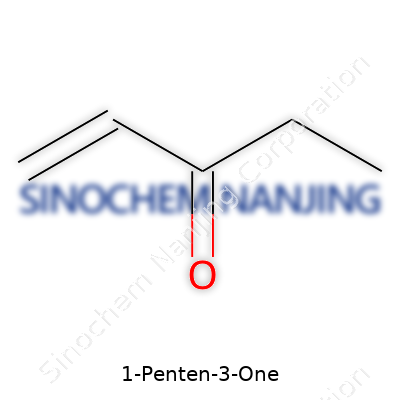
| Names | |
| Preferred IUPAC name | pent-1-en-3-one |
| Pronunciation | /ˈwʌnˈpɛnˌtiːnˈoʊn/ |
| Identifiers | |
| CAS Number | 616-29-5 |
| Beilstein Reference | 1209247 |
| ChEBI | CHEBI:51735 |
| ChEMBL | CHEMBL316539 |
| ChemSpider | 154058 |
| DrugBank | DB02170 |
| ECHA InfoCard | 100.033.755 |
| EC Number | 211-530-4 |
| Gmelin Reference | **7,206** |
| KEGG | C01830 |
| MeSH | D010414 |
| PubChem CID | 7997 |
| RTECS number | SA8575000 |
| UNII | 7J6RU2A8SM |
| UN number | UN1245 |
| Properties | |
| Chemical formula | C5H8O |
| Molar mass | 84.12 g/mol |
| Appearance | Colorless to pale yellow liquid |
| Odor | fruity; berry; green |
| Density | 0.827 g/mL at 25 °C (lit.) |
| Solubility in water | very slightly soluble |
| log P | -0.14 |
| Vapor pressure | 2.25 kPa (20 °C) |
| Acidity (pKa) | 7.5 |
| Basicity (pKb) | 6.11 |
| Magnetic susceptibility (χ) | -7.18 × 10^-6 cm³/mol |
| Refractive index (nD) | 1.4266 |
| Viscosity | 0.773 cP (20°C) |
| Dipole moment | 2.93 D |
| Thermochemistry | |
| Std molar entropy (S⦵298) | 309.3 J·mol⁻¹·K⁻¹ |
| Std enthalpy of formation (ΔfH⦵298) | -86.4 kJ/mol |
| Std enthalpy of combustion (ΔcH⦵298) | -2294 kJ/mol |
| Hazards | |
| GHS labelling | GHS02, GHS07 |
| Pictograms | GHS02,GHS07 |
| Signal word | Warning |
| Hazard statements | H225, H302, H315, H319, H335 |
| Precautionary statements | P210, P233, P240, P241, P242, P243, P261, P264, P271, P280, P301+P312, P303+P361+P353, P304+P340, P305+P351+P338, P312, P337+P313, P370+P378, P403+P235, P501 |
| NFPA 704 (fire diamond) | 2-3-2 |
| Flash point | 13 °C |
| Autoignition temperature | 180 °C |
| Explosive limits | 1.6% - 8.6% |
| Lethal dose or concentration | LD50 oral rat 820 mg/kg |
| LD50 (median dose) | LD50 (median dose): Oral rat LD50 820 mg/kg |
| NIOSH | TTJ5E4J42I |
| REL (Recommended) | REL: 5 ppm (18 mg/m³) |
| IDLH (Immediate danger) | Unknown |



