1-Octene: More Than Just a Building Block for Chemistry
Historical Development
1-Octene didn't just drop into chemists’ laps overnight. Research teams from oil refineries started investigating the so-called alpha-olefins in the late 1940s and early 1950s, when the chemical industry sought new ways to turn petrochemicals into versatile industrial feedstocks. Petroleum cracking processes, especially Ziegler and Shell Higher Olefins Process (SHOP), led to discovery and commercial production of a wide range of linear alpha-olefins, including 1-octene. The boom in polymer chemistry through the 1960s and 1970s had chemists around the world fine-tuning catalysts that could string these eight-carbon molecules into everything from tough plastic bags to high-performance elastomers.
Product Overview
This compound brings a straight-line carbon chain to the table, one double bond tucked neatly at the start. Industrial players carve it out specifically for its purity and controllable properties. Companies manage it as a clear, colorless liquid that doesn’t have much of a smell. Most producers package and ship it for use in plastics manufacture, lube-oil applications, and as part of detergents. Refineries and chemical plants have labs measuring purity upward of 99%, with specifications emphasizing precise control over isomers and contaminant levels, especially sulfur and water.
Physical & Chemical Properties
Easy to spot on a spec sheet, 1-octene shows its signature characteristics: boiling point hovers near 122°C, freezing point sinks below -100°C. Its molecular formula, C8H16, lays out a straightforward hydrocarbon with a single terminal double bond. The compound is hydrophobic and floats on water, carrying a density of around 0.71 g/cm³ at room temperature. 1-Octene dissolves in most organic solvents—think ethers, alcohols, and other hydrocarbons. In air, it burns with a smoky yellow flame, letting off carbon dioxide and water, but under industrial conditions, storage demands solid tank integrity due to flammability and volatility.
Technical Specifications & Labeling
Any buyer gets a product data sheet spelling out details—purity, water content, acidity, color (measured by APHA scale), and residue after evaporation. Real-world handling demands tankers and containers rated for Class 3 flammable liquids, following regulations from OSHA, EPA, and local fire codes. Labels flag hazards such as flammability and potential skin or eye irritation. Safety Data Sheets (SDS) give first responders guidance about leaks, fire-fighting, and protective gear necessary for workers pouring drums or sampling batches in plant labs.
Preparation Method
Refiners favor two main approaches to making 1-octene. The Ziegler process couples triethylaluminum with ethylene, growing carbon chains stepwise and then fracturing them to yield alpha-olefins. The SHOP process uses higher hydrocarbons and rearranges them into a mixture of linear alpha-olefins, from which 1-octene can be isolated by fractional distillation. Both methods favor large-scale runs and produce a spectrum of related products, but sophisticated distillation columns and process controls give chemical engineers the ability to isolate pure 1-octene. Tracking improvements in catalyst chemistry and process efficiency forms a huge part of ongoing research, pushing these yields higher every decade.
Chemical Reactions & Modifications
The defining feature on 1-octene is its terminal carbon-carbon double bond. Chemists count on that reactivity, using it as an entry point into a wide range of chemical reactions: polymerization (with Ziegler–Natta or metallocene catalysts), hydroformylation (to form aldehydes), epoxidation (to produce epoxides), and oligomerization (to give longer olefin chains for synthetic base oils). The plastic industry leans hard on this molecule—high-density and linear low-density polyethylene copolymers gain flexibility, strength, and impact resistance from it. Major detergent manufacturers use sulfonation and alcohol-forming reactions, then turn these alky groups into the backbone of sulfate and ethoxylate surfactants.
Synonyms & Product Names
Chemists and procurement teams recognize this molecule by a lineup of names: alpha-octene, 1-n-octene, and oct-1-ene. Some product suppliers roll out proprietary grades under commercial labels like “Ocenex,” “Octelene,” or “HiOcten,” often tied to purity or intended end use. Trade associations and regulatory groups rely on standardized naming (IUPAC, CAS Registry) to keep supply consistent and safe, especially for global shipment or regulatory review.
Safety & Operational Standards
You don’t handle a flammable hydrocarbon like 1-octene without strict safety routines. Facilities outline detailed control measures: spark-proof tank farms, vapor recovery systems, and flame arrestors on vents. Technicians wear goggles, gloves, and respirators to avoid eye, skin, or respiratory exposure. All plant alarms and sensors maintain low thresholds, since vapor can ignite if it finds a stray spark or static from poor grounding. Fire teams keep foam and dry chemical extinguishers nearby, and environmental teams prepare spill kits to contain runoff that could threaten groundwater. Workers see regular training drills—no corner gets cut with chemicals like these.
Application Area
Demand for 1-octene keeps growing alongside plastics and detergent markets. Polyethylene copolymerization takes the bulk of annual production, feeding high-performance packaging and film grades that turn up in grocery stores across the world. The lube and synthetic oils sector turns to this molecule during base oil formulation, driving energy efficiency in machines from tractor engines to wind turbines. Chemical makers value its intermediate role in manufacturing fatty alcohols, plasticizers, and surfactants, weaving it into everything from washing powders to specialty adhesives. In research labs, students use it for organic syntheses, helping to train the next generation of chemical engineers and materials scientists.
Research & Development
Innovation teams keep chasing cleaner, greener, and more efficient production routes. Catalysis researchers publish papers every year on improving selectivity, reducing contaminants, and slashing energy demands of key processes. One trend involves renewable feedstocks—some pilot plants now explore bio-derived processes, taking raw materials like plant oils and converting them through dehydration and olefin metathesis. Others probe new catalytic materials that might lower the operating temperatures or cut down on hazardous by-products. Digital process control, advanced real-time sensors, and machine learning models let manufacturers anticipate process fluctuations and cut waste, holding down both costs and environmental footprints.
Toxicity Research
Compared to other industrial hydrocarbons, 1-octene shows modest acute toxicity, but that doesn’t mean labs take chances. Research shows short-term overexposure irritates eyes and lungs, possibly causing headaches and dizziness at high vapor levels. Animal studies highlight liver and kidney stress with prolonged exposure, so regulators enforce strict occupational exposure limits. Wastewater teams analyze effluents since the compound quickly degrades in surface water, but bioaccumulation risks remain low. Still, regulators look over the data before green-lighting any new application, checking chronic effects with updated toxicological models and routine environmental monitoring.
Future Prospects
The outlook for 1-octene links straight to the world’s demand for lightweight, flexible materials with tailored properties. As single-use plastics face stricter scrutiny, the push lands on recyclable, more robust polyethylene blends, nudging innovation in 1-octene copolymerized products. Green chemistry paves the way toward renewable sources and circular processes, putting pressure on the industry to swap out fossil inputs for plant-based options, guided by new catalytic tricks. Research into advanced applications—like specialty elastomers for automotive or medical use, friction-reducing additives in electronics, and new surfactant chemistries—keeps the molecule in the sights of R&D teams worldwide. Producers who invest in cleaner manufacturing, tight spec control, and real transparency with regulators and communities will carry the business forward, keeping both planet and profit in mind.
What is 1-Octene used for?
From Plastic Bags to Car Bumpers
Step into any grocery store, and plastic wraps or bags likely started their life with a molecule like 1-octene. Most people haven’t heard the name, but this colorless liquid makes modern living easier in ways we rarely stop to consider. Back in university, I took a tour through a polymer plant and watched work crews in safety goggles weighing out chemicals in shiny vats; the operator pointed to a barrel labeled “1-octene” and said, “This one keeps your detergent bottle flexible and strong.” That got me thinking: something most of us never hear about actually shapes much of daily life.
Building Better Plastics
Polymers shape our world—a simple statement, but one that’s true every time you carry food home in a plastic bag or sit inside a car lined with tough, seamless interiors. 1-Octene earns its place in this story. It doesn’t act alone, but links together with other ingredients (like ethylene) to form what chemists call linear low-density polyethylene (LLDPE). This fancy name boils down to plastics that bend, stretch, and keep from tearing.
Without 1-octene, those thin but strong garbage bags we stuff with kitchen scraps would split more easily. Touch the bottle holding shampoo, and there’s a good chance 1-octene added resilience, holding up under squeezing, dropping, and recycling. Manufacturing plants blend it in measured amounts so the finished product doesn’t crack once it leaves the factory shelf.
Car makers also turn to these kinds of plastics for trim, bumpers, dashboards, and wiring insulation. Beyond visible parts, 1-octene helps insulation materials stay tough so they don’t break down in heat or cold. That keeps passengers safe and headaches away from mechanics.
Driving Demand in Industry
Industry chases performance—meaning better products for less effort. 1-Octene delivers just that. In wire and cable manufacturing, the addition stops plastics from snapping under stress. Factories mixing up adhesives and even some lubricants also rely on 1-octene. Its structure makes it a building block, so companies don’t have to hunt for alternatives that may not offer the same combination of strength and flexibility.
The story doesn’t end at packaging and cars. Medicinal devices, sports equipment, and shoes sometimes depend on special plastics created with 1-octene. Even those lightweight milk jugs owe their shape to 1-octene helping plastic keep its form.
What Should Change Next?
Few people realize that most 1-octene comes from oil and gas production. That leaves a big question: how can the world balance convenience with environmental responsibility? Chemical engineers continue to search for greener ways to produce key molecules. Some startups look at plant oils and new catalysts in hopes of building the same materials with a smaller carbon footprint. Years ago, I sat in a lecture about waste plastic piles growing worldwide. I left believing every link in the supply chain—especially molecules like 1-octene—matters for our shared future.
Talking about what goes into plastics can push us to ask tougher questions. What happens after we toss that milk jug? Can industry move toward recycling streams that reuse 1-octene-based plastics instead of dumping them or sending them to incinerators? People don’t need to remember a name to appreciate how it silently shapes our world, but they can care about smarter choices in materials that touch every home and street.
What is the chemical formula of 1-Octene?
Getting to Know 1-Octene
Anyone who spent time in a chemistry lab remembers the distinct scent of hydrocarbons and the sense of discovery that comes with unlocking their secrets. Among these, 1-octene stands out with eight carbon atoms chained together and a double bond sitting at the edge—hence the name "1-octene." The chemical formula for 1-octene is C8H16. Not every molecule looks so unassuming with its straight chain and single terminal double bond. This small detail shapes its industrial and scientific value.
Why C8H16 Matters Beyond the Laboratory
Someone might glance at C8H16 and see only a cluster of letters and numbers, but 1-octene supports industries from making plastics to creating specialty chemicals. Polyethylene production—think water pipes, bottles, and film wraps—often taps 1-octene as a co-monomer. Adding it adjusts properties like flexibility, strength, and stress resistance. Without those tweaks, consumer goods could become brittle or ineffective under pressure. The tailormade flexibility seen in modern packaging leans on chemistry just like this.
Safety and Environmental Considerations
Anyone working with chemicals, from the plant operator to the dedicated teacher filling test tubes in class, knows safety stands above all. 1-octene, like other alkenes, brings volatility and flammability. Handling it calls for good ventilation and robust storage. Incidents, even rare, can put workers and communities at risk. Regulators, such as the Occupational Safety and Health Administration (OSHA), set exposure limits and expect ongoing safety training. These rules are rooted in real incidents—lab fires, spills, rapid evaporation—where quick action prevents large-scale harm. Sharing protocols and holding drills keep both seasoned chemists and newer staff prepared.
Supply Chain and Quality Assurance
Manufacturing 1-octene often relies on cracking longer hydrocarbon chains or refining certain petroleum fractions. As fuel sourcing grows more competitive and climate-sensitive, ensuring a consistent supply sometimes becomes difficult. A sudden hike in crude prices or disruptions in global shipping ripple straight down the value chain. I’ve seen research teams anxiously watching market reports, knowing that a gentle nudge in supply can derail weeks of careful planning. Solutions range from deepening supplier relationships to investing in diversity across procurement. Companies who plan ahead, document their sourcing, and stay transparent with clients typically weather storms with fewer setbacks.
Recycling and the Push Toward Green Chemistry
Society expects chemical makers to do better—not only produce useful molecules but keep environmental impact to a minimum. 1-octene’s integral role in plastics raises essential questions: what about recycling, reducing waste, or using bio-based feedstocks? The emergence of chemical recycling, which breaks down plastic polymers into original monomers, creates a closed-loop opportunity. Bringing 1-octene back into circulation sidesteps landfills and gives manufacturers a greener starting point. Research continues to accelerate here; universities and startups make headway turning agricultural byproducts into simple olefins. While this green chemistry push is just gaining steam, real change starts with updating process lines and giving engineers the tools to innovate.
Looking Forward: Education and Outreach
A chemical formula like C8H16 hides a world of practical challenges. Teachers, engineers, and policy leaders can build awareness by putting real outcomes front and center. By linking formulas to the things people touch every day—food containers, auto parts, cables—the world sees how much foundational chemistry still matters. Fewer barriers mean more people get inspired to ask tough questions, improve processes, and drive sustainability across every field that counts on molecules like 1-octene.
Is 1-Octene hazardous?
A Closer Look at the Chemical and Its Risks
1-Octene enters the picture in loads of industrial setups: from making polyethylene plastics to synthetic lubricants. It’s a colorless liquid that smells a bit sweet and sharp, kind of like a cross between gasoline and paraffin. Not exactly something you’d want to splash on your skin or breathe in regularly. In the real world, most folks never interact with 1-Octene directly, but people working in chemical plants or refineries need to understand what it’s like working around it.
Looking at the Main Dangers
Ask anybody who’s spent time around chemical tanks, and they’ll talk about inhalation and fire risk first. 1-Octene can irritate your nose and lungs, sending you coughing or making you feel nauseous if you breathe in high amounts. With skin contact, it’s similar to many other hydrocarbons—it can dry your skin or cause redness. Spilling it in your eyes can sting or burn, so goggles and gloves aren’t just for show.
Fire risk stands out far more than anything else. 1-Octene has a low flash point, so once there’s a spark, this stuff takes off quickly. That’s not theoretical. In storage areas and near transfer lines, strict rules keep open flames away for good reason. Static sparks, dropped tools, or even hot machinery can turn a small leak into a major hazard.
Short and Long-Term Health Considerations
With short-term exposure, the most common complaints circle around dizziness, headaches, or throat irritation. If you’re in a poorly-ventilated area, things can get worse: central nervous system effects are rare but possible, mostly after inhaling heavy concentrations for a long stretch. I’ve talked with industrial safety trainers who stress constant airflow and proper masks, not because it’s theoretical, but because accidents have happened.
Long-term effects from regular, low-level contact haven’t shown up much in well-documented studies, but like many synthetic chemicals, there’s always a question mark when research is limited. What we do know is long-term skin exposure can lead to dryness or dermatitis, not unlike frequent contact with other hydrocarbon liquids.
Environmental Risks
Spills don’t just threaten humans. Wildlife can get exposed if 1-Octene escapes into groundwater or soil. The chemical breaks down in the air, but slower in water or on the ground, so spill cleanups aren’t just about keeping human workers safe. Downstream, local regulations often require spill containment and emergency plans wherever large volumes are handled.
Solutions: Education, Control, and Safer Practices
The best way to deal with 1-Octene’s risks never boils down to one single fix. Regular training makes a bigger difference than just handing out a safety data sheet. Workers need to know the look and smell of a leak, the limits of personal protective gear, and how to deal with a spill. Installing gas detection systems around big tanks and keeping up with regular maintenance brings risks down further.
Local fire departments, plant managers, and environmental agencies usually have emergency plans in place, and these get practiced in drills. I’ve watched these exercises prevent confusion during real incidents. Small things matter—having fire extinguishers on hand, using bonded containers for static, and running exhaust fans in storage rooms all add up.
Modern manufacturers look for safer substitutes or design closed-loop systems where workers never need to open a drum or breathe near a vent pipe. With strong safety culture, most hazards tied to 1-Octene can be reduced to manageable levels.
How is 1-Octene stored and handled?
Understanding the Risks of 1-Octene
1-Octene belongs in the family of alkenes, bringing both high flammability and a tendency to form explosive mixtures with air. Anyone who has worked in an industrial site knows these properties mean respect for strict safety measures. 1-Octene finds its way into plastic manufacturing, especially in polyethylenes. The stakes get high because this colorless liquid turns volatile when not dealt with properly, and history offers enough tales about warehouse mishaps caused by overlooked storage basics.
How Storage Choices Make or Break Safety
Storing 1-octene works best with tanks made of stainless steel or carbon steel. Some sites use glass-lined options, but metal tanks dominate the scene thanks to proven reliability in resisting the compound’s chemical nature. Above-ground tanks dominate in both large factories and mid-scale production plants. These tanks often fit nitrogen-blanketing systems, which push away air and lower the risk of ignition. From hands-on experience, triple-checking that oxygen never builds up inside a storage tank forms the backbone of a safe storage plan.
Temperature also calls for close control. 1-Octene won’t play nice with heat. The flash point comes in at about 13°C (roughly 55°F), so any storage area must stay cool and shielded from sunlight. Warehouses running climate control steer clear of open flames or sparks, and electrical equipment stays spark-proof. Keeping storage tanks on solid, non-combustible foundations calls for steady routine checks. I have seen periodic walk-throughs in well-managed sites catch tiny leaks or sweating valves before they spiral.
Labeling, Loading, and Moving 1-Octene
Poor labeling turns risky in a blink. Tanks and drums get clear marks with the material’s name, warnings about flammability, and emergency handling steps. Some sites install electronic sensors that track both leaks and temperature swings, which ease the pressure on staff who might miss a change during a long shift. Drums for transport demand grounding and bonding to prevent static discharge. Loading and unloading produce static, especially in dry air, so connecting tanks and hoses with grounding cables never gets skipped. Protective clothing—flame-resistant overalls, goggles, gloves—counts for more than just looks or regulation. Spills may not happen every day, but once exposed skin catches octene, health risks like inflammation or chemical burns grow real fast.
Tackling Spills and Emergency Response
Spill response training comes standard in sites handling volatile organics. Teams keep absorbents, foam extinguishers, and vapor-containment kits nearby. The crucial part is coordination. Evacuation maps hang in every corridor, alarms link directly to the local fire brigade, and air-handling systems shut down automatically if sensors catch fumes over safety limits. All it takes is a small spill near a warm zone to brew an emergency—years back, an overlooked valve in an older warehouse set off an alarm, but prompt action and clear roles helped avert disaster.
Pushing for Better Practices
Companies updating their storage rules can borrow from major chemical councils and regulatory bodies. OSHA and the European Chemicals Agency publish best practices that blend clear language with hard data. Industry groups push for regular drills, updated gear, and better training. Keeping up-to-date knowledge and regular audits closes gaps that might emerge as handling routines change or new processes roll out. At the end of the day, no fancy system substitutes for workers staying sharp and respecting the risks every single shift.
What are the physical properties of 1-Octene?
A Clear Liquid with a Noticeable Scent
People who work with chemicals in labs and factories quickly recognize 1-octene by its sharp, often sweet odor. If you take a clear sample in a glass, it looks like water but behaves nothing like it. Its clarity is deceiving; beneath that simple look, this compound helps shape modern processes in plastics and specialty chemicals. At room temperature, it pours easily, bringing a slight fragrance that can fill a small space if left open.
Boiling Point, Melting Point, and Volatility
1-Octene boils at about 121 to 122 degrees Celsius. That’s higher than water by a long shot, yet low for big organic molecules. In practical terms, this means it vaporizes fairly quickly on a warm day. If you’ve ever spilled it on a bench, you’ll notice it disappears before long, thanks to that volatility. People need to handle it carefully and store it in tightly sealed containers, or they’ll lose it to the air. On the cold end, it freezes just below –101 degrees Celsius. In any normal working environment, you’ll always find it as a liquid, even in a chilly warehouse.
Density, Solubility, and the Nature of Liquids
It floats on water. With a density around 0.72 grams per cubic centimeter, 1-octene sits well above water’s benchmark. This property matters in industrial separations. If mixed with water, it will always rise to the top, easy to skim or siphon away. Solubility doesn’t go both ways. Water and 1-octene want nothing to do with each other; they split fast, never forming a proper blend. It mixes much better with oils and other organic solvents. For those who deal with chemical solutions, this makes it handy for extracting non-polar substances from mixtures.
Flammability and Risk Factors
Let’s not forget safety. 1-Octene is flammable. Its vapors catch fire easily when mixed with air and exposed to a source like a spark or open flame. I’ve seen junior lab techs underestimate small spills, thinking a damp rag is enough. Safety teams always say: keep it away from heat and always work with proper extraction fans running. Industry keeps a tight lid on storage, using steel drums and proper signage for a reason. The flash point sits near 26 degrees Celsius. So on a hot summer day, even a hint of a spark in a confined area can spell trouble.
Why Proper Handling Matters
In many plastics and synthetic industries, tiny mistakes around a drum of 1-octene can stall whole lines and cost real money. It’s not just about direct danger—it’s about keeping the operation smooth, clean, and compliant. Anyone with experience knows chemical supply means thinking ahead: locking up drums, checking seals, and training staff against overconfidence. Quick evaporation leads to losses and environmental leaks, so good ventilation and spill kits earn their keep. Everyone down the supply chain benefits from this level of care.
Better Practices for a Safer Workplace
Companies who look out for their people insist on personal protective gear, spill containment, and clear drills for cleaning up. In my own work, I’ve watched seasoned operators double-check storage temperatures and keep chemical records up-to-date. Having a straightforward spill plan, fire extinguisher handy, and a habit of cleaning up immediately keeps the workplace efficient and safe. That’s how strong chemistry and strong teams go together—by understanding the small details behind the liquid’s important role in industry.
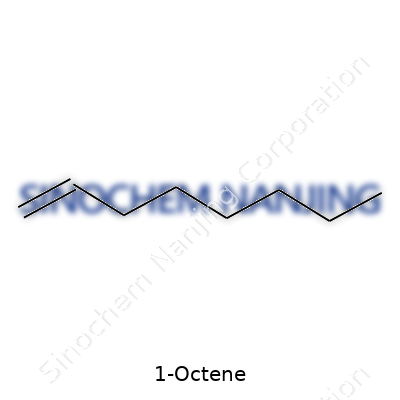
| Names | |
| Preferred IUPAC name | oct-1-ene |
| Other names |
1-Octene Oct-1-ene α-Octene n-Octene-1 |
| Pronunciation | /ˈwʌn.ɒkˌtiːn/ |
| Identifiers | |
| CAS Number | 111-66-0 |
| Beilstein Reference | 1209242 |
| ChEBI | CHEBI:28687 |
| ChEMBL | CHEMBL15359 |
| ChemSpider | 7277 |
| DrugBank | DB14011 |
| ECHA InfoCard | ECHA InfoCard: 100.003.475 |
| EC Number | 204-060-1 |
| Gmelin Reference | Gmelin Reference: **1918** |
| KEGG | C08290 |
| MeSH | D010059 |
| PubChem CID | 8900 |
| RTECS number | RG2450000 |
| UNII | N8O8I41WMH |
| UN number | UN2247 |
| Properties | |
| Chemical formula | C8H16 |
| Molar mass | 112.21 g/mol |
| Appearance | Colorless liquid |
| Odor | mild, gasoline-like |
| Density | 0.715 g/cm³ |
| Solubility in water | Insoluble |
| log P | 3.3 |
| Vapor pressure | 1.5 hPa (20 °C) |
| Acidity (pKa) | pKa ≈ 44 |
| Basicity (pKb) | > 15.7 |
| Magnetic susceptibility (χ) | -9.84×10⁻⁹ |
| Refractive index (nD) | 1.418 |
| Viscosity | 2.04 mPa·s (25 °C) |
| Dipole moment | 0.57 D |
| Thermochemistry | |
| Std molar entropy (S⦵298) | 322.0 J·mol⁻¹·K⁻¹ |
| Std enthalpy of formation (ΔfH⦵298) | +5.2 kJ/mol |
| Std enthalpy of combustion (ΔcH⦵298) | -5094.2 kJ/mol |
| Pharmacology | |
| ATC code | V03AX23 |
| Hazards | |
| GHS labelling | GHS02, GHS07 |
| Pictograms | `⦾═` |
| Signal word | Warning |
| Hazard statements | H226, H315, H400 |
| Precautionary statements | P210, P233, P240, P241, P242, P243, P261, P271, P273, P280, P301+P310, P303+P361+P353, P304+P340, P305+P351+P338, P312, P331, P370+P378, P391, P403+P235, P405, P501 |
| NFPA 704 (fire diamond) | 1-1-0-2 |
| Flash point | 60 °F (16 °C) |
| Autoignition temperature | 205 °C |
| Explosive limits | 1.1% - 6.4% |
| Lethal dose or concentration | LD50 oral rat 12,100 mg/kg |
| LD50 (median dose) | LD50 (median dose) of 1-Octene: **12.1 g/kg (rat, oral)** |
| NIOSH | PS8925000 |
| PEL (Permissible) | PEL (Permissible Exposure Limit) for 1-Octene: 100 ppm (OSHA TWA) |
| REL (Recommended) | 75 mg/m³ |
| IDLH (Immediate danger) | IDLH: 100 ppm |



