A Deep Dive Into 1-Methyl-1-Cyclopentene: Beyond the Lab Bench
How 1-Methyl-1-Cyclopentene Emerged in Chemistry’s Timeline
The world of organic chemistry looks deceptively simple—carbon rings, straight chains, double bonds. Yet each new compound enters with its own story and potential. 1-Methyl-1-cyclopentene belongs to a special class of cycloalkenes, and its origins stretch back to mid-20th-century explorations in hydrocarbon chemistry. Chemists searching for novel pathways to functionalized rings ran across cyclopentenes. With mounting interest in compounds that could stir up new methods for making pharmaceuticals, materials, and flavors, 1-methyl-1-cyclopentene didn’t stay hidden for long. Its synthesis opened doors to new cyclization strategies and cross-coupling reactions—steps forward for both academia and industry. As researchers became fascinated by five-membered rings, the presence of a methyl group attached at the first carbon gave this molecule a place in reaction development history. Records indicate careful attention to ring strain, isomerization patterns, and the potential to serve as a precursor for a range of functionalized products.
Looking Closer: What Stands Out in 1-Methyl-1-Cyclopentene
Strip away the abstractions, and you find a clear liquid with a faint, sweet-aromatic odor. Unlike open-chain alkenes, cyclic molecules offer rigidity, which affects reactivity. 1-Methyl-1-cyclopentene has a molecular formula of C6H10, and it measures out with a molar mass near 82.14 g/mol. The double bond, sitting between the first and second carbon, makes this compound more reactive than saturated cyclopentanes—sudden changes in conditions can prompt addition, polymerization, or rearrangement. Its density generally hovers just below that of water, helping separate out layers in organic extractions. Boiling and melting points skew on the lower side for cycloalkenes, which matches my own experience handling similar five-membered rings. Volatility demands attention in any open benchwork, since fumes can travel fast in a cramped lab.
The Technical Bits: Labeling and Reporting Requirements
Chemicals like 1-methyl-1-cyclopentene carry standard identifiers: CAS number, molecular formula, and systematic chemical names. Depending on where the bottle arrives from, you might spot names such as 1-methylcyclopentene or methylcyclopentene, usually clarified by the position of the methyl substituent. Most suppliers follow labeling conventions that include hazard warnings, flammability icons, storage recommendations, and purity levels. It pays to check certificate of analysis documents to verify material consistency—a purification misstep can derail a whole batch reaction in a research setting.
From Lab to Drum: How Chemists Prepare This Alkene
Synthesis usually begins with cyclopentanone or cyclopentanol. Common laboratory routes involve alkylation followed by dehydration. For instance, converting cyclopentanol with methylating agents gives a methylated alcohol, which then transforms into the alkene using acidic or basic dehydration. In bulk settings, acid catalysis—think sulfuric or phosphoric acid—removes water and steers the final product toward greater yields. Columns packed with silica or alumina separate the product from leftover starting material. Distillation quickly isolates the pure alkene, since its volatility makes separation straightforward. Each step in this sequence benefits from careful temperature control, and old-timers will recall the risk of bumping or boiling over—a reminder that working with flammable liquids multiplies the need for vigilance.
How 1-Methyl-1-Cyclopentene Reacts and Changes
The double bond in 1-methyl-1-cyclopentene draws electrophiles like moths to a flame. It undergoes typical alkene reactions: addition of hydrogen halides, halogenation with chlorine or bromine, and even catalytic hydrogenation to yield a more saturated ring. For those looking to explore more, oxidative cleavage with agents like ozone or potassium permanganate chops the ring open and introduces oxygen-containing groups. The methyl group provides a directing effect—substituents on the ring determine where addition or substitution targets. Synthetic chemists have found that the compound’s structure supports further transformations, producing everything from substituted cyclopentanes to open-chain compounds during harsh conditions. It’s a building block, but its value comes from what it can become.
Names That Pop Up in Journals and Catalogs
You might run across 1-methyl-1-cyclopentene under a few aliases, which matters for researchers trawling through old patent literature or safety sheets. “Methylcyclopentene” and “1-methylcyclopentene” represent the most frequently cited variations, but clarity in numbering protects from mix-ups with isomers like 3-methylcyclopentene. Chemical Abstracts Service (CAS) numbers sidestep confusion once and for all. As with so many chemicals, an accurate search depends on double-checking for regional naming quirks—sometimes, suppliers in Europe or Asia prioritize different conventions than those based in North America.
Keeping the Bench—and the Lab—Safe
Safety with 1-methyl-1-cyclopentene draws from shared lessons across flammable organic liquids. Its low flash point means sparks, open flames, and even static electricity can cause fires or explosions. I’ve seen more than a few close calls during distillation runs when oversight slipped and vapor met an unsuspecting heating mantle. Fume hoods serve as non-negotiable barriers; personal protective equipment covers exposed skin and eyes, since the liquid can irritate upon prolonged contact. Regulatory bodies such as OSHA, EU-REACH, and GHS all weigh in with guidelines on labeling, permissible exposure limits, and safe storage. Long-term exposure studies show no major chronic toxicity, but absence of evidence doesn’t mean free license—caution remains the rule.
Applications That Stretch From Industry to Lab Research
This five-membered ring alkene rarely plays a starring role in consumer products, but its value jumps out during the synthesis of specialty chemicals and intermediates. It’s used as a platform molecule for constructing more complex rings in pharmaceutical and agrochemical research. Its reactivity makes it useful in polymerization studies—a classic case where people test catalysts and initiator systems. I’ve noticed it appear in patents for flavor and fragrance molecules, too—small methylated rings often carry scent notes that show up in blended perfumes, and modifications lead to derivatives that find use in aroma science. Industrial teams value its presence in optimization of catalytic methods, such as alkene metathesis and ring-opening reactions. Every time a chemist wants a model substrate with defined reactivity, this compound stands out among five-membered analogs.
Behind the Scenes: Driving Research Forward
Recent papers lean into the possibilities for functionalizing small alkenes and harnessing ring strain for new transformations. Researchers have picked 1-methyl-1-cyclopentene to probe the limits of regioselectivity and stereoselectivity, especially in asymmetric catalysis. It’s featured in studies exploring transition metal-catalyzed modifications—think palladium and ruthenium complexes. Computational chemists analyze its energy profile for insight on ring-opening and rearrangement reactions; experimentalists try out new reaction conditions to get greener, safer, or cheaper outcomes. Universities and industrial R&D share an interest in how small changes at the methyl group lead to big shifts in product distribution. Each new finding adds a brick to the knowledge base for ring synthesis and functionalization.
Diving Into Toxicity and Environmental Behavior
Testing for toxicity covers the basics—dermal and ocular exposure studies, inhalation limits, and long-term environmental fate. Studies suggest moderate acute toxicity: high concentrations can cause central nervous system depression or respiratory irritation, but symptoms subside without lingering effects if exposure cuts off quickly. Environmental studies focus on volatility and breakdown pathways in air and water. The molecule degrades under UV light and attacks from atmospheric oxidants, limiting its persistence. Waste disposal needs oversight—organic solvents contaminated with cycloalkenes count as hazardous waste, requiring compliant collection and incineration or specialized chemical treatment. Regular reviews of safety data sheets help everyone stay up to date as new toxicity findings emerge.
Looking Ahead: What Comes Next for 1-Methyl-1-Cyclopentene
Chemistry never stands still. Tomorrow’s value for 1-methyl-1-cyclopentene lies at the intersection of green synthesis and advanced materials. Green chemistry pushes for cleaner, safer, and less energy-intensive production methods, and this alkene could see reworked protocols that trade harsh reagents for recyclable catalysts and milder conditions. In materials science, specialized cycloalkenes seed next-generation polymers and specialty resins. As circular economy ideals take hold, researchers investigate whether five-membered alkenes like this can serve as monomers in upcycled plastic streams or as bio-based feedstocks using engineered microorganisms. The molecule’s story continues as new chemists tinker and test, always looking for the next discovery in an old ring.
What is 1-Methyl-1-Cyclopentene used for?
What is 1-Methyl-1-Cyclopentene?
1-Methyl-1-cyclopentene may not sound familiar outside chemistry circles, but it carves a quiet path through the world of specialty chemicals. It belongs to a family of organic compounds called cycloalkenes, which simply means there’s a five-membered ring in play with a double bond and a methyl group tacked on. That alone nudges its reactivity in ways that make it more than a scientific curiosity.
Building Blocks for Synthesis
This compound shows up as a building block in organic synthesis. Labs and factories often reach for it when making substances that will never show up on a grocery store shelf, but might influence the stuff that does. Chemical manufacturers use 1-methyl-1-cyclopentene as an intermediate. Its ring structure and double bond give it an edge in adding to, splitting, or rearranging molecules to make something new and useful.
Applications in Pharmaceuticals and Fragrances
One place that benefits: the pharmaceutical world. Chemists looking to create new medications sometimes need small but key changes in the scaffold of a molecule. 1-Methyl-1-cyclopentene helps introduce a methylated cyclopentene moiety into complex pharmaceuticals — a trick that can change how a medicine folds, reacts, or gets broken down in the body.
Perfumers also pay attention to raw materials like this one. Fragrance chemistry often takes advantage of unique rings and double bonds to deliver the smells that fill soaps and deodorants. Here, derivatives of cyclopentene rings can influence everything from fresh citrus notes to earthy undertones that stick around on skin and fabric.
Specialty Polymers and Advanced Materials
Polymer innovation leans on oddball molecules to push the limits of plastics, adhesives, and industrial rubbers. Add a methyl group to a cyclopentene, and you change how that unit strings together in a polymer chain. This can lead to materials with better resistance to heat, more resilience to harsh chemicals, and specific electrical properties. A lot of this work doesn’t get broad attention, but these advances later pop up in things like medical devices or electronics you never realized had specialized plastics inside.
Environmental and Safety Profiles
The chemical industry bears a lot of responsibility for keeping new molecules in check. 1-Methyl-1-cyclopentene, like many volatile organic compounds, comes with its own safety data sheet. Workers handling it must wear gloves and keep labs well ventilated. Spills get treated seriously. All of this matters because what happens in the lab or factory rarely stays there — leaks and bad disposal can easily ripple out into soil and water. Regulatory agencies track these chemicals, watching for risks that could affect public health or ecosystems.
Sustainable chemistry groups push for greener processes when using substances like this one. Routes that keep waste low, solvents safer, and energy costs down do more than just trim the budget. They shrink the shadow that industrial chemistry can cast on air and water quality. Research into recyclable catalysts and closed-loop reaction vessels mark steps toward a cleaner future for chemicals that once came with unavoidable environmental baggage.
Looking Forward: Safer and Smarter Chemistry
Creative minds in industry and academia continue to look for smarter ways to use every tool in the kit, including 1-methyl-1-cyclopentene. Safer handling, improved waste management, and process innovation all matter. Demand for new molecules, be they for drugs, plastics, or scents, keeps pushing the edges of what cyclopentene derivatives can offer. Smart partnerships between chemists, safety experts, and regulators give hope that what’s useful today will stay safe tomorrow — not just for workers in labs, but for any community downwind.
What is the chemical formula of 1-Methyl-1-Cyclopentene?
1-Methyl-1-Cyclopentene: More Than Just a Name
People study organic chemistry not only to memorize structures but to grasp how molecules tick. Plenty of us sat at cluttered lab tables, Sharpie-stained hands flipping through notecards, facing a wall of strange carbons and hydrogens. Then you meet names like 1-Methyl-1-Cyclopentene, which sounds almost harmless until you realize it’s a compact tale of carbon arrangement. In this case, “1-Methyl” means a methyl group hooks onto the very first carbon of a cyclopentene ring. That ring—five carbons forming a pentagon, single double bond included—serves as the backbone.
The Chemical Formula: C6H10
The formula for 1-Methyl-1-Cyclopentene stands as C6H10. With six carbons and ten hydrogens, it doesn’t sound like much, but there’s storytelling in those numbers. A cyclopentene ring alone gives C5H8. Tacking on a methyl group (CH3) to that double bond location creates the formula: count up six carbons and ten hydrogens, and you’ve got it.
Understanding Its Structure in Daily Context
Anyone who has spent hours drawing line structures knows that changing just one atom’s position flips everything. With 1-Methyl-1-Cyclopentene, chemists look for that one double bond and add a methyl group to the first carbon. Think about that as a barstool with a new leg welded onto a certain spot—it affects how it stands and interacts with other stools in the crowd.
Why dig into the nuts and bolts of this molecule? Many compounds with slight differences transform the result: reactivity, toxicity, environmental effect, potential medical uses. For instance, small changes to hydrocarbon rings lead to big results in pharmaceuticals or materials. That’s not some wild claim—drug design teams often sift through thousands of small ring variants before finding one that hits just right.
Real-World Relevance and Applications
My own time in the lab showed how subtle structural tweaks can spell the difference between a stubborn, immovable sample and a quick-reacting building block. 1-Methyl-1-Cyclopentene may not headline in the news, yet it represents countless hydrocarbons in fuels, fragrances, industrial agents, and even in the synthesis of biologically active molecules. Small rings like this often serve as stepping stones in organic synthesis—a foundation for bigger, sometimes lifesaving, chemistry.
That’s why knowing the formula matters. Regulatory bodies and environmental chemists need exact numbers for handling safety and emissions. Handling a small-molecule hydrocarbon takes specific information: volatility, reactivity, possible breakdown products. No one wants a training mishap or ecological slip-up due to careless math or hazy awareness of structure.
On the horizon, chemistry education keeps pushing problem-solving and creative thinking. Clear in-memory pictures of structures like 1-Methyl-1-Cyclopentene drive deeper understanding, from textbook challenges to real-world technology. The more people lean into these foundational details, the better grounded future discoveries become—whether that’s building safer materials or designing next-gen resources.
Is 1-Methyl-1-Cyclopentene hazardous or toxic?
Chemicals Don’t Get a Free Pass
People deal with a lot of lab names and special substances day in and day out. 1-Methyl-1-Cyclopentene sounds like it belongs on a shelf behind thick glass, handled by folks wearing protective gear and steady nerves. Safety around chemicals is a shared concern. Nobody wants to be the one who shrugs off the rules and pays the price—at work or at home.
Exposure: What’s at Stake
Looking up this chemical leads to a pretty sparse set of research, but the basics point to flammable liquid. That alone sets off alarm bells. Liquids that catch fire don’t belong sitting near open flames or hot equipment. The chemical itself, related to cyclopentenes, can irritate skin and eyes. I once splashed a solvent with similar combustion risks on my arm in college; burning and redness stuck around for hours—reminders that even “just” irritation affects your day.
There’s also the air we breathe to think about. Volatile organics like this one turn to vapor and can irritate lungs. People with asthma and sensitive airways get hit hardest. At one factory job, improper ventilation caused a coworker to cough and wheeze after cleaning up a spill of a related hydrocarbon. Bad air does more damage over time—headaches, dizziness, even memory problems.
Is It Toxic?
Unlike some well-studied chemicals, 1-Methyl-1-Cyclopentene lacks long-term human trials or juicy headlines about deadly outbreaks. No news is not always good news, though. The substance joins the group of hydrocarbons for which “unknown” doesn’t mean “safe”—it means “handle with caution.” Science builds trust by running tests, publishing data, and updating public records. For this molecule, published data is thin, but similar chemicals show both acute and chronic effects if misused.
Animal studies for similar compounds show nervous system effects at high exposure. A close chemical cousin caused convulsions in some rodents when injected in large doses, and liver changes after repeated contact. It doesn’t mean anyone working with it will show up at a doctor’s office clutching their side, but inhaling or swallowing these substances is never a smart bet.
Managing Hazards, Not Hiding from Them
Chemical safety comes down to training and honest labeling. As a chemist in a mid-sized plant, I learned that shortcutting personal protection and proper ventilation leads straight to problems. Emergency rinses, freshly marked containers, and smart storage do most of the work in keeping an incident off the books. Flammable liquids need tightly sealed containers, lightning-fast cleanup of spills, and no one eating or drinking nearby.
Regulators like OSHA and NIOSH set rules for handling unknowns: wear gloves, goggles, and turn on the fume hood, even if paperwork looks clean. The guidance isn’t just for looks; it protects against the gaps in available data.
Awareness and Honest Communication
Even if 1-Methyl-1-Cyclopentene hasn’t starred in a disaster, chemical safety won’t ever be optional for workplaces or home labs. Vigilance is practical, not paranoid. Until more research fills out the picture, treating untested molecules with care keeps people, air, and local water safer. If new toxicities get uncovered, responsible companies and regulators should send out alerts fast, update safety data sheets, and retrain workers. That’s not just policy; it’s common sense shaped by generations of lessons—some learned the hard way.
What are the storage requirements for 1-Methyl-1-Cyclopentene?
Why Storage Bother Matters
Dealing with 1-Methyl-1-Cyclopentene means showing respect for its chemistry. This is a flammable liquid, with a flash point low enough to worry anyone used to storing volatile organic compounds. I’ve walked through more than one chemical storehouse with rows of similar drums, and the rules echo on every sign: keep these things cool, keep them dry, and never forget about ventilation.
Temperature: Room for Error Is Tight
Storing this compound in a warm area can turn a quiet drum into a hazard. Heat ramps up vapor pressure, increasing chances for leaks or, worse, a fire if vapor hits an ignition source. There’s science behind the warnings. Laboratories and storerooms usually pull out the usual playbook for flammables: lock bottles away in a flammable storage cabinet, out of sunlight, and somewhere temperatures stay steady, ideally below 25°C. Cool temperatures mean less vapor in the air, reducing explosion risk. I once saw someone try to cut corners, letting solvent drums linger in stuffy rooms near steam pipes — it wasn’t a surprise replacement became a routine cost.
Moisture: Keep It Dry
Any seasoned chemist can recall the mess water causes with certain compounds. Water doesn’t always spell disaster for 1-Methyl-1-Cyclopentene, but it isn’t a friend either. Contact with water can nudge unwanted reactions. Corrosion on storage drums follows, and that means leaks. From my time in maintenance, the only way to avoid cleanup and the expensive disposal that follows is to guarantee seals and storage spaces stay bone-dry. Desiccant packs and humidity sensors help — skip them, risk headaches later.
Air and Light: Hidden Enemies
Oxygen can stir up oxidation. Unsealed containers let air sneak in and spoil the chemical. Most labs double up on airtight seals and use containers made from materials that don’t react — think glass, high-quality plastics, or metal drums lined for chemicals. Light plays its own tricks, so clear glass is a no-go; always reach for amber or opaque bottles. Over the years, those who cover these bases save themselves from surprise inventory losses.
Fire Safety: No Joke
Nothing focuses the mind like the label “highly flammable.” Any container of 1-Methyl-1-Cyclopentene belongs far from open flames, sparks, or electrical gear that could throw a spark. Grounding and bonding storage containers make a real difference, especially in bulk storage. A static discharge can ruin more than a day. I’ve heard too many stories in chemical safety meetings about fires starting from the tiniest spark to ignore this point.
Legal Requirements: No Shortcut
Regulations do more than make life complicated; they give a basic safety net. Fire codes (like NFPA) want these compounds under strict lock and key — flammable liquid cabinets rated for Category 2 liquids. Safety Data Sheets drill these ideas home: store apart from oxidizers, acids, and bases. Ignore them, and surprise inspections can end with hefty fines or worse, facility shutdowns.
Better Storage Choices
Some prefer smaller bottles to reduce loss if a leak starts. Others invest in continuous monitoring for volatile organic compounds in the air. Both approaches point to the same truth: safe storage isn’t a box ticked once, but an ongoing job. Good training, regular checks, and real investment in proper equipment reduce risks. After all, overlooked storage rarely leads anywhere good.
What is the boiling point of 1-Methyl-1-Cyclopentene?
Understanding What Boiling Point Tells Us
Think back to chemistry class, where the teacher warmed up some clear liquid in a flask and waited for bubbles to roll. That lesson about boiling points hangs around for a reason. The boiling point isn't just a neat number on a chart; it provides the baseline for safety, storage, and how a chemical gets used in a real-world setting. For 1-Methyl-1-Cyclopentene, that boiling point reads about 99°C, not far from the point where water turns to steam.
Why the Boiling Point of 1-Methyl-1-Cyclopentene Matters
I’ve handled volatile liquids in the lab, and every degree in boiling temperature tells me something crucial. That narrow window between liquid and vapor affects how you bottle up 1-Methyl-1-Cyclopentene or ship it across town. A boiling point close to 100°C means low pressure or a warm room could send vapors right out of the bottle. These vapors bring hazards for the people working with the chemical—think headaches, dizziness, or even a fire if the wrong spark lights it up.
Manufacturers care about this number because it sets the rules for every step, from filling drums to mixing with other substances. If you try to distill a mixture and don't plan for the specific boiling point, you risk blowing off something important or, worse, running into an explosive accident. In my experience, a few degrees can be the difference between a routine shift and a chemical mess nobody wants to clean up.
Facts on 1-Methyl-1-Cyclopentene Use
1-Methyl-1-Cyclopentene pops up in research labs, making specialty chemicals, and as a starting material for synthesis projects. Organic chemists love the way its ring structure can get modified, stitched onto other molecules, or broken apart. Scrapings from glassware and strong gasoline-like scents follow its use, and the boiling point sticks at the center of it all.
Historically, similar volatile organic compounds have played a part in big accidents. The 1980s Bhopal tragedy resulted from underestimated volatility and poor safety controls—a grim reminder of what happens when boiling points get ignored. Regulators check boiling data because the wrong number can leave workers in danger or spoil research results.
Smart Handling and Solutions
Getting safe with 1-Methyl-1-Cyclopentene starts with storing it somewhere cool and well-ventilated. A chemical with a boiling point just below 100°C ticks close to room temperature fluctuations. Keeping containers tightly sealed and away from flames is more than best practice—it's essential. Ventilation takes away fumes before they build up. Spill kits sit close by, stocked with absorbent pads and neutralizing agents.
Engineers lower risks by setting up distillation under controlled temperatures and pressures. They calibrate equipment to respect that 99°C threshold. Safety officers train everyone to recognize the smell, wear the right gloves, and handle glassware with respect.
Education leads to fewer mistakes. Putting the boiling point front and center on safety sheets keeps everyone aware. Clear signage, temperature tracking, and checklists support safe handling every step of the way. Research continues into safer alternatives, but until then, knowing and planning for that number keeps people safe.
The Broader Impact
This one property—the boiling point—ripples out, touching everything from industrial plans to public health. For students, technicians, and professional chemists, knowing it isn’t trivia. It’s a daily fact that stands between good science and real danger.
At its core, the boiling point of 1-Methyl-1-Cyclopentene amounts to much more than a number. It defines procedures, sharpens situational awareness, and can even save a life.
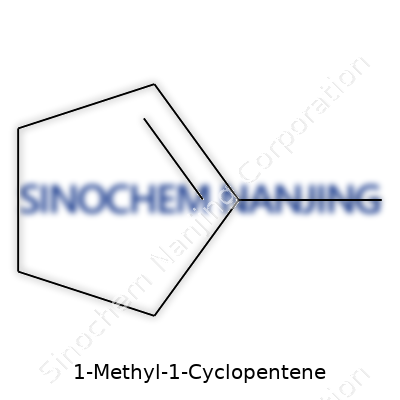
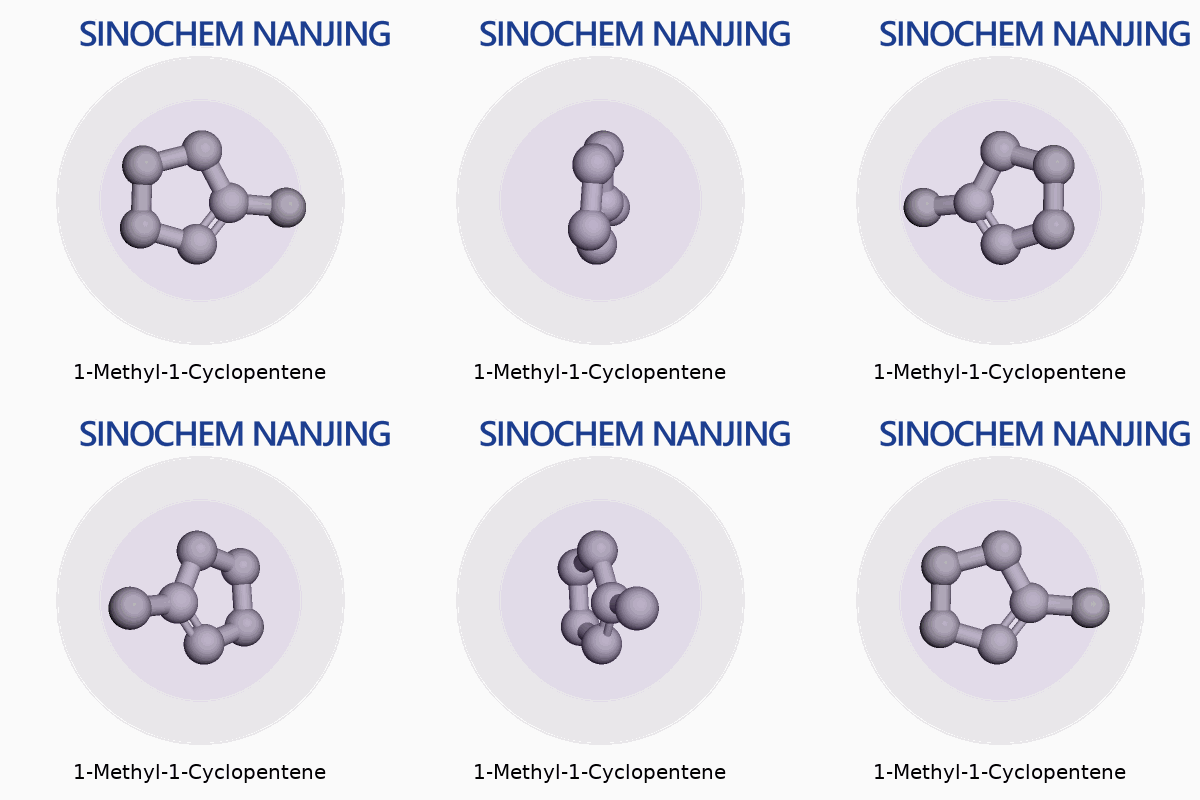
| Names | |
| Preferred IUPAC name | 1-Methylidenecyclopentane |
| Other names |
1-Methylcyclopentene 1-Methylcyclopent-1-ene 1-Methyl-1-cyclopentene 2-Methylenecyclopentane |
| Pronunciation | /waɪˈmɛθ.əl waɪ ˌsaɪ.kləʊˈpɛn.tiːn/ |
| Identifiers | |
| CAS Number | 693-89-0 |
| Beilstein Reference | 1261096 |
| ChEBI | CHEBI:38541 |
| ChEMBL | CHEMBL134788 |
| ChemSpider | 153653 |
| DrugBank | DB14006 |
| ECHA InfoCard | InChIKey=EREGEVHJFZRHPD-UHFFFAOYSA-N |
| Gmelin Reference | 79200 |
| KEGG | C04337 |
| MeSH | D003419 |
| PubChem CID | 82258 |
| RTECS number | RI0175000 |
| UNII | 53D2H3P0G7 |
| UN number | 2557 |
| Properties | |
| Chemical formula | C6H10 |
| Molar mass | 82.143 amu |
| Appearance | Colorless liquid |
| Odor | Strong odor |
| Density | 0.777 g/mL at 25 °C (lit.) |
| Solubility in water | Insoluble |
| log P | 1.94 |
| Vapor pressure | 3.79 kPa (at 20 °C) |
| Acidity (pKa) | pKa ≈ 44 |
| Basicity (pKb) | pKb = 17.24 |
| Magnetic susceptibility (χ) | -59.0·10⁻⁶ cm³/mol |
| Refractive index (nD) | 1.417 |
| Viscosity | 0.759 cP (20°C) |
| Dipole moment | 0.79 D |
| Thermochemistry | |
| Std molar entropy (S⦵298) | 314.6 J·mol⁻¹·K⁻¹ |
| Std enthalpy of formation (ΔfH⦵298) | -3.9 kJ/mol |
| Std enthalpy of combustion (ΔcH⦵298) | -3866 kJ/mol |
| Hazards | |
| GHS labelling | GHS02, GHS07 |
| Pictograms | GHS02 |
| Signal word | Warning |
| Hazard statements | H226, H304, H315, H336 |
| Precautionary statements | P210, P233, P240, P241, P242, P243, P261, P271, P280, P303+P361+P353, P304+P340, P312, P370+P378, P403+P235, P501 |
| NFPA 704 (fire diamond) | 1-1-0 |
| Flash point | “-12 °C (10 °F) (closed cup)” |
| Autoignition temperature | 220 °C (428 °F; 493 K) |
| Explosive limits | 2.2–11.7% |
| Lethal dose or concentration | LD50 (oral, rat): 6270 mg/kg |
| LD50 (median dose) | LD50 (oral, rat): 3,160 mg/kg |
| NIOSH | KN3325000 |
| PEL (Permissible) | Not established |
| REL (Recommended) | REL (Recommended Exposure Limit): NIOSH considers 1-Methyl-1-Cyclopentene to have no REL established. |
| IDLH (Immediate danger) | IDLH: 1,000 ppm |
| Related compounds | |
| Related compounds |
Cyclopentene Methylenecyclopentane Cyclopentadiene 1-Methylcyclopentane 1,2-Dimethylcyclopentene |



