1-Iodobutane: Behind the Scenes of an Understated Alkyl Halide
Historical Development
Back in the 19th century, organic chemists found themselves wrestling with the basic building blocks of molecules. The story of 1-iodobutane starts with discoveries around halogen-substituted hydrocarbons – times that saw names like Auguste Cahours using elemental iodine and butyl alcohols to create early samples of compounds just like this. Synthetic prep of simple alkyl iodides, once a tricky feat, kept evolving with more practical and controllable lab techniques. As lab benches swapped dangerous glassware for safer modern equivalents, 1-iodobutane turned from a curiosity into a reliable laboratory friend, opening opportunities for scientists picking apart reaction mechanisms or searching for more effective functional group transformations. Conservation of detail and improvement in yield have steadily made 1-iodobutane a stock chemical in research and industrial inventories worldwide.
Product Overview
At a glance, 1-iodobutane can come off as just another clear liquid with a pungent odor. Yet, it holds a key place among alkyl halides for its reactivity and straightforward chemistry. It appears as a colorless to pale yellow liquid, making it easy to spot leaks or spills. A steady stream of researchers relies on its role as a precursor for more complex structures, especially in synthetic organic labs with limited access to more niche alkylating agents. The iodine atom sets it apart — making the molecule more reactive and providing a handy handle for substitution or elimination reactions. Compared to its cousins, the chlorides and bromides, 1-iodobutane transforms faster and with more flexibility in typical lab-scale chemistry setups.
Physical & Chemical Properties
Pour a sample out, and you run into a liquid that boils around 130 °C, showing off a higher density than water. That iodine atom has real weight, pushing the density up to about 1.6 g/mL. As for solubility, water and 1-iodobutane part ways pretty firmly, staying in their separate layers. Yet it blends into most organic solvents with little fuss. The barrier coming from the carbon–iodine bond—weak compared to bromine or chlorine—makes this molecule easier to nudge into chemical change. Its refractive index points to its purity and comes handy for those running checks between bottles from different suppliers. Even the color can signal trouble: yellowing might mean slow breakdown, or a hint of air and light making their mark.
Technical Specifications & Labeling
You scoop up a bottle of 1-iodobutane, and you’ll notice labels packed with safety icons and R/S statements. The labeling follows rules built up from decades of safety lapses and regulatory tweaks, striving to give everyone from bench scientist to warehouse worker a fighting chance to avoid mishaps. Purity levels, batch numbers, storage temps — these aren’t just paperwork but reminders of the compound’s sensitivity. Sometimes a tiny contaminant can torpedo the result of a sensitive synthesis, so attention to what’s printed and checked weighs heavy on decisions in the lab.
Preparation Method
Chemists who work out of fume hoods or pilot plants know the recipe can shift depending on what resources and safety margins are available. Traditional prep leans on reacting n-butanol with iodine and red phosphorus, igniting a process that relies on careful temperature and byproduct control. There’s that old stink of phosphorous fumes if procedures slip. Green chemistry pushes for less hazardous approaches, using milder conditions and less toxic reagents, but sometimes those come with trade-offs on cost or purity. Watching the reaction is a dance—overheating cooks off valuable product, under-reacting leaves you with alcohols that clog up purification later. Anyone who’s run a synthesis knows you measure success as much by what’s left in the flask as what’s left untouched in the purification column.
Chemical Reactions & Modifications
1-Iodobutane doesn’t stay idle for long. It acts as a launcher for nucleophilic substitution, swapping out that iodine for something new. Need to tack on a cyanide? Prepare a nitrile in one step. Like to lengthen a carbon chain using a Grignard reaction? The iodine breaks off like a dream, letting you bolt on new carbon groups. The compound serves as a launching pad for new pharmaceuticals, specialty flavors, or biodegradable polymers. Elimination reactions with strong bases bring butenes to life, which feed into more complex syntheses. The simpler the starting points, the cleaner the leap towards a new molecule nobody’s seen before in a flask.
Synonyms & Product Names
The world of chemical names remains a minefield for the uninitiated. Iodobutane can show up on labels as 1-iodo-n-butane, butyl iodide, or n-butyl iodide. Each name means the same simple molecule, but tracking procurement records or cross-referencing literature needs a sharp eye for these synonyms. Catalog databases love to use different formatting or conventions, so researchers sometimes find themselves hunting for one name while another is sitting quietly in inventory. This often slows down ordering or leads to missed chances for safer, fresher stock.
Safety & Operational Standards
Ask anyone who’s had 1-iodobutane touch bare skin or catch a whiff up close — it bites with that caustic edge. Direct contact irritates, so gloves and goggles aren’t just window dressing but a matter of health. This molecule doesn’t deal well with ignition sources, and even commonplace static sparks from synthetic lab coats can turn a spill into a flash fire. Regulatory standards often demand storage in ventilated, fire-resistant cabinets. Disposal routes must respect environmental laws, since release into air or water harms more than just the workers. Many labs now adopt closed handling systems for transfer and washing, aiming to keep volatile vapors and waste exposure as low as possible. And with iodine compounds under watch for their potential in illegal syntheses, even shipment sees added scrutiny and paperwork.
Application Area
In the lab, 1-iodobutane finds frequent use as an alkylating agent for introducing butyl groups into molecules. Research spanning pharmaceuticals, agrichemicals, and specialty polymer development uses this reactivity to bend molecular backbones toward desired activities or physical traits. Complex drugs and advanced materials start with small, reliable chemicals. Outside the lab, fewer industrial applications lean on this chemical, since scale-up faces challenges over cost and waste from heavy halogen atoms. Specialty manufacturing sometimes utilizes it when there’s simply no better alternative for tacking on a four-carbon chain.
Research & Development
Curiosity in R&D circles revolves around pushing safer, greener ways to generate and use 1-iodobutane. For each project looking to swap out more toxic or persistent chemicals, research groups map out methods for lower-waste, selective syntheses. Many hands seek catalysts that can trim steps or shrink solvent use, leading to less cleanup and smaller carbon footprints. Analytical chemists design studies to track purity degradation, while pharmaceutical teams try to harness its reactivity for faster, more efficient drug building blocks. Research often springs from grant-driven pressures to align with sustainability goals, and sharing results at conferences or in journals builds the playbook for future improvements.
Toxicity Research
Concerns about 1-iodobutane’s impact on health and the environment keep toxicologists busy. The molecule has known irritant properties, and studies show that inhalation or skin absorption brings harm over time. Acute exposure tests in animals reveal nervous system effects and potential impacts on liver and kidney function at higher doses. Its environmental persistence, especially thanks to the heavy iodine atom, drives studies on how long breakdown takes in water, soil, or industrial effluent. Regulatory agencies scan these findings to shape rules on exposure limits, waste handling, and permissible releases. Researchers keep combing through the data, aiming to clear up just how much risk the compound brings in given workplaces or downstream ecosystems.
Future Prospects
The chemical toolbox grows, but 1-iodobutane isn’t bowing out. Future trends lean into refining old processes: finding low-impact routes for preparing the chemical, engineering safer packaging, and extending shelf life all rank as development targets. Interest in more efficient, cleaner reactions with iodobutanes rises with every push for better yields, less contamination, and reduced risks. Many believe recycling or reclaiming halogenated byproducts may turn one of the chemical’s main drawbacks into a sustainability win. Regulatory challenges and raw material pricing could make large-scale production trickier, but as long as labs need versatile alkyl sources, 1-iodobutane will hold on — and researchers will search for ways to make its use cleaner, safer, and more cost-effective.
What is the chemical formula of 1-Iodobutane?
A Closer Look at 1-Iodobutane's Chemical Nature
Many folks scanning a periodic table or a chemistry set won’t give 1-Iodobutane a second glance. Yet, in real chemistry labs, this compound stands out for its versatility. The chemical formula for 1-Iodobutane is C4H9I. It's made from a butane core, where one of the terminal hydrogens swaps places with an iodine atom. This tweak seems small, but it changes both the character and the usefulness of the molecule.
Why the Chemical Formula Matters
Chemical formulas might look like alphabet soup, but they tell stories about bonding, reactivity, and uses. C4H9I gives a straight chain hydrocarbon backbone—four carbons all in a row. Those unbranched carbons keep things predictable. Tossing iodine at the end adds weight, changes boiling points, and turns an ordinary hydrocarbon into a tool for chemistry experiments. The shift from a plain hydrocarbon to an alkyl halide shows off just how sensitive organic chemistry is to small adjustments.
How 1-Iodobutane Plays a Role in Real Life
In university labs, 1-Iodobutane joins the group of molecules used in substitution reactions. I remember using it during an undergraduate synthesis, mixing it in flasks as my group hunted for better ways to build ether compounds. That iodine atom sticks out—it’s bulky, a bit stubborn, but great at leaving during reactions. That’s what makes this chemical valuable as a starting material for making other organic compounds. Chemists often favor iodides for these reactions; they leave quickly, making the process both faster and easier to control.
Relevance to Industry and Learning
Industries lean on compounds like 1-Iodobutane not for the compound itself, but for what it can become. Pharmacies, plastics manufacturers, and agrochemical producers need molecules with reliability. Changing just one atom—replacing a hydrogen with iodine—serves as a kind of customization tool. As researchers tweak molecules for new drugs or polymers, compounds like this let them bolt on functional groups with little fuss. The formula C4H9I isn’t just chemistry trivia; it’s shorthand for a series of potential reactions and products.
Challenges and Safer Solutions
Working with 1-Iodobutane teaches a few lessons right away. It smells strong, and it can irritate the skin or eyes. As someone who's accidentally spilled some, I learned that safety showers and heavy gloves aren’t just for show. Industry and labs both have to focus on storage, ventilation, and personal gear to keep risks low. There’s also the added issue of cost—iodine is pricier than other halogens, so chemists try to use just enough to get the job done. A push toward greener reactions—the kind that use less toxic materials and create less waste—has also shifted some focus away from iodine compounds, but nothing has fully replaced their reactivity just yet.
Looking Ahead
Chemists keep searching for ways to balance practical needs with safety and cost. While 1-Iodobutane isn't going anywhere soon, cleaner, cheaper, and safer methods keep cropping up in research. For students and researchers learning about organic reactions, this compound shows how every atom counts. The formula C4H9I is a launchpad for exploring how a simple change in structure can lead to a huge range of useful chemistry.
What are the primary uses or applications of 1-Iodobutane?
Bridging Gaps in Organic Chemistry Labs
Anyone who’s flipped through an organic chemistry textbook or poked around a university lab has seen 1-iodobutane at work. It doesn’t look particularly special in the bottle, but it often acts as a building block in experimentation. I remember those college days spent coaxing subtle changes in reagents, hoping the reaction actually worked. 1-Iodobutane played a key part in many syntheses, especially for students sharpening their skills with nucleophilic substitution reactions, which show how carbon chains can grow by swapping atoms. Real understanding comes from seeing this molecule connect pieces in hands-on work. It’s a simple structure, yet it opens up so many transformations.
Turning Ordinary Molecules into Something More Useful
Chemists reach for 1-iodobutane when they need to stick a butyl group onto something. This isn’t just an academic exercise. Pharmaceutical companies depend on efficient alkylation reactions for drug design. Adding a butyl chain at just the right position can change how a medicine behaves in the body. Years ago, during an internship, I watched a team use 1-iodobutane to tweak a drug’s side chain, searching for better absorption rates. They weren’t chasing theory—they looked for real results, guided by data and a bit of creative guesswork.
Supporting Research and New Discoveries
1-Iodobutane doesn’t show up on TV commercials, but its presence runs deep behind the scenes. It helps scientists create specialty compounds for research, testing possibilities in everything from agriculture to materials science. Researchers rely on it to make reference compounds—molecules with known structures that labs use to calibrate their instruments or check processes. It’s also a key part of making surfactants for detergents and lubricants. That’s one of those moments where lab work intersects with something found under kitchen sinks and in garages.
Unexpected Corners: The World of Scents and Flavors
Not all chemical building blocks lead to medicines or fancy new plastics. In the fragrance and flavor industry, small alkyl iodides help shape molecules that end up in perfumes, flavorings, and aroma compounds. 1-Iodobutane reacts predictably, letting chemists design scents with more precision. Most folks might not realize that a humble chemical like this can have a hand in the way a favorite soap or snack tastes or smells. As companies search for new notes in consumer products, reliability and predictable outcomes make a difference.
Staying Safe and Moving Forward
Straight talk—no laboratory chemical comes without risks. Iodinated compounds carry certain hazards. Many chemists, myself included, remember the careful routines around these bottles: gloves, goggles, fume hood. Fact-based handling, guided by science and industry standards, should be non-negotiable. Mistakes in the past have shaped stricter safety protocols. Knowing the background of a common chemical lets you respect both its power and its risks.
A Place in the Modern Toolbox
From growing molecules in a classroom lab to crafting new pharmaceuticals and even fine-tuning a soap’s scent, 1-iodobutane proves its value every day. The chemical industry faces scrutiny for environmental impacts, so there’s a push to find greener alternatives and minimize waste. In my experience, teams that make a real difference always respect both the problem-solving possibilities and the responsibilities that come with chemistry. That’s how progress—and respect—gets built.
What are the safety precautions when handling 1-Iodobutane?
Why This Chemical Demands Respect
My first run-in with 1-iodobutane came in an undergraduate organic chemistry lab, and nobody needed to tell me to be careful—the sharp odor hit me through my mask. Many organic solvents are unforgiving, but 1-iodobutane ramps up the stakes. It enters the body through skin contact, inhalation, and even brief exposure can spark headaches, dizziness, or worse. Plenty of chemists develop rashes or respiratory issues from this compound. Its high vapor pressure means it doesn’t just sit in the flask—it wants to get airborne and find your lungs.
PPE: The Barrier Between You and Trouble
Glassware and gloves form the line of defense. My own practice at the bench always starts with nitrile gloves; latex might not hold up. Eye contact brings serious risks. Chemical splash goggles work better than basic safety glasses, a hard-learned lesson after seeing a peer douse his cheek with a stray drop. Double-layer lab coats protect your clothes and skin, while closed shoes keep spills off your feet. Never work alone—if a spill turns nasty, having backup nearby can save your skin, literally.
Ventilation Isn’t Optional
Hood use isn’t negotiable. 1-iodobutane’s fumes irritate the lungs almost instantly. Long-term exposure links to thyroid and nervous system problems. Airflow in a dedicated chemical hood clears away vapors before they drift into the general lab air. If your hood fails, pack up—don’t keep pushing your luck. Good labs maintain air monitoring equipment nearby so anyone can check if the levels drift out of safe range.
Storage Habits That Keep Everyone Out of Harm’s Way
This isn’t a bottle you stash on a crowded shelf. Store 1-iodobutane in a cool, dry spot away from sunlight. Flammable cabinet space works best—it doesn’t play nice with bases, oxidizing agents, or open flames. I once saw a rookie store it next to nitric acid; the supervisor caught it before the worst happened, but even close calls stick with you. Labeling the container with hazard symbols stops a lot of accidents before they start.
If Something Goes Wrong
Fast reaction can keep a bad situation from turning tragic. If you get any on your skin, wash the spot with water for at least 15 minutes. For eyes, use an eyewash and open your lids wide. Breathing in vapors means heading outside or getting to an emergency shower. Calling for help beats trying to tough it out, every time. Every lab post safety info right by the door. It makes a difference if you’re panicking—or helping a colleague who’s hurting.
Long-Term Exposure Risks and Why Protocol Matters
Chronic, low-dose exposure doesn’t seem like a big deal at first, but thyroid issues or nerve damage sneak up slowly. That’s why every step—right down to proper glove disposal—carries so much weight. Good habits don’t just keep you safe during one experiment; they add up over years of lab work, protecting the next class of students and coworkers. Taking shortcuts with 1-iodobutane ends in regret more often than not.
What is the boiling point of 1-Iodobutane?
Why Chemists Care About Boiling Points
Ask any working chemist about the boiling point of a compound, and you’ll spot a pattern: these numbers matter. The boiling point gives real-life boundaries. You measure boiling points to check purity, confirm identity, and plan reactions. This is not a trivial figure buried in a textbook; in the lab, the difference between 130 °C and 150 °C could change the result of an experiment—and the safety protocols you follow. With reagents like 1-iodobutane, accurate data cuts down on bad surprises.
The Boiling Point: Reliable Numbers Speak Louder than Guesses
1-Iodobutane boils at 130 to 133 °C under standard atmospheric pressure. That range comes straight from reliable compendiums like the Merck Index and practical experience in bench work. Roll up the sleeves in organic synthesis, and you can feel the consistency: run a distillation with 1-iodobutane, and you’ll watch the thermometer hover right in that range as the vapors rise. Mistaking it for a similar but lighter halide, such as 1-bromobutane (boiling at about 101 °C), could ruin a fractional distillation. Nobody wants to waste time troubleshooting a mix-up that precise boiling data could have prevented.
Halogen Atoms Pull Their Weight
Students often wonder why 1-iodobutane’s boiling point lands higher than its chloro- or bromo-cousins. The size and weight of iodine play a huge role. Bigger atoms lead to stronger van der Waals forces. Iodine is dramatically heavier than bromine or chlorine—the difference bumps the boiling point up by tens of degrees. This weighty influence is obvious to anyone who’s observed the evaporation rates of different alkyl halides. In practice, having reliable boiling points for each compound avoids confusion during cleanup and recycling of solvents, reducing chemical waste and time spent fixing mistakes.
Handling Hazards Begins with Basic Properties
The boiling point shapes the way chemists set up a reaction, cool down glassware, or pick lab equipment. Heat a flask containing 1-iodobutane, and unwatched, those vapors can sneak into the room at 130 °C. I’ve learned from experience: routine fume hood checks and double-checking heating baths are good habits. Accidental inhalation or skin exposure with iodoalkanes brings health risks. These problems compound if technicians confuse 1-iodobutane for a higher-boiling cousin or forget the volatility difference when moving chemicals between vessels.
Industry Relies on Accurate Data
Manufacturing hinges on predictability. Whether pharmaceuticals, agrochemicals, or specialty chemicals, every reaction gets scheduled and tracked around core physical data. Misjudging boiling points can break supply chains or prompt costly do-overs. I’ve seen entire batches scrapped over simple recording errors in basic properties.
Training and Modern Tools Can Prevent Errors
Chemists need more than tables—they need training and reminders about the whys behind the numbers. Digital lab notebooks now flag mismatched boiling points or prompt double-checks. Combining reference data with real-time monitoring has trimmed accidental losses. A culture of peer review, reinforced by easy access to trusted data sources, has cut beginner mistakes in my own lab—everyone wins when people respect the numbers, not just recite them.
Looking Forward: Small Details, Big Impact
The 130 to 133 °C range tells us more than just when to watch for vapors. Accurate, consistent boiling points let chemistry move from guesswork to reproducible science. Getting this right means safer labs, stronger research, and less waste—nothing fancy, just precision that pays off for everyone.
How should 1-Iodobutane be stored?
Why Chemical Storage Gets Overlooked—And Why That’s a Problem
Several years ago, I remember walking past a university lab during a workplace safety audit. Half-open solvent bottles lined benches, cabinet doors left cracked, lids off—lots of busy hands, not much long-term thinking. The pressure to produce results sometimes pushes simple steps like “proper storage” to the back of the line. With compounds like 1-iodobutane, cutting corners can land someone in a world of hurt, both for health and for research.
1-Iodobutane Demands Respect
1-Iodobutane brings a handful of risks to the table. This compound won’t just evaporate into the air unnoticed; it can knock out a sharp, irritating odor that signals trouble even before any label gives you the details. The thing about halogenated hydrocarbons—the group it belongs to—is that they show a knack for flammability and volatility. Short-term, that can mean headaches, dizziness, irritation; long-term, chronic exposure has raised enough alarms to prompt tighter regulations worldwide.
The Simple Details That Protect People
Earning trust in a laboratory means more than posting “safety first” at the entrance. 1-Iodobutane lives longer and more safely in a cool, well-ventilated room, nowhere near direct sunlight or a heat source. Even the best ventilation system can’t make up for lapses in common sense. Flammable liquids storage cabinets—the kind built from steel and labeled with their distinctive bright color—provide the first real line of defense. These cabinets separate the chemical from incompatible materials such as strong bases, oxidizers, and acids, shutting down the chain reactions that could turn bad situations deadly.
Any chemist who’s experienced running out of room in the flammable cabinet knows it’s tempting to improvise. That only multiplies the chance of a spill or worse. Regular audits and clear inventory reports force accountability. Digital records and scheduled checks often catch the overlooked bottles, the ones shoved behind newer orders and forgotten until a problem arises.
Labels Matter More Than Ever
Transparent labeling and updated material safety data sheets (SDS) never go out of style. It stuns me how many accidents start with a faded or generic label. Once, I saw a bottle marked simply “B4”—nobody knew if it was benign or dangerous. For 1-iodobutane, clear hazard information lets newcomers and seasoned staff spot a threat instantly, even at a glance when handling or reorganizing stocks.
Cleanup: More Than Just Mopping Up a Mess
A minor spill can feel like an inconvenience, but letting residue sit multiplies long-term health risks. Absorbent pads or dedicated spill kits eat up small leaks instantly; after that, trained staff dispose of the waste following hazardous material protocols. In my experience, lab teams who set aside time for regular deep cleaning rarely deal with long-running exposure or mysterious symptoms among members.
What Labs Can Do Differently
Training never stops. Even after years in the field, rules and recommendations shift. Labs that foster routine education and hands-on drills tend to report fewer near-misses—and people speak up sooner when something looks wrong. My own habit: a five-minute storage check at the start and end of every shift. It saved me trouble more times than I can count. Secure, ventilated, labeled, and isolated from hazards—these four basics keep people, data, and facilities intact.
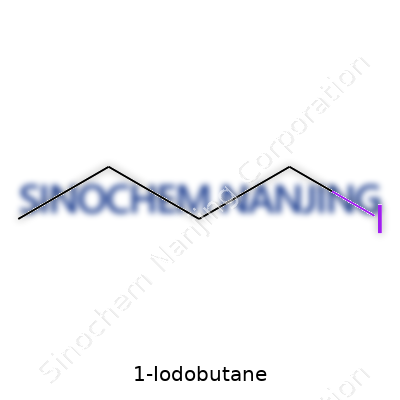
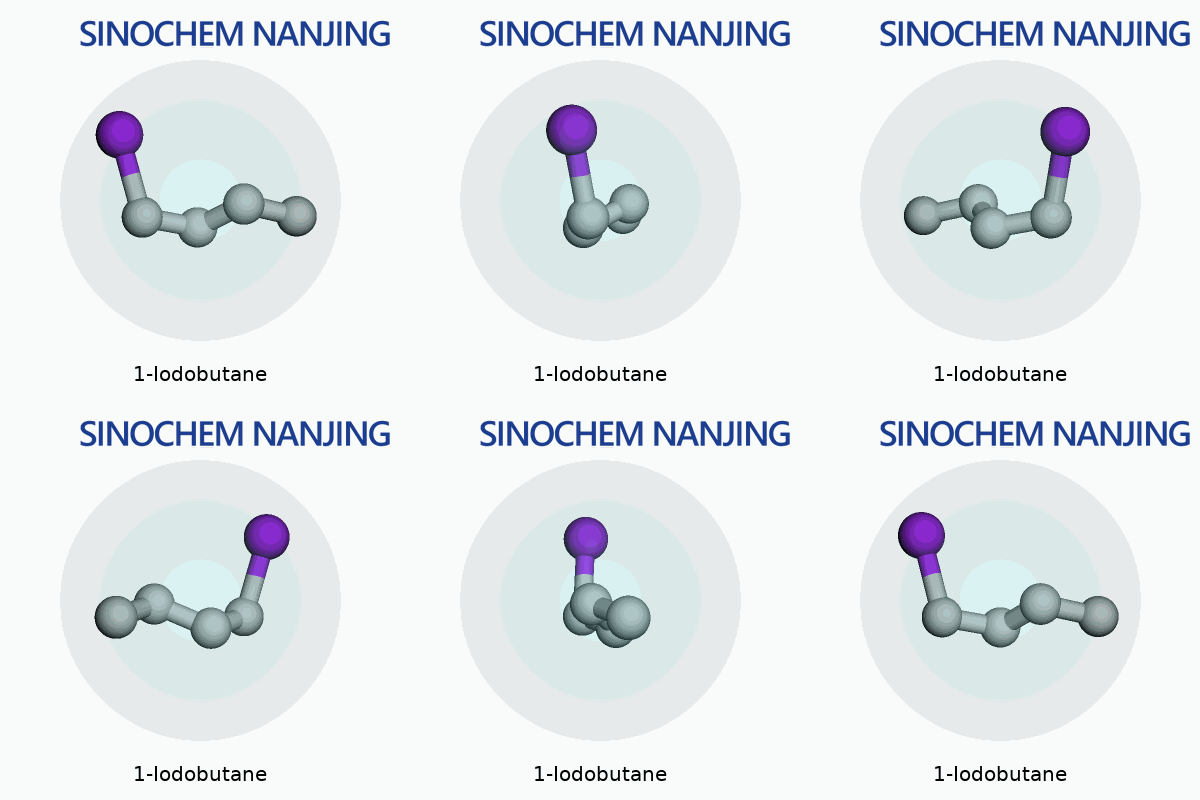
| Names | |
| Preferred IUPAC name | 1-iodobutane |
| Other names |
Butyl iodide 1-Butyl iodide n-Butyl iodide |
| Pronunciation | /waɪˌoʊ.doʊˈbjuː.teɪn/ |
| Identifiers | |
| CAS Number | 542-69-8 |
| Beilstein Reference | Beilstein Reference: 1718732 |
| ChEBI | CHEBI:35768 |
| ChEMBL | CHEMBL15824 |
| ChemSpider | 38501 |
| DrugBank | DB02043 |
| ECHA InfoCard | 100.007.119 |
| EC Number | 603-007-00-7 |
| Gmelin Reference | Gmelin Reference: 8077 |
| KEGG | C06730 |
| MeSH | D001021 |
| PubChem CID | 8055 |
| RTECS number | EK8575000 |
| UNII | MU72812JTK |
| UN number | UN1993 |
| Properties | |
| Chemical formula | C4H9I |
| Molar mass | 184.03 g/mol |
| Appearance | Colorless liquid |
| Odor | pleasant |
| Density | 1.616 g/mL at 25 °C |
| Solubility in water | 0.3 g/L |
| log P | 2.83 |
| Vapor pressure | 3.31 mmHg (at 25 °C) |
| Acidity (pKa) | 15.6 |
| Basicity (pKb) | pKb ≈ 15.0 |
| Magnetic susceptibility (χ) | -68.0·10⁻⁶ cm³/mol |
| Refractive index (nD) | nD 1.490 |
| Viscosity | 2.238 mPa·s (25 °C) |
| Dipole moment | 2.05 D |
| Thermochemistry | |
| Std molar entropy (S⦵298) | 247.5 J⋅mol⁻¹⋅K⁻¹ |
| Std enthalpy of formation (ΔfH⦵298) | -23.3 kJ/mol |
| Std enthalpy of combustion (ΔcH⦵298) | -2422.7 kJ/mol |
| Hazards | |
| Main hazards | Harmful if swallowed, causes skin irritation, causes serious eye irritation, may cause respiratory irritation, harmful to aquatic life. |
| GHS labelling | GHS02, GHS07 |
| Pictograms | GHS02,GHS07 |
| Signal word | Warning |
| Hazard statements | H302, H315, H319, H335 |
| Precautionary statements | P210, P280, P305+P351+P338, P301+P312, P337+P313 |
| NFPA 704 (fire diamond) | 1-1-0 |
| Flash point | 41 °C |
| Autoignition temperature | 180 °C |
| Explosive limits | Lower: 1.1%, Upper: 7.0% |
| Lethal dose or concentration | LD50 oral rat 4550 mg/kg |
| LD50 (median dose) | LD50 (median dose): Oral rat LD50 = 2,660 mg/kg |
| NIOSH | XN8575000 |
| PEL (Permissible) | Not established |
| REL (Recommended) | 50 ppm |
| Related compounds | |
| Related compounds |
1-Bromobutane 1-Chlorobutane 1-Fluorobutane Butane 2-Iodobutane |



