An Editorial Perspective on 1-Iodo-2-Methylpropane
Historical Development
Chemistry stands on the shoulders of many discoveries, sometimes from curious minds simply chasing patterns and reactivity. 1-Iodo-2-methylpropane, an organic compound with modest fame, traces its roots to the early explorations in organohalide synthesis. Decades ago, researchers tried to swap atoms on carbon skeletons, drawn to the power of the halogen group. The iodine atom, heavier and more reactive than its lighter halogen cousins, interested synthetic chemists for its ability to create reactive intermediates. In the early days, making iodoalkanes often meant risking exposure to toxic vapors with glassware that could shatter. Even with these risks, shifting chlorine or bromine atoms for iodine created handles for new types of synthetic work, which ended up touching sectors from pharmaceuticals to petroleum refining. Sitting here, I can see how a single compound like 1-iodo-2-methylpropane tells a story of chemistry’s move from harsh and risky homegrown processes to the controlled, clean, and precise methods of modern laboratories.
Product Overview
One can spot 1-iodo-2-methylpropane by its distinctive structure—a three-carbon backbone, a methyl group sprouting from the middle, and a glossy iodine atom clinging to the edge. Folks in the lab see it as a colorless, oily liquid with an unmistakable, sometimes irritating odor. Away from technical documents, most users remember it for its role as an alkylating agent. In practical synthesis, it pops up as a reactive building block for more complex molecules digestible by both industrial needs and academic curiosity. For someone who has mixed flasks late at night and monitored reactions with care, the presence of iodo-compounds marks an intersection where practical utility meets chemical curiosity.
Physical & Chemical Properties
Physically, 1-iodo-2-methylpropane brings together a combination of density and volatility. Its relatively high molar mass, courtesy of iodine, gives it more heft compared to lighter alkyl halides. This denser liquid doesn’t evaporate as quickly, so you catch whiffs of it longer when handling open bottles. Chemically, iodine’s size stretches the molecule’s carbon-iodine bond, and that same stretch primes it for reactions such as nucleophilic substitution. That trait keeps it on the shelves for work ranging from pharmaceuticals to the design of novel organic frameworks. Practical experience tells me that proper handling matters—spill a drop, and the sticky scent lingers, a reminder of its stubborn persistence in the environment if not managed respectfully.
Technical Specifications & Labeling
Industry standards developed for 1-iodo-2-methylpropane focus on purity—fractions of a percent difference affect yields in research and commercial synthesis. Most reputable suppliers offer it at 98 percent or better purity, labeling it with clear hazard warnings, batch numbers, and proper hazard pictograms. Chemists appreciate reliable labels, since mix-ups can lead to expensive failures or even safety risks. The consistency demanded in labeling echoes regulatory pushes for traceability, so each bottle carries a trail—from synthesis to the bench. Accurate technical details on packaging aren’t just box-ticking: they save lives, labs, and research budgets alike.
Preparation Method
Preparing 1-iodo-2-methylpropane usually starts with 2-methylpropan-1-ol or 2-methylpropyl derivatives, relying on conversion techniques honed over decades. The classic Finkelstein reaction stands out—swap a chlorine or bromine with iodide using sodium iodide in acetone, taking advantage of solubility quirks and thermodynamic favorability. Runs like these taught me the value of patience and careful monitoring: one misstep with the solvent or temperature, and yields tank. Scaling up this reaction calls for practical thinking, since large runs increase the risk of unwanted byproducts and tougher waste management challenges. Each approach requires respect for both the reactivity of iodine and the tenacity of the alkyl group, especially under heating.
Chemical Reactions & Modifications
Organic chemists value 1-iodo-2-methylpropane mainly due to its eager reactivity in nucleophilic substitution and coupling reactions. In my own projects, swapping the iodine atom provided access to ethers, amines, and other derivatives vital to pharmaceutical intermediates. Its reactivity demands careful stoichiometry and temperature control; otherwise, the reaction veers off course. Newer transition-metal-catalyzed couplings expanded its value, with palladium-catalyzed cross-couplings connecting it to aromatic or vinyl partners in a single step. These transformations speed up synthesis pipelines and allow chemists to build molecules once considered unreachable in a reasonable time.
Synonyms & Product Names
Scientists often juggle synonyms—1-iodo-2-methylpropane also goes by isobutyl iodide, 2-methyl-1-propyl iodide, or, less accurately, isobutyl iodide. Knowing these variations isn’t just pedantry; it heads off costly mistakes when ordering reagents or interpreting older literature. Industries and catalogs still list it under multiple names, which makes clear communication among purchasing teams and researchers all the more critical. I have swapped stories with colleagues who missed out on crucial data due to a synonym confusion—proof that even little errors in name recognition can send progress sideways.
Safety & Operational Standards
Handling 1-iodo-2-methylpropane means respecting its volatility and potential for harm. Its vapors irritate skin, eyes, and respiratory tracts; improper ventilation or spills can put staff out of action and force expensive cleanups. Regular training builds muscle memory for quick response to splashes and fume leaks. Labs follow strict containment rules—gloves, goggles, and working fume hoods are standard. Management audits usage logs and waste records, especially since regulations tighten every year as environmental and health concerns grow. These protocols work—one overlooked vent or absent glove turns a simple experiment into a trip to the safety office or local clinic.
Application Area
1-Iodo-2-methylpropane’s main draw comes from its role as an alkylating agent. Pharmaceutical labs grab it for N-alkylation, the formation of carbon-nitrogen bonds vital to many active molecules. Agrochemical research uses it for synthesizing tailored pesticides and herbicides. In my days prepping molecular libraries, I found it sped up the stepwise construction of new drug analogs or crop protection leads. The electronics industry sometimes taps organoiodides like this one in the search for novel materials, though most commercial bulk ends up in organic synthesis. Its nimble reactivity shortens timelines, which matter when a competitor pushes to market. Careful selection of applications ensures minimal waste and less environmental fallout—a priority for both researchers and managers balancing productivity and sustainability.
Research & Development
Ongoing research around 1-iodo-2-methylpropane centers on cleaner preparations and finding alternatives for difficult alkylations. Catalyst innovation opens new doors—greener solvents and lower temperatures drive both cost savings and environmental benefits. Academics look into expanding the utility of the compound in complex molecule assembly, while industry labs evaluate performance in new processes beyond traditional pharmaceuticals. Partnerships with regulatory bodies also push for methods that minimize side products and ease waste handling. Graduate students, fresh from theory and hungry for hands-on work, take on optimization studies that incrementally build global knowledge. Over the years, I watched as these efforts not only delivered safer processes but sometimes sparked clever solutions in adjacent chemical arenas.
Toxicity Research
Anyone around synthetic chemicals long enough learns vigilance. Toxicity research identifies iodoalkanes as irritants, with potential for cumulative harm to organs and ecosystems. Animal studies underline acute toxicity, though concrete long-term data on 1-iodo-2-methylpropane is still evolving. The danger often comes from repeated low-level exposures, which teach the importance of closed systems and scrupulous record-keeping. Institutional review boards scrutinize protocols, pushing researchers to update procedures every time new toxicological data emerges. My own experience with risk assessments revealed that simple steps—double-checking ventilation and documenting every exposure—outweigh even the flashiest innovations in equipment. No shortcut replaces a culture of respect for health research.
Future Prospects
Looking ahead, the future for 1-iodo-2-methylpropane hinges on sustainable chemistry. Research groups and commercial labs alike hunt for methods that cut down hazardous waste and limit reliance on heavy halogens. Advances in catalysis may soon render some iodoalkanes less crucial, as milder and more selective reagents take their place in key reactions. Efforts to recycle iodine or use bio-based feedstocks grow year by year, encouraged by sharper regulations and a workforce increasingly shaped by climate awareness. Even as the chemistry toolbox expands, the lessons learned from compounds like 1-iodo-2-methylpropane—balancing reactivity, utility, and responsibility—stay at the center of practice. Future generations will write new chapters, turning yesterday’s reactive intermediates into stepping stones toward cleaner, safer, and more inventive chemical science.
What is the chemical formula of 1-Iodo-2-Methylpropane?
Real Chemistry Lives in Simple Details
Ask someone in a lab coat what 1-Iodo-2-Methylpropane looks like on paper and you’ll hear “C4H9I" before you get your question out. This isn’t just trivia—getting these chemical formulas right unlocks a lot more than an answer on a test. It helps track toxicity, recognize building blocks in a pharma lab, even connect dots from crude oil all the way to the pill shelf. If you work with chemicals or care about what trickles through water quality or manufacturing processes, puzzle pieces like this matter.
Where the Structure Comes From
This compound has a backbone of propane—a classic three-carbon chain—plus one extra carbon for good measure, thanks to a methyl group attached at the second carbon. One of the hydrogens gets swapped for an iodine atom. That swap leads to four carbons, nine hydrogens, and a single iodine: C4H9I. You’ll see maps of atoms in textbooks, but folks see these as more than just dots and lines. The iodine atom isn’t just a decoration; it changes how the molecule reacts and where it fits.
Why Get the Formula Right?
Mixing up formulas in a report or mixing bench chemicals with the wrong stock creates real problems. Iodine atoms have heft, much heavier than chlorine or bromine. In my early college days, I tried to run a reaction thinking a batch had bromopropane—used the wrong formula. The yield tanked and lab time got wasted cleaning up. Those real-world mess-ups are how you learn that the details in a formula determine everything from solubility to toxicity. According to the National Library of Medicine, iodine-containing organics tend to stick around longer when spilled compared to their lighter cousins, and they show up differently in mass spectrometry, making detection and disposal plans change.
Practical Uses and Safety Matters
1-Iodo-2-Methylpropane may not headline the news, but it plays a behind-the-scenes role in organic synthesis. Labs use it to bolt on carbon chains or introduce new functional groups into a bigger molecule—the kind of work that feeds into drug discovery and specialty materials. Anyone handling this compound needs to know its true makeup. Direct contact, spills, or inhalation can send iodine atoms into the body, not just burn the skin. The U.S. Centers for Disease Control (CDC) warns about organoiodine compounds potentially damaging thyroid function with repeated exposure. Even small labs need good ventilation and well-labeled containers.
Moves Toward Better Handling
Many accidents link back to confusing similar-sounding or similar-looking compounds. Having visual aids on benches and redundancy in label checks makes a surprising difference. Some teams print out the formulas big and bold, or use color-coded storage to keep the iodine versions apart from the bromine or chlorine ones. Safety officers teach not just what the formula means but why it matters, walking through what happens if you grab C4H9Br instead of C4H9I. Investing early in these habits keeps both people and results safe.
Bringing It All Together
Kitchens have recipes—labs have formulas. 1-Iodo-2-Methylpropane is C4H9I by formula, but every letter shows up for a reason. Chemistry profits from clear thinking, and accuracy about an atom or number spells the difference between waste and discovery, safety and mishap. Keeping formula literacy high stands as a foundation for everything that follows, from making a new material to protecting everyone working the bench.
What are the common uses of 1-Iodo-2-Methylpropane?
Why This Little Molecule Matters
1-Iodo-2-methylpropane doesn’t show up as a household name, but chemists and laboratory workers recognize its punch in organic synthesis. Most folks won’t see it outside the lab, yet it serves as a workhorse behind the scenes, paving the way for new compounds and products. It’s all about the power that an iodine atom brings to the table. This molecule delivers that effect in spades, thanks to the easy-to-break bond between its carbon and iodine atoms.
Vital Tool in Synthetic Chemistry
Organic chemists often look for molecules that can introduce branching in a carbon chain—1-iodo-2-methylpropane stands out for its ease of use when trying to add a branched isobutyl group. The iodine kicks out easily, leaving behind a carbon that grabs onto almost anything electrophilic. Making new molecules that might go into drugs or specialty chemicals becomes a lot simpler with this tool. There’s no chemistry of complexity without building blocks like this one.
Building Pharmaceuticals
Modern drug discovery chases after new molecules that fit the body’s needs, and modifying side chains on drug candidates plays a big role in this process. Medicinal chemists use 1-iodo-2-methylpropane to plug in isobutyl groups and see how that changes the effect on an enzyme or receptor. Adding this small tweak helps improve how well a molecule works, how long it stays in the body, or even how easily it dissolves. Many pain relievers, blood pressure medications, and antiviral drugs grow from foundation steps that include this building block.
Agrochemical Applications
Farming chemicals like herbicides and insecticides often come from families of complex organic compounds. Each little piece tacked on to a molecule can change how safe or effective it is for crops. 1-Iodo-2-methylpropane gives formulators a simple path to isobutyl side chains, which can fine-tune everything from longevity in soil to effectiveness on a specific weed. That kind of customization isn’t possible without reliable reagents like this one.
Material Science and Surfactant Synthesis
Beyond drugs and crop agents, some consumer goods trace their origins back to this compound. Surfactant manufacturers use 1-iodo-2-methylpropane so they can adjust chain branching and produce ingredients with the exact wetting or foaming quality needed for soaps and detergents. Custom-building these molecules can mean a difference in how comfortable a shirt feels, how easily a stain lifts, or how well a household cleaner works.
Safety and Handling
This is not a chemical for casual use. Iodinated organics often give off sharp, strong odors and they’re known to irritate the eyes and respiratory tract. Most labs keep it tightly capped and handle it under fume hoods. Personal protective equipment matters—always gloves, goggles, and lab coats. Disposal also needs attention; halogenated organics shouldn’t get mixed with regular waste streams. Adhering to local safety regulations keeps researchers healthy and the environment protected.
Responsible Innovation
As chemists continue to create new materials and medicines, smart use and storage of reagents like 1-iodo-2-methylpropane matter more than ever. Modern labs need to weigh efficiency against safety and environmental impact. Adopting green chemistry approaches, such as using catalytic rather than stoichiometric amounts, can reduce the need for these halogenated intermediates. Researchers who share best practices foster innovation that respects both science and sustainability, shaping how future molecules get built.
Is 1-Iodo-2-Methylpropane hazardous or toxic?
Getting to Know the Chemical
1-Iodo-2-methylpropane shows up occasionally in lab work and sometimes in chemical manufacturing circles. Its structure includes an iodine atom attached to a branched propane chain. Small changes to hydrocarbons can totally change how a substance interacts with the environment or the body. I spent some time around labs that used all kinds of halogenated compounds, and I’ve seen what happens when folks let familiarity with ordinary-sounding chemicals lull them into letting their guard down.
Potential Hazards Up Close
The main concerns for 1-iodo-2-methylpropane boil down to a mix of chemical reactivity and biological risk. Iodinated organics like this one can irritate eyes, skin, and the respiratory tract. That sharp, instantly recognizable smell gives away their volatility. I once witnessed a rush to the safety shower after a minor spill of a similar iodo compound; the skin reddened and itched despite quick action. The fact is, halogenated solvents can move through gloves if you don’t use the correct type. Nitrile stands up to most exposure, but anything thinner or older breaks down—and the burning sensation on the skin is not a good memory.
Just like other small halogenated molecules, this compound can present inhalation risks. Breathing in the vapors at any decent concentration produces dizziness and nausea, sometimes a cough that lingers. Folks with lung sensitivity get hit much harder. There’s also the issue of potential systemic toxicity—organics containing iodine get metabolized by the liver and might cause headaches or more severe symptoms if exposure keeps happening.
Evidence and Research Gaps
Publicly accessible data on 1-iodo-2-methylpropane isn’t as robust as for solvents like chloroform or bromoform. But looking at similar compounds, you can expect this molecule to show at least moderate toxicity. It likely acts as an irritant and, at high doses, could harm organs over time. Animal studies suggest organoiodides can mess with thyroid function because the body confuses them with natural iodine sources. While no dramatic stories make headlines for this specific chemical, it belongs to a class with a track record of trouble when mismanaged.
What Matters in the Workplace
Ventilation makes a huge difference. A fume hood or even a strong local exhaust keeps the air safe. I’ll admit, once or twice I tried to “just pour quickly” without extra airflow in a pinch. That shortcut earns regret and a sore throat for the day. Eye protection and gloves—even for a quick transfer—never felt like wasted effort. The small stuff builds up: left unwashed, a tiny splash leads to skin sensitivity after repeated contact. Proper storage, in tightly sealed bottles, cuts down on vapors that might otherwise leak into lab space over time.
Environmental Impact and Disposal
Compounds containing iodine do not break down easily if they end up in water or soil. They’re persistent, and sometimes they move through the ecosystem in ways we don’t expect. Incineration by an experienced waste handler stands as the best route. Pouring anything down the drain contaminates local water and always breaks lab protocols, for good reason. The lessons here echo my own training: treat these substances with the same care you’d reserve for more notorious toxics, even if regulators haven’t flagged them yet.
Keeping Safe and Moving Forward
Everyone benefits from treating 1-iodo-2-methylpropane with respect. Using the right personal protective equipment, fans or fume hoods, and strict storage guidelines saves a ton of grief in the long run. Research into chronic effects remains limited, so erring on the side of caution feels like the best call. More transparency about potential hazards empowers everyone, from students to seasoned chemists, to make smart choices about exposure—especially with organoiodine compounds where the long-term impacts still aren’t fully mapped out.
How should 1-Iodo-2-Methylpropane be stored?
Understanding the Risks Behind the Chemical
1-Iodo-2-methylpropane catches the attention of anyone who’s handled a stockroom filled with halogenated solvents and specialty intermediates. Its iodine atom brings heft, and its volatility stands out during warm days or in labs where the air feels thick. Rarely does a bottle go unlabelled – the heavy, often unfamiliar scent reminds you this isn’t water, nor is it your everyday acetone.
Why Storage Isn’t Just About Following Labels
The Material Safety Data Sheet offers some clues, but real-world experience calls for a dose of caution above and beyond what’s printed on paper. Letting 1-iodo-2-methylpropane linger in a poorly sealed bottle, even for a short time, lets vapors leak out, spoiling air quality and risking irritation – not to mention safety codes. For organoiodides like this, exposure to sunlight or open air encourages decomposition, forming nasty byproducts you really don’t want in your workspace. The substance doesn’t tolerate moisture well; even minor humidity in the air can react, with enough time, to compromise its purity. Failure to notice early signs of decomposition – color change, haze, or gas formation – brings real health risks. This is not the kind of chemical where sloppiness works out.
Smart Storage Practices That Actually Work
Glass or high-grade plastic bottles sealed with PTFE-lined caps do the job well. Leaving the bottle in direct sunlight or near a heat source courts disaster. Instead, a dry, dark cabinet works best – the further away from a warm radiator or window, the better. Room temperature stays safest, though a cool spot in the chemical storage fridge (one designed for organics, not food) adds margin. Hygrometers earn their keep here: tracking moisture levels lets you react before humidity creeps in.
I once saw a junior staffer stash a bottle on a dusty general-purpose shelf, set right under the main extraction fan. Within a week, the label turned sticky from condensation, which kickstarted bottle corrosion. Even chemical-resistant plastics break down when given enough time in the wrong spot; failing to use sealed secondary containment trays just means one cracked lid sends material everywhere. Absorbent pads underneath offer a last line of defense but never substitute for a correct storage spot in the first place.
Labeling and Environmental Responsibility
You can’t overstate the importance of clear, dated labeling. Including hazard signs, full chemical name, and even storage date makes life easier – not only for yourself but for the next person who has to handle the inventory. Rotating stock keeps fresher material up front and prevents any chance of grabbing an old, decomposed sample by accident.
Proper disposal plans also matter; leftover or spent 1-iodo-2-methylpropane doesn’t belong in regular landfill trash. Specialized hazardous waste streams protect both staff and the environment beyond the lab’s four walls. By following the process set out by local regulations, labs support community health while avoiding costly fines.
Building Good Habits and Knowledge Sharing
Chemical stewardship involves more than ticking boxes on a safety checklist. Sharing good storage habits in team meetings or arranging refresher sessions for handling less common materials like 1-iodo-2-methylpropane makes everyone safer. Newer researchers see the practical side of textbook advice when seniors explain the little mistakes everyone almost makes. This is how accidents drop and confidence rises in every workspace where unusual or hazardous substances play a role.
What are the physical properties of 1-Iodo-2-Methylpropane?
Curiosity Meets Chemistry
Let’s talk about a chemical that doesn’t show up in most folks’ kitchen cabinets, but gets plenty of action in labs: 1-iodo-2-methylpropane. This molecule wears its heavy iodine badge right at the front, which changes its behavior compared to its lighter cousins in the alkane family. Most people won’t ever hold a bottle of it, but in organic chemistry, this compound means business.
How It Looks and Feels
Pouring this liquid in the lab, you get a clear, colorless product. The first thing anyone notices—long before the equations—comes from the weight in the hand. This isn’t water. With a density around 1.615 grams per cubic centimeter at room temperature, 1-iodo-2-methylpropane feels heavier than it looks, thanks to the iodine. That matters, especially if you’re used to tossing around lighter organic solvents. It’s a mental reset.
Touching this stuff isn’t safe—gloves are law—but the liquid slips around fast, nowhere near the syrup end of the scale. Trying to shake a vial, I’ve watched it slosh around with all the energy you'd expect from something with a relatively low viscosity. The boiling point lands in the 90–110 degrees Celsius range, enough to give moderate volatility in a warm room, but nothing explosive. That means it needs some minding, but not jumpy nerves like you’d get with diethyl ether or acetone.
Odor, Solubility, and Flash Point
The smell hits sharp, almost like wet paint mixed with metal. Not as brutal as chloroform or benzene, but hard to miss if the cap’s off too long. Sometimes reminders come not from numbers, but the nose.
Water and 1-iodo-2-methylpropane don’t make friends. Give them a good shake and you’ll see two layers settle out quick. The solubility in water stays minuscule, but mix it with organic solvents like ethanol, ether, or chloroform and you get a homogenous blend. This fact shapes how people store and handle it—leaks don’t head for the drain, and cleanup means more than a splash with water.
Flash point clocks in at just below 23°C. There’s a narrow gap between safe handling and reaching ignition. The risk might seem low in small amounts, but in my early days, seeing a small puddle close to a Bunsen burner really drove that lesson home. Flammable work needs sharp focus.
Handling and Hazards
Physical properties aren’t just about numbers—they dictate how chemists plan for safety. This compound will move fast at room temperature but doesn’t evaporate in seconds. Lack of strong odor can trick newcomers into letting their guard down, but skin contact or inhalation carries risk—irritation, and worse with repeated exposure. I’ve seen colleagues rush through protocols; one unlucky spill leaves a lasting memory for the careful ones.
The heft in each drop means spills don’t spread as quickly as lighter solvents. In practice, this gives a second’s grace to stop, think, grab the absorbent pads—because every chemist knows iodine-based compounds seldom wipe up as clean as they spill.
What Can Be Done Differently?
Routine can dull respect for chemicals, but putting the bottle back in the right cabinet, using fume hoods, and labeling with clear hazard warnings make the next hand-off safer. There’s no shortcut to safety. It pays off to double-check vapor paths, handle glassware with steady hands, and stay mindful of those low flash points. My experience shows small details—like using glass pipettes instead of plastic, or swapping gloves earlier—can stop small accidents from turning into long cleanups or worse. Lab work with 1-iodo-2-methylpropane deserves the same sharp eyes as the flashiest new molecule.
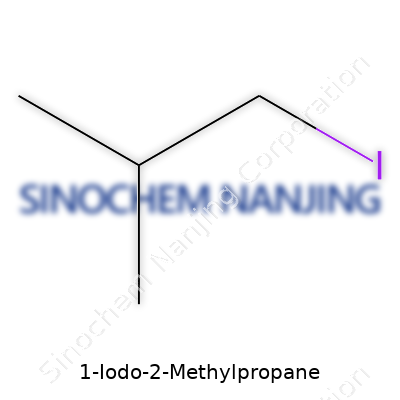
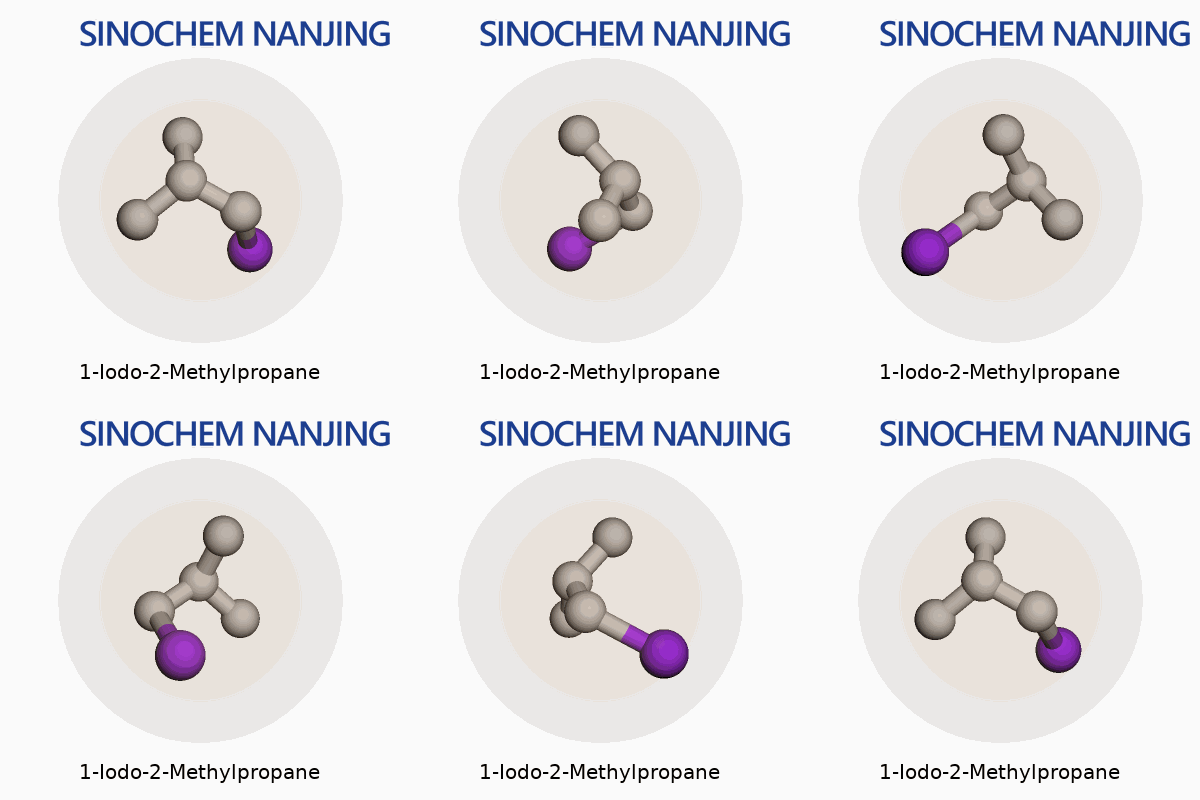
| Names | |
| Preferred IUPAC name | 2-Iodo-2-methylpropane |
| Other names |
Isobutyl iodide 2-Iodoisobutane 1-Iodoisobutane 2-Methyl-1-iodopropane |
| Pronunciation | /waɪˈɒdoʊ tuː ˈmiːθəl ˈproʊˌpeɪn/ |
| Identifiers | |
| CAS Number | 513-38-2 |
| Beilstein Reference | 3580532 |
| ChEBI | CHEBI:51165 |
| ChEMBL | CHEMBL282315 |
| ChemSpider | 10154 |
| DrugBank | DB11645 |
| ECHA InfoCard | ECHA InfoCard: 100.007.341 |
| Gmelin Reference | 3565 |
| KEGG | C06341 |
| MeSH | D011188 |
| PubChem CID | 6554 |
| RTECS number | UN2975000 |
| UNII | M7D88H4B1E |
| UN number | UN2359 |
| CompTox Dashboard (EPA) | DJ8V1D3YJQ (string) |
| Properties | |
| Chemical formula | C4H9I |
| Molar mass | 184.024 g/mol |
| Appearance | Colorless liquid |
| Odor | Unpleasant |
| Density | 1.595 g/mL at 25 °C |
| Solubility in water | Insoluble |
| log P | 1.97 |
| Vapor pressure | 3.5 mmHg (25°C) |
| Acidity (pKa) | pKa = 50 |
| Basicity (pKb) | pKb = -1.3 |
| Magnetic susceptibility (χ) | -76.0e-6 cm³/mol |
| Refractive index (nD) | nD 1.448 |
| Viscosity | 1.823 cP (25°C) |
| Dipole moment | 2.10 D |
| Thermochemistry | |
| Std molar entropy (S⦵298) | 322.8 J·mol⁻¹·K⁻¹ |
| Std enthalpy of formation (ΔfH⦵298) | -65.9 kJ/mol |
| Std enthalpy of combustion (ΔcH⦵298) | -2470.7 kJ/mol |
| Pharmacology | |
| ATC code | '' |
| Hazards | |
| GHS labelling | GHS02, GHS07 |
| Pictograms | GHS02,GHS07 |
| Signal word | Warning |
| Hazard statements | H226, H319, H335 |
| Precautionary statements | P210, P233, P240, P241, P242, P243, P261, P271, P280, P303+P361+P353, P304+P340, P305+P351+P338, P312, P337+P313, P370+P378, P403+P235, P501 |
| Flash point | < 23 °C c.c. |
| Lethal dose or concentration | LD₅₀ (oral, rat): 955 mg/kg |
| LD50 (median dose) | LD50 (median dose): Oral rat LD50 > 2,000 mg/kg |
| NIOSH | SA9100000 |
| PEL (Permissible) | Not established |
| REL (Recommended) | REL: NIOSH: 2 ppm (10 mg/m³) TWA |
| Related compounds | |
| Related compounds |
1-Bromo-2-methylpropane 1-Chloro-2-methylpropane 2-Iodopropane 1-Iodopropane Isobutyl iodide |



