1-Chloro-3-Bromopropane: Chemistry, Context, and the Road Ahead
Historical Development
The path of 1-Chloro-3-Bromopropane traces back to a wave of organic synthesis advancements that swept laboratories in the mid-twentieth century. Chemists searching for versatile halogenated compounds saw potential in molecules that could act as building blocks for pharmaceuticals, polymers, and specialty chemicals. Through persistent experimentation, researchers unlocked halogenation strategies and established a clearer view of the ways single molecules—like 1-Chloro-3-Bromopropane—could enable simpler synthetic routes compared to juggling two halogenating reactions. My early work with halogenated organics reminded me how even basic molecules often stemmed from decades of collective trials, errors, and modifications. Halogenated hydrocarbons, considered niche in the 1960s, moved into mainstream reagent shelves. Scientists gradually gave more attention to controlling positional selectivity and minimizing unwanted side-products, charting a more refined era for laboratory and industrial synthesis.
Product Overview
At its core, 1-Chloro-3-Bromopropane provides both chloride and bromide groups bound to a simple propane backbone. This arrangement interests chemists aiming to conduct substitution or elimination reactions, where the relative reactivity of the two halogens—plus the chain length and configuration—matters. Users often look for it in transparent liquid form, usually stored in amber glass to reduce risk from light-induced degradation. The practical uses have grown from simple derivatives to include its function as an intermediate, a blocking group, or as a stepping stone towards more complex molecular frameworks. I've found it rarely stands alone; its main value emerges in the transformations it enables, rather than any magic in the molecule itself.
Physical & Chemical Properties
1-Chloro-3-Bromopropane appears as a colorless to pale yellow liquid with a noticeable halogen odor, somewhat biting and hard to completely remove from equipment after use. The compounds’ moderate density—heavier than water due to the presence of chlorine and bromine—affects how it handles in separatory funnels or density-based separations. The boiling point usually falls in the neighborhood of 150°C, and the liquid doesn’t mix well with water. My experience reminded me how crucial it is to anticipate dense halocarbons collecting on the bottom in aqueous workups; a detail overlooked too often even by seasoned students. Chemical stability remains reliable if stored carefully, but light and strong bases will push the molecule towards decomposition or unwanted side reactions.
Technical Specifications & Labeling
Truth be told, labeling halogenated compounds like this one sticks close to standard hazards. Bottles carry warnings about toxicity, flammability, and environmental persistence. Most reputable vendors provide GC or NMR data to vouch for purity, since minor impurities in halide reagents can complicate downstream chemistry. I've seen organizations grapple with labeling rules across countries; sometimes a reagent from abroad sports extra pictograms and precautionary phrases, underscoring the global pressure to treat hazards seriously. These technical details occasionally feel bureaucratic in the lab’s heat, but a single mislabel can set off confusion or worse—a costly mistake with dangerous chemicals.
Preparation Method
Classic preparation of 1-Chloro-3-Bromopropane starts from 1,3-propanediol or 1,3-dihalopropanes. Reactions proceed through halogen exchange processes, such as reacting 1,3-dibromopropane with sodium chloride or exploiting the differences in nucleophilicity. Many chemists gravitate towards phase transfer catalysts to smooth out yields, especially when working with less reactive halides. I recall trying direct halogenation routes; even minor shifts in temperature or solvent choice could swing the ratio of products wildly. These challenges underscore the push to refine techniques—drawing on knowledge passed informally from senior chemists as much as from the published literature.
Chemical Reactions & Modifications
Chemists often use 1-Chloro-3-Bromopropane as a functional handle, eager to exploit the two different halides for selectivity. The bromine atom tends to leave more easily in substitution reactions with nucleophiles, opening the molecule to modification into amines, thiols, or other substituted aliphatics. Chlorine offers the route to more controlled transformations, persisting where rougher hands have already pried off the bromine. I've seen this compound act as a sleeping giant in organic synthesis; where some see a simple electrophile, others unlock multi-step pathways or even ring closures, all made viable by smart sequencing of halide activation. Each lab finds variations on this theme, continually reinterpreting the best use for the two halogens present in one chain.
Synonyms & Product Names
The chemical world rarely agrees on a single name, and 1-Chloro-3-Bromopropane carries a handful of aliases. You might see it listed as 3-Bromo-1-Chloropropane, 1-Bromo-3-Chloropropane, or both, depending on which halogen gets pride of place. Not to mention registry numbers from organizations like CAS, which help differentiate it from isomers and similar molecules. In practice, lack of standardization can turn simple ordering into a small research project. I recommend double-checking structure diagrams any time confusion crops up—nobody likes discovering they’ve bought a positional isomer after opening the package.
Safety & Operational Standards
Safe handling of 1-Chloro-3-Bromopropane ranks high. Users contend with toxic vapors, the risk of skin absorption, and persistent residues that stubbornly cling to glassware. Fume hoods become essential, both to vent the acrid smell and to prevent exposure. Modern labs lean heavily onto PPE like double gloves and splash-resistant goggles. Over the years, less cautious practices have faded away. With regulatory bodies regularly updating exposure limits, everyone faces tighter scrutiny, especially in teaching labs where students’ familiarity may lag behind chemical realities. Waste disposal remains a sticking point—halogenated solvents can’t just drain away, raising both moral and legal stakes. Most labs develop protocols assigning specific waste containers for halocarbons, then contract disposal to specialists. The learning curve for proper disposal sticks with anyone who’s tried to navigate the alphabet soup of hazardous waste categories.
Application Area
1-Chloro-3-Bromopropane’s primary utility emerges in synthesis rather than as a finished product. Pharmaceuticals research relies on it to anchor more complex functional groups and as a starting point to construct rings, chains, or heterocycles. Polymer chemists reach for it when a precise halogen content or spatial arrangement gives materials different properties. Even in my own experience, I’ve watched colleagues coax out new organometallic reagents by pairing this compound with magnesium or lithium. Analytical chemistry teams sometimes turn to it as an internal standard for gas chromatography, counting on its volatility and clear peak. Its reach has widened as green chemistry principles push chemists away from more hazardous halides, even as stricter regulations close in on unnecessary toxics. Each use case faces pressure from safety concerns and a push for more sustainable or lower-impact alternatives.
Research & Development
Recent years have seen researchers probing new synthetic methods and applications for 1-Chloro-3-Bromopropane, largely motivated by environmental and regulatory headwinds. Green chemistry goals—like solvent minimization, alternative energy inputs, and improved atom economy—shape the latest batch of studies. I came across papers swapping legacy reagents for ionic liquids or exploring microwave-assisted reactions that shrink cycle times and boost overall yields. Collaboration between academia and industry now feels less siloed, as safety data and synthetic knowhow flow more freely between camps. Lab automation and machine learning place another layer atop traditional research, accelerating route refinement and helping teams compare dozens of possible transformations before ever filing a patent. The development pipeline no longer belongs to large chemical firms alone—small startups and interdisciplinary teams challenge conventions, tilting the field towards more efficient, greener syntheses.
Toxicity Research
Toxicologists track halogenated hydrocarbons with justified concern. 1-Chloro-3-Bromopropane, like many relatives, brings acute toxicity risks if inhaled, ingested, or absorbed—and also stirs questions about chronic exposure. The molecular size and dual halogen content raise red flags for bioaccumulation and environmental persistence, echoing lessons learned from now-regulated solvents. Rodent studies have flagged potential nervous system depressant effects and liver toxicity. My early assumptions about “routine” chemicals faded as I read more on long-term risks—even small leaks or repeated skin contact can build up, a fact not always clear from older textbooks. Regulatory agencies and institutional safety boards filter these data into workplace exposure guidelines, striving to keep research while trimming the long shadow of occupational illness.
Future Prospects
Looking ahead, 1-Chloro-3-Bromopropane will face mounting pressure to remain relevant in synthesis as greener alternatives take the spotlight. Demand persists in specialty laboratories and tightly controlled industrial settings, but the combination of regulatory scrutiny and sustainability targets encourages chemists to rethink reliance on halogenated feedstocks. My sense is that innovation will swirl around both replacement strategies—like biobased or catalytic approaches—and improved lifecycle management for old standbys like this one. Investing in better degradation pathways, closed-loop waste recovery, and rapid detection methods can soften some environmental tolls. Future research may cement its status as an enabling molecule in specific, high-value domains while curtailing broader use that risks health or ecological harm. The cycle of chemical advancement never truly ends; each generation retools its portfolio while weighing risk, reward, and responsibility.
What is the chemical formula of 1-Chloro-3-Bromopropane?
Chemical Formula: C3H6BrCl
Walk into any organic chemistry lab and chances are you’ll find bottles labeled with unfamiliar names and formulas. 1-Chloro-3-bromopropane probably sits on one shelf, waiting for its turn in the limelight. Scientists and students both need to know its formula: C3H6BrCl. These six elements—carbon, hydrogen, bromine, and chlorine—come together to form a straightforward but significant molecule.
Why should anyone care about 1-Chloro-3-bromopropane outside a classroom or research lab? Out in the real world, it serves as more than a mouthful. People use this compound when they want to build larger, more complex molecules. For example, it plays a part in organic syntheses—those complex kitchen recipes of modern science where each ingredient must fit a certain way.
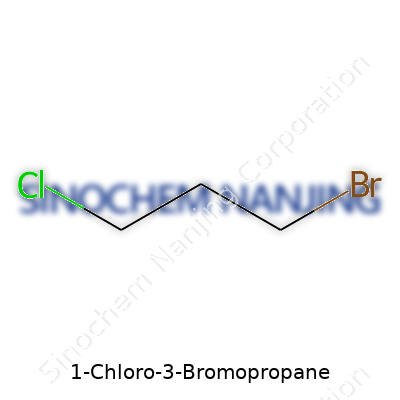
Three carbon atoms line up to create the backbone. On one end, a chlorine atom attaches. On the other, a bromine. Along the chain’s body, hydrogen atoms fill in the gaps. That makes C3H6BrCl as much a set of building blocks as it is a finished puzzle. The two different halogens, bromine and chlorine, give it special versatility. Chemists choose between them based on which reaction they need. One halogen might leave the molecule faster or stick around longer; nature makes no promises on how a reaction will end.
The real value of 1-Chloro-3-bromopropane lies in its reactivity. In practical terms, it’s a problem-solver. Researchers aiming to attach unique molecular groups look for molecules that are both sturdy and easy to manipulate. This chemical delivers on both points. For example, chemical manufacturers use it to help create pharmaceuticals and specialty polymers. I’ve watched students struggle to memorize dozens of chemical structures for exams, but this one sticks because its simplicity gives it a starring role in so many textbook reactions.
Not every compound earns the right to be studied, handled, and worked into research. 1-Chloro-3-bromopropane stands out because of what it allows us to do. The presence of both chlorine and bromine atoms opens up selective substitutions—swapping one atom for another—to build even more advanced molecules. That kind of selective chemistry powers a lot of medical breakthroughs, as well as innovations in electronics and coatings.
Every chemical in a lab poses potential risks. 1-Chloro-3-bromopropane must be treated with proper care. Chlorinated and brominated compounds can harm air quality or linger in groundwater. Safe storage, responsible disposal, and personal protective equipment matter more than ever. At one university lab I visited, strict inventory logs and automated fume hoods helped keep everyone safe. Taking shortcuts only opens the door to chemical burns and environmental headaches.
Any straightforward formula can cause big waves if mismanaged. Science education, industry regulations, and greener synthetic methods offer an antidote. By teaching safer methods and investing in alternative green chemistry, labs lighten the environmental load. Scientists keep searching for less hazardous solvents or recyclable halogenated compounds to minimize impact without sacrificing progress.
Some people say that chemistry rests on formulas, but those numbers don’t mean much without practical value. The formula C3H6BrCl points to one molecule, but it stands as a gateway—each atom positioned for possibility, each reactant a small step toward something larger. The right balance of caution, curiosity, and creativity turns a simple compound into the foundation for bigger discoveries.
What are the common uses of 1-Chloro-3-Bromopropane?
Versatile Role in the Laboratory
1-Chloro-3-bromopropane finds its way into many labs for its reliability in organic synthesis. Chemists often count on it when building new structures for pharmaceuticals or agrochemicals. Its structure—carrying both a chlorine and a bromine atom—makes it flexible. One group can be swapped out for something new, letting researchers tweak molecules for specific tasks. There’s a kind of satisfaction in seeing a simple compound open up doors to so many products just by changing small things.
Building Block for Pharmaceuticals
Drug developers don’t like gambling with unreliable building blocks. Here, 1-Chloro-3-bromopropane has earned trust as a starting point for core scaffolds in drug design. Many medicines, from pain relievers to antibiotics, begin life from molecules with these halogen atoms. Adding a group to the chain or swapping out an atom lets teams build diversity into drug candidates. This sort of chemical “tinkering” brings new molecules to clinical trials. Within the industry, speed matters, but so does safety—every shortcut must be reliable.
Functional Material Synthesis
Industries use 1-Chloro-3-bromopropane to prepare specialty chemicals like surfactants and polymers. A surfactant might make a cleaner work better, or a polymer might add durability to a material. Teams working in materials science tend to appreciate how such small molecules pave the way for things as different as adhesives, coatings, or even parts of solar panels. Nothing flashy here—just a backbone that gives structure and function to daily products.
Solvent and Extraction Agent
Lab techs often use this chemical as a phase transfer agent. That means it can help shift reactants between layers in chemical mixtures, helping reactions happen faster and more completely. Extraction of DNA and RNA sometimes draws on these properties; 1-Chloro-3-bromopropane improves the purity of what’s pulled out. To someone in a research lab, pure samples make or break an experiment. Yields go up, frustration goes down.
Challenges and Safer Handling
The flip side of versatility comes with risk. 1-Chloro-3-bromopropane brings irritation hazards for skin, eyes, and lungs. Industrial users must respect this potential. Proper fume hoods, gloves, and goggles become routine gear. Regulations anchor on this reality—safety data sheets don’t just gather dust. Waste management also takes center stage, as environmental releases pose threats to water and soil.
Moving Forward: Better Alternatives and Green Chemistry
Researchers look for replacements that do the job with fewer health concerns. Green chemistry champions find ways to reduce halogenated chemicals in the synthesis pipeline. For example, newer reagents with less toxicity or greater biodegradability gather support. The field shifts as the environmental cost of using halogenated chemicals like 1-Chloro-3-bromopropane becomes clearer. Innovation often comes from pressure—both regulatory and ethical.
Final Thoughts
From early education, I learned to respect chemicals like this. Proper technique means more than just following instructions. Over time, new best practices and improved alternatives often start as small changes: a safer lab habit, a tweak in the procedure, or a substitution in the chemical lineup. Progress benefits everyone who steps into a lab or uses products made with thoughtful care.
What safety precautions should be taken when handling 1-Chloro-3-Bromopropane?
Real-Life Risk: Respecting Hazardous Chemicals
Anyone who’s spent time around a chemistry lab knows the wide range of chemicals, each with its own personality. Some demand extra caution, and 1-Chloro-3-Bromopropane sits squarely in that camp. It’s not just a matter of rules. Mishandling can cause trouble—skin irritation, lung damage, and possible impacts on the nervous system. I remember hearing stories from seasoned techs about chemical splashes and sloppy habits that led to ER visits.
Personal Protective Equipment (PPE): Your First Defense
Let’s talk gloves. Nitrile or neoprene gloves stand up better than latex. Goggles with side shields, not just splash specs, protect eyes from unpredictable squirts. Lab coats or chemical-resistant aprons block direct contact. Closed shoes beat open-toed sandals, every day, all day. Taking these simple steps, I have avoided plenty of close calls myself.
Air Matters: Ventilation and Fume Hoods
Fresh air changes the game. Working with 1-Chloro-3-Bromopropane straight on a bench won’t cut it. Fume hoods keep harmful vapors out of your breathing space. More than one hospital trip has traced back to skipping this step. Occupational safety experts emphasize that inhaling this chemical should always be avoided, as both short-term irritation and longer-term toxicity remain real risks.
Safe Handling and Storage
The habit of prepping all gear in advance saves headaches. Never transfer the liquid with bare hands or standard glass droppers—go for pipettes or dispensers meant for corrosives. Labeling every container with clear, bold text cuts down on confusion and accidents; swapping capless bottles between containers sounds minor until it leads to spills. Store this compound in cool, ventilated, locked spaces, far from heat or open flames. I’ve seen overstuffed shelves tip over, so decent shelving really matters.
No Food, No Water, No Distractions
Food or drink around work areas should never mix with volatile chemicals. It remains easy to forget about a cup of coffee or a sandwich near your workstation, yet those little lapses create real risk. Studies have linked chemical exposures to poor hand hygiene or surface contamination in break areas. Washing up before leaving the bench builds lifelong habits to keep chemicals out of the kitchen.
Dealing with Spills and Waste
Spills will happen, no matter how careful anyone claims to be. Absorbent pads, spill kits, and access to eyewashes and showers stand as core safety features. Have a plan. If something splashes, irrigate eyes and skin fast and call for help. For disposal, local hazardous waste protocols take top priority. Cutting corners with sink disposal invites fines and long-term pollution—communities have learned that lesson the hard way.
Training and Preparedness
Staying updated on safety data sheets (SDS) provides the facts others missed. Training doesn’t just cover the dos and don’ts—it keeps everyone sharp and aware. People I know who took regular refreshers rarely made huge mistakes, simply because they understood the stakes.
Bringing It All Together
Treating 1-Chloro-3-Bromopropane with respect—using the right gear, working in proper spaces, handling and storing it sensibly, and cleaning up well—keeps those in the lab and those outside of it safe. Leadership from lab managers and individual responsibility matter equally. Knowledge, experience, and a bit of caution combine for the best defense.
What is the boiling point of 1-Chloro-3-Bromopropane?
Diving Into Chemical Properties with Real-World Impact
1-Chloro-3-bromopropane doesn’t sound like a household name, but folks working in labs or involved with chemical manufacturing often know this compound well—or at the very least, they should. Its boiling point lands at around 160-161°C (320-322°F). For someone outside chemistry circles, a number like this might seem irrelevant, just another data point from a wall of technical specs. From my years handling solvents, reagents, and more than a few spill kits, the boiling point takes a front seat when it comes to choosing chemicals for certain tasks.
Boiling Point: More Than a Fact on a Label
If a chemist is working on a reaction that runs hot, anything that boils off before the planned temperature throws a wrench in the process. Take 1-chloro-3-bromopropane, for example. Producing it is one thing—making sure it stays in the flask until the reaction finishes becomes a worry if the temperature creeps up. Its boiling point gives direct instructions: treat it with the same respect you’d give a kettle on the stove, but imagine what’s inside is a lot harder to clean up or explain to building maintenance.
The reason its boiling point matters trickles into safety guidelines, storage choices, and even shipping containers. If you move it somewhere hot, let’s say a truck bed baking under a summer sun, hitting those temperatures could mean pressure builds up or something leaks, and now you have a whole set of headaches that no one wants. NIOSH and similar guidelines weren’t written just to kill the party; they’re practical history lessons spelled out in numbers.
Why Practical Chemistry Still Relies on Basics
Sometimes workers in research find a compound like 1-chloro-3-bromopropane fills a specific niche. Need a building block for pharmaceuticals or agrochemicals? This one pops up more often than you’d think. The decision to use it—whether synthesizing a new molecule or analyzing breakdown products—can come down to its boiling point. A higher boiling point compared to other similar molecules can make it easier to purify by distillation. Lower boiling points raise questions about volatility and inhalation risk. At 160-161°C, this compound sits in a spot where handling isn’t as simple as tossing it on a hot plate and walking away. It demands real attention.
Opportunities and Precautions in Handling Halogenated Compounds
In an era where green chemistry is more than a buzzword, knowing how a substance like 1-chloro-3-bromopropane behaves helps pivot towards safer and more efficient lab practices. I’ve seen too many protocols written without accounting for boiling points, with materials evaporating off before reactions finish or, worse, fouling up venting systems. Tracking data like this ensures companies and researchers don’t just check boxes—they actually keep people out of harm’s way.
Anyone developing alternatives or substitutes weighs boiling point as part of the discussion. Lowering energy consumption in chemical processing, or mitigating emissions during handling, can tie right back to these foundational properties. Raising awareness about these small but essential details strengthens every part of lab work, from teaching students to supporting professionals solving today’s problems.
How should 1-Chloro-3-Bromopropane be stored?
Understanding the Chemical
1-Chloro-3-Bromopropane does not show up in everyday conversation, but chemists and lab technicians know it well. As someone who spent years running reaction vessels and prepping materials for organic synthesis, the stuff leaves a distinct impression. It’s a pale clear liquid, and it brings both the bite of organochlorine and organobromine compounds. Many of us have handled it with a bit of caution, especially after catching a whiff of its sharp odor. Health studies say it causes irritation of the eyes, skin, and lungs, which matches the warnings on the label.
Recognizing the Risks
Every chemical asks for respect. 1-Chloro-3-Bromopropane brings toxic vapors and flammable properties to the table. Prolonged exposure links to headaches, dizziness, and potential short-term nervous system effects. Gloves, goggles, and fume hoods become necessities, not suggestions, to prevent its harmful touch or inhalation. Years ago, I watched a coworker develop a rash due to splashes that nobody caught in time. Stories like that stick with me each time I hand over a new bottle in the lab.
Best Practices for Storage
Any storage plan starts with a cool, dry location. Heat and light only make chemical reactions more likely, putting everyone around at risk. I never let a bottle of 1-Chloro-3-Bromopropane sit next to a window, or anywhere the sun pokes through. Ventilated cabinets play a critical role, as fumes can build quickly in closed spaces. Investing in a flammables chemical cabinet brings peace of mind, especially since many labs run 24/7 shifts. Mechanical ventilation removes vapors that otherwise build up unnoticed.
Storing this compound away from acids, bases, and oxidizing agents also helps keep things safe. A shelf full of incompatible chemicals can spell disaster, especially during hasty restocks or end-of-day cleanups. Labels with clear hazard information stand out as another must, helping new hires and veterans stay alert during those late nights or rushed mornings. In my own work, I’ve witnessed confusion over similar-sounding names on bottles—a mistake nobody wants to repeat with volatile chemicals.
Supporting Safety with Proper Containers
Glass bottles with tight-sealing caps set the standard. Some plastic containers react with chlorinated or brominated solvents, leading to leaks or degraded material. I remember a time when a shipment arrived in a non-standard polymer bottle. We quickly transferred everything to glass after noticing a sticky residue forming on the outside. No one wants mystery corrosion blending with the daily routine.
Finding Solutions and Improving Protocols
Periodic audits help spot forgotten hazards. In the last lab I worked at, a checklist hung near the storeroom door. Each week, someone verified that compounds like 1-Chloro-3-Bromopropane sat in the right cabinet with updated logs. Staff training keeps everyone alert. The senior technician taught new employees the “smell test”—if you can smell it, you’re standing in the wrong place or using the wrong protective gear.
Modern inventory software tracks chemicals by location, expiry date, and condition. Any flagged issue gets attention before it develops into an incident. These aren’t just bells and whistles; they keep costly and life-threatening mistakes out of the lab.
People make the difference. From the right cabinet to the right habits, storing dangerous chemicals takes knowledge, investment, and shared responsibility. There’s real comfort in knowing the bottle sits safe behind a locked, ventilated door, far away from anything that could turn a routine experiment into an emergency.
| Names | |
| Preferred IUPAC name | 3-Bromopropyl chloride |
| Other names |
3-Bromopropyl chloride 1-Bromo-3-chloropropane gamma-Bromopropyl chloride |
| Pronunciation | /ˈklɔːrəʊ θriː ˈbrəʊməʊprəʊpeɪn/ |
| Identifiers | |
| CAS Number | 109-70-6 |
| Beilstein Reference | 878478 |
| ChEBI | CHEBI:41264 |
| ChEMBL | CHEMBL15301 |
| ChemSpider | 70117 |
| DrugBank | DB14119 |
| ECHA InfoCard | 100.006.889 |
| EC Number | 203-445-0 |
| Gmelin Reference | 16263 |
| KEGG | C19261 |
| MeSH | D015590 |
| PubChem CID | 80396 |
| RTECS number | TX9625000 |
| UNII | U89E039N74 |
| UN number | UN2344 |
| Properties | |
| Chemical formula | C3H6BrCl |
| Molar mass | 187.44 g/mol |
| Appearance | Colorless to yellowish liquid |
| Odor | Sweet odor |
| Density | 1.432 g/mL at 25 °C(lit.) |
| Solubility in water | slightly soluble |
| log P | 1.99 |
| Vapor pressure | 1.9 mmHg (20°C) |
| Acidity (pKa) | 14.8 |
| Magnetic susceptibility (χ) | −76.2×10⁻⁶ cm³/mol |
| Refractive index (nD) | 1.462 |
| Viscosity | 2.13 cP (20°C) |
| Dipole moment | 2.60 D |
| Thermochemistry | |
| Std molar entropy (S⦵298) | 354.6 J·mol⁻¹·K⁻¹ |
| Std enthalpy of formation (ΔfH⦵298) | -51.2 kJ/mol |
| Std enthalpy of combustion (ΔcH⦵298) | -3984.7 kJ/mol |
| Hazards | |
| GHS labelling | GHS02, GHS07 |
| Pictograms | GHS02,GHS07 |
| Signal word | Danger |
| Hazard statements | H302 + H315 + H319 + H335 |
| Precautionary statements | P210, P233, P240, P241, P242, P243, P261, P271, P304+P340, P312, P403+P235 |
| NFPA 704 (fire diamond) | 1-2-0 |
| Flash point | 69 °C (closed cup) |
| Autoignition temperature | 215 °C |
| Lethal dose or concentration | LD₅₀ (oral, rat): 1540 mg/kg |
| LD50 (median dose) | LD50 (median dose): Oral rat LD50 2,900 mg/kg |
| NIOSH | TX9625000 |
| PEL (Permissible) | No OSHA PEL established. |
| REL (Recommended) | 0.1 ppm (0.56 mg/m3) |
| Related compounds | |
| Related compounds |
1,3-Dibromopropane 1,3-Dichloropropane 1-Bromo-3-chloropropane 1,3-Diiodopropane 1-Iodo-3-chloropropane 1-Bromo-3-iodopropane |



