1-Bromobutane: A Chemist’s Companion Across Generations
Historical Development
Since the early days of organic synthesis, brominated alkanes like 1-bromobutane have been reliable tools in chemists’ hands. Around the time organic chemistry left its infancy in the late 19th century, synthetic methods for halogenating hydrocarbons grew popular. At that time, discoveries about reaction pathways and molecular structures fueled rapid progress. 1-bromobutane, simple yet effective, found a spot among essential reagents, perhaps because it proved easy to prepare from accessible butanol. Students in laboratories even today often use this reaction’s predictable nature as a case study, and researchers in industry lean on its stability and reactivity. Those early advances launched 1-bromobutane into wide use—a kind of go-to building block for future molecules, especially as diverse industrial needs emerged through the 20th century.
Product Overview
1-bromobutane lands on the shelf as a colorless liquid. Its scent catches the nose—a sharp, almost ether-like character that reminds some of solvents or freshly opened lab vials. It has enough stability to bottle, ship, and store under the usual cool and dry conditions. Labs occasionally see it made and used within a single day, but commercial batches run from a few liters for educational use up to drums for larger synthesis. Its presence spans from teaching facilities all the way up to industrial plants. The role it plays today isn’t fashionable, but it’s reliable—an old friend among reagents brought out to start or extend a carbon chain or nudge an alkyl group into a molecule that requires a gentler hand than more reactive alkyl halides.
Physical & Chemical Properties
1-bromobutane takes the form of a dense, nearly water-clear liquid at room conditions, with a boiling point hovering near 101°C. Its density surpasses that of water, which helps with certain extraction steps in the lab. It stays largely insoluble in water but dissolves well in organic solvents, thanks to its long alkyl chain. Flammability enters the conversation—its vapors catch with a spark, and its flash point stays just below the boiling point, so storage and use demand respect for fire safety. The molecule features a moderate dipole, with the bromine atom stealing most of the attention due to size and electronegativity. The C–Br bond gives predictable reactivity, sitting right in the sweet spot for substitutions or eliminations without unraveling unpredictably.
Technical Specifications & Labeling
Manufacturers bottle 1-bromobutane with technical purities that often hit 98% or higher. Some batches push further, meant for analytical or pharmaceutical uses where trace impurities mean trouble. Labeling never skips the basics: chemical name, common synonyms, molecular formula C4H9Br, and CAS number 109-65-9. Warning phrases reflect its irritation risk and its environmental hazards, with GHS pictograms for flammable liquids, acute toxicity, and skin or eye irritants. Reputable suppliers offer Certificates of Analysis on request, so users know whether their 1-bromobutane arrives free of troublesome side products like isomers, moisture, or acid residues.
Preparation Method
One of the classic methods brings 1-butanol together with sodium bromide and sulfuric acid. The process blends old-school chemistry with practical efficiency. Sulfuric acid dehydrates the scene, liberating hydrobromic acid from sodium bromide. The hydrobromic acid then attacks the primary alcohol, swapping the OH group for a bromide. The distillation that follows pulls 1-bromobutane away from a slurry of salts and leftover acid, allowing for collection in a receiving flask cooled to keep losses low. Some laboratories push for greener methods, choosing milder acids or even catalysis with less corrosive reagents, but the principle remains rooted in simple displacement.
Chemical Reactions & Modifications
Few molecules invite reaction like a straight-chain alkyl bromide. In hands both experienced and fresh, 1-bromobutane undergoes nucleophilic substitution, handing its bromine atom off to an incoming nucleophile. A chemist looking to make butyl amines, ethers, or thiols will often begin with this step. The compound also shows its versatility in elimination reactions, leading to 1-butene after a strong base steps in. Cross-coupling reactions like the Grignard synthesis unlock organomagnesium intermediates, putting 1-bromobutane into the toolbox for constructing more complex molecules from simple blocks. Each pathway draws from the dependable nature of that C–Br bond—a balance between leaving-group ability and resistance to unwanted side reactions.
Synonyms & Product Names
Walk through chemical catalogs and you’ll see familiar echoes: n-butyl bromide, butane bromide, or even 1-bromobutyl for those preferring a systematic touch. Globally, databases refer to the CAS number 109-65-9. Some suppliers list it as Butyl Bromide, highlighting the n-butyl linear structure to distinguish it from branched isomers that carry different properties. In academic literature, most stick with the unambiguous 1-bromobutane, making discussions clear and avoiding confusion over position or branching.
Safety & Operational Standards
Every technician handling 1-bromobutane grows familiar with its hazards. It irritates skin and eyes on contact; repeated unprotected exposure brings redness, itching, or worse. Vapors irritate the respiratory tract, occasionally causing headaches or dizziness in poorly ventilated spaces. Because it ignites easily, flammable-liquid cabinets and spark-proof equipment become necessities rather than suggestions. Chemical hygiene protocols recommend gloves—usually nitrile—along with goggles and lab coats. Fume hoods limit the risk of vapor accumulation. Waste streams head into halogenated organics containers, not down the drain, protecting both handlers and the environment. Safety data sheets underline emergency procedures: eye washes, eyewash stations, showers, and PPE tailored to splash and vapor risk.
Application Area
Industrial chemistry relies on 1-bromobutane for making other chemicals, with its use in drug synthesis standing out. Pharmaceutical plants rely on it for making intermediates that block or extend molecular skeletons. In agrochemical labs, it helps design new insecticides, herbicides, or even repellents that boost yields or crop resistance. Laboratories introduce 1-bromobutane during teaching demonstrations, explaining fundamental organic transformations to new generations. Material scientists exploit its reactivity for specialty polymers or as a starting agent for functionalized rubbers and plastics. On the electronics front, brominated compounds like this one occasionally show up in specialty solvents or in steps meant to treat surfaces or create specific bonds. Even fragrance industries find a place for it—modifying molecular structures to fine-tune volatility or blend properties—which says a lot about its standing as a trustworthy feedstock across specialties.
Research & Development
Research groups chase new routes for safer or more selective alkylation using 1-bromobutane. Some focus on green chemistry, aiming to reduce waste acids or use recyclable reagents. Catalyst development features heavily, as teams try to push selectivity further, making reactions faster or cutting down on unwanted byproducts. Education hasn’t stood still either; teaching labs experiment with microscale versions that cut exposure and waste for undergraduate students. Analytical chemists work on detecting trace levels of alkyl bromides in environmental samples, motivated by concerns over persistence and bioaccumulation. All these efforts reflect a desire to keep 1-bromobutane useful, relevant, and safe as chemical priorities evolve.
Toxicity Research
Animal studies show that 1-bromobutane carries risks if inhaled, ingested, or absorbed through the skin in large quantities. Acute toxicity causes nervous system symptoms—dizziness or drowsiness—particularly at high vapor concentrations. Long-term studies point to possible liver or kidney stress after sustained exposure, but evidence remains mixed, prompting calls for more chronic exposure studies. Regulatory bodies, including the EPA and ECHA, monitor new findings to update workplace exposure limits. Environmental research tracks its breakdown, noting some persistence but limited bioaccumulation in higher organisms. Researchers develop more sensitive detection methods to trace even small leaks in air and water, supporting safety in both workplace and nearby habitats.
Future Prospects
Shifts toward greener chemistry push for alternatives to traditional halogenated reagents, but for certain transformations, 1-bromobutane keeps outperforming less reactive or less accessible options. Research teams work on making its preparation less resource intensive. Companies in the sustainability space explore ways to recycle or neutralize bromides more efficiently after use, aiming to shrink both cost and environmental footprint. Future advances in catalysis may unlock new uses, such as asymmetric transformations or pairing with bio-based nucleophiles. Education curriculums keep revisiting its role, aware that today’s students will decide tomorrow’s reagents. The prospects hinge on balancing utility with safety and environmental responsibility—always evolving, inching closer to practices that leave the smallest mark while delivering reliable outcomes in science and industry.
What is 1-Bromobutane used for?
What Makes 1-Bromobutane Useful?
Sitting on a shelf in a lab, you might mistake the clear liquid for something simple. 1-Bromobutane sounds like just another compound, but it plays a surprising role behind the scenes in research, manufacturing, and education. In my years visiting chemistry classrooms and talking with folks in the specialty chemicals world, I’ve noticed it usually comes up when someone wants to introduce a “bromine” somewhere new or start a chain reaction—sometimes literally.
How 1-Bromobutane Sparks Organic Chemistry
Unlike the household bleach or vinegar sitting under the sink, 1-bromobutane lands in the hands of people trying to build bigger molecules. It’s what chemists call an “alkylating agent” — basically, it helps tack on a four-carbon chain to other molecules. This ability proves handy, especially for students learning the ropes in organic chemistry labs. Ask anyone who survived their first year of organic lab work and they’ll remember making n-butyl compounds from it, chasing after greasy spots on silica plates, or sniffing that odd, faintly sweet smell left behind after a reaction.
Industrial Applications Hit Closer to Home Than You Think
Factory floors, not just university benches, have a use for this compound. The pharmaceutical industry, for example, relies on 1-bromobutane to build active ingredients for pills. It doesn’t end up in the tablets you swallow, but it helps create the backbone of certain medicines. Its ability to swap places with other groups of atoms creates pathways to more complicated molecules, many of which end up in our medicine cabinets.
Making flavors and fragrances sometimes calls for 1-bromobutane, too. While synthetic flavors might sound scary, the real story is about process and cost. Building a sweet note in a candy often starts with building blocks like this one. A few steps down the line, 1-bromobutane becomes part of the equation that yields a safe, enjoyable product.
Safe Handling Remains Key
Anyone working with 1-bromobutane should keep safety goggles and gloves close by. The liquid packs a punch—touching it or breathing its vapors can irritate skin and the breathing passages. It’s flammable and its vapors can form toxic compounds when burned. Companies and researchers are held to strict standards; I haven’t met a lab manager yet who takes those risks lightly. Regular training, proper ventilation, and storage away from open flames remain non-negotiable.
Looking for Greener Chemistry
People in my field often talk about “green chemistry,” aiming for less hazardous chemicals and cleaner production methods. 1-Bromobutane, made from alcohol and hydrobromic acid, can result in waste that needs careful disposal. Responsible labs recycle solvents and minimize excess wherever possible. I’ve seen groups push hard for alternative reagents or reaction methods that lower the need for halogenated compounds like this. Schools and companies alike look for better waste management solutions and improved fume hood designs to keep workspaces safer and cleaner.
Educational Importance
Few chemicals feature in so many undergraduate chemistry courses. Handling 1-bromobutane gives students hands-on experience with real-world protocols. They learn how to manage reagents, measure out small amounts, and respect the hazards. These lessons carry on, whether they end up designing drugs or monitoring food safety years later. Giving students this exposure, under close supervision, builds skill and awareness that textbooks fail to deliver.
Toward Responsible Use
Every batch used has a purpose, from launching young chemists’ first experiments to supporting the frameworks for essential medicines and flavors. By keeping health, safety, and environment front and center, researchers and producers can harness these chemical tools while looking after the people and planet involved. That kind of responsibility lifts a simple lab chemical to something more meaningful for all of us.
What are the safety precautions for handling 1-Bromobutane?
Why Safety Matters Around 1-Bromobutane
I’ve spent years working around organic chemicals, some more forgiving than others. 1-Bromobutane stands out as a clear liquid, but its risks aren’t obvious just by looking at it. This chemical stings if it touches skin, leaves a sharp smell in the air, and doesn’t mess around if fumes start collecting indoors. Whether setting up undergraduate labs, prepping for industrial work, or carrying out basic reactions at home, ignoring safety with 1-Bromobutane has consequences.
Gloves, Goggles, and the Right Clothes
No one likes glove sweat, but nitrile or neoprene gloves become your best friend here. I’ve seen regular latex gloves break down too quickly, so tougher materials serve better. Eye protection matters just as much. A splash in your eye gets ugly fast with compounds like this — standard safety goggles block that threat, and face shields help when pouring bigger quantities. Long sleeves, solid shoes, and lab coats put another barrier between the chemical and your body, cutting back on risk with every extra layer.
Ventilation Makes a Difference
Working in small, stuffy spaces increases exposure to fumes, and with 1-Bromobutane’s low boiling point, vapors rise fast. Good fume hoods or open windows with strong airflow pull contaminated air away. I remember noticing a headache after only a short session at a crowded bench without decent airflow; with toxic solvents, a few hours can already hurt your lungs or brain over time. Routine use of fume hoods isn’t just a formality — it keeps headaches and chronic health issues at bay.
Handling, Spill Control, and Waste
Spills surprise you even when you’re careful. I always have paper towels, spill kits, and baking soda or sand ready for accidents. Small leaks wipe up with absorbent pads, but bigger spills call for extra help — and never just water, since that can spread the chemical. Disposal demands care, too. Collecting liquid waste in clearly marked, sealed containers, not pouring it down the sink, and using a professional pickup service prevents pollution and legal headaches. Safe practices start with the first drop and continue until the last bit leaves your work area.
Fire Hazards and Preventing Accidents
1-Bromobutane loves to catch fire around sparks and flames. I’ve made it a habit to check for open flames, unplugged appliances, and static build-up before bringing any flammable solvent to the bench. Grounding equipment and wearing static-dissipative shoes cuts down the risk. Fire blankets and extinguishers, placed nearby and checked regularly, help if something slips by.
Health, Behavior, and Knowing What to Do Next
I always review the safety data sheet before touching a chemical I haven’t seen in a while. Inhalation, skin contact, or accidental swallowing turn small mistakes into medical emergencies. Training everyone on quick response — from emergency showers to local poison control numbers — pays off under pressure. Regular drills build good habits even among newer lab members, creating a culture where people look out for each other.
Simple Steps, Lasting Benefits
Over the years, building and keeping good habits around 1-Bromobutane has spared me close calls and bad outcomes. Investing a few minutes in careful prep pays back in health, safety, and peace of mind in any lab setting. Clear guidance, routine checks, and a habit of double-checking gear make all the difference when handling agents that seem normal but hide real danger.
What is the molecular formula and structure of 1-Bromobutane?
Getting Right Into the Chemistry
1-Bromobutane lands in labs and classrooms as a simple, clear liquid, with an unmistakable aroma. Its formula, C4H9Br, means it stacks four carbon atoms in a row. You find a bromine atom at one end of that chain, holding on to the first carbon. The rest of the molecule looks like a straight stretch of hydrocarbons, with hydrogen atoms crowding every available spot.
A Closer Look at Structure
Thinking about how atoms connect makes all the difference. The molecule’s backbone comes from four carbons in a straight line. Chemists draw this out as Br–CH2–CH2–CH2–CH3. Each carbon holds onto enough hydrogens to fill its four “arms.” That bromine takes the spot usually claimed by a hydrogen on the first carbon.
It’s a textbook example of an alkyl halide. I remember puzzled classmates staring at skeletal formulas, wondering why the bromine always clings to that “1” carbon. Once you break it down, the logic locks in—bromine replaces just one hydrogen, right at the tip.
Why Structure Shapes Behavior
In organic chemistry, swapping out just one atom can steer an entire reaction a different direction. The position of bromine matters here. Sticking that bromine at the end, rather than in the middle, means 1-bromobutane often reacts faster in classic substitution and elimination reactions than its isomeric cousins.
Plenty of undergraduate labs start students with 1-bromobutane for this reason. It reacts cleanly and predictably. In my own time in the lab, I remember using it in SN2 reactions to make butanol. Watching the change—how simply pulling off bromine and popping on a hydroxyl group transforms a substance’s character—brought home the power of structure in chemistry.
C4H9Br may not sound flashy, but the presence of that big, heavy bromine atom pulls electrons away from the first carbon. This carbon ends up slightly positive, much more inviting to nucleophiles. That’s what lets reactions like nucleophilic substitution happen smoothly. The mold stands as a prime example for students learning to predict outcomes and build bigger molecules.
Applications and Problems
Factories use 1-bromobutane as a starting block. It helps build pharmaceuticals, flavors, plastics, and dyes. Industry likes it for its reliability—it reacts in calculated ways. It gets things done, but its usefulness also hides some risk.
Exposure to 1-bromobutane, through skin contact or inhalation, can irritate and cause health problems. Regulations require ventilation and gloves for those working with the substance. We’ve learned as chemists never to underestimate even the simplest reagents.
Looking Forward
As more chemists seek greener processes, some push to sideline brominated compounds. But many reactions still turn to 1-bromobutane for its predictable behavior. Substitution with less toxic options, tighter safety standards, and better waste management make handling such substances less risky. The formula and structure of 1-bromobutane may seem small in the grand dance of organic chemistry, yet it keeps teaching generations of students—and keeps labs running—because its reactivity stays so reliable.
How should 1-Bromobutane be stored?
Why Proper Storage Matters
1-Bromobutane, a clear, colorless liquid many know from organic chemistry labs, shows up in a range of industrial and classroom settings. It comes with hazards—flammable fumes, the risk of skin and eye irritation, and even breathing trouble with enough exposure. Too many workplaces learn the hard way what happens without careful storage. Fires, damaged containers, and exposed workers rarely make headlines, but the fallout sticks with people for years. The lesson: stricter storage rules often save time, money, and sometimes health over the long run.
What Science and Experience Teach
People who handle chemicals like 1-Bromobutane every day see patterns others miss. This substance gives off vapors that hang low near the floor, where older ventilation systems barely move the air. The risk goes way up in warm places without steady airflow. Static electricity, open flames, even a hot light bulb—these can all spark a fire or explosion. A shelf near the window, lined with jugs and glassware, doesn’t cut it. Anyone who’s dealt with a chemical spill will recognize the sharp, stubborn odor and its tendency to stick to surfaces.
What Proper Storage Looks Like
A simple setup works best: seal the bottle tightly, label it with the full chemical name and date, and stash it in a cool, dry spot. Insulated flammable-liquids cabinets do more than look tidy—these keep fumes from escaping and protect everything inside from sudden heat. Surfaces built to survive spills and easy-to-clean floors pay off right away. In shared shops or labs, I’ve seen well-organized storage spaces make it much easier to keep track of what’s on hand and what’s missing.
On the label side, nothing beats legible, permanent markers and labels facing forward. Color-coded systems help new folks get up to speed quicker. Put the cabinet far from direct sun, heaters, or open sockets—basement rooms tend to stay cooler, though humidity also matters for the container and its contents. Shelves need to stay uncluttered, with space between bottles to prevent breakage during regular searches or emergencies.
Small Steps Make a Difference
Training everyone who might touch these chemicals pays the biggest dividends. New hires and old hands need reminders: never pour leftovers back into old bottles, don’t use random kitchen containers, and always wear gloves and goggles. In my experience, quick daily spot-checks go much further than yearly audits. If someone sees a crusty cap, they deal with it before it turns into a bigger cleanup. Drip trays and secondary containers cost little but block major leaks from seeping down to the floor or into drains.
Emergency plans save headaches, especially in older buildings with shaky alarms or slow ventilation. Spill kits, eye-wash stations, and clear instructions on who to call should sit right where folks can reach them. Digital records, updated with every use, make it easier to track expiration dates, quantities, and storage checks without the mess of paper logs.
The Takeaway
Experience, combined with research and solid industry guidelines, points toward one core truth: safe handling beats shortcuts. 1-Bromobutane rewards care, routine checks, and a stubborn insistence on good habits. Across labs, factories, and schools, those daily steps keep everyone healthier and business running without ugly surprises.
Is 1-Bromobutane hazardous to health or the environment?
The Basics Behind 1-Bromobutane
Ask anyone working in organic chemistry and they likely know 1-bromobutane. This clear, colorless liquid shows up in labs for making pharmaceuticals, dyes, and flavors. Some people might run into it at school or in workplace research. In small vials, it doesn’t look threatening. But just because something’s common, doesn’t mean it falls on the safe side.
How Exposure Feels—and Why It Matters
I remember opening a bottle of 1-bromobutane in a classroom—no gloves, no respirator, thinking back on those younger days, you realize most people don’t get new information on chemical safety until mistakes happen. It irritates the skin almost instantly. Eyes sting on contact. Inhaling its vapors, even for a moment, sets off coughing and a raw, uncomfortable burn in the throat. Occupational Safety and Health Administration (OSHA) notes symptoms of dizziness, nausea, and headaches, especially in unventilated rooms. Prolonged exposure can depress the nervous system.
Short-term exposure tells part of the story. A bigger worry crops up with chronic contact. Studies highlight how brominated alkanes, including 1-bromobutane, can affect kidneys, liver, and the central nervous system. Liver enzymes climb, cell health drops. The U.S. National Library of Medicine lists bromobutane as harmful by inhalation, ingestion, and contact.
Environmental Fallout
Few people realize what happens after a spill heads to the drain. 1-bromobutane doesn't vanish safely down the pipe. It lingers in water systems. Fish and aquatic life struggle when even low concentrations reach rivers and streams. The compound resists natural breakdown, sticking around longer than many folks hope. It seeps through soil, reaching groundwater, and threatens drinking supplies. According to the Environmental Protection Agency (EPA), volatile organic compounds like this often show up in sites with poor chemical management.
Wildlife gets a double hit—direct contact through contaminated water, indirect effects from disrupted plant growth. The Environmental Working Group (EWG) urges keeping halogenated solvents far from drains, since they can bioaccumulate in the food chain.
Barriers, Best Practices, and What Works
Many labs already run fume hoods and train staff to wear protection, but gaps slip through. Old habits—like skipping gloves or leaving containers open—undercut the best intentions. Chemical manufacturers can push safer alternatives for research when possible. Some places lean on green chemistry approaches now, designing synthetic routes that skip halogenated solvents.
Waste management plugs a major hole. Every time I’ve watched a drain-swallowing chemical, I picture those fish downstream. Investing in solvent recovery, or neutralization systems, makes a meaningful dent. Regulations provide a backbone, yet personal responsibility inside a lab or factory space drives day-to-day decisions.
Schools and workplaces should keep 1-bromobutane locked up, logged, and handled by people with real training. Simple spill kits, regular ventilation checks, and a strong “never down the drain” rule make all the difference.
Moving Forward with Eyes Open
Using 1-bromobutane means choosing caution. Chemicals don’t have to look menacing to cause damage. Personal experience—and stacks of environmental reports—make clear that care pays off, inside the lab and out in the wider world.
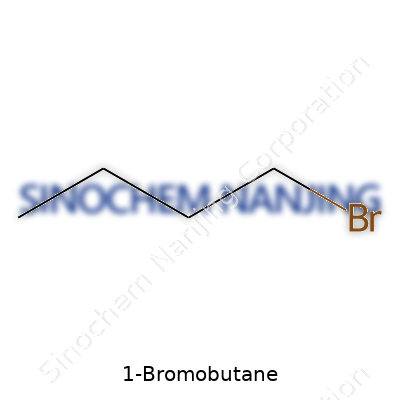
| Names | |
| Preferred IUPAC name | 1-bromobutane |
| Other names |
1-Bromobutane n-Butyl bromide Butyl bromide n-Butane bromide |
| Pronunciation | /waɪ ˈbroʊ.moʊ.bjuː.teɪn/ |
| Identifiers | |
| CAS Number | 109-65-9 |
| Beilstein Reference | 1369231 |
| ChEBI | CHEBI:35898 |
| ChEMBL | CHEMBL16410 |
| ChemSpider | 6827 |
| DrugBank | DB02185 |
| ECHA InfoCard | 100.003.994 |
| EC Number | 200-827-9 |
| Gmelin Reference | 8229 |
| KEGG | C01700 |
| MeSH | D001943 |
| PubChem CID | 8009 |
| RTECS number | EJ8575000 |
| UNII | U5H9OBL6SZ |
| UN number | UN1126 |
| Properties | |
| Chemical formula | C4H9Br |
| Molar mass | 137.02 g/mol |
| Appearance | Colorless liquid |
| Odor | gasoline-like |
| Density | 1.272 g/mL at 25 °C |
| Solubility in water | 3.05 g/L (20 °C) |
| log P | 2.9 |
| Vapor pressure | 3.5 kPa (at 20 °C) |
| Acidity (pKa) | 16 |
| Basicity (pKb) | pKb 15.56 |
| Magnetic susceptibility (χ) | -73.5×10⁻⁶ cm³/mol |
| Refractive index (nD) | 1.439 |
| Viscosity | 2.127 mPa·s (20 °C) |
| Dipole moment | 1.66 D |
| Thermochemistry | |
| Std molar entropy (S⦵298) | 229.6 J·mol⁻¹·K⁻¹ |
| Std enthalpy of formation (ΔfH⦵298) | −108.7 kJ·mol⁻¹ |
| Std enthalpy of combustion (ΔcH⦵298) | –2875.8 kJ·mol⁻¹ |
| Hazards | |
| GHS labelling | **GHS labelling of 1-Bromobutane (string):** GHS02, GHS07, Signal word: Warning, Hazard statements: H226, H315, H319, H335 |
| Pictograms | GHS02,GHS07 |
| Signal word | Warning |
| Hazard statements | H225, H315, H319, H335 |
| Precautionary statements | P210, P261, P280, P301+P312, P305+P351+P338, P332+P313, P337+P313 |
| NFPA 704 (fire diamond) | 1-2-0 |
| Flash point | 38 °C |
| Autoignition temperature | 293 °C |
| Explosive limits | 1-9% |
| Lethal dose or concentration | LD50 oral rat 3050 mg/kg |
| LD50 (median dose) | LD50 (median dose): Oral rat LD50 = 3200 mg/kg |
| NIOSH | WI7175000 |
| PEL (Permissible) | 100 ppm |
| REL (Recommended) | 50 ppm |
| IDLH (Immediate danger) | 200 ppm |
| Related compounds | |
| Related compounds |
1-Chlorobutane 1-Iodobutane 1-Fluorobutane Butan-1-ol Butanal Butanoic acid |



