1-Bromo-2-Methylpropane: A Journey through Chemistry, Industry, and Progress
Historical Development
Stories in chemistry often start with people searching for simple answers to practical questions. 1-Bromo-2-methylpropane entered the scene as researchers were refining ways to build complex carbon skeletons. Back in the days of early organic synthesis, the need for efficient alkyl bromides pushed chemists to experiment with alcohols and halogenating agents. Over decades, as scientists understood substitution reactions better, 1-Bromo-2-methylpropane moved from bench-top curiosity to reliable workhorse. The compound shows up in old laboratory manuals, where instructors trained students on nucleophilic substitution. Its steady presence in textbooks and laboratory prep lists shows that this molecule doesn’t just symbolize a piece of chemical tradition. It’s a tool that shaped organic chemistry as an applied science, giving new generations hands-on experience with real-world transformations.
Product Overview
1-Bromo-2-methylpropane, known widely for its role in education and research, keeps showing up in places where building and tweaking carbon frameworks matters. Its straightforward chemical structure—four carbons and one bromine atom tucked between branching methyl groups—makes it useful for making more complicated compounds. Manufacturers make sure this molecule meets the purity standards for the jobs it does, but it’s not just about numbers. Chemists care about reliable reagents. Whether someone is optimizing a synthetic step or teaching undergraduate labs, supply consistency leads to reproducible results in experiments and industry.
Physical & Chemical Properties
On the lab bench, this compound looks like a clear, colorless liquid with a sharp, almost sweet odor common to alkyl halides. It boils at about 91°C, low enough that its fumes can waft up during an experiment. A key property here is density—around 1.2 g/mL—which means it sinks in water, unlike many organic liquids. Because it’s not very soluble in water, but dissolves easily in organic solvents like ether, 1-Bromo-2-methylpropane plays well with oils and other hydrocarbons. The bromine atom makes the molecule reactive in certain chemical settings, especially with nucleophiles, allowing the brominated carbon to act as a convenient departure point for chemical modifications. The balance between stability and reactivity has made it an attractive choice in teaching synthesis, as students can both isolate and transform it safely.
Technical Specifications & Labeling
Producers package 1-Bromo-2-methylpropane under regulations aligned with global transport and safety standards. Each bottle bears the CAS number 78-77-3, and suppliers have to report purity—often hitting above 98%—along with batch numbers and safety designations. Labeling doesn’t stop at identity and concentration; hazard symbols and first-aid instructions come printed clearly, as contact or inhalation calls for caution. SDS sheets accompany shipments, covering fire hazards, incompatibilities, and procedural responses that keep workplaces informed. Labs that use this compound for synthesis track inventory tightly and log all usage, part of a culture that respects both safety and supply chain transparency in today’s chemical world.
Preparation Method
Industrial and research labs usually make 1-Bromo-2-methylpropane by treating 2-methylpropan-1-ol with a hydrobromic acid source. The setup looks simple on paper, but controlling side reactions and maximizing yield demands experience. Some routes prefer using phosphorus tribromide, which forms the bromide under mild conditions and helps avoid waste. Others lean on traditional aqueous acid methods, though this often brings in water-sensitive steps and the need for careful extraction. Whether made in small laboratory setups or scaled for higher throughput, good technique is needed to deliver the chemical with high purity and few byproducts, preventing downstream issues in both research and industrial synthesis.
Chemical Reactions & Modifications
What draws chemists back to 1-Bromo-2-methylpropane is how predictably it reacts with nucleophilic partners. In class, students learn the art of SN2 mechanisms as they watch a clear reaction between this alkyl bromide and simple reagents like cyanide or azide ions. Bromide acts as a reliable leaving group, allowing for the formation of nitriles, amines, and ethers. This compound doesn’t resist change; it adapts to a wide range of substitutions, opening pathways to more complicated molecules like pharmaceuticals, fragrances, and agrochemicals. The methyl branching next to the bromine sets up selectivity, which distinguishes its chemistry from that of straight-chain analogues. Chemists keep returning to it, knowing it can deliver specific structural features critical in high-value compounds.
Synonyms & Product Names
Industry and academic literature refer to this chemical by several names. Isobutyl bromide, 2-methyl-1-bromopropane, and 1-bromo-isobutane mean the same thing, showing how naming conventions in chemistry sometimes reflect historical quirks or different priorities—structure, function, or origin. Some catalogs list it under trade names or product codes, which can muddy the waters for beginners. Regardless of the name, accurate labeling and cross-referencing remain essential, especially in global supply chains where safety and regulatory compliance depend on clear chemical identification.
Safety & Operational Standards
Handling 1-Bromo-2-methylpropane safely takes more than reading MSDS sheets. Labs have learned through experience that brominated solvents need good ventilation and methodical procedures. Avoiding skin and eye contact, using gloves made from nitrile or neoprene, and wearing goggles count as standard practice. Local exhaust ventilation or working in fume hoods means that even small spills or vapor emissions don’t become health risks. Some may become complacent around familiar chemicals, but this compound can irritate mucous membranes and trigger headaches if inhaled. Responsible storage in flame-proof cabinets, separate from strong bases and oxidizers, adds another layer to the protection protocols practiced in both education and industry. Fire risks demand that extinguishers rated for chemical spills stay close.
Application Area
Organic synthesis forms the heart of this compound’s day-to-day use. Whether pursuing academic research or scaling up processes in industry, chemists build on the reactivity of 1-Bromo-2-methylpropane to make intermediates for medicines, agricultural products, and specialty materials. Its clean reactivity pattern makes it a frequent choice for teaching core reaction mechanisms. Beyond textbooks, the pharmaceutical sector relies on it for preparing selective alkylated compounds that can pave the way for active drug molecules. Crop science depends on it for running pilot studies on new pest control agents. Manufacturers of flavors and fragrances turn to it for introducing branched carbon motifs that boost the vibrancy of synthetic aromas. Its versatility underlines why it stays current in laboratory catalogs and research projects.
Research & Development
Academic researchers still find new avenues for this old chemical. By using 1-Bromo-2-methylpropane in reactions involving novel catalysts or greener solvents, they create sustainable synthesis routes. In the pharmaceutical industry, process chemists explore modifications that reduce waste and costs. Analytical chemists look for trace impurities down to parts per million, aiming for cleaner products and fewer side effects in end-use compounds. Students join the conversation, using this molecule in thesis projects to probe reaction mechanisms that underpin drug discovery and advanced materials. The compound’s simplicity does not limit its contribution—each experiment feeds into the iterative process that builds knowledge in chemistry.
Toxicity Research
Nobody should downplay the need for rigorous study of toxicity. Animal models show that 1-Bromo-2-methylpropane can irritate respiratory tracts, damage the liver at sustained high doses, and harm aquatic systems after runoff. These facts drive strict exposure guidelines. Workplace monitoring and regular health checks for frequent handlers anchor safety culture. Environmental scientists keep an eye on emissions, setting up treatment tanks and containment strategies that cut the risk of water pollution. Transparent reporting and collaboration between regulators and industry keep this learning continuous, as new findings shape regulatory updates and workplace training courses. This chemical’s history teaches us: knowing the dangers creates room for safer practice and better stewardship.
Future Prospects
As research marches on, 1-Bromo-2-methylpropane remains relevant for both tradition and innovation. Synthetic chemists, eyeing automation and machine-learning-driven reaction prediction, incorporate it into digital libraries because of its well-defined reactivity. Environmental challenges are nudging manufacturers toward greener production methods that use less hazardous reagents, less energy, and create fewer waste streams. Students returning to physical classrooms after years relying on remote learning value hands-on experience with foundational reagents. The industry’s transition to lower-carbon processes will touch every supply chain link, encouraging more recycling and tighter controls on emissions. This compound, with all its chemistry, safety lessons, and rich application history, stands as a marker of how core chemicals adapt—and stay useful—in the changing landscape of science and industry.
What is the chemical formula of 1-Bromo-2-Methylpropane?
Understanding the Basics
The chemical world never runs out of surprises, but names like 1-Bromo-2-Methylpropane often leave people scratching their heads. Unpacking its structure sheds light on more than a formula. As someone who has worked in a laboratory setting, mistakes and confusion often stem from these chemical names. Take 1-Bromo-2-Methylpropane: it looks intimidating but starts to make sense after a moment’s look.
Looking at the backbone, propane gives us a three-carbon chain. The “2-methyl” tells us a methyl group sits on the second carbon. The “1-bromo” part says a bromine atom bonds to the first carbon. The complete formula for 1-Bromo-2-Methylpropane is C4H9Br. Getting this formula right matters, not just for science exams, but for safety and proper identification in labs and industry.
Why Formula Accuracy Counts
From early on, I remember accidentally switching up numbers in formulas, which created trouble both in lab reports and small-scale reactions. Chemical suppliers, researchers, and even those handling hazardous material databases need absolute clarity. One wrong digit or misplaced atom in a formula can lead to accidental exposure to different substances or regulatory violations. Mislabeling costs time, money, and sometimes health.
A study from the American Chemical Society stated that improper labeling remains a leading error in workplaces using chemicals. The formula for 1-Bromo-2-Methylpropane does not seem like a life-threatening fact, but this organic halide has toxic and environmental risks like many bromine-containing compounds. Transparency and accuracy form a foundation for chemical safety.
Experience in Real-World Applications
Any student or lab worker who’s spent hours purifying organic compounds recognizes the pain of misreading a chemical label. Once, mixing up two similar compounds, because the only difference in the formula was a single digit, led to a failed synthesis and wasted resources. That frustration stays with you and highlights why teachers hammer home the importance of structural formulas.
Use and Environmental Responsibility
1-Bromo-2-Methylpropane pops up in synthetic chemistry—mainly alkylation reactions for pharmaceuticals or specialty chemicals. Know how the atom arrangement affects reactivity, handling, and disposal options. Brominated organics are flagged for their persistence in the environment. People handling them bear a responsibility that goes beyond the benchtop.
Hazard communication rules—globally harmonized standards rolled out in recent years—demand precise chemical identification. Small manufacturing or research facilities feel the brunt of these regulations most. I’ve seen firsthand the way clear labeling with correct formulas prevents regulatory headaches, makes audits smoother, and keeps everyone a little safer.
Fact-Based Solutions
Encouraging rigorous initial training in how to break down chemical names and write accurate formulas reduces errors. Labs investing in digital inventory management prevent typos and confusion. Quality-control checks that review chemical stock solutions help catch errors before they cause problems. Small steps build a culture where accuracy comes naturally, not just for compliance but also for care.
What are the common uses and applications of 1-Bromo-2-Methylpropane?
Where Chemistry Meets Daily Life
1-Bromo-2-methylpropane isn’t a household name, but the things made from it touch our lives more than most people realize. Known for its halide group, this compound takes part in reactions that build up the blocks for far more familiar products. I remember my early days working in a university lab—our team dealt with a lot of halogenated organics, and this one always seemed to turn up when we needed a strong alkylating agent.
The Workhorse in Organic Laboratories
Every organic chemist has probably reached for 1-bromo-2-methylpropane in the lab. Its role? It delivers an isobutyl group to other chemicals, setting up pathways to make pharmaceuticals, fragrances, and agrochemicals. I’ve used it for straightforward nucleophilic substitution reactions, where you swap out the bromine with something the chemist wants—such as an amine or a sulfur group. It’s reliable for building more complex molecules, especially when you’re trying to introduce branching into carbon chains. The result often becomes a crucial step toward something useful, like an active pharmaceutical ingredient or a specialty polymer.
Paving the Way for Pharmaceuticals
Drug manufacturers use this compound more than most folks think. Many modern medicines, including antiviral and anti-inflammatory agents, start with basic building blocks that get fine-tuned along the way. 1-Bromo-2-methylpropane comes into play to put an isobutyl group onto a molecule, which often changes how the final drug behaves in the body. That one swap can influence how a pill gets absorbed and how well it works. Back when I interned at a pharma company, I watched senior chemists choose this chemical for steps in pain medication synthesis. The logic was simple: it’s dependable, known, and efficient for sticking specific groups exactly where you want them.
Right at Home in Fragrance and Flavor Labs
Perfume and flavor creation seems far removed from industrial chemistry, but there’s a strong connection. Isobutyl structures made using 1-bromo-2-methylpropane sit at the core of key aroma chemicals. Isobutyl acetate, a compound with a crisp, fruity scent, owes part of its creation to this starting material. I’ve read about smaller fragrance houses relying on this route because it’s cost-effective and customizable—it lets them design new scent profiles without breaking the bank. It’s the same story in the world of flavors: distinct taste molecules can trace their genealogy back to these simple organic reactions.
Touching the Field: Agrochemicals and Crop Protection
Farmers count on pest control solutions, and those solutions often rely on organic syntheses that start in a chemical plant. Some herbicides and fungicides come from routes where 1-bromo-2-methylpropane played a part. Growing up in a rural area, I saw the impact that efficient synthesis had on affordability. Lower production costs for active ingredients mean more accessible crop protection tools, which supports higher crop yields in the long run.
Room for Caution and Progress
This compound, like many halogenated organics, brings safety and environmental concerns. Direct exposure carries risks, so factories need smart containment and disposal methods. Regulation helps, but there’s still a push in the industry to move toward less hazardous alternatives or design new ways to recycle byproducts. Responsible handling and ongoing research go hand-in-hand to ensure products stay useful without endangering workers or ecosystems.
Keeping Innovation Alive
Many discoveries start from simple chemicals and creative applications. 1-Bromo-2-methylpropane continues to power up new ideas in labs, whether the focus is on life-saving drugs, the next fragrance hit, or better crop yields. With constant research and a nod toward safety, this unassuming compound keeps finding its way into things that matter day-to-day.
What are the safety precautions for handling 1-Bromo-2-Methylpropane?
Understanding the Risks
1-Bromo-2-methylpropane lands in the group of alkyl halides that gives off a strong, sweet odor. Its volatility means it quickly moves from liquid to gas if left out, and that makes inhalation hazards real. After spending years working with chemicals like this in academic and industrial labs, I have seen that most accidents don't stem from malice—just routine, rushed mistakes or skipping steps considered “unnecessary.” Inhaling its vapors might irritate airways and eyes, while splashes can burn skin. Long-term exposure brings deeper worries: the compound likely affects the nervous system and liver.
Basic Steps That Protect Workers
Proper ventilation stands out as the main barrier between a worker and trouble. Fume hoods aren’t decorations—they’re lifelines. If the fan isn’t humming, nobody should handle 1-bromo-2-methylpropane out on an open bench. Most gloves don’t hold up against solvent splashes forever, especially nitrile or latex types. For real protection, gloves made for halogenated hydrocarbons—usually the heavier-duty butyl or SilverShield types—do a better job blocking leaks. Goggles, not just glasses, close the gap at the edge where mist sneaks through. Simple lab coats keep sleeves between skin and accidental spills; natural fiber material like cotton resists melting on contact, unlike polyester. Shoes cover toes—sneakers and open sandals belong nowhere near a lab like this.
Storage: Out of Sight, Safely Out of Mind
Stories from the lab always circle back to storage mishaps. Wrong cabinet, careless stacking, loose lids—these blunders cause so many close calls. 1-Bromo-2-methylpropane belongs with other volatile organics that thrive in cool, dry, and well-ventilated cabinets. The containers themselves must close tight, resist corrosion, and have clear labeling that avoids any guesswork. Avoid stacking chemicals on high shelves or near heat sources; safer storage at waist height prevents dangerous spills during normal handling.
Emergency Training Matters
I learned the real value of hands-on emergency training after a spill in my first industrial job. Nobody freezes if they practice. Every worker should know where the eyewash station and safety shower are, and how to use them without hunting for instructions. If a spill soaks clothing, the best move is to step into the shower right away. Trying to “wait it out” just makes injuries worse. Reporting smaller leaks before they turn to bigger problems saves labs thousands in cleanup and keeps the environment safer for everyone.
Waste Disposal: Follow the Law, Not Just the Habit
Dumping 1-bromo-2-methylpropane down the drain or mixing it with non-halogenated waste isn’t just bad chemistry—it breaks environmental law and endangers water supplies. Hazardous waste containers must get sealed and labeled for pickup; signature logs track every transfer, holding labs accountable for every gram. Ignoring disposal protocols lands not only the lab but also the local ecosystem in trouble. Staff with up-to-date chemical hygiene training stick to legal disposal routes, keeping fines and future contamination issues at bay.
Attitude Shapes Safety Outcomes
Every day in the lab offers a choice—cut corners or show respect for risky chemicals and your own health. I’ve seen seasoned researchers stay alert and never treat “routine” tasks lightly, setting strong examples for students and new workers alike. No fancy equipment can replace personal responsibility and teamwork when it comes to keeping chemical exposure low. The safest places are the ones where people always ask questions, stay aware, and learn from both good habits and near misses.
What are the storage conditions required for 1-Bromo-2-Methylpropane?
What Makes 1-Bromo-2-Methylpropane Different?
Plenty of folks who handle chemicals every day already know that not all compounds act the same. With 1-Bromo-2-Methylpropane, things get serious because of how volatile and flammable this liquid acts. It packs a strong odor, catches fire pretty easily, and vaporizes fast when left open. My first run-in with this chemical involved a mess in the lab, and I learned right then that cutting corners on storage didn’t just put the experiment at risk; it made the whole team uncomfortable.
Minimizing Risks: Temperature and Ventilation Matter
Heat is never a friend to volatile organics. Storing 1-Bromo-2-Methylpropane in a cool spot—below 25°C if possible—slows down evaporation and reduces the odds of pressure building inside the container. If the storage area gets too warm, you end up with more vapors in the air. It only takes one stray spark or a poorly covered outlet to start a fire. From my own experience, “out of sight, out of mind” never works for chemicals like these. Routine checks of temperature and air flow go a long way.
Ventilation pushes those invisible vapors away before they hit dangerous levels. My work in a university chemical stockroom showed me that in places where air circulation stayed on point, there were fewer headaches and way less trouble with alarms. Good fume hoods and open shelving—not just packed, sealed rooms—keep everyone safer. Never shove these bottles in a closet with a space heater humming beside them.
Keep Out the Sun and Away from Open Flames
Direct sunlight isn’t harmless. Light heats up the chemical, but it can also trigger unwanted reactions. I’ve seen more than one glass bottle get cloudy sitting on a sunlit window sill, and that’s not just hard on the chemical, it’s dangerous. Shelves for these bottles work best tucked away from windows, well-marked, and lined with materials that won’t spark if a bottle drops.
Open flames don’t belong around flammable materials. In crowded spaces, Bunsen burners and hot plates can turn an accident into an emergency. I’ve gotten in the habit of sorting flammable liquids—1-Bromo-2-Methylpropane belongs with compatible materials in a dedicated flammables cabinet, far from electrical outlets or ignition sources.
Containment and Container Materials
Containers deserve just as much attention as the chemical inside. Glass does the job for most labs, as long as you stick with screw-top caps and avoid corroded or mismatched lids. Once, I saw a plastic container degrade fast because the wrong cap was used. The risk isn’t only leaks—fumes can slip out, and the whole room picks up that sharp, irritating smell. Labels should always stay clear, with the contents and the hazard symbols readable at a glance.
Secondary containment—simple plastic trays or bins—adds another layer of safety. In case a bottle tips or leaks, the chemical won’t spill across the floor or onto other supplies. A splash today can turn into a health hazard for the next user weeks later if nobody catches it.
Personal Responsibility and Ongoing Checks
Keeping chemicals safe never rests entirely on storage. Every person has a role. Regular checks for leaks, pressure build-up, damaged bottles, or faded labels catch small problems before they snowball. In my time training students, reinforcing the basics—keep things cool, ventilated, dry, and organized—worked better than any single rulebook.
Ultimately, it only takes one lapse to create a dangerous mess. Attention to the simple habits ends up saving time, product, and health—not to mention nerves. If everyone treats storage rules as standard as locking the front door, fewer risks will slip through the cracks.
What is the purity grade of available 1-Bromo-2-Methylpropane products?
Purity: More Than a Number
The grade of any chemical stands out as one of the first points researchers, lab techs, and industrial buyers check. In labs, the available 1-Bromo-2-methylpropane typically sits in the range of 97% to 99% purity. Analytical work and tricky syntheses push toward the 99% side, while general prep or industrial-scale needs often land closer to 97%. Reagent grade and technical grade products both pop up in catalogs, but not all bottles meet the same expectations.
Why Purity Impacts Results
Small contaminants add up, especially in applications like medicinal chemistry, polymer building blocks, or pharmacology. A single percent of impurity can throw off analytical results or mess up a synthesis. It’s a headache most chemists have felt: spending days replicating a result, only to realize the impurity profile in the brominated alkane shifted everything. Trusting a purity number without secondary verification can waste valuable research hours and stretch budgets thin.
How Suppliers Stack Up
Sigma-Aldrich, TCI, and Alfa Aesar rank among the big players worldwide, and they publish clear purity specs: 97%, 98%, sometimes up to 99%. You’ll also find lower grades in bulk for industrial work, but respectable labs consistently go for 98% or higher. Technical grade stocks—sourced from specialty suppliers or chemical dealers—sometimes cut purity to 95%. Price drops fast, but so does reliability.
Gas chromatography or NMR data often supports those numbers, though documentation can range from rigorous certificates to barebones safety sheets. As a bench scientist, I learned to double-check data sheets before blending, since similar lot numbers rarely guaranteed matching performance.
The Hidden Costs of “Good Enough” Purity
Running a small research group, I’ve seen shortcuts burn through budgets. That 2% gap between 97% and 99% isn’t just marketing. Synthesis of target compounds depends on reactant quality. Impurities introduce unknowns into reaction pathways, sometimes forming byproducts impossible to fully separate. These headaches aren’t limited to academic labs; scale-up in the pharmaceutical world runs into problems fast if source chemicals don’t consistently meet tight specs.
My former colleagues in manufacturing shared stories of lost batches tied back to inconsistent starting material. Regulations on pharmaceutical production tell the same story, with agencies like the FDA and EMA expecting detailed traceability and quality checks. Not every lab needs to match GMP or ISO standards, but skipping those checks sets up trouble for later.
Cutting Through the Clutter
Where does a professional start when faced with different grades? Focus lands on reputable suppliers and third-party verification. Certificates of Analysis (COA) with batch-level chromatograms help, but in-house checks like NMR or GC-MS build trust in what arrives on the loading dock. As digital marketplaces grow, demand for transparency has risen—reviews, independent assessments, and supplier histories shape who gets repeat business.
Academic labs strapped for cash often try lower grade products, but any time saved routinely erodes when reactions stop working or analytical reproducibility fails. The tiny cost of upgraded purity pales against hours fixing unexpected results.
Looking Forward
Shifting research norms and tightening industry standards drive more buyers toward higher grades and stricter documentation. As someone who’s navigated both tight budgets and process failures, I always argue for prioritizing chemical purity and supplier transparency. Any lab investing in high-grade 1-Bromo-2-methylpropane stands a better chance of reaching clear, reproducible conclusions and keeping projects on track over the long haul.
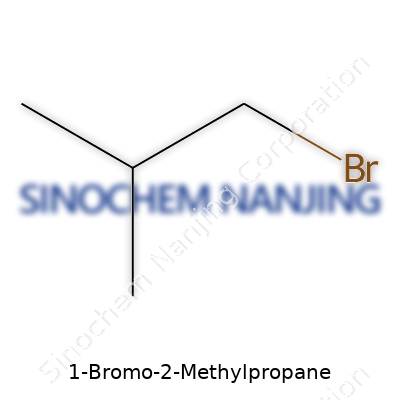
| Names | |
| Preferred IUPAC name | 2-Bromobutane |
| Other names |
Isobutyl bromide 2-Methyl-1-bromopropane 1-Bromo-2-methylpropane |
| Pronunciation | /waɪ ˈbroʊmoʊ tuː ˈmɛθəl ˈproʊpeɪn/ |
| Identifiers | |
| CAS Number | “78-77-3” |
| Beilstein Reference | 1718738 |
| ChEBI | CHEBI:42241 |
| ChEMBL | CHEMBL15652 |
| ChemSpider | 18621 |
| DrugBank | DB11332 |
| ECHA InfoCard | 100.008.830 |
| EC Number | 602-304-7 |
| Gmelin Reference | 10806 |
| KEGG | C08315 |
| MeSH | D001940 |
| PubChem CID | 6579 |
| RTECS number | EJ6475000 |
| UNII | AT1S6Q9F5V |
| UN number | UN2344 |
| Properties | |
| Chemical formula | C4H9Br |
| Molar mass | 137.02 g/mol |
| Appearance | Colorless liquid |
| Odor | Alcoholic |
| Density | 1.257 g/mL |
| Solubility in water | Insoluble |
| log P | 2.76 |
| Vapor pressure | 3.4 kPa (at 20°C) |
| Acidity (pKa) | pKa ≈ 50 |
| Basicity (pKb) | pKb ≈ 9.25 |
| Magnetic susceptibility (χ) | -74.5e-6 cm^3/mol |
| Refractive index (nD) | 1.436 |
| Viscosity | 0.674 cP (20°C) |
| Dipole moment | 2.05 D |
| Thermochemistry | |
| Std molar entropy (S⦵298) | S⦵298 = 309.2 J·mol⁻¹·K⁻¹ |
| Std enthalpy of formation (ΔfH⦵298) | -139.5 kJ/mol |
| Std enthalpy of combustion (ΔcH⦵298) | -2807.8 kJ/mol |
| Hazards | |
| GHS labelling | GHS02, GHS07 |
| Pictograms | GHS02,GHS07 |
| Signal word | Warning |
| Hazard statements | H225, H315, H319, H335 |
| Precautionary statements | P210, P261, P280, P301+P312, P304+P340, P305+P351+P338, P312 |
| NFPA 704 (fire diamond) | 1-2-0 |
| Flash point | -31 °C (closed cup) |
| Autoignition temperature | 530 °C (986 °F; 803 K) |
| Explosive limits | 1.7–10.2% |
| Lethal dose or concentration | LD50 oral rat 3,000 mg/kg |
| LD50 (median dose) | LD50 (median dose): Oral rat LD50 = 3 g/kg |
| NIOSH | SA9125000 |
| PEL (Permissible) | Not established |
| REL (Recommended) | 50 ppm |
| Related compounds | |
| Related compounds |
Bromomethane 2-Bromopropane 1-Bromopropane 1-Bromo-3-methylbutane 2-Bromo-2-methylpropane |



