A Down-to-Earth Look at 1-Aminopropane: The Humble Backbone of Alkylamines
Historical Development
Some stories in chemistry start slow, and 1-aminopropane’s tale began in labs where patience and practicality shaped success. This simple molecule, also called n-propylamine, entered the game as chemical industries hunted for better amines during the 1800s. Early researchers, with basic glassware and a deep interest in organic reactions, found that changing just one part of a hydrocarbon chain unlocked new uses. Chemists learned to coax propylamine into existence through halide and alcohol conversions, watching an otherwise low-key alkane grow a backbone in both research and industry. Years of steady trial and error made this compound a foundational amine, not just for synthesis but for building up knowledge about how amines work. Over time, as demand rose for intermediates in pharmaceuticals, agriculture, and dyes, this small molecule showed its versatility. That history matters because understanding where modern synthesis came from connects every new project to the sweat of generations before us.
Product Overview
1-Aminopropane’s formula—C3H9N—doesn’t hint at its wide reach. In practice, it feels like a hand tool in a chemist’s kit: straightforward, but you turn to it again and again. Its direct chain makes it less fussy than many branched cousins, so chemical plants churn out gallons of the liquid using established methods that don’t call for rare catalysts or energy-wasting steps. You find 1-aminopropane acting as a building block—in agricultural chemicals, plastics, rubber accelerators, drug synthesis, and even water treatment agents. Its unique mix of stability and reactivity helps manufacturers keep costs down and quality up, carving out loyal demand in places far beyond the textbooks.
Physical & Chemical Properties
Think of 1-aminopropane as colorless with a nose-wrinkling, ammonia-like odor that’s impossible to mistake. At room temperature it shows up as a clear, volatile liquid, boiling at about 48°C—well below water—so it doesn’t stick around if you leave the cap off. It loves water—not in a romantic way, but in the practical sense: it mixes easily, which means spill cleanups get tricky in labs and factories. The molecule slips into organic solvents, too, which makes it a popular choice in multi-step syntheses. Chemically, the primary amine means it reacts with acids, creating stable salts. It doesn’t shy away from aldehydes, ketones, or acyl chlorides either. Those traits open doors for forming imines, amides, and many derivatives, inviting experimentation if you know what you’re doing.
Technical Specifications & Labeling
Global suppliers ship 1-aminopropane with purity specs often above 99 percent for industrial or lab work, since impurities can sabotage reactions. Containers get labeled with UN numbers due to its flammability, and any storage space must have proper ventilation. In my own experience, that flammability makes you double-check that the storage racks meet standards—you don’t want a misplaced drum turning a storeroom into a hazard zone. The labeling side isn’t just bureaucracy. Anyone handling drums, bottles, or tankers needs to see hazard pictograms, boiling point, water solubility, and emergency handling details right on the label, all to reduce the risk from unpredictability.
Preparation Method
1-Aminopropane production grew out of classic organic conversions. The old-timers used the Gabriel synthesis or reduction of propionitrile, depending on what feedstocks were cheap. These days, reduction of propionitrile with hydrogen over a nickel catalyst dominates where large volumes are needed. The method is as rugged as it is effective—start with propionitrile, push hydrogen into the mix, and nickel speeds things along, leaving you with a high-yield stream of amine ready for separation and purification. The process stands as a model for balancing cost, efficiency, and quality, reminding users that chemical industry advances flow from both clever chemistry and operating discipline.
Chemical Reactions & Modifications
The amine group on 1-aminopropane begs to react—it teams up readily with acids, aldehydes, acyl groups, and more. Propylamine reacts with acids to give nice, stable salts, and it won’t shy away from epoxides and haloalkanes, letting you swap in different groups for custom molecules. Condensation reactions extend its reach in synthesizing Schiff bases, which turn up all over coordination chemistry and catalysis. If you want amides, just pair it with the right acid derivative. Through alkylation or acylation, you can build out a wider family of amines or tweak the molecule for specific end-uses, making it a workhorse for creative minds in the lab.
Synonyms & Product Names
Chemists and suppliers toss around terms like n-propylamine, propan-1-amine, 1-propylamine, or just propylamine in catalogs and safety data sheets. Anyone ordering should check structures instead of trusting common names—suppliers outside the West may use one synonym more than another, and regulatory labels don’t always follow a single standard. This muddle in names traces back to how early chemical naming lacked a central authority, and only strict IUPAC standards made global trade in amines easier and less confusing.
Safety & Operational Standards
Experience in handling 1-aminopropane means respecting both its volatility and toxicity. The low boiling point means vapors fill the air even at cool temperatures, so gloves, splash goggles, and tight ventilation aren’t negotiable. Breathing in fumes leads to headaches, throat irritation, and long-term damage if exposure isn’t managed. Spills aren’t just messy; they increase fire risk and can corrode metal over time. Regulations worldwide, like those from OSHA and the European Chemicals Agency, raise the bar for safety with minimum exposure limits, mandatory personal protective equipment, and storage rules. Shop floors need regular training and clear signage to avoid costly mistakes.
Application Area
Ask a chemical manufacturer, and 1-aminopropane might look like an afterthought—a staple among hundreds of intermediates. Yet take a closer look and it shows up as an essential link in agrochemical synthesis, rubber accelerators, surfactants, pharmaceuticals, and corrosion inhibitors. Every time new pesticides hit the market, chances are high that propylamine plays a role in making their active molecules stick to the target pest. Water treatment facilities rely on it as a chemical for removing impurities, while labs find its straightforward reactivity a boon for synthesizing more complex molecules. Hospitals, automotive companies, and textile plants all benefit from specialized products built from this humble amine.
Research & Development
The world of research keeps circling back to 1-aminopropane because its reactivity lets scientists explore new reactions. In medicinal chemistry, drug developers turn to it for linking functional groups onto complex ring systems, building everything from antiviral agents to experimental anesthetics. Materials scientists have found uses for its derivatives in crafting adhesives and rubber compounds with specific mechanical properties. High school labs and top-tier facilities both use it as a teaching example, showing students how basic organic synthesis paves the way for endless chemical discovery. By making fundamental reactions easy to demonstrate and extend, propylamine nudges applied and theoretical research forward.
Toxicity Research
Toxicologists view 1-aminopropane with caution. Even small splashes cause skin and eye burns, and regular inhalation triggers respiratory complaints. Its acute toxicity numbers hover above those of household ammonia, but any direct exposure spells trouble without quick medical response. Long-term studies suggest that repeated exposure at high levels leads to chronic symptoms—damage to mucous membranes, nervous system issues, and even kidney strain in animal models. New research focuses on vapor thresholds, seeking better workplace standards that protect workers without shutting down productivity. Experience shows that respect outpaces fear—workers using proper engineering controls and protective gear rarely suffer serious harm.
Future Prospects
Interest in green chemistry and sustainable manufacturing keeps 1-aminopropane in focus for researchers. Cleaner synthesis routes, using fewer toxic starting materials, draw plenty of funding. Advances in catalyst design promise improved selectivity and lower waste, letting plants lower their environmental impact with each production run. Others zero in on new derivatives for high-performance polymers, surfactants, and bioactive agents geared for unpredictable global markets. Smarter monitoring and automation improve both efficiency and safety. As renewable feedstocks and circular economies take root, there’s real promise in pushing production of propylamine away from fossil fuel dependency and toward bio-based chemicals, closing the loop for future generations of scientists and engineers.
What is 1-Aminopropane used for?
Understanding 1-Aminopropane
1-Aminopropane, also known as propylamine, lines the shelves in plenty of chemistry labs. Folks in industry call it a simple aliphatic amine, just a molecule built from carbon, hydrogen, and nitrogen. It has a strong fishy smell and a reputation for being a little tricky to handle because it’s flammable and corrosive. But step beyond the label and there’s a long list of jobs it handles.
Key Role in Chemical Manufacturing
It all starts with chemical synthesis. Propylamine acts as a building block for more complex molecules. Scientists use it to manufacture herbicides, pharmaceuticals, and surfactants. The pharmaceutical field especially relies on this compound for producing ingredients that enter everyday medicines. If you pop a pill for allergies or high blood pressure, there’s a small chance the molecule played a part somewhere in the production pipeline.
Helping Crops Grow
The crop protection business leans heavily on solvents and precursors. Propylamine lands in this area, pulled into the production of certain herbicides. These weed killers support farmers by giving crops a fighting chance against the stubborn plants that pop up and compete for sunlight and nutrients. Farmers benefit from higher yields, food waste drops, and land is used more efficiently. In a world that feels like it’s always short on food, that’s no small thing.
Specialty Chemicals and the Textile Industry
Propylamine pops up as an intermediate during the creation of dyes and coatings. Textile makers rely on bright, colorfast dyes. Grit and grime from daily life don’t fade shirts as quickly because molecules like propylamine sit further back in the supply chain. These steps aren’t glamorous, but they make the fabrics last longer and look better on store racks. Coatings on electronics, furniture, and even automotive parts also find uses for this compound, protecting surfaces from corrosion and wear.
Lab Work and Everyday Science
College chemistry students and seasoned researchers alike mix up experiments using 1-aminopropane thanks to its ability to act as a reagent. It reacts with acids and many other substances, so it proves handy in small-scale organic syntheses. Before big pharmaceutical companies ship out products, new drugs start as tiny experiments in flasks and test tubes—with chemicals like propylamine playing a quiet but important role.
Looking at Health and Safety
Handling this compound is no joke—it irritates eyes, skin, and lungs, so anyone who works with it wears gloves and goggles and makes sure the lab has good ventilation. Chemical manufacturers follow strict rules for storage and transport. For communities living near chemical plants, strong regulation gives peace of mind. The U.S. Environmental Protection Agency and Europe’s REACH regulation both track chemicals like this to limit harm while allowing industry to function. Those rules evolved from hard-learned lessons, with health and safety at the core.
Are There Alternatives?
Chemists keep searching for greener options. Plant-based feedstocks are an exciting frontier, but right now, the structure and reactivity of 1-aminopropane make it hard to replace in certain processes. Efforts continue, looking for jobs it can give up to less hazardous chemicals, or processes that cut down on waste and emissions. Industry can make a real difference by sharing safer practices and sticking to transparent environmental reporting, so no one gets left in the dark.
What are the safety precautions for handling 1-Aminopropane?
Understanding 1-Aminopropane and Its Hazards
1-Aminopropane, also called propylamine, has a reputation among lab workers and industry folks for being a bit tricky to handle. Its distinct fishy odor gives away even the smallest spill or leak. Breathing in its fumes or spilling it on your skin can lead to some real trouble, from headaches or dizziness to chemical burns and breathing problems. Cases of irritation or worse, reported in chemical safety data sheets and first-hand stories on the shop floor, make you respect this stuff real quick.
Personal Protective Equipment (PPE)
Goggles, nitrile gloves, and a sturdy lab coat aren’t up for debate when dealing with 1-Aminopropane. Too many people skimp on the basics and pay for it with irritated eyes or burned skin. A proper face shield goes a long way, especially if splash risks are high. If you work in a spot where vapor concentrations can get above recommended exposure limits, don’t just trust the usual surgical mask—get a respirator designed for organic vapors. A few layers of gloves also give peace of mind since this chemical can eat through thin material over time.
Ventilation and Workspace Setup
In my own stints in the lab, careful planning around airflow saved me plenty of headaches—literally and figuratively. A well-maintained fume hood keeps vapors out of your nose and lungs, which makes everything a lot safer. Checking that the hood or local exhaust ventilation system pulls air correctly before pouring or mixing can mean the difference between a normal day and a call to the nurse. Keep the smallest amount possible on your bench and stash the rest tightly sealed in appropriate storage when it’s not in use.
Storage Rules
Don’t ever throw a bottle of 1-Aminopropane in with acids or oxidizers. This kind of mix-up lands companies in accident reports and causes serious injuries. Stick with chemical storage cabinets built for corrosive and volatile compounds. Containers need to stay closed and clearly labeled. The stuff evaporates quickly, so keep it in a cool, well-ventilated area, away from heat and direct sunlight. Padlocks and access logs aren’t overkill for tracking who uses what and when.
Spill and Accident Response
Spills can escalate fast. Absorbent pads rated for organic chemicals work best. Never let anyone mop it up with paper towels or cloth—this only spreads the mess and increases vapor in the air. Get everyone out of the affected area while you clean up and ventilate. Rinse skin immediately with running water if contact happens and head straight to the safety shower if needed. For inhalation, fresh air is the first step, then a medical check. Every workplace should have written emergency procedures that make sense to everyone, not just safety managers.
Training and Culture
I’ve seen too many accidents happen because someone skipped the safety briefing. Share stories of near-misses and mistakes, so new folks understand the risks. Regular training and refresher courses lead to fewer accidents. Keep the material up-to-date and practical, with real examples rather than foreign policy. No one likes endless training, but clear, open talk about risks and experiences pushes safety from afterthought to habit.
Looking Forward
1-Aminopropane shows up in research and industry because it gets the job done, but shortcuts never pay. Endorse a safety-minded culture and address small problems before they grow. With facts, experience, and a dose of common sense, handling this chemical safely becomes routine, not a gamble.
What is the chemical structure and formula of 1-Aminopropane?
The Straightforward Structure of 1-Aminopropane
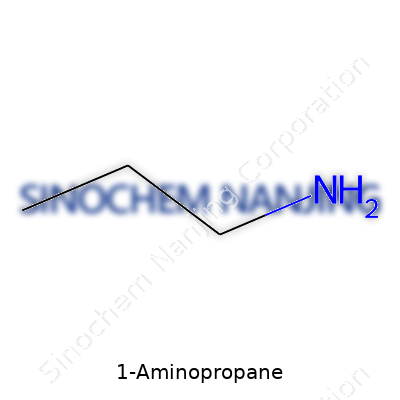
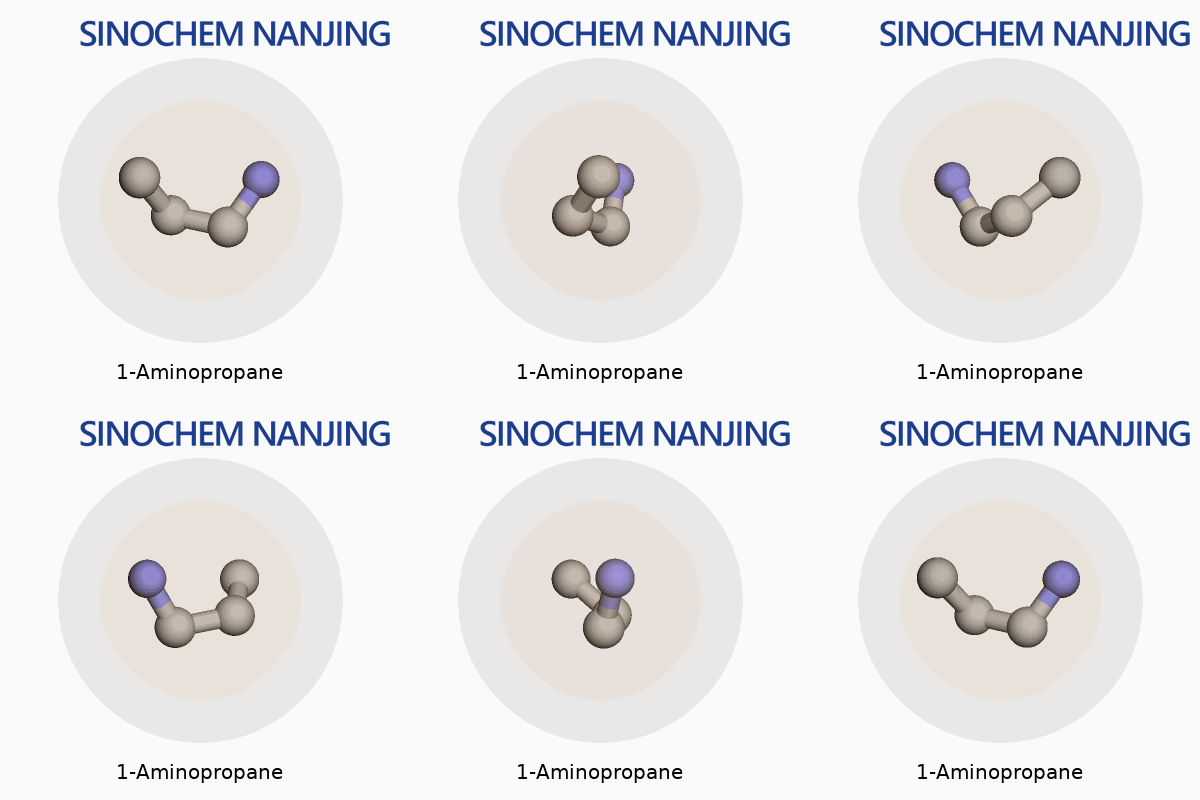
In organic chemistry, small molecules make an impact through their unique properties and reactions. 1-Aminopropane, also called propylamine, keeps things simple but demonstrates why molecular structure matters. The backbone features three carbon atoms in a straight chain. Attached to the very first carbon is an amino group—just a nitrogen connected to two hydrogens. Chemists use the formula C3H9N for this substance.
Instead of abstracting things, picture three carbon atoms forming a line: C–C–C. The end carbon, meaning the first in line, holds the NH2 group and two hydrogens. Each middle and last carbon finishes their bonds with hydrogens. Nothing fancy hides here, just classic single carbon-carbon and carbon-hydrogen connections. The presence of the amino group at one end gives this molecule some basicity and makes it a building block for lots of chemical reactions.
Significance in Real Life and Chemistry Labs
Back in college, during organic lab, the smell of propylamine made its presence obvious. Not pleasant—sharp and fishy. This comes from its volatility and the nature of amines in general. Small amines like 1-aminopropane dissolve well in water, thanks to hydrogen bonds they form through the lone pairs on the nitrogen. They show up in everyday items: pharmaceuticals, crop protection chemicals, and dyes. Factories use it to make surfactants, corrosion inhibitors, and new molecules in medicinal chemistry research.
Industry cares about purity, storage conditions, and safety. 1-Aminopropane, being flammable and irritating, needs careful handling. Facts matter here. Propylamine boils at 48 °C and weighs in at about 59 g/mol. Left around unchecked, it forms vapors that can catch fire. Proper ventilation keeps workers safe and prevents fire risks.
Opportunities and Potential Risks
This compound’s reactivity explains its appeal but also brings challenges. The amine group reacts with acids to form salts, like propylammonium chloride. Chemists often exploit this straightforward chemistry to tweak molecules for better drug absorption or to tune how reactive something might be. Someone working with 1-aminopropane has easy access to further chemical transformations: converting it into amides, nitriles, or swapping the position of the amine to see how properties shift.
With increased use, environmental and workplace questions step up. Small amines affect aquatic life if they escape containment. Basic precautions in the lab and the plant go beyond regulations—they help the team avoid injuries and stop contamination at the source. Adopting sealed processes, installing scrubbers for exhaust air, and separating storage all contribute to fewer problems. In my own work, seeing simple changes—a different gasket material or a closed transfer system—lowered the risk to almost nothing.
Moving Science Forward with Simple Blocks
Chemistry often advances by rearranging small, familiar pieces. 1-Aminopropane belongs in the toolkit as a straightforward example—nothing mysterious, just a three-carbon chain bearing an amino group. Structure matters, and with molecules like this, opportunities emerge for building bigger, more complex systems. By understanding the details, from the atomic layout to safe procedures, labs and businesses can put these foundational compounds to good use, while looking after everyone’s health and the environment.
How should 1-Aminopropane be stored?
Getting Safety Right
People handling chemicals like 1-aminopropane owe it to themselves and their coworkers to respect what’s on the label. This compound, also called propylamine, smells like ammonia and puts up a strong fight in the air. I remember working in a small lab, where a single careless cap led to an instant headache and everyone running for fresh air. That burnt-in lesson taught me real fast that storage isn’t some box-ticking exercise. It’s direct harm reduction.
Propylamine boils off at around 48 degrees Celsius—think warm days in poorly ventilated warehouses. In tight containers, pressure can build, risking burst seams or leaks. Flammable vapors sneak out otherwise, and with a low flash point, this stuff finds ignition sources too easily. One stray spark from static electricity or a flicked light switch can turn fumes into disaster. At my last job, a safety drill made every team member trace the route from chemical shelf to outside, fire extinguisher in hand. You don’t forget the smell of scorched plastic when you test such scenarios.
Know Your Storage Spot
Metal or high-density polyethylene containers with tight seals keep propylamine where it belongs. But no container compensates for a sun-baked storeroom. Cool, dry, shaded shelving—far from direct heat and natural sunlight—buys peace of mind. Stashing chemicals near warehouse doors or next to radiators creates easy failures. At one site I visited, drifting sunbeams made a shelf “hot to the touch.” Even the best plastic warps there, and screw tops loosen under stress.
Sparring chemicals need separate corners. Strong oxidizers and acids share nothing with amines. Back in college, a bleach-amine mix in a waste bin gassed the lab for hours. No one ever packs these together, not twice anyway. Inviting propylamine into a room stacked with acid bottles risks runaway reactions and caustic clouds.
The Simple Tools That Work
Posting up spill kits, working vents, and onsite eyewash stations points to a team that values more than empty compliance. One older technician I admired labeled shelves with giant block letters—big enough to catch anyone’s attention. Pictograms warn non-English speakers just as loud. If a label comes loose, take five minutes, print a new one, and tape it right down. Training mistakes plenty of smart people into thinking a fume hood is optional, but propylamine’s stingy vapors tell a different story in your lungs.
Insurance, Record-Keeping, and Audits
Inspections show who keeps the rules and who cuts corners. Nobody likes paperwork, but a log book showing you checked temperatures, seals, and labels last week tells a much kinder story in a crisis. Some companies use sensors now, pinging phones if the storeroom warms up or if containers tip. That alone can save a lock-up from total loss on a hot weekend. Local and federal codes don’t exist to trip up honest work—they force makers and users to think two steps ahead. Regular review of these rules, posted clearly in the storage area, replaces forgetfulness with routine safety.
Room for Improvement
The science-literate world needs to support workers, not just managers. Staff should feel encouraged to point out bad storage, ask questions, or suggest changes. No shame in saying, “I don’t know. Can you show me again?” 1-aminopropane might look plain compared to exotic chemicals, but no seasoned handler shrugs it off. Good habits, clear training, smart storage, and routine checks do more than preserve product. They keep people going home safely each night.
Is 1-Aminopropane hazardous to health or the environment?
Understanding 1-Aminopropane
I’ve worked around chemicals in both industrial and academic settings, and 1-aminopropane (also called n-propylamine) isn’t a new name in the world of small organic molecules. Clear, colorless, and with a smell that’s hard to forget, this compound often ends up in labs and factories as part of manufacturing processes. While many people never run into it, those who do deserve a clear picture of what it means for their health and the environment.
Health Hazards on the Job and at Home
Walking into a room where 1-aminopropane has leaked delivers a sharp, fishy odor. In my experience, a whiff like that signals the need for caution. Even low concentrations can irritate eyes, nose, and throat. If someone handles this chemical with no gloves or goggles, they might feel a burning sensation or even see redness on their skin. Splashes into the eyes cause pain and may harm vision unless treated right away.
More serious problems crop up when high levels of vapor fill the air. Breathing in a lot of 1-aminopropane can bring headaches, dizziness, and even collapse. This follows the same logic as other amines—once they’re in your lungs, things go bad quickly. I’ve heard stories from plant workers who dealt with nausea and breathing trouble after a spill. The body is telling us to stay away and get fresh air fast.
The Occupational Safety and Health Administration (OSHA) sets tight exposure limits for compounds like this, asking workplaces to monitor the air and train workers. The National Institute for Occupational Safety and Health (NIOSH) considers 1-aminopropane a potential occupational hazard, classifying it as an irritant and recommending protective equipment. Not all small businesses keep up with this, which risks not only acute accidents but long-term health effects for their teams.
Environmental Impact: Air, Water, and Soil
1-Aminopropane doesn’t stick around for long once it hits the open air, but that doesn’t mean it lacks impact. When this chemical escapes into rivers or soil during disposal, local wildlife faces trouble. Fish and aquatic plants show signs of stress after short exposure, with lower survival rates and stunted growth. I’ve seen some small-scale experiments where aquatic snails lost mobility within hours after being dropped into contaminated water.
Even in the soil, bacteria and worms might stop breaking down organic matter as quickly, throwing off the balance that healthy ecosystems need. While nature can break this compound down with sun and bacteria, large spills overwhelm these points of resilience. That kind of setback creates visible changes to local plant life and reduces the insect population. Those changes ripple up the food chain, hurting birds and small mammals in the process.
Limiting Exposure and Protecting the Environment
Keeping employees safe means regular training, strong ventilation, and readily available protective equipment. I always keep a strict policy—nobody handles these chemicals alone, and emergency showers stay checked and clear. Small investments in exhaust fans and air filters pay off when fewer people call in with headaches or skin rashes.
For the environment, proper storage and waste treatment plans cut down on accidental releases. Chemical plants should take a hard look at their pipes, tanks, and seals. Leaks don’t just cost money—they impact community health by way of groundwater or fumes. Neutralizing waste with acids and controlling pH before disposal creates fewer risks for water systems. Public reporting brings added accountability.
In my experience, a good rule of thumb is this: if a chemical stings your nose or eyes, keep it out of waterways and treat it with respect. Sound practices at work and at disposal sites help protect people and the world around us from the reach of chemicals like 1-aminopropane.
| Names | |
| Preferred IUPAC name | propan-1-amine |
| Other names |
n-Propylamine Propylamine |
| Pronunciation | /waɪˈæmɪnoʊˌproʊpeɪn/ |
| Identifiers | |
| CAS Number | 107-10-8 |
| 3D model (JSmol) | `3D structure; JSmol: CNCCC` |
| Beilstein Reference | 1209240 |
| ChEBI | CHEBI:15828 |
| ChEMBL | CHEMBL15572 |
| ChemSpider | 14401 |
| DrugBank | DB02240 |
| ECHA InfoCard | ECHA InfoCard: 100.001.059 |
| EC Number | 203-466-5 |
| Gmelin Reference | 7782 |
| KEGG | C02233 |
| MeSH | D017316 |
| PubChem CID | 7846 |
| RTECS number | UC5950000 |
| UNII | CAI44W6L9R |
| UN number | UN1277 |
| Properties | |
| Chemical formula | C3H9N |
| Molar mass | 59.11 g/mol |
| Appearance | Colorless liquid |
| Odor | ammonia-like |
| Density | 0.716 g/mL at 25 °C |
| Solubility in water | Miscible |
| log P | 0.62 |
| Vapor pressure | 2.6 atm (20 °C) |
| Acidity (pKa) | 10.60 |
| Basicity (pKb) | 3.37 |
| Magnetic susceptibility (χ) | -19.5×10⁻⁶ cm³/mol |
| Refractive index (nD) | 1.387 |
| Viscosity | 0.28 mPa·s (20 °C) |
| Dipole moment | 4.29 D |
| Thermochemistry | |
| Std molar entropy (S⦵298) | 248.3 J·mol⁻¹·K⁻¹ |
| Std enthalpy of formation (ΔfH⦵298) | -59.0 kJ/mol |
| Std enthalpy of combustion (ΔcH⦵298) | -1990.7 kJ/mol |
| Pharmacology | |
| ATC code | N06AX21 |
| Hazards | |
| GHS labelling | GHS02, GHS07 |
| Pictograms | GHS02,GHS07 |
| Signal word | Warning |
| Hazard statements | H226, H302, H314, H336 |
| Precautionary statements | P210, P261, P271, P280, P301+P312, P304+P340, P305+P351+P338, P312, P403+P233 |
| NFPA 704 (fire diamond) | 2-4-0 |
| Flash point | -18 °C |
| Autoignition temperature | 460 °C (860 °F; 733 K) |
| Explosive limits | 2.8-13.5% |
| Lethal dose or concentration | LD50 oral rat 530 mg/kg |
| LD50 (median dose) | 640 mg/kg (rat, oral) |
| NIOSH | SA7410000 |
| PEL (Permissible) | PEL: 500 ppm (1200 mg/m³) |
| REL (Recommended) | 30 mg/m³ |
| IDLH (Immediate danger) | 400 ppm |
| Related compounds | |
| Related compounds |
Propylamine Isopropylamine n-Propylamine 2-Aminopropane 1-Aminobutane |



