Looking Closer at 1,6-Hexanediamine: Roots, Realities, and the Road Ahead
Tracing the Timeline: Historical Development
1,6-Hexanediamine didn’t just appear out of thin air. The early roots go back to advancements in organic chemistry during the nineteenth century. Chemists, always after better ways to pull apart and rebuild the building blocks of life, began tinkering with new carbon-nitrogen compounding methods. Come the era of synthetic polymers, research around diamines kicked into higher gear. In the 1930s, the chemical found its stride as a crucial backbone in the creation of nylon 6,6, a moment that kicked off the irreversible rise of synthetic fibers. This diamine stands as a result of decades of knuckle-down effort from bench scientists and industry engineers, all aiming to make things stronger, lighter, and not so reliant on nature alone.
The Substance at Hand: Product Overview and Everyday Uses
In the factory, the world outside rarely stops to consider what 1,6-hexanediamine means—or what it does. Yet step inside a manufacturing plant, especially one churning out robust sheets of nylon, and the story comes alive. This colorless, almost oily substance spells out reliable performance where high-strength plastics are needed. Most people encounter the fruits of its chemistry in the form of durable textiles, automotive parts, or even as smooth handles of power tools. That humble plastic toothbrush in the bathroom drawer? It probably owes some of its snap and flexibility to the push given by this chemical. It’s not a household name, but its touch lingers in everyday items.
Physical & Chemical Properties: More Than Numbers
Talk to a technician about 1,6-hexanediamine and they might tell you it melts at around 42 degrees Celsius and boils past 200 degrees. In practice, that means it’s a bit tricky to handle on a hot summer day or in colder climates without careful storage. Its amine groups, drawn to water molecules, pull moisture from the air in a way you notice. Its high solubility in water means it spreads through systems rapidly, and its faint ammonia-like odor, hard to ignore in a lab, gives immediate sensory feedback. Work with it long enough and you recognize its defining stickiness and slight tang, both signs of its underlying chemistry—straightforward yet highly reactive when the right partners line up.
Technical Details: Realities Over Labels
Every shipping drum and bulk container holds more than just chemicals; it carries exact formulas, purity percentages, and warnings stamped right on the side. Industrial standards peg purity at 99 percent plus, since even a small load of contaminants can tip a reactor run sideways. Labels document hazard classes, transport codes, and controlled handling instructions in detail, but out on the shop floor, that high purity matters more: it keeps reaction yields high and keeps impurities from fouling up the end products. Chemsafe gloves and goggles, safety showers close by, and strict adherence to handling protocols dominate the real-world routine, shaping every interaction with the substance.
Preparation: What Goes into Making It
No one pulls 1,6-hexanediamine straight from the ground or a barrel of oil. Its most common route traces back to adiponitrile. Catalytic hydrogenation breaks those triple-bonded nitrogens apart under pressure and heat, freeing the compound into a usable diamine. It’s less chemistry from a textbook and more industrial juggling: heat just right, pressure just right, catalysts finely tuned. There are small-scale alternatives, usually reserved for specialty labs or when alternative feedstocks pop up cheap. It’s a process with little room for cutting corners, especially since downstream products rely on stable, pure diamines to hold up under scrutiny.
Chemical Reactions & Modifications: What It Can Do
Put this diamine in a flask with diacid chlorides and watch nylon bloom through a process called polymerization. These same reactive “amine” ends open the door to an array of specialty plastics, resins, and even coatings engineered for specific tolerances. Laboratory heads know how small shifts—swapping out a hydrogen here or introducing an aromatic group there—can bend the framework into something new, perhaps a polymer that shrugs off heat or tackles a certain chemical exposure without blinking. This flexibility is prized not just in textiles, but in adhesives and surface coatings that have to survive extremes without peeling or softening.
Aliases and Everyday Names: Keeping Track
Those working in chemical industries juggle a set of names: 1,6-diaminohexane, hexamethylenediamine—both point to the same clear liquid with the same set of uses. In different contexts, scientific shorthand or trade names might crop up, usually in technical papers or on purchase orders. While the specifics rarely matter once the drums arrive, ensuring they match up across international lines helps keep the chain of production honest and safe. Every synonym, every alternate product name, attaches to a long trail of documentation so that nothing gets missed on its journey from plant to factory floor.
Safety & Operational Standards: Staying Ahead of Risks
Having spent time in and around labs where this chemical gets handled, I know the drill: even a splash can create issues, and its fumes sting more than the nose. National standards call for tightly controlled workspaces, forced ventilation, and wearing proper gloves and eye protection every single time. Spill containment booms and rapid cleanup kits live within arm’s reach, because even minor accidents mean downtime or worse. In places with tight enforcement, periodic air sampling keeps exposure below recommended limits, always chasing zero. Serious players train staff rigorously—because safety doesn’t happen by luck or accident.
Application Area: More Than Just Nylon
Nylon 6,6 production may take the lion’s share, but connections run broader. Automakers draw on it for tough, lightweight plastic components—fuel lines, engine covers, clips—pushing down weight while toughening performance. Coatings specialists demand it for epoxy curing agents, ensuring surfaces perform under weather and stress. Even the medical supply industries have found ways to use derivatives in drug encapsulation and device parts, betting on bio-compatibility and performance under sterilization. The reach of this diamine, often behind the scenes, runs deep into modern manufacturing.
Research & Development: New Frontiers
Labs worldwide continue to experiment with 1,6-hexanediamine. On bench tops, chemists search for greener production paths, aiming to slash energy demands and carbon footprints. As consumers demand less plastic waste, companies test recyclable or biodegradable blends sprung out of modified diamine chemistry. Advances in digital control mean reactor runs are tracked and optimized down to the second, yielding less waste and higher selectivity. These behind-the-curtain tweaks eventually filter out into products people touch every day, sometimes raising the bar on safety, cost, or environmental impact.
Toxicity Research: Weighing Risks to Protect Health
Prolonged exposure or repeated handling without gear can bring both acute and long-term health effects. Fumes irritate eyes and respiratory passages, while direct skin contact risks dermatitis. Long-term studies, both animal and workplace, suggest careful limits. Regulatory agencies collect toxicity data to set occupational exposure caps, track spills, and demand thorough cleanup even at trace contamination. Nobody on the line takes these warnings lightly, and error in procedure can push a plant offline or land someone in the emergency room. Close monitoring isn’t just bureaucratic overreach; it stems from hard lessons learned on the factory floor.
Looking Forward: What Comes Next
It’s easy to take 1,6-hexanediamine for granted, yet the realities of the climate crisis, raw material limits, and shifting consumer demands are tilting the ground beneath every chemical producer. Upstarts and established firms alike invest in biobased feedstocks, sometimes leveraging microorganisms to put together these diamines instead of refining from petroleum derivatives. Circular economies tempt with the idea of recycling these chemicals back into the supply chain. While synthetic chemistry will continue to anchor countless products for years, the race to do it cleaner, safer, and more efficiently may shape the most interesting chapter in this molecule’s already remarkable story.
What is 1,6-Hexanediamine used for?
What is It?
1,6-Hexanediamine looks like an odd name at first glance, yet it plays a low-profile but solid role in daily life. Colorless and with a distinctive amine smell, this chemical pops up on safety data sheets in laboratories, yet most people never hear of it directly. Still, the things it helps make are everywhere—in kitchens, cars, offices, and hospitals.
The Backbone of Nylon
Look at textiles, and nylon jumps out as a true workhorse. Tough, flexible, and able to withstand repeated wear, nylon stands up to rough treatment in clothing and carpet fibers. At the heart of this polymer, 1,6-hexanediamine acts as a key building block. Mixing it with adipic acid starts a reaction that produces nylon-6,6. Factories push out thousands of tons each year; the demand reflects the variety of places that tough fiber shows up, from outdoor gear to industrial belting.
Automotive and Electronics
Polymers based on 1,6-hexanediamine show up in more than just fabrics. Car makers count on nylon plastics to craft everything from radiator end tanks to air intake manifolds. These parts face sharp changes in temperature, constant vibration, and occasional splashes of chemicals or salt brine. The chemical backbone provided by 1,6-hexanediamine means components keep their shape and performance longer, cutting maintenance and reducing breakdowns for the everyday driver.
Medical Devices and Health
Sterility matters in medical environments, so device makers need strong, stable materials. Nylon materials made with 1,6-hexanediamine stay resilient after repeated sterilization. I’ve seen surgical sutures, catheters, and specialized tubing made from these polymers, each counting on that same chemical backbone for strength and flexibility. Reliable materials can mean faster recovery times and reduced risk for patients.
Coatings and Adhesives
Walk into a freshly painted room, and you’ve likely benefitted from 1,6-hexanediamine in another role—as a crosslinking agent. Two-part epoxy coatings, so common on concrete garage floors, owe some of their scratch resistance to this chemical. These coatings protect surfaces in warehouses, kitchens, and schools. Adhesives made with 1,6-hexanediamine stand up to heat and solvents; they hold shoes together, seal electronics, and fix broken fixtures at home.
Environmental Concerns
No discussion on modern chemicals goes far without noting the environmental load. Nylon production, using 1,6-hexanediamine, generates nitrous oxide—a greenhouse gas over 250 times stronger than carbon dioxide. Industrial giants face pressure to cut emissions and clean up supply chains. Solutions range from carbon capture to developing ways to recycle more nylon products or replace oil-based feedstocks with renewable inputs. Industries in Asia, Europe, and North America are investing in cleaner processes, with some progress in reducing nitrous oxide emissions at major plants.
Personal Reflection
I’ve found myself surprised at how often invisible links like 1,6-hexanediamine shape reliable tools and comforts many take for granted. From the shoes I hike in to the medical gear families rely on in emergencies, this chemical has more impact than its obscure name suggests. Balancing innovation, durability, and the need to shrink carbon footprints is the real challenge for the industry and everyone using its products.
What are the safety precautions when handling 1,6-Hexanediamine?
Understanding the Risks, Not Just the Labeling
Anyone handling chemicals in a lab or on a factory floor learns fast that safety sheets only skim the surface. 1,6-Hexanediamine demands close attention because this colorless solid can turn toxic if it gets on your skin, in your eyes, or worse, if you breathe it in. My own days working in a polymer lab showed me that it’s never the warnings in fine print that keep you safe. It’s the day-to-day habits, the way people check on each other, and making protective gear second nature.
Smart Handling Starts Before You Open the Bag
It’s tempting to think you can just suit up and carry on, but real safety around 1,6-Hexanediamine starts with planning. You don’t want to open a container in a cramped corner where you can’t move quickly if there’s a spill. Even a trace of this stuff on your hands brings burning, itching, and in some cases deeper tissue damage if nobody notices. So, you clear your space, check your safety shower is working, and keep plenty of soap at hand. Even the most experienced chemist I worked with always double-checked his gloves for pinholes—no shortcuts.
Personal Protective Equipment Is Never Optional
Basic gloves won’t cut it here. Go with heavy-duty nitrile or butyl gloves, and don’t forget safety goggles and a sturdy lab coat. I’ve seen one too many folks skip goggles, figuring their glasses will protect them. A single splash later, they’re flushing their eyes and hoping for no long-term damage. Adding a face shield when pouring or transferring larger amounts gives a real line of defense against the unexpected.
The Air You Breathe Needs Protection Too
1,6-Hexanediamine can send off irritating fumes, especially if the product heats up or there’s a spill. Just relying on an open window won’t help. Use a fume hood—no exceptions. On days where vent fans broke, nobody in our building touched this chemical. It’s not stubbornness; the headaches and nausea after accidental inhalation aren’t worth the risk. Respiratory protection matters if you’re ever outside a hood for maintenance or cleanup, like a fitted mask with the right cartridges.
Cleaning Up and Disposal: Don’t Wing It
Drop some on the floor, and it can burn through your clothes and shoes before you realize the danger. Quick cleanup looks simple, but making sure you actually remove every bit takes patience. Don’t wipe with bare hands—use absorbent material, neutralize with weak acid, then lock everything in chemical-resistant containers for disposal. I’ve seen more than a few rookie mistakes from forgetting decontaminated tools or not labeling waste, leading to costly mix-ups down the line.
Focus on Training, Not Just Rules
Safety grows out of watching out for your teammates, refresher training, and learning from close calls—not just rules posted on a wall. In my work, real improvements always came after people shared stories about spills or near-misses without blame or secrecy. Keeping this open culture, paired with regular audits and drills, means nobody forgets how dangerous 1,6-Hexanediamine can be. Regulations exist for good reason, but human habits—checking gear, planning ahead, and never getting complacent—make all the difference.
What is the chemical formula of 1,6-Hexanediamine?
Understanding the Backbone: The Formula
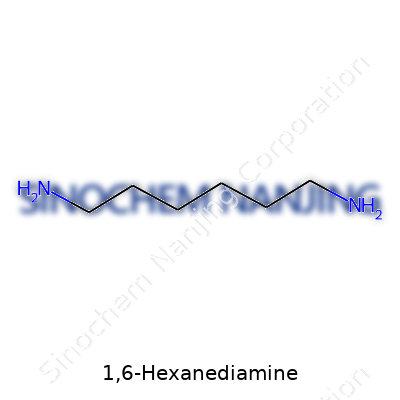
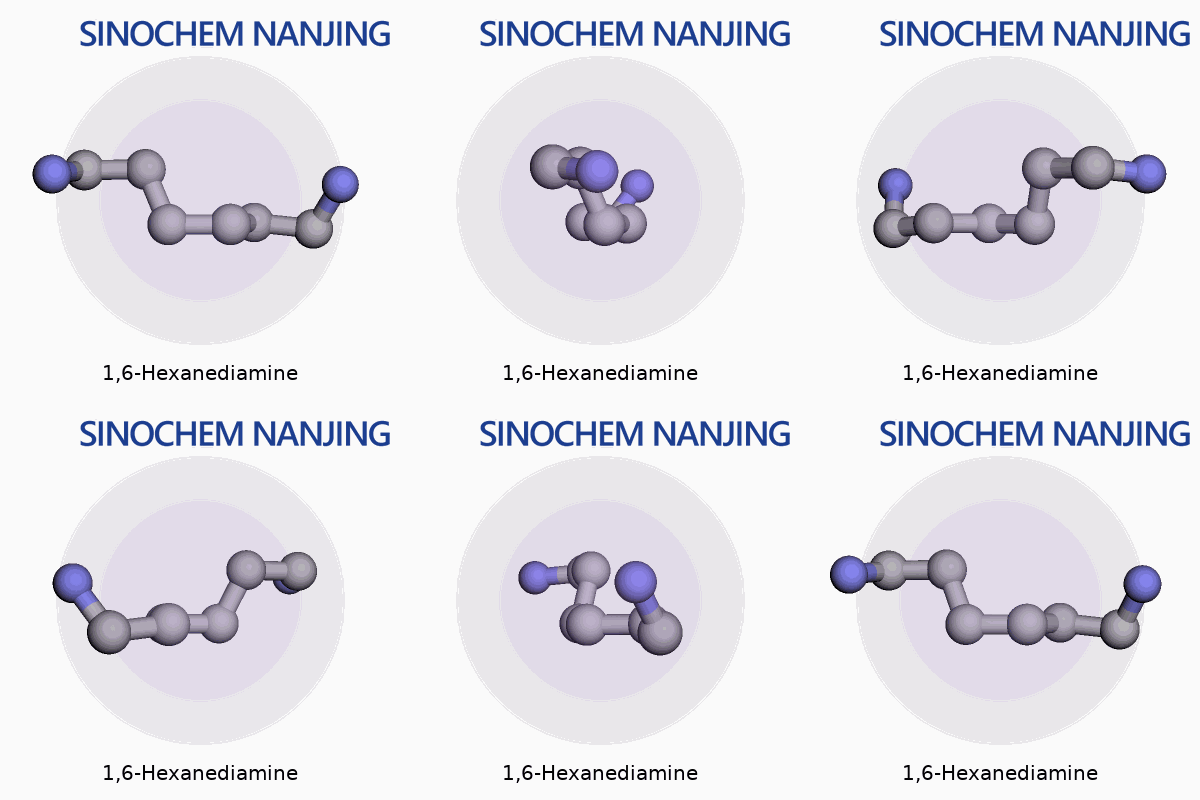
1,6-Hexanediamine carries the chemical formula C6H16N2. This simple set of numbers and letters connects directly to a world most people rarely stop to think about. The structure comes from six carbon atoms arranged in a chain, with two amino groups (NH2) at each end. That line-up hints at the unique part 1,6-hexanediamine plays in materials that shape modern products.
Pillars of Modern Manufacturing
Hexanediamine leads an invisible life supporting products from clothing to car parts. Nylon-6,6 fibers owe their strength to this molecule. The textile industry relies on the reaction between 1,6-hexanediamine and adipic acid to form those iconic strong strands. This chemical backbone lets clothing stretch, survive dozens of washes, and keep shape over time. People talk about innovation, but it begins with basic chemistry.
Walk into any car or electronics store, you’ll brush past nylon panels and electrical insulation. These use that same C6H16N2 building block. Its capacity to link up as part of tough, heat-resistant plastics means electrical engineers and automakers trust it for safety and longevity. Plastics made from this formula last through punishing heat and use, so wiring keeps homes and vehicles safe year after year.
Sourcing, Safety, and Environmental Responsibility
The drive for more nylon means high demand for hexanediamine. Most production draws on petrochemical sources, which raises persistent questions about sustainability and pollution. Chemical plants release nitrous oxide, a greenhouse gas, during nylon manufacturing. That puts a responsibility on manufacturers to adopt cleaner technologies or invest in carbon capture. As the world moves toward greener practices, research into biomaterial-based methods winds its way through universities and companies.
On the user side, hexanediamine itself needs respect. Its amino groups make it reactive, and skin contact or inhalation over time causes irritation or worse. Chemical workers need the right safeguards—ventilated equipment and protective gear. I’ve met factory staff who describe burning sensations from one exposure, then learn with strict training that prevention is far easier than treatment. Working around these risks keeps the workforce healthy and production on track.
Room for Better Solutions
Challenges spur innovation. For hexanediamine, shifting away from fossil resources looks tough at first glance, but chemists are already developing fermentation methods using renewable feedstocks. These cut fossil fuel use and shrink waste. One pilot program at a European chemical company uses sugar from beets to start the process, aiming to match the scale and quality of traditional sources. With the right policy pressures and research investment, plant-based paths may turn out to be not only possible but profitable.
Product end-of-life stands as another concern. Current plastics persist in landfills for decades. Chemical recycling—breaking old nylon down into its original monomers—offers a real way to recover and reuse hexanediamine. Firms in Japan and the US demonstrate this on industrial scales, showing that these fibers can find new life after their first use. This closed-loop system means less trash, lower emissions, and a tighter circle for resources.
Everyday Impact: Why Knowing the Formula Counts
People rarely check the labels of what holds an engine together or keeps their clothes durable. Understanding that C6H16N2 underpins these everyday products opens the door to smarter choices. Whether planning for greener materials or making the workplace safer, knowing what lies at the heart of things leads to better results in daily living.
How should 1,6-Hexanediamine be stored?
Why Safe Storage Isn’t Optional
People in the chemical industry know 1,6-hexanediamine makes nylon and a mix of other products. It gives off a strong smell, can corrode skin, and reacts with water or air over time. Anyone who has handled a drum or opened a container knows a spill isn’t just a sticky mess. It brings real risk, both chemical and environmental.
1,6-Hexanediamine reacts fast with carbon dioxide and moisture, forming crusty deposits around drum lids and turning into a sticky paste. Too many accidents happen because someone figures they can leave a lid cracked or skip the secondary containment. Overconfidence has caused burns, inhalation issues, or full-blown emergency calls.
Temperature and Containers: Two Priorities
Heat speeds up the reaction with air and boosts vapor pressure, which pumps vapors into the workspace and harms workers. Factory storage areas without air conditioning might see sweating drums, with crystals showing up inside or leaks around the seals. The ideal solution has always been dry, well-ventilated storage below 30°C, with the material in tightly sealed drums or IBCs made from corrosion-resistant metal or sturdy plastic. Cold rooms can work. Just remember, product labels should not peel off and barcodes need to scan easily for traceability.
Keeping It Separate and Contained
An old coworker skipped separating raw stock one winter, stacking containers by some acid barrels in our warehouse. The result was a dangerous blend of fumes and residue that drew the fire department. It’s safer to isolate 1,6-hexanediamine from acids, oxidizers, and strong bases. Even a little spill mixing with an incompatible chemical brings risk.
Secondary containment trays and catch basins are more than a formality. My own workgroup managed to catch a slow leak that would have damaged a concrete floor and forced weeks of soil removal just by using basic plastic trays. Facilities with chemical inventory always keep spill kits within arm’s reach and train workers on clean-up, with ready-to-use supplies.
Taking Worker Safety Seriously
Vapors irritate eyes and skin fast, and repeat exposure will damage airways and vision. Some folks, especially new hires, try to shortcut with thin gloves or skip goggles during transfer. It doesn’t take long before someone wishes they’d suited up properly. Chemical-resistant gloves, goggles, and long sleeves matter. If ventilation falls short, use a respirator. Never ignore the value of posted chemical safety data sheets—read them before starting the job.
Recordkeeping and Checks Matter
Regulators and insurance people want to see paperwork. That means a log of inventory checks, container inspections, spill response drills, and regular maintenance of ventilation systems. We used to walk through the stockroom each week, reading shipment records and matching them with onsite materials. Any drum showing rust, leaks, or warped lids came out of rotation, sometimes costing us money but saving bigger headaches down the road.
Storing 1,6-hexanediamine calls for habits that put health, safety, and local regulations at the center. With clear rules, personal vigilance, and updated training, a facility can avoid the kinds of costly incidents that hurt workers and the community.
Is 1,6-Hexanediamine hazardous to health?
What I’ve Learned Working Near Industrial Chemicals
I’ve spent time in plants and workshops where safety signs compete for wall space with tool racks. There’s a smell you begin to associate with certain corners—sometimes sharp and chemical, sometimes subtle enough to ignore until your throat feels rougher hours later. I bring this up because for anyone unfamiliar with 1,6-hexanediamine, it’s easy to wave off chemical safety as an abstract risk. Most folks never see or touch this stuff, but plenty of workers still do.
Where 1,6-Hexanediamine Shows Up
If your daily scene involves hard hats or blue barrels, hexanediamine isn’t rare. It helps turn out nylon, which fills factories that make everything from car parts to waterproof clothing. This chemical shows up where synthetic fibers are born and in resins that end up in kitchenware and machine gears. Think of it as a backstage worker in a play that never takes a bow but runs almost every show in the industrial world.
What We Know About Health Risks
Breathing in hexanediamine dust or fumes can quickly bring on a scratchy nose and coughing. Anyone loading pellets into a hopper knows the sting. Skin contact doesn’t just dry things out—it can bring on rashes, sometimes itching for days. The risk isn’t just about what you can feel in the moment. I’ve seen crew mates complain of headaches after even short shifts in poorly ventilated rooms.
Eyes are especially touchy. Splash hexanediamine and you get burning and maybe lasting irritation. There are studies showing corneal damage in rabbits with high exposure. Chronic risks show up less often—nobody is claiming this chemical causes every health problem under the sun. OSHA, NIOSH, and the EPA have all flagged it as hazardous in workplace settings. The danger ramps up with poor safety habits, not with the occasional splash, but the point stands: repeated contact is risky.
Regulations and Why They Exist
There are good reasons why shops run fans and hand out gloves. U.S. regulations require air monitoring in places using 1,6-hexanediamine—even if the team thinks they’re “used to the smell.” Proper gear matters. Nitrile gloves, goggles with side shields, respirators for heavy dust—these aren’t just nagging rules but habits that save lungs and skin. Anyone who’s watched a coworker get a face-full by skipping a mask remembers that lesson longer than any orientation slideshow.
How to Shrink the Hazards
Here’s what works best: engineering controls over duct tape fixes. Strong ventilation, sealed systems, proper labeling—these cut down on unexpected exposures. Training that takes real-world examples from people who’ve been there, done that, works better than reading policy out loud. Employers need up-to-date safety data sheets everyone can actually understand, posted where anyone can check them. Clean-up kits on hand and clear reporting for spills help avoid “near-misses” that turn into emergencies.
Personal responsibility tops the list. You pay attention, you watch out for each other, you make it easier for a new hire to ask questions without feeling embarrassed. My experience says that’s the key: seasoned workers looking out for the rookie, bosses backing up the safety culture, and everyone remembering that shortcuts never work out for long. Hexanediamine isn’t the most dangerous chemical around, but nobody should ignore the risks when the solutions are right in front of us.
| Names | |
| Preferred IUPAC name | hexane-1,6-diamine |
| Other names |
Hexamethylenediamine HMDA Hexamethylene diamine 1,6-Diaminohexane |
| Pronunciation | /ˌhɛk.seɪnˈdaɪ.əˌmiːn/ |
| Identifiers | |
| CAS Number | 124-09-4 |
| Beilstein Reference | 1710836 |
| ChEBI | CHEBI:35739 |
| ChEMBL | CHEMBL50478 |
| ChemSpider | 7276 |
| DrugBank | DB02390 |
| ECHA InfoCard | 13b26a68-7e3b-40e6-bbbb-6f94685b1e76 |
| EC Number | EC 203-865-4 |
| Gmelin Reference | 67669 |
| KEGG | C00558 |
| MeSH | D006520 |
| PubChem CID | 8050 |
| RTECS number | MO1738000 |
| UNII | M5F429UP4Q |
| UN number | UN2280 |
| CompTox Dashboard (EPA) | DTXSID2020377 |
| Properties | |
| Chemical formula | C6H16N2 |
| Molar mass | 116.20 g/mol |
| Appearance | Colorless to pale yellow liquid or crystalline solid |
| Odor | Ammonia-like |
| Density | 0.89 g/cm³ |
| Solubility in water | Soluble |
| log P | -1.18 |
| Vapor pressure | 0.3 mmHg (at 20 °C) |
| Acidity (pKa) | 10.7 |
| Basicity (pKb) | 3.6 |
| Magnetic susceptibility (χ) | -18.1e-6 cm³/mol |
| Refractive index (nD) | 1.483 |
| Viscosity | 10.9 mPa·s (at 40 °C) |
| Dipole moment | 3.46 D |
| Thermochemistry | |
| Std molar entropy (S⦵298) | 302.7 J·mol⁻¹·K⁻¹ |
| Std enthalpy of formation (ΔfH⦵298) | -22.1 kJ/mol |
| Std enthalpy of combustion (ΔcH⦵298) | -3893 kJ/mol |
| Hazards | |
| GHS labelling | GHS02, GHS05, GHS07 |
| Pictograms | GHS05,GHS07 |
| Signal word | Danger |
| Hazard statements | H302, H314 |
| Precautionary statements | P280-P261-P303+P361+P353-P305+P351+P338-P304+P340-P310 |
| NFPA 704 (fire diamond) | 3-1-0 |
| Flash point | > 85 °C |
| Autoignition temperature | 585 °C |
| Explosive limits | 1.2–9.9% |
| Lethal dose or concentration | LD50 oral rat 910 mg/kg |
| LD50 (median dose) | 1110 mg/kg (Rat, oral) |
| NIOSH | WX0175000 |
| PEL (Permissible) | PEL (Permissible Exposure Limit) for 1,6-Hexanediamine: 5 mg/m³ |
| REL (Recommended) | 1 ppm |
| IDLH (Immediate danger) | 100 ppm |
| Related compounds | |
| Related compounds |
Hexamethylenediamine Adiponitrile Hexamethylenetetramine 1,6-Dibromohexane Hexanedioic acid |



