Looking at 1,5-Cyclooctadiene: A Chemist's Perspective
Tracing the Roots: A Century with 1,5-Cyclooctadiene
There’s something fascinating about the story behind 1,5-cyclooctadiene, or COD as many chemists call it. COD made its first big appearance in the early twentieth century during a period when chemists were eagerly exploring ring compounds, hoping to unravel the oddities of strained structures. It wasn’t synthesized just on a hunch; its discovery was wrapped up in efforts to understand the stability and reactivity of cyclic olefins. Over time, it carved a niche for itself, not so much with fanfare, but more by virtue of its behavior in transition metal chemistry. For anyone who has spent time in a research lab, stories about COD surface regularly. Whenever organometallic synthesis comes up, tales of its unmistakable smell, tricky purification, or its uncanny ability to act as a ligand in all kinds of clever ways seem to follow.
The Nature of the Beast: What’s in a Name?
COD is a clear, oily liquid. You often spot it in its brown glass bottle, sometimes just labeled “1,5-cyclooctadiene,” sometimes as “sym-dibutylene” or in shorthand as “COD.” This compound features an eight-carbon ring with two double bonds sitting at positions 1 and 5. This setup gives it an unusual mix of stability and flexibility. It’s not like benzene—those double bonds don’t sit quietly; they readily take part in coordination to metals and join in all sorts of cycloaddition chemistry. In the lab, COD smells sharp and sweet, but don’t let the aroma fool you. Its volatility and the reactivity that makes it so valuable in synthesis also call for careful storage and handling.
Living with COD: Properties and Variability
COD’s boiling point sits just under 150°C, and it freezes at temperatures lower than most standard lab freezers can reach. This means it pours easily and evaporates if left open on the bench for too long. Its density sits somewhere around 0.87 grams per milliliter. Water and COD don’t mix; COD floats on top in a crisp, colorless layer. Those double bonds love to react with electrophiles and metals, meaning it doesn’t stick around in the open for very long if conditions are even slightly reactive. In those cases, the ring sometimes opens up, or the double bonds get attacked. Chemists learn quickly to keep COD under inert gas to prevent slow decomposition.
Method of Production: Getting COD to the Bottle
Commercially, makers usually get COD from nickel-catalyzed dimerization of butadiene. The process isn’t particularly glamorous; it’s all about balancing reaction speed against the tendency of the product to participate in unwanted side reactions. Experience shows that even slight tweaks—different pressure, catalyst choice, or solvent—can make a big impact on yield and purity. In the lab, smaller amounts sometimes come from more traditional methods, but for large-scale use, industry always leans on catalytic routes. That’s not surprising, since demand comes not just from academic labs, but also from places working with specialty polymers or catalysts. Contamination by peroxides or ring-opened byproducts can mess up sensitive chemistry, so most folks invest the time in re-distilling COD, especially before using it in air- or moisture-sensitive work.
Reactivity: A Ligand with a Legacy
COD grabs attention in inorganic chemistry because of its work as a ligand. When COD meets transition metals—nickel, rhodium, palladium, just to name a few—it transforms ordinary salts into powerful catalysts. Chemists talk about the “COD trick,” where the loosely bound diene partner makes it easy to swap in fancier ligands or start polymerizations that demand an active metal center. My first encounter with a COD complex happened during a project focused on cycloaddition reactions. The way COD complexes dissolve, react, and reprecipitate underscores its contribution to the field. Beyond ligands, COD finds a role in Diels-Alder reactions. Those double bonds love to pair with electron-poor dienophiles; synthetic organic chemists use this to build complicated carbon frameworks.
Working with COD: Standards are Anything but Boring
Labs never take COD’s handling lightly. Its volatility and reactivity force a good look at safety data. Flammable vapors, skin and eye irritation, and potential respiratory trouble loom large on any bench where COD comes into play. Proper labeling, sealed bottles with secure caps, and the usual round of gloves, goggles, and fume hoods all become second nature. Some older reports suggest links to nervous system effects after heavy exposure, but more recent research urges continued study. Health and safety officers often treat COD like other unsaturated hydrocarbons: keep it cold, dry, and well away from ignition sources. These steps echo larger trends in laboratory culture, focusing on minimizing unnecessary risk.
COD’s Uses: Far Beyond the Bottle
Catalysts sit in the spotlight here, but COD’s reach extends to the creation of specialty polymers and the synthesis of fine chemicals. Industries making flavors, fragrances, and specialty plastics see value in COD’s structure and reactivity. In pharmaceuticals, the ability to introduce complexity or create metal complexes in a controlled way sometimes hinges on using COD as an intermediate step in synthesis. The push in green chemistry to use less hazardous solvents or switch to flow chemistry also elevates COD’s standing, since it enables formation of key intermediates with less fuss than more exotic reagents. In every case, the push for higher selectivity and less waste puts COD in a good position—when chemistry allows—for forward-thinking applications.
COD in the R&D World
In research circles, COD often appears in papers describing new catalysts or organic frameworks. Years ago, I watched a team use COD-derived complexes to ace hydrogenation reactions that were headache-inducing with older systems. Others marvel at the way COD complexes enable living polymerization—opening doors to new plastics and materials. Journals break new ground often, showing how tweaks to COD’s structure or its metal companions shape function. Funding for projects that build on COD’s reactivity signals continued confidence in its utility, both in academia and industry. The more labs uncover about COD’s coordination chemistry and transformations, the better equipped chemists are to invent efficient processes for pharmaceuticals, specialty polymers, and catalytic recycling.
Risks, Toxicity, and Environmental Concern
COD doesn’t carry the same level of notoriety as some toxic chemicals, but neglecting its hazards isn’t wise. Animal studies report neurotoxic effects at high doses, sparking interest in limiting operator exposure in both lab and industrial settings. Environmental agencies take note because, like other volatile organics, accidental release can lead to air and water concerns. COD’s tendency to escape into vapor means proper ventilation matters just as much as careful storage. Chemists now reach for lower-toxicity or less volatile alternatives when possible, but the reality is, COD’s utility keeps it relevant. Keeping exposures low, emphasizing protective equipment, and investing in updated toxicity studies remains essential for healthy, sustainable research environments.
Looking Forward: What’s Next for COD?
The future for 1,5-cyclooctadiene mirrors larger trends in chemical research. Efforts to improve catalyst efficiency and sustainability motivate new synthetic pathways that give COD a key role. Computational modeling helps predict COD-metal complexes’ behavior, hinting at smarter catalyst design. As industries look to trim waste and cut costs, using COD in continuous flow synthesis and recyclable catalyst systems shows promise. Meanwhile, academic labs focus on safer derivatives, greener production, and better characterization of environmental impacts. Education, responsible handling, and collaborative science ground COD’s future, linking its familiar double bonds to new challenges in efficiency, safety, and innovation.
What is 1,5-Cyclooctadiene used for?
What 1,5-Cyclooctadiene Means in the Real World
Some chemicals get all the attention in science class. Ethanol, ammonia, acetone—these names show up everywhere. But now and then, a compound like 1,5-cyclooctadiene (COD for short) reminds me that chemistry often works in the background, making tech and industry possible. I’ve seen this firsthand during a summer stint at a chemical research lab, where COD turned out to be anything but "just another reagent."
Acting as a Ligand in Catalysis
COD isn’t just a tongue-twister from a textbook. In the lab, it steps in as a ligand—a type of helper molecule that keeps precious metal catalysts stable and functional. Catalysis means speeding up chemical reactions, a process that lets us build anything from polymers to pharmaceuticals.
In organometallic chemistry, catalysts often rely on metals like rhodium, iridium, or nickel to get the job done. If left fully exposed, these metals start bonding with all sorts of stray molecules, which can wreck the reaction or halt it altogether. COD jumps in, forming a cage-like embrace with the metal center and shielding it long enough for scientists to make new bonds efficiently and selectively. Over in specialty manufacturing or research settings, without ligands like COD, many modern chemical methods would stall out.
Making Complex Molecules Simpler to Build
During a project last year, we used COD while prepping for a hydrogenation experiment. Hydrogenation—adding hydrogen to molecules—is a workhorse method in pharma, energy, and food chemistry. COD made it easier to generate the right type of nickel catalyst on the spot. Without COD, the metal particles would clump up, killing the activity and wasting resources. The clean end product made a huge difference in our yields, and we finished ahead of schedule.
A Starting Point for Synthesis
COD doesn’t just stick to helping out as a ligand. Many chemical companies see it as a valuable starting block for building larger, more specialized molecules. Its structure holds two reactive double bonds, so chemists can tweak and shape them using reactions like addition or cyclization. COD helps design new polymers, materials, and specialty chemicals with controlled shapes and sizes. These can end up in electronics, coatings, high-performance materials, or even advanced drug molecules.
COD Safety and Supply
COD’s usefulness comes with some responsibility. This stuff gives off a strong smell and tends to irritate skin or eyes if handled carelessly. Regulations usually call for gloves, goggles, and a vented workspace whenever COD gets opened. Chemical manufacturers must track supply closely, since high purity COD brings premium prices. Shortages have been rare, but tight supply can slow down research or manufacturing unexpectedly. Staying connected with reliable suppliers has proven to be the smartest move for most teams.
What Could Help Going Forward
Research into greener chemistry keeps growing. Alternatives to COD would need to offer the same blend of stability and reactivity—no easy feat. Some labs now look at using recycled solvents and renewable raw materials as a way to cut back on waste. From my own experience, smart engineering controls paired with regular safety training keep risks in check and help maximize COD’s practical value.
This humble compound may not draw crowds like aspirin or ammonia, but for anyone building tomorrow’s materials or medicines, COD sits among the unsung essentials that quietly drive innovation.
What are the physical and chemical properties of 1,5-Cyclooctadiene?
A Closer Look at the Liquid Itself
1,5-Cyclooctadiene often looks like many other colorless liquids in a laboratory, but it stands out once work begins. This organic compound boils at 153°C, offering a dependable range for distillation. Pour it at room temperature, and a mildly sweet, almost gasoline-like odor drifts up—one warning that concentration in the air demands some respect for safety. Flammability isn't a theoretical risk; its flash point comes in at 32°C, creating a real fire hazard in busy labs if containers are left open or ventilation isn't ideal.
Chemical Uniqueness: Double Bonds Set It Apart
Two double bonds define 1,5-Cyclooctadiene. Where those bonds sit matters. They're separated by three single-bonded carbons each, giving the molecule what chemists call a "non-conjugated diene" structure. This layout makes the compound a flexible platform for a range of reactions. Throw a catalyst into the mix, and those double bonds act like magnets for metal atoms—meaning organometallic chemists see this as a common ligand. I’ve seen it stabilize nickel and palladium complexes in ongoing catalytic research. Without these double bonds, that usefulness evaporates.
Why Solubility Matters in the Real World
In practice, 1,5-Cyclooctadiene doesn’t mingle well with water. Try to dissolve it and you'll notice the two layers in a beaker, a classic sign the liquid prefers organic solvents like ether or chloroform. This tells chemists a lot about how to handle waste or set up extractions. If you spill it, mopping up takes more than water—the right organic absorbents need to be close at hand, or risk a messy cleanup and environmental headache. Research shows that organic diene compounds often persist in the environment, so lab practice calls for immediate and careful containment.
Health and Safety Aren’t Just About Gloves
I’ve watched people shrug off gloves and goggles “just for a second,” convinced the worst won’t happen. Yet 1,5-Cyclooctadiene carries genuine toxicity. Even brief skin or eye contact causes irritation. Breathing in vapors can provoke headaches or dizziness. Health and safety data sheets issued by agencies in the US and Europe stress the risk of chronic effects if exposure goes unchecked. Facility managers hold regular training not for compliance boxes, but because the price of carelessness can mean more than an interrupted experiment—it can mean a trip to the hospital or long-term health consequences.
Rethinking Storage and Fire Safety
Proper storage means sealing containers tightly and keeping them away from heat sources, direct sunlight, and static electricity. The compound forms flammable vapors at surprisingly ordinary temperatures. Labs need fire extinguishers and spill control equipment ready, and chemical fume hoods in constant use. Safety upgrades often follow near-misses, but waiting until after an accident costs more than the price of planning ahead. Insurance reports and safety audits consistently show that facilities keeping their organics stored in ventilated, flammables-rated cabinets avoid more accidents and downtime than those with a casual approach.
Paths to a Safer and Smarter Lab
Universities and research firms have put money into better personal protective equipment, ongoing safety education, and real-world drills using substances like 1,5-Cyclooctadiene as examples. Labs ban open flames anywhere near storage shelves. New extraction techniques rely on automation, keeping workers farther from potential exposure. My own work has seen clear benefits in both research speed and peace of mind since strict protocols came into play. Rather than treating these safety steps as obstacles, more chemists recognize them as the backbone of true progress in synthetic chemistry.
How should 1,5-Cyclooctadiene be stored and handled safely?
Why Experience Shapes How We Store Chemicals
Working in a lab taught me pretty quickly: shortcuts in chemical storage often end up being expensive mistakes. The same logic fits with 1,5-Cyclooctadiene. Folks might look at it as just another organic solvent, but the reality means you need care from the start. This liquid has a way of grabbing oxygen from the air, which pushes it toward unwanted reactions over time. Mix that with a low flash point and you get a recipe that can go south in a hurry if you don’t treat it right.
Choosing the Right Containers
Stainless steel or amber glass bottles usually make the best homes for 1,5-Cyclooctadiene. Plastic deforms or lets vapors seep out. Sealing containers tight and keeping out air slows those slow-burn reactions you can’t always see. I’ve seen folks toss a bit of nitrogen over the surface, creating a blanket that blocks out oxygen. It’s not expensive and helps avoid the problems caused by long exposure to air.
Storing Cool and Dry: Not Just Good Advice
Good storage space does a lot of heavy lifting. I like using locking flammable cabinets, set away from direct sunlight and any spot that gets too warm. Even small amounts will jump in vapor pressure quickly if left near a heater or in the sun. A cool storeroom, with clear labels, lets everyone know what’s inside. Too many accidents start with “I thought it was something else.” Keeping water away also matters, since moisture can invite its own set of trouble.
Handling: Beyond the Lab Coat
Newcomers tend to toss on a lab coat and gloves, then call it a day. I stick to nitrile gloves, safety goggles, and make sure the workspace has good ventilation. Opening any container with 1,5-Cyclooctadiene in a fume hood cuts down those eye-watering fumes on the spot. Never pipette by mouth. I know it sounds obvious, but sometimes old habits slip in under pressure.
Spill Response and Waste
Minor spills happen, but how you react saves time and headaches down the line. I quickly cover any drop with plenty of absorbent pads, and toss the mess into a labeled hazardous waste bin right away. Wiping up with regular paper towels just isn’t good enough. Trying to drain that waste down the sink runs against every best practice I’ve learned. The right way: keep a dedicated waste container, label it with the chemical, and let trained professionals handle the rest.
Why All This Matters
Hundreds of chemical accident reports mention poor labeling, leaky caps, or plain old “I didn’t know.” It gets easy to see how life changes fast after a single careless step. The American Chemical Society and OSHA point out again and again that paying attention to storage and regular checks stops most problems before they start. Using tried and true habits, built from mistakes and real cases, makes safety less about paperwork and more about getting home healthy at the end of the day.
What is the molecular formula and structure of 1,5-Cyclooctadiene?
A Closer Look at 1,5-Cyclooctadiene
1,5-Cyclooctadiene shows up in more places than you might expect, from organic labs in universities to big chemical plants. It looks like a colorless liquid, gives off a sharp, somewhat sweet scent, and most chemists recognize its structure pretty quickly once they see it. Behind that simple appearance hides a molecule that has quietly shaped synthetic chemistry for decades.
The Molecular Formula
1,5-Cyclooctadiene’s molecular formula tells you a lot right up front: C8H12. This formula says the molecule contains eight carbon atoms and twelve hydrogen atoms. Unlike many hydrocarbons, you’ll find double bonds in its ring, making it a diene. The double bonds sit at the 1 and 5 positions of the eight-membered carbon ring, giving this compound its name and its reactive personality.
The Structure That Drives Its Uses
Visualizing the structure, I remember drawing countless ring structures on whiteboards in the lab. The cyclooctadiene ring has a puckered, non-planar shape. The double bonds aren’t neighbors – instead, they keep their distance at opposite sides of the ring. This spatial arrangement opens doors for reactions that don’t work as easily on smaller or more strained rings like cyclobutene or cyclohexene.
The diene system is unconjugated. The double bonds don’t overlap electronically, which changes how this molecule reacts compared to something like 1,3-butadiene. The eight carbons form a large-enough ring to relieve strain yet tight enough to discourage free rotation, which keeps the molecule somewhat rigid. Each carbon in the ring holds a hydrogen, and at the sites of double bonding, extra pi electrons give it added chemical character.
Why Structure Matters in the Real World
Organometallic chemists like myself have seen 1,5-cyclooctadiene used daily as a ligand in catalysts, helping produce vital industrial chemicals and pharmaceuticals. The way those double bonds sit across from one another allows this molecule to grab onto metals at two points, rather than just one. That bidentate grip changes the reactivity of the metals, leading to new reactions and faster processes. Compounds like Wilkinson’s catalyst or many other rhodium complexes owe their popularity to this little diene and its ability to make or break bonds at metal centers.
Troubles, Toxicity, and Safer Chemistry
No discussion would be complete without addressing safety. 1,5-Cyclooctadiene is volatile and flammable. The sharp odor many recall in the lab signals a chemical you don’t want to breathe for long. Chronic exposure risks and the potential to form explosive peroxides during storage push chemists to treat it carefully. Proper fume hoods, handling procedures, and regular peroxide checks become routine for anyone using it regularly.
Since the drive for greener and safer chemistry keeps getting louder, synthetic chemists often look for less hazardous alternatives when planning reactions. Sometimes, there isn’t a simple replacement for 1,5-cyclooctadiene’s unique slot in catalysis, but manufacturers update protocols to cut down exposure and waste. Closed systems, personal protective equipment, and good labeling practices turn out to be some of the best defenses against accidents in teaching and professional labs alike.
The Takeaway
1,5-Cyclooctadiene may look like just another hydrocarbon, but those double bonds across its eight-membered ring keep it vital to many branches of chemistry. From enabling advanced metal catalysis to presenting safety challenges that shape lab culture, it commands respect on the lab bench and factory floor. Whether planning a new synthetic route or training the next generation of chemists, understanding its structure and handling quirks ultimately leads to better science and safer workplaces.
Is 1,5-Cyclooctadiene hazardous or toxic?
What 1,5-Cyclooctadiene Does in Labs
1,5-Cyclooctadiene isn’t something everyday folks bump into very often. You’ll mostly find it in research labs or chemical plants. It plays a role in making certain catalysts and compounds. Not a household item, but scientists and engineers use it for quite a list of reactions.
Why Worry About Safety?
Many chemicals push the limits of what’s safe if not treated with care. 1,5-Cyclooctadiene, known as COD among chemists, belongs in that category. If you spill a bit on your hands, expect redness or irritation. Some researchers who handled it without gloves ended their day with dry or itchy skin. Breathing in its vapors can irritate the nose, throat, and lungs. Sore throats and coughing can turn up if you don’t have the right protective gear. I’ve seen more than one lab member shake their head after getting a whiff too close.
Let’s talk limits. Normally, chemicals in the workplace get occupational exposure limits set by government safety boards. For 1,5-cyclooctadiene, those clear numbers aren’t always listed because it isn’t as common as other industrial chemicals. Still, data shows its vapors can cause headaches, dizziness, or fatigue if exposure lingers. Most lab protocols I’ve used recommend using it only in a well-ventilated fume hood. Fresh air and a steady draft keep the risk low.
Long-Term Risk and Environmental Concerns
Information on COD’s long-term effects isn’t as deep as with some legacy chemicals. No evidence points decisively to cancer or major chronic diseases from normal lab exposure. That said, some animal studies suggest repeated high doses could affect the liver. Fact is, if you use it a couple times a week in a chemistry lab, the main concern still revolves around inhalation or skin issues rather than hidden health damage.
Spills matter too. COD doesn’t dissolve well in water and floats on top. Left unchecked, it can bother aquatic life. Local rules tell users to avoid dumping it down the drain. Most workplaces I know bottle up any extra COD in special containers. Responsible labs and factories hand it to waste contractors for safe disposal, keeping it out of rivers and reservoirs.
Making Safer Choices in Practice
Safety starts with good habits. Gloves, splash goggles, and fume hoods are basic tools in every lab I’ve worked in. New students sometimes question why we double up on gloves—one leaky pair and your skin tingles the rest of the day. Training pays off here, and knowing what to do if someone gets exposed matters even more.
Companies offering 1,5-cyclooctadiene usually supply a clear safety data sheet. Any time I opened a new bottle, I gave that sheet a fresh read. It outlines not just health effects but also what to do in case of fire—COD can catch flames easily if handled near sparks. Some labs swap it out for other chemicals if safer options exist, but most rely on strong safety protocols instead.
Final Thoughts on Handling COD
No one outside of a chemistry field needs to worry about 1,5-cyclooctadiene lurking in their daily life. In any place that uses it, respect, information, and prevention tactics go a long way. Even though it isn’t the most dangerous material overall, treating COD with caution protects workers and the environment at the same time.
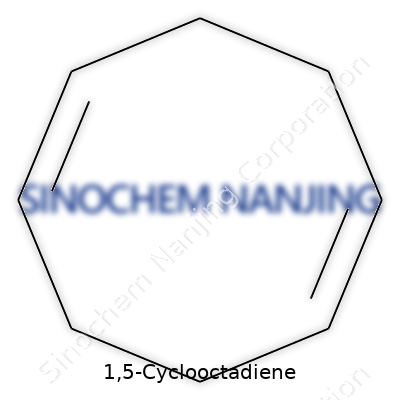
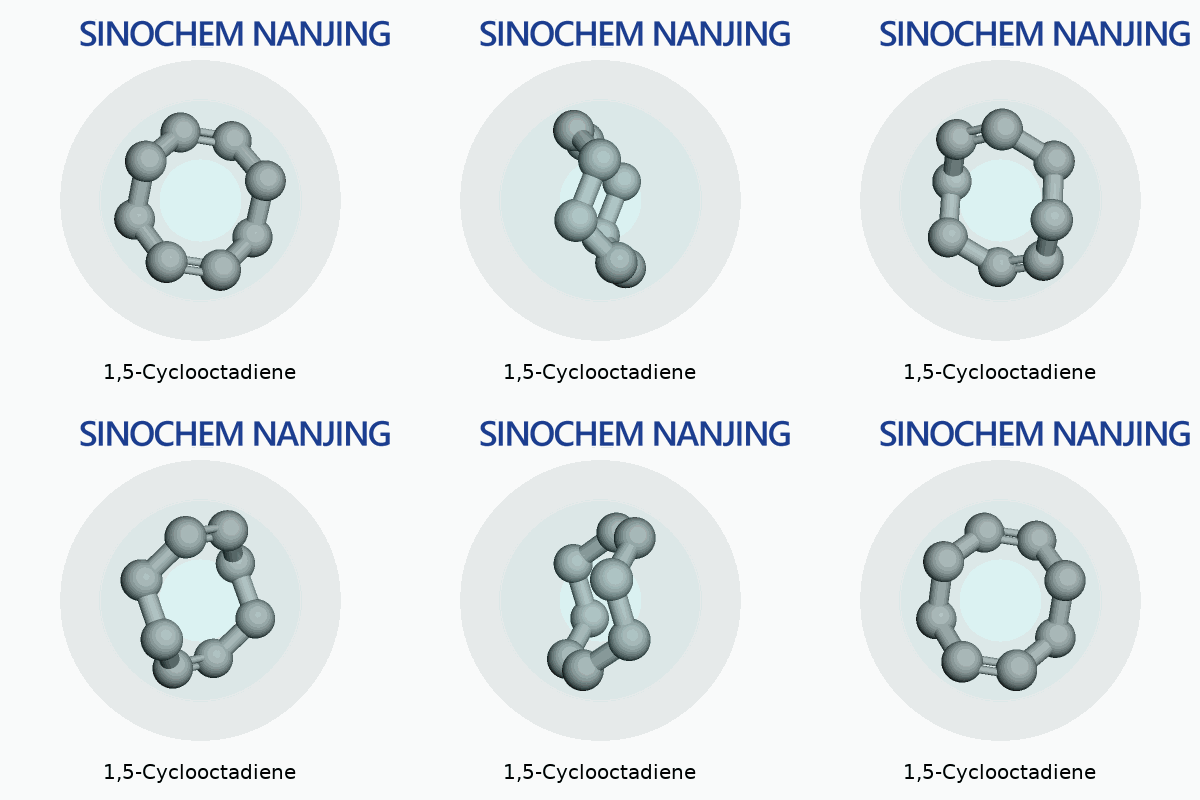
| Names | |
| Preferred IUPAC name | cycloocta-1,5-diene |
| Other names |
CYCLOOCTA-1,5-DIENE 1,5-COD Sym-Octa-1,5-diene COD Cycloocta-1,5-diene |
| Pronunciation | /ˌwʌn.faɪv.saɪ.kloʊˈɒk.təˌdaɪiːn/ |
| Identifiers | |
| CAS Number | 111-78-4 |
| Beilstein Reference | 1208739 |
| ChEBI | CHEBI:51606 |
| ChEMBL | CHEMBL15314 |
| ChemSpider | 107832 |
| DrugBank | DB02183 |
| ECHA InfoCard | 03bdbc2f-6b54-4a66-957a-ce0adf9c4d53 |
| EC Number | 1.3.3.6 |
| Gmelin Reference | 87119 |
| KEGG | C02544 |
| MeSH | D003494 |
| PubChem CID | 65143 |
| RTECS number | RQ2080000 |
| UNII | 5U8E598YDS |
| UN number | UN2240 |
| Properties | |
| Chemical formula | C8H12 |
| Molar mass | 110.19 g/mol |
| Appearance | Colorless liquid |
| Odor | mild pleasant odor |
| Density | 0.857 g/mL at 25 °C |
| Solubility in water | insoluble |
| log P | 1.7 |
| Vapor pressure | 0.5 mmHg (20 °C) |
| Acidity (pKa) | 15.50 |
| Basicity (pKb) | > 15.08 |
| Magnetic susceptibility (χ) | -68.6·10⁻⁶ cm³/mol |
| Refractive index (nD) | 1.475 |
| Viscosity | 4.22 mPa·s (20 °C) |
| Dipole moment | 0.27 D |
| Thermochemistry | |
| Std molar entropy (S⦵298) | 330.3 J·mol⁻¹·K⁻¹ |
| Std enthalpy of formation (ΔfH⦵298) | -12.3 kJ/mol |
| Std enthalpy of combustion (ΔcH⦵298) | -4446 kJ/mol |
| Hazards | |
| GHS labelling | GHS02, GHS07 |
| Pictograms | GHS02, GHS07 |
| Signal word | Warning |
| Hazard statements | H226, H315, H319, H335 |
| Precautionary statements | P210, P233, P240, P241, P242, P243, P261, P264, P271, P280, P302+P352, P303+P361+P353, P304+P340, P305+P351+P338, P312, P321, P332+P313, P337+P313, P362+P364, P370+P378, P403+P235, P403+P233, P405, P501 |
| NFPA 704 (fire diamond) | 2-3-2 |
| Flash point | 38 °C (100 °F; 311 K) |
| Autoignition temperature | 220 °C |
| Explosive limits | 1.4–8.3% |
| Lethal dose or concentration | LD50 oral rat 4050 mg/kg |
| LD50 (median dose) | LD50 (median dose): Oral rat LD50: 2500 mg/kg |
| NIOSH | NA0450000 |
| PEL (Permissible) | Not established |
| REL (Recommended) | REL (Recommended Exposure Limit) of 1,5-Cyclooctadiene is: "10 ppm (40 mg/m³) TWA |
| IDLH (Immediate danger) | IDLH: 400 ppm |
| Related compounds | |
| Related compounds |
Cyclooctene Cyclooctane Cyclooctatetraene 1,3-Cyclooctadiene |



