Understanding 1,4-Xylene: More Than Just a Chemical Compound
Tracing the Footprints: Historical Context
1,4-Xylene, sometimes called para-xylene or p-xylene, traces its roots back to the early days of industrial chemical manufacturing. Chemists first isolated xylene isomers from coal tar during the growth of the dye and explosive industries. The story of 1,4-xylene, like many industrial aromatics, weaves through the fabric of the 19th and 20th centuries. Paints, resins, plastics, and synthetic fibers all started to rely heavily on precursors churned out in refineries and chemical plants. Petrochemical processes grew, and with them, so did the importance of isolating and purifying aromatic hydrocarbons, which includes 1,4-xylene. This chemical isn’t just a product born from oil; it helped shape the infrastructure of the modern materials industry. Even today, it's a staple in petrochemical complexes worldwide.
What It Is: Lifting the Lid on 1,4-Xylene
Anyone who’s spent time in a lab or worked near chemical plants has likely come across 1,4-xylene. Chemically, it’s one of three isomers of dimethylbenzene, sharing the spotlight with ortho- and meta-xylene. Its structure puts its two methyl groups opposite each other on a benzene ring, a detail that seems minor but shapes its behavior in reactors and products. Para-xylene's clear, sweet-smelling liquid form makes it familiar to those who handle solvents and chemical feedstocks. The smell can even evoke memories of paint thinners or certain cleaning supplies, though that’s not its main calling these days. Manufacturers use 1,4-xylene mostly to create terephthalic acid and dimethyl terephthalate, two key players in the world of polyester and PET plastics. Anyone wearing a polyester T-shirt or drinking from a clear plastic bottle owes something to this aromatic compound.
Physical and Chemical Attributes
Handling 1,4-xylene, you see a colorless, volatile liquid with a distinct odor. Its boiling point hovers around 138°C, a property exploited in many industrial distillation processes. Solubility in water barely registers, but it mixes well with most organic solvents, thanks to its aromatic nature. The density sits slightly lower than water, making spills a real environmental challenge when they occur. Chemically, 1,4-xylene shows more stability than some cousins. Benzene rings resist a lot, but with the right push, such as heat or certain catalysts, 1,4-xylene reacts to produce everything from esters to bulky polymers. Its flammability underlines a major concern for storage and transport—safety always rides shotgun where 1,4-xylene goes.
Preparation Story: How Industry Produces 1,4-Xylene
Most commercial para-xylene comes out of the catalytic reforming of petroleum naphtha or the toluene disproportionation process. Refiners separate the three xylene isomers, frequently using crystallization or adsorption techniques, as their boiling points cluster frustratingly close together. This separation becomes a test of technical skill and energy management, with para-xylene’s ability to crystallize at lower temperatures sometimes tipping the scales in its favor. The chemical industry has poured investment and brainpower into making this process more efficient, since demand for PET resins feeds a never-ending appetite for the starting material.
What Goes On Chemically: Reactions and Transformations
Looking at 1,4-xylene’s reactivity, its main pathway stretches toward oxidation. Catalysts like cobalt or manganese set the scene for air oxidation reactions, transforming 1,4-xylene into terephthalic acid. This step supplies polyester plants and bottle manufacturers with their lifeblood. Outside that main highway, chemists can push 1,4-xylene into nitration, halogenation, or sulfonation, though the yield and selectivity often challenge even seasoned chemists. Alkyl substituents on aromatic rings dial up the reactivity, a fact that’s both useful in synthesis and worrisome during fire hazards.
The Many Hats: Synonyms and Names in the Trade
Anyone tracking chemical shipments or studying technical literature knows that synonyms multiply in the chemical trade. 1,4-xylene is known as para-xylene, p-xylene, and sometimes just PX. Each name surfaces in different contexts, sometimes leading to confusion when evaluating regulations or product handling instructions. The CAS number helps clear up mix-ups in regulatory paperwork, but clear labeling and communication in the workplace often matter just as much as technical paperwork.
Practicing Safe Chemistry: Regulatory and Operational Considerations
Staying safe with 1,4-xylene comes down to respecting its flammability and the health hazards linked to inhalation or skin contact. Workers use gloves, goggles, and well-ventilated spaces to keep exposures low. In my time working in a site where aromatics arrived by railcars, regular drills and up-to-date safety data helped prevent incidents. Regulatory guidelines, like those from OSHA and the EPA, shape how industry stores and handles this chemical. Communities living near production plants push for more transparency, tighter containment measures, and solid emergency plans—rightfully so, as leaks and fires affect more than just plant property.
Where 1,4-Xylene Ends Up: Uses and Applications
The vast bulk of 1,4-xylene ends up as raw material for things most of us rely on every day. Its path to terephthalic acid and onward to PET means our closets, grocery aisles, and hospitals all rely on this chemical. Textiles, film, food packaging, and even certain engineering plastics wouldn’t exist at this scale or price without para-xylene-based processes humming in the background. It doesn’t stop there, either. Specialty chemicals, paints, and adhesives take advantage of 1,4-xylene’s solvency and reactivity. In research, its purity makes it a reference compound and a building block for further transformations.
Looking Under the Hood: Pushing the Boundaries Through Research
Innovation in how we use and produce 1,4-xylene keeps researchers busy. Process engineers chase higher yields and lower waste, tweaking catalysts and reactors for tiny gains that translate into huge savings at scale. Environmental chemists have been working on clean-up techniques and risk assessment tools to better predict the impact of accidental releases. Polymer chemists probe new ways to convert 1,4-xylene derivatives into high-performance materials, with demand for recycling and upcycling PET products rapidly steering fresh investments. On the academic side, there’s ongoing study into the fundamental reactions of xylene isomers, feeding insights back into applied research.
Toxicity: Weighing the Hazards
Talking about 1,4-xylene without mentioning health risks would ignore the realities many industrial workers face. Inhalation of vapors irritates the throat and lungs, a concern for anyone without proper ventilation or personal protective equipment. Long-term exposure links to neurological symptoms and, in extreme cases, damage to internal organs. Animal studies shed light on metabolic pathways and help set safe exposure limits, but the chemical’s persistence in the environment poses a threat beyond the workplace. Communities demand tighter monitoring and enforcement once they’ve experienced spills or leaks. Over the years, regulators adjusted threshold limits, reflecting both better science and hard lessons from accidents.
Where Next: Charting the Future for 1,4-Xylene
Looking ahead, demand for polyester and PET recyclability drives both production and innovation. The chemical industry faces mounting pressure to decarbonize, cut waste, and produce cleaner products—1,4-xylene included. Routes that tap renewable feedstocks or introduce closed-loop recycling schemes gain more attention, with startups and legacy players alike racing to find the best solutions. Artificial intelligence, real-time analytics, and more efficient catalysis promise incremental gains for today’s plants. As climate policy and corporate responsibility evolve, 1,4-xylene’s story will keep changing.
What is 1,4-Xylene used for?
Everyday Chemistry Hiding in Plain Sight
Most folks haven't heard of 1,4-xylene, but they’ve likely used or benefited from something tied to it. This compound shows up mostly as a raw ingredient in the chemical industry. It doesn’t appear in store aisles under its name, but it helps make a lot of useful stuff. I remember touring a large manufacturing plant a few years back, listening to folks on the floor talk about solvents, glues, coatings—products that often trace part of their beginnings to xylene isomers. 1,4-xylene often slips through the cracks in news coverage, but it deserves a little spotlight.
Making Plastics and Fibers That Shape Daily Life
1,4-xylene stands out as a building block for plastic, especially polyester. Factories use it to create purified terephthalic acid (PTA), which connects directly to polyethylene terephthalate (PET). Think of plastic bottles, food packaging, clothes made from synthetic fibers, and even carpets. One study from the International Journal of Polymeric Materials shows over 80% of PTA comes from xylene. People regularly ask why the world seems chained to plastics. Part of the answer: chemicals like 1,4-xylene make them relatively cheap, light, and tough.
Role in Solvents and Coatings
Paint thinners, adhesives, and printing inks—these products count on strong, stable solvents to work smoothly. 1,4-xylene works well here because it dissolves grease and residue. I tried cleaning dried latex paint from a brush once; products with xylene made the job surprisingly quick, though I also learned to use gloves. Its effectiveness comes from its chemical structure, which carries both the strength and volatility needed for fast evaporation. The American Coatings Association reports that xylene isomers, including 1,4-xylene, account for a good share of specialty and industrial paint formulas.
Pharmaceuticals and Lab Work
Drug makers sometimes use 1,4-xylene to create certain medications. The compound helps form intermediates that make their way into painkillers and antibiotics. Scientists also choose xylene as a clearing agent in tissue sample labs. Without chemicals like these, getting clear slides for diagnosis would be far tougher. The National Institutes of Health includes 1,4-xylene in lab manuals for tissue processing, with safety warnings for long-term exposure.
Worries About Health and the Environment
Here’s where experience meets evidence. 1,4-xylene, in high-enough doses, causes dizziness and headaches. Workers handling it every day run the real risk of overexposure unless companies enforce good safety practices. At one facility I visited, the air monitors made non-stop noise, reminding everyone to stay sharp about leaks. The chemical evaporates quickly and travels through air, so spills and improper storage create risks outside of factories. A 2023 report from the U.S. Environmental Protection Agency highlights groundwater contamination concerns near production sites. Keeping local water clean means tighter controls and smarter disposal strategies.
Toward Safer, Smarter Industry
1,4-xylene won’t vanish from industrial production soon, but better regulations can help. Replacing open-air cleaning with closed-loop systems helps keep emissions down. Regular air and water checks near factories catch leaks early before they spread. Workers speaking up about headaches or irritation can signal problems, and companies must listen. Research teams in Europe and Japan keep searching for less hazardous alternatives that also break down faster in the environment. Until then, xylene's role requires respect and vigilance, not just acceptance.
What are the safety precautions when handling 1,4-Xylene?
Understanding 1,4-Xylene Risks
Many people work with solvents, and 1,4-xylene ranks high on the list for paint, printing, and chemical manufacturing. This colorless, sweet-smelling chemical does its job well, yet the risks add up fast without the right approach. 1,4-xylene vapor can fill the air quickly in closed spaces. Breathing it in may cause headaches, dizziness, confusion, and, in high amounts, even loss of consciousness. Skin absorbs it, too, so even a splash isn’t harmless. Accidental spills bring worries about burns, rashes, or longer-term health impacts. I’ve seen shop workers forget gloves once and get red, peeling hands days after cleaning tools.
Personal Protection
The basics start with what you wear. Good safety goggles block splashes—nobody wants fumes stinging their eyes for hours. Nitrile gloves offer more protection than thin latex. I’ve found disposable lab aprons keep shirts clean and stop splashes, but heavy-duty coveralls last longer for big jobs. Sometimes people skip a mask, thinking a quick pour isn’t risky. That’s a shortcut nobody can afford, because fumes pile up. A cartridge respirator rated for organic vapors handles the airborne threat. If the label says “use under fume hood,” trust it. Even a cracked window helps, but a real fume extractor keeps the air clear.
Workplace Setup
Busy shops get cluttered fast. Clean benches and good ventilation matter more than extra shelf space. I’ve worked in places where open cans sat for hours. Any spill turns the room into a hazard. Patching a chemical-proof mat on the work surface makes cleanup easier and contains drips. 1,4-xylene isn’t just flammable; it stays on your hands, your sleeves, and whatever you touch. Always wash up right after handling it, and keep eating and drinks away from the work zone.
Spill Response and Storage
A simple accident, like knocking over a beaker, needs quick action. Absorbent pads and sand help, but solvents chew through paper towels, so choose your cleanup gear wisely. Once, I saw a newcomer mop up xylene with rags and left them in a trash can. The next day, the whole room smelled like fumes. Every used mop or cloth must go in a sealed chemical waste container. Buildings keep designated safety cans for a reason; they slow down fires if anything ignites. Store 1,4-xylene in tightly sealed containers, out of sunlight, away from sparks or open flames. Signs and chemical hazard labels cut confusion.
Training and Emergency Planning
Workers learn safety in the classroom, but real-world drills stick with you. Fire alarms, eyewash stations, and clear exits count the most during emergencies. Nobody grows up expecting to use a chemical shower, yet it pays off to know exactly where it stands. The best workplaces assign safety captains to walk new workers through these drills, refresh training regularly, and bring up near-miss stories. Those talks remind everyone we’re one slip-up away from a trip to the ER if we ignore the basics.
Better Safeguards for the Future
Companies can swap bulk containers for smaller sizes to limit accidents. Digital monitoring systems show real-time fume levels before anyone complains of dizziness. Regular audits spot old habits, like using glassware with hairline cracks or skipping glove changes. Safer chemical substitutes pop up every year, and I’d encourage shops to try safer alternatives if possible. Personal health checks and open talk about exposure make sure folks don’t hide symptoms out of fear. The safest place I’ve worked handed out free protective gear—and that goodwill meant everyone wore it, no excuses.
What is the chemical formula and structure of 1,4-Xylene?
Understanding the Basics of 1,4-Xylene
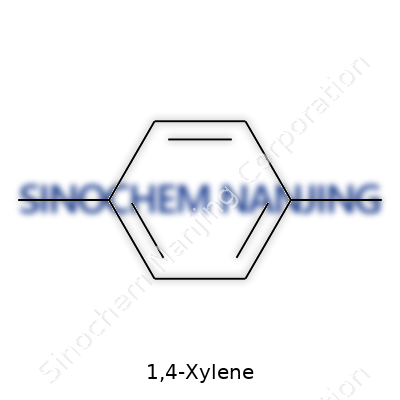
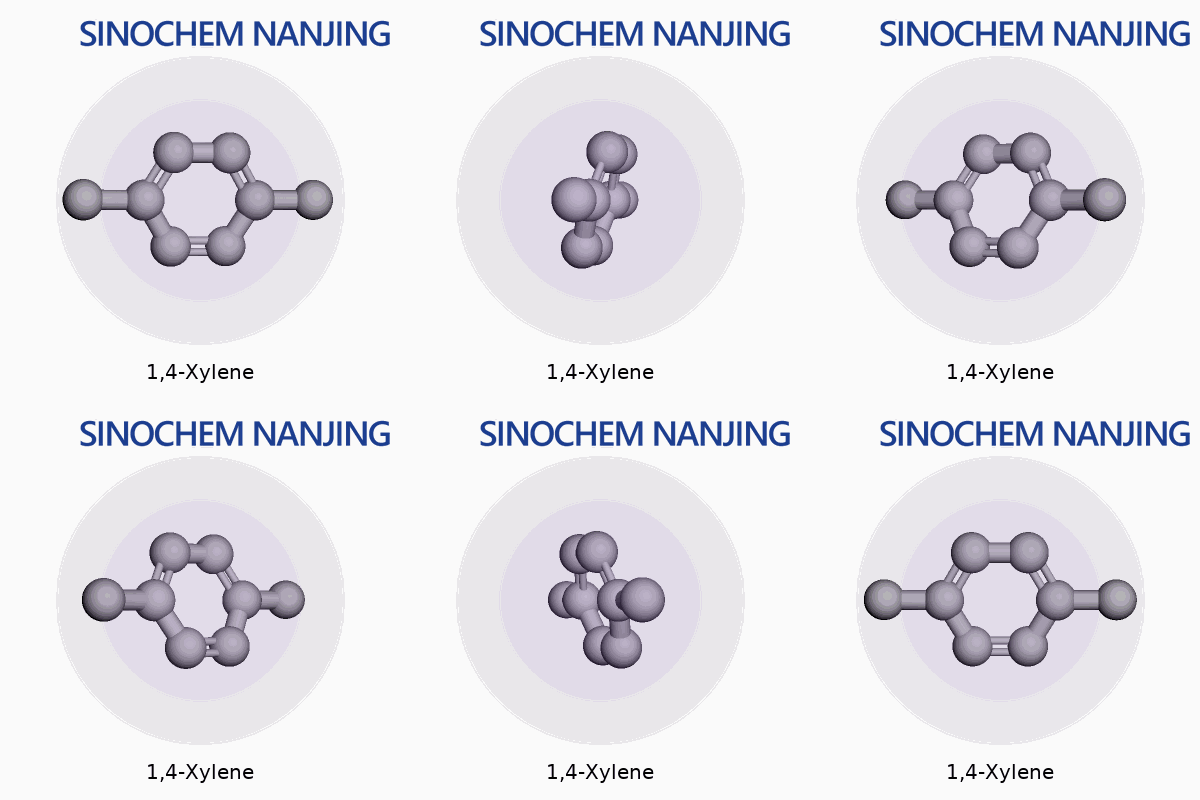
1,4-Xylene, better known to many as para-xylene or p-xylene, sits among a group of chemicals called aromatic hydrocarbons. It carries a formula: C8H10. Put simply, the molecule has eight carbon atoms and ten hydrogen atoms. All the atoms fit together in a way that shouldn’t surprise anyone familiar with benzene rings. It has a hexagonal ring made of six carbons, with two methyl groups, each made of a carbon and three hydrogens, linked at the positions opposite each other on the ring. That’s what turns it into the “1,4” version. People call it para-xylene because those methyl groups point to each other like the two ends of a see-saw.
Why Structure Matters
Structure gives a chemical its personality. With 1,4-xylene, the symmetrical design means it behaves differently from its siblings, ortho-xylene and meta-xylene. The placement of the methyl groups pushes its boiling point up to 138.4°C and its melting point to 13.2°C. This makes it a solid on a cold winter day but a liquid most of the time at room temperature. It blends right into petroleum products and plastics because of this predictable shape and size.
Where 1,4-Xylene Shows Up in Life
I once worked near a plastics plant that ran day and night, producing enormous volumes of PET—used in bottles and fibers. I found out most of the PET on shelves owes its existence to para-xylene. This isn’t just about bottles. Think of polyester clothes, bedding, even ropes. You’re probably wearing or holding 1,4-xylene’s handiwork right now. Industries use it as a building block because it reacts in a way that makes long, strong chains of plastic. Its structure, with those two methyl hooks on opposite sides, lets chemical reactions line up with almost no waste.
Refineries pull para-xylene out of crude oil by distilling and separating the various xylene isomers. Although the process isn’t easy or cheap, there’s a reason they go to the trouble. The chemical economy values precision, and 1,4-xylene’s symmetry pays off big time. Since most bottles and clothing fibers trace back to this molecule, supply and demand for it ripple out to impact oil prices, recycling strategies, and even global shipping.
Looking for Answers: Environmental and Safety Issues
People have started paying more attention to 1,4-xylene for reasons that aren’t so pleasant: health and the environment. Anyone who’s smelled strong solvents around paint thinners or gasoline might remember the sharp, sweet odor. Breathing in a lot of xylene fumes irritates eyes and throats, makes folks dizzy, and can hurt the liver with enough exposure. On top of that, plastic pollution is climbing, driven by chemicals like this one. Recycling drops the burden, but not enough bottles get recycled worldwide.
Governments and researchers could lean harder into green chemistry. Alternatives to PET plastics would ease some of the strain, but finding options that perform as well isn’t simple. Cleaner production of xylene, better capture of emissions, and smarter recycling all help reduce the footprint. When communities mark safe handling limits and invest in monitoring, workers and the environment both win. The formula itself won’t change, but the way people use and control it can always get smarter.
How should 1,4-Xylene be stored?
Understanding the Risks
1,4-Xylene doesn’t look like much—clear, sweet-smelling, easy to mix with other chemicals. That’s also what gets folks into trouble. This stuff evaporates fast, catches fire before you know it, and can knock your system for a loop if you breathe too much. NIOSH and OSHA list it for strict handling. Big disasters start with little mistakes, and a single drip left unchecked leads to a bigger mess. Years ago, I watched a colleague put off relabeling old drums—within a week, the wrong liquid got pumped into a process, halting the floor and drawing an army of safety inspectors. All because somebody let their guard down around a common solvent.
Getting the Basics Right
Storing 1,4-xylene starts with the container. Only use steel or certified HDPE drums that close tight and won’t react with it. Seals have to be in good shape—old, hardened gaskets let vapor seep out and increase fire risk. Tanks or drums stay upright, away from sunlight and heat. Staff in plants or warehouses should never stack drums more than two-high. One stumble knocks the stack down, and now you’ve got flammable liquid leaking across a floor.
Temperature plays a bigger role than people figure. A hot storage corner heats the product, causing pressure inside drums to climb. Vented caps help, but keeping drums cool cuts down on vapor. Fans in the storage area pull fumes toward an outside exhaust, never back into the building. Good air flow lowers inhalation risk.
Label Everything, Every Time
One slip with labeling and confusion follows. The label needs the chemical name, major hazard warnings—flammable, irritant, toxic—and who to call in an emergency. Small shops sometimes trust memory, thinking they'll “get around to the paperwork later.” That’s a gamble no one wins in the long run. Every drum, every decanted bottle, every backup sample—each carries a clean, right-side-up warning.
Strict Access and Training
Not everyone should walk in and open a xylene drum. Restricted access limits the chance of slip-ups. Only trained workers or lab techs who know what they’re handling get access, and their training goes beyond a slideshow. I always pair new hires with someone who’s spilled a drum or had to pull a solvent-soaked rag off a hot plate—real experience sticks because people remember near misses. Refresher drills once or twice a year help keep protocol fresh.
Planning for Emergencies
Even the best system goes sideways if nobody knows where to find the spill kit or which route leads outdoors in a hurry. Kits next to storage rooms carry absorbent pads, heavy gloves, goggles, and a solid chemical-rated respirator. Enough fire extinguishers should line walls in easy reach, rated for flammable liquid fires. It helps to run a drill—fake a leak, shout the alarm, see if muscle memory kicks in. If anything bogs down, fix it on the spot.
Don’t Store Forever
Old stocks attract trouble. Schedule regular checks and use-by dates. Unused drums linger in corners, labels fade, seals crack, and the next thing you know, nobody’s sure what’s in them. I’ve seen maintenance teams turn up containers ten years past their prime, and nobody knew how to dispose of them safely. The lesson there—rotate inventory, dispose of excess under local hazardous waste rules, and never stash extra “just in case.”
Small Habits, Big Benefits
Safe storage isn’t about fancy systems, just steady habits: right containers, good labeling, simple access rules, alert eyes on the shop floor. 1,4-Xylene only turns into a headline if you treat it like an afterthought.
What are the environmental and health effects of 1,4-Xylene exposure?
What Happens After Breathing Xylene?
The sweet, almost aromatic smell of fresh paint, glue, or cleaning solvent often means xylene is in the air. 1,4-Xylene, one of xylene’s chemical siblings, slips through the nose, down into the lungs, and straight into the bloodstream. Workers in paint and chemical plants know this routine all too well. Spending long hours surrounded by these fumes sometimes brings headaches, dizziness, and a scratchy throat by the end of the shift. A few days of that, and you figure out what it means to feel “foggy.” Xylene may make the nervous system jittery, speed up heartbeats, and if you’ve been exposed for too long, trouble concentration and memory. There’s plenty of evidence showing regular exposure to these vapors messes with the liver and kidneys, both organs that filter out toxins.
The hard part comes when thinking about families who live right by industrial zones. Children breathe in more air than adults, pound for pound, and their smaller bodies handle toxins worse. Even at lower levels, xylene leads to eye and nose irritation, and for vulnerable groups, the consequences build over time. Pregnant women worry the most, as long-term exposure threatens the development of their babies.
Environmental Wake Left Behind
1,4-Xylene settles deeper than a bad workday. Industry spills or dumping accidents feed it into soil and water. Once xylene hits the dirt, it moves quickly toward groundwater, carried by rain or runoff. Not much slows it down. People living near chemical plants, junkyards, or old gas stations remember warnings about well water. Toxic water means kids can’t play in backyard creeks and gardens struggle to grow. Fish exposed to xylene start swimming sideways, struggling to survive.
The air suffers as well. Once xylene fumes escape from tanks or open containers, sunlight and heat transform them into smog. These chemical reactions trigger ozone warnings on the news, making life hard for anyone with asthma. Cities like Los Angeles or Houston have already learned the hard way: smog feels like a weight on every breath.
Why This Matters: Understanding Risks and Solutions
Paint and chemical fumes sneak up quietly. Xylene appears in so much—paints, varnishes, gasoline—because it dissolves things well. Everyone wants products to work, but that convenience costs something. The burden lands hardest on people who handle chemicals without solid ventilation or who watch fence lines get closer to growing neighborhoods.
Solutions show up in simple steps but require real effort. Ventilated workspaces matter—fans and filters trap chemicals, and personal protective equipment adds another shield. Factories switching to closed-loop systems slow down leaks and wipe out accidental splashes. Safe disposal practices keep dangerous compounds out of landfills and waterways. Labels make a difference too: warnings about what's inside give people a chance to protect themselves and demand safer alternatives.
Clean-up technology for water aims to trap chemicals in carbon filters or break them down in bioreactors. Nature-based solutions help too—planting strips of hardy grass between plants and rivers stops runoff from carrying chemicals downstream. Pressure works from the outside too; neighbors demanding regular air and water testing often push slow-changing industries to act.
All the facts point to the obvious: nobody gets to ignore the impact of chemicals like 1,4-xylene. Health and environmental protections only work if people use them consistently, keep close watch on industrial practices, and take local stories seriously. Change happens from the ground up, often right where the problem started.
| Names | |
| Preferred IUPAC name | 1,4-dimethylbenzene |
| Other names |
p-Xylene Para-xylene 1,4-Dimethylbenzene |
| Pronunciation | /waɪˈliːn/ |
| Identifiers | |
| CAS Number | 106-42-3 |
| Beilstein Reference | 1360681 |
| ChEBI | CHEBI:27338 |
| ChEMBL | CHEMBL14237 |
| ChemSpider | 8579 |
| DrugBank | DB03322 |
| ECHA InfoCard | ECHA InfoCard: 100.003.484 |
| EC Number | 601-022-00-9 |
| Gmelin Reference | 60553 |
| KEGG | C01839 |
| MeSH | D022782 |
| PubChem CID | 8659 |
| RTECS number | ZE2625000 |
| UNII | K8A6VYXZSV |
| UN number | UN1302 |
| Properties | |
| Chemical formula | C8H10 |
| Molar mass | 106.17 g/mol |
| Appearance | Colorless liquid with an aromatic odor |
| Odor | Aromatic odor |
| Density | 0.86 g/cm³ |
| Solubility in water | Insoluble |
| log P | 3.15 |
| Vapor pressure | 8.6 mmHg (20°C) |
| Acidity (pKa) | 40.4 |
| Basicity (pKb) | 12.38 |
| Magnetic susceptibility (χ) | −7.9 × 10⁻⁶ cm³/mol |
| Refractive index (nD) | 1.496 |
| Viscosity | 0.81 mPa·s (25°C) |
| Dipole moment | 0.00 D |
| Thermochemistry | |
| Std molar entropy (S⦵298) | 172.8 J·mol⁻¹·K⁻¹ |
| Std enthalpy of formation (ΔfH⦵298) | 8.57 kJ/mol |
| Std enthalpy of combustion (ΔcH⦵298) | -4565.7 kJ/mol |
| Pharmacology | |
| ATC code | J63XX01 |
| Hazards | |
| GHS labelling | GHS02, GHS07, GHS08 |
| Pictograms | GHS02,GHS07 |
| Signal word | Danger |
| Hazard statements | H226, H312, H315, H332, H319, H335 |
| Precautionary statements | P210, P233, P240, P241, P242, P243, P261, P264, P271, P301+P310, P303+P361+P353, P304+P340, P305+P351+P338, P312, P337+P313, P370+P378, P403+P233, P403+P235, P405, P501 |
| NFPA 704 (fire diamond) | 2-3-0 |
| Flash point | 27 °C |
| Autoignition temperature | 527 °C |
| Explosive limits | Explosive limits: 1.1–7% |
| Lethal dose or concentration | LD50 oral rat 4300 mg/kg |
| LD50 (median dose) | LD50 (median dose): 4,300 mg/kg (oral, rat) |
| NIOSH | Xylenes (o-, m-, p-isomers) 1330-20-7 |
| PEL (Permissible) | 100 ppm (435 mg/m³) |
| REL (Recommended) | 50 ppm |
| IDLH (Immediate danger) | 900 ppm |
| Related compounds | |
| Related compounds |
Benzene Toluene m-Xylene o-Xylene Ethylbenzene |



