Looking at 1,4-Dinitrobenzene: Science, Safety, and the Road Ahead
Historical Development
Tuning into the world of industrial chemistry, I often trace compounds back to their roots, and 1,4-dinitrobenzene stands as a classic example of how early research set the stage for modern materials and manufacturing. Chemists in the late 1800s discovered ways to attach nitro groups onto aromatic rings, driven by curiosity and a growing demand for synthetic dyes and explosives. Back then, many breakthroughs stemmed from small laboratories and hands-on tinkering, and 1,4-dinitrobenzene quietly slipped into the spotlight as chemists looked for stable, versatile intermediates. Major shifts in European and American manufacturing later put this compound on the radar, especially as new uses emerged for both its derivatives and the parent molecule. This legacy remains visible in the way regulations and production methods have changed in response to lessons from the past—missteps and triumphs alike.
Product Overview
Over time, 1,4-dinitrobenzene earned a respected place in diverse industrial sectors. The molecule’s backbone, a benzene ring with two nitro groups in the para position, gives it certain chemical traits that simplify downstream synthesis. For years, it found favor in dye synthesis, explosives research, and as a valuable intermediate in making special polymers. Product names like para-dinitrobenzene or simply DNB pop up across technical catalogs, a quiet nod to the compound’s persistent utility. In the shop floors and labs where innovation rubs up against cost and technical hurdles, people rely on its predictable reactivity and known behavior to kickstart more complex projects.
Physical & Chemical Properties
Thinking back to my own lab days, what always stood out about 1,4-dinitrobenzene was its yellow, crystalline appearance. Not every nitroarene gets this much attention, but DNB’s stability in storage and firm melting point brought it a certain respect among technicians. Unlike many volatile compounds, it sits comfortably on the shelf without evaporating or breaking down at room temperature. Yet, its real value comes from the play between stability and reactivity. The two nitro groups grant resistance to simple oxidation, but skilled chemists use their electron-withdrawing nature to orchestrate selective reactions on other parts of the molecule. This dual personality—unmoved by air, but still reactive under the right coaxing—fuels its steady demand in practical chemistry.
Technical Specifications & Labeling
In everyday use, technical standards for 1,4-dinitrobenzene land somewhere between thoroughness and market reality. Packages get stamped with clear hazard information, batch codes, and concentration details because small changes in purity ripple through downstream reactions. Industry guidelines force suppliers to maintain narrow purity ranges, sidestepping issues that come from impurities or traces of similar molecules like 1,3-dinitrobenzene. From what I’ve seen, the bigger producers respond by tightening quality controls and updating labeling to keep up with shifting safety expectations. These efforts tie into broader discussions about transparency and worker protection; they matter far beyond the lab or warehouse dock. Clear, precise labeling closes a loop between manufacturer, user, and safety agencies, which can head off accidents before they unfold.
Preparation Method
Traditional syntheses of 1,4-dinitrobenzene trace straight back to classic aromatic chemistry. In my graduate years, I remember painstaking lectures detailing how gentle control of nitric acid strength, temperature, and mixing rates can make the difference between a clean para-isomer or a frustrating mess of mixed products. The reaction—nitrating benzene under carefully tuned conditions—highlights the art behind good chemistry. Even now, modern facilities usually stick to this template, but improved monitoring systems and cleaner waste handling have softened the environmental footprint. The chemistry itself hasn’t radically changed, but the attitude toward waste streams and emissions certainly has.
Chemical Reactions & Modifications
Inside the beaker, 1,4-dinitrobenzene opens doors to all sorts of experimental tweaks and industrial shortcuts. Its structure invites reduction reactions, yielding important building blocks like p-phenylenediamine, a staple in polymer, dye, and photography industries. Toss it into the right solvent or pair it with the right reducing agent, and the molecule splits apart to reveal fresh applications. Every year, research journals showcase new routes—catalysts that use less energy, trickier multi-step sequences, and greener solvent systems. These developments offer hope for cutting waste and lowering process temperatures, a win both for budgets and the environment.
Synonyms & Product Names
Catalogs and lab notebooks sometimes refer to 1,4-dinitrobenzene as para-dinitrobenzene, DNB, or even P-DNB. The cluster of common names often reflects regional habits or translation quirks. Some older chemistry texts swap in “para” to clarify its position on the benzene ring, while package labels in shipping warehouses might prefer the simple “DNB.” Having navigated both academic labs and manufacturing settings, I’ve learned to check the fine print. Minor differences in naming can create supply chain hiccups or legal issues if people aren’t speaking the same language, figuratively or literally.
Safety & Operational Standards
Handling 1,4-dinitrobenzene draws a clear line between casual and professional work habits. The nitro groups carry actual hazards, especially for workers without proper training or equipment. Long runs in production or careless storage can put teams at risk for inhalation, skin absorption, or worse if spills or dust aren’t contained. I’ve seen operational shifts tighten dramatically over time, pressured by studies linking nitroarene exposure to nervous system effects and organ damage. Regulatory bodies worldwide now enforce strict ventilation, personal protective gear, and emergency protocols. Documentation and ongoing staff education carry just as much weight as the product itself—companies face lawsuits, fines, and even shutdowns when they stumble. This living history of regulation reflects a hard-earned understanding of risk, not just a bureaucratic hoop to jump through.
Application Area
Following the chemical downstream, 1,4-dinitrobenzene anchors itself in many fields. Dye and pigment makers splice it into everything from simple colorants to specialized inks. Explosives researchers rely on its controlled reactivity for safer, more predictable formulations. Some medical and pharmaceutical labs turn to DNB as a reference compound for analytical work. Over decades, its role as a precursor for p-phenylenediamine opened the door for entire classes of polymers, especially in strong synthetic fibers. Few compounds show up this consistently across so many industry boundaries—a testament to its real-world staying power and technical flexibility.
Research & Development
Researchers never leave 1,4-dinitrobenzene alone for long. Academic studies push its boundaries by testing new reaction conditions and sustainable modifications. Over the last decade, green chemistry sets the tone: solvent replacement, energy-efficient catalysis, and closed-loop processes win grants and company investment dollars. On the technical side, the aim is to draw out new derivatives with lower toxicity and better performance, especially as global regulations push for safer chemicals in the workplace. Researchers publish detailed studies, track long-term breakdown products, and push suppliers for samples free of trace contaminants. These iterative advances might not always hit the headlines, but over time they change the landscape for industry and public health.
Toxicity Research
Every conversation about 1,4-dinitrobenzene comes back to safety. Early industrial adoption outpaced the research, but efforts to document and address human health risks are catching up fast. These days, toxicologists track how DNB moves through waterways, tissues, and even atmospheric dust. Acute exposure links to symptoms from dizziness to organ stress, and animal studies highlight the need for constant vigilance in industrial settings. The industry response tends to swing between defensive postures and proactive investment in improved containment. Unlike some “legacy” toxins, DNB research hasn’t plateaued. New analytical tools illuminate low-level effects and chronic exposures, pushing facilities to step up worker medical monitoring and spill containment.
Future Prospects
Looking at what’s next, a few big questions loom. Key players across chemical and manufacturing industries are weighing tighter controls and eco-friendlier synthesis routes. There’s solid momentum in the research community to swap out hazardous reagents and retool old plants for lower emissions. Some initiatives focus on digital monitoring and real-time safety alerts, allowing for smarter risk management without slowing down production. Innovation at this junction calls for both deep technical chops and a careful reading of regulatory winds. The conversation—both in boardrooms and on the shop floor—feels less about legacy and more about reimagining safe, resilient supply chains that respect both human and environmental limits. These shifts signal a future where legacy compounds like 1,4-dinitrobenzene are handled with more respect, sharper tools, and a clearer understanding of both their benefits and risks.
What are the main uses of 1,4-Dinitrobenzene?
Role in Dye Manufacturing
1,4-Dinitrobenzene finds its strongest foothold in dye production. Factories working with azo, sulfur, and disperse dyes often start with this compound because its structure allows strong and lasting color connections. Think about the deep blue on denim or the bright reds in printed cotton. These colors often appear only after a long chemical journey that began with this single, yellowish crystal. While paint and coloring products catch our eye daily, much of the chemistry behind them stays unseen. Workers and chemists trust 1,4-dinitrobenzene since it reacts predictably, giving manufacturers steady results batch after batch. Without it, certain shades and levels of colorfastness become harder to achieve.
Building Blocks for Pharmaceuticals
The world depends on a constant stream of new drug formulas. Many medicinal molecules, especially in the early research stages, form step by step from basic structures. 1,4-Dinitrobenzene serves as one of these building blocks. Skilled chemists use it to create intermediates that lead to painkillers, anti-infectives, and experimental treatments. Its twin nitro groups give it a unique backbone, allowing for controlled substitutions and rearrangements in the lab. In smaller labs, people with strong safety training might work with this compound for research, development, and testing. This keeps pharmaceutical pipelines looking for new cures always moving.
Pesticide and Agrochemical Synthesis
On farms, every growing season brings a fight against bugs and weeds. Producers of pesticides and herbicides carefully design molecules that knock out pests while sparing crops. 1,4-Dinitrobenzene helps by acting as a precursor or reagent for certain agrochemicals. For example, it helps form specific nitroanilines, which then get turned into effective weed and pest controls. The use of this chemical here traces back decades, showing how developers rely on tried-and-tested chemistry for solutions in fields as much as in medicine.
Electronics and Explosives: A Different Pathway
Not every use lands in the visible consumer world. Some electronic component producers count on 1,4-dinitrobenzene to introduce nitro groups into specialty polymers and conductive materials. Its application in this sector means reliability and specific characteristics, such as electrical insulation or heat resistance. There are also specialty explosives and propellants built from this compound, mostly in small volume, high-impact applications. This doesn’t connect to the mainstream, but it does underscore how widely these molecular structures reach.
Safety and Environmental Considerations
Exposure to chemicals like 1,4-dinitrobenzene puts workers in certain plants at risk. This is not a benign material—prolonged contact affects blood, liver, and the nervous system. Plant managers and safety officers must follow strict personal protection and ventilation rules. The compound also carries environmental baggage: accidental releases can stress soil and water systems. Regulators expect companies to track every step, report spills immediately, and handle disposal with seriousness. Using local incident data shows factory towns see better outcomes when employees receive regular training and on-site emergency drills.
Paths to Safer Alternatives
The pressure to find less hazardous raw materials grows each year. Industry groups keep testing greener options, trying to mimic the properties of dinitrobenzene with less risk. Substitution isn't easy. Cost, performance, and regulatory approval each slow down the shift. Support for research, consumer pressure, and clear government rules help drive positive changes so that tomorrow's dyes, drugs, and agrochemicals use safer building blocks wherever possible.
Is 1,4-Dinitrobenzene hazardous to human health?
What 1,4-Dinitrobenzene Brings to the Table
Anyone who’s handled chemicals in a lab setting or worked around industrial manufacturing knows 1,4-dinitrobenzene by its yellow crystals and sharp smell. It’s not a household name, but it makes its way into industries that make dyes, explosives, and some pharmaceuticals. My own time around chemical stockrooms gave me a certain wariness for anything with “nitro” in the name – and for good reason.
Reviewing Real Hazards
Breathing in 1,4-dinitrobenzene or getting it on your skin is not something to shrug off. Even in small amounts, folks exposed directly can feel lightheaded or short of breath. In my experience, nosebleeds and nausea sometimes follow suit in labs with poor ventilation. This isn’t just anecdotal; studies on rodents and occupational health surveys back it up. The chemical gets into the bloodstream and can disrupt how blood carries oxygen. In doses large enough, those red blood cells can’t deliver oxygen properly and the skin might even turn a bluish color—a real signal to see a doctor, not just tough it out.
The Environmental Protection Agency and the Centers for Disease Control both class 1,4-dinitrobenzene as hazardous. They warn against both short-term and long-term exposure. People working with the compound over months or years have reported more than just headaches or fatigue. We’ve seen organ damage, most notably to the liver and kidneys, after repeated exposures. Some studies from Europe even point to nerve issues and changes in behavior in workers. Regulatory bodies in the U.S. and abroad have put tight limits on workplace exposure. Still, that doesn’t stop accidents from happening, especially in older factories or less regulated sites.
What Makes the Risk Real
Chemicals like this aren’t just owned by companies with spotless records and perfect safety systems. Sometimes spills happen or rules get bent. The vapor can drift, and in one story from a peer working at a dye facility, neighborhood complaints pushed for an air quality check. What they found proved the chemical didn’t just stay in the walls of the plant. Homeowners near sites that use or process nitro compounds reported more health issues than the national average. Runoff can also slip into waterways if treatment steps falter. I’ve seen that the aquatic life in nearby ponds takes a hit fast, backed up by research showing high toxicity to fish and invertebrates.
Changing the Outlook
The work needed to stay safe means better than basic gloves and goggles. I believe serious investments in fume scrubbers and real-time air monitoring often cost less in the long run compared to medical bills and lawsuits. Companies have learned lessons the tough way, but widespread transparency about incidents remains patchy. One way out would be stricter inspection schedules from independent agencies. Sharing more health data with the public, especially in communities near major users, can make the risks clearer — pushing industries to adopt best practices, not just the bare minimum required by law.
It makes a difference when people handling the compound understand the risks—not just management, but everyone from techs to janitors. Memorializing near-misses and “bad air days” teaches the next round of workers to take these hazards seriously. The chemistry should never be more important than the people doing the work. That’s a lesson a lot of us had to learn the hard way, and 1,4-dinitrobenzene is a clear example of why those lessons matter.
What are the storage and handling precautions for 1,4-Dinitrobenzene?
What Makes 1,4-Dinitrobenzene a Hazard
1,4-Dinitrobenzene pops up in certain dye and chemical manufacturing processes. In practice, you’ll spot it as a yellowish crystalline solid with a distinct odor that lingers. It’s far from harmless. Prolonged inhalation or skin contact will bring on severe headaches, dizziness, skin irritation, and—if left unchecked—liver or kidney issues. The chemical attacks red blood cells, reducing their ability to move oxygen. Occupational exposure stories in industry circles back up these facts, and it’s easy to see why seasoned workers keep their guard up.
Safe Storage: Simple Steps Make a Difference
Inside a storage room, temperature swings threaten safety. 1,4-Dinitrobenzene doesn’t like heat or direct sunlight. Warmth bumps up the risk of decomposition and vapor release. For best results, stash the material in a cool, dry spot with solid ventilation. Keep it far from acids, alkalis, and reducing agents, since incorrect combinations mean fires or explosions.
The lesson here is pretty direct: never store 1,4-Dinitrobenzene with snacks, clothing, or anything you’ll take home. Store in tightly sealed, chemical-resistant containers—think glass or high-density polyethylene. Clearly label everything, using strong, permanent markers, making certain no one grabs the wrong jar in a rush. Invest in some secondary containment—simple trays or bins catch leaks and make cleanup less of an ordeal.
Safe Handling: Training Builds Good Habits
I remember the first time I watched a new technician handle dinitro compounds without gloves—he learned quickly from the resulting rash, but training should come sooner. Proper PPE matters. Suits, nitrile gloves, safety goggles, and respirators cut out most exposure risks. The right gear isn’t optional, no matter how routine the shift feels. Keep a dedicated eyewash station and safety shower nearby. Spills need an immediate, organized response: evacuate, ventilate, isolate.
I’ve seen teams stuck dealing with embedded contamination from poor cleanup habits—lesson learned. Never sweep or try to push dried dust; always use dedicated vacuums with HEPA filters. Clean up wet spills with absorbent materials, and waste always goes in marked hazardous chemical bins—nobody enjoys the surprise of an accidental mix with incompatible trash.
Protecting Health and Promoting Awareness
Effective safety is about information and repeated practice. Every worker should read and understand the latest safety data sheets before handling 1,4-Dinitrobenzene. At one plant, we ran monthly emergency drills, and it made a real difference during an actual spill when everyone moved fast and knew their role.
Regular health checks for anyone exposed to dinitro compounds help spot trouble early. If a coworker starts showing cyanosis or complaining about headaches, take it seriously—don’t chalk up symptoms to a rough day. Get them checked by medical professionals who understand chemical exposure.
Building a Safer Work Culture
Simple changes make all the difference: clear labels, routine safety talks, regular PPE checks, and strong policies on eating or drinking near chemicals. Speak up if something looks off, even if it has nothing to do with your own shift.
Hazardous chemicals like 1,4-Dinitrobenzene demand practical respect day after day. Equipment fails, new staff join, and shortcuts always tempt. Every worker shapes the safety culture—keep asking questions, check procedures, and never let routine numb your attention. In my own experience, it’s that commitment to diligence, not blind trust in procedure, that keeps everyone coming home safe.
How should 1,4-Dinitrobenzene be disposed of safely?
Understanding the Risks
1,4-Dinitrobenzene doesn’t just sound harsh; it lives up to its name. This substance plays a role in chemical manufacturing and research settings, and its bright-yellow crystals come with serious health warnings. Breathing in or coming into contact with 1,4-Dinitrobenzene can damage blood, liver, and the nervous system. On top of this, it stays toxic in the environment, risking harm to water systems and wildlife. Scientists place 1,4-Dinitrobenzene on the list of priority pollutants for a reason.
Hazard Control Starts at the Source
Storing it in a cool, dry place far from anything flammable sounds obvious, but workplace accidents often involve everyday slips in such basic care. I remember visiting a university lab and watching a careless lid left off a vial threaten the day’s safety. Rules around storage may feel tight, but they cut down on surprises. Leaky containers and accidental spills have too high a cost when this chemical sits on shelves.
Disposal Isn’t a DIY Project
Pour it down the drain or toss it in the trash? Absolutely not. Environmental regulations treat 1,4-Dinitrobenzene as hazardous waste. Local dump sites refuse anything this risky, and treatment plants aren’t built to handle it. The only real option: send it to a licensed hazardous waste management facility. These places have workers trained for safe handling and destruction of chemically active substances.
The Steps from Lab Bench to Destruction
Safety starts with labeling. Every container holding even a pinch of 1,4-Dinitrobenzene gets a full chemical label. Labs collect the waste in sealed, leak-proof containers. Instead of filling regular garbage bags, staff use containers made to resist chemical reactions. Once containers fill, they connect with a waste disposal contractor. Transport follows strict Department of Transportation rules. You see those symbols on a waste drum? Those mean a trained crew will carry it, not just anyone with a truckbed.
How Treatment Works at the Facility
High-temperature incineration remains the top method. Facilities burn waste like 1,4-Dinitrobenzene at over 1,000°C. At these temperatures, the molecule breaks down into less harmful materials before the gases can escape. Some facilities neutralize small amounts with chemical reagents, but for most situations, only high heat works thoroughly. Workers monitor emissions and follow all air pollution control laws.
Prevention Pays Off
Searching for alternatives matters too. Green chemistry pushes scientists to swap toxic chemicals for safer ones through research and innovation. Keeping less 1,4-Dinitrobenzene on hand means a smaller pile to throw away. Auditing labs or factories and cutting down on excess chemical use spares everyone extra headache and hazard.
What Can Go Wrong?
Improper disposal filters through the whole community. Toxic runoff ends up in rivers and lakes, damaging everything from insects to fish. Fumes spread through air-handling systems, endangering workers and their neighbors. Every step, from storing to shipping, needs attention. Even trained professionals can make mistakes, so oversight and double-checking go a long way.
Final Word on Responsibility
Disposing of nasty chemicals like 1,4-Dinitrobenzene calls for strict caution and expert help. Lives and environments depend on those extra steps. Many places have hotlines or agencies ready to advise or refer citizens and businesses to proper disposal routes. Leaning on expert waste contractors makes the path clear, legal, and safe — and that's a job worth doing right.
What is the chemical structure and formula of 1,4-Dinitrobenzene?
A Close Look at 1,4-Dinitrobenzene
The science of chemistry can feel intimidating, but some compounds are straightforward once you break them down. Take 1,4-Dinitrobenzene, sometimes known by its short name, para-dinitrobenzene. It's not as common in daily life as table salt, yet it shows up in important places, from dyes to explosives. Its impact reaches far, which makes knowing its makeup and structure vital not just for academics but also for those working in chemical industries.
The Structure and Formula Unpacked
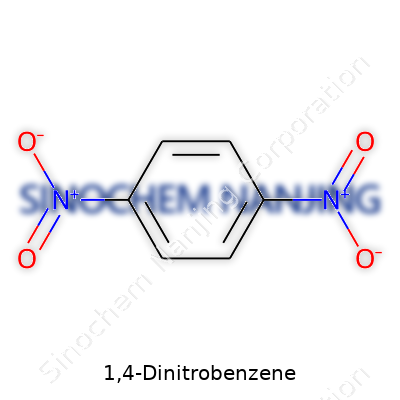
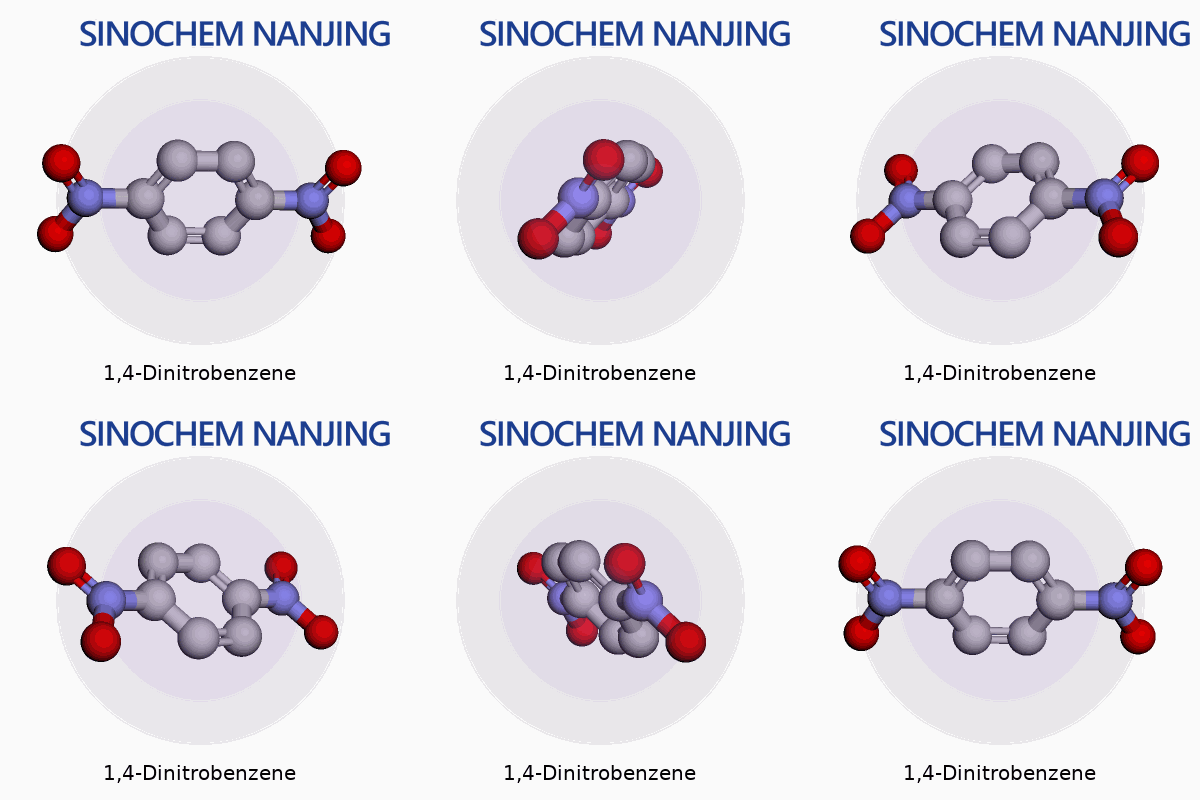
1,4-Dinitrobenzene sits on a benzene ring, a simple hexagon of six carbon atoms, bonded together in a stable loop. Attached to this ring are two nitro groups, each made of one nitrogen atom and two oxygen atoms. The positions on the ring are what give this compound its personality: the nitro groups anchor themselves at carbon positions one and four, directly across from each other, which is why "1,4" sits in the name. Chemists call this the "para" position.
The formula paints a clear picture: C6H4(NO2)2. There are six carbons and four hydrogens on the ring; each nitro group brings one nitrogen and two oxygens. If you count it together, the full summary of atoms looks like this: C6H4N2O4.
Why Structural Details Matter
Before diving into chemistry, I used to think these things were just trivia. Knowing where an atom sits on a ring wouldn't matter outside of a textbook. That view changed after spending time with researchers working to design safer industrial chemicals. The position of a group on a benzene ring makes or breaks a molecule’s use and safety. For example, the way the nitro groups set themselves apart in 1,4-Dinitrobenzene makes this compound more chemically stable than other isomers—like 1,2-dinitrobenzene, where the groups huddle next to each other and react much more aggressively.
The industry prefers 1,4-Dinitrobenzene for making dyes and as a stepping stone to more advanced compounds. Position and arrangement matter. Swap the nitro groups to different spots and the outcome can shift from stable to unstable, safe to risky. This precision saves lives in sectors that work with explosive or toxic chemicals.
Health and Environmental Impact
Even stable chemicals can pose dangers if mishandled. Benzene rings with nitro groups are no joke in the human body. The nitro groups add potency, making these chemicals harder for living tissue to break down. Some studies have linked dinitrobenzenes to toxicity in the liver, kidneys and, at higher exposures, neurological damage. I once met a chemist who worked in an old dye plant. He shared stories about workers who never wore gloves, and the health problems they faced decades later. These stories stick with you and drive home why clear labeling and safety systems matter.
Building Safer Solutions
There's no need to forge ahead with outdated practices when safer methods exist. Closed-system reactions, strong air handling, and decent personal protective equipment can spare workers a lot of grief. Understanding the structure of chemicals like 1,4-Dinitrobenzene is more than an academic requirement. In my personal experience, pushing for worker education around the real meaning of chemical names makes a difference. People handle chemicals with more respect when they know what's in front of them.
We stand to gain a safer, cleaner world by using information, training, and the right engineering solutions. Knowing the structure and formula of 1,4-Dinitrobenzene marks a small start on that journey, but it’s an important one.
| Names | |
| Preferred IUPAC name | 1,4-dinitrobenzene |
| Other names |
p-dinitrobenzene para-dinitrobenzene 1,4-DNB |
| Pronunciation | /ˌwaɪ.tʃiːˌdiː.aɪˌen.aɪˌtiː.əʊˈbɛn.ziːn/ |
| Identifiers | |
| CAS Number | 100-25-4 |
| Beilstein Reference | 1465072 |
| ChEBI | CHEBI:15941 |
| ChEMBL | CHEMBL15655 |
| ChemSpider | 5886 |
| DrugBank | DB01979 |
| ECHA InfoCard | EC Number: 210-146-4 |
| EC Number | 209-272-0 |
| Gmelin Reference | 172021 |
| KEGG | C01002 |
| MeSH | D017363 |
| PubChem CID | 8460 |
| RTECS number | CZ9800000 |
| UNII | 00C34B3TYK |
| UN number | UN0396 |
| CompTox Dashboard (EPA) | DTXSID4044466 |
| Properties | |
| Chemical formula | C6H4N2O4 |
| Molar mass | 168.11 g/mol |
| Appearance | Yellow crystalline solid |
| Odor | Odorless |
| Density | 1.61 g/cm³ |
| Solubility in water | Slightly soluble |
| log P | 1.98 |
| Vapor pressure | 0.00031 mmHg (25°C) |
| Acidity (pKa) | 15.0 |
| Basicity (pKb) | 15.11 |
| Magnetic susceptibility (χ) | χ = -46.0·10⁻⁶ cm³/mol |
| Refractive index (nD) | 1.627 |
| Viscosity | 1.38 mPa·s (at 68 °F) |
| Dipole moment | 3.97 D |
| Thermochemistry | |
| Std molar entropy (S⦵298) | 160.9 J·mol⁻¹·K⁻¹ |
| Std enthalpy of formation (ΔfH⦵298) | 104.3 kJ/mol |
| Std enthalpy of combustion (ΔcH⦵298) | -1379.6 kJ·mol⁻¹ |
| Pharmacology | |
| ATC code | D08AX10 |
| Hazards | |
| Main hazards | Harmful if swallowed, toxic in contact with skin, causes skin and eye irritation, may cause damage to organs through prolonged or repeated exposure, harmful to aquatic life. |
| GHS labelling | GHS02, GHS06, GHS08, GHS09 |
| Pictograms | GHS06,GHS03 |
| Signal word | Danger |
| Hazard statements | H302, H319, H332, H351, H372, H400 |
| Precautionary statements | Precautionary statements of 1,4-Dinitrobenzene: "P210, P261, P264, P270, P271, P273, P280, P302+P352, P305+P351+P338, P312, P337+P313, P362+P364, P501 |
| NFPA 704 (fire diamond) | 2-2-4-OX |
| Flash point | 146 °C |
| Autoignition temperature | 530 °C (986 °F; 803 K) |
| Explosive limits | 0.2–1.1% |
| Lethal dose or concentration | LD50 oral rat 240 mg/kg |
| LD50 (median dose) | LD50 (median dose): 240 mg/kg (oral, rat) |
| NIOSH | DN1225000 |
| PEL (Permissible) | PEL (Permissible Exposure Limit) of 1,4-Dinitrobenzene: "1.5 mg/m³ (OSHA TWA) |
| REL (Recommended) | 0.05 mg/m3 |
| IDLH (Immediate danger) | 50 mg/m3 |
| Related compounds | |
| Related compounds |
Nitrobenzene 1,2-Dinitrobenzene 1,3-Dinitrobenzene Benzene Aniline 1,4-Diaminobenzene |



