1,4-Difluorobenzene: A Down-to-Earth Look at a Not-So-Everyday Chemical
Historical Development
Chemistry stories often overlook the unsung workhorses, but 1,4-difluorobenzene deserves its due. After the invention of benzene derivatives in the nineteenth century, chemists began experimenting with halogen substitutions. The addition of fluorine at the para positions of benzene creates 1,4-difluorobenzene, giving a twist to the usual aromatic chemistry. Back in the mid-1900s, researchers chasing new refrigerants and pharmaceuticals eyed these fluorinated aromatics for their stability and unique properties. It wasn’t just idle curiosity. The scramble to tailor-make molecules for electronics, drugs, and advanced materials drove chemists deeper into the toolbox, and 1,4-difluorobenzene popped up as a promising piece.
Product Overview
Anyone in a synthetic lab or working industrial scale knows 1,4-difluorobenzene isn’t something you find on the corner store shelf. It comes as a clear, colorless liquid, and its most striking feature is its volatility. This chemical isn’t just an oddity; it’s woven into advanced manufacturing and research labs around the world. Fluorinated aromatics have been gaining attention wherever reliable, robust molecules are needed, especially where harsh chemical environments tend to chew up ordinary organics.
Physical & Chemical Properties
Digging into its character, 1,4-difluorobenzene brings a boiling point that nudges up around 85°C, which is lower than benzene, a nod to the electron-withdrawing grip of those fluorine atoms. Its density sits a little higher than water, so it forms slick organic layers in separations. The electronegativity of fluorine not only lowers flammability but also increases the compound’s chemical resistance compared to other benzene relatives. In the real world, its sweet, ether-like odor is easy to pick up in the lab, but that’s not a cue to lower your guard—those fumes hint at the need for careful handling.
Technical Specifications & Labeling
Chemists and engineers handling this stuff keep a sharp eye on purity. Impurities—chlorinated benzenes, acids, moisture—can foul up sensitive downstream reactions, especially in electronic applications. You’ll spot clear grade distinctions in chemical supply: technical, high-purity, and electronic grades. Proper labeling isn’t bureaucratic red tape but a matter of safety, signaling hazards like skin and respiratory irritation or environmental risks to those working around it. Packaging doesn’t take shortcuts; glass or fluoropolymer-lined containers ward off unwanted reactions.
Preparation Method
Making 1,4-difluorobenzene efficiently requires precision. Old routes like direct fluorination of benzene are out—too risky, too uncontrolled. Modern synthesis tends to spin from the Balz-Schiemann reaction, starting with 1,4-diaminobenzene and swapping nitrogens for fluorines through nitrosyl intermediates and tetrafluoroborate salts. This method offers control, reducing the odds of messy side products. Another route transforms 1,4-dichlorobenzene by swapping chlorines for fluorines using nucleophilic aromatic substitution, a clever flip of the substitution puzzle and a distinctly modern touch. Efficiency and yield matter to both researchers and commercial plants, pushing methods that keep costs and purity in balance.
Chemical Reactions & Modifications
What makes 1,4-difluorobenzene such a chemistry workhorse isn’t just its stability. Fluorine atoms at the para positions open new doors. Its double-fluoro motif pumps up resistance to oxidation and acid attack, but also pre-activates the ring for further substitution or coupling. In practice, this means Suzuki and Stille cross-coupling reactions run smoothly, creating new, more complex molecules for polymers, OLEDs, or target molecules in pharmaceuticals. The presence of fluorine can bump up or dial down a chemical’s ability to interact with biological targets or electronic environments. Synthetic chemists rely on this predictability to crank out new candidates for semiconductors or medicine.
Synonyms & Product Names
Anyone searching through catalogs or literature for 1,4-difluorobenzene needs to juggle multiple names. Some go by para-difluorobenzene, while others shorten it to p-difluorobenzene or 1,4-DFB. Each label echoes its molecular layout—fluorine atoms opposite each other on the benzene ring. It pays to double-check, since confusion with other difluorobenzenes can waste time or even change the course of an experiment.
Safety & Operational Standards
Handling this chemical outside a fume hood or without gloves is asking for trouble. The volatility puts it in the respiratory system fast, and prolonged exposure isn’t just a mild concern—studies point to irritation and possible neural effects. Spills spread quickly and can seep into water systems. Many labs and plants lean on OSHA and REACH guidelines. PPE isn’t negotiable: nitrile gloves, tight-sealing goggles, and physical barriers keep exposure in check. Storage asks for cool, ventilated spaces, locked and clearly marked. Good training builds the culture you need around such chemicals; one misstep creates big consequences not only for people but for environmental compliance.
Application Area
1,4-Difluorobenzene’s greatest impact shows up in the electronics world—LCDs, semiconductors, and the broader field of materials science. Its backbone resists the moisture and heat that wreck less robust materials. Chemists count on its fluoro template to anchor polymer chains, producing insulators or responsive films in integrated circuits and medical devices. There’s a niche in agrochemicals too, where its backbone builds up active molecules that break down at a controlled pace. In pharmaceutical labs, fluorinated aromatics slide into lead compounds to shape bioactivity—sometimes small substitutions make all the difference in drug performance. The footprint stretches further in specialty adhesives, surfactants, and battery electrolytes, where chemical resilience pays off in longer product lifespans.
Research & Development
Research has pulled 1,4-difluorobenzene into the orbit of drug hunters and materials scientists building layers and interfaces just a few atoms thick. Advanced spectroscopies and computational models examine its electronic structure, confirming the stabilizing punch that two fluorines deliver compared to hydrogen or chlorine. In academia, it’s a teaching compound for aromatic substitution, helping graduate students to track real-world challenges with selectivity and reactivity. Many startup companies work in the shadow of big electronics or pharma players, tweaking the molecule for unique outcomes, from OLED blue emitters to tailored drug candidates. Every new trick or technique around this molecule reflects a push for smarter, tougher, or more precise science.
Toxicity Research
Safety research never stands still. Toxicologists have logged acute exposure risks: respiratory and eye irritation top the list, but chronic impacts still need long-term tracking. Animal studies note some neural and hepatic effects at higher doses, but translating these to workplace exposure takes big datasets and careful risk management. Water contamination troubles regulators, since fluorinated aromatics linger and resist biological breakdown. The ongoing debate about “forever chemicals” has turned attention on substances such as 1,4-difluorobenzene, even though its risk profile falls below more notorious compounds. Proper waste management and monitoring keep these risks from building up, but real answers will need fresh data.
Future Prospects
Looking down the road, research and application momentum will keep 1,4-difluorobenzene central in both mainstream and niche markets. The steady pivot to smart devices, wearables, and compact electronics increases demand for molecules with its unique profile. Battery research leans on it for new electrolytes and separators, while software-driven drug design targets its predictable structure for new leads. Regulatory pressure on manufacturing waste and emissions will drive cleaner synthesis, greener purification, and circular economy practices. Exploiting its full potential will come from focused investment in safer derivatives, efficient recycling, and richer toxicity datasets. The chemical’s future rides on teamwork between industry, academic labs, and regulators shaping the next generation of safer, smarter chemicals.
What are the common uses of 1,4-Difluorobenzene?
Growing up around a family of engineers and high school Chemistry teachers taught me early on that odd-sounding chemicals often run the show behind the scenes. 1,4-Difluorobenzene is one of those quiet players that manages to pop up in a handful of places that deserve a closer look.
Deep Roots in Chemical Synthesis
People mostly know this molecule for its use in chemical research labs. Chemists prize it as a starting point for building more complex molecules. Two fluorine atoms on a benzene ring may not seem thrilling, but this structure gives chemists a head start when building compounds for pharmaceuticals or smart materials. In synthesis work, small changes to a benzene ring can make or break a process. Substituting hydrogen atoms with fluorine often changes chemical stability and reactivity in just the right way to open doors for new drug candidates.
Big pharma companies and research centers scoop up 1,4-Difluorobenzene to create fluorinated building blocks. These serve as intermediates, making it easier to add molecular features that improve a medicine’s activity or help a plastic resist harsh weather. Fluorine, being small and electronegative, nudges the ring’s properties in ways that make the chemistry more flexible and the end products more powerful.
Specialty Solvent and Calibration Standard
1,4-Difluorobenzene also finds plenty of work as a solvent, not just in lab glassware but in very technical setups. Its neat, symmetrical structure and stable behavior under heat make it a top pick for scientists running tricky reactions. Unlike water or alcohol, it doesn’t get in the way of sensitive molecules. Instead, it lets chemists coax out tricky reactions and isolate delicate materials, especially when working with organometallic compounds or specialized polymers.
Nuclear magnetic resonance (NMR) spectroscopy labs look to 1,4-Difluorobenzene for calibration purposes. People running these machines appreciate that it gives a sharp signal, helping them calibrate equipment and accurately measure the spacing between fluorine and hydrogen atoms. Getting NMR signals right is more than just technical lore—it translates into better measurements and more reliable test results for everything from food safety labs to new cancer drugs.
Bridge to Fluorinated Materials
Outside the lab, this molecule can help pave the way for high-performance polymers and coatings. Adding just the right pattern of fluorine atoms gives plastics or resins a boost—they shrug off stains, shed water, or resist UV light. Electronics makers see a real benefit here. Adding fluorine tweaks electrical properties, so semiconductor and insulating materials turn out cleaner and more reliable.
Keeping Safety Front and Center
Not every household has a bottle of 1,4-Difluorobenzene tucked away, but those who handle it must take care. The stuff isn’t highly toxic compared to other industrial chemicals, yet it can irritate the skin or lungs if spilled or mishandled. Proper gloves, lab coats, and ventilation figure into everyday use to keep accidents at bay. Big labs know that even small leaks or spills can cause headaches, so routine safety checks keep things running smoothly. Chemical makers follow regulations for storage and shipping, recognizing that every handling step matters.
New Paths and Responsible Use
This molecule shows that even small details in chemistry can ripple out and affect entire industries. Companies and universities are always on the lookout for greener ways to produce and use these compounds. Some labs look for replacements or tweak the recipe to cut waste and use less energy in manufacturing. Industry giants listen to regulatory bodies pushing for safer chemicals and more sustainable pathways. Staying updated means weighing safety, environmental impact, and research value with every new use of 1,4-Difluorobenzene.
What is the chemical formula and molecular weight of 1,4-Difluorobenzene?
Understanding the Details: Chemical Formula and Weight
Talking about 1,4-Difluorobenzene, its chemical formula stands as C6H4F2. Every time you see this code, it holds a special message: six carbon atoms, four hydrogens, and two fluorines arranged on a benzene ring. For those who pay attention to the numbers, the molecular weight clocks in at 114.09 grams per mole. It looks like a straightforward molecule, but its double dose of fluorine atoms gives it several unique quirks.
Why Fluorination Matters
Fluorine doesn’t show up everywhere in nature—chemists go to some lengths to add it to a molecule. In the world of materials and medicine, fluorine changes everything. Molecules like 1,4-Difluorobenzene take on new character compared to their hydrogen-only relatives. With fluorine in the mix, a simple benzene ring suddenly stands up to acids, holds up under heat, and resists reacting with stuff that usually chews up rings without these modifications.
People working in laboratories or building new chemicals want substances that don’t break down from sunlight or harsh solvents. Fluorinated rings answer that call. That's why C6H4F2 becomes valuable in research, pharmaceuticals, and materials work. In fact, the presence of fluorine atoms often lengthens the life span and sharpens the performance of polymers and specialty coatings. Chemists like me appreciate that toughness—no worrying about things falling apart after a few temperature swings.
The Role in Industry and Environment
Industrial chemists put 1,4-Difluorobenzene to use as a building block. Try to make a new drug or tweak a plastic formula for extra durability, and fluorinated aromatics often sneak their way into the process. Still, nobody can ignore the flip side. As with most synthetic organofluorine compounds, persistence in the environment can become a real issue. These molecules don’t break down easily, and I’ve seen the aftermath in chemical clean-up projects—sites waiting years for a drop in contamination levels.
Managing these risks doesn’t call for panic, just careful planning. Good lab practice means limiting waste and treating runoff before anything leaves the site. Some researchers keep exploring chemical tricks that break apart these strong carbon-fluorine bonds, aiming for cleaner options down the road. As more people care about sustainability, pressure grows for companies to take these steps seriously, rather than just following minimum rules. I’ve seen science win out when business and environment both get a seat at the table.
Learning from the Data
Getting facts straight about molecules, like remembering 114.09 g/mol for 1,4-Difluorobenzene, comes in handy when scaling up reactions or checking purity in the lab. A miscalculation throws off entire batches, wastes materials, and loses time. My own sticky notes from years ago remind me: details matter. Standardizing these basics builds a safety net. Projects move without hiccups, new products launch on schedule, and environmental promises turn into real action.
Is 1,4-Difluorobenzene hazardous or toxic?
What 1,4-Difluorobenzene Is and Where You’ll Find It
1,4-Difluorobenzene pops up in a few corners of industry and labs. It’s a colorless liquid, has a sweetish smell, and belongs to a family of chemicals built around a simple benzene ring but with fluorine atoms attached. In practice, chemists use it to make other fluorinated compounds, sometimes important for things like advanced plastics, specialty solvents, or pharmaceutical development.
Straight Talk on Its Hazards
Anyone handling industrial chemicals tends to get nervous when they see words like “fluorinated aromatic.” This suspicion is pretty reasonable. Most fluorinated aromatics bring a degree of mystery, and toxicologists pay close attention to what exposure brings. For 1,4-difluorobenzene, multiple studies indicate it carries toxicity, especially through inhalation or skin absorption.
Breathing in even moderate amounts can irritate the lungs and cause dizziness, nausea, or drowsiness. If the liquid touches your skin, it soaks in fairly easily, and people tend to complain of redness, drying, or cracking. Nobody wants to take a chemical home with them after work, so gloves and goggles aren’t just a suggestion, they're the minimum smart move.
Accidental splashes or prolonged exposure add complications. Some animal tests suggest repeated contact leads to liver or kidney stress. Long-term studies remain spotty, but chronic exposure to chemicals from the same family sometimes leads to blood, liver, or nervous system issues. Real evidence in humans is limited, yet it’s no leap to assume caution pays off.
Lab Safety Isn’t Window Dressing
Anyone who’s spent a season or two in a chemistry lab learns to respect solvents with names like this one. The sweet aroma turns less appealing after too many afternoons hunched over flasks. Ventilation becomes a line of defense—fume hoods were invented for a reason. The advice for workplaces isn’t complicated: Keep open containers to a minimum, work under a hood, glove up with nitrile or PVC, and wear eye protection. Proper disposal counts, too, since no one wants their wastewater picking up rings of fluorinated hydrocarbons.
Big Picture Health and Environmental Concerns
Publicly available safety data sheets classify 1,4-difluorobenzene as hazardous. Acute toxicity sits above a lot of everyday household chemicals but below the most dramatic industrial poisons. Despite this, few people outside labs or factories ever cross paths with it. That doesn’t mean it doesn’t matter—environmental persistence is a factor. Fluorinated chemicals don’t break down quickly, so leaks and spills become long-term problems for groundwater and soil.
Public health concerns center around chronic, unnoticed exposure for those working in production or chemical research. Adequate training, labeling, and emergency plans don’t just check regulatory boxes; they make a real difference for worker health.
Smarter Solutions and Everyday Choices
Safer handling starts with clear communication, up-to-date safety training, and sticking to protocols. Companies sometimes swap in less toxic chemicals where possible, or redesign processes to cut the amount on hand. For anyone outside the lab, awareness still matters. Waste treatment and proper disposal stop bench chemicals from reaching drinking water or farmland.
In my experience, respect for these kinds of compounds lays the groundwork for a lab culture where people speak up if they spot risks. Prevention beats cleanup every time. Chemicals like 1,4-difluorobenzene may never be household names, yet close attention keeps them from turning into household problems.
How should 1,4-Difluorobenzene be stored and handled?
Everyday Caution in a Chemical World
Even folks who have only spent a little time in a lab recognize the hush that falls when a chemical with a handful of hazard symbols appears on the bench. I remember my first introduction to 1,4-difluorobenzene—a colorless liquid with a sweet odor and no immediate threat to the eye. Looks, in chemistry, never tell the whole story. In case anyone needs reminding, this isn’t a bottle for the untrained, and a little misjudgment can turn a routine day into a disaster.
Taking Hazards Seriously
This compound doesn’t like heat, sparks, or static. Vapors creep faster than you’d think, set a low flash point, and can create flammable atmospheres. Breathing fumes for too long invites headaches or worse. Touching the liquid by mistake results in skin irritation. I’ve seen a seasoned chemist heedless for just a moment; no one wants to repeat that ambulance call.
Storage shapes everything. 1,4-difluorobenzene stays most stable in tightly sealed containers, far from sunlight or heat sources. I keep it in a flammables cabinet with a locking door. It isn’t just about following rules; experiences have shown me corrosion or vapor leaks end up much more expensive than any safety supply.
No Substitute for Personal Protection
Goggles shouldn’t fog up on your head; they belong over your eyes. Chemical-resistant gloves go on before the bottle comes out—nitrile works well here. A lab coat and long sleeves block accidental splashes. Some colleagues try to trust their reflexes instead of the gear, thinking fast hands will beat a spill. I trust thick gloves more than luck.
Nobody wants to breathe in fumes. Good labs run their work in a fume hood. Only a stubborn fool opens the vial in a breezy room, convinced air movement will cover up the problem. Years in chemistry: there’s no clever shortcut to safe handling.
Disposal: Where Mistakes Come Back to Haunt You
Empty containers still carry fumes. Pouring leftovers down the drain isn’t just illegal, it poisons the water supply and harms waste handlers. I rinse and triple-check, placing every drop and used glove into a properly labeled waste bin. If someone is ever in doubt, they ask the lab manager or the safety officer. Waste haulers track hazardous chemicals by paperwork, not guesses.
Fire extinguishers should never gather dust, especially in storage rooms. Regular safety drills in my workplace made sure nobody fumbled the response when seconds mattered. Training, not wishful thinking, buys peace of mind.
Building a Culture—Not an Afterthought
I’ve seen plenty of corners cut when supervisors think no one is watching. Cutting corners leads to injuries and lost careers. Speaking up costs much less than silence after the incident report; reporting spills or unsafe storage means management fixes the problem. It helps keeping a culture where everyone holds each other to clear expectations.
New work calls for careful separation of incompatible chemicals. Hydrochloric acid or strong bases stored beside this solvent? That’s asking for trouble. Good recordkeeping and careful inventory go a lot further than sheer memory.
Some get tired of hearing about the right way to handle chemicals, but habits build themselves over time. The careful steps—protective clothing, careful disposal, strict separation—are only inconvenient until they save you from regret.
What are the physical properties of 1,4-Difluorobenzene such as boiling point and appearance?
An Honest Look at 1,4-Difluorobenzene’s Physical Traits
1,4-Difluorobenzene isn’t the flashiest compound out there, but you’ll find its clear look and sharp, aromatic smell hard to forget in a lab setting. Most folks will spot it as a colorless liquid at room temperature. That’s something I always appreciate after years spent with various organic solvents — nothing like a clear appearance to quickly confirm purity without a bunch of guessing.
The boiling point sits at about 85°C, which strikes me as very manageable. That puts it in a similar category to standard solvents used in organic synthesis. Lower boiling points draw attention for folks designing extraction systems or planning to recover solvents by distillation — the process doesn’t chew up as much energy. I remember boiling something similar during an undergraduate lab, and the lab manager reminded us to double-check the condenser before heating up anything below 100°C. The vapor sneaks up faster than you think.
Why Physical Properties Shape Practical Use
Walk into any lab supply room, and you’ll see how much stock physical traits carry. The low viscosity and pleasant flow of 1,4-difluorobenzene mean no fuss with pipettes — a matter most techs appreciate. Density clocks in at roughly 1.17 grams per milliliter, which places it heavier than water but still easy enough to handle without special glassware. The balance keeps things safer and reduces splash risk. In my time handling aromatic fluorocarbons, I’ve found the faint, sweet odor signals time to check ventilation; you don’t want to underestimate the fumes, even with a liquid that barely leaves a trace on your gloves.
One often-overlooked quirk stems from its flammability. Ignition can happen at fairly standard lab temperatures, so anyone storing larger quantities needs to give flammable cabinets more than a passing glance. Keeping it away from heat sources sounds obvious, but many forget that a low-boiling aromatic like this can vaporize quickly if left open. A spill on the bench has a way of creating its own silent hazard. I’ve seen close calls simply due to carelessness from rushed sample prep. Safety training covers this, but reinforcement never hurts.
Risks and How to Work Around Them
Experience has taught me that awareness beats caution every time. With 1,4-difluorobenzene’s volatility, the best insulation comes from sealed containers and a reliable fume hood. That boiling point makes it vaporize quickly, raising inhalation risks if the workspace lacks good airflow. Strict eye protection and frequent glove changes reduce skin exposure.
Labs using this solvent can cut hazards by focusing on storage and handling protocols. Flammables, even at modest volumes, demand respect. Proper chemical labeling and routine checks help, and clear communication between coworkers goes further than any printed protocol stuck on a wall. Fire-resistant storage, spill kits within arm’s reach, and regular training updates all shield you from the worst scenarios. From my own experience, practice rows on the Material Safety Data Sheet keep surprises to a minimum, whether in academic or industrial environments.
Looking Beyond the Data Sheet
Some see numbers like 1.17 g/ml or 85°C and gloss over the story they tell. For frontline users — chemists, lab techs, safety officers — the real message lies in knowing how materials behave in messy, real-life situations. Every time I return to the basic facts about a compound’s appearance and boiling point, those numbers link back to handling decisions, lab efficiency, and most importantly, daily safety. Honest respect for the physical facts forms the core of reliable, safe chemistry.
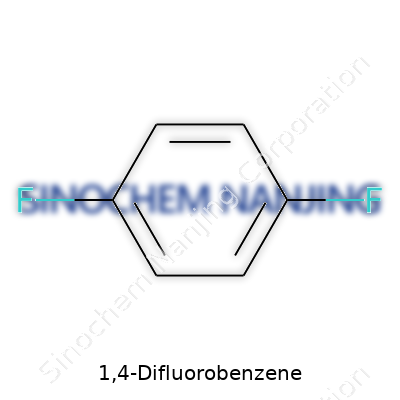
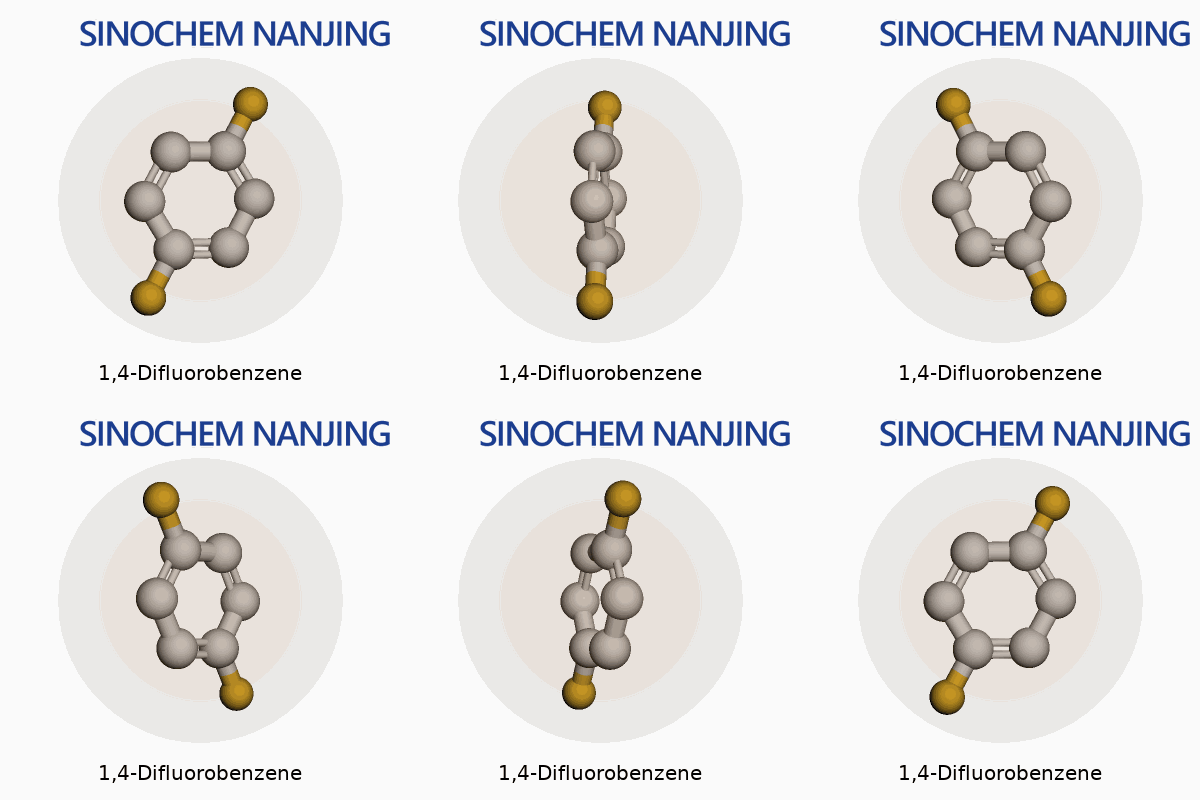
| Names | |
| Preferred IUPAC name | 1,4-difluorobenzene |
| Other names |
p-Difluorobenzene para-Difluorobenzene 1,4-DFB 1,4-Difluorobenzen |
| Pronunciation | /ˈwʌn, fɔː ˌdɪˌfluːərəˈbɛnziːn/ |
| Identifiers | |
| CAS Number | 367-11-3 |
| Beilstein Reference | 1209222 |
| ChEBI | CHEBI:16207 |
| ChEMBL | CHEMBL15614 |
| ChemSpider | 65297 |
| DrugBank | **DB14106** |
| ECHA InfoCard | 03f225d8-84dc-4c38-9b09-74f1bde8c869 |
| EC Number | '205-575-3' |
| Gmelin Reference | 97665 |
| KEGG | C01748 |
| MeSH | D003976 |
| PubChem CID | 7410 |
| RTECS number | CU8225000 |
| UNII | YC7V4S0TPH |
| UN number | UN2387 |
| Properties | |
| Chemical formula | C6H4F2 |
| Molar mass | 114.10 g/mol |
| Appearance | Colorless liquid |
| Odor | Aromatic odor |
| Density | 1.114 g/mL at 25 °C (lit.) |
| Solubility in water | slightly soluble |
| log P | 1.99 |
| Vapor pressure | 11.4 mmHg (25°C) |
| Acidity (pKa) | 40.5 |
| Basicity (pKb) | 25.77 |
| Magnetic susceptibility (χ) | -62.2·10⁻⁶ cm³/mol |
| Refractive index (nD) | 1.436 |
| Viscosity | 0.607 cP (25°C) |
| Dipole moment | 3.98 D |
| Thermochemistry | |
| Std molar entropy (S⦵298) | S⦵298 = 309.5 J·mol⁻¹·K⁻¹ |
| Std enthalpy of formation (ΔfH⦵298) | -374.2 kJ/mol |
| Std enthalpy of combustion (ΔcH⦵298) | -3215 kJ/mol |
| Hazards | |
| GHS labelling | GHS02, GHS07 |
| Pictograms | GHS02,GHS07 |
| Signal word | Warning |
| Hazard statements | H225, H315, H319, H335 |
| Precautionary statements | P210, P261, P264, P271, P280, P301+P310, P304+P340, P311, P312, P330, P403+P233, P405, P501 |
| NFPA 704 (fire diamond) | 1-2-0 |
| Flash point | '31 °C (88 °F; 304 K) (closed cup)' |
| Autoignition temperature | 510°C |
| Explosive limits | 1.1–7.5% |
| Lethal dose or concentration | LD₅₀ oral rat 2790 mg/kg |
| LD50 (median dose) | LD50 (median dose): 2,700 mg/kg (rat, oral) |
| NIOSH | DA3850000 |
| PEL (Permissible) | Not established |
| REL (Recommended) | 0.5 ppm (parts per million) |
| Related compounds | |
| Related compounds |
1,2-Difluorobenzene 1,3-Difluorobenzene Fluorobenzene Chlorobenzene Bromobenzene Iodobenzene |



