1,4-Cyclohexadiene: Chemistry at the Core of Modern Innovation
Historical Development
The path of 1,4-cyclohexadiene through chemical history traces back to the days when researchers were sorting through the mysteries of cyclic hydrocarbons. Its initial synthesis opened new doors for both academic and industrial research. Chemists have used it to model conjugated ring structures, and it played a quiet yet steady role during the expansion of organic synthesis in the 20th century. The story of this compound runs in parallel to the evolution of physical organic chemistry, marking milestones in the understanding of aromaticity, hydrogenation, and the behavior of unsaturated cyclic systems. Bench chemists once isolated it as a byproduct or intermediate, slowly unraveling its reactivities, until targeted synthesis became standard.
Product Overview
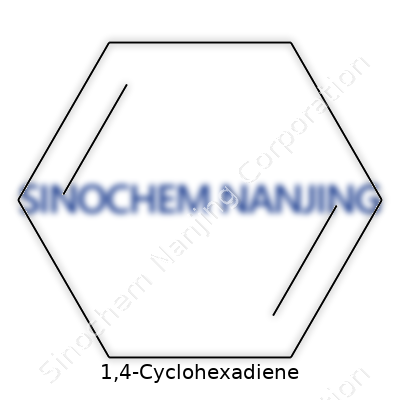
1,4-Cyclohexadiene is a colorless, volatile liquid with a light, gasoline-like smell. Commonly used as a hydrogen donor in transfer hydrogenation, it shows up in many organic labs as a versatile intermediate. This compound often carries the code C6H8, forming part of a chemical family that bridges the gap between aliphatic and aromatic rings. The structure is simple: a cyclohexane ring bearing double bonds at the 1 and 4 positions. Such a pattern means it teeters on the edge of aromatic stability, retaining just enough reactivity to catch a chemist’s eye. You’ll see it on inventory sheets with names such as para-cyclohexadiene and 1,4-CHD.
Physical & Chemical Properties
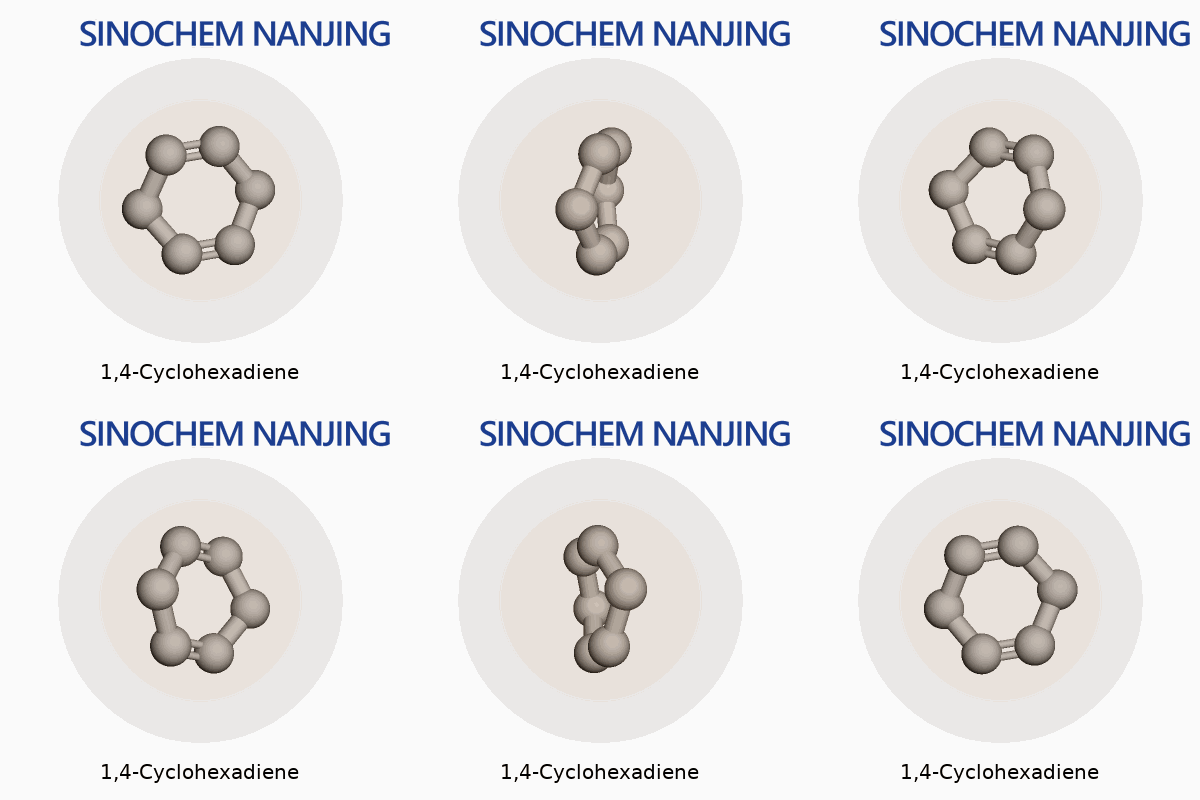
1,4-Cyclohexadiene boils at 81 °C, and if you handle it at room temperature, you notice it evaporates quickly and acts stubborn around light and heat. Density sits at about 0.86 g/mL, which is on par with other low-weight hydrocarbons. The double bonds make it less stable than its saturated cousin, cyclohexane. It dissolves in most organic solvents, doesn’t mix well with water, and takes to common nonpolar liquids as if made for them. Unlike benzene, the ring isn’t perfectly planar, so aromatic character doesn’t quite arrive, but the resonance within the molecule gives it a distinct spectrum in both NMR and IR. If you work with it, you’ll see reactivity at the double bonds with both electrophiles and nucleophiles, making it a useful substrate for a host of addition and substitution reactions.
Technical Specifications & Labeling
In the lab, you find 1,4-cyclohexadiene in amber glass for good reason—it doesn’t care much for direct sunlight or oxygen. The labels always specify its purity, usually exceeding 95% if it’s to be used for fine chemistry. Hazards appear front-row, warning about its volatility and flammability. The CAS number 628-41-1 often sits below the name. If you look at a bottle of this compound, translations of its name accompany the main label, a nod to its global relevance. Bulk shipments run under tight scrutiny, requiring clear marking for transport safety—no one likes surprises with volatile organics riding in trains or trucks.
Preparation Method
Synthesis of 1,4-cyclohexadiene usually traces back to benzene’s partial hydrogenation. This process delivers control over how much hydrogen contacts the aromatic ring; palladium catalysts tend to favor reduction at the 1,4 positions rather than the 1,3. The process demands close watching, as one step too far yields cyclohexene or even cyclohexane. Continuous monitoring of temperature and hydrogen flow distinguishes preparation from over-reduction. There are other routes, including diene cyclization and ring-closing metathesis, but reduction of benzene remains the reliable standby for most labs and plants.
Chemical Reactions & Modifications
Once in a flask, 1,4-cyclohexadiene steps up as an active partner in many reactions. It plays a strong hand in hydrogen transfer chemistry, handing off allylic hydrogens to reduce nitriles, imines, or even carbonyls by way of transfer hydrogenation. The double bonds welcome additions—hydroboration, halogenation, epoxidation—sometimes demanding careful reagent control to dodge side products. Chemists love it for Diels-Alder reactions, as its conjugated diene system stands ready for cycloaddition. Functionalization at allylic positions opens routes to more complex rings and frameworks, and modified versions have appeared in targeted syntheses for pharmaceuticals and polymers. Later-stage oxidation returns you to benzene, while selective reduction spits out cyclohexene or cyclohexane.
Synonyms & Product Names
In catalogs and journals, 1,4-cyclohexadiene goes by several names: para-cyclohexadiene, p-cyclohexadiene, and 1,4-CHD. Some texts call it dihydrobenzene, which hints at its benzene roots but overstates the aromatic link. Occasionally, you’ll find references to its systematic name, 1,4-dihydro-1,4-cyclohexadiene. Such diversity in naming creates confusion for new researchers, so establishing a common language in the lab can prevent mix-ups.
Safety & Operational Standards
Handling 1,4-cyclohexadiene requires respect. It takes very little to create a risk: vapors catch fire easily, and contact with strong oxidizers or open flames can flash into a blaze. Inhalation of vapors irritates the respiratory tract, and skin absorption must be avoided by wearing nitrile gloves and safety glasses. Labs should rely on well-maintained ventilation, spark-proof equipment, and careful disposal of residues. Training pays off; a little attention to detail prevents minor incidents from turning serious. Spills get covered quickly with inert absorbents, and waste goes away as hazardous, not general, chemical trash.
Application Area
Applications stretch well beyond classroom demonstrations. In research, 1,4-cyclohexadiene serves as a hydrogen source for mild reductions, especially handy if you want to skip pressurized hydrogen tanks. Industrial setups use it for specialty polymers and colorants, and fields such as pharmaceutical manufacturing find it valuable in constructing ring systems for active ingredients. As a diene, it acts as a building block for more complex cyclic molecules, feeding directly into agrochemicals and specialty materials. Its structure shows up in some natural products, prompting biochemists to consider synthetic analogs and metabolic pathways.
Research & Development
Interest in 1,4-cyclohexadiene extends into catalysis, green chemistry, and materials science. Recent research investigates its application in organometallic complexes, hoping to leverage its electron-donating capabilities for catalysis or energy storage. Chemists experiment with its derivatives for new synthetic routes to challenging carbon frameworks, aiming for efficiency and cleaner reaction streams. Academic groups study its behavior in transition-metal-catalyzed transformations, pressing for milder conditions and broader substrate compatibility. The combination of straightforward preparation and diverse reactivity keeps it firmly in the experimental toolkit for next-generation synthetic design.
Toxicity Research
The toxicological profile of 1,4-cyclohexadiene doesn’t match the high-hazard reputation of benzene, but its close relation prompts caution. Existing studies point to irritation at the mucous membranes and suggest chronic exposure could lead to nervous system effects. Animal models provide evidence for moderate acute toxicity, but most research flags fire and explosion hazards over direct toxicity. Research continues to probe long-term effects, especially as the compound pops up more in downstream industrial processes. Regulatory agencies require clear labeling and proper handling, backed by material safety data and up-to-date worker training. Personal experience suggests regular re-evaluation of storage and disposal practices to minimize human and environmental exposure.
Future Prospects
Looking to the future, 1,4-cyclohexadiene stands at a crossroads between established chemistry and new applications. As synthetic methods move toward safer, more sustainable conditions, the compound’s role in transfer hydrogenations and organocatalysis could expand. Demand for specialty intermediates in drug discovery puts it on the radar for large-scale, greener production methods. Continued investigation into its reactivity and toxicology will sharpen best practices, reducing risks for both workers and the environment. Chemists, materials scientists, and regulatory bodies each have a stake in its trajectory, shaping how it supports complex synthesis while facing the call for safer, cleaner chemistry.
What is 1,4-Cyclohexadiene used for?
A Simple Molecular Tool with a Lot of Influence
Thinking about chemicals like 1,4-cyclohexadiene might seem more academic than practical, yet this simple compound shapes everything from the drugs in the medicine cabinet to the plastics and coatings on household items. My own stint working in a research lab taught me how these “invisible” molecules power the processes behind major discoveries. Let’s take a look at how this one small hydrocarbon makes a big impact.
A Reliable Source of Hydrogen
Chemists treat 1,4-cyclohexadiene as a cheap and easy way to transfer hydrogen into a reaction. This molecule willingly donates hydrogen atoms without dragging along any annoying byproducts, which lets scientists reduce certain chemical compounds without having to fire up pressurized hydrogen tanks or dangerous catalysts. In our university lab, we swapped out riskier hydrogenation methods for reactions using 1,4-cyclohexadiene all the time, ramping up safety while keeping our syntheses efficient and predictable. This approach also saves time and cash, making it popular in industrial settings.
Building Block for New Compounds
This hydrocarbon shows up when chemists stitch together new organic molecules. It lurks behind the scenes in those chain-reaction “Diels-Alder” experiments taught in organic chemistry courses—sometimes creating early versions of pharmaceutical compounds or specialty chemicals used for waterproof coatings. Because 1,4-cyclohexadiene rolls out two reactive “double bonds,” chemists can bend it into ring structures at the heart of many complex molecules. I remember my own effort to make a tricky natural compound, where using this molecule as a starting point chopped weeks off our project timeline.
Cleaner Chemistry with Fewer Hazards
Industrial labs often use 1,4-cyclohexadiene to trim away unwelcome bits from chemical mixtures. This lets manufacturers control the make-up of fuels or plastics to squeeze more out of their raw materials. Since this compound decomposes cleanly into benzene and hydrogen—two substances researchers already handle with care—it fits well in labs focused on safer waste management. Cleaner chemical reactions don’t just help the environment; they cut costs for companies, too. Watching my colleagues juggle regulator demands and shrinking R&D budgets, I saw how substituting older reagents with this one lowered risk and streamlined approvals.
Where Is It Going Next?
There’s a push in industry to switch over to “greener” chemicals and safer procedures. 1,4-Cyclohexadiene already wins points for being stable at room temperature and easy to store, sidestepping ignition this or explosion that. Efforts continue to scale up processes using it as a hydrogen donor, nudging labs and factories away from trickier alternatives. Startups exploring new plastics and battery materials often turn to classic compounds like this during pilot projects, since predictability means fewer headaches and faster progress. As safety, cost, and sustainability rule more chemical research, expect this molecule to stick around—and possibly become even more central in years to come.
Smarter Choices for Chemistry
Chemists still face challenges controlling who gets exposed to substances like benzene generated during these reactions, so training, good ventilation, and tight handling rules never go out of style. Between its low cost, handy hydrogen delivery, and simple handling, 1,4-cyclohexadiene offers the kind of reliability labs and factories need. It may look plain, but it turns out to be a behind-the-scenes workhorse, helping chemists discover, improve, and deliver the materials modern life relies on.
Is 1,4-Cyclohexadiene hazardous or toxic?
Understanding the Risks
Most people have never heard of 1,4-cyclohexadiene, but this colorless liquid shows up in labs and industry for chemical synthesis jobs. Its structure packs a punch—two double bonds hanging on a six-member ring, making it a great fit for making other molecules, especially in pharmaceutical and materials work. Like plenty of specialized chemicals, 1,4-cyclohexadiene doesn’t get the public spotlight, yet the question pops up from time to time: do people treating this chemical need to worry about their own safety?
Hazards Unpacked
Scientists point out that 1,4-cyclohexadiene can catch fire easily, with a flash point around 23°C (about room temperature). Storage near any kind of heat source always brings danger. Spend just a few minutes reading its safety data sheet, and the flammable label jumps out. Handling this stuff with lighters, open flames, or static electricity around can mean someone’s luck runs out, fast.
Touching liquid 1,4-cyclohexadiene might leave skin or eyes feeling raw, red, or irritated. Fumes can irritate noses and throats and could leave someone coughing or feeling short of breath. People working regularly with volatile solvents in the lab often talk about that distinct, sharp “solvent smell” that can hang in the air. Long hours in an unventilated room could make someone dizzy or nauseated.
Toxicity: Looking at the Facts
Here’s where honesty counts: 1,4-cyclohexadiene is no picnic for mammals. In rats, professors have measured that it takes doses well above those found in the environment to cause death, but at high doses, lab animals do succumb. So, its toxicity fits the mold of many other hydrocarbons—harmful if inhaled or swallowed in large amounts, but not among the nastiest compounds out there. This isn’t sarin gas or dioxin.
Accidental exposure can still spell trouble. Swallowing it brings the risk of headaches, vomiting, and more serious effects at higher doses. Anyone splashing it on their skin all day without protection can end up with chemical burns or allergic reactions, depending on their own sensitivity. The best-available studies don’t show 1,4-cyclohexadiene as likely to cause cancer, birth defects, or chronic illness at exposures below legal limits. On the bright side, it doesn’t seem to bioaccumulate in tissue the way some other rings, like benzene, do.
Pushing for Safe Practices
The lessons aren’t complicated. Good ventilation, gloves, and eye protection matter. In my own years working in student chemistry labs, stories from peers who forgot to use a fume hood can be chilling: headaches, stinging eyes, or a persistent cough that wouldn’t quit all afternoon. It’s easy to shrug off glove use or ventilation when something feels routine, but the real professionals respect risk even with "ordinary" chemicals. Proper storage, clear labeling, and fast cleanup for spills make a huge difference.
Fire safety training for chemistry students, periodic checks on storage areas, and an insistence on personal protective equipment prevent accidents. Chemical exposure often creeps up without fanfare. One missed glove, one blown lab rule, and the effect might stick for hours or days. Industry sets exposure limits for a reason—regular monitoring with detector badges, basic first-aid gear nearby, and reporting headaches or nausea early prevent small accidents from spiraling.
Addressing the Issue
Small and medium-sized labs need easy access to clear, readable safety data. Overly technical hazards communication fails to keep people safe if it isn’t understood. Encouraging lab workers and students to treat even low-profile chemicals with respect keeps them safer. In-house drills, straightforward signage, and not cutting corners set the right culture.
1,4-cyclohexadiene demands respect for its flammability and acute effects on the body. Take the time for proper training, keep the right gear on hand, treat each sample with the caution it deserves, and this chemical stays a useful tool without turning into a news story about an avoidable accident.
What is the molecular formula of 1,4-Cyclohexadiene?
Sizing Up the Structure
1,4-Cyclohexadiene sports the molecular formula C6H8. On a surface level, it’s just six carbon atoms and eight hydrogens, arranged in a ring with two double bonds separated by single bonds. Chemists use simple shorthand like this every day, but the formula points toward a much bigger story in the world of organic chemistry. People working at a lab bench often see this ring as a starting point for a range of syntheses, not only a theoretical structure learned in a textbook.
Context Behind the Formula
In real-world settings, having the right formula on hand means experiments don’t get stalled over mix-ups. I remember the first time I tried to prepare a reaction involving 1,4-cyclohexadiene in an undergrad laboratory. No one could remember the formula. Folks kept reaching for cyclohexane (C6H12) or benzene (C6H6), but that slight difference mattered. Observing how even one or two hydrogen atoms affect chemical behavior stuck with me. C6H8 tells you that 1,4-cyclohexadiene won’t act just like benzene or cyclohexene.
Why It Matters in Chemistry
C6H8 isn’t simply a fun trivia answer for chemistry students. 1,4-Cyclohexadiene pops up as a handy “hydrogen donor” in laboratory procedures, especially in metal-catalyzed reductions. Removing or adding a single double bond can flip a molecule’s reactivity. In the field, that means researchers can turn to this molecule for specific transformations, pushing their research forward.
Data supports these observations. Studies published in reputable journals like the Journal of the American Chemical Society have shown how easily 1,4-cyclohexadiene delivers hydrogen atoms, making it useful for synthetic work. Its specific combination of carbons and hydrogens enables selective transfer hydrogenation, something chemists value in sustainable synthesis efforts.
Looking Over Safety and Handling
C6H8 isn’t only a tool for reactions. Its double bonds make it more reactive compared to saturated hydrocarbons. That means better attention to ventilation and container storage in the lab. If mishandled, accidents aren’t far off—flammable vapors and potential health risks push for caution. The formula hints at these dangers, much like it hints at molecular utility.
Long-term safety improves with better training and labeling. Too often, I’ve seen students pour the wrong chemical, expecting one ringed compound and getting another. In one case, misreading the label forced a full evacuation due to vapor buildup. Small mistakes with formulas sometimes cascade into larger issues, driving home the point: knowing what’s in your bottle matters more than most realize.
Knowledge Beyond Memorization
Holding onto a formula like C6H8 isn’t just about passing a quiz; it’s about building respect for the precision that science demands. For labs, safer research often comes down to simple steps, like rechecking molecular formulas, rather than hoping protocols save the day. Getting familiar with fundamental chemistry pays off in both successful experiments and safe workplaces.
Understanding these numbers opens doors for young scientists, educators, and anyone looking to solve real-world problems with molecules. Each piece of fundamental knowledge lays groundwork for bigger breakthroughs, whether you’re chasing new medicines or exploring green chemical processes. Proven chemical facts become the anchor for new ideas.
What are the storage and handling requirements for 1,4-Cyclohexadiene?
The Risks in Everyday Chemistry
1,4-Cyclohexadiene shows up in a lab and you get a faint whiff of its sweet, almost floral smell. What many don’t realize is, beneath that pleasant aroma, this colorless liquid carries a fair share of risks. Chemistry doesn’t always wave a red flag. A small spill or careless move can mean fire or worse—and not just for the person holding the bottle. At room temperature, its vapors build up fast, and the flashpoint sits under 40°C. That’s barely above the temperatures on a sunny June day in many cities, so it doesn't take much for things to turn dangerous.
Flammability: Not Just a Symbol on a Label
I’ve seen people store solvents like 1,4-Cyclohexadiene next to an electrical outlet, or stack the bottle on a shelf because it’s easier to grab. Fire codes exist for a reason. This stuff catches fire with the smallest spark—stray static, friction from unscrewing a cap, or faulty wiring. Metal cabinets marked for flammables aren’t just nice-to-haves. Good airflow in a storage area reduces risk; one whiff reminds you of its volatility. Keep it away from oxidizing chemicals, acids, and bases. One wrong shelf, and you’ve mixed up a recipe for disaster.
Sealed Tightly, Shielded from Sun
Sunlight breaks chemicals down in strange ways. 1,4-Cyclohexadiene can form peroxides, which brings danger that creeps up over months. Dark bottles help, but they aren’t enough on their own. Temperature control matters, too. Fluctuating heat speeds up decay and evaporation. If a lab has no temperature regulation, or tucks bottles near a hot water pipe, you get a risk most won’t spot at a glance.
Personal Experience in Use
One afternoon, I watched an experienced technician splash a few drops onto their gloves. Liquid seeped through, fast. It’s hard to overstate how important good gloves are. Nitrile holds up, but latex doesn’t stop cyclohexadiene from touching skin. Ventilated hoods go from “optional” to “non-negotiable." Goggle fog is an annoyance, yet eyes burn if exposed—even for seconds.
Labeling and Emergency Prep
Clear labeling stops confusion. I’ve seen two bottles mix-ups that nearly ruined ongoing projects. People overlook small things, like swapping out old containers. Inspecting bottles for cracks or residue shouldn’t be a quarterly ritual; weekly checks matter. A spill kit close by—sand, absorbent pads, and a proper disposal barrel—saves hours and anxiety if a glass container slips off a bench.
Regulation and Documentation
Paperwork looks dry, but tracking each incoming batch and how long it’s sat around can pinpoint hazards before trouble surfaces. Too many labs ignore expiry beyond a basic sticker. Peroxide test strips cost little and can spot buildup in a snap. Training new hires on these checks pays back in safety, not just compliance.
Better Handling, Fewer Accidents
Getting this right comes down to smart routines. Don’t grab the first gloves you see. Store bottles low on a shelf in a protected cabinet. Never leave even a trace near ignition sources. Share regular reminders among staff rather than trusting memory. Every bit of routine preparation can cut down on risk, mess, and loss.
Where can I purchase 1,4-Cyclohexadiene?
Understanding What You’re Dealing With
People encounter the name 1,4-Cyclohexadiene most often during discussions about chemistry, organic synthesis, or certain polymer manufacturing processes. It’s a simple hydrocarbon with a six-carbon ring and two double bonds. In the lab, it serves as a hydrogen donor and even finds its way into research connected to new materials or catalysts. Anyone asking about purchasing it ought to know: this isn’t like picking up fertilizer at the garden store.
Sourcing and Purchasing Challenges
Companies like Sigma-Aldrich, Thermo Fisher Scientific, and Alfa Aesar sell small bottles of this chemical to laboratories and research centers, not to the average person. They check every order. These vendors ask for proof of your institution’s scientific credentials and demonstrate an interest in what experiments use the compound. Even universities jump through paperwork hoops before they get a delivery. Sometimes, schools have chemical safety officers sign off before any order leaves a warehouse. This process keeps dangerous substances out of unqualified hands and focuses them where trained professionals will use them.
Safety Matters
No matter the reason for interest, safety should dominate. 1,4-Cyclohexadiene is flammable. Its vapors can irritate the respiratory system, and it adds significant risk to every step from shipment to storage. I’ve seen the aftermath of mishandled solvent spills in academic labs—charred countertops, expensive fume hood repairs, anxious calls to fire services. Handling unsafe chemicals without proper ventilation or training can lead to long-term health consequences or, in the worst case, explosions. This isn’t paranoia. These stories explain why legitimate chemical vendors keep sales tightly regulated.
The Legal Landscape and Accountability
Regulation puts checks in place for everyone’s protection. In the United States, organizations like the EPA or OSHA require companies to track where hazardous chemicals go. In Europe, REACH regulations hold sellers and buyers responsible for demonstrating chemical safety. Even Amazon and eBay remove listings for chemicals like 1,4-Cyclohexadiene after running into counterfeit sales or legal loopholes. Trying to bypass normal distribution channels risks not just health but criminal prosecution.
Approaching Chemical Access With Integrity
One reason for these hurdles comes from a real worry—misuse. Some people want these chemicals for illegal drug manufacturing. That pushes legitimate scientists to work harder at keeping their supply chains clear and audited. Anyone needing this compound for genuine research or industrial work should consult their organization’s chemical procurement officer or seek out research collaborations. Connecting with a university or hospital lab often opens more doors than trying to order solo.
Solutions and Safer Pathways
Open discussion across research communities and industry leaders is long overdue. Legitimate buyers can advocate for streamlined but secure purchasing, with digital recordkeeping and clear safety training requirements. More vendors should offer online modules or guides on safe chemical handling, making sure education goes hand in hand with each sale. Governments could give incentives to businesses sharing best practices, rather than waiting for disaster to strike.
Trust grows only in an ecosystem where everyone—from supplier to end user—understands their role in safety. That means aspiring buyers need to ask themselves why they want a certain compound in the first place, and prepare to show the accountability expected in serious scientific work.
| Names | |
| Preferred IUPAC name | cyclohexa-1,4-diene |
| Other names |
p-Divinylene-cyclohexane 1,4-CHD 1,4-Diene-cyclohexane 1,4-Cyclohexadiene p-Cyclohexadiene |
| Pronunciation | /ˌwʌn.fɔːr.saɪ.kloʊˈhɛk.saɪˌdiːn/ |
| Identifiers | |
| CAS Number | 628-41-1 |
| Beilstein Reference | 1209241 |
| ChEBI | CHEBI:36683 |
| ChEMBL | CHEMBL1377 |
| ChemSpider | 67100 |
| DrugBank | DB01985 |
| ECHA InfoCard | 100.070.597 |
| EC Number | EC 208-858-9 |
| Gmelin Reference | 50544 |
| KEGG | C06421 |
| MeSH | D003558 |
| PubChem CID | 10295 |
| RTECS number | GV7875000 |
| UNII | 2B1B2X0V3H |
| UN number | UN2254 |
| Properties | |
| Chemical formula | C6H8 |
| Molar mass | 80.13 g/mol |
| Appearance | Colorless liquid |
| Odor | sweet |
| Density | 0.889 g/mL at 25 °C(lit.) |
| Solubility in water | Insoluble |
| log P | 1.82 |
| Vapor pressure | 1 mmHg (20°C) |
| Acidity (pKa) | 23.0 |
| Basicity (pKb) | 10.87 |
| Magnetic susceptibility (χ) | -57.8·10⁻⁶ cm³/mol |
| Refractive index (nD) | 1.475 |
| Viscosity | 0.924 cP (20°C) |
| Dipole moment | 0.00 D |
| Thermochemistry | |
| Std molar entropy (S⦵298) | 310.3 J·mol⁻¹·K⁻¹ |
| Std enthalpy of formation (ΔfH⦵298) | 84.5 kJ/mol |
| Std enthalpy of combustion (ΔcH⦵298) | -225.5 kJ/mol |
| Hazards | |
| GHS labelling | GHS02, GHS07 |
| Pictograms | GHS02, GHS07 |
| Signal word | Warning |
| Hazard statements | H226, H304, H315, H319, H335 |
| Precautionary statements | P210, P233, P240, P241, P242, P243, P261, P264, P271, P280, P301+P310, P303+P361+P353, P304+P340, P312, P331, P370+P378, P403+P235, P405, P501 |
| NFPA 704 (fire diamond) | 1-2-0 |
| Flash point | 6 °C |
| Autoignition temperature | 498 °C |
| Explosive limits | Explosive limits: 1.3–7.8% |
| Lethal dose or concentration | LD50 oral rat 2910 mg/kg |
| LD50 (median dose) | LD50 (median dose): Oral (rat) 2300 mg/kg |
| NIOSH | NA0791 |
| PEL (Permissible) | Not established |
| REL (Recommended) | 25 ppm |
| IDLH (Immediate danger) | 500 ppm |
| Related compounds | |
| Related compounds |
1,3-Cyclohexadiene Benzene Cyclohexene Cyclohexane |



