1,3-Xylene: The Hidden Backbone of Modern Industry
Historical Development: From Discovery to Industry Staple
The growth story of 1,3-xylene traces back to the dawn of modern organic chemistry. Originally separated from coal tar in the mid-19th century, chemists realized early on that this clear, sweet-smelling hydrocarbon did far more than perfume the air. As the petrochemical business boomed through the 20th century, industrial chemists learned to isolate 1,3-xylene from petroleum refining and catalytic reforming, boosting supply and, with it, the range of applications. The early years saw this hydrocarbon play a quiet supporting role, overshadowed by more prominent aromatic compounds like benzene or toluene. Over time, as the plastics and polyester industries took off, 1,3-xylene found its place as a versatile intermediate — never the market king, but always indispensable. Having researched both the history of petroleum chemistry and industrial advancements, I’ve seen how these sorts of “background” chemicals often turn out to be keystone species in the industrial ecosystem.
Product Overview: More Than a Commodity
1,3-xylene, sometimes called meta-xylene, stands as one of three isomers of dimethylbenzene. Unlike its cousins ortho- and para-xylene, meta-xylene rarely draws headlines or fanfare. Its importance shines in the manufacture of isophthalic acid and a range of other products that end up in bottles, paints, and even solar panels. This molecule helps drive the synthesis of resins and polymers that form the literal backbone of countless every-day items. I’ve always found it fascinating how such an unassuming liquid connects so many disparate parts of the world economy, from cheap mass-produced containers to high-performance engineering plastics.
Physical & Chemical Properties: Small Changes, Big Impact
On paper, 1,3-xylene comes off as just another clear liquid hydrocarbon with a boiling point close to 139°C and a melting point hovering around -48°C. It’s not particularly remarkable to see in a laboratory bottle. Yet, from experience, its moderate volatility and tendency to mix well with other organics make it easy to use and handle — at least with good ventilation and basic safety measures. The structure of two methyl groups parked at positions 1 and 3 on a benzene ring gives meta-xylene a distinctive reactivity profile. This difference seems minor but determines what chemists can make from it. Unlike para-xylene, which dominates PET production, meta-xylene’s sweet spot lies in specialty resins and coatings. The details of physical chemistry often escape attention, but they explain the practical differences that guide purchasing and process decisions in industry.
Technical Specifications & Labeling: Standards that Matter
No product gets out the door in the chemical sector without specifications. For 1,3-xylene, purity thresholds matter because downstream reactions balk at trace contaminants. Analytical techniques like gas chromatography set the bar for what counts as “pure” meta-xylene: clear liquid, minimal water content, few if any byproducts, and consistent composition. Regulatory labeling spells out health hazards, fire risks, and storage instructions — not just to tick boxes but to genuinely protect workers and the environment. In my experience, plant audits always focus hard on labeling and verification — paperwork and process checks often prevent disasters before they ever happen.
Preparation Method: Industrial Scale Synthesis
Modern manufacture of 1,3-xylene mostly runs through the catalytic reforming of petroleum naphtha. This process cracks large hydrocarbon molecules into smaller aromatics, then separates the isomers by fractionation or selective adsorption. A fraction of meta-xylene emerges from these complex mixtures, with further purification steps to boost the share of 1,3-xylene for specific applications. In academic research, small-scale syntheses using Friedel-Crafts alkylation exist mostly as teaching tools. The sheer scale of demand drives reliance on these robust, continuous petrochemical processes. I’ve seen how plant managers constantly tweak operations to maximize yield and purity, balancing economics and safety in a way textbooks rarely capture.
Chemical Reactions & Modifications: Adaptable and Reactive
Chemists appreciate 1,3-xylene for the flexibility it offers in synthesis. Oxidation of the methyl groups on the benzene ring makes isophthalic acid, a crucial building block for high-end polyesters and coatings. Mono-nitration, halogenation, and sulfonation open more chemical doors, leading to dyes, herbicides, and even pharmaceuticals. With the right catalysts, 1,3-xylene transforms into a host of specialty intermediates. In my own projects, I’ve seen how easy it can be to underestimate the safety considerations of these transformation steps — proper safeguards separate smooth production from unnecessary risk.
Synonyms & Product Names: Speaking the Right Language
In the global chemical trade, clarity counts. 1,3-xylene pops up on bills of lading and product catalogs under names like meta-xylene, m-xylene, and even 1,3-dimethylbenzene. Each label signals the same molecule but helps buyers and sellers confirm the product matches their needs. Overlooking small spelling or nomenclature differences sometimes leads to costly mix-ups — I’ve seen operators waste hours sorting out mistakes that could have been avoided with a careful cross-check of synonyms and trade names.
Safety & Operational Standards: Non-Negotiable Precautions
Handling 1,3-xylene in an industrial setting always brings health and safety to the fore. Vapors irritate eyes, skin, and respiratory tracts; in high concentrations, central nervous system effects follow. Fire risk stays ever-present because vapors ignite easily with the right spark. Personal experience tells me no one should take shortcuts near open drums, reactor vessels, or tank farms. Training, proper ventilation, fire suppression, and close attention to monitoring equipment keep accident rates low. Regulatory bodies set exposure limits, and real-world compliance comes down to persistent habits, not just posters on the wall.
Application Area: Ubiquity from Plastics to Paints
It’s striking how often 1,3-xylene’s influence shows up in the unbranded backbone of modern life. Isophthalic acid, one of its main derivatives, improves toughness and chemical resistance in polyester resins used for plastic bottles, fibers, and can coatings. Metal cans lined with these resins don’t corrode as quickly, keeping food fresh. Specialty paints and printing inks depend on the properties imparted by m-xylene-derived ingredients. Even as the chemical rarely appears on end-product labels, its fingerprints are everywhere — a fact that makes any disruption in its supply chain ripple out through consumer goods, packaging, and infrastructure.
Research & Development: Pushing Efficiency and Sustainability
R&D laboratories worldwide invest energy into optimizing every step of 1,3-xylene production and use. From catalyst development targeting higher yields to environmentally friendlier oxidation methods, innovation keeps one eye on minimizing costs and the other on reducing greenhouse gases and waste. Academic partnerships sometimes yield next-generation separation membranes or biocatalytic methods that promise less resource-intensive production. I’m inspired by the enthusiasm of chemical engineers who treat every increment of saved energy or solvent not just as corporate gain but as progress toward a more sustainable future.
Toxicity Research: Testing and Monitoring for Real Safety
Decades of toxicology work establish clear evidence: prolonged exposure to 1,3-xylene vapor causes problems ranging from headaches and dizziness to liver and kidney damage in severe cases. The risk to aquatic life means accidental spills demand rapid containment. Reliable data from both animal studies and occupational health monitoring support the strict workplace exposure limits now in place. I have seen how real-time gas detection and routine medical checkups for operators translate dry toxicology charts into daily routines that save lives and health.
Future Prospects: Balancing Industry and Environment
Global industry won’t move away from 1,3-xylene overnight. Polymer, paint, and resin producers still rely heavily on the molecule’s unique properties. Yet the pressure to go green drives research into both petrochemical process improvements and possible renewable alternatives. More efficient catalysts and recycling-based purification may cut emissions and energy use further. The hope for “greener” meta-xylene made from renewable feedstocks remains distant, given current economics, but long-term strategies often rest on breakout technologies that can quickly change feasibility. If experience teaches anything, it’s that changes in public policy, consumer preferences, and raw material economics can shift the landscape rapidly. Anticipating these twists — and preparing flexible processes — keeps forward-thinking companies agile. As society asks more from chemicals — in safety, in environmental impact, in performance — those who invest in real innovation will shape how widely, and wisely, we keep using the unsung workhorses like 1,3-xylene.
What is 1,3-Xylene used for?
Digging Into the Uses of 1,3-Xylene
1,3-Xylene, part of the aromatic hydrocarbon family, shows up in places most folks wouldn’t expect. It has a simple job on paper—serving as a solvent and a building block. Turn the clock back to my early career working with industrial coatings. I remember the sharp, sweet smell of xylene in the air from some paint thinners and ink blends. 1,3-Xylene isn’t as common as its siblings 1,2 and 1,4, but anyone who’s handled resins or industrial adhesives has probably worked with this chemical.
Solvent Power for Industry
Factories and workshops run thanks to reliable solvents. 1,3-Xylene helps dissolve other chemicals, which lets paint coat a surface smoothly and adhesives bond tightly. No fancy science needed: it keeps the solution wet long enough for precision application but dries fast enough for production. That sweet spot matters whether you’re laying down automotive paint or printing high-resolution images on a glossy label.
Companies look for solvents that pull their weight without breaking the bank. 1,3-Xylene gets selected because it offers solid performance, but isn’t as volatile as some nastier options on the table. The average worker might not see it nametagged on a barrel, but it’s likely part of the thinner used to clean brushes or prep a surface.
Chasing Purity in Lab Applications
Lab researchers turn to 1,3-Xylene as a starting point for making chemicals with more complex structures. Imagine trying to build a tiny model by snapping together toy bricks: you need the right piece to make everything else click. This compound steps up as that piece, used in the creation of pharmaceuticals, plastics, and dyes. The path from a clear liquid in a beaker to an everyday product—like the pills in a medicine cabinet or the dye in a favorite T-shirt—sometimes runs straight through 1,3-Xylene.
Years ago, I watched chemists use fractions of xylene isomers, separating them with precise distillation towers. The work required careful skill, but the payoff was in the hundreds of other chemicals downstream. It’s an unsung utility, making science run smoother by providing pure ingredients for big discoveries.
Environmental and Safety Considerations
It’s impossible to mention 1,3-Xylene without addressing the risks. Factories using it can release emissions if safety systems aren’t tight. Exposure can irritate eyes and lungs—something I saw firsthand when a co-worker forgot his mask during a late-night cleanup. Unlike some nastier solvents, it breaks down in the atmosphere naturally, but that doesn’t excuse sloppy handling. Regulatory bodies keep a close eye on air and water emissions to protect workers and neighbors.
To stay responsible, businesses lean on training and ventilation. Proper gloves and face protection make a difference. Investing in closed-loop systems limits harmful vapors and helps keep folks safe. Every worker deserves a space where chemicals help, not hurt.
Looking Forward
The chemical industry faces growing pressure to swap out risky substances with greener options. Research into safer solvents might someday loosen the grip of xylene isomers across factories and labs. Lessons learned from safe handling and responsible sourcing matter, and even everyday consumers can support clean industry by choosing products from companies that value both innovation and health.
1,3-Xylene fills silent but key roles behind the scenes. From making inks stick to building new medicines, it quietly supports modern life. Knowing what goes into these processes and how to handle them safely helps everyone—worker, neighbor, end user—trust the products being made and the science that shapes our world.
What are the safety precautions when handling 1,3-Xylene?
Knowing What You’re Working With
1,3-Xylene isn’t an everyday substance for most people, but in labs and industrial settings, it often shows up for use as a solvent or chemical intermediate. Anyone who spends time around this stuff probably knows about its strong, sweet odor and that exposure brings health risks. Breathing in xylene vapors can trigger headaches, nausea, dizziness, and even serious respiratory issues. Skin contact sometimes causes burns or rashes. People working with chemicals like 1,3-xylene quickly learn how being alert and careful keeps the real problems at bay, both in the lab and on factory floors.
Personal Protective Equipment Matters
A basic rule in chemical handling—if you wouldn’t want it on your skin, don’t give it the chance. Standard practice calls for chemical-resistant gloves, safety goggles, and a face shield if splashing looks likely. Rubber or nitrile gloves handle xylene better than vinyl, which can break down slowly over time. Street clothes won’t cut it for lab or warehouse work. A lab coat or coveralls protect the rest of your body. In places where vapor concentration rises above safe levels, a proper respirator offers critical protection. No one relishes wearing a respirator, but air-purifying masks with organic vapor cartridges do the trick. For full-body tasks, even boots and aprons might join the uniform.
Clean Air Makes a Difference
Ventilation isn’t just some box to check. Proper airflow is the line between a safe room and an accident waiting to happen. Fume hoods or local exhaust systems pull vapors away before anyone breathes them in. In places where large spills are possible, extra fans or specialized extraction units come into play. In smaller spaces, a fume hood alone can keep xylene exposure below legal limits. Air monitoring equipment helps watch for exposure and flags rising levels before trouble hits.
Storing and Handling the Right Way
No one wants to think about fires, but xylene’s flammable nature keeps that risk ever-present. All containers deserve tight seals and should sit far from sparks, heat, or open flames. Every drum, bottle, or can holds the potential for a big problem if mishandled. Proper labeling stops confusion and cuts down on mistakes. Only trained staff should pour, transfer, or store these chemicals—experience trumps guesswork every time. Spills call for absorbent pads and cleanup kits nearby, and running shoes aren’t a good substitute for chemical-resistant footwear if a leak hits the floor.
Knowledge and Backup Plans
Everyone who works with 1,3-xylene needs regular training. Reading safety data sheets once isn’t enough. Clear protocols help in emergencies, so eyewash stations, showers, and exit routes can’t get blocked. Fire extinguishers rated for chemical fires stay ready for use—water doesn’t help with xylene-based blazes. Spill kits with absorbent material, neutralizers, and disposal bags need regular checks. Regular drills mean nobody freezes up if something goes wrong. A tight team, clear instructions, and honest reporting of close calls protect both people and property.
Final Thoughts
Xylene can seem routine once you get used to it, but letting caution slip brings quick lessons at a high price. Insisting on proven safety steps, keeping training current, and never cutting corners pays off every day, saving health, lives, and livelihoods.
What is the chemical formula of 1,3-Xylene?
What Makes 1,3-Xylene Unique?
Walking through any university chemistry lab or flipping through industrial safety guides, you’re bound to see xylene brought up. This isn’t some rare find on a shelf—1,3-xylene turns up in paint thinners, printing inks, and even in gasoline blending. Out of the three xylene isomers, 1,3-xylene, often called meta-xylene, sets itself apart by the arrangement of its methyl groups on the benzene ring.
The Chemical Formula Demystified
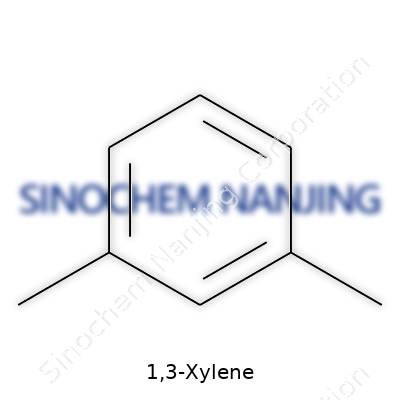
Let’s break it down: 1,3-xylene carries the formula C8H10. The logic behind this formula is pretty easy to visualize once you picture its structure. Take a benzene ring, count around the carbons, and notice two methyl groups sticking out from carbon-1 and carbon-3 positions. That’s what gives this compound its name—meta-xylene, or 1,3-xylene.
Every time the word “xylene” gets tossed around in class or at an industrial plant, they’re referring to a family of three isomers. These isomers differ just by where those two methyl groups plant themselves. With meta-xylene, the methyl groups keep their distance, neither adjacent nor on opposite sides—just separated by one carbon. Chemically, this setup translates to eight carbon atoms and ten hydrogen atoms, typed up neat as C8H10.
Why the Chemical Formula Matters Beyond the Books
It’s tempting to see formulas as meaningless strings, but take it from someone who’s handled hazardous materials and puzzled through reaction mechanisms—the right formula makes real-world safety decisions possible. C8H10 isn’t just an academic answer. You need to know it if you’re working with combustibles, figuring out ventilation in a workshop, or monitoring emissions at a refinery.
Regulators lean heavily on accurate formulas for setting exposure limits and defining cleanup protocols. For instance, the Occupational Safety and Health Administration references C8H10 and its isomers regularly due to their potential health impacts, from dizziness under high exposure to more severe nerve effects.
Application and Safer Practices
Back in the day, I used to supervise a floor in a research lab where xylene ended up in all sorts of extractions and syntheses. It only takes one missed label or mix-up to cause problems, so knowing the chemical formula wasn’t just about passing an exam. Technicians tracked inventory using chemical formulas—knowing they were dealing with C8H10 meant pulling the right SDS and following the right handling rules: gloves, goggles, and proper disposal.
On the sustainability front, knowing the formula feeds directly into waste minimization efforts. Emerging green chemistry approaches, for example, reward teams able to substitute less hazardous compounds with similar formulas but fewer risks. Understanding where every hydrogen or carbon lands helps predict not just reactivity, but also toxicological profiles and breakdown products.
Moving Forward in Research and Industry
Chemists and manufacturers now leverage chemical databases and digital tracking more than ever. Listing C8H10 gets 1,3-xylene recognized quickly among regulators and buyers worldwide. As standards tighten—partly to curb air pollutants and protect workers—the need for clear, accurate formula knowledge doesn’t slow down.
For students, technicians, or anyone involved in chemical supply chains, the formula C8H10 means precise communication, safer workplaces, and a step toward more responsible industry.
Is 1,3-Xylene hazardous to health or the environment?
Knowing the Risks in Real Life
Chemical names like 1,3-xylene may sound obscure, but their impact reaches many people—workers in paint factories, mechanics using degreasers, or anyone living near industrial sites. From personal experience growing up near a chemical plant, I remember that strange, sweet odor in the air many evenings. Turns out, that wasn’t harmless. 1,3-xylene, part of the xylene group, shows up in many industrial activities. Its hazards are not just theory—they affect real communities and real bodies.
What Exposure Really Means
Breathing air laced with xylene fumes brings stinging eyes and headaches. Many short-term reports confirm this, but the worry goes further. High doses, even for brief periods, can knock out a person’s sense of balance and clear thought. This isn’t just about factory accidents. Someone painting a room or refueling at a busy station, inhaling vapors without fresh air or a mask, risks nausea and dizziness.
Long-term exposure makes the stakes higher. Medical research links repeated contact with xylene to liver and kidney trouble. Anecdotes from painters and auto workers match scientific literature—over months or years, things sometimes get worse. Chronic contact can bring on memory loss, hearing decline, and muscle weakness.
How 1,3-Xylene Moves Through the Environment
Xylene spills don’t stay put. I’ve watched trucks slosh chemicals onto busy highways during accidents, only to see that liquid disappear hours later—not because it was cleaned up, but because it evaporated. Xylene evaporates quickly, leaking into the air, sometimes traveling miles from its release. Rain can carry small amounts into the soil and groundwater. Once it gets into water systems, wildlife takes the hit. Fish exposed to xylene lose motor control and struggle to reproduce. Communities downstream may find their drinking water laced with strange tastes and smells.
What the Data Shows
Public databases, such as the EPA’s Toxics Release Inventory, list hundreds of thousands of pounds of xylene released each year in the United States. While not all of it is the 1,3 isomer, the hazards don’t change much. Xylene isn’t as persistent as some classic pollutants, but it lingers long enough to cause problems.
Regulations try to keep levels low. The US Occupational Safety and Health Administration (OSHA) sets an exposure limit at 100 parts per million (ppm) over an average workday. For environmental safety, the EPA limits xylene in drinking water to 10 ppm. Exceeding these isn’t rare, especially in places with heavy industry or poor oversight.
Addressing the Problem
People sometimes feel powerless around big chemical names, but change starts with transparency and basic protections. Companies can invest in better ventilation, personal protective equipment, and leak detection for their workers. Neighborhood groups can demand testing of drinking water and insist on timely cleanup of spills. Local governments, when pressed, can enforce buffer zones between homes and storage tanks.
Switching to safer solvents in schools, workshops, and garages matters, too. Teachers and shop trainers play a big role, making sure students learn to use gloves, goggles, and fans—not just because it’s a rule, but because those habits prevent harm. As long as industry depends on chemicals like 1,3-xylene, protection and vigilance remain the best tools.
How should 1,3-Xylene be stored and disposed of?
1,3-Xylene Demands Respect—Here’s Why
1,3-Xylene has a way of cropping up in labs and manufacturing zones where solvents matter. It’s got power as a fuel additive and in the world of paints, but that same strength can let it do real harm if handled carelessly. Skin contact dries you out, inhaling its vapors can get your head spinning, and spills have a knack for turning a small problem big in no time.
Where Risk Turns Real: What Poor Storage Looks Like
Some folks see a drum and figure it’ll keep anything safe, but 1,3-xylene needs barriers it can’t eat through. It shouldn’t sit in plastic bins that weaken or metal that isn’t made for tough jobs. Metal drums with tight gasket-sealed lids let you avoid leaks or accidental whiffs. This isn’t the stuff to tuck next to a furnace or along an aisle where forklifts bounce by. Every time someone overlooks a rag soaked in it or stacks its containers under sunlight, health problems and fire risk creep in.
Good Storage Looks Like This
Think of a locked chemical cabinet with clear labels, not a makeshift shelf with scribbled tape. Store 1,3-xylene in ventilated rooms where air doesn’t get heavy, with spill-containment trays wide enough to catch the worst-case scenario. Flammable liquid storage rules sit there for a reason, especially since vapors can catch from just a tiny spark. I’ve seen facilities set up grounding and bonding systems—no one wants static electricity to set off fumes.
Fire-resistant cabinets save lives and keep insurance costs fair. In my experience, keeping incompatible chemicals, like oxidizers and acids, far apart beats dealing with a domino effect after an accident. Anyone walking around these storage spots should know what’s where and why.
Disposal Has No Shortcut
Dumping xylene down the drain belongs in the hall of shame. Local regulations set real penalties for putting solvents in landfill-bound containers or pouring them into sewage. Licensed hazardous waste handlers have the tools to recycle or incinerate xylene waste right, minimizing harm to people and the planet.
I’ve watched clean-up teams use sealed, labeled drums lined with absorbent material for liquid waste. Solid waste, like cleaning rags or gloves, goes straight into UN-rated containers. These practices don’t just keep up appearances—they stop fires and surprise audits. Most reputable labs keep a logbook for every drop of waste, not to cover themselves if something goes wrong, but to double-check nothing slips through the cracks.
Solutions That Go Beyond the Minimum
The best workplaces foster training. Each employee gets a walkthrough on the specific risks and sees for themselves how to use personal protective gear—no one should find out the hard way that gloves or goggles matter. Anyone new to the job hears stories from people who’ve seen small mistakes snowball.
I remember one older manager who always kept spill kits in every room, not locked away in some warehouse. Absorbent granules, neutralizing agents, and proper signage stood ready for any spill. That attitude saves more than money; it builds trust.
Tough rules exist because people have already learned from past fires and poisonings. If everyone pays attention to good storage and disposal habits, it keeps workers safe and meets the standards families and inspectors expect.
| Names | |
| Preferred IUPAC name | 1,3-dimethylbenzene |
| Other names |
m-Xylene meta-Xylene 1,3-Dimethylbenzene |
| Pronunciation | /waɪˈliːn/ |
| Identifiers | |
| CAS Number | 108-38-3 |
| Beilstein Reference | 605612 |
| ChEBI | CHEBI:17312 |
| ChEMBL | CHEMBL14238 |
| ChemSpider | 7551 |
| DrugBank | DB01900 |
| ECHA InfoCard | 100.003.132 |
| EC Number | 202-422-2 |
| Gmelin Reference | **203111** |
| KEGG | C02216 |
| MeSH | D022756 |
| PubChem CID | 7909 |
| RTECS number | ZE2450000 |
| UNII | YGJ69HFG8H |
| UN number | UN1302 |
| Properties | |
| Chemical formula | C8H10 |
| Molar mass | 106.17 g/mol |
| Appearance | Clear, colorless liquid |
| Odor | Aromatic odor |
| Density | 0.86 g/cm³ |
| Solubility in water | insoluble |
| log P | 3.20 |
| Vapor pressure | 8 mmHg (20°C) |
| Acidity (pKa) | pKa = 38.56 |
| Basicity (pKb) | 12.50 |
| Magnetic susceptibility (χ) | -3.68 × 10⁻⁹ |
| Refractive index (nD) | 1.505 |
| Viscosity | 0.893 mPa·s (25 °C) |
| Dipole moment | 0.64 D |
| Thermochemistry | |
| Std molar entropy (S⦵298) | 166.0 J·mol⁻¹·K⁻¹ |
| Std enthalpy of formation (ΔfH⦵298) | +24.7 kJ·mol⁻¹ |
| Std enthalpy of combustion (ΔcH⦵298) | -4183.8 kJ/mol |
| Pharmacology | |
| ATC code | D02AE02 |
| Hazards | |
| GHS labelling | GHS02, GHS07 |
| Pictograms | GHS02,GHS07 |
| Signal word | Warning |
| Hazard statements | H226, H315, H319, H335 |
| Precautionary statements | P210, P261, P273, P280, P301+P310, P303+P361+P353, P304+P340, P305+P351+P338, P308+P313, P312, P331, P337+P313 |
| NFPA 704 (fire diamond) | 2-3-0 |
| Flash point | 25 °C (77 °F) |
| Autoignition temperature | 529 °C |
| Explosive limits | Explosive limits: 1.1% to 7% |
| Lethal dose or concentration | Lethal dose or concentration (LD50/LC50): "LD50 (oral, rat): 4300 mg/kg |
| LD50 (median dose) | LD50 (median dose) of 1,3-Xylene: "4300 mg/kg (oral, rat) |
| NIOSH | B2 1800 |
| PEL (Permissible) | PEL (Permissible Exposure Limit) of 1,3-Xylene: 100 ppm (parts per million) |
| REL (Recommended) | 50 ppm |
| IDLH (Immediate danger) | 900 ppm |
| Related compounds | |
| Related compounds |
Benzene Toluene o-Xylene p-Xylene Ethylbenzene |



