A Closer Look at 1,3-Phenylenediamine: History, Uses, Risks, and the Road Ahead
The Roots and Rise of 1,3-Phenylenediamine
1,3-Phenylenediamine didn’t burst onto the industrial scene overnight. Researchers started to notice the value of aromatic diamines like this back in the late 19th century, as synthetic chemistry unlocked new molecules for dyestuff and polymer industries. German chemists often led the charge, tinkering with coal tar derivatives to give rise to compounds that formed the backbone of everything from clothing pigments to emerging plastic technology. At a granular level, the rise of 1,3-Phenylenediamine—also known as meta-phenylenediamine—aligned with the explosive growth of the textile dye sector, and then found new life in engineering, electronics, and eventually more niche fields like diagnostics and pharmaceuticals. The compound’s journey underscores a hard truth in chemistry: old molecules rarely stay limited to their first jobs.
What Sets It Apart: Properties and Handling
Familiar to most as a grayish, sometimes slightly brownish crystalline solid, 1,3-Phenylenediamine melts at a moderate temperature, dissolves in hot water, and stands up to moderate acids—but don’t leave it long in open air, since oxygen likes to react with those exposed amino groups. The smell is pungent, which makes handling unpleasant without proper ventilation. That’s really the story across much of aromatic amine chemistry—the double-edged sword of reactivity brings utility and risk in equal measure. The molecule itself, C6H8N2, owes much of its behavior to the placement of those two amine groups opposite on the benzene ring, which makes it valuable for linking larger structures, but also more energetically unstable than its para or ortho cousins in many reactions. In technical settings, chemists measure its purity through melting point, infrared spectra, and chromatographic purity, often looking for traces of oxidized byproducts that hint at poor storage or excessive age.
Getting to 1,3-Phenylenediamine: Synthetic Pathways and Tweaks
Old-school methods to make 1,3-Phenylenediamine relied heavily on reduction reactions—starting from m-dinitrobenzene, which is treated with reducing agents like iron filings and hydrochloric acid or catalytic hydrogenation over palladium or nickel. Sometimes, the synthesis can involve a more modern approach aimed at minimizing waste and lowering the energy footprint, but the bones of the traditional process remain helpful. Chemists take pains to avoid over-reduction or incomplete purification steps, since contaminants can make their way into the final product and wreak havoc in downstream uses. As for modifications, the primary amine groups invite an array of further reactions—condensation with acid chlorides, diazotization, or polymerization linkages. This has opened doors to complex molecule construction and custom polymers, but it increases the need to monitor purity and trace contaminants at every turn.
Names in the Field: Synonyms and Trade Names
Chemists rarely stick to one name in day-to-day work. Beyond “1,3-Phenylenediamine,” you’ll hear people mention “meta-phenylenediamine” or simply “MPD.” These aren’t just academic distinctions—the same substance shows up in patents, safety data sheets, and purchase orders under these different banners. For anyone tracking chemical usage across borders, or seeking toxicology data, it pays to search under all known aliases. Commercial grades may tack on labels that speak more to physical form or intended use—like “technical grade MPD” or “high-purity MPD for polyamide production”—but underneath, the chemical fingerprint remains the same.
Where Safety and Operations Meet
The conversation about aromatic amines can’t sidestep safety concerns. Aromatic amines, including 1,3-Phenylenediamine, have drawn scrutiny over possible links to cancer and other long-term health risks. Lab veterans know to treat even small-scale transfers with full gloves, goggles, and dedicated fume hoods, since the dust and vapors bring immediate irritation and a string of long-term risks that won’t show up in a single shift. Regulatory voices—from North America to the EU and increasingly across Asia—set exposure limits demanding continuous air monitoring and engineering controls, not just the right gear. Even factories aiming for large-volume synthesis of high-performance polymers have adapted their systems to automatically transfer and process the chemical in sealed environments, cutting the odds of accidental release to workers or neighborhoods. Safety standards also anchor discussions about labeling—clear, unambiguous language about acute and chronic hazards tops every container, with contingency planning for spills and emergency exposure woven into basic operational practices.
Applications: From Everyday Goods to Frontiers of Science
Anyone wearing synthetic textiles or using electronics has likely benefited from advances in 1,3-Phenylenediamine chemistry. Polyamides—especially robust groups like aramid fibers—depend on reliable linking compounds, and this molecule stands among the workhorses. Dyestuffs factor just as heavily; while the world has moved away from the wild-west era of dye chemistry, 1,3-Phenylenediamine remains a building block in select pigment lines, with strict regulation limiting which ones reach consumer goods. Recent years have seen a surge of interest from the batteries and fuel cell sector, since aromatic diamines play a role in engineering stable, conductive membranes. The pharmaceutical realm dips into this well in research and synthesis of bioactive intermediates, while analytical chemists turn to the compound for derivatization and identification of more elusive molecules. These fields lean hard on reproducible quality and minimal side products, which raises the bar for producers and pushes research teams to refine their processes further still.
What Research Teaches—and What Remains Unknown
In the world of R&D, 1,3-Phenylenediamine straddles a fine line. There’s deep curiosity about how to tweak its structure or harness its reactivity for advanced material synthesis. Scientists look for ways to improve selectivity in polymerizations, lower risks of byproduct formation, and trap elusive intermediates that could unlock new applications. At the same time, toxicity research takes center stage. Decades of animal tests and workplace studies land the compound in a gray area—definite acute effects (irritation, allergic response), hints of chronic toxicity in high-exposure settings, and uncertainty over long-term consequences at trace environmental levels. Wastewater streams from dye or resin factories used to carry loads of aromatic amines, and past accidents have sparked regulatory bans and remediation campaigns in places like Europe and Japan. Environmental persistence and bioaccumulation haven’t reached the same infamy as heavy metals or some halogenated organics, but growing research into water safety and new analytical methods ensures the spotlight will only grow brighter.
Ideas for Moving Forward
The record with 1,3-Phenylenediamine’s benefits and risks tells a bigger story about chemical stewardship. Old processes need updating, with green chemistry principles driving more selective reductions, lower temperatures, and simplified purification. Closed-system manufacturing brings enormous value for occupational health, but only if rigor doesn’t fade over time or across supply chains. Expanded biomonitoring in industrial zones and sharper environmental tracking can catch leaks or improper disposal before they echo across ecosystems. At the same time, investment in alternatives—whether through bio-based feedstocks, inherently safer molecules, or just cleaner downstream substitutes—pressures producers to modernize. Strong scientific networks, open data sharing, and regulatory consistency can lower barriers for companies trying to make safer products. In the lab, new catalysts and synthetic routes can drive down waste and energy needs. The history of 1,3-Phenylenediamine carries lessons worth heeding further into an era where society demands chemical innovation not just for tomorrow’s technologies, but with care for workers, the environment, and neighbors living at the fence line of industry.
What is 1,3-Phenylenediamine used for?
Why Manufacturers Use 1,3-Phenylenediamine
Factories crank out a lot of things that shape our lives today, and many of them need just the right chemistry behind them. 1,3-Phenylenediamine is one of these chemical players, especially in the dye and pigment world. Textile workers rely on this stuff for getting those deep blacks and blues in synthetic fibers. I’ve stood in a fabric facility and watched workers mixing up batches, knowing that without compounds like this, our clothes would look a lot less colorful.
This chemical isn’t just a one-trick pony, though. People in the plastics industry lean on it, too. Engineers add it to epoxy resins to build tough materials—stuff you’ll find in circuit boards, wind turbine blades, and the shells of consumer goods. Its specific chemical properties allow these materials to stay durable, even under pressure. Most folks might not realize it, but the foundations of our electronics trace right back to chemicals like 1,3-Phenylenediamine.
Creating Colors and Protecting Goods
I’ve seen 1,3-Phenylenediamine pop up all over the place where color and strength matter. Companies use it for making dyes that last longer in sunlight and washing cycles. It’s got a knack for resisting fading—that’s a major win for anyone who wears jeans or sits on color-rich sofas. Old dyes never kept up, leading to quick fade-outs. The chemical industry searched for answers, and this compound delivered real improvements.
Besides clothes and plastics, ink makers find it useful. Printing shops still turn to it for reliable black inks, which resist smudging and offer crisp lines, especially on glossy magazines and packaging material. Even hair dye companies once took a shining to it for similar reasons, though concerns about allergic reactions have sent many looking for alternatives there.
Safety Matters
If you work in one of these industries, you know handling 1,3-Phenylenediamine can be risky. There’s a reason workers don gloves and face guards before pouring it out. It’s classified as toxic if swallowed and harmful for skin or eyes. Studies have raised concerns about possible links to cancer, particularly among people regularly exposed without protection. The tough fact is, safety guidelines developed for a reason—real lives depend on them.
The European Chemicals Agency and U.S. agencies hold companies to strict standards. Data from OSHA shows that skin exposure is the main cause of reported incidents. Manufacturers now move toward closed system handling, and they’re finding water-based alternatives where possible. I’ve walked through more than one plant that switched to different colorants, proving change happens with the right push.
What’s Next: Pushing for Safer, Cleaner Chemistry
No one likes trade-offs between safety and performance. Chemists keep searching for substitutes that won’t risk workers’ health or pump toxins into the environment. Biobased or plant-derived dyes could take over some markets. The reality is that old habits die hard, and 1,3-Phenylenediamine offers consistency and performance that’s tough to beat. Customers still push for cheaper materials and longer-lasting products, so pressure to innovate stays high.
From what I’ve seen, responsible factories invest in both safety and research. Real investment—ventilated mixing rooms, hands-on safety classes, and support for chemists hunting for better options. That’s the way forward: not blind loyalty to tradition, not reckless chasing of the cheapest option, but smarter chemistry, safer work, and a willingness to adapt as we learn more.
Is 1,3-Phenylenediamine hazardous to health?
Chemicals Color Our World—With Risks
Everyday products hide ingredients with strange names. 1,3-Phenylenediamine sounds technical, but it shows up in things like hair dye, dark-colored textiles, and some inks. The attractive results can come with hidden costs. I grew up in a family that owned a dry-cleaning shop, and stories of rashes, eye irritation, and breathing difficulties weren’t rare. Over time, I learned that being around certain chemicals changes not just one’s skin but long-term health.
Science Points to Harmful Effects
1,3-Phenylenediamine belongs to a class of aromatic amines. Research from the National Institute for Occupational Safety and Health (NIOSH) links aromatic amines to allergic reactions and increased cancer risks. That’s not something anyone wants next to their body, much less in their bathroom cupboard.
Direct contact with 1,3-Phenylenediamine can trigger skin allergies, and studies document serious responses, especially in those handling the raw chemical or using dark hair dyes. The European Chemicals Agency lists this compound as harmful by skin absorption and inhalation, with evidence pointing toward toxic effects on organs like the liver and kidneys. Asthma and breathing difficulties occur at higher exposure levels. The International Agency for Research on Cancer (IARC) has called for caution with aromatic amines, as the evidence suggests they can damage DNA and cause tumors with long-term exposure. Nobody benefits from developing illness due to overlooked risks, so transparency in labeling and access to safety data matters.
Invisible Risks for Everyday Workers
Lack of protection or safety guidelines in salons and small factories leaves many people exposed. Shortcuts at work or at home multiply the risks. I’ve seen workers in small dye shops without gloves or masks, trusting their company to provide safe products. Later, some developed lingering coughs or patchy irritation on their arms. Manufacturers will point to permissible limits, but studies on chronic, low-level exposure show that risks stack up over time. Some children have been poisoned simply because a caregiver applied hair dye improperly.
What Can We Do About It?
The biggest lesson here is don’t take familiar products at face value. If you use hair dye or work in coloring industries, check for clear safety guidelines. Gloves, face masks, and proper ventilation are simple but effective measures. Dermatologists recommend patch testing before using hair coloring products, especially if you have sensitive skin or a history of allergies. Look for products marked “phenylenediamine-free” or with clear allergy test recommendations.
Companies should invest in safer alternatives when possible. European regulations already limit some uses of 1,3-Phenylenediamine, pushing manufacturers to improve formulations without sacrificing quality. If you’re a salon owner or worker, regular safety training and up-to-date information on chemical risks help prevent serious problems. For the general public, demanding better labeling and supporting companies using safer chemistry will push the industry in the right direction.
The Bottom Line
Smoother hair, deeper colors, or bolder prints shouldn’t come with a health price. My experience says: respect for chemicals, clear information, and willingness to switch to safer alternatives make even the most vibrant lives healthier. We deserve more than just color—we deserve safety in every step.
What are the proper storage conditions for 1,3-Phenylenediamine?
Understanding the Material
1,3-Phenylenediamine pops up in labs, dye manufacturing, and hair product development. Over the years, I've seen dangerous shortcuts in how people handle such chemicals. This substance carries its quirks—it's sensitive to air, prone to discolor, and can irritate the skin or eyes. Good handling doesn’t only prevent spoiled product, but guards the health of everyone around.
The Crucial Points of Storage
One constant rule applies to chemicals: dryness keeps trouble away. With 1,3-Phenylenediamine, moisture is a problem. Water lets it form unwanted byproducts, and that ruins both its purity and your day. I saw a batch stored in a damp utility room—by the next week, it turned brownish, showing signs of breakdown. Dry, airtight containers cut down the risk. Use sealed glass or high-quality, resistant plastic. The fewer air exchanges, the better.
Heat poses another threat. This compound keeps longer in cool conditions. Temperatures around 2–8°C work best, usually in a dedicated chemical refrigerator. Storing it at room temperature speeds up degradation. I’ve watched researchers lose product because the air conditioner failed for a weekend, and after that, the jars all had unusual odors and had to be tossed. Consistent, low temperatures preserve its structure and safety.
Oxygen and Light: Silent Foes
Oxygen exposure invites oxidation—this triggers the very reactions you want to avoid. While perfect oxygen exclusion is tough outside of gloveboxes, purging the storage container with dry nitrogen is doable and effective. Laboratories selling fine chemicals often pack 1,3-Phenylenediamine under inert gas for this reason. Light is another enemy; ultraviolet rays help spark degradation. Store the substance in amber bottles or opaque bins. A shelf near a sunny window is out of bounds.
Safety Precautions Every Step of the Way
Leaks and spills shape one’s memory. I’ve cleaned up 1,3-Phenylenediamine after it tipped over in a shipping box, eating through cardboard and staining floors. Proper labeling saves time and nerves. Clear hazard labels and handling instructions should always face out. Keep it away from incompatible chemicals—oxidizers spark dangerous reactions. A dedicated, labeled area in the chemical storeroom works well. Never stack it above containers with acids or bases, as accidental mixing could escalate risks.
Practical Steps for Risk Reduction
I can’t forget watching an intern discover the importance of personal protective equipment. Handling the jar without gloves meant a trip to occupational health for a skin reaction. Plan ahead with thick, chemical-resistant gloves and safety goggles, not just flimsy latex. Expect accidents—that preparation means faster, safer cleanups. Absorbent pads and specialized disposal containers cut time to manage spills. Make sure everyone gets regular training, as good habits matter more than any sign on a door.
Routinely check expiry dates and inspect for clumps or color changes before each use. Stock rotation—the simple act of using older supplies first—cuts down on waste and overlooked hazards. Feedback from smaller labs often points out the value of inventory logs. Track each gram from delivery through disposition, so nothing gets forgotten at the back of a shelf.
Clear Communication Builds Trust
Trust in the workplace grows out of visible commitment to safety and conscientious chemical storage. Tightly following guidelines for 1,3-Phenylenediamine means less waste, fewer mishaps, and smoother audits. Training everyone who comes near these materials—regardless of job title—proves to workers and visitors that safety is real, not just a manual gathering dust.
What safety precautions should be taken when handling 1,3-Phenylenediamine?
Understanding What You’re Working With
1,3-Phenylenediamine shows up in several industries, from dye making to materials science. The risk goes far beyond the occasional chemical spill. I remember stepping into a lab for the first time and seeing a colleague handle these powders with bare hands—nobody really brought up skin exposure until rashes started popping up. The wake-up call? Certain aromatic amines, like this one, slip in unnoticed and can cause a whole world of skin and respiratory irritation.
Health Hazards: More Than Just ‘Irritation’
The science backs up what a lot of people have seen—direct skin contact can cause redness, itching, and eventual sensitization. Even limited airborne dust kicks up headaches, dizziness, and discomfort that lingers well after the workday. Several safety data sheets from industry leaders point out the dangers of inhaling dust or letting it hit your bare skin. Nobody should need to learn that lesson the hard way.
Simple Steps that Matter
I learned early in my career that the cheapest glove on the shelf offers little protection. When dealing with 1,3-Phenylenediamine, choose chemical-resistant gloves—nitrile and neoprene hold up where others fail. Goggles provide real comfort, especially when working over open containers or mixing solutions. Face shields may sound dramatic to some, but I’d take a slight inconvenience over a hospital visit.
A splash apron or a full lab coat keeps clothing and exposed skin safe. Changing out of work clothing before heading home matters, since cross-contamination follows you to your car, your home, and your family. Shoes also stay at the door. Good habits save more than just your own skin.
Keep the Air Clean
Poor ventilation turns a small accident into a major one. I have seen folks rely on cracked windows or small fans—ideal only if you like gambling with your lungs. Fume hoods and extraction fans do most of the heavy lifting by keeping airborne particles out of your breathing zone. Some workplaces install local exhaust systems for particular mixing stations, taking air directly away from your nose. These systems aren’t just about staying on the right side of regulations—they keep your team in work, not at the doctor’s office.
Storing and Handling Smarter
Always store 1,3-Phenylenediamine in sealed, labeled containers. I keep mine in a dry, cool spot—nowhere near acids and oxidizing agents. I watch for stains, leaks, or odd smells that can spell trouble. Leftover or old material never goes in with general waste. Chemical waste streams exist for a reason. Every single workplace should train staff on emergency responses, showing what to do and where to go if a spill or exposure happens. All too often, a moment of panic makes a minor event worse than it needs to be.
Solutions Worth Supporting
Building a safety culture doesn’t take endless paperwork or expensive tech. It takes honest conversations about what actually happens on the floor or in the lab. Regular refresher training keeps everyone sharp. Labels with real-life warnings—not just codes and tiny print—help people remember the hazards. Where possible, look for safer substitutes or closed systems for transfer and mixing.
After years working with substances like 1,3-Phenylenediamine, nobody will ever hear me say “just be careful.” Good safety means making danger the exception, not the daily risk.
What are the physical and chemical properties of 1,3-Phenylenediamine?
Meet 1,3-Phenylenediamine
Science class taught me that certain molecules stick in your mind—the ring-shaped ones, especially. 1,3-Phenylenediamine stands out because it combines an aromatic feature with two simple amine groups. On the shelf, this compound usually takes the form of a white or light gray solid. If you hold it, you’ll notice it doesn’t melt away in your palm; it melts above 60°C. Once it gets warm enough, the solid transitions quickly, which laboratory workers have to watch out for.
Solubility and Odor
Drop 1,3-Phenylenediamine into water and it mixes better than many aromatic compounds. The amine groups help this powder dissolve easily in water, forming a colorless solution at moderate concentrations. I’ve worked with similar aromatic diamines in dye projects, and their water solubility speeds up mixing and application. The compound does give off a faint, ammoniacal odor, nothing too overwhelming, though workers remember it after a day in the lab.
Chemical Reactivity
Chemically, 1,3-Phenylenediamine stands out by being both stable and quite reactive where it counts. Both amine groups on the benzene ring open the door to lots of interesting reactions. In one experience with a hair dye formulation, the amine groups grabbed onto other ingredients and formed new colors right on the spot. Exposed to air, this material can slowly oxidize and darken, showing visible changes that remind chemists to store it away from light and oxygen when possible.
Uses and Hazards
Factories use 1,3-Phenylenediamine for more than just color. It fits into the world of dyes, especially for synthetic fibers and hair coloring products. It acts as a building block for pigments and pesticides too. Working with this chemical, I’ve seen its power and also its risk. Touching or inhaling the dust brings skin and respiratory irritation, and the substance can act as a sensitizer. That means after a few exposures, some people develop allergic reactions. Anyone handling it in a plant relies on gloves and a good mask. Eye protection makes a difference.
Environmental Impact and Safety Concerns
Chemicals like 1,3-Phenylenediamine can end up where you don’t want them. Drainages from factories risk contaminating local water. I’ve seen reports showing fish and aquatic life struggle when exposed to aromatic amines, especially if they pile up over time. Regulators like the EPA and European agencies have set restrictions and guidelines for its use and disposal. Proper procedures in manufacturing, storage, and waste handling cut down risks for workers and for surrounding communities.
Finding Better Alternatives
Industry keeps looking for replacements that do the same job without the toxic side effects. Green chemistry labs explore options with less environmental impact and lower risk of sensitization. Downtime in the factory or in chemical supply chains sometimes spurs managers to rethink traditional chemicals. Cleaner production methods help, and switching to less hazardous intermediates makes these processes safer for everyone involved.
Balancing Utility and Safety
Understanding this compound’s properties makes its industrial uses possible, but never risk-free. Good ventilation, protective gear, and careful storage remain everyday essentials in settings where 1,3-Phenylenediamine features on the inventory list. Science keeps moving—if there’s a safer way to achieve the same end results, it makes sense for companies and researchers to pivot toward those new options.
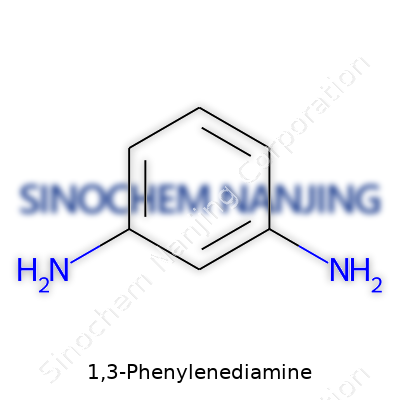
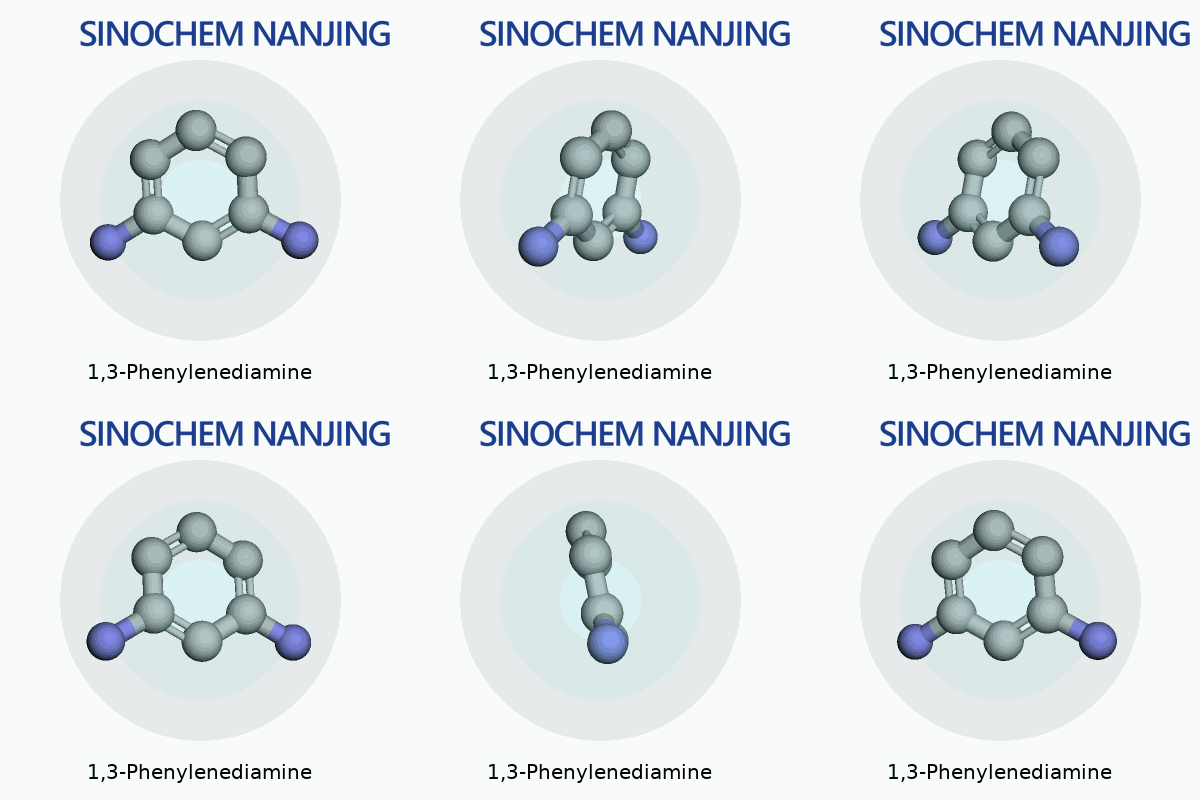
| Names | |
| Preferred IUPAC name | benzene-1,3-diamine |
| Other names |
m-Phenylenediamine 1,3-Benzenediamine Meta-phenylenediamine 1,3-Diaminobenzene MPD |
| Pronunciation | /ˌwʌn.θriː ˌfiːˈniːlɪnˌdaɪ.əˈmiːn/ |
| Identifiers | |
| CAS Number | 108-45-2 |
| Beilstein Reference | '120924' |
| ChEBI | CHEBI:17627 |
| ChEMBL | CHEMBL1401 |
| ChemSpider | 682 |
| DrugBank | DB01606 |
| ECHA InfoCard | 01ee0d8a-bcae-4f9b-97e7-56c8f22536cc |
| EC Number | 203-584-7 |
| Gmelin Reference | 77867 |
| KEGG | C01417 |
| MeSH | D010697 |
| PubChem CID | 7009 |
| RTECS number | SS7875800 |
| UNII | 75N8A72A7O |
| UN number | UN2239 |
| Properties | |
| Chemical formula | C6H8N2 |
| Molar mass | 108.15 g/mol |
| Appearance | Gray to purple gray solid |
| Odor | Amine-like odor |
| Density | 1.179 g/cm³ |
| Solubility in water | miscible |
| log P | 0.09 |
| Vapor pressure | 0.0025 mmHg (25°C) |
| Acidity (pKa) | 13.6 |
| Basicity (pKb) | 8.25 |
| Magnetic susceptibility (χ) | -67.0·10⁻⁶ cm³/mol |
| Refractive index (nD) | 1.569 |
| Viscosity | 1.14 mPa·s (at 50 °C) |
| Dipole moment | 1.49 D |
| Thermochemistry | |
| Std molar entropy (S⦵298) | 106.6 J·mol⁻¹·K⁻¹ |
| Std enthalpy of formation (ΔfH⦵298) | 53.0 kJ/mol |
| Std enthalpy of combustion (ΔcH⦵298) | -3137 kJ·mol⁻¹ |
| Pharmacology | |
| ATC code | D08AX05 |
| Hazards | |
| Main hazards | Harmful if swallowed, in contact with skin or if inhaled. Causes serious eye irritation. May cause an allergic skin reaction. Suspected of causing genetic defects. Toxic to aquatic life with long lasting effects. |
| GHS labelling | GHS02, GHS05, GHS06, GHS08 |
| Pictograms | GHS07,GHS08,GHS09 |
| Signal word | Danger |
| Hazard statements | H302, H317, H319, H331, H341, H351 |
| Precautionary statements | P261, P264, P273, P280, P302+P352, P305+P351+P338, P310, P321, P330, P362+P364 |
| NFPA 704 (fire diamond) | 3-2-0 |
| Flash point | 113°C |
| Autoignition temperature | 535°C |
| Lethal dose or concentration | LD50 oral rat 315 mg/kg |
| LD50 (median dose) | LD50 (median dose): 500 mg/kg (oral, rat) |
| NIOSH | UR9100000 |
| PEL (Permissible) | Not established |
| REL (Recommended) | 0.1 mg/m³ |
| IDLH (Immediate danger) | 15 mg/m3 |
| Related compounds | |
| Related compounds |
Aniline p-Phenylenediamine m-Phenylenediamine dihydrochloride Diphenylamine o-Phenylenediamine |



