1,3-Dichloropropene: Insight and Outlook
Historical Development
Looking at the shifts in modern agriculture, 1,3-dichloropropene stands out as a tool that shaped crop management since the mid-1900s. Early chemists searching for better weed and pest controls landed on chlorinated hydrocarbons, and by the 1950s, companies began synthesizing 1,3-dichloropropene. Through the decades, farm operations in North America, Europe, and Asia started depending on it to reduce nematode populations — soil-dwelling pests that challenge healthy plant growth. Agricultural expansion and the drive to boost yields fueled its rise, alongside stricter scrutiny from public health advocates and environmental groups. Regulatory opinions on its use have swung over the years, from broad approval in the latter twentieth century to more targeted applications dictated by risk assessments. The story of 1,3-dichloropropene is a lens into the ongoing tug-of-war between the need for bigger harvests and the demand for safer, cleaner land.
Product Overview
Most people working with crop protection know 1,3-dichloropropene as a soil fumigant with a liquid formulation, often marketed under different trade names. It arrives in drums or bulk tanks, ready to be injected below the surface before planting. The odor is striking — easily recognizable without being unpleasantly strong. The goal is simple: keep nematode infestations in check to give seeds a fair shot at sprouting and producing. Farmers relying on specialty crops, such as vegetables, nuts, tobacco, and orchard fruits, have adopted it for decades, using it to replace older, more persistent pesticides. This approach isn’t without controversy, but for those battling persistent pests, it has been hard to beat in terms of speed and scope of action.
Physical & Chemical Properties
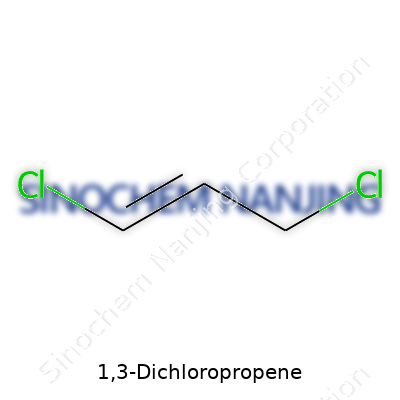
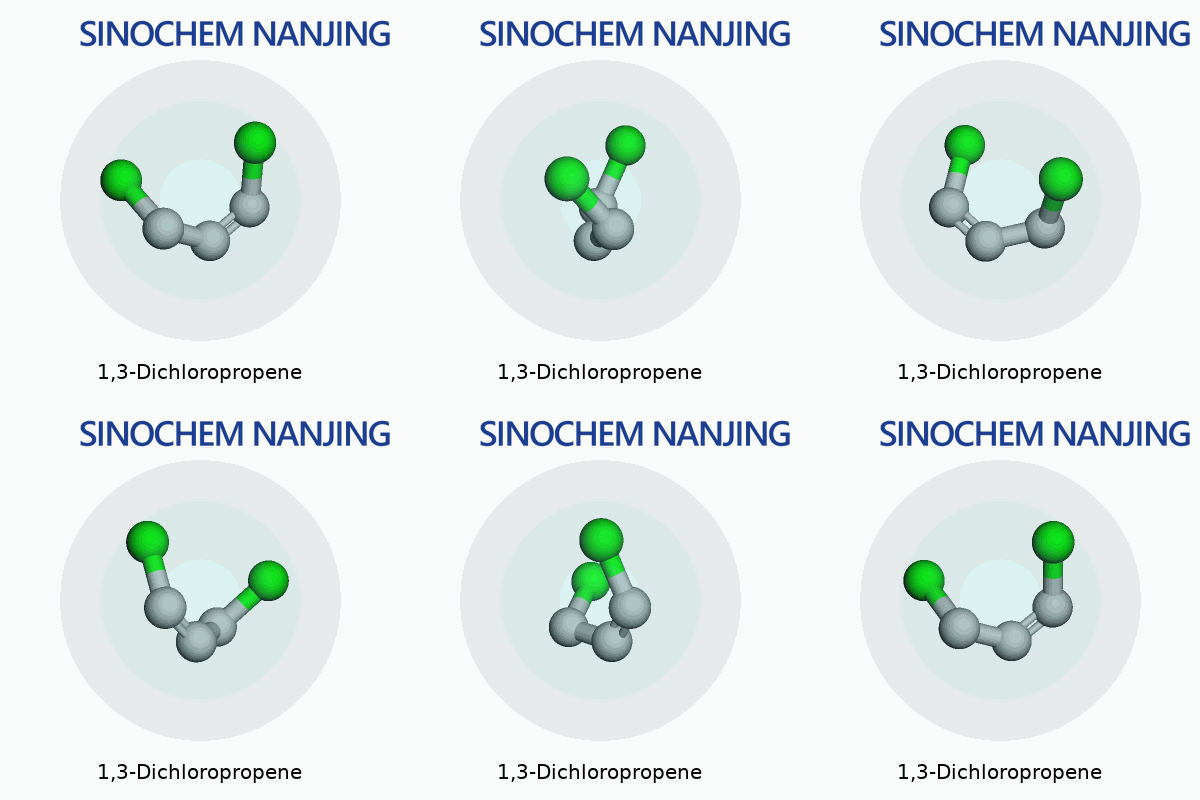
To understand why 1,3-dichloropropene became so effective, look at its basic traits. With a moderate boiling point and relatively low water solubility, it evaporates into the soil after application, spreading through the root zone where nematodes gather. Its chemical structure—two chlorine atoms attached to a three-carbon chain—makes it reactive against target organisms but manageable for skilled handlers. It comes as a clear, colorless to pale yellow liquid, with a density and vapor pressure that influence how it behaves after entering the soil. People who work in the field learn quickly that this is not a chemical to play around with, as its vapors spread fast if mishandled. The right equipment and application timing separate good outcomes from risky ones.
Technical Specifications & Labeling
Any legitimate package of 1,3-dichloropropene lays out its strength—usually as a high-percentage active ingredient in a stabilized formulation, accompanied by stringent use instructions. Labels spell out precise dosages per hectare, application methods, minimum pre-plant intervals, and re-entry restrictions. Governments keep close tabs on these details, with labeling reflecting changing scientific assessments about exposure limits for workers and bystanders. Risk mitigation measures appear in bold, mandating protective gear, closed handling systems, and buffer zones near wells or sensitive habitats. Labels also warn about temperature guidelines, as the chemical’s volatility changes with the weather. Skipping over these fine points invites both poor results and unnecessary risk.
Preparation Method
Industrial chemists synthesize 1,3-dichloropropene by reacting propylene with chlorine under controlled conditions. This process reliably yields a mixture of cis- and trans-isomers, which together form the technical-grade product. Separation and purification steps follow, stripping away byproducts to meet tough regulatory thresholds for impurities. Unlike many other farm chemicals, the manufacturing steps for 1,3-dichloropropene have not changed much over the decades, apart from the added filtration and quality control demanded by today’s tighter environmental standards. The chemical industry sees value in refining older methods rather than inventing entirely new ones where efficiency and reliability matter most.
Chemical Reactions & Modifications
1,3-dichloropropene’s reactivity shows up when it decomposes in soil or comes in contact with moisture—breaking down into chloride ions and other small molecules that eventually dilute or bind to soil particles. Chemists have explored ways to tweak the molecule for different persistence or mobility, but the base structure remains quite stable under transport and storage conditions. In labs, scientists use it for studying nucleophilic substitution reactions or as a building block for more complex organochlorine compounds. The reactivity that wipes out nematodes does so by disrupting biological processes their bodies depend on, and scientists still study these mechanisms to refine how, when, and where the chemical should see use.
Synonyms & Product Names
Trade names and alternative descriptions of this chemical pop up in regulatory documents, research papers, and sales sheets. Known widely as 1,3-D, it also appears as Telone among farmers and specialty crop advisers. Other names, such as cis-1,3-dichloropropene and trans-1,3-dichloropropene, specify the different isomers present in technical mixtures. This patchwork of names can throw off consumers and new users, so clear documentation remains a key part of safe, effective handling. No matter what it’s called, the rules of safe use do not change.
Safety & Operational Standards
The safety story behind 1,3-dichloropropene can’t be set aside. Farmhands, applicators, and even neighboring residents have raised alarms about acute and chronic exposures. Acute risk includes eye and respiratory irritation, skin burns, and symptoms from inhaled vapor. Chronic research—sometimes contradictory—points to cancer risks and longer-term toxicity, forcing both producers and regulators to update safety procedures. Closed transfer systems, air monitoring, and required idle intervals between treatment and planting are not just suggestions, but hard rules enforced by regulators and company safety officers. Protective equipment—full-face respirators, chemical-resistant suits, impermeable gloves—often make the difference between safe jobs and dangerous ones. Clinics that serve agricultural regions keep their poison control numbers handy during the busy soil treatment months, reflecting both the risk and the responsibility that come with using this chemical.
Application Area
Walking the fields in growing regions, one can see where 1,3-dichloropropene plays a part. It is used on vegetable plots, orchards, and high-value cash crops, as well as in greenhouse settings where soilborne pests limit productivity. In sandy soils, where nematode mobility runs high, this approach makes business sense for growers facing thin margins, especially with rising costs and lower pesticide options available since the phase-out of more persistent chemicals like methyl bromide. Some golf course superintendents even relied on it in the past to manage turf nematodes, though public spaces now use other options due to increased scrutiny. Global adoption varies based on crop type, pest pressure, and regulatory attitude, but 1,3-dichloropropene remains deeply embedded in the toolkit for growers facing persistent soil pest problems.
Research & Development
Agrichemical research focusing on 1,3-dichloropropene has not slowed even as new products arrive on the scene. Universities and industry labs run trials on residue patterns, breakdown products, and alternative delivery systems that cut drift and exposure. Research teams are testing next-generation application injectors, biofilters to trap emissions, and formula tweaks to pair this fumigant with other soil amendments. Some studies look at ways to combine biological control options with reduced doses of fumigants, hoping for a one-two punch that extends the chemical’s usefulness without overstaying its welcome environmentally. Regulatory pushback creates its own research arm, pressing manufacturers to keep the compound within shrinking margins of allowed use. Phasing in precision agriculture methods, such as GPS-guided injectors and remote vapor monitoring, changes what the ‘good stewardship’ of fumigant treatment looks like now compared to forty years ago.
Toxicity Research
Scientists keep a close eye on toxicity data for 1,3-dichloropropene, weighing public health, worker safety, and long-term soil health. Animal studies and epidemiological work have drawn links between exposure and certain cancers, liver and kidney issues, and reproductive effects. The U.S. Environmental Protection Agency and international agencies have listed it as a probable human carcinogen, and ongoing studies try to refine that risk profile with new data. Some evidence indicates breakdown products in groundwater may stay longer than initially thought, prompting calls for better water monitoring near treatment sites. In my own experience with advocacy groups, the biggest demand is for transparency — users want to see all the data behind decisions, not just headline risks or benefits. That keeps everyone more informed, and pushes industry, academia, and regulators to run full-circle reviews every few years.
Future Prospects
Talking to both farm operators and policy makers, it’s clear that the future for 1,3-dichloropropene will depend on evolving stewardship rather than outright bans. While tougher safety standards push some users toward non-chemical nematode management—crop rotation, soil solarization, and biological agents—others still count on the chemical when the stakes are highest, such as with high-value crops heading for international markets. The next generation of products in this category will likely be tighter controlled, with new formulas designed to reduce emissions, cut residue levels, and extend pre-plant intervals to allow breakdown before crops take root. Advances in soil biology could open up hybrid solutions, where 1,3-dichloropropene gets paired with microbials rather than displacing them. The challenge will be matching the economic realities faced by growers with wider sustainability demands. Progress comes step-by-step: better engineering controls, fuller risk transparency, and continued investment in both people and science to keep fields productive without putting workers, neighbors, or future harvests at risk.
What is 1,3-Dichloropropene used for?
Digging Into What 1,3-Dichloropropene Means for Our Food
Across countless farm fields, 1,3-dichloropropene turns up as a chemical tool people often never hear about. Most research points to its most common use: killing nematodes in the soil. Nematodes may sound harmless, but these microscopic worms will ravage everything from carrots to potatoes, hitting small family plots and massive industrial farms alike. Without ways to keep pest populations down, entire harvests can run thin or outright fail. Growers turn to 1,3-D as one of a handful of strong weapons against these invisible invaders.
It’s not a chemical folks pick up at the local hardware store. Usually, agribusinesses and specialized applicators get the job, injecting 1,3-Dichloropropene deep beneath the soil surface before seeds drop in. This strategy blocks the nematodes before crops can even set root. The protection lets fields push toward strong yields, which means fuller produce shelves and lower grocery prices down the line. But spraying anything toxic around food inevitably brings tough questions about risk, pollution, and what ends up on people’s plates.
What We Know About Risks and Regulations
The trouble lies in the nature of 1,3-dichloropropene itself. The EPA has weighed both its benefits and potential harm. Direct inhalation causes dizziness and irritation for farmworkers; too much exposure poses cancer risks, so rules exist to keep these dangers in check. Application can only happen with the correct gear, and each state draws its own lines on where and how farmers can use the chemical. These restrictions try to balance productivity with long-term soil health and the safety of communities living near fields. California and a few others have responded to public outcry by tightly capping use or setting up buffer zones around homes and schools. Some choose not to allow 1,3-D at all when groundwater contamination becomes a real threat.
Drinking water tests reveal that 1,3-D doesn’t always stay put in the ground. Rain can carry residues into wells, especially in sandy regions, which means kids and older adults could face higher risks than scientists would like. As someone who’s followed rural health stories closely, community meetings get heated the moment groundwater shows traces of any chemical used on crops, 1,3-D included. Local pushback can halt projects and spark fresh calls for alternatives in agriculture.
Can We Farm Without 1,3-Dichloropropene?
No one solution fits every soil or climate, but there are ways forward. Some organic farmers skip chemical tools and instead rotate crops or plant nematode-resistant varieties bred for tough soils. Others invest in new biological products—and these are starting to gain real ground as researchers prove their value on yield and pest control alike. Switching isn’t easy or cheap. Years of habit and the pressure to maximize output enter every discussion about phasing out well-known chemicals. Crop losses cut right into a farmer’s bottom line, so people are reluctant to gamble on new approaches unless they see proof.
This issue cuts across more than just one rural field. Choices about pest control shape what winds up in lunchboxes and kitchen drawers. Every family deserves to know what trade-offs get made behind the scenes, and farmers need more options to keep soil, water, and health in balance. Watching the science evolve and hearing stories from those directly affected makes clear that transparency and innovation go hand in hand on the future of safe, sustainable food.
Is 1,3-Dichloropropene hazardous to humans or the environment?
Understanding How 1,3-Dichloropropene Affects People and Land
1,3-Dichloropropene, often called Telone, shows up on fields across the world as a tool for controlling nematodes and other pests. Farmers rely on it to protect crops like potatoes, carrots, and tobacco. On paper, the chemical looks efficient: it clears out the underground pests so vegetables don’t get nibbled away before harvest. Living in a farming community for many years, it’s easy to see why farmers lean on chemicals like this. But stepping back, questions about health and safety keep coming up, and for good reason.
Health Risks Bubbling Up
The debate around 1,3-Dichloropropene isn’t just about crop yield or weeds. It touches home for people who live near treated fields. Just being near the chemical or breathing in some air downwind of its application can trigger headaches, nausea, and irritation of skin, eyes, or throat. Long-term exposure brings up even more worrisome effects. California researchers have tracked this chemical through air monitoring, linking it with a possible higher risk of cancer for people living closest to fumigated fields. The California Office of Environmental Health Hazard Assessment flagged it as a “proposition 65” carcinogen.
Sprayers work at dawn when the air is still, hoping to keep drift under control — but breezes pick up, or rain comes, and that ideal doesn’t always hold up. People living nearby tell stories about headaches and respiratory problems after fresh fumigations. Cancer clusters are hard to pin on one chemical, but residents near heavy-use regions like the San Joaquin Valley often feel like test cases for chemicals not fully understood.
Environmental Spillover and Water Worries
The reach of 1,3-Dichloropropene doesn’t end at the edge of a field. The way it breaks down in soil produces 3-chloroallyl alcohol and other byproducts. These can move into the air or seep through sandy soil into groundwater. Drinking water supplies, especially in rural areas with shallow wells, get exposed. US Geological Survey data points to routine finds of low levels in groundwater samples from fumigated states. Wildlife pay a price too, with some small mammals and invertebrates in treated areas showing stunted populations or mutation rates.
Real Change Starts with Accountability
Regulations help, but loopholes and lack of enforcement mean communities must keep a careful eye out. California started requiring buffer zones, longer waiting times, and better leak-proof equipment. These changes only came about because people spoke up, presented clear evidence, and demanded action from local governments. Community monitoring programs—where people install low-cost air sensors and share results with regulators—forced transparency when the usual systems overlooked day-to-day exposure.
Solutions don’t stand still. Some growers now rotate crops or use cover cropping to keep nematode populations down without fumigants, even though it means more labor and less predictability. Organic farms must avoid 1,3-Dichloropropene entirely, relying on soil health instead. These options don’t roll out overnight and cost factors linger, but seeing long-term health and clean water on the line makes a compelling argument to keep innovating.
Working Toward a Safer Future
Living close to treated fields or working the land yourself means facing these risks firsthand. We can support policies that reward safe practices and back up health surveillance in rural communities. All it takes is facing hard truths, backing science over spin, and sharing locals’ stories to inspire change. The health of communities and natural landscapes deserves a spotlight in every conversation about farm productivity or pest control.
What are the safety precautions when handling 1,3-Dichloropropene?
The Reality of Handling 1,3-Dichloropropene
Few chemicals make you rethink your safety practices like 1,3-dichloropropene. Used mostly in farming as a soil fumigant, this stuff helps kill pests and weeds before most crops even sprout. With decades spent working alongside folks who measure out soil treatments or haul drums across fields, one thing becomes clear: cutting corners doesn’t end well. I’ve seen people suit up like astronauts just to pour it into a tank, and those precautions exist for a reason.
Why Extra Precautions Aren’t Overkill
This chemical evaporates quickly and can cause a range of health issues. Breathing its vapors can sting more than just your eyes—harsh coughing, headaches, nausea and even long-term lung or nerve trouble go along with too much exposure. Skin contact can burn or leave lasting irritation, and accidental spills can easily lead to contamination in places you don’t want. In California, where fumigants see lots of use, strict rules limit when and how workers enter treated fields. During spray season, farmhands near a fumigated site need special safety plans—and that’s not just red tape. State records show people have gone to the hospital after unplanned exposure, often because a mask sat one bench too far from the truck.
Tools and Habits that Make a Difference
Gloves, goggles, chemical-resistant boots, and a fitted respirator belong close at hand—nothing else will do if you find yourself dealing with a leak. In my own experience, gloves got me out of a jam more times than I can count. If you step out of a supply shed, double-check that you left the container closed. Fresh air and good ventilation indoors or out help dispersion and keep fumes from building up, which keeps everyone breathing easier. Read the label every single time—manufacturers update those for a reason, and missing a change can put everyone at risk.
Dealing with Spills and Emergencies
Family and coworkers can recall frantic moments when something tipped over or a hose wasn’t tight. Every minute counts. Spill kits and absorbent pads should sit nearby, not hidden away on some distant shelf. Call for help right away and notify anyone in the area; lock down the scene and block off the spread. If it happens outside, set up barriers to keep the chemical from washing toward drains or water sources. The EPA highlights how quick reporting and prompt cleanup matter to stop a small spill from turning into a disaster for crops, farmworkers, and local streams.
Workers Speak: Respect Builds Safety
Nobody walks into a cloud of 1,3-dichloropropene and shrugs it off. Colleagues who ignored a sore throat or skipped the mask learned the hard way—doctor visits, lost workdays, and sometimes permanent health concerns. Long-term farm managers rotate teams, post warning signs, and keep records checking that everyone received proper training. These steps protect lives and livelihoods. People respect the chemical’s risks and respect each other enough to look out for the signs, whether that’s a whiff of something odd or a missing glove.
Smarter Controls: Training and Awareness
Ongoing training proves more valuable than laminated safety charts collecting dust in a breakroom. Teams who participate in regular safety talks seem less likely to leave gear behind or miss minor leaks. Locals who know about wind shifts and how vapors drift can speak up before a minor issue escalates. Farm organizations and chemical suppliers offer free classes, guidance, and refresher materials—tools nobody should ignore. With stricter oversight and honest communication, communities keep accidents rare, and that’s where real progress takes root.
How is 1,3-Dichloropropene applied as a pesticide or fumigant?
What Farmers See in 1,3-Dichloropropene
Growers around the world deal with nematodes—tiny worms that attack crops from below the soil. Left unchecked, these pests sap plants’ strength, draining both yield and profit. For many, 1,3-dichloropropene offers a line of defense. This chemical doesn’t just chase off the problem. It reduces nematode numbers deep in the soil, giving crops the start they need after planting.
Application Happens on the Ground, Not in a Lab
Applying 1,3-dichloropropene isn’t just about buying a jug and heading into the field. Licensed applicators usually handle this job after careful soil prep, because this substance packs a punch. The chemical comes as a liquid, injected into the soil before planting, using tractor-mounted shanks or by drip irrigation systems. A tractor pulls across the field, poking narrow slots into the earth. The chemical rides in just a few inches below the surface, where nematodes live and feed.
Once applied, soil gets sealed either by mechanical methods or sometimes plastic tarps to trap fumes. This keeps the product in the root zone long enough to kill pests, without letting vapor escape into the air. Workers know to post warning signs and restrict entry for several days, protecting people and neighbors nearby until it’s safe. None of this happens by chance. Applicators track wind speed, soil moisture, and temperature, as these factors shape how the material spreads. Timing is everything—aiming for days when the soil is still moist, and the risk of vapor drifting away is low.
Risks Are Real, and Solutions Don’t Come Easy
The science is clear: working with 1,3-dichloropropene brings risks. Inhaling fumes, even short-term, can cause irritation or worse for lungs and skin. Long-term exposure links to higher health risks. Regulators in places like California keep tight rules on how, when, and where this chemical goes out. The EPA classifies 1,3-dichloropropene as a probable human carcinogen. Some regions set strict buffer zones, or impose annual limits on its use to reduce city air pollution.
These limits bring costs and headaches for growers. Skipping the treatment can mean crop loss; overusing it can risk lawsuits and community opposition. It’s a hard line to walk. From my own work visiting farms in the Central Valley, I’ve seen how draining it feels to protect crops while facing a mountain of regulations and public scrutiny.
Looking Toward Alternatives
Change doesn’t come overnight. Scientists and farmers test biological controls—cover crops, soil solarization, or new strains of nematode-resistant seeds. These can cut pest pressure, but not all fields respond the same. Some land, with heavy infestations or high-value crops, still meets the reality of needing chemical intervention.
Still, demand keeps growing for food that’s both safe and sustainable. The path forward will stretch beyond one single fix. It means more research funding, listening to people who farm the land, and keeping public health front and center. People want harvests they can count on, but not at the expense of personal safety.
For now, 1,3-dichloropropene remains a part of agriculture’s toolbox—but its use stays balanced against risk, regulation, and a push for broader solutions in the dirt beneath our feet.
Are there any regulations or restrictions on using 1,3-Dichloropropene?
Understanding Why Rules Exist
1,3-Dichloropropene, used mostly as a soil fumigant in agriculture, carries a real punch. It tackles nematodes, those tiny worms that destroy crops, but its reputation doesn’t stop at farming miracle. This chemical can cause breathing trouble, skin irritation, and even cancer risks with heavy or long-term exposure. People and environmental groups have sounded alarms for good reason. The U.S. Environmental Protection Agency (EPA) has stepped in with regulations aimed at giving farmers tools for good yields while guarding public health and the environment.
What Farmers and Applicators Must Follow
Regulation covers how, where, and who can use 1,3-dichloropropene. The EPA classifies it as a “restricted use pesticide.” This label sets it apart. Only certified applicators—folks with special training and a license—can handle the stuff. They have to wear protective gear: gloves, respirators, coveralls. Not exactly Sunday gardening attire. Regulators require buffer zones between treated fields and homes, schools, or water bodies. These distances aren’t suggestions; drift and runoff could bring real harm if ignored.
States layer on more restrictions. California, with its tough environmental stance, makes applicators give advance notice to neighbors and restricts use during certain weather conditions. Some areas limit fumigation to protect ground and drinking water. I’ve listened to local farmers talk about how keeping up with changing rules feels tougher than battling pests. But they agree that working without gloves or ignoring reentry timing is no joke. Regulations come from lessons learned the hard way decades ago, when people got sick from working near untreated fields or drinking contaminated water.
Monitoring and Accountability
Regulating agencies run inspections and ask for paperwork on every use. Think of applicators keeping logbooks and maps, proving they followed the rules. State inspectors show up, sample the air, even test groundwater. If paperwork is sloppy or violations pop up, fines follow fast. In one county, repeated violations cut off a farm’s access to the chemical for good.
These checks seem strict but look at what’s at stake: rural communities, school children nearby, or endangered wildlife. Public health records show that improper use leads to real-world consequences, from hospital visits after exposure to chronic illness among field workers. Agencies take data seriously. EPA required Dow AgroSciences, the main manufacturer in the U.S., to reformulate products, add stabilizers, and design safer containers. Nobody wants to see the chemical in rivers or wafting into homes. Review panels keep looking at the risks and benefits, changing labels and rules as new science arrives.
Seeking Safer Alternatives
The push for less toxic replacements grows stronger. U.S. and European regulators bet big on phasedown schedules to phase out or limit the chemical further. Integrated pest management, cover crops, and soil solarization work as viable alternatives, but may mean higher costs or slower results. Research into biological options offers hope for less risky solutions. Food buyers and consumers, armed with more information than ever, have started pressuring growers through purchasing decisions. Even big agricultural suppliers now invest in training and provide less hazardous soil treatments.
Working Together for Long-Term Health
At the heart of these regulations lies a hard balance. Farming feeds families, but cutting corners with chemicals undercuts trust and health. Community voices matter when setting limits, and folks need easy ways to report concerns. Clear communication about why these rules exist helps everyone stay safer—from the farmer to the folks at the kitchen table nearby. As new methods surface and science advances, expect these rules to keep shifting. For now, respect for the land and for each other guides careful use and steady change.
| Names | |
| Preferred IUPAC name | 1,3-dichloroprop-1-ene |
| Other names |
1,3-DCP Telone Aviator Soil Fumigant 57 Nematox 1,3-Dichloropropylene |
| Pronunciation | /ˌwaɪənˌθriː daɪˌklɔːrəˈprəʊpiːn/ |
| Identifiers | |
| CAS Number | 542-75-6 |
| Beilstein Reference | 1209223 |
| ChEBI | CHEBI:37849 |
| ChEMBL | CHEMBL43065 |
| ChemSpider | 5174 |
| DrugBank | DB11474 |
| ECHA InfoCard | 03a6f508-1e69-437a-97d0-cf2d0d2a928e |
| EC Number | 204-039-4 |
| Gmelin Reference | 6066 |
| KEGG | C06576 |
| MeSH | D003994 |
| PubChem CID | 7907 |
| RTECS number | UC0690000 |
| UNII | K3W7F47W3E |
| UN number | UN2047 |
| Properties | |
| Chemical formula | C3H4Cl2 |
| Molar mass | 110.98 g/mol |
| Appearance | Colorless to amber liquid |
| Odor | Sweet, penetrating odor |
| Density | 1.217 g/mL at 25 °C |
| Solubility in water | 2.35 g/100 mL (20 °C) |
| log P | 1.85 |
| Vapor pressure | 42 mmHg (20°C) |
| Acidity (pKa) | pKa = 13.6 |
| Basicity (pKb) | 5.16 |
| Magnetic susceptibility (χ) | -64.0·10⁻⁶ cm³/mol |
| Refractive index (nD) | 1.450 |
| Viscosity | 0.926 cP (25 °C) |
| Dipole moment | 2.10 D |
| Thermochemistry | |
| Std molar entropy (S⦵298) | 340.7 J·mol⁻¹·K⁻¹ |
| Std enthalpy of formation (ΔfH⦵298) | −85.6 kJ·mol⁻¹ |
| Std enthalpy of combustion (ΔcH⦵298) | -2341 kJ·mol⁻¹ |
| Hazards | |
| GHS labelling | GHS02, GHS06, GHS08 |
| Pictograms | GHS02,GHS06,GHS08 |
| Signal word | Danger |
| Hazard statements | H226, H301, H311, H315, H319, H331, H335, H341, H351, H410 |
| Precautionary statements | P261, P264, P271, P272, P273, P280, P284, P301+P310, P303+P361+P353, P304+P340, P305+P351+P338, P307+P311, P320, P330, P342+P311, P362+P364, P391, P403+P233, P405, P501 |
| NFPA 704 (fire diamond) | 3-2-2 |
| Flash point | 25 °C (77 °F) |
| Autoignition temperature | 790°F (421°C) |
| Explosive limits | 2.8–14.5% |
| Lethal dose or concentration | LD50 oral rat 127 mg/kg |
| LD50 (median dose) | LD50 (median dose): 127 mg/kg (oral, rat) |
| NIOSH | NIOSH: Not established |
| PEL (Permissible) | PEL (Permissible Exposure Limit) of 1,3-Dichloropropene: 1 ppm (parts per million) |
| REL (Recommended) | 1 ppm (5 mg/m³) |
| IDLH (Immediate danger) | 100 ppm |
| Related compounds | |
| Related compounds |
1,2-Dichloropropane Chloropicrin Ethylene dibromide |



