1,3-Dichloropropane: Digging Beneath the Surface
Historical Development
Most people don’t run into 1,3-dichloropropane at the supermarket, but its story winds through decades of chemical research and industrial growth. Early in the twentieth century, chemists took a keen interest in simple chlorinated hydrocarbons derived from petrochemical sources. At the time, chlorination techniques advanced quickly, prompting experiments with different raw materials for use in agriculture, polymer production, and ultimately, as intermediates for further chemistry. My first brush with 1,3-dichloropropane came during a university lecture on legacy soil fumigants—older practices often prioritized productivity over caution, with 1,3-dichloropropane sharing the stage with closely related chemicals like 1,2-dichloropropane and the much-discussed 1,3-dichloropropene. With stricter awareness of toxicity risks and environmental persistence, regulatory attitudes shifted over the years, demanding re-examination of how and where such chemicals fit in.
Product Overview
You don’t find bottles labeled “1,3-dichloropropane” stacked on hardware shelves, and for good reason. Most of its journey traces upstream, steering toward intermediate usage—feeding industrial syntheses rather than practical day-to-day applications. Industrial scale refineries lean heavily on chlorinated solvents and intermediates; the chemical is typically bundled among other solvents, especially in processes involving polymer or pesticide synthesis. From my own stints in chemistry labs, I recall that the product’s clarity and colorlessness were notable, but the aroma and volatility kept ventilation running at high. Commercially, it had a reputation among researchers as both a useful reagent and a storage challenge. No fluff here—1,3-dichloropropane is something you handle with focus and understanding rather than casual interest.
Physical & Chemical Properties
Colorless and a little oily, 1,3-dichloropropane shows off a sharp, somewhat unpleasant odor—noticeable even in low concentrations if a cap isn’t sealed tight. Its volatility means a bottle left open quickly lets the content slip into the air. The boiling point clocks in at roughly 120°C, and its density clusters near 1.154 g/cm³, placing it above water and most organic solvents on a comparative scale. The molecular structure, with chlorines anchored at two ends of a three-carbon chain, allows flex in chemical reactions—making it both a target of curiosity and a worry for environmental scientists. Flammability remains low, though that aroma testifies to its readiness to vaporize if left unchecked.
Technical Specifications & Labeling
Bottles of 1,3-dichloropropane come bearing warnings: avoid breathing vapors, keep storage cool, know the spill cleanup before you even start working. Labels flag the dangers straight up, reflecting not just regulatory compliance but hard-learned lab experience. Concentration grades rarely dip below reagent-level purity in reputable supplies, but for many industrial operations, purity requirements shift with downstream processes. Whether in drums or glass containers, the importance of correct labeling stands out—no one wants to mistake this for a benign solvent or a less hazardous compound. Handling 1,3-dichloropropane demands the right gloves, goggles, and containment practices.
Preparation Method
Historical syntheses didn’t skimp on elemental chlorine; most production routes chlorinate propylene or 1,3-propanediol under precisely controlled conditions. Modern facilities balance conversion efficiency with environmental controls. Over-chlorination leads to a murky stew of byproducts, so current methods employ catalysts and temperature control to tilt the yield toward the desired isomer. I remember faculty stressing the need for strict process monitoring—otherwise, both efficiency drops and the waste stream starts to resemble a witch’s brew. In smaller syntheses, lab workers add chlorine gas to propene derivatives, each step followed by careful distillation and purification.
Chemical Reactions & Modifications
Despite its simplicity, 1,3-dichloropropane holds more potential than most folks expect. The two chlorines invite nucleophilic substitution, letting chemists swap out chlorine for other functional groups and opening the carbon chain for further engineering. Its role as an intermediate matters most in building block applications, especially where larger, more functionalized molecules matter. For instance, in making particular polymers or surfactants, tweaking the dichloropropane skeleton sets up further transformation. On a practical level, anyone hoping for an inert presence here will be disappointed. It reacts when coaxed and demands respect for what those reactions produce, especially in waste management and downstream uses.
Synonyms & Product Names
Turn over a chemistry catalog and the same molecule can show up under several aliases—1,3-dichloropropane sometimes appears as trimethylene dichloride, dichlorotrimethylene, or just DCP. Each name hails from a tradition in chemical nomenclature, but no matter the alias, safety sheets tap the same hazards. In research discussions or regulatory filings, this tangle of synonyms complicates tracking exposure and toxicity data. My time with regulatory audits taught me the importance of cross-referencing synonyms, since lab accidents often start with a misidentified bottle or ambiguous paperwork.
Safety & Operational Standards
Ask any lab tech or plant operator about 1,3-dichloropropane, and you’ll catch an undercurrent of wariness. The chemical lands on lists of controlled substances in many places, and proper ventilation, protective equipment, and spill response training matter—not just “best practice” but basic survival. The principal health risks come from inhalation and skin contact, as the vapors irritate the mucous membranes and can travel quickly from a bench spill to the entire room. In spaces where this solvent is used routinely, air monitoring stays constant, and emergency showers and eyewash stations had better work. Regulations guide every step, from import and storage through disposal, with environmental authorities justifiably interested in preventing groundwater leaks or workplace exposure. My own experience in industrial safety training hammered home the point that shortcuts in labeling, ventilation, or waste handling mean gambling with health, licenses, and public trust.
Application Area
Pure 1,3-dichloropropane doesn’t pop up much in consumer products. It serves almost entirely as an industrial ingredient: a stepping-stone for complex organic syntheses, a component in specialty resins, and occasionally as a solvent or soil fumigant, though the latter has dropped with mounting environmental caution. The chemical’s ability to deliver reactive chlorines to molecular frameworks makes it valuable to chemists creating building blocks for advanced materials or synthesizing active ingredients for crop protection. As regulations grow tighter and alternatives emerge, fewer companies now choose 1,3-dichloropropane as a frontline chemical. My conversations with industry contacts point to trendlines favoring greener, more benign reagents—companies want safety and environmental certainty, not just technical performance.
Research & Development
No one brags about legacy pollution caused by chlorinated solvents, and R&D has pivoted in response. Recent conference posters and journal papers highlight efforts to find substitutes or engineer catalysts that minimize hazardous byproducts. Research into minimizing human and ecological risks remains constant, with new technologies aiming to trap or neutralize chlorinated intermediates before they can cause trouble. The search for better synthesis routes—say, replacing elemental chlorine with safer agents or using closed-loop systems—offers hope for lower emissions and waste. Grants support projects focused on remediation and biotransformation, spurred by past groundwater contamination in areas where old production practices dominated. Having followed the environmental chemistry literature for years, I know that even advances in analytical detection—being able to spot tiny amounts in complex samples—push the field forward and drive better practices.
Toxicity Research
Toxicity draws a hard line around 1,3-dichloropropane’s reputation. Mammalian and environmental assays show that exposure causes irritation in the respiratory tract and, at high enough doses, systemic effects on organs such as the liver and kidneys. Chronic exposure in industrial or lab settings poses a recognized risk, and environmental breakdown is neither rapid nor always complete. Regulatory authorities continue to track plume migration in soil and groundwater where legacy dumping or leaks occurred. The evidence so far points clearly: limiting exposure remains sensible, both for workers and communities near chemical sites. As the science has advanced, standardized toxicity tests now go hand-in-hand with chemical registration. My own take, informed by review of case studies on groundwater cleanup, is that no one should underestimate the persistence or mobility of these compounds once released outside laboratory or production settings.
Future Prospects
Awareness, regulation, and technology—all three shape the future for 1,3-dichloropropane. Industrial interest edges toward alternatives, especially as public concern around chlorinated organics pushes research upstream. Newer synthesis routes and remediation technologies may further narrow its use, but market segments needing bespoke syntheses or specific reactivity profiles will hang on longer, as is true for other legacy chemicals. The focus now lands on phasing out unnecessary exposures, tracing environmental fate with ever-better instruments, and integrating greener chemistry principles into industrial practice. Modern chemical management has no nostalgia for shortcuts from previous generations; each advance or regulation earns its own place by balancing risk, sustainability, and technical need. From where I stand, 1,3-dichloropropane’s story won’t vanish, but its role looks narrower every year as the sector learns from its long, hard lessons.
What is 1,3-Dichloropropane used for?
Understanding Where 1,3-Dichloropropane Fits In
Anyone who spends enough time down the aisles of an agricultural supply warehouse or behind the scenes of an industrial chemical facility will cross paths with a bottle or barrel marked “1,3-Dichloropropane.” This chemical pops up much less often in public conversation than its cousin, 1,3-dichloropropene, but that doesn’t mean it’s not working behind the scenes.
Most of its reach comes straight from its roots in the plastics and chemical manufacturing sectors, where the demand for chlorinated hydrocarbons stays high. Years ago, I worked in a small plastics plant on the Gulf Coast. People rarely talked about what went into the mix unless a shipment showed up late or we had to scramble for substitutes. Chemicals such as 1,3-Dichloropropane worked as key building blocks for polymer production. Some companies use it to add certain properties—think flexibility, stability, or even just to make raw inputs work together smoother.
Pesticides and By-Products
1,3-Dichloropropane doesn’t get used much as a standalone pesticide. Its fame mainly rides on the back of 1,3-dichloropropene, which acts as a soil fumigant and nematicide. Still, working in ag fields, I sometimes ran into stories from the old-timers about barrels of “mystery mixes” in the shed, where leftover solvents ended up in the water supply. Here, 1,3-Dichloropropane sneaks into the picture as a by-product or impurity in fumigants. Research from the EPA and studies across California’s Central Valley found traces of it in groundwater, linking the problem back to fumigant runoff and manufacturing waste. This kind of accidental pollution doesn’t just threaten field workers—those of us who grew up drinking well water are reminded of the risks of invisible chemicals seeping below our feet.
Health Concerns Don’t Take a Day Off
Once studies started surfacing about chlorinated hydrocarbons in rural aquifers, folks living in those regions pushed regulators to act. The EPA and similar agencies stress just how little data exists about the direct effects of 1,3-Dichloropropane on humans, but what data we do have—mostly from animal research—points to liver and kidney damage at moderate exposures and raises plenty of cancer questions. In my small town, trust for regulatory agencies ebbs and flows, mostly because early warnings often arrive late. Chronic low-level exposure to things we can’t see but show up in the news always sparks worry.
Cutting Down Risk in Everyday Life
People often ask what can actually get done. One answer sits in transparency. Knowing where and how these chemicals enter our food and water sources matters more than anything else. Improved labeling, stricter manufacturing controls, and investment in safer chemical alternatives require real commitment. Working in industry taught me that shortcuts add up, whether in cost or in consequences. Stronger regulations on discharge and regular testing help spot leaks before they turn into disasters. Responsible disposal, regular soil and water screening, and open public access to test results go beyond corporate press releases—these build trust back up with communities living nearby.
The Bigger Picture
People working on farms or in manufacturing plants want safe jobs, and folks living downwind want safe air and water. Cleaner technology and accountability won’t just protect crops or boost profits—they help fill grocery stores with food nobody has to worry about. 1,3-Dichloropropane may not top the headlines, but its story asks real questions about what ends up in our environment, and what gets left behind unless we pay attention. Facts on 1,3-Dichloropropane are out there, but we all deserve more clarity and commitment to safety in how chemicals move from factory floor to backyard well.
What are the safety precautions when handling 1,3-Dichloropropane?
Why This Chemical Needs Respect
Anyone spending time in a lab or on a worksite with chemicals understands that 1,3-Dichloropropane doesn’t forgive mistakes. This substance holds a reputation for toxicity, and a quick whiff can burn your nose and throat. The big risk comes from how easily the vapors spread and how quickly they get into your system through skin or lungs. I’ve watched seasoned technicians flinch after a careless moment, so handling this chemical always brings an air of caution.
Understanding the Hazards
Contact with 1,3-Dichloropropane can cause skin and eye irritation. Getting this stuff in your eyes feels like sandpaper, and it can trigger allergic reactions for some. Breathing in the vapor threatens the lungs, and overexposure runs the risk of impacting liver and kidney health, too. There’s evidence tying it to damage at the cellular level, and safety agencies like OSHA and EPA set strict limits for good reason.
Personal Protective Equipment Makes a Difference
Whenever I handle 1,3-Dichloropropane, protection rises to the top priority. That means nitrile gloves, not latex, because this chemical can slip through the wrong material. Safety goggles or a face shield protect your eyes. Lab coats, sometimes even chemical-resistant aprons, add another layer. Respirators offer backup when proper ventilation isn’t enough. Skipping proper PPE may save a minute, but it isn’t worth the hospital bill or the regret later.
Good Ventilation Reduces the Danger
Work happens best with a fume hood or exhaust fans continually pulling vapors away from the work area. I’ve seen rooms with half-hearted airflow turn risky fast. Without enough fresh air, the vapor sticks around, letting exposure creep up with every minute. Routine air monitoring using direct-reading instruments makes sure the space stays safe. Regular checks keep folks honest and remind them what’s at stake.
Storage and Clean-Up Matter
You don’t want 1,3-Dichloropropane sitting anywhere it doesn’t belong. Store it in tightly sealed containers, away from anything flammable and under lock and key. Even minor spills call for a deliberate response: absorbent pads, chemical-resistant gloves, and disposal in approved chemical waste containers. Never pour excess chemicals down the drain or toss cleanup materials in the regular trash. Environmental groups and regulatory agencies track these incidents because one mistake can lead to wider contamination.
Training and Clear Protocols Save Lives
In my own experience, accidents tend to happen when people take shortcuts or skip training refreshers. Managers and lab leaders have a responsibility to set clear rules, post written protocols, and make sure everyone on site knows them. Emergency eye wash stations and safety showers need to stay accessible and unobstructed. Posting emergency numbers nearby has made a real difference more than once in places I’ve worked.
Prevention Beats Cure Every Time
A single encounter with 1,3-Dichloropropane gone wrong can affect someone’s health for years. It pays to keep up with the latest studies and consult material safety data sheets often. Staying vigilant means fewer costly incidents and healthier teams. Safety around chemicals doesn’t come from luck—it comes from respect, preparation, and enforcing the basics every day.
What is the chemical structure of 1,3-Dichloropropane?
What Makes 1,3-Dichloropropane Unique?
1,3-Dichloropropane has always struck me as a bit of an underdog in the world of organic chemistry. Many folks pay attention to its cousin, 1,2-dichloropropane, because of its industrial applications. Yet, 1,3-dichloropropane carries a structure that reveals a lot about how simple changes in a molecule alter both its properties and, surprisingly, its fate in the environment.
Structure at a Glance
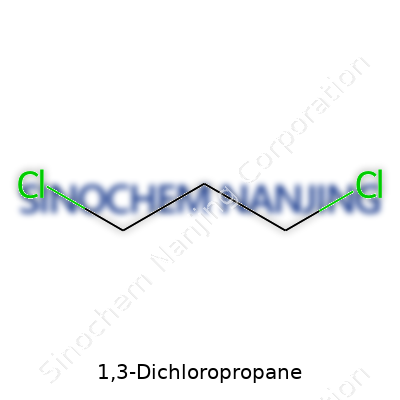
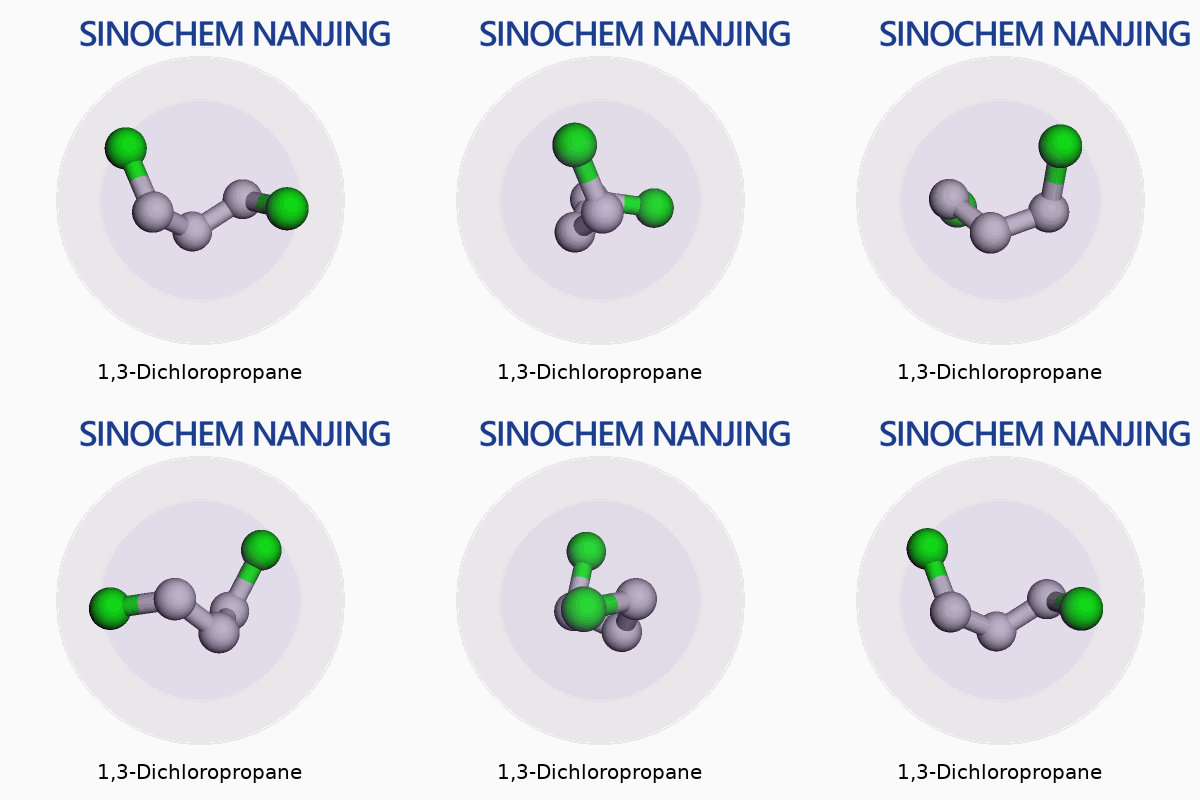
Looking at 1,3-dichloropropane, you run into a three-carbon chain, with chlorine atoms attached to the first and third carbons in the sequence. Its molecular formula is C3H6Cl2. At a more detailed level, the atoms arrange themselves like this: Cl-CH2-CH2-CH2-Cl. This arrangement puts both chlorine groups on the ends of the chain, giving the molecule a kind of symmetry. These terminal chlorine atoms bring up memories from my chemistry classes—halogen atoms on the ends of chains often make a substance reactive in ways that bring both benefits and hazards.
Real-World Experience and Risk
I worked in a laboratory for a couple of summers during college. My first encounter with dichlorinated alkanes, like 1,3-dichloropropane, wasn’t in a fancy experiment. It happened during a discussion about the safety data sheets we read before handling chemicals. Just a difference in the placement of those chlorine atoms, we learned, shifted the boiling points and hazards by a mile.
Facts matter here. Researchers know 1,3-dichloropropane turns up sometimes as a byproduct in the production of other chemicals. Because both chlorines are attached at the ends, the molecule is less likely to engage in certain reactions than if the chlorines were close together, as seen in other isomers. This kind of structure influences how it breaks down in air or water and how it moves through soil. I’ve seen cases where run-off from outdated industrial processes sends these molecules straight into local waterways, affecting fish and other wildlife.
Why Chemical Structure Matters
Structure goes beyond lines and letters written on a diagram. It plays a major role in the way chemists choose processes in manufacturing and disposal. For example, environmental scientists keep a close eye on 1,3-dichloropropane partly because it doesn’t stick around in soil or water as long as the more tightly packed, “vicinal” dichloropropanes. Some breakdown products carry their own risks, so not paying attention to a single atom’s placement can result in real-world consequences.
Chlorinated alkanes get used as solvents and intermediates, though tighter regulations keep the nastier variants out of everyday consumer goods. From my perspective, companies and researchers should make use of structure-activity relationship studies. These studies track not only how these chemicals behave in isolated beakers, but how their chemistry interacts with living systems and the environment.
Looking Toward Solutions
Some progress comes from green chemistry, which steers industry toward less harmful substitutes and encourages recycling of volatile compounds captured from exhaust streams. Rigorous monitoring and proper containment help prevent accidental release. Structure-based predictions, using computer models, let regulators and companies anticipate risks before large-scale use begins.
Paying attention to 1,3-dichloropropane’s simple structure teaches an important lesson. Seemingly minor details can drive big differences in safety, environmental impact, and usefulness. That’s why chemical structure remains one of the most fundamental ideas—one that goes far beyond the black-and-white lines of a textbook.
How should 1,3-Dichloropropane be stored?
Understanding the Risks
1,3-Dichloropropane doesn’t get much attention outside of labs, factories, or environmental reports. It’s a volatile organic compound, and even a small mishap can affect people’s health or the surrounding environment. Breathing in its vapors, touching contaminated surfaces, or even a small spill in the wrong place can cause harm. Experience shows that folks storing chemicals sometimes overlook something basic—prevention begins with informed caution, not just more rules in a binder.
Storage Conditions—No Shortcuts
Cool, dry, and well-ventilated storage spaces remain the minimum standard, but unlike some benign compounds, 1,3-Dichloropropane demands extra vigilance. I’ve seen incidents where improper temperature control led to increased pressure within containers—never ignore those warnings about storage temperatures, usually below 25°C (77°F). Placing it near sources of heat, direct sunlight, or ignition really turns the risk dial up. Vapors tend to be heavier than air and gather in low places, so always store drums or containers above floor drains and away from workspaces where people gather.
Container Integrity and Material Choices
Using the right storage containers makes a world of difference. Steel drums with tight seals do well, as do compatible plastics like high-density polyethylene. Once, a fellow worker told me about a warehouse fire traced to a leaky drum - the wrong gasket material reacted, letting out vapors that found a spark. Never rely on guesswork with chemical compatibility. Check for corrosion, degradation, or leaks before and during storage. Immersing a container in plastic overwrap buys some time if there’s a slow leak, but nothing beats regular checks.
Labels, Inventory, and Separation
A quick glance can’t tell you what’s in an unmarked drum. Proper labels resist moisture and remain clear over time. In tight quarters, stacking different chemicals together seems efficient, but mixing oxidizers or strong acids around chlorinated solvents just begs for trouble. Dedicated storage zones for incompatible chemicals prevent dangerous reactions if something goes sideways. In my experience, skipping this step often comes back to haunt any facility.
Ventilation—Not Just an Afterthought
Breathing in vapors can happen before you even notice a leak. Good ventilation avoids heavy concentrations by moving air through the storage area and dispersing any rogue fumes. Fans with explosion-proof motors help if you handle this compound in bulk. Relying on open windows or doors might seem simpler, but engineered systems work much better for hazardous chemicals. Know that every authority I’ve talked to, from OSHA to local health departments, stresses the importance of keeping air moving in areas holding chlorinated solvents.
Emergency Prep: Know the Drill
All the safety data in the world won’t help unless people know what to do if something goes wrong. Install spill kits nearby, not locked away in an office. Portable eye wash stations and quick access to showers matter more than most realize, especially after an accidental splash. Emergency numbers taped right next to the storage door save precious seconds. Every drill and hands-on walk-through makes the difference during a real spill or fire. In my own work, teams with regular emergency training always react faster and safer than those relying on handbooks alone.
Responsible Use Means Responsible Storage
Improper storage of 1,3-Dichloropropane puts people, property, and the environment at risk. Safe storage shows respect for coworkers and neighbors and saves money over the long run by preventing accidents. Investing in good practices—right containers, clear labels, robust ventilation, and emergency readiness—keeps everyone safer and keeps regulators off your back. It’s not just good policy, it’s good sense built on hard-won experience and hard science.
What are the health risks associated with exposure to 1,3-Dichloropropane?
What People Face in the Real World
1,3-Dichloropropane pops up in pesticide manufacturing and fumigation work, mostly in places growing crops. Many farm workers, chemical handlers, and even nearby residents can breathe it or touch it without knowing its name. Breathing this chemical doesn’t sound scary, but over time, it leaves a real mark on health. Based on several toxicology studies and EPA reviews, long-term exposure goes way beyond some itching or coughing. The most common pathway into the body is through the air, especially when it gets used in soil treatment and starts to evaporate. Some folks may get it on their skin or in drinking water, especially around fields or manufacturing sites.
Lungs, Liver, and Blood: Where Trouble Begins
I spent some time working in an agricultural supply business. A co-worker once told me about headaches after handling fumigants for a season—never once thinking the symptoms might link back to chemical exposure. Inhalation can trigger immediate throat and nose irritation. Extended exposure drags deeper issues into the picture. According to data from the National Institute for Occupational Safety and Health, people can end up with serious lung damage and long-term respiratory problems. If it gets into drinking water, the chemical travels into the liver, changing the way the body breaks down toxins or stores fat. Animal studies have shown connections to liver damage and blood changes, which lines up with observations of workers feeling unexpectedly tired or weak after exposure.
Cancer and the Bigger Picture
Concerns over cancer risks show up in several scientific reviews. The US EPA lists 1,3-dichloropropane as a potential human carcinogen based on animal studies and observed cell changes. Not every person exposed gets cancer, but the risk jumps with more regular or high-level exposure. Workers least protected—like field laborers without protective gear—carry the highest burden. Since this chemical isn’t naturally occurring, its presence in food or water hints at a bigger industrial footprint than folks might assume. In some communities, cancer rates have ticked up near areas using a lot of fumigants, though pinpointing one cause among many always brings some disagreement among doctors and researchers.
What Makes This Problem Harder
Health risks stack up for those who already have asthma or liver problems. Not everyone working on a farm can afford regular check-ups or catch problems early. Many folks never hear about chemicals used near their homes, even in 2024. Lack of accessible medical screenings, language barriers, and weak regulatory oversight mean hidden problems grow unchecked. I’ve seen older workers opt for bandanas or basic masks, missing the level of protection needed for real safety. The issue isn’t just “bad luck”—it’s a system that runs on uneven rules and silent risks.
Paths to Safer Communities
Keeping 1,3-dichloropropane away from sensitive populations starts with farmer education, clear warning labels, and affordable protective equipment. Pesticide drift monitoring helps track air quality in communities next to treated fields. Regulations need teeth: stricter limits on use, better reporting, and regular enforcement. Substituting less harmful chemicals and developing safer methods build long-term solutions. Local clinics, especially in farming towns, need the support to ask about and track chemical exposure. Real change shows up when communities, regulators, and workers share the responsibility for knowing what moves through their fields and air—before symptoms turn into lifelong health debts.
| Names | |
| Preferred IUPAC name | 1,3-dichloropropane |
| Other names |
alpha, gamma-Dichloropropane DCP Trimethylene dichloride |
| Pronunciation | /ˌwaɪˌɛnˌθriː.daɪˌklɔːrəˈprəʊpeɪn/ |
| Identifiers | |
| CAS Number | 142-28-9 |
| Beilstein Reference | 1209220 |
| ChEBI | CHEBI:37940 |
| ChEMBL | CHEMBL1229566 |
| ChemSpider | 7663 |
| DrugBank | DB14019 |
| ECHA InfoCard | 03b8936a-bb7e-4def-bd9d-1335d40cd198 |
| EC Number | 203-445-0 |
| Gmelin Reference | 163073 |
| KEGG | C01742 |
| MeSH | D016629 |
| PubChem CID | 7917 |
| RTECS number | TX9625000 |
| UNII | ZC6RB8O1H6 |
| UN number | UN1992 |
| Properties | |
| Chemical formula | C3H6Cl2 |
| Molar mass | 112.99 g/mol |
| Appearance | Colorless liquid |
| Odor | Sweet chloroform-like |
| Density | 1.16 g/mL at 25 °C |
| Solubility in water | slightly soluble |
| log P | 1.98 |
| Vapor pressure | 1.6 kPa (at 20 °C) |
| Acidity (pKa) | 14.6 |
| Magnetic susceptibility (χ) | −7.87 × 10⁻⁶ cm³/mol |
| Refractive index (nD) | 1.4450 |
| Viscosity | 2.59 mPa·s (20 °C) |
| Dipole moment | 2.28 D |
| Thermochemistry | |
| Std molar entropy (S⦵298) | 216.5 J·mol⁻¹·K⁻¹ |
| Std enthalpy of formation (ΔfH⦵298) | -146.0 kJ/mol |
| Std enthalpy of combustion (ΔcH⦵298) | −1681.8 kJ·mol⁻¹ |
| Hazards | |
| GHS labelling | GHS02, GHS07 |
| Pictograms | GHS07 |
| Signal word | Warning |
| Hazard statements | H226, H302, H315, H319, H335 |
| Precautionary statements | P210, P233, P260, P273, P280, P301+P310, P303+P361+P353, P305+P351+P338, P304+P340, P312, P330, P403+P235, P501 |
| NFPA 704 (fire diamond) | 2-2-0 |
| Flash point | 62 °C |
| Autoignition temperature | 588 °C |
| Explosive limits | 2.8–14% |
| Lethal dose or concentration | Lethal dose or concentration (LD50, oral, rat): 860 mg/kg |
| LD50 (median dose) | LD50 (median dose): 830 mg/kg (oral, rat) |
| NIOSH | III (China) |
| PEL (Permissible) | Not established |
| REL (Recommended) | REL (Recommended): Not established |
| IDLH (Immediate danger) | IDLH: 1,000 ppm |
| Related compounds | |
| Related compounds |
1,2-Dichloropropane 1-Chloropropane 2-Chloropropane Propylene dichloride |



