1,3,5-Trimethylbenzene: Unpacking Its Legacy, Science, and Future
Tracing the Story of 1,3,5-Trimethylbenzene
Anyone who's spent time around a lab or refinery has crossed paths with 1,3,5-Trimethylbenzene, also called mesitylene. It didn’t just pop up out of nowhere. This molecule emerged out of old-school coal tar distillations back in the 19th century—chemist Robert Kane first isolated it in the mid-1800s. At that point, researchers were pulling apart coal tar for anything useful, from dyes to solvents, hungry for new organic compounds. Mesitylene stood out for its symmetry and stability—a simple, neat arrangement of three methyl groups across the benzene ring. Over time, that structure helped it grab attention not only in pure academic research but also in practical chemical syntheses, as solvent, or as a precursor in bigger, more complex reactions.
Getting to Know the Molecule: Properties and Profile
1,3,5-Trimethylbenzene carries more than just a snappy name. At room temperature, it’s a clear, colorless liquid, pretty aromatic—open a container and you'll get a sweetish scent. Under the microscope, it has a boiling point around 164°C, a melting point below freezing, and it’s not easily soluble in water. On the bench, chemists value its chemical stability: that trio of methyl groups anchored on the benzene ring makes for predictable reactions, so it shows up in a ton of practical chemistry work, especially as a solvent or an intermediate. Its molecular formula, C9H12, looks innocuous, but its physical traits—high flash point, low water solubility—mean you take care if you have to handle it in bulk. That distinctive density and flammability cues up specific storage and labeling needs, which anyone working with flammable organics learns by heart.
Labels, Specs, and What They Mean in Your Hands
If you’re ever pouring from a can labeled “mesitylene,” you’re dealing with something flammable, marked UN 3295 for those in the shipping and hazardous materials industries. These labels are not red tape—they’re crucial for safety and so everyone in the supply chain knows what’s inside. The product specs matter too. Lab-grade 1,3,5-Trimethylbenzene should come close to purity standards exceeding 98% or 99%. Impurities, like other trimethylbenzenes, can trip up sensitive reactions. That’s a point students and seasoned chemists both learn quickly. Regulatory bodies keep a close eye on labeling, including hazard symbols and fire risk indicators, all so nobody stumbles into a preventable accident.
How It’s Made and Modified
Modern synthesis favors the methylation of benzene or toluene derivatives using Friedel–Crafts alkylation. In practice, this involves tossing benzene with methyl chloride and an aluminum chloride catalyst—messy and finicky, but effective. Yields depend on reaction conditions and purity of reagents. While you could still distill it from coal tar, crude oil, or naphtha fractions, most industrial batches start from those alkylation reactions, refined with careful fractional distillation. The chemistry world recognizes mesitylene as a solid launching pad—those methyl groups aren’t just decorative. They open up the molecule for further substitution, so organic chemists use it when building more complex aromatic compounds, dyes, resins, and agrochemicals.
Chemical Reactions and Innovation
Mesitylene’s benzene ring, studded with methyl groups, gives it strong resistance to many attacks—a trait organic chemists often exploit. When you want to tweak it, the ring’s symmetry makes predicting reaction outcomes less of a toss-up. Halogenation, sulfonation, and nitration proceed in a steady, manageable fashion, often yielding products needed for pigments, fragrances, or specific intermediates in pharmaceuticals. Electrochemical oxidation of mesitylene draws attention in research labs aiming for greener chemistry, since traditional oxidation can get wasteful. Newer methods focus on minimizing byproducts and hazardous waste, a trend that echoes across the globe as more industries push for sustainability.
Alternative Names: Finding It on the Shelf
Products and research papers often mention it as mesitylene, Trimethylbenzene, or, less commonly, 1,3,5-TMB. Depending on the application, synonyms may crop up to match regulatory codes or local languages. If you’re dealing with buying or checking MSDS sheets, it pays to recognize these labels to avoid confusion, especially since the structural isomers (like 1,2,4-Trimethylbenzene) show up in related contexts but aren’t exactly interchangeable.
Safety, Handling Sense, and Industrial Expectations
Working with mesitylene means you need your wits about you. The vapors aren’t just uncomfortable—they can irritate the respiratory tract. High concentrations can even affect the central nervous system, leading to headaches, dizziness, or nausea. Flame risk remains the daily reality; it catches fire more easily than some would predict. That’s why chemical plants and labs store it with strict ventilation, grounded containers, and spark-free equipment. Industrial hygiene standards set by agencies like OSHA or NIOSH aren’t optional. In my experience, well-run research facilities double-check storage protocols, run regular fire drills, and invest in good PPE, because cleaning up after a spill or, worse, a fire, means risking far more than just lost material. Eye-wash stations, fume hoods, and ready access to spill kits aren’t just best practice—they’re baseline requirements when safety is on the line.
Working Life: Where 1,3,5-Trimethylbenzene Shows Up
Mesitylene finds a home in more places than it gets credit for. Its utility as a solvent stretches from organic synthesis labs to paint factories and resin manufacturing. Specialty chemicals, dyes, and pigments start out with this compound. The petrochemical industry values its ability to dissolve resins and polymers, while the fragrance and flavor sector taps into its aromatic backdrop. You could also find traces of it in gasoline, acting as an enhancer for octane ratings, though environmental and health policies have steadily chipped away at these volumes. Academic researchers often deploy it as a standard or as a chemically reliable aromatic for method testing. This constant presence across industries highlights its importance, both for current practices and as engineers and researchers hunt for next-generation applications.
Eyes on the Future: Development, Research, and Outlook
Toxicity and environmental risks now drive much of the current research. Long before sustainability became a buzzword, studies began surfacing that questioned large-scale release and chronic exposure, especially for workers. Animal studies show that high doses produce liver and kidney effects, so industrial hygiene and monitoring remain top priorities. Despite manageable risk under strict protocols, environmental agencies worldwide keep reviewing the limits for both air and water release, responding to mounting public health and ecological concerns. At the same time, innovation hasn’t slowed down. Researchers probe alternative uses in battery research, advanced material science, and catalytic systems. Some experiments aim to use mesitylene in green chemistry as a solvent or platform molecule, minimizing both energy waste and byproducts.
Where It Could Go Next
The horizon for 1,3,5-Trimethylbenzene broadens with the push toward cleaner chemical processes and tighter regulation. Markets may shift with evolving guidelines—demand dropping in sectors that face more scrutiny or increasing where safer applications take root. Advances in catalysis, especially with a focus on lowering environmental impact, could give mesitylene a starring role as a sustainable building block. On the regulatory side, there's likely to be even sharper focus on risk assessment, exposure monitoring, and improved containment. Research into biodegradation and remediation of accidental releases gets more funding as environmental accountability ramps up. For those of us in the field, the story is ongoing, shaped by changing needs, new discoveries, and a steady drumbeat of safety improvements drawn from decades of experience and lessons, both hard-won and celebrated.
What is 1,3,5-Trimethylbenzene used for?
Digging Into a Versatile Chemical
1,3,5-Trimethylbenzene, better known as mesitylene among chemists, pops up across manufacturing, the lab bench, and sometimes even hidden close to home. Think about how solvents help thin out paints, keep the gears moving in industrial cleaners, or play a key part in making glues flow just right—mesitylene does a lot of that heavy lifting. Its chemical structure—three methyl groups hugging a benzene ring—makes it more than just a name out of a textbook.
The Backbone of Modern Solvents
Picture a bustling paint shop or a big ink factory. The solvents called on for the job can’t just dissolve the pigment; they have to dry at the right speed, be safe for equipment, and avoid side reactions. 1,3,5-Trimethylbenzene finds its value here. It helps balance drying time and stability in everything from aerosol lacquers to spray paints. Without it, solvents don’t carry pigment as smoothly and coatings might not leave the finish that buyers expect. Degreasing agents in industry also rely on its properties to strip away oil and grime without attacking the metal or damaging plastics.
Stepping Into the Lab
Walk down the hallway of a research lab and you’ll likely find mesitylene in use as a specialty solvent. Lab workers handling certain organic reactions prefer it, partly because it doesn’t react with acids or bases as quickly as many other options. People might compare it to toluene or xylene, but it holds up better in high-temperature syntheses. Mesitylene doesn’t just dissolve reactants; its presence can help push a slow reaction over the finish line.
The Road to Fuels and Additives
Ever read about fuel additives that help engines run more smoothly or cut back on knocking? Chemical companies tap mesitylene for these roles. The structure—stable and energy-dense—means it can boost octane in gasoline blends. Oil refineries often turn to trimethylbenzenes in the mix, not only for octane but to help create the right vapor pressure blend. Here, the benefits ripple out to drivers. More reliable combustion means longer engine life and fewer emissions on the road.
Health and Safety on the Table
Workers and environmental advocates keep a close eye on aromatic hydrocarbons. 1,3,5-Trimethylbenzene sits on regulators’ lists for air quality and occupational health. Exposure usually happens in paint shops or manufacturing facilities, where people handle concentrated forms. Breathing high levels for long periods can irritate eyes, throat, and nose, or cause dizziness. Good ventilation, proper respirators, and routine monitoring keep those risks in check. Researchers stay on the lookout for longer-term effects and urge better labeling around products containing aromatic hydrocarbons.
Room for Smarter Choices
Years spent around industrial settings drove home the lesson that safer choices in chemicals matter. Workers respond best to clear education about risks and safe handling. Shops that swap in alternative solvents where possible help protect everyone’s health. In labs, small-scale uses still call for full knowledge of what goes down the drain. Environmental rules push factories to reclaim and recycle solvents instead of letting them evaporate into the air. Factories that ramp up closed-loop systems save not just money, but headaches down the line from local pollution complaints.
Looking Ahead
Mesitylene’s talent for multi-tasking shows how chemistry shapes daily life, from the car engine to a fresh coat of wall paint. Innovations in solvent recycling and air filtration promise to trim its environmental footprint. With each step forward, industries keep looking for smarter, safer paths to use old chemicals in new ways. Progress often starts with someone asking, “What’s in that can?” and not stopping until the answer is a little safer than before.
Is 1,3,5-Trimethylbenzene hazardous to health?
Digging Into Everyday Chemicals
The name 1,3,5-Trimethylbenzene might not ring many bells, but almost everyone comes in contact with it at some point. Known in industry calls as mesitylene, this chemical goes into paints, solvents, gasoline, and even some consumer products. I remember watching workers on a road crew one summer, breathing in gasoline fumes, never giving much thought to what floated in the air. Yet that common mix includes things like 1,3,5-Trimethylbenzene. Scientist hats on or off, it pays to take a closer look at what we breathe and touch.
What the Science Says
Breathing in 1,3,5-Trimethylbenzene can irritate the nose, throat, and lungs. Spend long periods around high concentrations—say in a paint shop or fuel depot—and that irritation can turn into headaches or dizziness. Studies published by the U.S. Environmental Protection Agency and the Agency for Toxic Substances and Disease Registry lay out why those headaches happen. This compound heads straight to the central nervous system, slowing things down and making reaction times longer. I once toured a chemical storage facility and saw workers with persistent coughs. They’d thought it was allergies, yet air samples suggested they’d been breathing in vapors containing mesitylene.
It’s not just the air that matters. Letting liquid 1,3,5-Trimethylbenzene touch your skin can bring on redness or a rash. Getting it in your eyes stings badly. Factories with poor ventilation or broken protective gear see more of these accidents. The U.S. National Toxicology Program doesn’t list this chemical as a confirmed human carcinogen, but the fact that it builds up in fat cells means it sticks around longer than the harmless solvents folks used a century ago.
Risk Comes From Repeated Small Hits
I’ve spoken with workers in industrial settings who get used to certain smells—some even find that sharp odor familiar, almost comforting. Over time, regular low-level exposures put a load on the body, often going unnoticed until screening bloodwork tells another story. Chronic exposure ramps up risk for liver and kidney trouble, with animal studies hinting at more organ damage if levels get too high.
What Can Be Done About It?
Minimizing risk calls for sturdy practices. At an auto shop I visited, mechanics swapped out cheap paint thinners for safer alternatives, and it cut down coughs they’d come to see as normal. Good exhaust systems moved fumes out quick. Gloves and goggles sat at every workbench, not locked away in boxes collecting dust. Safety data sheets offered clear handling directions, and crew leaders ran regular training instead of letting new hires stumble through mistakes. The American Conference of Governmental Industrial Hygienists suggests strict limits on exposure, and those numbers weren’t plucked out of thin air. Spaces with lower levels meant folks missed fewer days from headaches and fatigue.
Room for Smarter Choices
The point isn’t to spark panic about trace fumes in a garage or a neighborhood gas station. For everyday people, incidental exposures tend to be low. Yet looking out for workers, watching for prolonged, higher exposures, and choosing better options for home projects keeps health front and center. As awareness grows, companies start hunting for replacements and invest in better protections. Health agencies keep data moving forward, and informed choices—at work and at home—raise overall safety for everyone.
What is the chemical formula of 1,3,5-Trimethylbenzene?
Understanding 1,3,5-Trimethylbenzene
Spotting the chemical formula for 1,3,5-Trimethylbenzene isn’t tricky if you look at its structure. Think of the benzene ring: six carbons in a ring, each with one hydrogen. Attach a methyl group—just a CH3—to positions 1, 3, and 5. The formula shapes up as C9H12. This layout never seems to really get old in chemistry circles, especially among those who’ve spilled their share of aromatic hydrocarbons in the lab. This compound, known in trade as mesitylene, stands out by the way these three methyl groups tuck themselves in every other spot around the ring.
Why the Formula Matters Beyond the Test Tube
In the real world, a chemical’s name is only the front door. The formula C9H12 means more than just a memory exercise. What matters is how mesitylene fits into industry and daily life. I’ve worked near factories turning barrels of aromatic hydrocarbons into everything from paint thinners to fuel additives. If you’re refueling at the gas station, you’re likely close to some version of this chemical, since it pops up in gasoline blends. Mesitylene isn’t just filler—it boosts octane, leading to smoother-running engines. In a country where transportation soaks up nearly half of all oil use, improving fuel quality shapes both pocketbooks and air quality.
Health Concerns, Safety, and Solutions
Knowing the formula isn’t just for academic debate. Mesitylene can irritate eyes and lungs after enough exposure. You’ve probably watched a coworker, after splashing some on their skin, rush to wash it off—an experience you don’t forget, if not for the burning, then for the warning it sends. The Centers for Disease Control and Prevention point out the risks of breathing too much of this vapor, especially for workers without adequate ventilation. That’s why smart facilities put in fume hoods and rotate staff on the floor.
Regulations already tackle proper labeling and exposure limits, but there’s always ground to gain. Switching to closed-process systems, so handling happens away from open air, trims risk. Engineers can’t always swap mesitylene for something safer, but better personal protective equipment and even real-time air monitors give an edge. The push for greener solvents might, one day, leave a lot of aromatic hydrocarbons in the past. For that, research labs keep testing less volatile options, and some progress shows up in water-based paints you find at the home store.
Environmental Viewpoint
Many folks don’t realize how quick these volatile compounds drift into the atmosphere. Mesitylene lingers in smog-forming emissions, and urban air quality studies regularly flag it as a culprit. On hot summer days in cities, you can practically smell the hydrocarbons swirling between cars and concrete. Stricter emissions laws, wider adoption of catalytic converters, and cleaner alternatives for solvents help lower human and environmental exposure. States with aggressive air-quality goals test out community sensors right near busy roads, keeping an eye on both known and emerging compounds. Real-world solutions come from listening to the data as much as the workers dealing with these chemicals firsthand.
Informed Choices
Chemistry class feels a long way off when you fill a gas can or paint the shutters, but knowing that C9H12 means more than a formula builds a useful kind of respect. Decisions made in the lab today can either add to tomorrow’s cleanup, or steer us toward a world with sharper safety, cleaner air, and smarter products.
How should 1,3,5-Trimethylbenzene be stored?
Why Storage Matters
Working in a lab, I’ve seen what happens when chemicals like 1,3,5-Trimethylbenzene aren’t handled carefully. Anyone who’s spent time around organics learns quickly that something seemingly simple—where and how you store a substance—can mean the difference between safety and an emergency. This aromatic hydrocarbon is flammable and its vapors can be harmful, so a smart storage approach matters for everyone, not just for compliance but for real safety.
Keeping Flammables Safe
Nearly every solvent locker or chemical cabinet in a lab should meet specific standards for storing flammable materials, and 1,3,5-Trimethylbenzene is no exception. Store it in a tightly sealed metal container, out of direct sunlight and away from any heat sources. In my experience, metal safety cabinets with grounded shelves make a big difference. I’ve seen glass bottles break, and it always leads to long clean-ups and wasted product—plus, with this compound, unnecessary risks to respiratory health.
Ventilation is not an extra—it’s a must. Poor ventilation makes any accidental spills or vapor build-ups a much bigger problem, and it isn’t just a matter of comfort. The substance has a relatively low flash point, so its vapors can ignite easily in the right conditions. I recall one incident when a poorly ventilated storage room let fumes build undetected until someone turned on a hot plate—luckily only the alarm went off, not the chemical itself.
Protecting People and Staying Compliant
Regulatory guidelines exist for good reasons. The Occupational Safety and Health Administration (OSHA) and the National Fire Protection Association (NFPA) both label this compound as hazardous, calling for flammable liquid storage protocols. I always keep the required SDS sheets nearby and make sure labels on all containers stay legible and visible—this isn’t just paperwork, this is first-step protection.
Spills have shown me how fast a routine day can turn into a scramble. Absorbent pads and spill kits need to be within reach, not packed away in another room. I’ve learned to overstock containment materials rather than find myself short. Any liquid that hits the floor or a bench can spread vapor quickly and create a health risk for the entire team.
Long-Term Considerations and Solutions
1,3,5-Trimethylbenzene has a tendency to degrade and oxidize slowly over time, which can create pressure in closed containers. This chemical trait means keeping bottles upright and away from incompatible materials, especially strong oxidizers, makes good sense. Metal shelves, clear labels, and records of purchase and opening dates have helped avoid not just chemical breakdown, but surprise expiration issues.
For storage areas, adding a fire suppression system is a wise investment. I remember a fire in an adjacent facility that didn’t have one—the damage was extensive and most of their stock got written off. Sprinklers, proper signage, and secure access bring real peace of mind.
Last, people sometimes cut corners by squeezing extra bottles wherever there is space. In reality, overcrowding shelves just increases the odds of a spill or a reaction. Giving each container its place, out of traffic paths, is the practical approach and one I’ve seen pay off many times.
So thoughtful storage isn’t just about following rules—it's about day-to-day reality, keeping teams healthy, and making sure everyone heads home safe.
What are the safety precautions when handling 1,3,5-Trimethylbenzene?
Understanding the Risks
Anyone who works with chemicals knows a mistake can turn a regular day into a nightmare. 1,3,5-Trimethylbenzene finds its way into paint thinners, plastics, and fuel additives. The danger lies in its toxicity and flammability. Breathing in its vapors or letting it touch your skin can make you dizzy, irritate your eyes, or even trigger headaches and nausea.
Personal Protective Equipment Saves More Than Trouble
I have seen folks skip gloves just to move faster. That shortcut often leads to trouble. Chemical-resistant gloves and goggles keep the hands and eyes out of harm’s way. A lab coat or chemical-resistant apron stops splashes from burning the skin. Building a habit of wearing the right gear every time, even just for a “quick” task, prevents accidents and long-term health issues. The National Institute for Occupational Safety and Health (NIOSH) strongly recommends these basics for anyone handling hazardous chemicals like 1,3,5-Trimethylbenzene.
Don’t Ignore Good Air
Ventilation holds more weight than many folks realize. In closed rooms, vapor stacks up quickly, making headaches and dizziness common. Long-term studies show indoor air gets up to four times more concentrated for workers with poor room ventilation. Fume hoods or local exhaust systems suck away fumes fast. In shops or labs without proper fans, air monitoring tools keep tabs on vapor buildup. If readings nudge over recommended limits—25 ppm for trimethylbenzene according to OSHA—get everyone out of the area and rework the ventilation strategy.
Storage: Simple Steps, High Stakes
Around the shop, people treat storage like an afterthought, but loose lids and poor labeling invite spills and confusion. Store 1,3,5-Trimethylbenzene in its original tight-sealed container, stashed away from any heat or flames—this stuff has a flash point not far above room temperature. Fire departments answer too many calls from simple lapses like mixing flammable chemicals with oxidizers or acids, which crank up the risk of fires or toxic gases.
Respect Spills: Don’t Just Mop and Move On
Spills seem trivial, but exposure starts here. If any 1,3,5-Trimethylbenzene gets loose, block off the area. I remember a shop mishap involving a cracked jar—the vapor triggered coughing and sent people outside in a hurry. Pouring absorbent material over the liquid traps it, and then the mix goes in a labeled hazardous waste bin instead of the trash. It’s about protection, not paperwork—and that means gloves and goggles every time, even for cleanup.
Training Goes Beyond Reading Labels
Too often, the person in charge relies on printed Safety Data Sheets. Real-world training beats reading any day. Familiarizing everyone in the room with signs of exposure, what to do if someone feels sick, and how to run eyewash stations or showers builds muscle memory for emergencies. Leading safety bodies like OSHA and the American Chemical Society stress that hands-on demos build far more confidence and skill than memos and posters alone.
Priority on Personal Responsibility
Years in the field stamped one lesson in my mind: nothing replaces personal vigilance. Trusting coworkers to notice trouble or letting safety slip when in a rush always comes back to bite. Spot-check PPE, tidy storage, and check that vents work before starting the day. Report bad air, leaks, or faulty gear instead of hoping someone up the chain fixes it. Gaps in these routines stack up, and all it takes is one lapse for someone to pay the price.
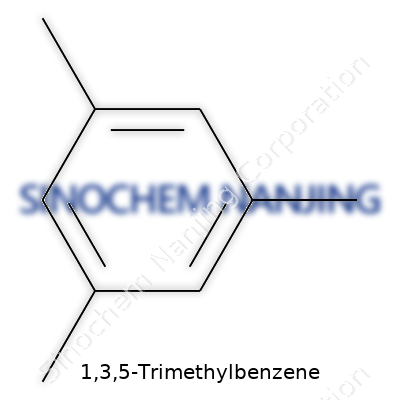
| Names | |
| Preferred IUPAC name | 1,3,5-Trimethylbenzene |
| Other names |
mesitylene sym-trimethylbenzene |
| Pronunciation | /waɪlɪn/ |
| Identifiers | |
| CAS Number | 108-67-8 |
| Beilstein Reference | 635944 |
| ChEBI | CHEBI:25573 |
| ChEMBL | CHEMBL14163 |
| ChemSpider | 8765 |
| DrugBank | DB01806 |
| ECHA InfoCard | DTXSID6023278 |
| EC Number | 601-043-00-3 |
| Gmelin Reference | 73606 |
| KEGG | C01578 |
| MeSH | D013975 |
| PubChem CID | 6959 |
| RTECS number | DC3325000 |
| UNII | R6562CR6OA |
| UN number | UN2324 |
| CompTox Dashboard (EPA) | DTXSID2020358 |
| Properties | |
| Chemical formula | C9H12 |
| Molar mass | 120.19 g/mol |
| Appearance | Colorless liquid |
| Odor | Aromatic odor |
| Density | 0.876 g/mL at 25 °C |
| Solubility in water | Insoluble |
| log P | 3.4 |
| Vapor pressure | 2 mmHg (20°C) |
| Acidity (pKa) | 38.34 |
| Basicity (pKb) | NA |
| Magnetic susceptibility (χ) | -69.5·10⁻⁶ cm³/mol |
| Refractive index (nD) | 1.504 |
| Viscosity | 0.655 mPa·s (25 °C) |
| Dipole moment | 0.31 D |
| Thermochemistry | |
| Std molar entropy (S⦵298) | 211.3 J·mol⁻¹·K⁻¹ |
| Std enthalpy of formation (ΔfH⦵298) | -24.3 kJ/mol |
| Std enthalpy of combustion (ΔcH⦵298) | -4183 kJ/mol |
| Hazards | |
| GHS labelling | GHS02, GHS07, GHS09 |
| Pictograms | GHS02,GHS07 |
| Signal word | Warning |
| Hazard statements | H226, H315, H319, H335, H411 |
| Precautionary statements | P210, P261, P273, P301+P310, P331, P405, P501 |
| NFPA 704 (fire diamond) | 2-3-0 |
| Flash point | 86 °C (closed cup) |
| Autoignition temperature | ~465 °C (869 °F) |
| Explosive limits | 1,2-7.0% |
| Lethal dose or concentration | LD50 (oral, rat): 5000 mg/kg |
| LD50 (median dose) | LD50 (oral, rat): 5000 mg/kg |
| NIOSH | CY1400000 |
| PEL (Permissible) | 25 ppm (TWA) |
| REL (Recommended) | 25 ppm (125 mg/m3) |
| IDLH (Immediate danger) | 900 ppm |
| Related compounds | |
| Related compounds |
Benzene Toluene Xylene Durene Isodurene Hemimellitene Pseudocumene Mesitylenesulfonic acid |



