Looking Beyond the Barrel: The Role of 1,2-Xylene in Industry and Science
Historical Roots and Changing Demand
Some chemicals never left the laboratory; others found their way into every corner of our daily lives. 1,2-Xylene belongs to that second group. Discovered as part of the coal tar distillation process in the mid-19th century, xylene isomers—including ortho-xylene, known as 1,2-xylene—gained attention when the explosive growth of the dye and plastics industries began. In those years, chemists barely had names for most distillation products, yet 1,2-xylene soon appeared in patent filings for both synthetic dyes and varnishes. By the 20th century’s midpoint, refineries pulled 1,2-xylene from petroleum streams, supporting the automotive boom and surging demand for plasticizers and intermediates. Today, you’ll spot its complex fingerprint in manufacturing, from chemical plants to paint workshops, even if you never see its bottle on a store shelf.
What Sets 1,2-Xylene Apart
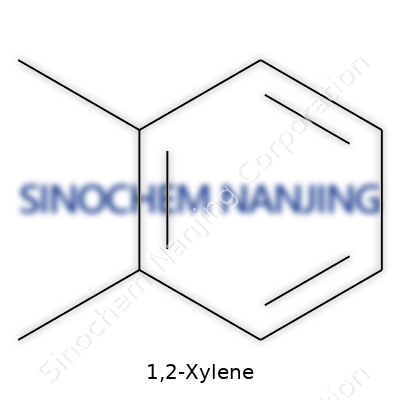
Look at 1,2-xylene on a molecular level—a benzene ring sprouting two methyl groups next to each other. This arrangement sets the ortho isomer apart from its meta and para relatives. Known both as 1,2-dimethylbenzene and ortho-xylene, its formula, C8H10, leads to properties that engineers and chemists value: a clear, flammable liquid with a sweet, familiar scent common to aromatic hydrocarbons. Because of its methyl groups, it boils at around 144°C and melts below freezing, so liquid storage is simple almost everywhere on earth. Its density sits a bit below water, with low solubility in water but strong affinity for organic solvents and greases, making cleanup in the lab less than pleasant if a bottle tips over. On labels you’ll see “1,2-dimethylbenzene,” “ortho-xylene,” or even “Oxylene,” all pointing to the same clear, pungent compound.
Technical Features and Norms
Purity plays a big role in the suitability of 1,2-xylene for different processes. Chemical plants target high purity—sometimes over 98 percent—for manufacturing downstream compounds while choosing steady suppliers and robust packaging. Bottled either in steel drums or bulk tankers, labeling should indicate the CAS number 95-47-6, the proper shipping name, and hazard warnings. Besides purity, labs monitor trace content of related isomers and sulfur, which can interfere with sensitive syntheses or those that use metal catalysts prone to poisoning. Most factories adopt the globally harmonized system (GHS) labels, marking flammable and health hazard pictograms. Safe handling practices like spark-free tools, flame arrestors, and chemical splash goggles aren’t optional—they’re standard in well-run operations.
Routes to Synthesis
Industrial giants obtain 1,2-xylene by catalytic reforming of petroleum fractions, followed by fractional distillation. This process separates the ortho isomer from its meta and para cousins, relying on advanced columns and high automation to cut energy costs. Older avenues, such as coal tar distillation or toluene methylation, serve as historical footnotes but still play a niche role in regions lacking crude refining infrastructure. Improvements in preparation revolve around reducing byproducts and boosting yield. Companies that scale up must walk a fine line, balancing output with stricter emissions rules and the drive for energy efficiency. The growing emphasis on carbon footprints has put pressure on engineers to recover wasted heat, recycle process streams, and embrace digital controls that predict production swings before bottlenecks shut things down.
Chemical Reactions and Tweaks
What gives 1,2-xylene a seat at the table of industrial chemistry is its rich reactivity profile. The paired methyl groups, parked right next to each other, heighten susceptibility to side-chain oxidation and halogenation. In one of its major transformations, 1,2-xylene runs through catalytic air oxidation to form phthalic anhydride—a lynchpin molecule for polyester resins, plasticizers, and dyes. While the benzene ring resists many harsh conditions, specialized catalysts allow selective substitution or oxidation, opening doors to fine chemicals. In academic circles, researchers keep probing new catalysts or greener oxidants to trim down waste and nudge selectivity a few points higher. Environmental researchers eye each tweak skeptically, knowing a shift in reactivity profile could spell trouble for downstream emissions or byproducts not seen in the original process.
Real-World Use and Importance
For most people, 1,2-xylene’s name doesn’t spark recognition unless they read tiny print on a can of paint or an industrial solvent. Yet, the products it enables shape everyday convenience. Its biggest downstream use, the creation of phthalic anhydride, supports a sprawling network of plastics, resins, and dyes that flow into homes as carpets, PVC, auto parts, and durable packaging. Coatings on wires and buildings owe a share of their resilience to chemistry that starts with 1,2-xylene. In specialty labs, it can serve as a solvent for certain resins or as a standard for chromatography, though safer or less aromatic substitutes sometimes edge it out for student use. Agriculture, electronics, and even medical chemistry circles dip into its range, either as a direct raw material or a building block for custom molecules. The common thread is scalability—process plant operators rely on steady, high-volume supply and robust distribution channels to keep larger economies humming.
Handling and Safety in Practice
Stories collected from old factory hands and young lab techs agree on one thing: treat 1,2-xylene with respect, not fear. Acute exposure irritates the eyes, nose, and skin, and routine handling in confined spaces sets off headaches or drowsiness if ventilation fails. Environmental agencies keep the pressure on factories to curb spills, leaks, and emissions, especially near water sources where xylene’s oiliness threatens aquatic life. Regulations in many countries kick in at low thresholds, requiring spill preparedness, training refreshers, and engineering controls like sealed pumping and air filtration. Fire risk ranks high—vapors ignite readily—so spark-proof wiring and chemical fire extinguishers become as important as raw material inventory. Most safety practices look like overkill until the moment you see a plume of vapor swirling around a loading dock late at night. At that point, training and good habits are all that stand between inconvenience and disaster.
Not Just a Commodity: Research and Debate
A wave of research tackles both production techniques and health impacts. Teams working on catalytic systems fiddle with nanomaterials—zeolites, metal-organic frameworks, and atomically dispersed platinum—to push for higher selectivity and lower energy input. Environmental labs use 1,2-xylene as a marker for tracking air quality near petrochemical sites, finding spikes in urban air during periods of heavy industrial activity. Others use mass spectrometry to assess its breakdown in the atmosphere, worrying about the formation of ground-level ozone. Newer studies explore its utility in organic synthesis—building advanced ligands or unusual polymers—while some regulators revisit toxicity studies, asking whether long-term exposures have been properly modeled in humans and wildlife. Peer-reviewed journals and international agencies fuel this debate, publishing risk assessments and reviewing industry compliance with occupational exposure limits.
Toxicity: A Clear Need for Vigilance
Toxicologists agree that repeated inhalation or skin contact with 1,2-xylene can pose risks to workers, though quick evaporation and strong odors often serve as crude warning signs. Animal studies highlight impacts on the nervous system, including dizziness and incoordination, while long-term exposure links to liver and kidney stress. In communities near processing plants, researchers investigate air quality readings and potential links to headaches, nausea, or irritation complaints. Government agencies publish workplace exposure guidelines—generally much tighter than for other simple aromatics—with calls for periodic medical monitoring for those handling the chemical regularly. Disposal protocols stress complete incineration or high-temperature destruction to avoid groundwater contamination.
Tomorrow’s Questions and Solutions
With every year, the push for safer, cleaner production methods shapes the future of 1,2-xylene. Industry strategists look for catalysts that boost efficiency without expensive rare metals or hazardous byproducts. Some researchers aim to tap renewable feedstocks, using bio-based aromatics to replace petroleum. Others focus on closed-loop production lines and solvent recycling systems to slash emissions and make accidents less likely. Advocates for stricter regulation point to data showing health disparities in fence-line communities, demanding both science-based exposure limits and more public disclosure about incidents. Innovations in personal protective equipment and remote leak detection give hope that operators may one day handle even large volumes with much lower risk. As industrial demand evolves—driven by new consumer goods, electronics, or materials science breakthroughs—there is every reason for chemical engineers, safety professionals, policymakers, and community advocates to keep challenging the status quo, stretch the technology, and shift toward production and use that respects both profit and public well-being.
What are the main uses of 1,2-Xylene?
How 1,2-Xylene Shows Up in Industry
You can spot 1,2-xylene working behind the scenes in plenty of products and processes that most people use or rely on, even without realizing it. This clear liquid, part of the xylene family from crude oil and coal tar, often ends up in massive steel drums and chemical plants. I’ve walked through paint factories that smelled sharp and sweet—that’s xylene in the air, making sure formulas stay thin and easy to spread.
Solvent in Paint and Printing
Businesses love using 1,2-xylene as a solvent. In paint shops, it stops the mixture from getting too thick and keeps pigments from clumping. If you’ve scrubbed spray paint off your hands, you’ve probably run into xylene in nail polish removers or thinners. Even in large-scale offset printing, xylene gives ink manufacturers the power to dissolve dyes just right, so magazines and packaging look crisp and clean.
Boosting Petrochemicals and Plastics
Many plastic bottles, automotive parts, and polyester fibers owe their shape and strength to chemicals made with help from 1,2-xylene. In one plastics factory in Malaysia, engineers rely on xylene to produce phthalic anhydride, which then gets turned into soft plastics used for things like electrical cords or raincoats. Some folks working in synthetic fiber plants will tell you that without xylene, the entire chain of fabric production jams up. It keeps the system moving, supporting the backbone of clothing and packaging.
Gasoline Isn’t Just Gasoline
Refineries blend 1,2-xylene into gasoline because it bumps up the octane level. Drivers might never think about it, but higher octane fuels help engines run smoother and knock less. Growing up in a family of mechanics, I heard plenty about fuel quality. Gas with added aromatics, including xylene, keeps engines happy and repairs at bay. The numbers on the pump matter more than advertising lets on.
Chemical Wires for Industry
1,2-xylene acts as a kind of chemical connector. It helps researchers and manufacturers link together large, complex molecules in specialty materials, dyes, and pesticides. Every season, farmers depend on crop protection agents that start in labs where xylene gets blended and distilled until the recipe comes out just right.
Health and Environment: What Needs Attention
Handling xylene isn’t as simple as grabbing some soap and water. In paint mixing rooms and chemical plants, health risks don’t just sit on surfaces—they float in the air. Studies from the National Institute for Occupational Safety and Health show that breathing in xylene vapor can cause dizziness, headaches, and, over long stretches, damage to liver and kidneys. People running smaller workshops sometimes skip on masks or proper ventilation, mostly because no one sees fumes building up. That’s not a risk worth taking.
Local governments enforce exposure limits and track air quality, but gaps still exist. Solutions often include good exhaust systems, personal protective equipment, and substitutes where possible. Companies could also offer better training and monitoring for anyone working directly with solvents, not just managers or those at the top.
Balancing Innovation with Safety
It’s hard to picture modern manufacturing, art supplies, or even farming without 1,2-xylene playing a part. Still, personal experience and reports from frontline workers both point to the need for steady oversight, clear labeling, and up-to-date safety habits. Industries run best when they weigh both output and health, always looking for safer solvents or closed systems. The future likely holds new tech, but for now, xylene remains one of those chemicals that keeps the engine of industry running—even if most folks never see it.
What are the safety precautions for handling 1,2-Xylene?
What 1,2-Xylene Can Do and Why It Matters
People who work with solvents in labs or factories probably know 1,2-xylene by its strong, sweet smell. It’s a clear liquid found in paint thinners, cleaning agents, and some chemical production lines. The health risks tied to 1,2-xylene are real—breathing it in, splashing it on the skin, or getting it in your eyes can cause trouble fast. Even short exposures lead to headaches, dizziness, irritation, and in larger doses, more serious nerve or lung problems. Regular exposure, even at low levels, can slowly chip away at well-being, making vigilance key in every use.
Start with Proper Ventilation
Nothing replaces a well-designed ventilation system. My time in a research lab taught me to never trust the smell test—if you can sense xylene in the air, it’s already too much. Fume hoods and local exhaust connections pull vapors away, sparing your lungs and everybody else’s. Open windows or fans rarely cut it. Long-term, poor ventilation can sneak up with chronic health problems. Think of a fume hood as the seatbelt of the chemical world; most folks I know wouldn’t even weigh a sample without using it.
PPE Isn’t Negotiable
Skin and eyes need real shields, not just regular workwear. Nitrile gloves, not cheap latex, hold up against xylene. Face shields and splash-proof goggles cover more than safety glasses ever can. Aprons made from rubber or heavy plastics keep chemicals off the body and out of clothing fibers. I still remember an early mistake—accidentally getting a splash past my gloves. The speed and strength of the irritation made a lifelong impression. Never treat PPE as optional, and don’t skimp on quality to save a few bucks.
Handling and Storage
Transfer xylene with care—spills stick around, and the vapors catch fire with just a spark. Pour slowly, use grounded containers, and avoid plastic pumps that could build up static. Xylene belongs in tight-fitting, clearly labeled steel drums or glass bottles. Store it somewhere cool and isolated from oxidizers, away from anything that heats up or could ignite. Lock away the area to keep out anyone not trained to handle spills or accidents.
Spill Response: No Room for Delay
I’ve seen small spills turn into headaches fast. Absorbent pads work best, scooping up liquid before it spreads. Employees should have a spill kit close by, and the kit should include eye wash, gloves, and materials that can tackle both liquid and vapor. Don’t try to mop it up with paper towels—heat builds up, and risk of fire escalates. Sweep up chemical-soaked materials into safe disposal drums right away.
Know the Emergency Plan
Every facility working with 1,2-xylene needs a drilled emergency plan. Evacuation maps, contact info for first responders, and immediate steps for skin or eye exposure help avoid panic. Regular training helps everyone stay sharp, and nobody should assume a quick Google search will help in the moment.
Stay Smart, Stay Healthy
Handling 1,2-xylene takes awareness, the right equipment, and a team approach. My own path in science and industry keeps proving how one slip-up can lead to weeks of recovery, or worse. Don’t gamble with shortcuts. Good habits, proper tools, and solid training make all the difference in keeping a workplace safe and healthy for the long haul.
What is the chemical formula and structure of 1,2-Xylene?
Understanding 1,2-Xylene
In everyday life, chemicals often show up as mysterious ingredients on labels, and few people stop to think about what those names actually represent. 1,2-Xylene, also called ortho-xylene, serves as one of those familiar-sounding but rarely understood compounds. The chemical formula for 1,2-Xylene reads C8H10. It consists of a benzene ring—six carbon atoms arranged in a ring with alternating double bonds—where two methyl groups attach to the first and second carbon atoms in the ring. This arrangement makes a difference in how the molecule interacts with other substances and how we use it in industry or research.
The Structure: Why the Arrangement Matters
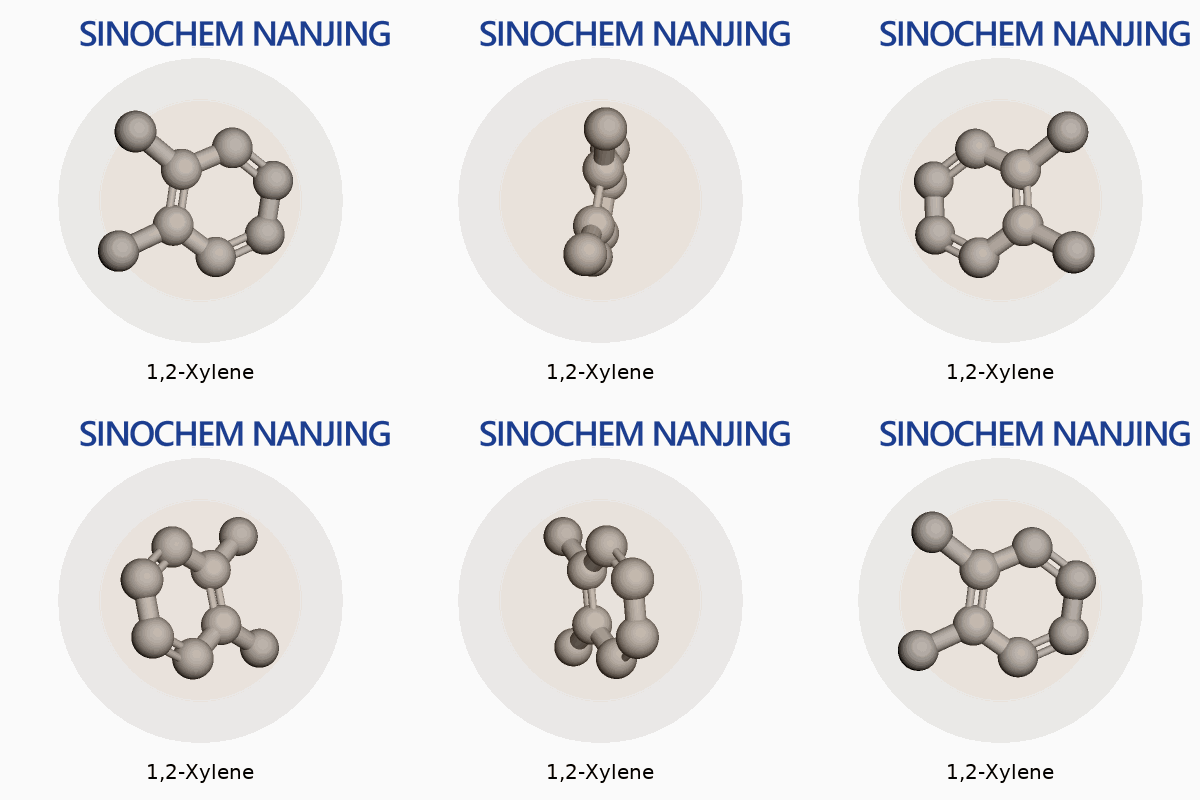
The two methyl groups bonded next to each other on the benzene ring set 1,2-Xylene apart from its relatives, 1,3-xylene (meta-xylene) and 1,4-xylene (para-xylene). These small structural differences lead to real changes in boiling point, melting point, and reactivity. The structural formula of 1,2-xylene looks like this:
- A benzene ring as the base
- One methyl group attached to carbon 1
- A second methyl group attached to carbon 2 (right next to the first)
I remember working with xylene isomers during a university lab. Even though each version shared the same formula, their behavior set them apart during distillation and when mixed into solvents. 1,2-Xylene boiled at a slightly lower temperature – due to how the methyl groups are packed together – and sometimes gave off a stronger, sweeter smell than its siblings. The structural arrangement isn't just chemistry trivia—it has real impact on how the liquid pours, how fast it evaporates, and how safely you need to handle it.
Relevance in Industry and Research
1,2-Xylene shows up in a variety of industries from paints and coatings to petrochemical manufacturing. Its main application involves use as a solvent and intermediate in synthesizing other chemicals, including phthalic anhydride. That phthalic anhydride then goes into making things like plasticizers and polyester resins. This chemical doesn’t just live on a shelf in a lab—it winds up in materials used in cars, construction, and packaging that touches everyday products.
The Health Consideration Angle
Exposure to 1,2-xylene matters for anyone who works closely with industrial solvents or spends time in freshly painted spaces. Standard safety guidelines point out that breathing in xylene vapor might cause headaches or even dizziness at high concentrations. From my own experience painting a garage, the need for good ventilation couldn't be any clearer, as the scent fills the air fast and sticks around. Handling it with gloves and masks isn't just overkill—it's following best practices established over years of occupational exposure studies. The compound’s presence in indoor air quality tests regularly reminds us these are materials that affect real health outcomes.
Looking Forward: Safe Use and Responsible Management
Moving beyond just knowing the formula, responsible use matters. Well-designed engineering controls, strong ventilation, and chemical storage policies all make a difference. The shift towards greener chemistry pushes industries to substitute volatile organic solvents like xylene with safer alternatives whenever possible. Investing in worker training and monitoring—using both biological and air sampling—helps keep risk in check.
The story of 1,2-xylene isn’t just about its molecular shape or its formula on a data sheet. It’s about where it shows up in our lives, and how our collective choices about safety and sustainability continue to influence what chemicals stay in use and which find replacements. A little knowledge of structure goes a long way toward better decisions at every step.
How should 1,2-Xylene be stored and transported?
Understanding 1,2-Xylene Beyond the Lab
Anyone who’s spent time around chemical plants or in industrial warehouses knows xylene by its sharp, almost sweet smell. 1,2-Xylene often shows up as a useful solvent or ingredient in everything from paints to lab reagents. Working with it in the real world builds respect for how easily things can go wrong when simple rules get ignored. Spills cause headaches—sometimes worse—and storing it properly keeps those headaches away from workers, communities, and companies.
Keeping 1,2-Xylene Stable in Storage
A drum of 1,2-Xylene rarely causes problems when it’s handled with respect. Temperature swings pose the biggest risk. 1,2-Xylene isn’t picky—above 27°C, vapor starts to build. That’s enough to set up a flammable atmosphere in a poorly ventilated shed. Metal containers with tight fittings ensure nothing leaks and vapors don’t build up. I’ve seen simple mistakes—leaving a lid loose for just a few minutes—lead to headaches, and worse, after employees get too close to the fumes. A good practice is to keep containers in a place out of direct sunlight and away from sources of static or sparks.
Many larger facilities store this solvent in above-ground storage tanks. People may think double-walled tanks are overkill, but one leak into soil can turn into a disaster for nearby groundwater. Maintenance teams check for corrosion and clean up small leaks immediately. I remember one spring when a rusted valve nearly emptied a tank before night shift caught the smell and shut off the flow. If folks hadn’t been alert, the cleanup would have taken months.
Separating 1,2-Xylene from Incompatibles
A simple rule that experienced warehouse workers repeat: keep xylene away from oxidizers. Interactions with substances like nitric acid or perchlorates can escalate fast—sometimes literally. Employees learn on their first day to post clear hazard labels and keep separate storage areas. Combining incompatible chemicals for the sake of “space efficiency” invites trouble.
Handling 1,2-Xylene on the Road
Transportation introduces more variables. A truck driver hauling chemicals carries not just product but responsibility to everyone sharing the road. Regulations mandate placards, but regular inspection of seals and securing drums against tipping come from experience. The best drivers check straps and closures at every rest stop, not because someone told them to, but because they’ve seen a drum pop loose on a rough stretch of road—spilling solvent across the truck bed.
Hazmat training gives drivers the basics, but a culture of safety does as much as any checklist. I recall a veteran driver who refused to take a load after noticing a tiny wet patch on the trailer floor. His caution saved days of cleanup and a possible fine. Emergency plans must always be ready: spill kits, clear procedures, and emergency contacts—simple steps that prove their worth the moment something leaks or catches fire.
Community Safety Depends on Diligence
Neighbors know these operations happen nearby. Companies who invite first responders for walk-throughs and supply up-to-date hazard information maintain community trust. After seeing the relief on a volunteer firefighter’s face during one of these tours, I’m convinced outreach and transparency matter as much as any specific storage technique.
Solutions Make the Difference
Practical steps like using explosion-proof fans, installing capacity sensors, and conducting weekly checks prevent almost every avoidable incident. Labeling, training, and habits picked up from years on the floor keep everyone safe. Respect for chemicals like 1,2-Xylene doesn’t come from fear, but from seeing what happens when people get careless and learning from it. That’s how sites stay safe and business keeps running smoothly.
What are the health and environmental hazards of 1,2-Xylene?
What Is 1,2-Xylene?
Most folks have never heard of 1,2-xylene. Yet, this chemical hides out in paint thinners, gasoline, cleaning agents, and the making of plastics. It’s a clear, sweet-smelling liquid that works as a solvent, helping things blend together or break down.
Breathing Risks: Personal Experience Meets Science
A single sniff may not knock you down, but I learned the hard way in a cramped auto shop how headache, dizziness, and nausea lurk soon after breathing it in. Research links inhaling 1,2-xylene to memory loss, confusion, and even liver or kidney harm with frequent exposure. I found that nausea comes long before the brain fog settles in, and folks in manufacturing often talk about the “xylene headache.” The CDC says short-term breathing can slow reaction times or cloud thinking, which is a real issue in jobs where mistakes hurt.
Skin and Eyes: No Barrier Strong Enough
Spilling this stuff on your hands burns and dries skin fast. My own run-in left me with peeling palms. Xylene strips away natural oils and opens the door for rashes. Accidental splashes can make eyes red and watery. Studies show that sensitive parts like the face or wrists irritate first, sometimes leading to blisters or long-term sensitivity.
Chronic Exposure in Workplaces
I’ve noticed that shops often don’t air out enough, and many folks don’t wear gloves. Workers in tire plants, printing shops, and fuel stations breathe these fumes for hours. Extended exposure increases cancer risk and damages nerves, as seen in reports linking solvent-heavy workplaces to higher rates of tremor or muscle weakness. OSHA sets limits, but crowded spaces or faulty fans bring higher risk.
Actions for Safer Work
Fresh air cuts dangers more than any promise of “protective gear.” Open doors, run exhaust fans, and bag up rags right away. Skin contact drops if folks wear gloves and long sleeves—rubber or nitrile, not worn-out cotton. Regular breaks outside help too. Testing the air and training workers on the signs of exposure make a bigger difference than just putting warnings on a label.
Environmental Toll: More Than Meets the Eye
It’s not just about people. Spills or careless dumping let 1,2-xylene soak into ground or run into streams. Fish and frogs can’t handle it—low levels in water spell trouble for their nerves and eggs. I’ve seen creeks along industrial parks lose frogs for seasons at a time. Air quality suffers in city traffic; when sunlight hits xylene vapors, ozone forms, which triggers asthma and ruins lung function in children.
Better Solutions, Not Just Band-Aids
Switching to water-based or less toxic alternatives pays off down the line. My old auto shop swapped to greener solvents for basic cleaning, and headaches almost disappeared by the end of the month. Local laws can shine here, too, with tougher rules for dumping and strict checks around plants.
Final Thoughts
Xylene brings benefits at a cost too many ignore. Real progress means putting health and the planet first, pushing for smarter technology, stronger rules, regular monitoring, and easy access to safer tools. Without action, more workers and neighborhoods will pay a price for fumes and careless disposal.
| Names | |
| Preferred IUPAC name | 1,2-dimethylbenzene |
| Other names |
o-Xylene ortho-Xylene o-Dimethylbenzene |
| Pronunciation | /ˈwʌn tuː ˈzaɪliːn/ |
| Identifiers | |
| CAS Number | 95-47-6 |
| Beilstein Reference | 605605 |
| ChEBI | CHEBI:17234 |
| ChEMBL | CHEMBL14126 |
| ChemSpider | 8210 |
| DrugBank | DB14182 |
| ECHA InfoCard | 03d9f653-7d2a-4f7c-aa4f-347fa6acb337 |
| EC Number | 601-021-00-3 |
| Gmelin Reference | 636 |
| KEGG | C01475 |
| MeSH | D02248 |
| PubChem CID | 8650 |
| RTECS number | ZE2450000 |
| UNII | F9L6A1M80T |
| UN number | UN1307 |
| Properties | |
| Chemical formula | C8H10 |
| Molar mass | 106.17 g/mol |
| Appearance | Colorless liquid with an aromatic odor |
| Odor | Aromatic odor |
| Density | 0.86 g/cm³ |
| Solubility in water | insoluble |
| log P | 3.12 |
| Vapor pressure | 7 mmHg (20°C) |
| Acidity (pKa) | pKa = 38.6 |
| Basicity (pKb) | 2.40 |
| Magnetic susceptibility (χ) | −9.95×10⁻⁶ |
| Refractive index (nD) | 1.496 |
| Viscosity | 0.81 mPa·s (25 °C) |
| Dipole moment | 0.62 D |
| Thermochemistry | |
| Std molar entropy (S⦵298) | 163.1 J·mol⁻¹·K⁻¹ |
| Std enthalpy of formation (ΔfH⦵298) | +8.38 kJ/mol |
| Std enthalpy of combustion (ΔcH⦵298) | -4551.0 kJ·mol⁻¹ |
| Pharmacology | |
| ATC code | V04CX06 |
| Hazards | |
| GHS labelling | GHS02, GHS07, GHS08 |
| Pictograms | GHS02,GHS07 |
| Signal word | Warning |
| Hazard statements | H226, H315, H319, H332 |
| Precautionary statements | P210, P261, P280, P301+P312, P304+P340, P308+P313, P403+P233 |
| NFPA 704 (fire diamond) | 2-3-0 |
| Flash point | 27 °C (81 °F) |
| Autoignition temperature | 463 °C |
| Explosive limits | Explosive limits: 1.1–7% |
| Lethal dose or concentration | LD50 oral rat 4300 mg/kg |
| LD50 (median dose) | LD50 (median dose): 4300 mg/kg (oral, rat) |
| NIOSH | NIOSH: Z8510000 |
| PEL (Permissible) | PEL (Permissible Exposure Limit) of 1,2-Xylene: 100 ppm (parts per million) |
| REL (Recommended) | 50 ppm |
| IDLH (Immediate danger) | 900 ppm |
| Related compounds | |
| Related compounds |
o-Xylene m-Xylene p-Xylene Ethylbenzene Toluene Xylenesulfonic acids |



