1,2-Epoxy-3-Ethoxypropane: Examining Its Path from Laboratory Curiosity to Chemical Workhorse
Historical Development
Chemistry carries a habit of playing long games with its discoveries. Decades back, researchers exploring the potential of true epoxy chemistry hunted for niche molecular structures that could open new avenues in coatings, polymers, and fine synthesis. 1,2-Epoxy-3-Ethoxypropane isn’t a household term, though it emerged from that wave of discovery during the mid-20th century, shaped by the demand for specialty intermediates. Scientific journals from the 1960s start referencing this ether-epoxide as a byproduct in studies examining propylene oxide variants, tempting industrial chemists with the promise of more manageable epoxides. The substance grew from bench-scale reactions in university labs to more significant roles when the paint and pharmaceutical industries got curious about what this three-carbon epoxide with an ethoxy tail could do. This journey demonstrates both the meandering and the perseverance seen in chemical innovation—old names recede, new purposes rise, and the molecule finds its moment.
Product Overview
Labeled most accurately as 1,2-Epoxy-3-Ethoxypropane, this compound lives among the ranks of functional epoxides with an additional ethoxy group that grants it some distinct handling and performance characteristics. Its molecular structure combines the reactivity of an oxirane ring with the solubilizing capacity of the ethoxy group, setting it apart from simpler glycidyl ethers. Often, specialty chemical suppliers view this compound as an intermediate—the thing between the building blocks and the final product, rather than an end-user chemical in its own right. This spot between precursor and product keeps it both essential and largely out of the public eye.
Physical and Chemical Properties
The character of 1,2-Epoxy-3-Ethoxypropane comes through in the lab. It presents as a clear, colorless liquid at room temperature, carrying a mild and somewhat ether-like odor. The liquid state makes it manageable for most synthesis steps, and its low-to-moderate viscosity supports efficient mixing. With a boiling point sitting a little higher than propylene oxide itself but not straying into the territory of heavy solvents, chemists find it easy to handle with standard laboratory equipment. The presence of the oxirane ring tells a portion of the story: reactive and eager to participate in addition reactions, but less volatile than parent epoxides. The ethoxy substitution lowers water solubility, but still permits moderate mixing with organic solvents—an advantage for both safety and process scale-up.
Technical Specifications & Labeling
Chemical producers assign clear CAS registry numbers and require hazard pictograms for safety signaling. Technical sheets list purity—often above 98 percent for specialty synthesis—plus moisture content, acidity, and residual glycols. Labels include chemical synonyms and recommended storage information, directing handlers to keep it in sealed containers out of direct sunlight in cool, dry conditions. These labeling requirements owe much to regulatory standards put in place for chemicals capable of causing both acute and chronic health effects, so workers and end-users know the stakes before uncapping a bottle or drum.
Preparation Method
Manufacturing 1,2-Epoxy-3-Ethoxypropane happens through modestly direct organic synthesis. Chemists usually start from allyl ethers, performing an epoxidation reaction using peracids such as m-chloroperbenzoic acid or hydrogen peroxide under acidic conditions. Some processes opt for metal-catalyzed variants—molybdenum and tungsten catalysts come to mind—offering higher yields and improved selectivity. Lab synthesis scales easily, but achieving the high purities necessary for pharma or electronics applications often demands distillation or extraction under nitrogen. The underlying chemistry brings together simple reactants, but small variations in temperature, catalyst, or solvent swing yields and byproduct formation significantly.
Chemical Reactions and Modifications
True to form as an epoxide, 1,2-Epoxy-3-Ethoxypropane opens itself to nucleophilic attack. The strained three-membered ring reacts with water, alcohols, and amines, giving rise to a cascade of secondary alcohols, aminoalcohols, and polyether chains. Its reactivity serves best in ring-opening polymerizations and in the synthesis of pharmaceutical intermediates, where selectivity is prized. Chemists have leveraged its functional groups to introduce both polarity and backbone flexibility into new polymers, while others adjust the backbone for specific chiral molecules needed in fine chemicals. The structure tolerates certain base- or acid-catalyzed transformations, making it less fussy than unsubstituted oxiranes but still plenty reactive for meaningful synthetic work.
Synonyms and Product Names
1,2-Epoxy-3-Ethoxypropane pops up in the chemical literature under several aliases: glycidyl ethyl ether, 3-ethoxy-1,2-epoxypropane, and ethoxypropyloxirane. These synonyms complicate database searches and regulatory compliance but help researchers and buyers make connections across suppliers, papers, and patents. Differences in regional nomenclature reflect the varied priorities of the chemical, pharmaceutical, and polymer industries, but the underlying structure never changes. For those less acquainted with arcane cataloging, the core identifiers stick—the blend of the epoxide ring and the ethoxy group never lets you confuse it with another glycidyl ether.
Safety and Operational Standards
Handling reactive epoxides draws on lessons learned from decades of industrial accidents and toxicological findings. 1,2-Epoxy-3-Ethoxypropane requires a careful touch—its epoxide ring demonstrates acute toxicity to mammals and an affinity for causing skin and eye irritation on contact. Appropriate PPE, including gloves and goggles, represents a bare minimum in any setting. Inhalation hazards call for proper fume hoods and local exhaust. Regulatory agencies treat this compound as a hazardous substance, mandating detailed SDS disclosures covering storage, spill cleanup, and first aid. Increased scrutiny on chronic health impacts, including possible carcinogenicity or developmental toxicity, places extra burdens on users to show that occupational exposure levels stay well below allowed thresholds. Training for new workers goes beyond paperwork, pushing for a culture of respect for the risks baked into reactive epoxides.
Application Area
The biggest value 1,2-Epoxy-3-Ethoxypropane delivers lands in specialty polymer synthesis, pharmaceutical intermediates, and adhesives. Its dual-functional nature appeals to chemists seeking a balance of reactivity and solubility in product design. In the world of advanced coatings, adding this compound improves crosslink density and weather resistance. Pharmaceutical synthesis leans on its ability to act as a protected glycidol surrogate, giving access to chiral side chains without sacrificing control. Small usages crop up in electronics, where tight control over dielectric properties matters. As with many specialty chemicals, success often depends on finding new applications outside the textbook, driven by researchers willing to explore beyond the defined use-case.
Research and Development
Recent years brought a surge in research aiming to make epoxy chemistry greener and safer. 1,2-Epoxy-3-Ethoxypropane, caught in this current, finds itself studied for alternative synthetic routes using more benign catalysts and solvents. Functionalization experiments explore more selective ring-opening using bio-inspired catalysts, promising step-change improvements in process mass efficiency. Cross-disciplinary teams from academia and industry probe its ability to enhance performance in biocompatible polymers and low-VOC coatings—areas gaining traction as regulatory landscapes shift. For those who thrive on tweaking chemical reactions to get a little more out of every step, this molecule presents a playground with real commercial incentive.
Toxicity Research
Persistent questions about human and environmental toxicity drove much of the modern scrutiny on 1,2-Epoxy-3-Ethoxypropane. Animal studies link high-level, chronic exposure to increased risks of genotoxicity and organ damage, making it clear that even useful molecules need boundaries. Environmental fate assessments suggest potential concerns for aquatic toxicity, especially when discharges enter waterways without thoughtful treatment. Analytical chemists work to lower detection limits and deliver early-warning systems for workplace air and surface contamination. This research has teeth—pushing manufacturers and users to keep exposures low and invest in closed-loop processes to cut fugitive emissions. Regulatory changes, including reduced allowable workplace concentrations, nod to the reality that advances in risk assessment sometimes outpace the market’s appetite for convenience.
Future Prospects
Efforts to cut hazardous waste and build safer chemistry pipelines line up with opportunities for 1,2-Epoxy-3-Ethoxypropane. Researchers in green chemistry seek milder catalyst systems or solvent-free production, rallying around the idea of sustainable specialty chemicals. Potential growth areas sit in advanced polymer applications—smart coatings, bioactive materials, and next-gen adhesives where tailored reactivity commands a premium. As companies embrace digital R&D, machine learning tools scan literature and patent data for new routes and formulations, hoping to unlock incremental improvements in efficacy and safety. The biggest gains probably come from widening the pool of chemists who understand both the promise and the risks, keeping innovation grounded in facts, and preserving health—for workers, consumers, and ecosystems. In the world of specialty chemicals, that’s the future worth building.
What is 1,2-Epoxy-3-Ethoxypropane used for?
Looking at a Surprisingly Versatile Chemical
Not many people talk about 1,2-Epoxy-3-Ethoxypropane, but folks in laboratories, factories, and manufacturing plants know it as glycidyl ethyl ether. This compound doesn’t make headlines, yet it quietly supports production across several sectors. If you look at chemical plants, adhesives and coatings production, or even electronics and plastics, this is where you’ll spot it.
The Backbone of Epoxy Chemistry
You might remember using glue or adhesives on a project. That sticky strength often comes from epoxy resins. Glycidyl ethyl ether pops up here—it works as a reactive diluent. Essentially, it helps thin out thick resins without leaving behind extra stuff that would weaken the bond. Adding this chemical makes epoxies easier to spread, improving their performance in floor coatings, paints, and sealants. Without such ingredients, workers would wrestle with chunky mixtures, wasting time and effort.
Powering Electronics and Composites
Anyone who ever took apart a circuit board knows electronics need reliable insulating materials that resist heat and keep out moisture. Epoxy resins play a part in this, and again, 1,2-Epoxy-3-Ethoxypropane shows up. This chemical helps control resin viscosity during production—making sure that coatings form an even layer around tiny delicate parts. With electronics getting smaller every year, a material that can flow easily and cure dependably holds tremendous value.
Advanced composites, like those in sports gear or aerospace panels, lean on epoxy for strength and flexibility. Here, the chemical gives manufacturers more control over how the composite forms, leading to better results with fewer performance failures down the line.
Toughening the Story for Industrial Paint and Coatings
High-performance coatings protect bridges, ships, factory floors, and pipelines from weather, corrosion, and chemical spills. Many coating formulas contain 1,2-Epoxy-3-Ethoxypropane since it lets those paints go on smoother and dry into an even finish. Harsh environments put coatings to the test—using a proven compound like this helps these paints last longer and keep maintenance costs down.
Safety, Experience, and Environmental Concerns
From my time working in a research lab, handling chemicals such as glycidyl ethers taught me that health and environmental impact always come first. This chemical carries safety warnings: it can irritate skin and eyes, and inhalation exposure needs strict control. Good labs and factories monitor exposure and keep emergency eyewashes within easy reach. Training people about proper use and safe disposal matters. A study from the International Agency for Research on Cancer highlights that glycidyl ethers, while versatile, can leave a trace in the environment if not handled properly. Many forward-thinking facilities now collect waste for responsible incineration or chemical treatment, instead of dumping it.
Pushing for Safer Alternatives and Better Oversight
Smarter manufacturing practices sometimes mean developing less hazardous substitutes, but epoxy chemistry still relies on compounds like this for its unique properties. Industry groups and government regulators keep pushing for better safety measures, monitoring long-term health effects, and sharing research to guide workers and managers. If companies invest in state-of-the-art ventilation, regular health screenings, and greener chemistry when possible, they can keep reaping the benefits without passing the cost to people or nature.
What are the safety precautions when handling 1,2-Epoxy-3-Ethoxypropane?
Why This Chemical Demands Respect
Anyone who’s spent time in a laboratory or on a chemical plant floor knows that some substances just shouldn’t be shrugged off. 1,2-Epoxy-3-Ethoxypropane comes with a set of risks that make a careful, eyes-wide-open approach essential. I’ve seen colleagues land themselves in trouble by ignoring glove protocols or skipping splash goggles, believing it's “just another solvent.” Overconfidence doesn't offer any protection.
Personal Protective Equipment Isn’t Optional
Most accidents with this compound start with skin or eye contact. Direct exposure feels deceptively mild at first but can escalate to persistent redness, swelling, or even chemical burns. Nitrile gloves — not vinyl or latex — hold up better against permeation. Laboratory coats that reach the wrists cut down on accidental splashes. Faces need protection from vapors and liquid alike; that means chemical splash goggles and, in situations with lots of vapor, a face shield.
Respect the Air You Breathe
Vapors from 1,2-Epoxy-3-Ethoxypropane don’t just disappear. Even brief inhalation leaves me with a sore throat and headache that lingers for hours. Chronic exposure to low levels, according to data from the CDC, can sensitize lungs and cause long-term breathing issues. A fume hood should run whenever this liquid leaves its bottle, period. Regular room ventilation also helps, but a hood offers the only real guarantee.
Flammability Means Stay Sharp
Many folks forget how easily this compound can catch fire. Once, a hotplate someone left on set off a near-miss incident. The material flashed almost instantly. Open flames and even static sparks create real hazard zones. Only explosion-proof refrigerators belong in areas where this solvent gets stored, never a standard kitchen model. Fire extinguishers rated for chemical fires — not just general ABC — should sit close by.
Keeping It Contained
Spills deserve fast, precise responses. My lab has a rule: only work with small amounts at any one time. Labeled spill kits with absorbent pads treat drips before things get out of hand. We don’t let paper towels anywhere near; absorbent clay or commercially made chemical pads keep the solvent from wicking through to the bones underneath the floor. Waste needs segregation in fire-safe cans, never tossed out with general garbage. Regular audits stop old containers from hiding in the back of cabinets where vapors could escape.
Training Can’t Be Skipped
A lot gets said about the theoretical risks, but nothing beats hands-on drills. Knowing where the eyewash is matters. Running a weekly check to see that showers still work makes a difference. Keeping safety data sheets handy and reviewing the real-life stories — the close calls, the burns that scar — drive home that precautions aren’t just for legal compliance or to check off a box.
Moving Toward Safer Practices
It's tempting to push for speed or cut corners, but routine and fatigue breed mistakes. Taking the time to plan, picking the right protective gear, and reviewing procedures before each use prevents those errors from turning into medical emergencies. Substitutes exist for many hazardous chemicals. If a less risky material can work, I always argue for switching. Safety hinges on culture as much as equipment, and that culture starts with sharing information, respecting the risks, and looking out for each other.
What is the chemical formula and structure of 1,2-Epoxy-3-Ethoxypropane?
What’s Behind the Name?
1,2-Epoxy-3-ethoxypropane can sound intimidating if you’re not steeped in chemical jargon. Still, its name points toward a surprisingly straightforward structure. The chemical formula is C5H10O2. The backbone forms with three carbon atoms, two oxygen atoms, and a few hydrogens to round off stability. The “epoxy” chunk highlights the three-membered ring, a telltale sign of reactivity, especially for chemists looking to break open new pathways in synthesis.
Looking at the Structure
The molecule looks like this: C2H5–O–CH2–CH–CH2 with the middle and last carbon joined by an oxygen bridge, creating the classic oxirane (epoxy) ring. The ethoxy part (C2H5O–) attaches to one end, giving the molecule a bit more flexibility and solubility. If you’ve ever handled similar epoxides, you’ll know even small tweaks to the structure lead to big differences in how it reacts and where it’s useful.
Why This Molecule Shows Up in the World
Epoxides aren’t just fancy names from the textbook; they power plenty of industrial processes. Epoxy resins, for instance, often present in adhesives, coatings, and even electronics, gain their strength from these three-atom rings. The reactivity of 1,2-epoxy-3-ethoxypropane gives manufacturers a tool for adding flexibility or changing how a resin cures. In my early days tinkering in a small lab, the way these little molecules could unlock new material properties always struck me. Epoxy-based coatings protect everything from ships’ hulls to cutlery, making the smallest molecules play a huge role in everyday life.
Handling Brings Its Own Set of Concerns
Not everything wonderful in chemistry comes without a catch. The oxide ring in 1,2-epoxy-3-ethoxypropane brings reactivity that’s helpful in manufacturing but risky in untrained hands. Data from occupational safety reports show that epoxide compounds can irritate the skin, eyes, and lungs. Long-term exposure sometimes means chronic health issues. Workers in epoxy manufacturing need training, gloves, and good ventilation. Safety data sheets encourage everyone—students, scientists, or industrial workers—to respect the potential dangers and use personal protection at all steps.
Problem-Solving in the Industry
Modern manufacturing faces tight regulations on chemical exposure. Companies constantly hunt for safer substitutes for handling or remediation. Researchers try altering molecular structures enough to keep performance where it counts but reduce toxicity. Looking at epoxides, the search isn’t just about swapping ingredients; education plays a huge role. Labs and factories alike benefit from clear, up-to-date guidance on how to safeguard workers and dispose of leftover chemicals. Strong internal audits and independent monitoring always reveal gaps nobody spotted before. With more companies committing resources to green chemistry, tomorrow’s epoxides might bring fewer health risks while keeping up in performance.
Final Takeaway
1,2-Epoxy-3-ethoxypropane isn’t a household name, but it’s another example of how even the most technical compounds have ripple effects beyond the lab bench. Chemistry classes might skim through these formulas quickly, but people working with and around these chemicals face a whole other story—one built of choices between productivity, safety, and environmental impact. As more companies share data and listen to feedback from workers and communities, the industry stands a chance to make the science work for everyone, not just for the sake of a smooth reaction or a tougher adhesive.
How should 1,2-Epoxy-3-Ethoxypropane be stored?
Why Storage Matters For Chemicals Like 1,2-Epoxy-3-Ethoxypropane
Dealing with chemicals feels simple on paper, but one wrong move can send a project off the rails. I’ve seen more than a few mishaps because someone overlooked a detail about storage, especially with reactive or volatile substances. 1,2-Epoxy-3-Ethoxypropane packs its own set of risks. It's flammable, forms vapors that can irritate eyes and lungs, and reacts with certain other substances. Without care, a storage slip positions workers, the environment, and even nearby property for trouble.
Real-World Approaches To Safe Storage
My experience tells me that storing this chemical isn’t a task to rush through. A drum left near a heat source, a leaky seal, or a cracked container all spell potential disaster. The best storage calls for cool, dry places away from sunlight and any source of ignition — no exceptions. Even a sunny window in the warehouse becomes a liability.
That’s why placement matters. Keep drums or smaller containers in a well-ventilated, clearly labeled area. Secure cabinets, ideally those built for flammable liquids, stop both leaks and accidental access, especially if untrained staff roam the facility. The worst mistake I ever saw up close? Someone forgot to check container labels. They stacked drums of different volatile substances in the same room. The result: a headache for the cleanup crew, endless paperwork, and a rush to improve training.
Material Compatibility and Chemical Neighbors
You can’t overlook material compatibility. 1,2-Epoxy-3-Ethoxypropane easily reacts with strong acids, bases, and amines, so it’s not safe next to those substances. Assigning specific shelves to different chemical classes minimizes accidents. I remember a warehouse that color-coded storage shelves by chemical risk, which worked wonders by making cross-contamination nearly impossible in a busy environment. Even the newest team member knew exactly where each product belonged.
On the physical side, containers should close tightly. Any exposure to air may turn even a tiny leak into a nasty vapor cloud. Metal containers with solid corrosion resistance, preferably without any scratches or dents, give the most reliable barrier. Avoid plastic containers unless confirmed safe for epoxides because plastic sometimes breaks down with long-term exposure.
Ventilation, Monitoring, And Access Control
Airflow inside chemical storage rooms makes a huge difference. I’ve worked in sites that relied on simple fans and others that invested in negative-pressure ventilation systems. Good air movement keeps vapor levels low, which matters a lot with a chemical this volatile. Monitoring for leaks or emissions—whether with portable gas detectors or installed sensors—backs up your safety plan.
Training goes hand in hand with physical controls. Staff should know what a spill looks like, how to contain it, and who to call. Limit who gets access to storage rooms; everyone does better when only trained personnel unlock the doors. In one factory I visited, a digital access system tracked who entered storage at all times, ensuring only certified staff could reach high-risk chemicals.
The Consequences: Lessons From The Field
Getting storage wrong doesn’t only break rules — it changes lives. One small fire set off by improper storage still sticks in my memory, not just because of the smell and chaos but by the relief that no one got hurt. Still, the factory halted, insurance costs climbed, and neighbors lost trust. Good storage amounts to more than “following instructions.” It preserves health, business continuity, and reputation.
Every facility storing 1,2-Epoxy-3-Ethoxypropane benefits by making safety routine, not an afterthought. The best facilities keep practices current, stick to clear labeling and separation, and always plan for the “what if.” Chemical safety is everyone’s job, day after day.
What are the potential health hazards of 1,2-Epoxy-3-Ethoxypropane exposure?
Everyday Chemicals with Not-So-Ordinary Risks
Workplaces handling 1,2-Epoxy-3-Ethoxypropane often focus on its function as a solvent and a tool in chemical reactions, but the health dangers tied to this compound go much deeper. I’ve spent enough time in labs and around industrial settings to know safety gear only goes so far—sometimes, new chemical threats slip through because folks just aren’t aware of what they’re dealing with. This compound doesn’t announce itself with a strong smell or striking color, so it often flies under the radar until symptoms surface.
What Happens During Short-Term Exposure
Contact with 1,2-Epoxy-3-Ethoxypropane can lead to skin irritation pretty quickly. I’ve seen coworkers brush off redness or a rash, but that’s the body’s early warning that something is wrong. Eyes exposed to the vapor or liquid can sting or water, sometimes badly enough to drag down productivity for the rest of the day. Even a short breath in a poorly ventilated room can bring headaches, dizziness, or nausea—symptoms often mistaken for a tough day or dehydration.
Long-Term Health Effects and Why Ignoring Them Doesn’t Work
Routine exposure to this solvent has much larger stakes. Over time, repeated skin contact may set the stage for chronic eczema or more severe allergic reactions, making even small touches unbearable. My background working alongside industrial hygienists taught me that vapor exposure is the sneakiest risk. It may not bother you at first, but day in and day out, inhaling the stuff builds up. Animal studies highlight liver and kidney stress, with long-term inhalation showing organ changes pointing to toxicity. While human data isn’t as thorough, we can’t shrug off these clues.
There’s still an open question around cancer risk. Some studies put chemicals in this family on watch lists for potential carcinogenic impact, even if regulators haven’t drawn a direct line yet. From a risk management point of view, erring on the side of caution protects workers and cuts down liability for everyone involved.
Protecting People Without Sinking Productivity
Face masks and gloves are basic shields, but not all barriers hold up against this compound’s volatility. In places I’ve worked, the difference-maker came from better ventilation systems and regular air checks. Swapping out basic PPE for gear rated to handle epoxides wasn’t just cautious—it became the expectation for worker safety. Training also stood out. Workers who understood the risks took them seriously, and you could see that in their habits. Knowing to wash exposed skin right away or recognize early symptoms can head off health crises.
The last line of defense often comes down to substitution. If a less hazardous alternative does the job, pushing for a switch often wins out in the long run, both for safety and peace of mind. Still, for many industries, that’s a long road. In the meantime, regular health checkups, honest reporting around symptoms, and clear emergency plans keep people safer than wishful thinking ever could.
Accountability and What Real Safety Looks Like
Real safety with 1,2-Epoxy-3-Ethoxypropane relies on deep respect for its risks and a commitment to education. Those who understand the hazard are the ones in the best position to shape safer workplaces—not just for compliance, but for the health and dignity of everyone showing up each day. Risk isn’t just a number on a chart; it’s as real and present as anyone handling this compound on the factory floor.
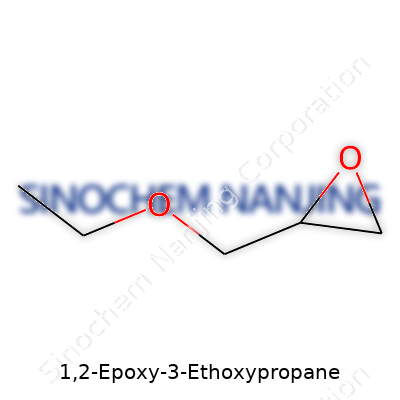
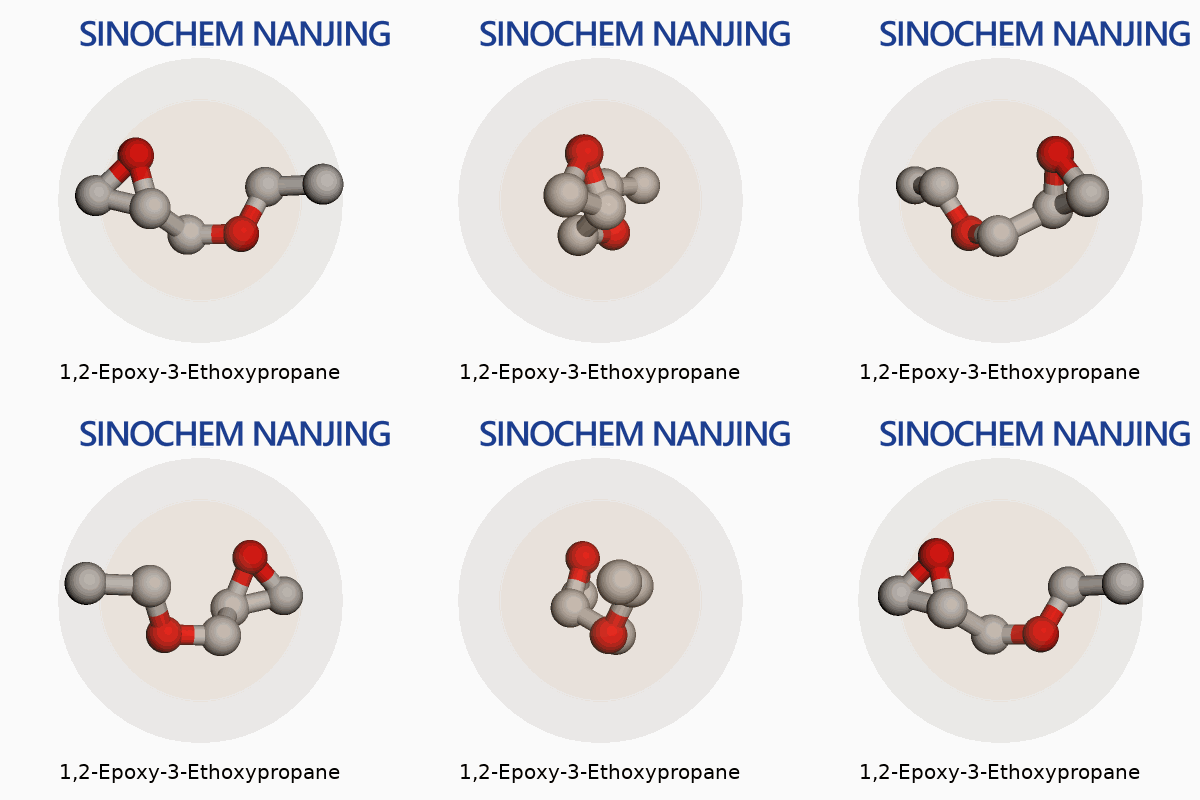
| Names | |
| Preferred IUPAC name | 2-Ethoxyoxirane |
| Other names |
Ethyl glycidyl ether 3-Ethoxy-1,2-epoxypropane Glycidol ethyl ether EGE 1-Ethoxy-2,3-epoxypropane |
| Pronunciation | /ˈɛp.ə.si ˈɪˌθɒk.siˌproʊˌpeɪn/ |
| Identifiers | |
| CAS Number | 1330-21-6 |
| Beilstein Reference | 636124 |
| ChEBI | CHEBI:84597 |
| ChEMBL | CHEMBL458148 |
| ChemSpider | 56498 |
| DrugBank | DB14096 |
| ECHA InfoCard | 03c8d8b5-e1b4-4c7d-82c1-52300928711e |
| EC Number | 203-474-9 |
| Gmelin Reference | 62234 |
| KEGG | C08345 |
| MeSH | D017541 |
| PubChem CID | 7928 |
| RTECS number | YU3225000 |
| UNII | 3E09X32909 |
| UN number | UN3271 |
| Properties | |
| Chemical formula | C5H10O2 |
| Molar mass | 104.14 g/mol |
| Appearance | Colorless liquid |
| Odor | Ether-like |
| Density | 0.915 g/mL at 25 °C (lit.) |
| Solubility in water | Miscible |
| log P | 0.3 |
| Vapor pressure | 2.7 mmHg (20 °C) |
| Acidity (pKa) | 15.5 |
| Basicity (pKb) | pKb = 3.89 |
| Magnetic susceptibility (χ) | -67.0×10⁻⁶ cm³/mol |
| Refractive index (nD) | 1.403 |
| Viscosity | 2.7 mPa·s (25 °C) |
| Dipole moment | 1.21 D |
| Thermochemistry | |
| Std molar entropy (S⦵298) | 311.6 J·mol⁻¹·K⁻¹ |
| Std enthalpy of formation (ΔfH⦵298) | -322.7 kJ/mol |
| Std enthalpy of combustion (ΔcH⦵298) | -1874.7 kJ/mol |
| Hazards | |
| GHS labelling | GHS02, GHS07 |
| Pictograms | GHS02,GHS07 |
| Signal word | Danger |
| Hazard statements | H226, H315, H319, H335 |
| Precautionary statements | P210, P261, P280, P305+P351+P338, P337+P313, P342+P311 |
| NFPA 704 (fire diamond) | 2-2-0 |
| Flash point | 41 °C (105.8 °F) - closed cup |
| Autoignition temperature | 227 °C |
| Explosive limits | 4–19% |
| Lethal dose or concentration | Lethal dose or concentration (LD50/LC50): LD50 (oral, rat): 2400 mg/kg |
| LD50 (median dose) | LD50 (median dose): Oral rat LD50: 2150 mg/kg |
| NIOSH | K0093 |
| PEL (Permissible) | PEL: 100 ppm (360 mg/m³) |
| REL (Recommended) | 2 ppm |
| IDLH (Immediate danger) | 400 ppm |
| Related compounds | |
| Related compounds |
Epoxypropane 1,2-Epoxy-3-isopropoxypropane Ethyl propyl ether 1,2-Epoxypropane (Propylene oxide) |



