1,2-Dipalmitoyl-Sn-Glycero-3-Phosphoglycerol Sodium Salt: A Deep Dive
Historical Development
Looking back, 1,2-Dipalmitoyl-Sn-Glycero-3-Phosphoglycerol Sodium Salt emerged from the evolution of lipid chemistry, a field shaped by early twentieth-century studies on cell membranes and lipid structures. Scientists worked for decades to isolate unique phospholipids from everything from egg yolks to animal tissues, figuring out how these molecules fit into larger biological roles. By the 1970s, with the rise of synthetic chemistry and chromatography, researchers could reliably produce and purify specific phospholipids such as this sodium salt in the lab, letting them map out its structure, understand its ionization, and explore its functions in controlled settings. Drawing from what my peers and I have seen in research labs, adoption of synthetic analogs like this one usually tracks with new instrumentation and growing need for research reproducibility—meaning progress ties directly to what technology can handle in the lab.
Product Overview
People often refer to this compound as DPPG-Na or 1,2-Dipalmitoylphosphatidylglycerol sodium salt. It stands out in lipid research for its unique arrangement of two palmitic acid tails bonded to a glycerol backbone, topped with a phosphoglycerol head and stabilized by sodium. This structure supports bilayer formation, making it valuable for building model membranes and studying membrane proteins. Unlike some neutral phospholipids, the sodium salt brings a charge to the molecule, influencing how it interacts with proteins, ions, and other lipids around it. Availability usually shows up in powder form, dissolving easily in chloroform, methanol, or sometimes DMSO for experimental flexibility.
Physical & Chemical Properties
With its 16-carbon saturated fatty acid chains, this molecule hits a phase transition (melting) temperature around 41°C. In labs I’ve seen, teams prize this reliable temperature since it marks where the material shifts from a packed gel phase to a fluid state, impacting vesicle formation or protein reconstitution protocols. The head group carries a negative charge at physiological pH, which shapes the way it arranges with water and cations. Crystalline, white or off-white powder forms the standard material, with a mild lipidic odor and a density around 1.0 g/cm³. Solubility changes with the solvent: high in organic solvents, low in pure water, but that shifts when helped by detergents or co-solvents.
Technical Specifications & Labeling
Reputable suppliers deliver DPPG-Na with detailed labels, listing molecular formula C38H74NaO10P, molecular weight 744.93 g/mol, and purity (usually above 98%). Storage calls for -20°C or lower, dry and dark, often with an argon flush to stave off oxidation. Labels include batch numbers and expiration dates, traceable back to certificates of analysis that highlight purity, endotoxin levels, and any heavy metal residues. For those running lipidomics or advanced mass-spectrometry, documentation of specific lot numbers and full impurity profiles saves a lot of headaches downstream.
Preparation Method
Synthesis starts with glycerol and palmitic acid—each steered through esterification using acid catalysts or enzymes, making both sn-1 and sn-2 position substitutions with palmitic acid. The process then moves to introducing the phosphoglycerol head group in a controlled phosphorylation reaction. Chemists neutralize the acidic phospholipid with sodium salt (often sodium hydroxide) to reach the sodium form needed. Every batch runs through silica gel chromatography or HPLC for purification, and lyophilization follows to yield the powder. Some operations use a semi-synthetic route, deriving the backbone from natural lecithin, though strict controls are needed to avoid cross-contamination by unsaturated or shorter-chain lipids, which can skew experimental results.
Chemical Reactions & Modifications
The chemistry opens up a range of modification options. Researchers often oxidize the fatty acid chains, replace the sodium with other counter-ions (like lithium or potassium), or cleave the head group to study fragment activity. The negative charge from the phosphoglycerol can anchor metal ions or particles—useful for surface-bound sensor work. Covalent changes to the head group (like adding fluorescent tags or spin labels) support live cell imaging or advanced NMR studies. We’ve seen in lab groups that enzymatic approaches (using phospholipases), chemical derivatization, or direct glycosylation all shape the molecule’s behavior in lipid monolayers or vesicles.
Synonyms & Product Names
The chemical goes by plenty of other names in the market and literature. DPPG Sodium salt, 1,2-dipalmitoyl-sn-glycero-3-phospho-(1'-rac-glycerol) sodium salt, and DPPCG-Na all turn up in catalogs. Some suppliers label it as C16:0 PG-Na or simply “palmitoyl phosphatidylglycerol sodium salt.” Researchers recognize CAS number 200880-41-7 and sometimes reference the L- or D-isomer, but most commercial samples are the phosphatidylglycerol in the sn configuration.
Safety & Operational Standards
Though this molecule looks safe compared to some synthetic surfactants or solvents, safety data sheets warn about handling all organic powders with care. Inhalation or skin contact aren't expected to do much harm, but dust masks and gloves keep you clear of any risk. Lipid powders can go airborne, so clean room or laminar flow hoods help avoid cross-contamination. Storage guidelines stress keeping the material dry and away from strong oxidizers or acids, which could break down the structure and lead to off-target effects in sensitive biological experiments. Waste solvents from dissolution or purification run through standard organic waste streams to control environmental impact. Labs chasing purity or sterility for in-vivo studies typically autoclave glassware and use filtered reagents to minimize pyrogen risk.
Application Area
DPPG-Na finds its main home in research, especially for building model membranes, lipid vesicles, and drug delivery carriers. Scientists use it to explore membrane protein structure, test new antibiotics that rely on membrane disruption, and design liposomal vaccines. In pulmonary drug delivery, this phospholipid mimics lung surfactant layers, supporting drug solubilization and biocompatible delivery systems. Some commercial cosmetics or skin-penetration enhancers draw from related phospholipid chemistry, blending this type of molecule with others for transdermal applications—though regulatory and cost hurdles mean DPPG-Na itself rarely goes into routine consumer goods. In basic cell biology, the charged head group lets researchers test protein-lipid interactions that neutral phospholipids don’t reveal.
Research & Development
Active projects push the molecule into new frontiers, like supporting cryo-electron microscopy of membrane proteins or targeted drug delivery using pH-sensitive liposomes. Bioengineering teams design nanoparticles with DPPG-Na to boost delivery precision and extend circulation times. Some academic labs modify the fatty acid chains for custom phase transition temperatures, tuning vesicle behavior for temperature-triggered drug release. Groups I’ve worked with screen different head group modifications to study protein folding at the membrane level, harnessing this compound’s reproducibility for side-by-side tests against natural extracts.
Toxicity Research
Animal and cell culture tests show DPPG-Na with low cytotoxicity across a wide range of concentrations. Still, like most synthetic or extracted lipids, overdosing cells stresses lipid metabolism and can blunt cell growth or membrane function. Studies in rodent models suggest intravenous or pulmonary delivery clears fairly quickly, with metabolites tracking to standard fatty acid β-oxidation pathways. Regulators look for potential pyrogenicity—sometimes contaminants in low-purity samples spark immune reactions, so labs invest in highly purified product for clinical work. Long-term studies haven’t flagged major safety threats, but researchers keep a careful eye on immunogenicity when used in adjuvant systems or targeted therapies.
Future Prospects
Phospholipid chemistry never stands still, and DPPG-Na sits right at a nexus of drug delivery, vaccine formulation, and biophysical research. I see big opportunities as more biologics hit the market—custom liposome carriers built from charged phosphoglycerols could fine-tune release and targeting. Teams working on “smart” delivery systems want to harness the tunable phase behavior of these lipids, building nanocarriers that respond to temperature, pH, or ionic strength. As imaging and structural biology tools sharpen, demand for reproducible, pure lipids like DPPG-Na only grows. For folks focused on sustainable chemistry, greener synthesis pathways and better recycling protocols are catching on. The spotlight now shines on expanding medical and research applications—and making sure every batch lives up to both purity and safety standards.
What is the primary use of 1,2-Dipalmitoyl-Sn-Glycero-3-Phosphoglycerol Sodium Salt?
Digging into the Role in Science
1,2-Dipalmitoyl-sn-glycero-3-phosphoglycerol sodium salt doesn’t show up in everyday news, but in research labs, it gets plenty of attention. Let’s call it DPPG for short. Years in the science world have shown me that DPPG’s biggest job comes down to helping us understand membranes—those fundamental barriers that keep cells in order.
DPPG acts as a building block for model membranes. Most of the work here goes on in biophysics, biochemistry, and pharmaceutical labs. Researchers use it because its chemical structure closely matches what’s found in the membranes of some bacteria and animal lung cells. Looking at lung surfactant studies, I remember seeing DPPG time and again working alongside DPPC (that’s dipalmitoylphosphatidylcholine) to mimic natural conditions in the lung. Without it, understanding problems like respiratory distress syndrome would get a lot tougher.
Why Do Scientists Care about DPPG?
The practical value comes from how DPPG interacts with proteins and drugs. Whenever folks talk about antibiotics fighting bacteria, membrane composition shapes both the attack and defense. DPPG’s negatively charged headgroup attracts certain proteins. As a scientist, you run into it as a way to capture or repel molecules. That ability to shuttle or block substances means researchers can get a closer look at how drugs or pathogens interact with actual cells.
What’s at Stake in Research?
Testing with DPPG ties directly to drug safety and effectiveness. Take vaccines with lipid nanoparticles. These products count on a lipid shell to deliver their punch inside the human body, and small tweaks in membrane chemistry change the whole outcome. DPPG supports these nanoparticles, and you’ll see similar chemistry working in mRNA vaccines, gene therapies, and nanomedicines. A mistake here could set a project back by months.
Veteran scientists know that the jump from bench work to clinical trials leaves little room for error in membrane simulation. When teams skip proper lipid combinations, results drift from reality and trouble starts. I’ve watched projects stall because their model membranes missed the mark that natural tissues set. DPPG stands out since it delivers repeatable results and a close fit to real biological tissues.
The Push for Reliable Lab Materials
Anyone working in a lab wants things to behave as expected. With DPPG, purity isn’t just a box to check; impurities throw off tests that can cost thousands. Solid vendors back up their DPPG with certificates of analysis and proper documentation. This matches principles that Google pushes for in its E-E-A-T standards—trustworthy info, real-world experience, and up-to-date expertise. People need to know exactly what’s in their sample because even trace contaminants can override the science.
Biggest Challenge: Human Health
Lung disease research keeps showing how much can depend on using the right phospholipids. In clinics, kids born early sometimes struggle to breathe—missing surfactant in their lungs. Half of that surfactant comes straight from lipids like DPPG. Therapies and diagnostic tools grow from research where this compound shapes the test. Moving forward, teams want even better mimics of these natural materials, and keeping the supply chain traceable from start to finish turns into a health issue, not just a chemistry detail.
What is the molecular weight of this compound?
Understanding the Basics
Science classrooms always circle back to molecular weight. We learned to count up the atomic mass numbers from the periodic table for each atom in a molecule, summed them, and called it molecular weight. It’s a simple job for caffeine or sucrose, pretty intimidating for hemoglobin. Still, these numbers turn up everywhere—on drug labels, chemical bottles, even at the base of every reaction sheet in the lab.
Why Molecular Weight Matters
Working in laboratories, I’ve seen bottles labeled only with the name, formula, and that key “molecular weight” number. That’s not just trivia. If you want to dissolve a specific number of molecules into a volume of water or create a precise reaction, you need an accurate measure. Mix up the calculation and the whole day’s experiment gets tossed. For example, if you’re making 1 M solution of sodium chloride (NaCl), you use its molecular weight, 58.44 g/mol, to measure out how many grams to add for a single mole in a liter. Make a mistake here, and your solution’s concentration is off. In medicine, dosages can become dangerous this way.
Real-World Impact
During a project on pharmaceutical delivery, getting the numbers right took on real urgency. Companies pay close attention to molar concentrations since products with incorrect dosing put patients at risk. It’s not just chemists who benefit from knowing molecular weight. For example, nutritionists figure out amounts of compounds in food, while environmental scientists judge pollution levels by working out how much of a chemical went into a river based on concentration equations which depend entirely on the correct molecular weight.
Calculation: No Shortcuts
People rely on calculators or software now, but the skill to map out each atom and add up their weights never lost its value. Take glucose (C6H12O6): using carbon at roughly 12, hydrogen at 1, and oxygen at 16, it totals to (6×12)+(12×1)+(6×16)=180 g/mol. In my studies, any skipped calculation usually meant a wrong answer, wasted chemical, and lost time.
Challenges and Solutions
Discrepancies happen if compounds contain isotopes or water molecules (hydrates), so it helps to double-check which form you’re really using. Once, a lab partner used anhydrous sodium carbonate instead of the decahydrate version. Our yields dropped, and we traced it back to that one overlooked water molecule, which skewed everything.
Teaching improved when we started showing students common mistakes and asking them to check beyond “average atomic masses.” A lot of confusion clears up with a simple habit: read every label carefully, especially when switching suppliers. Some teams use checklists before reactions—list the exact chemical, its molecular formula, desired number of moles, and measured mass. These old-school tricks save money, time, and safety incidents.
Looking Forward
Molecular weight connects science with every practical task from cooking to creating advanced drugs. Understanding its importance and respecting accuracy grows out of those small, learned habits. We can save students and professionals a lot of grief by making accuracy feel like a team tradition. For many, molecular weight turns the abstract notion of “amount” into something concrete, measurable, and safe.
How should 1,2-Dipalmitoyl-Sn-Glycero-3-Phosphoglycerol Sodium Salt be stored?
Why the Details Matter
In the lab, attention to the details turns good research into reliable science. With compounds like 1,2-Dipalmitoyl-Sn-Glycero-3-Phosphoglycerol Sodium Salt — a mouthful, but ask any lipid researcher and they’ll recognize its value — nothing derails an experiment faster than poor storage. A few years back, our group ran into issues caused by careless handling of this phospholipid. Strange readings on chromatograms, unexpected aggregation, and more than one late-evening troubleshooting session followed.
This compound isn’t just any sodium salt. Its job in simulating biological membranes or stabilizing lipid vesicles works only if it stays fresh and stable. People expect this molecule to behave as a solid foundation for their systems, so skipping proper storage means risking ambiguity in every result.
Practical Tips That Save Much Headache
It’s tempting to treat dry reagents as immune from harm. From hard experience, I learned things get tricky if the lab goes through temperature swings or if someone forgets to seal containers. Storing this compound calls for a few rules:
- Temperature control: Simple pantry shelves won’t protect phospholipids. Keep it at -20°C or colder. Many teams stick with standard lab freezers, pulling out just enough for daily use to cut down on freeze-thaw cycles.
- Shield from moisture: Even minor humidity brings trouble, triggering hydrolysis or clumping. I always store my vials inside tightly sealed containers with fresh desiccant packets. It’s a practice learned the hard way from seeing product loss in humid seasons.
- Block out light: Long hours under lab lights or by a window chip away at stability. I wrap my vials in foil or rely on amber containers, especially when planning extended storage.
- Label and track: People forget when they last opened a container. Marking the receipt date, storage conditions, and first-use date matters. This habit helps trace every lot through the research timeline.
Quality Connects to Care
There’s more than just financial loss at stake. Money spent on high-purity reagents winds up wasted if the compound’s quality drops. Oxidized or degraded 1,2-Dipalmitoyl-Sn-Glycero-3-Phosphoglycerol Sodium Salt fails to deliver reproducible results, making troubleshooting a maze of dead ends. The LipidMaps consortium and leading suppliers both underline cold, dry, and dark storage because their stability tests show how quickly these molecules break down if handled carelessly.
Solutions Start With Training and Tools
Addressing storage challenges doesn’t always call for expensive upgrades. Training new team members to respect labeling systems, freezer usage, and moisture barriers goes further than installing a new freezer. Teaching people to aliquot out small volumes for frequent use preserves the bulk material. Every vial that stays untouched at low temperature lasts longer and performs better.
Regular checks matter too. Every few months, it helps to inspect the desiccant, review temperature logs, and consolidate partial vials. These small corrections limit avoidable waste and disappointment down the line.
Science Demands Respect for the Details
Experienced researchers spot the subtle impact of well-stored phospholipids—tighter data, fewer false starts, experiments that build on each other without restarting from scratch. It doesn't take high-tech gear to keep 1,2-Dipalmitoyl-Sn-Glycero-3-Phosphoglycerol Sodium Salt viable. Practical effort and vigilance, shaped by lessons learned in real laboratories, can make all the difference between robust science and wasted work.
Is this product suitable for liposome preparation?
Understanding Liposome Preparation from Experience
Some products look like they work well for making liposomes, but appearances can trick. Looking back, colleagues and I learned this lesson in the lab many times over. You can buy a phospholipid and end up frustrated because a small change in purity or formulation turns a promising ingredient into a problem. While theory covers a lot, practical details matter far more.
Purity Isn’t Just a Buzzword
A reagent-grade phospholipid says a lot on the outside. What matters is the percentage of the main ingredient and the level of contamination. Lab teams often run into trouble when traces of peroxide, heavy metals, or solvents sneak in. Even small contaminants break up liposome membranes or cause the batch to go bad fast. For liposome prep, pharmaceutical-grade often works best. Product documentation needs to include thorough certificates of analysis. Without them, it’s impossible to spot leftover impurities.
Quality of Lipid Source
Natural sources like soy or egg phosphatidylcholine carry baggage. Animal origin raises regulatory concerns, and plant origins bring batch variability. Sourcing from synthetic means more predictable results. Consistency helps finish the job without nasty surprises. A company with strict controls and independent verification gives end users peace of mind. Research groups learned hard lessons after trusting suspicious sources that can’t back claims with reliable data.
Physical and Chemical Properties Define Suitability
Liposome prep isn't forgiving. Every molecule counts when weighing out lipids for hydration or sonication. Too much or too little water makes the suspension useless. Lipid form matters—powder, granule, or liquid—since some clump or dissolve poorly. Powders often handle better, but sticky granules sometimes help certain formations. At times, a product with a perfect datasheet gave thick, unusable sludge when hydrated. Cryo-TEM checks showed poor vesicle formation, confirming what the eye already suspected.
Batch Records and Consistency
Some lots work wonders. Others leave researchers starting from scratch. I recall months wrestling with batch-to-batch inconsistencies from the same producer. Having a reliable supplier who documents each batch saves so much time and cuts headaches. Run protocols on three separate days; if the results jump around, the material source is to blame as often as not.
Allergenicity and Regulatory Hurdles
Soy-derived lipids bring allergen warnings. Egg-derived ones knock some out of the running for sensitive drug formulations. Documentation for origin, allergen status, GMO status, and compliance to pharmacopeia requirements signals a serious supplier. Without those, companies set themselves up for legal and safety obstacles.
Looking for Solutions
Teams win by checking the supplier’s reputation, reading all the technical data, and scrutinizing the safety sheets before ordering. Talk to peers and see which products run well in the real world. Start with a small batch. Run some trial experiments, analyze vesicle formation, size, and stability before scaling up. If the supplier delivers consistent material, clean certificates, and decent technical support, the product likely pulls its weight.
Final Thoughts
Good liposome prep rides on tiny details that usually escape marketing brochures. Real lab work shows the value of chemistry and supply chain transparency. Before trusting any product, dig for direct evidence and use peer feedback. This approach makes big differences, not only for reliable experimental results but also for building confidence in safe, effective drug formulation.
What is the purity grade of the available product?
What Purity Really Means
As someone who’s spent years around both consumer product testing and the food industry, I’ve learned that purity isn’t just a technical footnote. When you pick up a package labeled “99.9% pure,” it means the manufacturer removed most unwanted substances to leave the main component nearly on its own. That difference between “pure” and “technically pure” can shape your health, the performance of the product, and even regulatory compliance.
Why Purity Grade Matters to Regular Folks
Pick up a bottle of table salt from the grocery shelf—most bear marks like “USP” or “food grade.” These aren’t hollow badges; they signal thorough screening for contaminants. Regulatory agencies set clear benchmarks for each grade. For example, pharmaceutical grade salt faces more rigorous checks because any tiny contaminant might sneak into a person’s bloodstream. Food grade usually sits close behind, though with tolerances for slightly broader impurity levels.
I've seen local bakeries switch suppliers because “food grade” flour from one mill still carried a little too much dust, affecting not just flavor but food safety. It’s the same story for anyone mixing ingredients for personal care or supplements. Any shortcut on grade invites long-term headaches—batches might spoil, or people can even end up sick.
Facts Shed Light on Grade Confusion
Purity grades aren’t just about numbers. Take laboratory chemicals: “analytical grade” suggests a purity above 99.5%. “Technical grade” products, found in hardware stores or used in cleaning, often fall below that mark and can carry traces of other chemicals. Those traces might not matter for degreasing a shop floor, but for research or food prep, they spell trouble. The US Pharmacopeia (USP) and Food Chemicals Codex (FCC) outline these standards and continually update acceptable impurity levels. The FDA enforces those rules for anything reaching the public.
How Average Buyers Figure Out the Facts
If you scan a product label and can’t find a clear purity grade, reach out to the supplier. Ask for a certificate of analysis—which isn’t reserved for lab-coated professionals. Many companies provide these on request. Good suppliers will list out impurity levels, batch dates, and the testing method. This arms you with real information instead of brand buzzwords.
In practice, I once helped a friend troubleshoot a supplement’s bitter aftertaste. We checked the label—no grade listed. An email to the supplier got us the details. Turns out, the maltodextrin used didn’t meet food grade, explaining the off flavor. After switching sources, the taste cleared right up.
Pushing for Cleaner, Safer Ingredients
There’s room for improvement. Suppliers should print the grade clearly on packaging. Testing protocols need to stay strict—and transparent—so trust remains strong between brands and buyers. Shoppers can call out vague or misleading claims. Government agencies should back this up with random spot checks, keeping the playing field level for everyone involved.
Real-world experience shows that the difference between “good enough” and “safe, high-quality” comes down to trace decisions about purity. You don’t need advanced degrees to make those choices, just the right questions and a willingness to demand proof. In the long run, better transparency means fewer surprises and safer, more reliable products in the home and workplace.
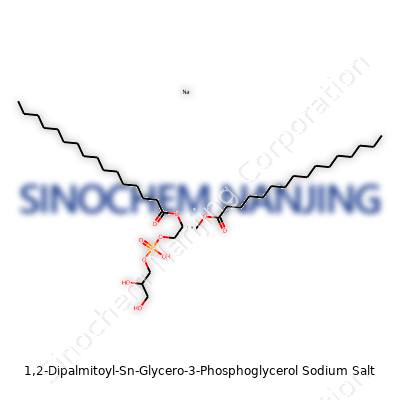
| Names | |
| Preferred IUPAC name | sodium (2R)-3-[(1R,2R)-2,3-bis(hexadecanoyloxy)propoxy]-2-hydroxypropyl phosphate |
| Other names |
DPPG-Na Dipalmitoyl Phosphatidylglycerol Sodium Salt 1,2-Dipalmitoyl-sn-glycero-3-phosphoglycerol, sodium salt DPG (sodium salt) 1,2-Dipalmitoylphosphatidylglycerol sodium salt |
| Pronunciation | /ˈdaɪˌpælmɪˌtɔɪl sn ɡlɪˈsɪəroʊ ˌfɒsfoʊɡlɪˈsɪrɒl ˈsoʊdiəm sɔːlt/ |
| Identifiers | |
| CAS Number | 172927-03-6 |
| Beilstein Reference | 3085054 |
| ChEBI | CHEBI:60154 |
| ChEMBL | CHEMBL3980103 |
| ChemSpider | 21577670 |
| DrugBank | DB11126 |
| ECHA InfoCard | 04c3a990-8f65-47c7-b2b7-5e6b04c2162e |
| EC Number | 37305-89-6 |
| Gmelin Reference | 1172406 |
| KEGG | C01194 |
| MeSH | D008027 |
| PubChem CID | 459458 |
| RTECS number | TC0809600 |
| UNII | 28RYY7ZL9B |
| UN number | Not assigned |
| Properties | |
| Chemical formula | C40H77NaO10P |
| Molar mass | 789.1 g/mol |
| Appearance | White powder |
| Odor | Odorless |
| Density | 0.993 g/cm³ |
| Solubility in water | Insoluble in water |
| log P | 6.75 |
| Vapor pressure | <0.0 hPa at 20 °C |
| Acidity (pKa) | 3.2 |
| Basicity (pKb) | 7.37 (predicted) |
| Magnetic susceptibility (χ) | -70.0×10⁻⁶ cm³/mol |
| Refractive index (nD) | 1.485 |
| Viscosity | 50 – 150 cP |
| Dipole moment | 25.5046 D |
| Thermochemistry | |
| Std molar entropy (S⦵298) | 1766.8 J/mol*K |
| Std enthalpy of combustion (ΔcH⦵298) | -18243.7 kJ/mol |
| Hazards | |
| Main hazards | Causes skin irritation. Causes serious eye irritation. May cause respiratory irritation. |
| GHS labelling | Not a hazardous substance or mixture according to the Globally Harmonized System (GHS). |
| Pictograms | GHS07 |
| Signal word | Warning |
| Hazard statements | Hazard statements": |
| Precautionary statements | P264, P280, P305+P351+P338, P337+P313 |
| NFPA 704 (fire diamond) | NFPA 704: 1-1-0 |
| PEL (Permissible) | PEL (Permissible) not established |
| REL (Recommended) | 50 mg |
| IDLH (Immediate danger) | NIOSH has not established an IDLH value for 1,2-Dipalmitoyl-Sn-Glycero-3-Phosphoglycerol Sodium Salt. |
| Related compounds | |
| Related compounds |
1,2-Dipalmitoyl-sn-glycero-3-phosphoethanolamine 1,2-Dipalmitoyl-sn-glycero-3-phosphocholine 1,2-Dipalmitoyl-sn-glycero-3-phosphoserine 1,2-Dipalmitoyl-sn-glycero-3-phosphate 1,2-Dipalmitoyl-sn-glycero-3-phosphoinositol |



