1,2-Dimethylcyclohexane: The Everyday Underdog in Chemical Manufacturing
Looking Back: Early Days and Discovery
To understand 1,2-Dimethylcyclohexane, it helps to start with the story of cyclohexane itself. Chemists began working with cyclohexane in the late 1800s, searching for ways to develop solvents and understand ring structures. Its discovery shaped the way organic chemistry evolved in both research and industry, fueling more curiosity about what happens when hydrogen atoms get swapped out for methyl groups. Adding those methyl groups gave us 1,2-Dimethylcyclohexane, a molecule that’s more than it seems at first glance. It came about through the drive for new intermediates—molecules that could play a part in making polymers, fuels, and other chemicals. As straight-chain hydrocarbons and benzene dominated headlines, this small but significant compound quietly proved its worth in labs around the world.
Getting to Know the Molecule: What It Really Is
1,2-Dimethylcyclohexane, put simply, is a cyclohexane ring with methyl groups attached to two neighboring carbon atoms. This arrangement gives it isomeric forms—cis and trans—which directly influence its behavior. Scientists deal with its liquid state under standard conditions, and its faint, gasoline-like odor marks its presence in the lab. Anyone handling hydrocarbons can tell you the difference a few methyl groups make, especially when it comes to boiling points or stability. Its molecular formula is C8H16, and it shares some common ground with other hydrocarbons in flammability and volatility. The presence of those methyl groups matters—a reminder that even small tweaks in chemistry can ripple out to impact real-world uses and properties.
Down to the Details: Properties and Technical Information
This compound comes with a boiling point around 123 to 132°C, depending on purity and isomer mix. At room temperature, it flows much like a thin oil, thanks to that saturated ring and branching methyls. It resists mixing with water but dissolves pretty easily in most organic solvents. The density sits just under that of water. Every lab tech will recognize its lack of color and its readiness to catch fire, and storage practices take these points seriously. Trying to label or transport 1,2-Dimethylcyclohexane means following flammable liquid protocols and precise hazard symbol use in line with GHS standards. None of this surprises those used to handling cyclic hydrocarbons, but each trait comes backed by real experiences—accidental spills, surprising vapor buildup, and the demanding watchfulness required on a factory floor.
How It’s Made: A Peek into Preparation
Conversations with folks at chemical plants reveal that industrial hydrogenation of o-xylene—or similar aromatic hydrocarbons—still stands as the main route to synthesize 1,2-Dimethylcyclohexane. The process involves high-pressure reactors, specialized catalysts (typically nickel or platinum on inert supports), and precise controls to maximize yield and purity. The resulting mixture usually contains both cis and trans isomers, which may be separated for applications where stereochemistry matters. Lab prep sometimes follows a similar route, using smaller scale and careful distillation for sample purity. The hard work here comes in the form of fine-tuning reaction conditions and dealing with byproducts, and it’s no surprise that those tweaks turn up in both production notes and scholarly articles alike.
Seeing It Change: Chemical Reactions
Despite the fact it resists much change under gentle conditions thanks to its saturated structure, 1,2-Dimethylcyclohexane can step up as a valuable starting point for halogenation or oxidation if you push it with strong reagents. Chlorination and bromination play big roles if industrial chemists need to build up more complex molecules. That stability, on the other hand, limits its role in fast-paced chemical synthesis, but selectivity matters just as much as reactivity to those who design reaction pathways. Stretching the chemistry further, researchers sometimes use it as a benchmark to analyze how similar cyclic compounds undergo conformational changes, drawing on the way those methyls change ring flipping and transition states.
Beyond the Standard: Other Names and Synonyms
Ask around and you’ll hear this molecule referred to by its IUPAC name, 1,2-Dimethylcyclohexane, but plenty of shorthand and synonyms crop up. The cis and trans tags, for instance, mark the orientation of those methyl groups on the ring. Chemists working in Asia or the US may abbreviate it as DMCX, while journals sometimes specify the isomer under study for clarity. Once you get caught up in a big project comparing aliphatic hydrocarbons, these distinctions reveal the tangle of nomenclature that most organic chemists take in stride.
Playing It Safe: Handling and Standard Practice
Practical stories from the shop floor will tell you why strict storage and handling protocols matter for a compound like this. It meets classification as a flammable liquid, and the vapors ignite easily near open flames or hot surfaces. Eye and skin protection make up the everyday uniform, and splash-resistant goggles belong in every toolkit. Industrial hygiene, with continual ventilation and vapor detection, serves as the first line of defense against uncontrolled exposure. Those who have handled hydrocarbon spills know that swift cleanup and proper containment prevent bigger headaches. Regulatory requirements from groups such as OSHA in the US require labeling and clear risk communication, and seasoned lab managers keep safety data sheets ready for review and audits. Years of experience show that small shortcuts can turn into big problems—so the best practice remains, always, careful attention and respect for the hazards.
Where It Goes: Applications in the Real World
The bulk of 1,2-Dimethylcyclohexane serves as a chemical intermediate. The oil and fuel industries use it as a model compound to understand how hydrocarbons behave under different refining and combustion conditions. In the world of materials science, researchers delve into its conformational preferences to learn more about flexible ring systems and stereoisomerism, guiding polymer science and petrochemical process improvement. Some solvent mixtures include it for niche extraction processes, where its properties help tune solubility and selectivity. Another real-world use pops up in lubricant formulation, where stable cyclic hydrocarbons improve performance under heat and pressure. Anyone who’s worked to sort out engine deposits or optimize fuel blends will appreciate the role these small structural tweaks play in achieving major gains down the line.
Pushing Boundaries: Research and Development
Research labs worldwide keep an eye on 1,2-Dimethylcyclohexane for what it reveals about saturated rings and their impact on reactivity. Detailed studies use NMR and X-ray crystallography to pin down the subtle conformational shifts that separate cis from trans, lessons which ripple into high-performance material development or pharmaceutical design. Analytical chemists find it a useful tool in studying solvation dynamics and molecular packing. On the industry side, R&D teams work to improve the catalytic hydrogenation processes that make it—tweaking reaction times, cutting byproduct rates, and reducing energy use. Tackling these challenges not only sharpens efficiency but also keeps costs reasonable. As the focus sharpens on green chemistry and sustainability, discussions turn to how these classic hydrocarbons can be made from renewable feedstocks, connecting old chemistry with emerging priorities.
High Stakes: Assessing Toxicity and Human Impact
Anyone close to chemical safety knows that saturated hydrocarbons like 1,2-Dimethylcyclohexane tend to show low acute toxicity, both in terms of inhalation and skin contact, though repeated or prolonged exposure often brings respiratory and dermatological effects. Animal studies point to mild irritant properties and minimal chronic toxicity at typical exposure levels, while care always rises with poorly ventilated spaces or high concentrations. On environmental grounds, slow biodegradation keeps it from ranking as a friendly compound in terms of ecological persistence, but large-scale spills rarely pose the same direct threat as more reactive or soluble toxins. Occupational exposure limits set by regulatory agencies serve to keep daily work within acceptable risk, and anyone who's spent time in industrial hygiene knows the importance of regular monitoring, up-to-date training, and rapid reporting of near-miss incidents. The lessons here are hard-won—assume nothing, keep the risks visible, and never grow complacent.
What’s Next: Future Directions and Challenges
Looking at the bigger picture, the future for 1,2-Dimethylcyclohexane stands at an interesting crossroad. Chemical manufacturing faces mounting pressure to lower its carbon footprint, pushing innovation towards bio-based feedstocks and cleaner synthesis routes, with projects underway to adapt hydrogenation processes for minimal waste and energy consumption. In research, questions still linger about the best ways to manipulate ring structures and methyl placements for tailored material properties—a reminder that even so-called “basic” hydrocarbons aren’t finished teaching us. With stricter regulations and broader emphasis on chemical stewardship, future applications may hinge on circular processes, closed-loop recycling, and tighter integration with digital monitoring systems. Watching new generations of chemists tackle these problems brings a sense of optimism: the old molecules remain, but the approaches to handling, improving, and learning from them keep evolving. This spirit of progress—practical, careful, relentless—anchors the work of everyone who’s ever measured, transported, or transformed 1,2-Dimethylcyclohexane.
What is 1,2-Dimethylcyclohexane used for?
Looking Beyond the Chemistry Textbook
If you look through the shelves in a high school chemistry stockroom, 1,2-dimethylcyclohexane probably doesn’t grab your attention. No flashy warning labels or household brand ties. In the real world, though, this cycloalkane has a handful of roles that keep a bunch of industries running cleaner, leaner, and sometimes just a little bit luckier in making breakthroughs.
Essential Role in Research Labs
Back in my college research days, having access to stable and predictable hydrocarbons helped keep experiments honest. 1,2-dimethylcyclohexane shows up as a reference substance in chromatography. Scientists lean on it for calibration because its molecular structure delivers a clear, reliable signal. That might sound simple, but accuracy in these tests can mean the difference between a failed drug trial and a future medicine sitting on pharmacy shelves. If you skip over these calibration checks, experiments start throwing out unreliable data, and years of work can go down the drain. Researchers at pharmaceutical companies, university labs, and materials science centers all depend on compounds like this to hit the predicted benchmarks.
Fine-Tuning Fuels and Lubricants
Factories and refineries mix 1,2-dimethylcyclohexane into some fuel research blends. The structure of the molecule—cyclohexane with two methyl branches at the 1 and 2 positions—helps engineers understand how subtle tweaks in molecule shape play out in real-world fuel properties. If you’ve ever read about ways to increase octane without producing more engine knock, research likely involved compounds in the same family. Oil and fuel engineers need compounds like this to refine testing methods and help nudge standards forward, cutting down emissions and creating better fuel economy for millions of people driving combustion engine vehicles.
Baseline Comparisons in Chemical Manufacturing
Industrial chemists use 1,2-dimethylcyclohexane as a “control” in synthesis experiments. Let’s say you want to investigate how a new process for making medical coatings stacks up against old-school batch reactions. You run both processes with a simple, stable molecule, then compare the output. This approach saves huge sums in wasted effort and raw materials. Chemical plants run hundreds of reactions every day—mistakes get expensive fast. Having a clean baseline is insurance against cascading errors, not just in pharma, but in plastics, coatings, and adhesives too.
Model Compound for Education and Training
Universities and technical colleges use 1,2-dimethylcyclohexane for teaching organic chemistry, especially when students need to learn about conformational analysis. Students get hands-on with modeling software and 3D kits, working through how molecules flex and twist around their bonds. No better way to grasp theory than to compare what the simulation spits out against a stable hydrocarbon they know has been tested across the world. Skill-building in the next generation of scientists starts with simple, reliable molecules.
Moving Toward Greener Choices
More industries want to lower their environmental impact, so even reference chemicals come under review. Chemists keep studying how to design similar molecules that offer the same dependability without sticking around in the environment for ages. Regulations in Europe and North America push companies to monitor usage, store chemicals safely, and find responsible disposal options. Research into biodegradable alternatives keeps picking up speed because every improvement helps limit pollution risks for future generations.
What are the physical and chemical properties of 1,2-Dimethylcyclohexane?
Charting the Looks and Feel
A bottle of 1,2-dimethylcyclohexane might not draw much attention. The clear liquid gives off a faint, petrol-like smell, a small hint of the chemistry packed inside. Pour a bit on your hand, you'll notice it evaporates fast. At room temperature, it stays liquid, showing it doesn’t boil easily, with a boiling point around 150°C. Its density sits close to that of water, making it float between the heavy, oily hydrocarbons and lighter, volatile ones.
Compared to straight-chain alkanes like hexane, which feel slick and runny, 1,2-dimethylcyclohexane packs its atoms tighter, thanks to the ring structure. Tossing two methyl groups onto the ring tweaks its weight and changes how it interacts with solvents or other chemicals, nudging up its stability. It won’t mix with water, sinking to the bottom when poured in, but it dissolves right into ether, benzene, or chloroform. I remember a school lab where we tried to split it with water—it clung to itself, refusing to mix, a reminder of how chemistry echoes stubborn personalities.
Twists and Turns in Structure
The “cyclohexane” ring isn’t flat; it puckers up into chair or boat shapes, and these shapes shift as the molecule moves. With two methyls stuck at neighbor spots, you get two main forms: cis and trans. In the cis form, both methyls crowd onto the same side, leading to steric strain—think elbows competing for space at a crowded dinner table. In the trans form, the methyls sit across the ring, giving each group breathing room, making this form a bit more stable. This structural difference shows up in their boiling points, melting points, and even in their smell if you have a keen nose.
A bottle labeled “1,2-dimethylcyclohexane” usually holds a blend of both forms unless a chemist separated them. For those in the petrochemical field, knowing which form they have can make a difference in how they use it or tweak it for further reactions. On one occasion in an industrial setting, troubles arose when a batch used the wrong mix and catalysis didn’t go as planned. Isomers matter, even if they weigh the same on a scale.
Reactivity and Real-World Use
1,2-Dimethylcyclohexane stands tough against many common acids and bases, a trait rooted in its saturated, cycloalkane nature. The chemical bonds in cyclohexane rings are strong—breaking them takes some real effort or specialized catalysts. If you set out to burn it, you get classic alkane combustion: carbon dioxide, water, some soot if starved for air, and a good amount of heat. This heat value caught attention long ago for fuel research, but the cost of making it in bulk held it back compared to simpler solutions like gasoline or diesel.
A stable backbone and tight ring system give it value in the lab, though. Chemists often use it as a model for understanding ring strain and stereochemistry, the science of how atoms sit around each other in space. One night studying for finals, I found myself sketching its different 3D forms until the pencil smudged—turns out, even simple-looking molecules refuse to be boring once you get to know them.
Potential and Responsibility
Safety plays a huge part in handling 1,2-dimethylcyclohexane. Inhaling its vapors, spilling it on skin, or carelessly discarding it raises health and environmental risks. Workers in industries that use it rely on proper ventilation, gloves, and protocols to avoid problems. Over time, I’ve seen old habits give way to better training and stricter controls—people matter, and so does the world around us. Choosing safe practices keeps this chemical in its lane: useful, instructive, and under control.
Is 1,2-Dimethylcyclohexane hazardous or toxic?
One Chemical, Many Questions
Many of us have handled products with ingredients that sound more like passwords than substances. 1,2-Dimethylcyclohexane is one such name. You won’t find it in your kitchen, but it pops up in certain industries—mostly as a solvent or in the lab for testing and synthesis work. Every so often, a name like this lands in the news or gets flagged in a safety review. The big question—does this stuff pose a real threat to people or the environment?
What Science Says About Toxicity
Researchers have looked into possible hazards this chemical brings. On paper, its toxicity doesn't stack up next to notorious solvents such as benzene or toluene. There aren’t any major government advisories or bans on 1,2-dimethylcyclohexane in consumer goods. Toxicologists publishing in open databases give it a fairly moderate score for acute toxicity. That means it doesn’t kill outright with a single high dose, but that doesn’t give it a free pass either. Inhaling large amounts can make breathing tough and leave you dizzy. Getting the liquid on your skin may cause mild irritation. Swallowing it by accident also brings risk, including coughing, burning sensations, or an unlucky trip to the doctor.
I worked summers in a paint workshop through college, where cyclohexanes had a place on the shelf—mostly for grease-removal, rarely in quantities that would knock you out. At no point did workers report severe illness, but our supervisor stressed basics: gloves, goggles, keep the fan running, and don’t eat your sandwich with dirty hands. Common sense ended up more useful than panic over every unknown chemical.
Environmental Concerns: Real or Overblown?
There’s another side to these stories. 1,2-Dimethylcyclohexane doesn’t show up as a major pollutant in public reports, but that comes with a caveat. Substances like this don’t just vanish. If poured down a drain or spilled in the yard, it won’t break down as quickly as, say, table salt. Its chemical structure causes it to stick around in soil and water. Fish and plants exposed to high enough concentrations might feel the pressure, although there’s little evidence from field studies of it causing mass die-offs. The lack of alarm bells doesn’t mean we should dump it without worry.
What Actually Matters: How We Use and Dispose
Days working in labs taught me that risk grows not from the material alone, but how people handle it. Safe labeling, smart storage, and education do more good than any ban. Fact sheets from sources like the European Chemicals Agency or U.S. EPA echo the same point—use it only where it makes sense, keep it sealed, and don’t toss it out with household trash. Accidents don’t just happen to “other people” either. A moment’s carelessness, a leaky bottle, or poor ventilation can bring side effects no one wants.
Better Practice Beats Fear or Indifference
We’re years past the time when workers would splash around unknown solvents bare-handed. Training, good habits, and solid disposal methods go the distance in reducing risk—more than headline warnings ever could. Manufacturers who stick with best practices, regular audits, and honest reporting give workers and neighbors peace of mind. And from my own run-ins with mystery chemicals, nothing beats a culture that encourages questions and puts safety before shortcuts.
How do you store and handle 1,2-Dimethylcyclohexane safely?
Respect the Chemistry
I’ve spent enough time around chemicals to know that something as seemingly simple as a hydrocarbon can pack a punch if you don’t pay attention. 1,2-Dimethylcyclohexane is wildly flammable, catches a spark easily, and produces hazardous vapors. The smell can trick you into comfort, but that’s false security. I’ve seen folks get nose-blind fast, thinking “It’s just like paint thinner” until headaches or worse set in. The chemical seems like a harmless clear liquid, but it demands respect.
Ventilated, Controlled, and Labelled
A small storage room without fresh air is asking for trouble. I always pick a well-ventilated, cool space, away from sun and ignition sources. Heat makes vapors build up even in a sealed drum. I don’t stack containers on a whim, since leaks can start slow and pool into puddles that no one notices until a strong whiff gives everyone in the storeroom nausea. After a scare at an old lab, I started double-checking every label. Nobody wants a bucket full of see-through liquid with some mystery scribble and hope for the best. Clear labeling—chemical name, dangers, and date received—makes life easier for anyone who comes after.
Safety Isn’t Optional
Flammable liquids always have a story. Some folks heard tales from that guy who almost blew up the shed with a forgotten can of solvent. That’s not an exaggeration. If you crack open a container in a confined spot, you might not smell the danger before it’s too late. I mix experience with personal caution—grounding and bonding containers when transferring liquid, even if it feels silly for “just a solvent.” Static builds faster than you think. Explosive vapors linger in the pockets you can’t see.
Personal protective equipment makes a difference. I never handle 1,2-Dimethylcyclohexane bare-handed. Gloves, splash goggles, and sturdy clothing kick in as standard routine. The stuff strips oils from skin and can irritate pretty badly. Inhaling vapors leaves you dizzy before you realize you’re in trouble. It’s worth the extra few seconds to fix your gear before pouring or measuring anything.
Disposal and Spills
The first time I handled a spill, I panicked. Paper towels, open windows, and a racing heartbeat are a bad combo. Now I keep spill pillows and sand handy. No water—hydrocarbons float and make things messier. Quick action limits damage. I shut off the power right away, avoid anything that could spark, and ventilate the air if I can. Waste containers are sealed immediately, labelled as hazardous, and handed straight to a chemical waste professional instead of sitting in the corner for weeks.
Training and Accountability
Even a well-lit chemical room means nothing if someone forgot the last drill or hazard sheet update. I put real effort into keeping everyone aware of emergency plans—fire extinguishers rated for chemicals, exits clear, and safety showers unobstructed. I’ve walked folks through those spaces, asking where they’d run in a hurry. Newcomers and veterans both benefit from refreshers. Refreshing safety basics isn’t busywork; it’s what kept me and my team out of the ER more than once.
Solutions Beyond Rules
Accidents rarely come from one big mistake—they build from shortcuts and overconfidence. Building a safety-first attitude in teams goes far. I’ve seen the best results in shops where everyone—from the techs to the boss—joins in on safety walks and risk discussions. No piece of gear or chemical should feel routine enough to slip the mind. That’s how you avoid new cautionary tales. 1,2-Dimethylcyclohexane, like many chemicals, delivers as much trouble or safety as the people handling it allow. Trust experience, double-check everything, and share what works to keep everyone in one piece.
What is the difference between cis- and trans-1,2-Dimethylcyclohexane?
Looking at Cyclohexane Rings in Real Life
The world of organic chemistry doesn’t always grab attention the way tech or health news might, but an issue like the difference between cis- and trans-1,2-dimethylcyclohexane touches everything from medicine to how chemicals act inside our bodies. These molecules may look similar at first glance, but zooming in, the way those two methyl groups arrange themselves changes almost everything about their behavior.
Cis and Trans: More Than Just Flipping Atoms
Cis-1,2-dimethylcyclohexane has both methyl groups sticking out from the same side of the cyclohexane ring. Imagine two neighbors standing on the same side of the street, waving at the same traffic. Trans-1,2-dimethylcyclohexane, on the other hand, puts one methyl group on one side and the other on the opposite—neighbors just not seeing eye to eye.
This isn’t just academic. These positions decide whether a molecule can slide easily into a receptor in your body or wedge awkwardly and get ignored. Pharmaceutical chemists have stories about the day they realized a cis isomer worked wonders, while its trans cousin did nothing or even caused trouble. At a cellular level, our enzymes and proteins recognize shapes the way a lock recognizes a key.
Strain, Stability, and That Chair-Like Ring
Cyclohexane prefers adopting a chair conformation—think of it as a comfy reclined lounge chair for atoms. Adding methyl groups means you start stuffing pillows into that chair, and if you place them wrong (for instance, both in axial positions), the atoms start bumping into each other. Axial positions point straight up or down from the ring, while equatorial sit more sideways—much more comfortable for big groups like methyl.
Trans-1,2-dimethylcyclohexane can manage to get both methyl groups in equatorial spots. That’s a low-energy, laid-back arrangement, making trans more stable by nature. In the lab, this comes through in boiling points, how the molecule reacts, and how easily cycles flip from one form to another.
The cis version gets stuck—at least one methyl almost always has to cram into an axial position, creating more crowding and making the molecule less comfortable. That extra strain affects its melting point, boiling point, and can sometimes make it react differently. I’ve seen samples of cis isomers crystallize differently or dissolve at a slower rate, just because of these small shifts.
Practical Impacts in Chemical Design
For folks designing drugs or new chemicals, ignoring these subtle differences can ruin months of hard work. A trans isomer might pass all the early tests then flop when it needs to lock into a target. On the flip side, a cis isomer’s strain can make it more reactive in just the right reaction or, in a polymer, grant more flexibility or resilience.
Labs use techniques like nuclear magnetic resonance (NMR) and chromatography to tease out which isomer they’re dealing with, since purity might spell the difference between a safe product and something that simply costs a lot with no real value.
Moving Chemistry Forward With a Close Look at Structure
Understanding why seemingly small changes matter keeps scientists on their toes. Detailed structural awareness doesn’t just help in pharmaceutical companies, it pops up in growing food, building materials, even surprising spots like aroma compounds in perfumes. Every choice to make or separate cis and trans forms builds understanding, saves money, and, sometimes, changes lives.
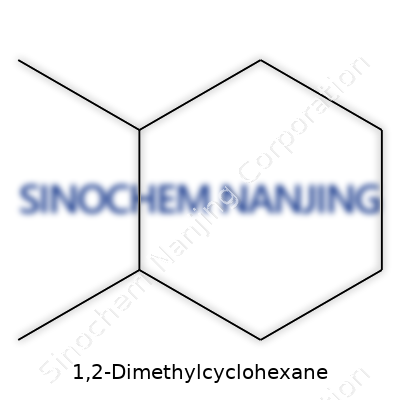
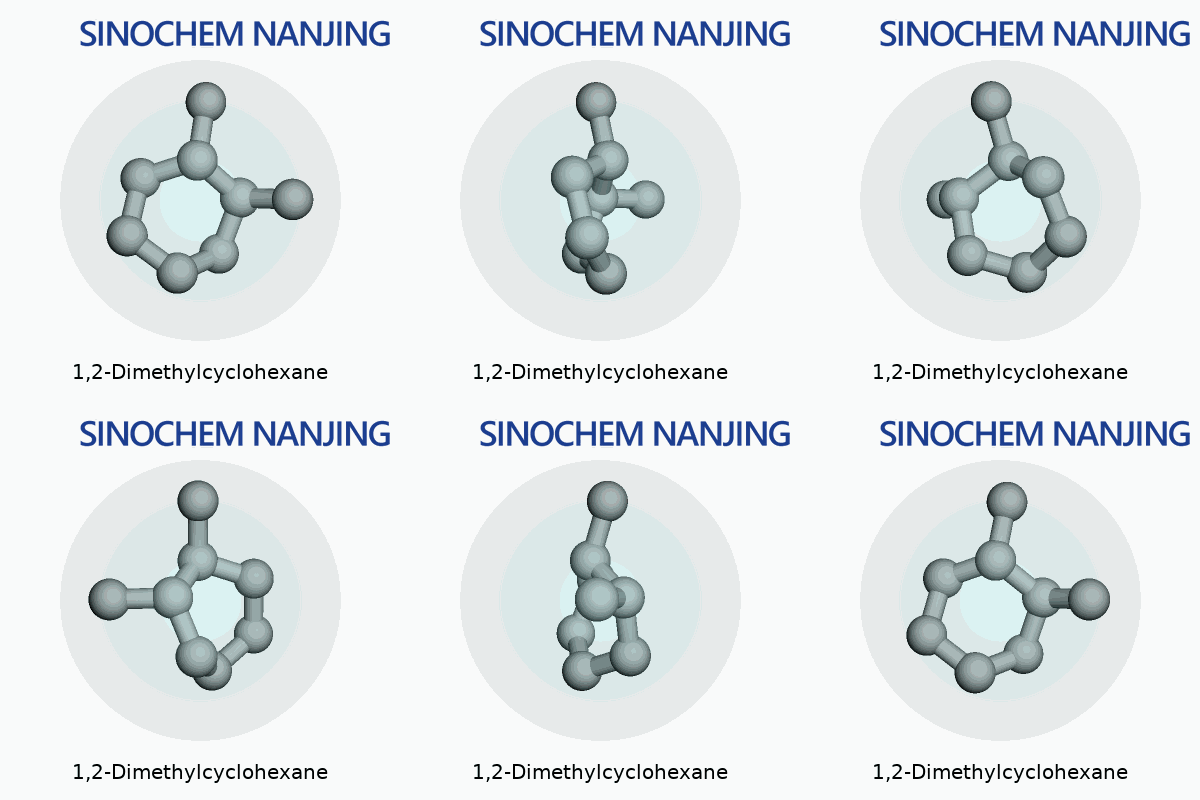
| Names | |
| Preferred IUPAC name | 1,2-dimethylcyclohexane |
| Other names |
cis-1,2-Dimethylcyclohexane trans-1,2-Dimethylcyclohexane 1,2-Dimethylhexahydrobenzene |
| Pronunciation | /ˈwaɪˌtuː daɪˈmɛθɪlˌsaɪkloʊˈhɛkseɪn/ |
| Identifiers | |
| CAS Number | 583-05-1 |
| Beilstein Reference | 1421117 |
| ChEBI | CHEBI:20537 |
| ChEMBL | CHEMBL22241 |
| ChemSpider | 16213 |
| DrugBank | DB14158 |
| ECHA InfoCard | d343d7ca-262a-45bb-ad26-f23a0d965212 |
| EC Number | 203-710-6 |
| Gmelin Reference | 8777 |
| KEGG | C16510 |
| MeSH | D003909 |
| PubChem CID | 11722 |
| RTECS number | GU4375000 |
| UNII | 1P9E8GHZ54 |
| UN number | UN2266 |
| CompTox Dashboard (EPA) | Q27213970 |
| Properties | |
| Chemical formula | C8H16 |
| Molar mass | 140.27 g/mol |
| Appearance | Colorless liquid |
| Odor | mild odor |
| Density | 0.777 g/mL |
| Solubility in water | Insoluble |
| log P | 3.61 |
| Vapor pressure | 3.6 mmHg (25°C) |
| Acidity (pKa) | Cyclohexane: ~50 |
| Magnetic susceptibility (χ) | -62.8·10⁻⁶ cm³/mol |
| Refractive index (nD) | 1.424 |
| Viscosity | 0.898 cP (25 °C) |
| Dipole moment | 0.11 D |
| Thermochemistry | |
| Std molar entropy (S⦵298) | 274.1 J·mol⁻¹·K⁻¹ |
| Std enthalpy of formation (ΔfH⦵298) | -156.9 kJ/mol |
| Std enthalpy of combustion (ΔcH⦵298) | –4681.7 kJ·mol⁻¹ |
| Hazards | |
| GHS labelling | GHS02, GHS07 |
| Pictograms | GHS02,GHS07 |
| Signal word | Warning |
| Precautionary statements | P210, P233, P240, P241, P242, P243, P261, P271, P301+P310, P303+P361+P353, P304+P340, P312, P331, P370+P378, P403+P235, P405, P501 |
| NFPA 704 (fire diamond) | 1-1-0 |
| Flash point | 42 °C (108 °F) (closed cup) |
| Autoignition temperature | 279 °C (534 °F; 552 K) |
| Explosive limits | 1.0–6.6% |
| Lethal dose or concentration | LD50 oral rat 3980 mg/kg |
| LD50 (median dose) | LD50 (median dose): 3,820 mg/kg (rat, oral) |
| NIOSH | NA2975000 |
| PEL (Permissible) | Not established |
| REL (Recommended) | 50 ppm |
| IDLH (Immediate danger) | Unknown |
| Related compounds | |
| Related compounds |
Cyclohexane Methylcyclohexane 1,3-Dimethylcyclohexane 1,4-Dimethylcyclohexane 1,2,4-Trimethylcyclohexane |



