1,2-Dimethoxyethane: Unraveling a Familiar Workhorse of Chemistry
Historical Development
Looking over the last hundred years, 1,2-Dimethoxyethane has tracked an interesting path through chemistry labs. This molecule first drew attention in the early days of organic synthesis—researchers needed reliable solvents, and they often reached for anything that could dissolve salts or push ionic reactions without reacting itself. Back in the middle of the twentieth century, the rise of lithium-ion batteries and finely tuned synthetic methods elevated the status of seemingly basic solvents. Practical and efficient, it earned a reputation as the sort of tool you pull from the drawer again and again. It proved its worth not just in fancy new battery designs but also in classic organic transformations.
Product Overview
Every good lab bench carries a bottle of 1,2-Dimethoxyethane, more often called glyme or DME. It looks clear and smells slightly sweet, giving little hint of its versatility. Chemists reach for it when they need something to dissolve both polar and nonpolar chemicals without interacting unpredictably. This balance gives it a seat at almost any experimental table, whether swinging pipettes in a research institution or producing specialty materials on a bigger scale. In my own experience, nothing replaces the clean way it handles both salts and organometallics. Startups as well as legacy labs find it a mainstay, since there aren’t many direct competitors that bring the same set of talents.
Physical & Chemical Properties
1,2-Dimethoxyethane flows like water but brings a mild ether-like aroma and low viscosity, which reduces headaches around measurement and mixing. Its boiling point hovers just under 85°C, giving enough thermal window for most reactions but offering an easy exit route if you need to distill or evaporate it. What matters more than the numbers, though, lies in its ability to dissolve both solutes and salts, especially lithium salts. Not many common solvents bridge that gap; DME does it smoothly. Solubility and volatility are both strengths, and in my own gloves-on work, I’ve welcomed that reliable behavior for reactions that run at moderate heat or need solvents that don't dangle water molecules like a tail.
Technical Specifications & Labeling
Buying a liter of 1,2-Dimethoxyethane, you want to check the label for purity. High-performance uses—like battery electrolyte production—call for extra-pure versions, with water and peroxides tightly controlled. The big labels warn about peroxide formation, since ethers can turn nasty with oxygen around. Chemists learn to test and, in many cases, stabilize ethers once bottles stay open for weeks. That careful labeling—water content, peroxide status, and trace metals—affects synthetic yields, battery output, or even the color of extracted products. In tight research work, a small deviation can send experiments off track.
Preparation Method
Making 1,2-Dimethoxyethane usually means starting from ethylene glycol or ethylene oxide and feeding in methylating agents, often methyl halides. The path winds through careful control of temperature and pressure to stop roughed-up byproducts. The chance to make this molecule at scale opened the door to constant supply, further dropping costs and growing its impact. I've heard stories—sometimes warnings—about side reactions, as methylating processes often produce a side stream of impurities if conditions slip. But in practice, reliable manufacturers balance scale and quality, focusing sharply on keeping peroxides low and reducing those trace halide leftovers.
Chemical Reactions & Modifications
Ask any bench chemist about ethers and they’ll mention stability: DME isn't quick to react under most laboratory conditions, which fits its primary use as a solvent. The methoxy groups do shield the backbone, so nucleophiles or strong acids rarely attack it. Long exposure to air means slow peroxide buildup, which can spell danger if left unchecked. Many modification strategies use DME as a scaffold to build larger polyethers—the so-called glyme family. Some research pivots into functionalizing the molecule for coordination chemistry, or as ligands for metals like lithium and magnesium. In most cases, stability wins out—no one wants their solvent to steal the spotlight from the compounds that matter.
Synonyms & Product Names
1,2-Dimethoxyethane wears a lot of hats. People call it glyme, monoglyme, dimethyl ethylene glycol, and DME among other names. The market sometimes splits—some brands focus on “battery grade” DME, advertising ultra-low water and trace impurities for use in modern lithium-ion and sodium-ion batteries. Others simply bottle “reagent grade” for labs and chemical plants. Navigating synonyms in academic papers gets tiresome, as older literature often switches between dimethoxyethane and glyme with little warning.
Safety & Operational Standards
Every time I handle DME, I remind myself to manage risk sensibly. Ethers like DME enjoy relatively low toxicity, but peroxide formation—especially in partially empty bottles—triggers serious hazards. Ethers left open, especially near light and air, form peroxides quietly but can detonate if concentrated or evaporated in closed spaces. Safety standards balance frequent peroxide testing, secure storage, and restricting ignition sources. College labs train students to pour this solvent under fume hoods, keep it tightly stoppered, and test for peroxides regularly. Personal experience confirms how quick safety lapses skip generations; a small spill can flash fire unless everyone stays sharp.
Application Area
Chemists count on DME for organometallic chemistry. It shines as solvent in the production of Grignard reagents and in reactions needing strong solvation of ions. Battery makers invest millions in finding the perfect electrolyte mix, and DME stays in the running—its high dielectric constant and strong dissolving power for lithium salts keep it relevant for next-gen designs, especially for high-voltage cells. It anchors research work in polymer synthesis and complexation studies thanks to how it supports both cations and organic frameworks. Industry-wide, DME carves out a spot in pharmaceuticals, fine chemicals, surface engineering, and functional materials. The reach of this molecule cuts across boundaries because few other solvents play so well with both metal ions and organic reactants.
Research & Development
Research into 1,2-Dimethoxyethane took off in parallel with growth in advanced batteries. Academic and private labs spend resources comparing glyme with other ether solvents, looking to boost charge/discharge rates or improve the thermal stability of battery systems. A lot of effort focuses on formulations that combine DME with other solvents or new salts to tackle flammability and cycle-life issues. In my experience, chemists still wrestle with whether DME can withstand repeated cycling without degradation, especially under demanding conditions. Papers keep emerging on its behavior with lithium and sodium, proposing tweaks in purity or additives that might tip the balance. Researchers dig deep into its coordination chemistry, searching for ways to exploit the unique interactions between glymes and alkali metals inside both batteries and catalysts.
Toxicity Research
Toxicology studies show that 1,2-Dimethoxyethane holds relatively low acute toxicity in rodents, but like most ethers, chronic exposure or mishandling can produce health effects. Recent data give little reason for panic when working at the bench, but do recommend careful ventilation—vapors cause mild irritation, and high-level exposures may harm the nervous system over time. DME’s tendency to carry trace impurities or create reactive peroxides means that handling protocols must make room for both chemical purity and practical safety. I’ve seen teams adopt fume hoods and glove-boxes as standard, especially for battery R&D or scale-up work. Researchers call for better data covering long-term and reproductive effects; the current regulatory environment requires tracking exposures and minimizing unnecessary contact wherever possible.
Future Prospects
Looking ahead, 1,2-Dimethoxyethane won’t fade from the scene any time soon. The world leans further into battery-driven transportation and renewable energy storage, so solvents that support high-energy storage solutions only gain value. Research on electrolyte blends highlights DME’s role at the core of improved anode-cathode performance. At the same time, regulatory pressure for safer, less volatile, and non-flammable solvents spurs continuous innovation. Some startups target bio-based or modified glymes with built-in safety switches. Chemical engineers experiment with recycling and purification techniques, hopeful they can stretch the life of each mole. Industry veterans know that no universal “green” solvent stands ready to take DME’s seat just yet. For now, the molecule’s practicality and proven reliability keep it working while newer candidates wait their turn in the wings.
What is 1,2-Dimethoxyethane used for?
What Drives the Use of 1,2-Dimethoxyethane
I’ve worked in chemistry laboratories where 1,2-dimethoxyethane—more often called DME—plays a critical part. It looks innocent enough: colorless, with a faint odor that follows you home after a long day in the lab. But it pulls far more weight than most people realize. Professionals in research, manufacturing, and battery development rely on it, not because it’s trendy or easy, but because it fits jobs nothing else quite can.
Powering Up Lithium Batteries
One of the most important uses of DME lands squarely in the world of battery technology. Modern lithium batteries eat up DME because of its knack for dissolving complicated lithium salts. The solvent doesn’t quit at normal temperatures. It lets ions move where they need to go, helping batteries charge faster and last longer. Anyone with a smartphone, electric vehicle, or solar home battery owes a bit of thanks to DME. Without it, companies would struggle to create safer, longer-range batteries.
Chemistry’s “Go-To” Solvent
Anyone who’s ever been elbow-deep in chemical synthesis knows DME as an all-star solvent. In my undergrad days, we seemed to run through gallons during finals season. DME dissolves both polar and nonpolar compounds, which makes it a standby in a chemical toolkit. Grignard reactions—essential for creating pharmaceuticals—thrive because DME can keep everything mixed and reactive. Many critical drugs and agricultural products only become reality because their building blocks come together in DME.
Tougher, Cleaner Electronics
The electronics industry leans on DME, particularly during manufacturing and cleaning. Printed circuit boards rely on solvents that remove stubborn residues but don’t leave conductive films or threaten the hardware. DME evaporates fast, so it helps clean tiny electronic bits before contamination or corrosion sets in. Some factories use it to extract rare earth elements, which go into everything from LEDs to your laptop’s processor.
Green Chemistry and an Eye on Safety
Anyone familiar with lab safety respects DME for what it is: flammable, volatile, and not a newcomer to the hazardous material list. Its vapors need plenty of ventilation and careful handling. The catch is, as chemistry moves toward greener, safer solvents, researchers keep looking at ways to either replace or recycle DME. That’s a tall order. Renewable alternatives don’t yet hit the same performance notes, so for now, most labs can only lower risks by tightening up best practices.
Why All This Matters
A substance like DME rarely gets credit. Most people outside chemistry never hear about it—yet it fuels breakthroughs in energy storage and medicines that shape our lives. Keeping an eye on how we use such solvents, and searching for better substitutes, ties into bigger conversations about sustainability in tech and medicine. Big changes start in small glass vials and the little extras, like DME, can tip the balance toward cleaner, safer, and more promising science.
Is 1,2-Dimethoxyethane hazardous or toxic?
What 1,2-Dimethoxyethane Does in the Lab
Anyone walking through a chemistry lab has probably tripped over a bottle labeled “1,2-Dimethoxyethane.” This clear, colorless liquid does a lot of heavy lifting. Found in research, battery production, and even some pharmaceuticals, it helps dissolve salts better than plain water or many other solvents. Scientists like its flexibility and reliability. They can strip away unwanted substances and coax otherwise stubborn compounds into solution.
Not All Solvents Are Created Equal
Ask anyone who’s worked in chemistry, and they’ll tell you: solvents can be trouble. Some burn your skin or leave you lightheaded. Others linger in the body long after exposure. 1,2-Dimethoxyethane tends to raise questions since it evaporates quickly and can get into the air easily. It doesn’t take much for someone to start breathing in fumes without noticing right away.
Toxicology studies have found this solvent comes with a few real risks. In animal tests, exposure caused liver and kidney changes at high doses. The material can also irritate the eyes and skin. Those who use it regularly should take that seriously. Contact rarely leads to obvious symptoms at first. Stinging eyes or a mild itch may seem minor. Over time, especially in closed spaces, these little exposures stack up.
Breathing and Absorption Risks
Vapors sneak into lungs fast. Users might not even realize how quickly air in a lab can hit unsafe levels without proper ventilation. Masks with organic vapor cartridges and solid local exhaust fans make a huge difference. In my own lab days, working in front of a fume hood was a baseline rule. Slipping up, even for a simple measurement or transfer, left me with a headache and a dry throat. Once you notice a sweet ether-like smell, it’s a warning sign to back out.
Fire Hazard Hits Home
Forget just health for a minute. This liquid ignites much easier than water-based solvents. One stray spark, even a static discharge from synthetic clothing, can turn a bad day into an emergency in moments. If you’ve ever watched a chemical go up in flames, you remember the adrenaline rush and panic. Fire blankets and extinguishers get regular checks for a reason. Spills should always be cleaned up immediately—paper towels and open trash cans can become ignition sources.
Waste Isn’t Simple
Throwing away extra solvent may sound simple. Municipal waste systems often can’t deal with chemicals like this. Improper disposal can seep into water supplies and harm aquatic life. Training people to label and separately store spent solvent avoids environmental headaches. Institutions that collect specialty waste make everyone’s work—inside and outside the lab—safer.
Staying Safe—Practical Solutions
Daily use calls for careful habits. Eye protection, gloves, and lab coats offer decent front-line defense. Good record keeping and clear labeling cut down on accidents. Regular training for new lab workers keeps everyone on the same page about what to do in case of exposure or fire. Investing a little extra effort up front means fewer emergencies down the road.
1,2-Dimethoxyethane isn’t something to fear, but it deserves respect. Like many favorites in the chemical toolbox, it can turn dangerous if its risks get ignored.
What are the storage conditions for 1,2-Dimethoxyethane?
Understanding the Chemical’s Character
1,2-Dimethoxyethane, often found in glass bottles or metal containers inside chemical storage cabinets, demands real respect from anyone who works with it. I remember the sharp, ether-like smell the first time I opened a bottle in the lab. This solvent, well known for dissolving a broad range of organic compounds, isn’t benign. Its low flash point—much lower than room temperature—means it lights up easily. Keeping this fact in mind can prevent disaster.
Risks Hidden Behind a Routine Label
At a glance, the clear liquid looks harmless. Research tells a different story. It evaporates quickly and forms vapors heavier than air. These vapors settle, drifting along benches and floors, sometimes traveling to ignition points far from where you expect. I’ve seen colleagues underestimating this risk, storing it carelessly near electrical equipment. More than one accident has started this way—not from some exotic reaction, but a moment of inattention around a common solvent.
Solid Steps for Safe Storage
To cut risk, you want the right approach from the start:
- Keep it cool. Room temperature is already pushing the boundaries. A dedicated flammable liquids refrigerator lowers the risk of fire. In hot climates or poorly ventilated rooms, the danger only increases.
- No sunlight. Light breaks down many solvents. A dark, shaded storage area helps maintain stability.
- Lock it away. Access control can’t be skipped. Every bottle goes into a flameproof cabinet, away from oxidizers and acids. Stacking incompatible chemicals together is a shortcut to regret. MSDS sheets show clear evidence—combining certain chemicals has caused warehouse fires and even explosions.
- Good caps matter. Once, a leaky cap filled our cabinet with that sharp odor. The vapor risk grows with each poor seal. Always double-check for intact gaskets and tight threads.
Health Takes Priority: Ventilation and Protective Measures
Breathing in the fumes is hazardous. Even in short stints, headaches or drowsiness can hit. Chronic exposure holds more serious threats—possible liver and kidney damage, nervous system effects—so strong ventilation becomes a non-negotiable standard. Fume hoods or local exhaust systems serve as the best defense in small workspaces. Regular checks keep the system functional, preventing gradual buildup of vapors over time. Anyone opening the bottle needs gloves and goggles as a basic courtesy to themselves. Nitrile gloves shield against skin contact, which isn’t a trivial matter with solvents like this one.
Solutions That Work in Everyday Labs
For new lab techs or garage chemists, labels and reminders placed front and center on storage cabinets help avoid old mistakes. Routine audits catch lapses—in my own experience, a supervisor’s surprise inspections made everyone remember the rules. Training and signage drive the message home: no shortcuts. Emergency supplies—spill kits, absorbents, fire extinguishers—stay ready, not buried in some back room.
Treating 1,2-dimethoxyethane with the same caution as other low-boiling ethers, like diethyl ether or THF, keeps people and property out of harm’s way. Looking at data from industrial accidents points straight to the same lesson: diligence beats luck, every day.
What is the chemical formula and molecular weight of 1,2-Dimethoxyethane?
The Chemical Formula That Shapes Everyday Lab Work
Inside any lab that deals with organic chemistry, seeing a bottle labeled with “1,2-Dimethoxyethane” sparks instant recognition. People who spend time around solvents know it under other names too, like glyme or monoglyme. Its chemical formula is C4H10O2, showing a simple backbone built from four carbon atoms, ten hydrogens, and two oxygens. Each detail in that formula unlocks a piece of its story—how it acts, why people use it for so many tasks, and what makes it tick on a molecular level. The molecular weight lands at 90.12 g/mol, letting chemists fit it into calculations with precision and consistency.
Why Knowing the Numbers Matters
I remember trying to mix up a batch of electrolytes for battery tests, hunting for a solvent that could keep lithium salts dissolved even at low temperatures. Reaching for a chemical without knowing exactly what’s inside can torpedo a whole experiment. For 1,2-Dimethoxyethane, its formula means it slots into reactions and tests where other ethers or alcohols fall short. Each oxygen atom in the chain brings in reactivity and solubility that carves out its own uses in labs and industry.
Having worked with this chemical on bench tops and during scale-ups, clarity about its formula and weight stopped mistakes before they started. When solvents get mixed from bulk drums, one error in calculation—especially if you misjudge gram weights—cascades through the whole batch. Chemists count on these plain data points to keep measurements clear, waste low, and risk out of the way.
Everyday Uses and the Facts Behind the Scenes
Beyond the number crunching, glyme becomes a problem-solver in tough spots. Its formula lets it dissolve a wide family of inorganic salts, making it useful in extractions, cleaning steps, and electrochemical setups. Its low viscosity flows better than many alcohols or glycols, smoothing out coatings and helping in polymer production. Researchers count on its reliable boiling point—about 85 °C—to distill it easily and recover it after use.
In battery labs, people combine 1,2-Dimethoxyethane with other co-solvents. It helps stretch the lifetimes of lithium-based cells, keeping performance steady in research and commercial applications. These details on formula and weight thread through every stage from ordering supplies to final disposal: nobody wants a mislabel hitting waste streams or fouling up sensitive detectors.
Challenges and Steps Toward Safer Handling
Anyone who handles chemicals tends to hear stories: a mislabeled drum, a calculation gone sideways, someone reaching for a solvent with the wrong density plugged into their work. Such mistakes cost time and sometimes risk safety. The clear formula C4H10O2 and accurate molecular weight give a foundation to spot-check orders, confirm identities with quick tests, and avoid slip-ups that simple data can prevent.
Getting these basics right spreads through every layer of lab work. Students training in research settings, experienced technicians on the production floor, and managers signing off on solvent purchases all lean on these same data points. As labs push for greener chemistry and safer processes, careful handling starts with the unglamorous roots—a correct formula, a trusted weight, both flagged at the very first step.
What are common applications of 1,2-Dimethoxyethane in industry or laboratory settings?
Seeing Real Problems, Not Just Molecules
Step into any chemistry lab and you’ll spot clear bottles filled with liquids you might never notice in daily life. One of those liquids—often labeled as DME, which stands for 1,2-dimethoxyethane—helps turn ideas into real applications. It looks like a simple solvent, but it’s a tool with a backbone, playing a role in both groundbreaking science and everyday operations.
Batteries, Energy, and the Push for Better Power
People talk a lot about lithium batteries. Powerful, lightweight batteries run our phones, laptops, and even many cars today. The inside of those batteries is a complex soup. DME finds use as a solvent here because it can dissolve lithium salts without breaking a sweat. Battery researchers rely on DME to increase how fast lithium ions move between the electrodes, which gives devices better performance and longer lifespans. It’s not just lab theory—DME is part of the quest for cleaner, more reliable power, making electric transportation more practical and reducing our reliance on fossil fuels.
Saving Time and Money in Synthetic Chemistry
Organic chemists, who work with carbon-based compounds, need solvents that stay stable and dry. DME fits this bill, letting them run reactions that water would ruin. It works especially well for reactions involving organometallic compounds such as Grignard reagents. Grignard chemistry matters because it lets scientists build complex molecules for drugs, plastics, and materials that end up in households and hospitals. The consistency and ability of DME to coordinate with metal atoms mean experiments finish faster, with less fuss about unwanted side reactions.
Finding Solutions in the Polymer Industry
Polymers—basically plastics—are the backbone of daily living. DME steps in as a solvent here, too. During the making of certain specialty plastics, DME makes it possible to dissolve raw ingredients so they mix and react just right. This clarity helps companies control product features, such as flexibility or heat resistance, which makes a difference whether you’re making medical devices or packing materials.
Cleaning Up and Recovering Metals
In the world of mining and refining, extracting metals efficiently is always a challenge. DME lends a hand as a solvent in some metal extraction processes, especially those using electrolytes. Its ability to dissolve specific salts better than water means recovery costs less and the process runs smoother. This helps cut both waste and expense, making metal recovery more sustainable and profitable.
Lab Work: Clarity Through Dryness
Water can crash a chemical reaction faster than you might think. DME offers a safer, less flammable alternative to ethers like diethyl ether, which catch fire too easily for comfort. It boils at a slightly higher temperature, so it’s easier to handle without losing solvent to the air. Chemists use it over and over for purifying and isolating sensitive compounds.
Addressing Challenges and Responsibility
Working with DME isn’t always risk-free. It’s flammable and poses some health concerns, so labs need good ventilation, careful storage, and safety protocols. Companies have a responsibility to train staff and track solvent waste, since environmental agencies continue tightening rules about solvent disposal. Reclamation and recycling, along with research into less hazardous alternatives, should always be part of the plan.
Paving the Way to Tomorrow
The story of DME goes beyond a bottle on a shelf. Its real value shows up in places where performance, speed, and cleanliness matter. From powering green technologies to helping scientists in the race against disease, DME provides the foundation for innovation. Responsible use, ongoing learning, and respect for safety keep its benefits in play for industry, research, and the environment.
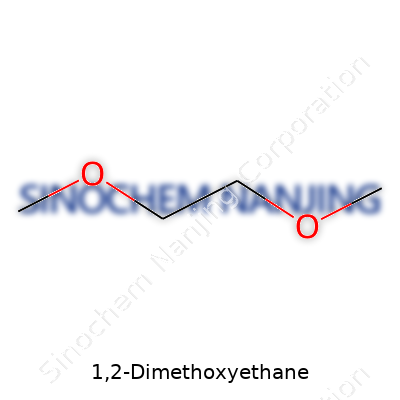
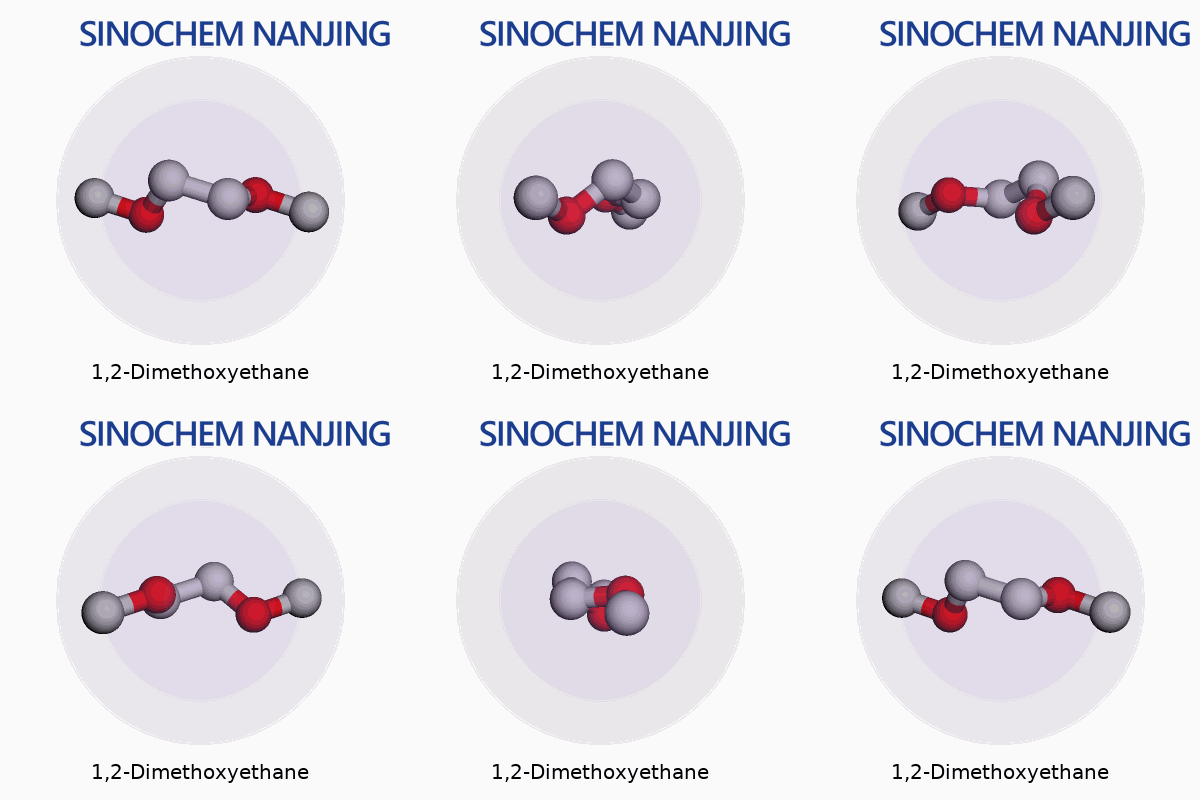
| Names | |
| Preferred IUPAC name | 2-methoxyethoxymethane |
| Other names |
DME Glyme Ethylene glycol dimethyl ether |
| Pronunciation | /ˈwaɪˌdiːˌɛmˈiːˌθeɪn/ |
| Identifiers | |
| CAS Number | 110-71-4 |
| Beilstein Reference | 1298730 |
| ChEBI | CHEBI:40458 |
| ChEMBL | CHEMBL15360 |
| ChemSpider | 6955 |
| DrugBank | DB01940 |
| ECHA InfoCard | 100.030.274 |
| EC Number | 203-794-9 |
| Gmelin Reference | 8186 |
| KEGG | C01193 |
| MeSH | D003588 |
| PubChem CID | 31236 |
| RTECS number | KL5775000 |
| UNII | Q4FVQ18TDL |
| UN number | UN1165 |
| Properties | |
| Chemical formula | C4H10O2 |
| Molar mass | 90.121 g/mol |
| Appearance | Colorless liquid |
| Odor | ether-like |
| Density | 0.867 g/mL at 25 °C |
| Solubility in water | Miscible |
| log P | -0.21 |
| Vapor pressure | 48 mmHg (20°C) |
| Acidity (pKa) | 38.0 |
| Basicity (pKb) | -1.3 |
| Magnetic susceptibility (χ) | -48.0×10⁻⁶ cm³/mol |
| Refractive index (nD) | 1.378 |
| Viscosity | 0.455 mPa·s (25 °C) |
| Dipole moment | 2.21 D |
| Thermochemistry | |
| Std molar entropy (S⦵298) | 204.0 J·mol⁻¹·K⁻¹ |
| Std enthalpy of formation (ΔfH⦵298) | –413.4 kJ·mol⁻¹ |
| Std enthalpy of combustion (ΔcH⦵298) | -2745 kJ/mol |
| Hazards | |
| GHS labelling | GHS02, GHS07 |
| Signal word | Warning |
| Hazard statements | H225, H319, H336 |
| Precautionary statements | P210, P261, P280, P301+P312, P303+P361+P353, P305+P351+P338, P337+P313, P370+P378, P403+P233, P501 |
| NFPA 704 (fire diamond) | 1-1-0 |
| Flash point | 42 °F |
| Autoignition temperature | 188 °C |
| Explosive limits | 1.5% - 24% |
| Lethal dose or concentration | LD50 oral rat 5500 mg/kg |
| LD50 (median dose) | LD50 (median dose): 5,500 mg/kg (rat, oral) |
| NIOSH | KK8225000 |
| PEL (Permissible) | Not established |
| REL (Recommended) | 1 ppm |
| IDLH (Immediate danger) | 500 ppm |
| Related compounds | |
| Related compounds |
Methoxyethane Diglyme Triglyme Tetraglyme |



