1,2-Diethylbenzene: More Than Just a Chemical Compound
Looking Back: How 1,2-Diethylbenzene Stepped into the Chemical World
Chemicals often have stories that go far beyond textbooks and lab shelves. 1,2-Diethylbenzene first got serious attention in the years of heavy innovation within the petrochemical industry. Back then, chemists looked for ways to pull more value out of crude oil, and the isomers of diethylbenzene were part of that hunt. Industrial applications had a habit of turning supposedly simple aromatic hydrocarbons into essential building blocks for materials, solvents, and intermediates. Amidst this, 1,2-diethylbenzene stood out for the ease with which it participated in key reactions. Its use developed in parallel with advances in zeolite catalysis, which helped refine and select the ortho isomer out of the jumble of possible products. Decades later, it's still relevant because these chemical pathways underpin so much of what modern synthetic chemistry can accomplish.
Getting to Know 1,2-Diethylbenzene Up Close
You’ll find 1,2-diethylbenzene’s molecular structure rooted in the classic six-membered benzene ring, with two ethyl groups parked on adjacent carbons. On paper, it sounds basic. In the drum or flask, it takes shape as a colorless, oily liquid, recognizable by its light aromatic scent. The structure gives it a reliable boiling point sitting around the mid-180°Cs and a density that marks it as less buoyant than water but not outrageously so. It’s not explosive, and it doesn’t corrode metal equipment, but it does bring its own quirks to the table. The bonds between that aromatic core and the ethyl chains hand it just the right balance: not too reactive in storage, but wide open to modification with the proper technique.
What’s in a Name? Synonyms and Common Labels
You might see 1,2-diethylbenzene under other names, especially if you dig through old literature. Some call it ortho-diethylbenzene because of the side-by-side position of those ethyl groups. In catalogues and chemical registries, the synonyms roll out: o-diethylbenzene and ortho-diethylbenzol crop up most often. Older texts lean toward benzene, 1,2-diethyl- as a sort of formal nod. Each version points to the same molecule, but context changes with the field of use and the country naming conventions.
Behind the Scenes: How Production Works
Making 1,2-diethylbenzene usually starts with ethylbenzene or straight benzene. Classic methods rely on alkylation—a controlled reaction between benzene and ethylene with acidic catalysts like zeolites or aluminum chloride. Control over reaction temperature, catalyst activity, and the ratio of benzene to ethylene directs the formation toward the ortho isomer. Since several isomers appear together in the product, skilled distillation or crystallization steps sort out the target from the mix. These steps must account for cost, purity, and waste management, which always seems trickier than guides make it sound. The big push now is for cleaner, more selective syntheses that trim down unwanted byproducts, especially as regulatory eyes watch discharge and emissions tightly.
What Can It Do? Reactions and Modifications
Though you can store 1,2-diethylbenzene without too much fuss, it’s ready to show off its versatility once chemists put it into a reaction flask. That benzene ring can take sulfonation, nitration, halogenation, and even oxidation if conditions are lined up right. The ethyl groups can be pulled off or shifted around with strong enough reagents. Lab workers might transform it into diethylphthalic acids or other aromatic derivatives for use in plasticizers, resins, and specialty solvents. Because each alteration changes the properties, the compound finds itself at the center of research on creating new polymer additives, surfactants, and intermediates for dyes.
Where It Ends Up: Applications That Matter
1,2-diethylbenzene holds its ground best as an intermediate rather than a product for direct use. Its main gig—acting as a stepping stone for complex molecules—keeps it circulating through industrial research and custom synthesis labs. It's valuable in the production processes for synthetic oils, as a building block for certain dyes and lubricants, and sometimes for specialty solvents. The paint industry, lubricant formulators, and resin manufacturers sometimes turn to it, chasing specific properties they can't get from simpler aromatics. Its ring structure and side chains give flexibility in chemical modification, so it can be custom-shaped for the needs of modern materials and novel polymers.
Safety and Operational Practices: What Experience Teaches
Anyone who’s poured or transported a drum of aromatic hydrocarbons knows a few truths: personal protective equipment isn’t just good policy, it’s non-negotiable. 1,2-diethylbenzene vapor can irritate skin and mucous membranes even after short exposure. Safety data hammer on the importance of ventilation, eye protection, and grounded containers to prevent static discharge. The MSDS sheets urge immediate washing with water for accidental skin contact and call for cleanup methods that minimize volatilization. Fire hazards are real, too, so good storage demands cool, shaded, and dry spaces, well away from open flames. Decades in labs and factory floors show that the real dangers come not from headline-grabbing incidents, but from lax routines and casual shortcuts that add up over time.
Reading the Research: Development and Toxicity Studies
Measuring health impact and environmental safety, researchers check both acute and chronic exposure. Most reports group it with other diethylbenzenes, noting moderate toxicity by inhalation and low risk at environmental levels, but industrial-grade exposures push beyond that comfort zone. Lab animal studies highlight liver and kidney effects at high doses, but these don't often match real-world scenarios. Still, caution remains the watchword, especially as cumulative, long-term exposure leaves researchers asking if subtle effects might surface later. Analytical chemists continue to refine detection in soils and waste streams, a welcome development as stricter rules demand detailed traceability for even low volume specialty chemicals.
New Horizons: What the Future Holds
Opportunities for improvement always catch my attention, especially in synthesis and downstream applications that cut both cost and risk. The wave of green chemistry continues to reshape how chemists look at aromatic hydrocarbons like 1,2-diethylbenzene. Cleaner alkylation catalysts, lower waste yields, and smarter reaction monitoring could drive efficiency in the near future. There's also growing interest in custom-tailoring aromatic intermediates for specific advanced materials, such as next-generation polymers, flexible electronics, or new solvent systems needed for low-carbon manufacturing. As scientific curiosity and regulation push the envelope, only those compounds that show both reliability and adaptability will earn their place in tomorrow’s factories and research labs. The journey for 1,2-diethylbenzene is far from over, in spite of its long track record, and that keeps both industry veterans and up-and-coming chemists watching closely for what's next.
What is 1,2-Diethylbenzene used for?
A Quiet Player in the Chemical Industry
1,2-Diethylbenzene may not grab headlines, but it has its hands in more projects than people realize. I remember early days in a small lab, watching technicians lean over rows of clear liquids that looked like they could be anything. One of those, unfamiliar to most outsiders, was 1,2-Diethylbenzene. Back then, I learned that chemists see value in places others might not look — this compound being a perfect example.
Solvent and Chemical Intermediate
Chemical plants use 1,2-Diethylbenzene as a solvent. It works quietly behind the scenes, helping reactions between other chemicals. Strong solvents need to keep their cool around heat and hold up to tough reactions. This compound handles those jobs. I’ve seen technicians add it to help mix immiscible ingredients, getting reactions moving that wouldn’t go anywhere on their own. Compared to some aggressive solvents, it offers a balance between power and not tearing up everything it touches.
There’s another side to the story. Beyond just helping mix things, 1,2-Diethylbenzene serves as a building block in organic synthesis. Manufacturers break it apart, rearrange its structure, or pull off an ethyl group to create other chemicals. Petrochemical plants depend on compounds like this one to churn out a stream of specialty chemicals used in everything from antioxidants to dyes.
High-Octane Fuels and Additives
Many people think of the stuff that makes engines run as straightforward fuel pumped from beneath the ground. In reality, gasoline gets tuned and tinkered with in umpteen different ways. Aromatic hydrocarbons like 1,2-Diethylbenzene have popped up as fuel additives because they boost octane levels. A smoother-burning engine owes some of its performance to compounds most drivers never hear about. I once spent a summer working under an auto mechanic who barely blinked at the inner chemistry but could tell right away when a tank ran cleaner on the right additive mix.
There’s a flip side, though. Aromatics often bring environmental headaches. Exposure can pose health risks, so industrial hygiene teams keep a close eye on levels during production and use. Regulations limit how much can wind up in fuel that gets sold at the pump.
Cleaner Chemistry — and What Comes Next
The world keeps pushing toward safer, greener alternatives. I’ve seen research teams scrutinize every chemical that ends up in a product, weighing environmental and health burdens just as much as cost. 1,2-Diethylbenzene demonstrates the tension between the need for high-performance solvents and additives and the drive toward sustainability in production.
Solutions involve tightening controls, refining processes, and hunting for replacements with better safety records. A robust supply of PPE, strong ventilation, and close air monitoring go a long way for people who handle volatile chemicals on a daily basis. Some companies have started switching to greener solvents where possible, though finding equivalents that match 1,2-Diethylbenzene’s properties can become a real challenge.
Benzene derivatives like this one run through more products and processes than most folks imagine. Each step forward in making or using them safely leaves all of us better off.
What are the physical and chemical properties of 1,2-Diethylbenzene?
Looking at the Basics
1,2-Diethylbenzene shows up as a clear, colorless liquid, carrying a sweet, gasoline-like scent. Most people outside certain industries might not run into it, but its profile still ties into daily life. This molecule’s backbone has a benzene ring, with two ethyl groups sitting on neighboring carbon atoms. That small change—just two extra carbon chains—shifts its boiling point to around 183 degrees Celsius and melting point near -15 degrees Celsius. At room temperature, it goes from bottle to vapor easily, so anyone working with it needs decent ventilation.
Its density, roughly 0.86 grams per cubic centimeter, runs lower than water, so if poured out, it would form a layer on top. That fact alone means anyone in a spill situation must think fast about cleanup and containment. Water will just send the liquid floating, not sink or mix, making it important to know your materials before reaching for the mop.
Chemical Personality
1,2-Diethylbenzene falls into the group of aromatic hydrocarbons. It doesn’t mix with water—typical for benzene derivatives—so it prefers oil, ether, or other organic solvents. Its molecular formula is C10H14. If someone drops it in water, the liquid keeps to itself, glistening as a separate phase.
Working in a chemical plant, I’ve seen how its ability to dissolve oils helps during product separations and cleanups. It sticks close to other non-polar substances but shies away from polar ones. That's a big point for physical handling and also for understanding potential health risks: its volatility and oil-loving nature can make cleanup tricky.
Reactivity and Precaution
Even though 1,2-Diethylbenzene doesn’t explode on its own, it burns easily when exposed to fire—think of it as sharing characteristics with gasoline. Vapors in closed spaces can build up and create flammable mixtures. Handling or storing it calls for good ventilation and spill plans. A safety data sheet flags its flammable status and respiratory irritation risk. These observations match what I’ve seen in labs where aromatic solvents force us to treat them with extra respect.
On a molecular level, this compound doesn’t just sit around untouched. It resists breaking down under moderate conditions, but with the right catalysts, it undergoes oxidation, turning into acids or other byproducts. Given its reactivity, industries tap into it for making other chemicals, especially in organic synthesis.
Why Safety and Knowledge Matter
Long hours in a chemistry lab have made me realize the value of understanding chemical properties before use. 1,2-Diethylbenzene stands as a reminder. Mismanaging a volatile, flammable compound creates hazards at work and beyond. Public reports on similar solvents show links between improper handling and fires or pollution.
Better storage—far from sparks—and using personal protective equipment offer simple, effective risk reduction measures. Introducing leak detection and improved labeling can slow down accidents before they start. Fact-based protocols, updated training sessions, and community right-to-know laws mean people stay safer—at home, in transit, or on the job. Open conversations around risks and properties pay off by keeping workers, neighborhoods, and the environment healthier.
Moving Forward
A focus on continuous training, regular maintenance of storage containers, and robust emergency response plans gives an extra layer of protection. In a time with more chemical use than ever before, taking time to know the physical and chemical realities of substances like 1,2-Diethylbenzene helps everyone make smarter, safer decisions, from lab benches to factory floors.
Is 1,2-Diethylbenzene hazardous to health or the environment?
Many Faces of 1,2-Diethylbenzene
1,2-Diethylbenzene doesn’t often make headlines, but it shows up in industrial operations, chemical labs, and sometimes in urban air. Used mostly as a chemical intermediate in processing and solvents, it usually keeps a low profile. Still, once you dig into what it’s made of and where it ends up, questions pop up about safety, both in health and the environment.
Breathing in Chemical Risks
From experience working at a chemical plant, the sharp solvent smell in the air always puts people on guard. Even if you’re following safety instructions, one whiff sticks around. Studies point out that inhaling aromatic hydrocarbons like 1,2-Diethylbenzene can irritate airways, trigger headaches, and sometimes make you dizzy. Chronic exposure leads to more troubling effects—liver stress, kidney strain, and worries for the long-term health of people who handle or work near such chemicals every day.
OSHA doesn’t set a clear exposure limit specifically for 1,2-Diethylbenzene, but its chemical cousins in the ethylbenzene family all get monitored closely. That alone signals a need for gloves, goggles, and real ventilation, not just by-the-book compliance. Data from the Agency for Toxic Substances and Disease Registry shows that similar compounds remain in fat tissue and can bioaccumulate. Workers sometimes downplay those headaches or mild nausea, chalking them up to bad weather or stress. Over years, these small exposures pile up.
Environmental Footprint
Chemicals like 1,2-Diethylbenzene don’t just vanish after use. Runoff and improper disposal leach into soil and streams, dragging along all the risks that come with persistence in the environment. Benzene-derived compounds carry a reputation for being slow to break down, especially in places where sunlight or microbes can’t easily get to them. The EPA considers benzene and its derivatives as air toxics for a reason; they travel in urban haze and hang around in groundwater.
Wildlife gets hit differently. Fish and aquatic insects exposed to these compounds show signs of toxicity—slowed growth, altered reproduction, and changes in behavior. People living near industrial zones sometimes notice odd tastes or odors in well water. Testing often traces those odors back to benzene-based chemicals. Kids and animals, who are both smaller and more vulnerable, seem hit hardest by long-term exposure to these traces.
Learning from the Lab and Field
Health and safety teams often recommend more than just gloves and goggles. Real protection means proper air handling, spill control, and clear labeling. Regular air and soil monitoring pick up leaks before they become headaches for entire communities. Training workers in basic chemical hygiene doesn’t just meet requirements—it sends folks home with clean lungs and clear skin at the end of their shifts. Researchers have found that activated carbon effectively scrubs aromatic hydrocarbons like diethylbenzene from water, and advanced oxidation treatments break down stubborn byproducts.
Communities benefit from transparency. Public posting of chemical inventories forces factories to think twice about footprints. Local health departments take soil and air samples, handing results straight to families living downwind. Some cities have mapped their contaminated zones and offered buyouts or medical screening, showing that response doesn’t always need to be slow and bureaucratic.
Looking Ahead
Every solvent or processing aid thrown into production should come with real scrutiny, not just paperwork. Getting honest about the true reach of chemicals such as 1,2-Diethylbenzene helps build safer jobs and cleaner neighborhoods. Limit emissions using new scrubber technologies, invest in water treatment, and support routine health screenings. Cleanups cost far less before the damage spreads. Sharing information helps workers and neighbors make better choices, from choosing PPE to pushing for local environmental testing. Years from now, the stories workers and families tell about chemical safety shouldn’t involve unexplained sickness or persistent odors in the air—they should center on well-maintained communities and healthy futures.
How should 1,2-Diethylbenzene be stored and handled safely?
Keeping Risks on the Radar
Few chemicals deliver a pungent reminder of their presence quite like 1,2-diethylbenzene. Anyone who’s popped a drum open knows what that sharp, sweet smell means: you’re dealing with a volatile organic compound. This isn’t a substance you stash wherever there’s an open shelf. Flammability tops the concerns, and any mistake can bring trouble quickly.
Why Proper Storage Makes a Difference
Back in my early days, I saw what happens when someone gets lazy about storage. A tank without proper grounding turned a regular workday into a page in the fire department’s logbook. It’s tempting to treat everyday chemicals as less dangerous, but a moment’s slip can cost property and sometimes lives. Insurance claims later rarely make up for lost time or health.
Strong science backs up the best storage practices. 1,2-diethylbenzene should live in a cool, well-ventilated spot. Heat ramps up evaporation and worsens explosion risks, so temperature control isn’t just wishful thinking. If there’s sunlight streaming into your chemical room, it’s not just your eyes that suffer; the risk of decomposition goes up, which can release nasty byproducts. Metal containers with secure lids, made from materials that stand up to aromatic hydrocarbons, keep vapors in check. Doors should stay locked, with signs up, so nobody wanders in out of curiosity.
Handling: No Room for Guesswork
Talking PPE isn’t about ticking boxes. Gloves, splash goggles, and lab coats stop burns, eye damage, and skin issues before they start. In my shops, we run through chemical splash drills for a reason. No matter how experienced someone is, panic after a spill never helps. Immediate washing with water remains the best first step if 1,2-diethylbenzene gets on the skin. Respirators or proper ventilation should always be an option—not every space gets enough airflow just by opening a window.
Spill kits catering to flammable organics need to sit within arm’s reach. Granulated absorbents and non-sparking tools belong on standby. After a cleanup, proper disposal is non-negotiable. Pouring leftovers down the drain or in general trash turns your facility into an environmental disaster zone and violates major regulations.
Supporting Safe Workplaces
Training goes beyond lectures and binders. Staff learn, remember, and care about procedures when they see direct links to their safety. Run regular refresher courses, update protocols every time your supplier changes, and encourage anyone who discovers a safety issue to speak up and fix it. Even old-timers benefit from being reminded that shortcuts, while tempting, often lead to disasters and paperwork.
The National Fire Protection Association ranks aromatic solvents like this one high on both flammability and health scales. Double-check local codes before a new shipment comes in. Emergency planners should know exactly where you store these chemicals and which door gets them fastest to a safe zone if something goes wrong.
Practical Solutions
Smart investments in automation can cut down mistakes. Leak detectors, automatic shut-off valves, and monitored climate systems spot issues before they become disasters. Digital logs track who moved the drum, when, and where, which brings accountability to every step. Sharing lessons learned, not just inside one company but with peer groups and industry alerts, keeps everyone a step ahead.
Respect for 1,2-diethylbenzene isn’t about fear—it’s about understanding that a disciplined approach saves hassle, money, and lives. Rely on real facts, share knowledge widely, and stay prepared for the unexpected.
What is the CAS number and molecular formula of 1,2-Diethylbenzene?
Understanding 1,2-Diethylbenzene
Organic chemistry brings a catalog of compounds, but each holds a different place in industry and research. 1,2-Diethylbenzene, sometimes known as o-diethylbenzene, lives as one of those lesser-discussed but significant aromatic hydrocarbons. It’s easy to skim over a compound like this in a textbook, but recognizing its identity is crucial for researchers, regulatory bodies, and supply-chain managers.
CAS Number: A Reliable Identifier
The Chemical Abstracts Service, or CAS, assigns numbers to substances to cut through confusion. For 1,2-Diethylbenzene, CAS points to 135-01-3. Scientists and suppliers around the world lean on this number to know everyone’s looking at the same compound. Even businesses outside the academy need CAS numbers to ensure that values in contracts match the bottles delivered. From my experience in the laboratory, a CAS number saves hours in cross-checking paperwork, and it keeps errors in shipment at bay. No one ever wants to receive a drum of a similar-sounding but functionally different compound because someone missed a digit.
Molecular Formula: C10H14
Knowing the atoms behind a substance changes how we see it. 1,2-Diethylbenzene carries the formula C10H14. This formula tells quite a bit: it’s based on the benzene ring, sporting two ethyl groups attached next to each other. Chemists can draw on this information to predict not only behavior in reactions, but also physical properties like boiling point or solubility. I remember lab days when a quick check of the molecular formula saved me from mixing incompatible chemicals. A single atom’s difference can pivot an entire procedure from safe to hazardous.
Why Details Matter in Industry and Research
Misidentification of chemicals causes delays and dangers. Imagine a student thinking she’s working with 1,3-diethylbenzene, only to find out later that the positional isomer she used behaves differently in her experiment. A CAS number and molecular formula act as a double-check: both pieces of data together practically erase such confusion. In chemical manufacturing, these details keep regulatory compliance clean and reduce inventory errors. Safety data sheets, toxicology reports, and shipping manifests all circle back to these critical identifiers. My time in academic labs taught me the true value of rigorous labeling, especially after seeing near-misses with incorrectly tagged vials. Mistakes become rare when everyone in the chain respects and understands the language of CAS numbers and molecular formulas.
Moving Toward Cleaner Communication
Industry-wide, the focus stays on making chemical data reliable and accessible. Chemical companies and labs would benefit from ongoing staff training on how to locate, interpret, and apply CAS numbers and molecular formulas. Digital inventory systems need upgrades to catch mismatches right away, flagging errors before anyone can act on them. Suppliers must stay transparent, posting accurate details on every shipment. In my experience, a conversation at the start of every project about these simple details often keeps bigger problems down the line in check.
Supporting Safer, Smarter Chemistry
So much research and technology depend on getting the basics right. CAS number 135-01-3 and the formula C10H14 connect scientists, businesses, and regulators through a common framework. Honoring accurate information about chemicals like 1,2-Diethylbenzene builds a safer lab, a smarter industry, and a stronger scientific community.
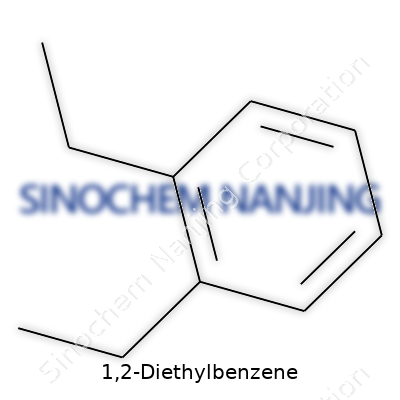
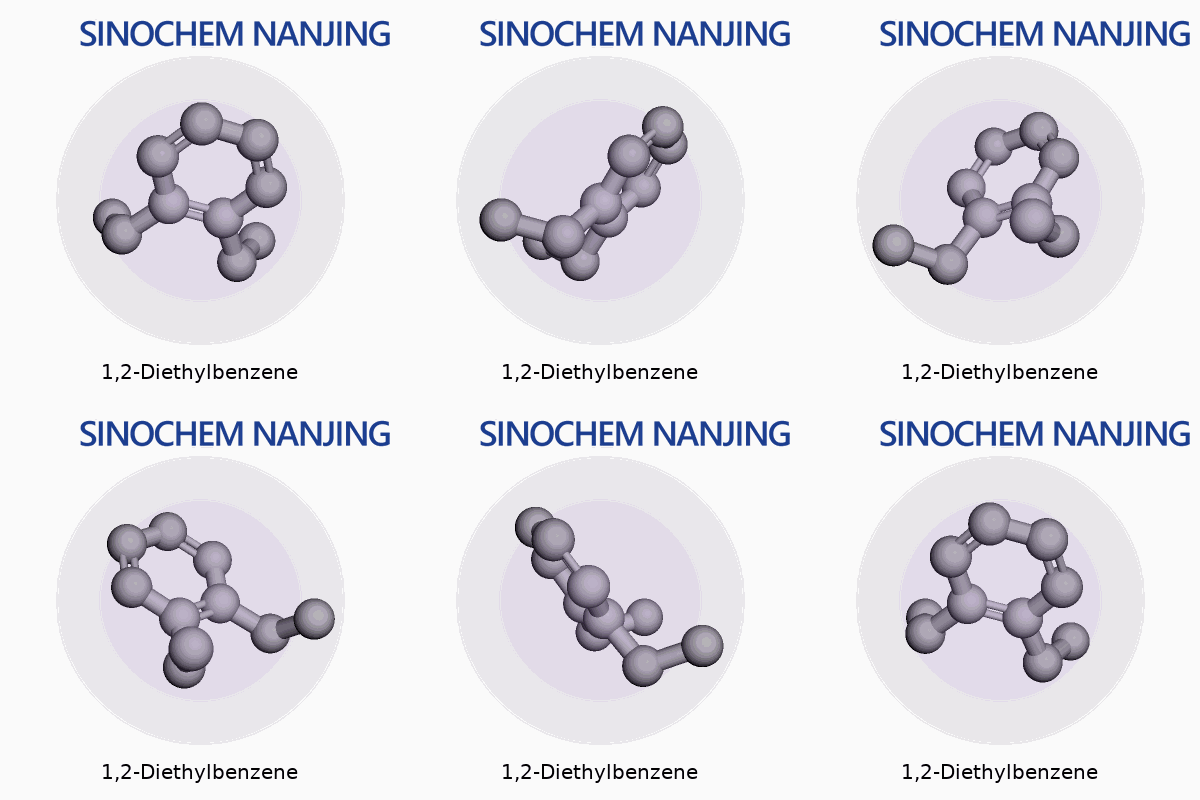
| Names | |
| Preferred IUPAC name | 1,2-diethybenzene |
| Other names |
Diethylbenzene 1,2-Diethylbenzene o-Diethylbenzene o-Ethyldiethylbenzene |
| Pronunciation | /ˈwaɪ.tuː daɪˈɛθ.əlˌbɛn.ziːn/ |
| Identifiers | |
| CAS Number | 135-01-3 |
| Beilstein Reference | 872422 |
| ChEBI | CHEBI:34499 |
| ChEMBL | CHEMBL227490 |
| ChemSpider | 8576 |
| DrugBank | DB14107 |
| ECHA InfoCard | 03be0d7e-ff92-4147-8917-3528c3735ed4 |
| EC Number | 205-928-9 |
| Gmelin Reference | 63744 |
| KEGG | C08349 |
| MeSH | D014899 |
| PubChem CID | 8838 |
| RTECS number | DI9375000 |
| UNII | K7INY4H4T6 |
| UN number | UN2278 |
| CompTox Dashboard (EPA) | DTXSID3049166 |
| Properties | |
| Chemical formula | C10H14 |
| Molar mass | 162.26 g/mol |
| Appearance | Colorless liquid |
| Odor | aromatic |
| Density | 0.867 g/mL at 25 °C |
| Solubility in water | insoluble |
| log P | 3.81 |
| Vapor pressure | 0.32 mmHg (25°C) |
| Acidity (pKa) | 40.4 |
| Basicity (pKb) | no data |
| Magnetic susceptibility (χ) | -68.2e-6 cm³/mol |
| Refractive index (nD) | 1.490 |
| Viscosity | 0.812 mPa·s (25 °C) |
| Dipole moment | 0.41 D |
| Thermochemistry | |
| Std molar entropy (S⦵298) | 250.6 J·mol⁻¹·K⁻¹ |
| Std enthalpy of formation (ΔfH⦵298) | 53.6 kJ/mol |
| Std enthalpy of combustion (ΔcH⦵298) | -6076.8 kJ/mol |
| Hazards | |
| GHS labelling | GHS02, GHS07 |
| Signal word | Warning |
| Hazard statements | H226, H315, H319, H335 |
| Precautionary statements | P210, P261, P280, P301+P310, P304+P340, P312, P331, P370+P378, P403+P235 |
| NFPA 704 (fire diamond) | 1,2-Diethylbenzene NFPA 704: 2-2-0 |
| Flash point | 64 °C (147 °F; 337 K) |
| Autoignition temperature | 458 °C (856 °F; 731 K) |
| Explosive limits | 1.1–7% |
| Lethal dose or concentration | LD50 (oral, rat): 4,300 mg/kg |
| LD50 (median dose) | LD50 (median dose): 3,820 mg/kg (rat, oral) |
| NIOSH | DA0185000 |
| PEL (Permissible) | PEL (Permissible Exposure Limit) for 1,2-Diethylbenzene: Not established |
| REL (Recommended) | 5 ppm |
| IDLH (Immediate danger) | IDLH: 900 ppm |
| Related compounds | |
| Related compounds |
Benzene Ethylbenzene 1,2-Dimethylbenzene 1,3-Diethylbenzene 1,4-Diethylbenzene |



