1,2-Dibromobenzene: Chemistry That Shaped Laboratories and Industries
Historical Development
Long before high-performance liquid chromatography or GC-MS could determine purity levels, chemists looked to aromatic halides with hope for easier syntheses and better yields. 1,2-Dibromobenzene stands out as a benchmark. Go back to the late nineteenth century, where the field of organic chemistry took big steps, and you find that halogenated benzenes quickly became favorites in both academic and industrial circles. Chemists wanted alternatives to chlorinated compounds, which frequently showed too much volatility or, in some cases, environmental persistence that outlasted usefulness. Brominated aromatics entered normal discussions about improving reactivity without creating other headaches. The preparation and study of 1,2-dibromobenzene gave researchers a platform for understanding aromatic substitution and broader reaction behavior, setting the stage for everything from undergraduate experiments to large-scale pharmaceutical exploration.
Product Overview
Every time a lab places an order for 1,2-dibromobenzene, it taps into a story that’s anything but simple. As a compound, it seems plain at first glance: a benzene ring that carries two bromine atoms tucked next to each other. Yet beneath that simplicity lies a ton of potential, which comes from both the chemical structure and the history of use. Chemists look to this compound for synthesis tasks where selective bromine placement can support the next synthetic step. Formulators and application chemists respect it for more subtle reasons too, because it brings reactivity that rings true in both routine reactions and new method development. Few chemicals transition so smoothly between the worlds of research and actual production lines as this dibrominated benzene.
Physical and Chemical Properties
Pour 1,2-dibromobenzene into a beaker and what you notice first is the clear, slightly oily liquid with a pretty high density for an organic, thanks to the heavy bromine atoms. Those atoms don’t just weigh the molecule down—they change its melting and boiling point, placing it well above most of the liquid aromatics. The faint but sharp aromatic odor reveals volatile properties, a fact that safety officers and lab techs need to respect. On the lab bench, the substance doesn't mess around with water. It's much happier mixing with organic solvents. Its chemical nature sits close to both its brominated cousins and the chlorinated aromatics, but it brings deeper electron-withdrawing power to the table, a fact that pushes reaction routes toward new territory.
Technical Specifications & Labeling
In laboratories and storage rooms, precise documentation follows 1,2-dibromobenzene. Clear labeling tells experts and newcomers alike where to line up handling precautions. Purity levels often reach up to 99% for analytical chemistry work, with trace water and lower-boiling contaminants scrupulously documented. Bottles show both molecular and structural formulas, often with hazard labels highlighting health and environmental risks. The focus stays on ensuring that everyone down the chain—chemist, shipper, or quality control specialist—knows exactly what the material delivers, what to avoid, and what protocols support safe, reliable use.
Preparation Method
Lab chemists often treat the synthesis of 1,2-dibromobenzene as one of those classic, almost timeless procedures. Direct bromination of benzene typically gives polysubstitution, so the strategy often shifts toward starting with o-dichlorobenzene and swapping out the chlorines for bromines through the Finkelstein reaction or using specific catalysts and controlled addition. Industrial setups sometimes work with higher temperatures or alternative solvents to push selectivity, but the principle stays constant: steer the reaction environment to favor the ortho isomer and minimize byproducts. Waste management and purification have become bigger concerns with rising awareness about brominated waste, so operators place a premium on process improvements that mean less leftover toxicity and easier downstream treatment.
Chemical Reactions & Modifications
What a working chemist really likes about 1,2-dibromobenzene is the way that each bromine atom hands over a reactivity handle. Nucleophilic substitutions, lithium-halogen exchanges, and cross-coupling reactions make it a solid platform for building more complex molecules. Suzuki and Ullmann couplings both find a home here, especially in pharmaceutical and materials science research. One direct example is its transformation into biphenyl derivatives, which unlocks new ligands and frameworks. Reaction temperature, solvent choice, and catalysts all play roles in tweaking the outcome, and the mild electron-withdrawing effect of the ortho bromines helps the molecule stand out among halogenated benzenes. Even the lingering trace of dibromo byproducts from side reactions can spark concern if a synthetic scheme relies on high specificity—purity matters acutely.
Synonyms & Product Names
A quick scan of literature and supply catalogs gives a long list of names—o-dibromobenzene, ortho-dibromobenzene, and 1,2-dibromobenzol, among others. These names matter, especially to people searching through chemical databases or managing chemical inventories. Inconsistent naming sometimes trips up even seasoned chemists, so keeping track of synonyms stays essential. Commercial products may be listed under these variants, and not all suppliers deliver the same purity or certification, so checking synonyms and documentation stays part of the everyday workflow in research and supply management.
Safety & Operational Standards
No one working in chemical labs treats 1,2-dibromobenzene lightly. Exposure limits and legal controls sit right up there with compounds of similar toxicity. Gloves, goggles, and fume hoods become part of the daily ritual anytime bottles come off the shelf. Respiratory protection gets particular attention, thanks to the low, but real, vapor hazard. Containment strategies and spill protocols focus on keeping both people and the environment safe. Waste rarely goes down the drain; instead, it’s collected and treated with specialized methods. Training programs emphasize both the dangers of direct exposure—skin, eyes, and inhalation—and the longer-term risks that come from chronic, low-level contact, which modern toxicology continues to explore.
Application Area
Industries dealing in dyes, agrochemicals, and pharmaceuticals rely on versatile intermediates, and 1,2-dibromobenzene fits that role smoothly. Producers of fine chemicals turn to it for introducing functional groups with precision. In pharmaceutical manufacturing, it sometimes pops up in routes toward antihistamines or other active ingredients. For polymer chemists, the dibromo structure enables cross-linking strategies that would struggle with simpler aromatics. Academic labs appreciate it as a teaching tool, not just because it follows clear reaction pathways but also because it lets students see the interplay between safety, reactivity, and purification in real-world practice. This breadth means demand shows no signs of fading, regardless of what direction new research might take.
Research & Development
One thing stands out in R&D: halogenated aromatics serve as a testbed for new reactions and greener techniques. Teams working on better cross-coupling reactions often use 1,2-dibromobenzene to push the limits of selectivity, catalyst reuse, or mildness of reaction conditions. Some research now centers on finding ways to dehalogenate leftover wastes, since environmental pressure grows stronger each year. Work on asymmetric synthesis routines, along with the need for scalable approaches, drives a steady stream of journal articles using this molecule as a standard for process improvement. For decades, labs have measured innovation in synthetic methodology by what they could accomplish with aromatic bromides—and this compound remains a touchstone.
Toxicity Research
The toxicology of brominated aromatics does not get overshadowed, mostly because concerns extend beyond the lab to factory settings and the wider environment. Early reports of acute toxicity led to more systematic study. Tests in animals linked high doses to both organ damage and neurological symptoms, although exposure standards in most facilities fall much lower than these levels. The bigger challenge comes when handling and disposal practices spread the compound beyond intended boundaries. Brominated waste sticks around long enough to make environmental scientists worry about aquatic and soil accumulation, so newer studies focus both on safer handling and on finding more effective destruction or deactivation methods. Long-term monitoring data remains limited, so the push to better understand cumulative impacts continues with each new generation of chemists and toxicologists.
Future Prospects
Looking forward, it’s clear that demand for reliable aromatic building blocks will remain steady, but expectations about safety, waste, and sustainability keep climbing. Advances in synthetic methodology may eventually shift away from halogenated aromatics or lead to processes that recycle or fully degrade what still ends up as waste. Development of less hazardous alternatives forms a growing part of conversations in both industry and academia, but for now, the need for molecules with adjustable reactivity, like 1,2-dibromobenzene, means it stays relevant. The intersection between ongoing innovation and rising environmental awareness may someday redefine how or even whether this compound sees wide use. Until then, both the risks and the rewards rest in the hands of those who keep safety, environmental impact, and technical achievement in focus, learning from each success and mistake along the way.
What is 1,2-Dibromobenzene used for?
Getting to Know 1,2-Dibromobenzene
1,2-Dibromobenzene doesn’t jump out to most people as an everyday chemical, but it holds a spot in the world of industry and research. If you’ve worked in a laboratory, you might remember the sharp, almost sweet smell drifting from a well-capped vial. That’s 1,2-Dibromobenzene—an aromatic organic compound with a pretty straightforward structure: a benzene ring armed with two bromine atoms next to each other. Simple as it sounds, its real value comes from what it can help create.
What It’s Used For
The biggest role for 1,2-dibromobenzene comes in organic chemistry. People in labs use it as a building block for synthesizing other chemicals. Its bromine atoms serve as anchors during chemical reactions, letting scientists swap them out for other groups. This property matters most in the production of pharmaceuticals and crop protection chemicals. In my lab experience, when you want precision and reliability, you lean on chemicals that react the same way, every time. 1,2-Dibromobenzene fits that bill.
Manufacturers tap into its properties for dye and pigment production, too. Think of the deep, stable colorants that don’t fade easily in sunlight or water—many start with base chemicals like this one. The electronics field turns to 1,2-dibromobenzene for certain specialty materials, especially those involving controlled reactions that demand both reactivity and stability. The perfume industry sometimes uses derivatives from related compounds, capitalizing on the molecule’s aromatic structure.
Benefits—And Some Warnings
With its role in producing active ingredients for medicines and pesticides, 1,2-dibromobenzene quietly supports industries that touch food on supermarket shelves and drugs in medicine cabinets. Experienced chemists like to use it since it’s stable under standard lab conditions and doesn’t break down easily. Yet, there’s always a catch with dealing with brominated aromatics: health and environmental hazards.
Breathe in the vapors or touch the liquid, and you gamble with irritation, dizziness, and potential long-term risks. That’s why most labs keep strong fume hoods running whenever these compounds come out. Waste handling also matters—brominated chemicals don’t just disappear; they can stick around and cause trouble if released into the environment. Regulatory bodies like the EPA and the European Chemicals Agency monitor and restrict the use of such chemicals, flagging them when evidence connects them to health or ecological harm.
Finding Safer and Greener Roads
In my years running reactions, finding a substitute that does the same job as 1,2-dibromobenzene with less risk often feels like a tough puzzle. Green chemistry drives innovation here. Researchers push for less toxic building blocks in drug and material synthesis. Some new catalysts now offer the same results using milder chemicals or with less waste, but old habits and proven reliability still pull many of us back to trusted examples like 1,2-dibromobenzene.
The shift won’t be overnight. Supporting research that targets safer alternatives—along with enforcing good ventilation and proper protective gear—turns out to be the most practical way forward. Students and scientists learning to recognize both the utility and risks of this compound help lay the groundwork for smarter, safer chemistry down the line.
A Compound with Influence
1,2-Dibromobenzene remains a backbone in chemical labs and manufacturing, despite the growing push for safer replacements. Respect for its ability should go hand in hand with caution. Understanding both sides—value and risk—gives the next generation of scientists and manufacturers a fighting chance to use what works, while working toward something better.
What is the chemical formula of 1,2-Dibromobenzene?
Peeling Back the Layers of a Simple Molecule
Walk through any chemistry lab—old tile or new vinyl panels—and you’ll see bottles with sharp-smelling liquids, some more familiar than others. One you might spot is 1,2-dibromobenzene. For anyone who waded through basic organic chemistry, that name hints at a ring of carbon atoms with two bromine atoms clinging side by side. I remember my final year in college, when a flask of it got cracked in a drawer. The stench lasted days, but it helped me put a face to the formula: C6H4Br2.
Why the Formula Really Matters
You might ask, why dwell on something as plain as a chemical formula? I’ve seen how a simple row of letters and numbers changes everything—how we label, store, and use a substance. Here, C6H4Br2 hints at more than a recipe; it tells you about toxicity, reactivity, even cost. In industry, small mistakes with these formulas cost money, lead to wasted batches, or worse, spark accidents. The benzene ring is sturdy, but adding those bromine atoms changes the whole game. Suddenly you’re handling something heavier, less volatile, slower to burn.
It turns out, 1,2-dibromobenzene finds a spot in making pharmaceuticals and some specialized plastics. The bromines stick tight, making the ring a good starting point for other reactions. I’ve seen folks in research scramble to get it just right because tiny errors mean lost grant money. In safer hands, knowing basic formulas keeps the work honest and safe.
What EEAT Means for Chemistry
Back in school, one professor hammered home, “Check your sources twice.” You trust your textbooks or peer-reviewed journals more than random websites. Google's updated guidelines put just as much weight on experience and background. After all, you want facts backed by work in a real lab, not just something copied from a supplier’s website. I’ve had grad students come to me with formulas found on online forums, only to find out those sources had flipped the position of the bromines, mixing up 1,2- with 1,3-dibromobenzene. It matters. Only the right formula—C6H4Br2—avoids that confusion.
Expertise comes from being in the trenches yourself. I’ve spent years handling aromatic compounds; I still respect the risk and double-check before mixing anything with brominated rings. In fact, there’s a good reason regulators put limits on how much gets released, and the toxic profile of bromine derivatives keeps health officers on their toes. Reporting the right formula isn’t just about passing a test. It’s about doing the job safely and responsibly.
Finding Better Approaches
More education on reading and understanding chemical names could help students catch mistakes faster. Clear visuals, detailed labeling, and hands-on demos always stuck with me far better than rote memorization. For regular folks outside the lab, knowing a bit about these formulas—like why two bromines matter versus one—can help make sense of the chemical world around us. This means everyone, from researchers to curious parents checking a product label, benefits from the right transparency and accurate data.
Is 1,2-Dibromobenzene hazardous or toxic?
What’s the Real Story with 1,2-Dibromobenzene?
1,2-Dibromobenzene, also called ortho-dibromobenzene, sometimes pops up in research circles and chemical industries. Its appearance isn’t flashy—clear, oily, not remarkable at first glance. But the stuff inside the bottle tells a different story. Let’s cut through chemical jargon and ask how this compound affects regular people, those who make it, transport it, and live near places storing it.
Digging Into the Risks
Brominated benzene compounds tend not to play nice with biology. Safety data sheets flag 1,2-Dibromobenzene as harmful to health. Breathing in its vapors, getting it on your skin, or swallowing it causes symptoms that range from irritation to more serious trouble—headache, nausea, drowsiness, even lung and liver impacts in case of high or repeated exposure. A couple of years ago, while visiting a midsize lab, I saw firsthand why lab staff wore double gloves and used fume hoods: even a small spill brought the unmistakable, sharp odor and an immediate rush to contain it.
Science backs up the caution. The National Center for Biotechnology Information lists it as acutely toxic through skin contact and inhalation. It isn’t listed as a confirmed human carcinogen, but animal studies from the 1980s showed it can damage organs over time. The Environmental Protection Agency limits exposure at worksites. Breathing low levels for months stressed rodents’ livers and kidneys, so health agencies ask us to minimize direct dealings with this chemical outside controlled settings.
Why It Surfaces in Industry
Industries use 1,2-dibromobenzene as a chemical step in making dyes and pharmaceuticals, and for special-purpose pesticides. So, it doesn’t end up in household cleaners or groceries, but it plays a low-profile part in the background of other chemical products. A major fire in a chemical plant in Asia made headlines for releasing similar brominated substances into the air, prompting large-scale evacuations. That incident showed what can go wrong if companies treat such materials like ordinary industrial compounds without special care and planning.
Environmental Footprint
Let’s don’t ignore the footprint this substance can leave. Once it leaks into soil or water, 1,2-dibromobenzene doesn’t break down quickly. Animals in affected water sources take up the chemical; fish can get sick, and contamination moves up the food chain. The compound doesn’t simply vanish. Its persistence means it lingers long enough to cause problems well after the original spill. I remember helping test groundwater near an old industrial site—testing found brominated solvents, and cleanup took years. Communities saw reduced property values, and families worried about long-term health.
How We Can Respond
Tighter controls at worksites give the first layer of protection. Workers trained to recognize hazards, prompt cleanup of any spills, and strong ventilation systems lower risk. Local governments can play a bigger role, too, by requiring companies to monitor air and groundwater year-round around chemical plants.
Ordinary people rarely handle 1,2-dibromobenzene directly, but public transparency matters. Fact sheets in plain language on local plant websites, open lines with local medical clinics, and public meetings can help remove the fog that surrounds industrial chemicals. We’ve learned from disasters in places like Bhopal and Seveso—communities need facts, not reassurances, when new chemicals enter their kitchens and homes through no fault of their own.
1,2-Dibromobenzene shouldn’t be feared irrationally, but treating it lightly means real danger for people and nature alike. Real oversight works better than crossed fingers.
What is the boiling point of 1,2-Dibromobenzene?
Details Behind the Value
1,2-Dibromobenzene usually boils at about 220°C, or roughly 428°F. This isn’t just some trivia that floats around in college labs. The number comes from decades of careful measurements, of hissing glassware rigged up in chemical plants and universities everywhere. Many technical data sheets and safety protocols rely on this specific detail.
Real-World Impact in Labs and Industry
Running chemistry experiments on 1,2-dibromobenzene, I remember how unforgiving that high temperature could be. If flasks weren’t clamped just right, you risked a mess or an accident. Many industrial setups depend on the exact boiling point to push processes that separate ingredients or manufacture other chemicals. Heat a batch to the right temperature, and you can draw off what you want by distillation. Overshoot, and material losses or safety risks emerge. Deciding how to handle 1,2-dibromobenzene changes depending on that boiling point—storage decisions, transport regulations, and even the kind of materials used for piping and valves all trace back to it.
Health and Environmental Safety
Thinking about health, the high boiling point means you won’t see it just drifting into the air at room temperature. That offers a level of safety for lab teams and workers handling it. Spilling something like this isn’t the nightmare that comes from ethanol or acetone. Still, with enough heat, it vaporizes, and the vapors themselves carry risks. Agencies like OSHA and the EPA point to that temperature when setting workplace exposure standards or environmental restrictions. Cleaning up a spill or fire gets more complicated above the boiling point, since vapors call for specific ventilation methods and personal protection gear.
Process Optimization and Troubleshooting
In chemical manufacturing, a boiling point of 220°C shapes the way engineers design reactors and distillation columns. Materials must resist high temperatures, pumps must push liquids without breaking down, and cooling systems scramble to pull heat from hot vapor. If temperature sensors read off by even a few degrees, it can throw off a whole shift’s work, or ruin a product batch. Anyone running those processes learns to trust the boiling point the way pilots trust runway lights at night.
Research, Data Integrity, and Replication
Reliable data builds trust. I’ve seen debates break out over confusing results, only to discover someone used the wrong boiling point in calculations. Good research always includes cross-checking values like this, since the difference between 219°C and 221°C can lead to misleading interpretations about purity or yield. If data comes from unverified or vague sources, mistakes creep in—compounding through years of reports and regulatory filings.
Building Reliable Solutions
To improve safety and efficiency, digitizing chemical databases helps prevent mistakes. Encouraging more frequent checks against standards published by groups like the CRC Handbook or NIST ensures consistency. Mandatory training for anyone handling high-boiling solvents, including how temperature affects safety and product quality, closes knowledge gaps that lead to accidents or faulty results. Companies could invest in better temperature monitoring devices and alarms in their labs and factory floors, keeping both staff and products safe. The smallest details, like a boiling point, determine the difference between a smooth day and a disaster.
How should 1,2-Dibromobenzene be stored and handled?
A Chemical That Demands Respect
Working in labs for years, I’ve seen folks underestimate the risks tied to everyday chemicals. 1,2-Dibromobenzene looks harmless on a shelf, but its impact can reach much further than its label hints. Known for its role in organic synthesis, this compound brings with it concerns for both personal safety and community health.
Understanding the Real Risks
1,2-Dibromobenzene comes with a set of hazards you can’t ignore. Splash just a little on your skin and irritation follows. Breathe in its vapor too long, headaches start creeping in, and the lungs don’t thank you. Animal studies have flagged possible links to organ damage after prolonged exposure. The Environmental Protection Agency and OSHA have both listed it among substances that call for careful handling. These facts aren’t meant to scare—they just underline the importance of taking it seriously.
Storing It Right: Lessons Learned
A shelf full of chemicals gets crowded fast. Still, some bottles can never sit side by side. 1,2-Dibromobenzene stores best in a cool, dry, well-ventilated spot away from sunlight, away from open flames, and far from oxidizers. Strong shelving, spill trays, and solid labels all play their part. I’ve seen too many people use random containers. Always keep it in the original bottle, and check that the cap seals tight every time you’re done.
Humidity and heat speed up chemical reactions. Storing this compound in a climate-controlled cabinet keeps things steady and lowers risk. Fume hoods should vent any whiff outside—never straight into the room. I once watched a lab cut corners, choosing desk drawers over dedicated cabinets; that gamble almost caused a costly contamination. Relying on routine and clear labeling offers both peace of mind and a strong defense if something spills.
Smart Handling for Safer Labs
I’ve always believed safety gear builds confidence. Full goggles, gloves (preferably butyl rubber), and a lab coat make the right armor. Splashes and vapor hide where you least expect them, and normal latex gloves break down fast when facing solvents like this one. Don’t forget the tiny step of washing hands immediately after glove removal, even if no spill seems obvious.
Pouring and transferring should stay inside a fume hood. Don’t use glassware with cracks. I once suffered a tiny cut when an old beaker gave way; it taught me to inspect everything before use. Containers without a clear hazard label become mistakes waiting to happen, especially after years of bottle-swapping.
Waste and Emergency Measures
Disposing of 1,2-Dibromobenzene can’t mean pouring it down the drain. Local laws treat halogenated organic waste as a big deal. Collected waste needs to travel to a licensed disposal facility. After one nearby lab dumped its excess down a drain, health inspectors found residues seeping into the water supply, and cleanup demanded weeks. If a spill happens, use absorbents rated for organics, not just paper towels, and wear full protective gear for cleanup. Keep emergency showers and eyewash stations clear and easy to reach.
Building Good Habits
Fresh training lays the foundation for safe labs and safer workers. Open conversations—everyone sharing lessons and updates—help avoid mistakes when eyes get tired. Good records and maintenance checks limit nasty surprises when deadlines loom. All these habits protect not just the person holding the bottle, but the wider community counting on us not to cut corners.
Storing and handling 1,2-Dibromobenzene responsibly comes down to respect: for chemicals, for coworkers, and for the community downstream. Slight carelessness today can turn into a big problem tomorrow. Building a safety-focused routine doesn’t just follow the rules; it saves real lives.
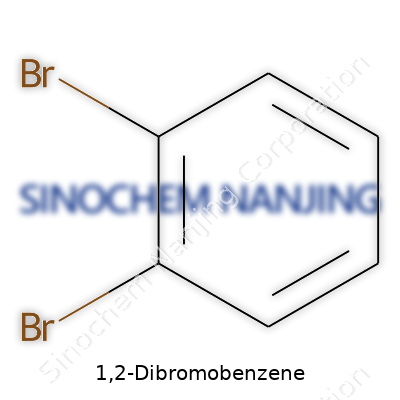
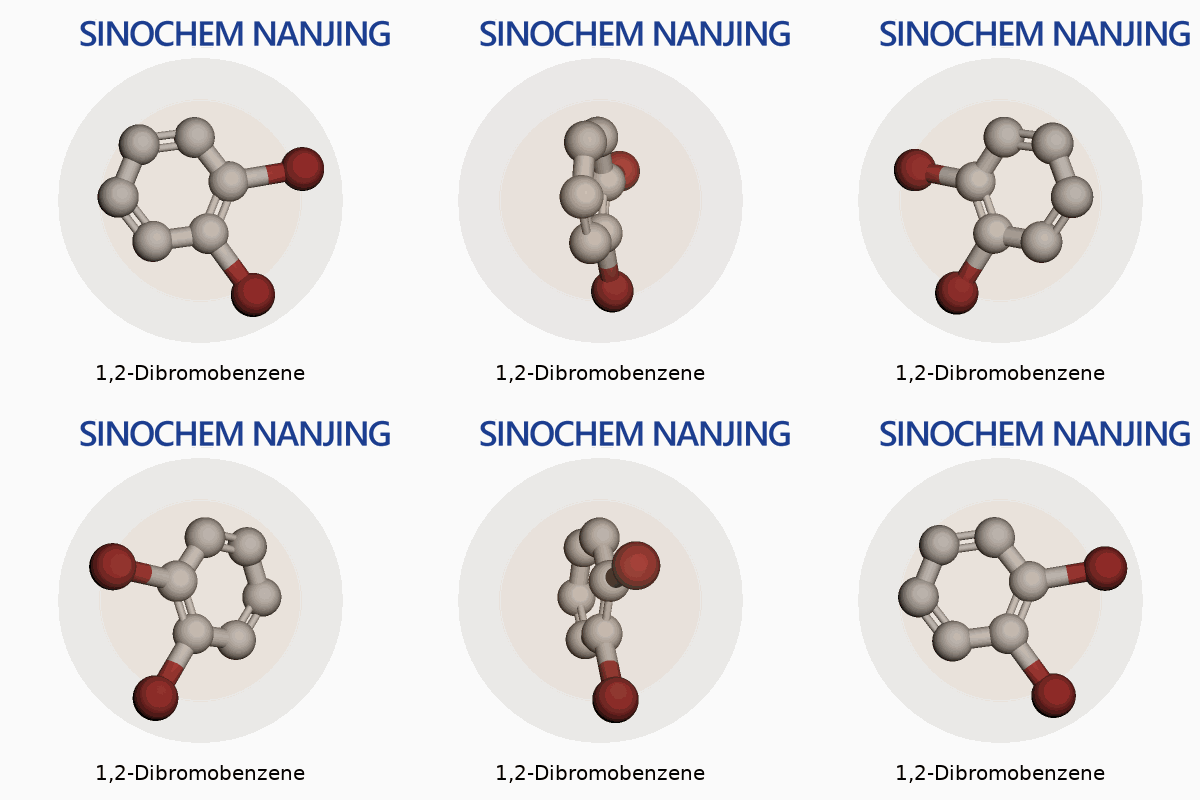
| Names | |
| Preferred IUPAC name | 1,2-dibromobenzene |
| Other names |
o-Dibromobenzene o-Dibromobenzol 1,2-Dibromobenzol |
| Pronunciation | /ˈwaɪ.tuː daɪˌbroʊ.moʊˈbɛn.ziːn/ |
| Identifiers | |
| CAS Number | 583-53-9 |
| Beilstein Reference | 1208723 |
| ChEBI | CHEBI:34690 |
| ChEMBL | CHEMBL16253 |
| ChemSpider | 151931 |
| DrugBank | DB01856 |
| ECHA InfoCard | 03d8a7c2-ac6e-47e2-af6e-3e242d570fe7 |
| EC Number | 205-884-8 |
| Gmelin Reference | 12615 |
| KEGG | C01576 |
| MeSH | D002922 |
| PubChem CID | 7242 |
| RTECS number | DI8225000 |
| UNII | UXO93IA6TY |
| UN number | UN2515 |
| Properties | |
| Chemical formula | C6H4Br2 |
| Molar mass | 235.90 g/mol |
| Appearance | Colorless to pale yellow liquid |
| Odor | aromatic |
| Density | 1.96 g/mL at 25 °C |
| Solubility in water | Insoluble in water |
| log P | 3.92 |
| Vapor pressure | 1.48 mmHg (25°C) |
| Acidity (pKa) | 43.01 |
| Basicity (pKb) | 1.60 |
| Magnetic susceptibility (χ) | -74.0·10⁻⁶ cm³/mol |
| Refractive index (nD) | 1.597 |
| Viscosity | 1.795 cP (20°C) |
| Dipole moment | 1.48 D |
| Thermochemistry | |
| Std molar entropy (S⦵298) | 109.5 J·mol⁻¹·K⁻¹ |
| Std enthalpy of formation (ΔfH⦵298) | +64.2 kJ/mol |
| Std enthalpy of combustion (ΔcH⦵298) | -3232.8 kJ/mol |
| Hazards | |
| Main hazards | Harmful if swallowed, causes skin and eye irritation, may cause respiratory irritation, toxic to aquatic life with long lasting effects |
| GHS labelling | GHS02, GHS07 |
| Pictograms | GHS07 |
| Signal word | Danger |
| Hazard statements | H302, H315, H319, H332 |
| Precautionary statements | P261, P280, P304+P340, P305+P351+P338, P312 |
| NFPA 704 (fire diamond) | 1-2-0 |
| Flash point | 61 °C (142 °F; 334 K) |
| Autoignition temperature | 572°C |
| Explosive limits | Explosive limits: 1.2–8.2% |
| Lethal dose or concentration | LD50 oral rat 1890 mg/kg |
| LD50 (median dose) | LD50 (oral, rat): 595 mg/kg |
| NIOSH | DL3575000 |
| PEL (Permissible) | Not established |
| REL (Recommended) | 0.1 ppm |
| IDLH (Immediate danger) | 50 ppm |
| Related compounds | |
| Related compounds |
Bromobenzene 1,4-Dibromobenzene 1,3-Dibromobenzene Chlorobenzene 1,2-Dichlorobenzene 1,2-Diiodobenzene Benzene |



