Reflections on 1,2,3,4,5,6-Hexachlorocyclohexane: History, Science, and Its Place in the Modern World
Tracing the Shadow: Historical Development
The journey of 1,2,3,4,5,6-Hexachlorocyclohexane (HCH or hexachlorocyclohexane) tells a story both of scientific ambition and of unintended consequences. Chemists discovered HCH during the era defined by rapid industrial growth and an unquenchable thirst for efficiency in agriculture. In the 1940s, when people began to recognize that crops needed robust protection from damaging insects to stave off the looming threat of famine, HCH stepped onto the world stage. Powered by initial successes with organochlorine insecticides like DDT, researchers were captivated by the strong, persistent action of HCH. Governments and industry rolled out its production and deployment at scale, treating it as a magic bullet for pest control. The optimism of those mid-century years, fueled by belief in technological progress, makes it easy to understand why HCH earned such a central role on farms and in urban mosquito-control campaigns.
Behind the Name: Product Overview
Digging into what HCH is: the molecule is a ring-shaped hydrocarbon, decked out with six chlorine atoms. Its basic formula—C₆H₆Cl₆—gives the clue that each carbon atom on the ring carries its own chlorine. Chemists soon found that depending on how those chlorines attach themselves, you end up with several isomers. Each has slightly different properties, but it is the gamma isomer, better known as lindane, that stole the spotlight. As insecticides go, HCH’s mixture was cheap to produce, easy to blend into powder, dust, or liquid, and transported well across distances.
Physical and Chemical Properties
HCH appears as a white or off-white crystalline solid at room temperature, with a faint, musty odor that hints at its chemical backbone. It doesn't dissolve much in water, clumping instead with the soils and fatty tissues where it lands. The toughness of its chemical bonds, along with all those chlorine atoms, makes it hang around in the environment—resisting breakdown by sunlight or microbes. These stubborn molecules build up in the food chain, a fact that soon revealed troubling secrets about the way we use persistent chemicals.
Technical Specifications and Labeling
Manufacturers, responding to tightening safety rules, marked HCH containers with hazard warnings: persistent, bioaccumulative, toxic. Legal limits on how much product could be present, both in formulations and residues, crept into regulatory codes in many countries. These rules forced tighter controls and stricter labeling, especially as scientific scrutiny confirmed risks from chronic exposure in both workers and nearby communities. What began as enthusiasm eventually needed skeptical oversight.
How HCH Comes To Be: Preparation Methods
Making HCH starts with a simple base—benzene. By reacting benzene with chlorine gas in the presence of UV light or a catalyst, the process churns out HCH in several isomeric forms. The mix can then be distilled or chemically separated, isolating the desired isomer for use. The synthesis is relatively direct, relying on well-understood principles of organic chemistry, which accounts for why its production could be scaled up so rapidly in the past. Yet separating the isomers turns out to be messy and expensive, so early industrial uses often involved the crude mixture, not just the more potent gamma form.
Chemical Reactions and Modifications
HCH tends to keep its structure in stable environments, thanks to those chlorines that shield the molecule’s carbon ring. Still, certain conditions—like exposure to strong bases, heat, or ultraviolet light—can break down HCH. These reactions rarely happen quickly in nature, which adds to environmental worries. Sometimes chemists have attempted to modify HCH, removing chlorines or adding functional groups, in attempts to create less persistent or less toxic variants. Success on that front remains limited, a problem tied to the same chemical durability that once made HCH so tempting as a pesticide.
Synonyms and Other Names in the Field
In different chemical catalogs, HCH goes by many names. Hexachlorocyclohexane is the mouthful chemists favor in formal texts. In trade and regulatory reports, it shows up as BHC (Benzene Hexachloride), plain “Hexachlorocyclohexane,” or by isomer—such as alpha-HCH, beta-HCH, or gamma-HCH, with lindane being the best-known of the bunch.
Safety and Operational Standards
After years of widespread use and many documented poisonings, safety rules around HCH grew strict. Workers who handle HCH must wear gloves, masks, and—more often lately—work in enclosed systems to keep dust or vapors at bay. Spills or leaks get flagged for immediate cleanup, with trained teams called in for larger incidents. Many countries draw a line on HCH content in food, groundwater, soil, and human tissue, setting what gets called maximum residue limits. Several international treaties—including the Stockholm Convention—call for phasing out HCH altogether, reflecting the global consensus that persistent pollutants like this cause more harm than good when left unchecked.
Application Areas: From Farms to Fading Memory
For decades, HCH proved popular in agriculture, protecting crops like cotton, wheat, and rice from hard-to-control insect infestations. Public health officials also used it in anti-mosquito campaigns, though indoor use led to complaints about lingering odors and symptoms like headaches and nausea. Veterinarians sometimes turned to HCH baths for livestock plagued by parasites. Over the last thirty years, environmental groups and scientists pushed for bans or severe restrictions, especially once evidence mounted about lingering contamination and health impacts on farmworkers and local communities. Today, only a handful of licensed uses remain, mostly in settings where safer alternatives don't exist or are out of reach for economic reasons.
Behind the Science: Research and Development
The story of HCH’s research is a rollercoaster—starting with the promise of bumper harvests and moving quickly to anxieties about what that newfound abundance cost. Early research celebrated HCH as a tool for progress. This started to change as ecologists linked organochlorine chemicals to declines in birds, fish, and insects, and as toxicologists matched rising HCH levels in fatty tissues with ranges of chronic conditions, including liver disease, neurological symptoms, cancers, and effects on the immune and endocrine systems. Today, research focuses less on HCH itself and more on how to detect, clean up, and understand the subtle ways it affects environments and future generations.
What the Numbers Show: Toxicity Research
Health studies consistently flag HCH for high acute toxicity and persistent low-level hazards. Animal studies show that even low doses, taken over months or years, cause liver damage, birth defects, hormone disruption, and cancer in some species. Children and pregnant women, caught downwind or left drinking contaminated water, face special risks. HCH tends to stick in fat, building up over months and years to levels that trigger concern well below amounts needed for a one-time poisoning. Doctors and public health specialists group HCH with a short list of chemicals that demand thoughtful replacement and rigorous monitoring.
Looking Ahead: Future Prospects
When governments and activists force chemicals like HCH off the market, the challenge shifts to cleaning up the mess left behind. Legacy pollution—old warehouse soils, river sediments, and former industrial areas—keeps HCH cycling through the global food system. Bioremediation projects aim to coax microbes and plants into breaking down HCH faster, sometimes with promising results, but workable solutions take years and lots of money. A big part of the future conversation comes down to accountability: how to make polluters help fix the problem, how to balance food security with environmental safety, and how governments can support farming communities in switching to safer pest control. Universities and public health institutions run long-term tracking studies, hoping to catch subtle health trends and prevent another era of “silent spring” chemicals slipping into everyday life. We’re at a crossroads—forced finally to weigh yesterday’s quick fixes against the lingering debts they carry for the world and the generations that follow.
What is 1,2,3,4,5,6-Hexachlorocyclohexane used for?
The Story Behind the Name
This mouthful of a chemical—1,2,3,4,5,6-hexachlorocyclohexane—ended up on the lips of many scientists, regulators, and farmers decades ago, mostly under the name “lindane.” For years, it worked its way into farms, pharmacies, and even homes, thanks to its use as a pesticide and in medical creams. Spraying crops, keeping seeds safe from bugs, and even killing lice and scabies on people—lindane got around a lot in the mid-1900s. The chemical did its job. Insects didn’t stand a chance, so folks stuck with it. Yet using something just because it works can bring problems nobody saw coming.
Bigger Problems Than Bugs
My grandfather ran a small farm not far from the river. He swore by this chemical—said it knocked out rootworms like nothing else. But as the years rolled by, dirty water and sick cattle started to pop up. Lindane and its cousins don’t break down easily. They build up in soil, drift to rivers, and climb their way into fish and milk. The World Health Organization and EPA noticed that these chemicals can damage nerves, mess with the liver, and even raise the chance of cancer.
Hard Lessons from the Land
Digging a little deeper, studies found people living near fields treated with lindane had higher rates of certain cancers, including non-Hodgkin lymphoma. A German study in the 1990s watched families living near old pesticide factories and found higher traces of lindane in their blood, with more impacts on children's growth and immune systems. The chemical’s long life means it still lurks in some soils and sediments years after folks quit using it.
Shifting Gears: What Now?
Europe, the US, and most of the world stopped using lindane in farming not just for farmers’ sake but for everybody downstream. Regulations kicked in after strong evidence from organizations like the Stockholm Convention showed these chemicals are persistent organic pollutants. Still, lindane hasn’t disappeared from everywhere. In some countries, it stays on the shelf as a second-line treatment for scabies or lice—usually only if nothing else works. The Food and Drug Administration still regulates those medical creams and shampoos tightly. Doctors and pharmacists now warn patients to use them sparingly, never on broken skin, and never more than ordered. Risks are just too high for casual use.
What Do We Do With Lingering Chemicals?
Environmental agencies took on the job of cleaning up old stocks and contaminated sites. Burning them at high temperature in controlled conditions can get rid of them. Some research teams in India and China started testing special bacteria that “eat” these pollutants—promising results, but it’ll take time. On the farm, growers switched to newer pesticides with shorter half-lives and lower risk to people and animals.
Don’t Forget the Old Lessons
The story of 1,2,3,4,5,6-hexachlorocyclohexane isn’t about just one farm or town. It reminds us to watch for the long game. Short-term fixes can mean long-term costs. Science pushes us to rethink chemicals before hundreds of millions of pounds go into the ground. If a chemical can hurt today’s water, crops, and kids, it makes sense to look twice, keep strong rules, and use old knowledge to plan smarter for tomorrow.
Is 1,2,3,4,5,6-Hexachlorocyclohexane toxic to humans or animals?
The Toxic Shadow of a Persistent Chemical
Once upon a time, 1,2,3,4,5,6-hexachlorocyclohexane (HCH) seemed like a breakthrough. It turned up in farm fields, gardens, and even households under trade names like lindane. Farmers relied on it for pest control, and it worked. Rate of crop losses dropped. But chemicals with staying power in the environment rarely come without baggage. With HCH, health concerns have grown with the years spent studying its side effects, and now evidence speaks volumes about its dangers for both people and animals.
The Reality For Humans
Everyday folks rarely talk about synthetic pesticides. Yet, they slip into water, soil, and food. HCH’s main isomer, lindane, holds a spot on the list of substances banned under the Stockholm Convention on Persistent Organic Pollutants. This happened after years of studies linked exposure to headaches, dizziness, liver damage, and central nervous system effects. In hospitals, lindane shampoo was still given to kids for lice through the 2000s, but doctors and researchers reported cases of poisoning from overuse or accidental swallowing. Children break down chemicals differently than adults, so the risk for them stays high. It doesn’t take a toxicologist to see why international agencies flagged it as a problem. The World Health Organization labeled lindane as “moderately hazardous,” and the U.S. Environmental Protection Agency moved to cancel all agricultural uses years ago.
Animals Caught In The Cycle
Testing on laboratory rodents gave a clearer picture. Even low doses triggered tremors, weight loss, and altered behavior. Higher exposures over time damaged liver, kidneys, and reproductive organs. HCH found its way up the food chain, landing in fat tissue and eggs. Birds exposed to contaminated water didn’t lay as many eggs, and those that hatched weren’t always healthy. Cows and goats grazing near old dump sites sometimes produced milk that carried small amounts of lindane fat-soluble residues, which meant humans eating dairy got a small dose, too. It’s a chain reaction, one that did not stop at the field’s edge.
Persistence and Bioaccumulation
These hexachlorocyclohexanes do not degrade quickly. They leach into groundwater and move for miles. Fish caught downstream of where HCH washed into rivers held onto those chemicals in their bodies. Anyone eating that fish—humans, otters, birds—added a little HCH to their own biology. Some studies tracked the chemical in human breast milk. Urban and rural mothers living near heavy HCH use during their youth tested positive. The body struggles to purge these compounds. Once inside, the chemicals stay awhile, fat tissue acting as long-term storage.
What Can Be Done?
Erasing such a stubborn pollutant from everyday life means cutting off sources. Collecting and properly destroying obsolete pesticide stocks is crucial. Teaching farmers safe, alternative pest management goes past regulation; it builds better soil and food while keeping families out of harm’s way. Cleaning up contaminated sites takes government attention and persistent funding. Whole communities have made it happen in places like Michigan and parts of India, but progress rarely happens fast. Public awareness works just as well, prompting people to ask hard questions about where their food comes from and demanding action from those who oversee public health.
Anyone reading this who has lived near treated fields or remembers those old canisters in a barn knows the risks aren’t imaginary. 1,2,3,4,5,6-hexachlorocyclohexane’s story is a reminder about how long the consequences of today’s shortcuts can linger. Better tools exist now. The sooner we use them, the safer life will be for every living thing downstream.
How should 1,2,3,4,5,6-Hexachlorocyclohexane be stored and handled safely?
The Reality of Dealing With a Toxic Chemical
If you’ve spent any time in an industrial lab, the mention of 1,2,3,4,5,6-hexachlorocyclohexane brings a firm sense of caution. This compound gained notoriety as Lindane, a pesticide that left a long environmental legacy. Health risks and regulatory scrutiny surround it for a reason. Breathing in or getting even trace amounts on your skin triggers everything from headaches to serious liver problems. It’s not something anyone wants floating around carelessly in the air or spilling in storerooms.
Choosing the Right Place to Store Dangerous Substances
Safe storage starts with picking a location away from heat, sparks, or even direct sunlight. The chemical breaks down and forms toxins much more rapidly in warm or unventilated spaces. Cool, dry rooms where only staff with proper training can get in work best. Ordinary cabinets or makeshift shelves simply don’t cut it—instead, facilities use locked chemical storage cabinets fitted with signs warning about hazardous materials inside. Structural steel and coated surfaces resist corrosion and leakage, which matters since this substance eats through some plastics over time.
Packed and Labeled With Care
Any container holding this chemical must seal tightly to prevent vapor from leaking out. Fact is, glass and special metal drums hold up better than typical containers used for less risky substances. Proper labeling stays essential, with bold lettering and hazard symbols that leave no doubts. Missing or unclear labels have led to confusion, exposure, and serious near-misses more than once. Regulations in Europe, the US, and Asia require color-coded labels and warning stickers for a good reason: it’s easy to grab the wrong thing in a hurry.
Protecting People Who Work With It
Personal protective gear makes a huge difference in preventing accidents. Staff wear heavy gloves, respirators, splash goggles, and full-body suits because this stuff soaks through skin quickly and inhalation risks add up with repeated exposure. Training isn’t a one-off lesson—it continues with regular refreshers and drills. Everyone in the facility needs to know where the emergency showers and eyewash stations are, and how fast they can reach them if something spills. It isn’t only about their own safety; contamination spreads fast on surfaces, and the knock-on effect can shut down a whole worksite.
Dealing With Spills and Waste
Industries handling this chemical never assume a small spill doesn’t matter. Swift action with absorbent pads, proper neutralizing agents, and waste containers keeps accidents contained. Dumping down sinks or drains counts as a major violation, so dedicated hazardous waste bins and pickups stay standard. It’s common to see secondary containment—trays or bunds—to catch leaks from drums or containers.
What Can Make a Difference Going Forward
Preventing harm means embracing a culture that treats chemical safety as essential, not an afterthought. Leadership bears responsibility for keeping facilities up to date, from ventilation systems to up-to-date chemical inventories. Cross-checking every process, running drills, and encouraging staff to report problems without fear helps spot issues before they endanger people or the environment. Lawmakers, too, can help by pushing for stronger standards and practical, enforceable rules. Less toxic alternatives exist for many of the jobs this old chemical handled, and making a switch benefits everyone.
Why It’s Everyone’s Business
From decades in the industry, one thing’s clear: safe handling and storage set the tone for trust and well-being, both inside and outside worksite walls. Getting it right doesn’t just prevent fines—it protects lives and land for generations ahead.
What are the environmental impacts of 1,2,3,4,5,6-Hexachlorocyclohexane?
What Is This Chemical and Where Did It Come From?
Plenty of chemicals have come and gone, but 1,2,3,4,5,6-hexachlorocyclohexane (HCH, often called lindane) carries a reputation that lingers. Lindane once filled warehouses and made its way into pesticides and lice shampoos worldwide. I remember growing up on a farm where neighbors trusted anything promising to kill pests. Lindane was a shelf regular for decades, an easy answer to insects chewing at food and wood. Problems grow when a quick fix turns out to be anything but quick or easy on the environment.
How HCH Ends Up in the Ecosystem
Pesticides don't just target bugs. After spraying or washing off, rain sweeps HCH through the ground, straight into streams, ponds, and eventually the ocean. The stuff clings to soil; it doesn’t just vanish after a few weeks. Studies across Asia, Africa, and Europe point to soils and riverbeds spiked with HCH residues years after use stopped. This chemical seeps down through roots and water supplies, showing up in unexpected places decades later.
Impact on Wildlife—What Science Shows
Regular inspections of birds and fish tell the same story: lindane accumulates in fatty tissues. Fish absorb HCH through water and plants. Birds of prey, eating those contaminated fish, end up with toxic levels inside their bodies. Cases show weakened immune systems, dropping egg counts, and sometimes failed eggshells. I’ve spoken to wildlife biologists who found HCH even in birds nesting hundreds of miles from farmland. These chemicals travel far by riding wind, water, and food chains.
Risks to People—Why Exposure Matters
Eating fish or crops laced with HCH threatens health. Scientists have measured this chemical in breast milk, so infants take in materials their parents encountered years before. Medical research links it to nervous system issues, liver disease, and higher cancer risk. One long-term farming neighbor told me about headaches and nausea after spraying fields—symptoms many dismissed years ago. We now know these weren’t simple annoyances, but warning signs.
Challenges with Cleanup and Control
Lindane brings a tough reality. It lingers in soil and water, refusing to break down naturally. Traditional cleanup costs a fortune and rarely pulls every trace from the ground. Nearly every country that once depended on lindane faces legacy toxic sites—fields and water sources labeled too dangerous for play or farming. Those who farmed the land didn't have access to today’s science or warnings, but now communities pay the price for cheap pest control decades back.
What Can Actually Help?
Bans on production and use have cut new entries into the environment, but old stockpiles and contaminated places won’t go away on their own. Safer alternatives for pests, like biological controls or crop rotation, have proven to work without poisoning downstream communities. Where contamination persists, targeted soil removal or bio-remediation—using plants and microbes to break down toxins—offers hope. International rules, like the Stockholm Convention, push for regular testing and safer waste disposal. Public awareness and community-led monitoring limit new exposure, especially for farmers and fishermen. Environmental health follows daily choices, from chemical purchases to cleanup efforts. Safer land often begins with listening to those who know and work it, and with measures that swap short-term ease for long-term safety.
Is 1,2,3,4,5,6-Hexachlorocyclohexane banned or regulated in any countries?
What Is 1,2,3,4,5,6-Hexachlorocyclohexane?
A lot of people know this chemical by its shorter name: HCH. It once played a major role in pest control, mostly as a pesticide on farms and in mosquito abatement programs. Its popularity soared in the post-war period, when boosting food production seemed to matter most. But decades of heavy use left a mark—contaminated soil, tainted water, and exposed communities.
The Reason for Concern
Living in a farming community, I've heard plenty of stories from long-time growers about chemicals that seemed like miracles and turned out to be mistakes. HCH builds up, not just in the ground, but in plants, animals, and people. Research links it with health issues, like neurological problems, immune system disruption, and even cancer. The chemical doesn't break down easily, so long after a field is sprayed, its residues linger in local rivers, fish, and soil.
Bans and Regulations Around the World
India once used HCH on a massive scale, especially the “technical” mix found in the popular pesticide Lindane. By the 2000s, mounting health worries and evidence of contamination pushed Indian regulators to ban it for agricultural use in 2015. Lindane's pharmaceutical form still finds limited use in medical shampoos for lice and scabies, but most agricultural use has stopped.
The European Union tackled HCH earlier. Restrictions started in the 1970s, and a complete ban swept across all member states in 2000. Europe took the step after groundwater studies found persistent contamination, and health experts highlighted strong links between HCH and environmental damage. The ban falls under the EU’s tough approach to persistent organic pollutants.
Canada, Australia, and the United States recognize the dangers, too. Both Canada and Australia phased out HCH starting in the late 1980s. In the US, regulatory agencies put Lindane on a list of restricted-use pesticides by the late 1970s, which squeezed most uses out of the market. By 2006, the Environmental Protection Agency (EPA) cancelled all remaining agricultural registrations.
Many African and Latin American countries joined in after the Stockholm Convention, an international treaty targeting persistent organic pollutants. This convention identified HCH isomers, including Lindane, as chemicals requiring tough restrictions or bans. Over 180 countries agreed to phase them out, and many followed up with their own national bans, recognizing the chemical’s risks to health and the food chain.
What Happens Next?
Older communities living near legacy waste sites keep facing exposure risks. Governments try to map and clean up old stockpiles, but funding and technical barriers block progress. In India, some urban factories left heaps of HCH waste, and efforts continue to secure and treat these hot spots.
Alternatives matter, too. The bans solved one problem but forced farmers and vector control programs to rethink pest management. Today's solutions involve integrated pest management, where folks use natural predators, crop rotation, or less harmful chemicals. From what I've seen locally, support and education make a real difference—farmers using WhatsApp groups now share tips about safer pest controls, and that change trickles up to policy-makers.
People everywhere still need better monitoring and clear communication. It's easy for contaminants like HCH to go unnoticed if public health agencies lose focus. Governments that support thorough soil, air, and water testing keep people safer and help clean up past mistakes. That commitment lies at the heart of preventing another legacy pollutant crisis.
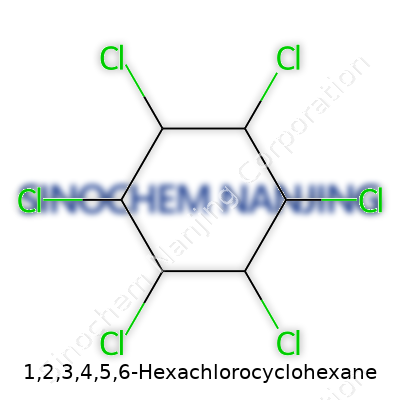
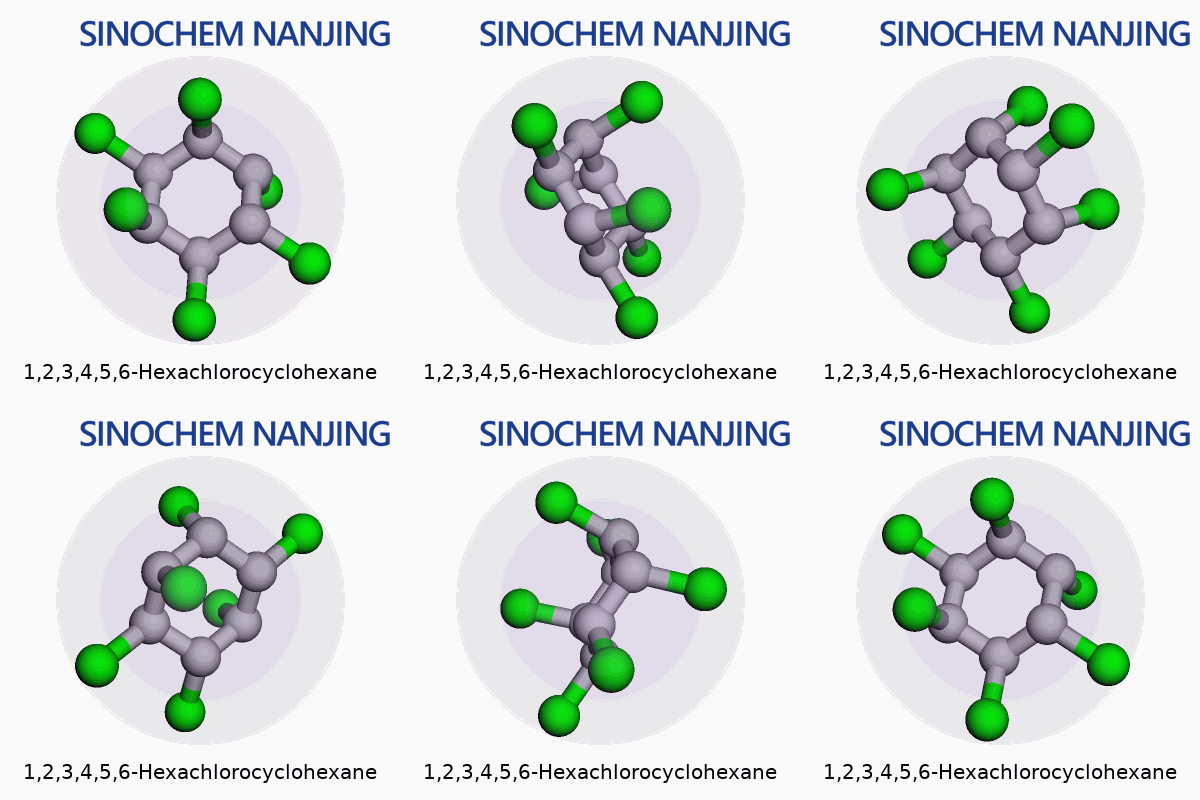
| Names | |
| Preferred IUPAC name | 1,2,3,4,5,6-Hexachlorocyclohexane |
| Other names |
Benzene hexachloride Hexachloran Lindane Gammexane HCH |
| Pronunciation | /ˌhɛk.səˌklɔː.rəˌsaɪ.kloʊˈhɛk.seɪn/ |
| Identifiers | |
| CAS Number | 319-84-6 |
| Beilstein Reference | 1909228 |
| ChEBI | CHEBI:36010 |
| ChEMBL | CHEMBL1409 |
| ChemSpider | 12777 |
| DrugBank | DB11106 |
| ECHA InfoCard | 03be026f-ea36-4d1a-ab65-7fa8bafd3790 |
| EC Number | 205-792-3 |
| Gmelin Reference | 10852 |
| KEGG | C06122 |
| MeSH | D006613 |
| PubChem CID | 6917 |
| RTECS number | GV2175000 |
| UNII | EF8756B839 |
| UN number | UN2468 |
| Properties | |
| Chemical formula | C6H6Cl6 |
| Molar mass | 290.83 g/mol |
| Appearance | White to light yellow solid |
| Odor | Musty odor |
| Density | 1.89 g/cm³ |
| Solubility in water | Slightly soluble |
| log P | 3.72 |
| Vapor pressure | 1 mmHg (20°C) |
| Acidity (pKa) | pKa ≈ 8.19 |
| Basicity (pKb) | 4.52 |
| Magnetic susceptibility (χ) | -0.000102 |
| Refractive index (nD) | 1.613 |
| Viscosity | 0.22 cP (25 °C) |
| Dipole moment | 2.61 D |
| Thermochemistry | |
| Std molar entropy (S⦵298) | 347.6 J·mol⁻¹·K⁻¹ |
| Std enthalpy of formation (ΔfH⦵298) | -8.18 kJ/mol |
| Std enthalpy of combustion (ΔcH⦵298) | -2722.2 kJ·mol⁻¹ |
| Pharmacology | |
| ATC code | P03AA01 |
| Hazards | |
| Main hazards | Harmful if swallowed or inhaled. Causes skin and eye irritation. Suspected of causing cancer. Very toxic to aquatic life with long lasting effects. |
| GHS labelling | GHS07, GHS08, GHS09 |
| Pictograms | GHS06,GHS09 |
| Signal word | Warning |
| Hazard statements | H300 + H302: Fatal if swallowed. Harmful if swallowed. H317: May cause an allergic skin reaction. H351: Suspected of causing cancer. H410: Very toxic to aquatic life with long lasting effects. |
| Precautionary statements | P261, P273, P280, P301+P312, P302+P352, P304+P340, P305+P351+P338, P308+P313 |
| NFPA 704 (fire diamond) | 2-2-0 Health:2 Fire:2 Reactivity:0 |
| Flash point | '215 °C (closed cup)' |
| Autoignition temperature | 340 °C |
| Explosive limits | Lower: 1.1% Upper: 6.2% |
| Lethal dose or concentration | LD50 (oral, rat): 100 mg/kg |
| LD50 (median dose) | 100 mg/kg (rat, oral) |
| NIOSH | XN2975000 |
| PEL (Permissible) | 0.5 mg/m3 |
| REL (Recommended) | 0.5 mg/m³ |
| IDLH (Immediate danger) | 50 mg/m3 |
| Related compounds | |
| Related compounds |
Cyclohexane Benzene hexachloride Lindane Tetrachlorocyclohexane Hexachlorobenzene Pentachlorocyclohexene |



