In-Depth Look at 1,1,2,2,3,3,4,4,5,5,6,6,7,7,8,8,8-Heptadecafluoro-1-Octanesulfonic Acid
Historical Development
Back in the early days of synthetic chemistry, people were fascinated with crafting molecules that nature simply never got around to making. 1,1,2,2,3,3,4,4,5,5,6,6,7,7,8,8,8-Heptadecafluoro-1-Octanesulfonic Acid, known in most labs as PFOS, entered the research spotlight in the mid-20th century. Driven by curiosity and industry needs, chemists developed PFOS alongside other perfluorinated compounds to replace older, less stable chemicals in manufacturing. The big break for PFOS came when large chemical manufacturers searched for a durable, water-repellent, and grease-resistant substance that didn’t degrade. Communities, scientists, and industries saw PFOS drive new success stories in everything from electronics to firefighting foams. Over time, folks started noticing that this sturdy molecule was sticking around in places people didn’t expect—organisms, water systems, even polar ice. That’s when the story took a sharp turn toward health and environmental concerns.
Product Overview
PFOS isn’t something most people meet in daily life. Its primary stage lies in manufacturing, where performance matters above all else. The strength of PFOS comes from its carbon-fluorine backbone, one of the toughest atom-to-atom bonds that chemistry has to offer. Rarely, if ever, does it break down in nature under normal conditions. The acid’s stability, paired with its tendency to lower surface tension, made it a go-to ingredient for stain repellents, fire-fighting foams, and semiconductor etching. Once companies realized how this chemical helped surfaces resist almost everything—oil, water, corrosion—the demand spiked for decades. This advantage also meant that PFOS didn’t stay put, sneaking into water, soil, and eventually, me and you.
Physical & Chemical Properties
PFOS shows off its chemistry as a clear, almost waxy solid or an oily liquid in pure form. It stands out for its strong sulfonic acid group at one end and a long chain loaded with fluorine atoms stretching away from it. That heavy fluorination grants PFOS its fierce resistance to heat, chemical attack, and biological breakdown. It won’t dissolve easily in most organic solvents, but loves to spread itself thin in water, clinging to any surface it can find. Its melting and boiling points outrun many common chemicals, letting it survive processes that would wipe out weaker compounds. The molecule measures out at a hefty 500+ g/mol, keeping it firmly planted wherever it lands.
Technical Specifications & Labeling
Folks working with PFOS need to pay attention to technical details. Labs typically deal with the potassium or ammonium salt, which changes how it handles in water and manufacturing setups. Labeling standards follow strict guidance—hazard pictograms, UN numbers, regulated designations. The acid strength clocks in above most strong acids, making it risky for skin and eyes. Shelf life rarely factors in, because PFOS doesn't degrade. Shipping documents and Safety Data Sheets (SDS) classify it as hazardous, subject to international tracking and disposal requirements. Precision in batch purity runs high, and reputable suppliers log exact amounts and trace contamination down to the part-per-billion range.
Preparation Method
Making PFOS never involved a simple one-pot process. Traditional manufacturers used electrochemical fluorination, plunging octanesulfonic acid through a bath of hydrogen fluoride under a hefty current. This harsh setup swapped out hydrogen for fluorine, creating a parade of byproducts alongside PFOS. Synthetic challenges stacked up, because even a small misstep could spit out compounds with broken chains or partial fluorination, hurting quality or performance. Modern labs sometimes work with alternatives, but the industrial pathway hasn’t shifted much due to the molecule’s stubborn nature and tightly regulated production.
Chemical Reactions & Modifications
PFOS ranks high for stubbornness, rarely going through the sorts of reactions that chemists rely on to dismantle or transform organic molecules. Most standard acids or oxidizers barely nudge it. The bright spot for modifications comes from the sulfonic acid tail, which will sometimes allow a salt to form or a metal to complex, opening up applications in specialized catalysis or membrane science. Thermally, PFOS resists breakdown up to several hundred degrees Celsius, making disposal tricky. Incineration above 1100°C offers a way out, but not without specialized equipment to snag and destroy any hazardous byproducts. Most labs treat PFOS as a terminal compound—something to isolate and safely store, rather than modify for daily use.
Synonyms & Product Names
Most scientists and safety officers simply call it PFOS, but rolls of technical paperwork list alternatives like Perfluorooctanesulfonic acid, Heptadecafluorooctanesulfonic acid, and sometimes the sodium or potassium salts. Product names in commerce vary by manufacturer, each tagging the material differently to match product lines, but regulatory filings unify under PFOS and associated CAS registry numbers. These details matter for accurate inventory, tracking, and managing safety compliance across borders and industries.
Safety & Operational Standards
PFOS challenges safety programs. Even at low concentrations, it can cause problems for wildlife and people, building up in biological systems over years and resisting normal breakdown. Legislative bodies in North America, Europe, and Asia started rolling out bans and strict controls after measurements showed PFOS creeping up food chains and appearing in human blood samples. Operational guidelines now demand full containment—closed systems, specialized spill handling, respirators and glove protocols, and disposal paths that avoid water or unmanaged incineration. Facility managers watch effluent streams and soil near PFOS-handling sites for traces that could slip into municipal water or agricultural land. Companies found non-toxic replacements for many uses, but some advanced manufacturing still sticks with PFOS when no substitute works as well.
Application Area
The list of places where PFOS made a difference runs long. Electronics fabrication, especially for chip etching and resist processing, used PFOS for decades to handle heat and chemical stress. Firefighting foams relied on this chemistry to douse jet-fuel blazes on runways and storage facilities, saving lives and equipment. Textile makers loaded PFOS-based repellents onto coats, carpets, and furniture for stain resistance. Plating shops chasing uniform metal deposits added it to electrolytic baths. As public health evidence stacked up, many companies cut back or phased out PFOS, turning to alternatives that held fewer long-term risks, sometimes paying higher costs in money or process changes.
Research & Development
Researchers spend plenty of time figuring out safer, smarter fluorinated molecules that can handle the same rugged jobs without lingering for decades. Teams tap into newer fluorosurfactants, reworking molecular design to break down faster or bypass living systems. Waste remediation gets special attention, with labs developing advanced filters, carbon adsorbents, and even genetically-engineered microbes to lock up or chew through PFOS where possible. Academic and industrial groups publish hundreds of studies every year tracking exposure, mobility, and breakdown, hoping to shut off environmental and health risks without stalling technologies that still depend on extreme chemistries.
Toxicity Research
Decades of toxicity work uncovered uncomfortable facts—PFOS tends to build up in liver, kidney, and brain tissues through repeat exposure. Health tracking points to immune system impacts, cholesterol spikes, developmental delays, and certain cancers popping up at higher rates in heavy exposure groups. Animal models show tumors and organ damage, supporting authorities’ efforts to push cleanup and replacement where possible. Scientists look for subtle, low-dose effects, tracking populations living near old manufacturing sites or using water supplies contaminated decades ago. Regulatory bodies decided that exposure levels need serious reduction, triggering a wave of water-cleaning projects and product bans.
Future Prospects
The science and industry around PFOS face a fork—on one side, demand for the rare properties that only fluorinated compounds deliver, and on the other, a push for health and environmental responsibility. Some see a future where green chemistry unlocks alternatives with equal performance, while front-line researchers try to mop up legacy pollution and trace every ounce produced since the 1950s. Companies and scientists work together, hoping to balance the need for durable, high-performance materials with new generations of chemicals that don’t follow PFOS’s notorious path through air, water, and food supplies around the globe.
What is 1,1,2,2,3,3,4,4,5,5,6,6,7,7,8,8,8-Heptadecafluoro-1-Octanesulfonic Acid used for?
Everyday Chemicals: The Invisible Helpers
Most folks don’t spend mornings thinking about chemicals sloshing in industrial vats or protecting stains from your sneakers. 1,1,2,2,3,3,4,4,5,5,6,6,7,7,8,8,8-Heptadecafluoro-1-Octanesulfonic Acid—often called PFOS for short—shapes a lot of products we take for granted.
How PFOS Shows Up in Life
PFOS acts as a surfactant, basically meaning it helps things slide, spread, or mix more easily. This quality makes it a key part of firefighting foams—the big ones sprayed on airstrips after a plane incident. PFOS foams don’t let water beads roll off flaming jet fuel; they force the flames down and keep them there, which can be the difference between a safe landing and a disaster. Fire services kept using these foams for decades because they flat-out worked better than anything else for chemical and fuel fires.
This chemical didn’t stop in fire stations. At home, a stain on the rug or a stubborn grease spot on the stove often means we’ve crossed paths with something once touched by PFOS. Many water-repellent sprays, non-stick coatings, and even stain-resistant clothing owe that seeming magic to this group of chemicals—including our friend PFOS. For decades, many manufacturers leaned on it to get grease and gunk sliding right off pans and tables, or to keep spills beading away from couches and jackets.
The Other Side: Bioaccumulation and Risk
Science started raising questions: if this chemical makes spills slide off, what happens when it runs off out of factories, through sewers, or seeps into groundwater? PFOS doesn’t break down under sunlight, microbes, or in the soil. So it lingers. Once in the body—animal, fish, or human—it tends to build up, not wash out. My own reading on this topic opened my eyes; studies link high PFOS levels to health concerns ranging from immune and liver troubles to developmental issues in kids.
In 2002, manufacturers in places like the United States pulled back from large-scale PFOS production. Cleanup hasn’t caught up with the mess left behind, with contaminated water showing up across states and remote communities. Policies now push for companies to track and restrict such chemicals, but legacy pollution hangs around.
A Shift in Thinking: Can We Do Better?
I look at the facts: firefighting foams proved their worth in emergencies. Nothing else matched them at the time. But long-term harm piles up quietly, and by the time it's clear, local towns pay the price in drinking water and health. Some fire departments now use safer foams for practice sessions and save older chemicals for true emergencies. Kitchenware brands switched to different coatings. Policy-makers propose stricter checks and phaseouts for PFOS, pushing manufacturers to prove their replacements weigh less heavily on public health and the environment.
Real solutions take persistence. Routine water testing, removal projects in affected areas, education about safe alternatives—these moves make a difference if taken seriously, not just talked about. We all have a stake in knowing what coats our frying pans and foams up at the local airport, because the ground under our feet keeps growing whatever soaks into it.
Is 1,1,2,2,3,3,4,4,5,5,6,6,7,7,8,8,8-Heptadecafluoro-1-Octanesulfonic Acid hazardous or toxic?
Why This Chemical Matters
1,1,2,2,3,3,4,4,5,5,6,6,7,7,8,8,8-Heptadecafluoro-1-Octanesulfonic Acid stands out for its complex name, but that’s only the start. This chemical, better known by experts as a specific type of PFAS (per- and polyfluoroalkyl substances), has sparked debate in labs, government offices, and homes. PFAS compounds show up in non-stick cookware, firefighting foam, stain-resistant fabrics, and even some fast-food wrappers. The big appeal: performance. The big question: safety.
Hard to Break Down, Easy to Build Up
PFAS like this one don’t break down easily in nature. They hang around in water, soil, and living tissue long after they’re used. Scientists call them “forever chemicals” for good reason. No matter how careful someone is after a spill or leak, rain doesn’t wash them away. Sunlight doesn’t break them apart. The challenge builds over time. Even at low levels, they can move up the food chain, from fish and plants to bigger animals, and to people.
What Research Shows
Studies from places like the CDC and EPA point to mounting concerns. This acid and its close cousins have turned up in drinking water and blood tests across the country. High levels can hurt the liver and immune system, affect hormones, and change how babies grow. Even small amounts may raise risks of high cholesterol, thyroid disease, and certain cancers. The science isn’t finished, but the message gets clearer each year: repeated exposure can cause harm.
Everyday Impact and Community Stories
I grew up near a rural fire station where PFAS foam sat stacked in big barrels. Years later, the well water ran cloudy; tests finally pointed to chemicals a lot like this one. Neighbors worried. Some paid thousands for new filters. Others started buying bottled water. The problem didn’t just hit home—communities across the country, from Michigan to North Carolina, learned that PFAS seeped silently into aquifers and stayed put for decades. It’s not just an industrial issue; it’s a kitchen sink issue, too.
Taking Action and Finding Solutions
Cutting down on PFAS use needs to start with factories and big fire stations, but can move right down to what we bring into our homes. Some cities have banned non-essential uses. Simple steps work as well—checking for PFAS-free labels or supporting businesses that skip these chemicals makes a difference. More money for water testing, tougher safety rules, and smart cleanup efforts help reduce risk. Watching for updates from groups like the EPA, listening to water safety advisories, and asking questions about sources—these habits keep families better protected.
The Bigger Picture
Tackling risks tied to 1,1,2,2,3,3,4,4,5,5,6,6,7,7,8,8,8-Heptadecafluoro-1-Octanesulfonic Acid takes more than new laws. People deserve clear information, real research, and practical steps to clean up and move forward. With more folks aware and pushing for action, safer water and air become possible, not just a hope.
How should 1,1,2,2,3,3,4,4,5,5,6,6,7,7,8,8,8-Heptadecafluoro-1-Octanesulfonic Acid be stored?
Respecting a Chemical with a Big Name and Bigger Impact
Walking into any facility that handles fluorinated chemicals, the first thing you notice is the sharp-smelling air and the hush in the work habits. Compounds like 1,1,2,2,3,3,4,4,5,5,6,6,7,7,8,8,8-Heptadecafluoro-1-Octanesulfonic Acid command respect for good reason. This compound, a member of the PFAS family, carries a legacy of environmental persistence and human health caution. Missteps in storage can lead not just to operational headaches, but to lasting harm.
Real Risks, Real Protocols
This acid doesn’t just stain lab floors or corrode cheap shelving. Left unchecked, leaks or spills can move quietly into water, soil, or the hands of the wrong worker. Over time, PFAS contamination can stick around in groundwater for decades. During my days on the shop floor, we had to live with the weight of knowing these spills didn’t fade; they would show up later in news reports or a community scare.
Fluorosurfactants like this draw extra scrutiny from environmental scientists worldwide. Agencies like the EPA and the European Chemicals Agency have lined up strict storage guidance not out of a sense of bureaucracy but because real damage follows lax habits. It’s hard to forget those hazmat training sessions drilling you on double containment and special labeling after you’ve seen even a small acid mistake etch a stainless-steel tray.
Best Practices You Can’t Afford to Skip
Strong acids need containers that keep their shape and integrity under stress. For this chemical, high-density polyethylene, Teflon, or certain stainless steel grades work—ordinary glass can shatter, and most metals corrode. Labels must be clear and readable, not buried in chemical jargon, so any worker or first responder can move quickly if something goes wrong.
Rooms for this chemical require strong ventilation—dust or vapor isn’t something anyone should breathe. Chemical-resistant trays or secondary containment beneath each drum or carboy catch leaks before they find a drain.
Temperature makes another difference. I’ve seen solutions go from stable to unpredictable after a storage room gets too hot in midsummer. Stable, moderate temperatures beat fluctuations and keep container seals from fatiguing. Keep out sunlight; UV light can break down packaging or degrade the chemical, making a mess nobody wants to explain later.
People and Training Drive Safety
No storage plan works without repeat training. Hazmat suits and splash shields already make for uncomfortable work, so you need muscle memory: how to clean a leak, who to call, and when to grab the spill kit. Having clear signage and procedures on the wall beats searching for a binder as someone shouts for help. Incident drills always sound boring, but every person I know who’s run one has a story about how it came in handy, sometimes years later.
Cleanup and Disposal: Don’t Wait Until It’s Too Late
Even careful storage runs up against the clock—old containers or expired batches threaten to become tomorrow’s problem. Lot tracking and routine checks save you from surprises hiding on the back shelf. Licensed hazardous waste haulers handle disposal; pouring down the drain is never an option, not even in a pinch. Environmental trust erodes quickly, but winning it back after a misstep takes generations.
A Chemical that Deserves Caution, not Complacency
In every facility I’ve worked, people bond over a quiet respect for chemicals like these. Storage protocols may seem laborious, but they’re born out of real incidents and lessons learned. Following the letter and spirit of safety guidelines isn’t just regulatory box-checking; it honors the stories of those who came before. Good storage, regular checks, and a culture of speaking up on safety protect workers and the communities around them.
What are the chemical and physical properties of 1,1,2,2,3,3,4,4,5,5,6,6,7,7,8,8,8-Heptadecafluoro-1-Octanesulfonic Acid?
Understanding Its Chemistry
1,1,2,2,3,3,4,4,5,5,6,6,7,7,8,8,8-heptadecafluoro-1-octanesulfonic acid, or PFOS, lands in a league of its own. The carbon chain stands fully fluorinated, with only the acid group breaking up the molecular armor. Fluorine atoms claim a place on each carbon, except the last, where the sulfonic acid group hangs off the chain. This engineered repetition gives it a bond stronger than nearly anything in the world of organic molecules. That kind of bond creates resistance not found in everyday acids.
If you handle this chemical, you see a colorless, oily liquid, heavier than water, not mixing into it, and giving off no noticeable odor. Its presence slips unnoticed unless you know what you’re looking for in a lab. The sulfonic acid tail brings strength—letting one end stick out in polar environments and the body avoid mixing with water by hugging its own kind. The hydrophobic and hydrophilic split feels like oil and vinegar in a bottle, except PFOS does its balancing act on a molecular scale.
Strength in Stability—And Its Downsides
With bonds as tight as PFOS, nothing in common environments takes it apart. Its chemical resilience means it refuses to break under sunlight, heat, or acid. It also won’t react the way normal fat-soluble molecules do in the body. While this toughness made PFOS sought-after—think stain-proof carpet, grease-resistant paper, and fire-fighting foam—it brings baggage. PFOS builds up in water, soil, and living tissue. The half-life in humans can stretch over five years, highlighting how sticky this chemical gets in our systems.
Research carried out by the CDC reports that PFOS turns up in the blood of most people tested in the U.S. Every time I see data like that, I remember my years in environmental journalism chasing down stories on “forever chemicals” and realizing how persistence outpaces any regulation cycle. More evidence links PFOS to immune and liver effects in animals. Scientists haven’t nailed down every impact on people, yet the steady accumulation spells risk.
Physical Handling and Uses
Anyone who’s worked with PFOS in industrial or research settings learns to respect it. The surface tension drops wherever it touches. This gives PFOS its edge in fire-fighting foams—spreading across liquid fuel faster than water or protein foams could. Grease repellent coatings get an efficiency boost that food wrappers and fast-food packaging once leaned on hard. Electronics and plating plants found it unbeatable for certain applications.
Physical properties tie back to those short carbon-fluorine bonds: boiling point above 400°C, near-zero vapor pressure under normal conditions, and stability across a pH range. You can test, heat, or freeze it; the structure holds. Water won’t dissolve it, oils don’t phase it, and only a handful of technical solvents do better than dilute it.
The Need for Responsible Solutions
Industry moved fast with PFOS, but the environment pays a long-term price. Europe and the U.S. have labeled it a priority chemical for reduction and removal, recognizing its impact on ecosystems and health. Wastewater and soil remediation remain expensive and challenging. Granular activated carbon and high-pressure membranes catch a good share, but cleanup rarely ends with a single process. From experience, groundwater tests near manufacturing zones show it lingers far longer than expected, even with active filtration efforts.
Finding safer alternatives won’t solve legacy pollution, but the shift to short-chain relatives and biodegradable surfactants offers hope for new products. Nothing replaces respect for a substance that blends robust chemistry with real-world consequences, and every sector that once trusted PFOS owes vigilance in tracking where these molecules end up.
What are the proper handling and disposal procedures for 1,1,2,2,3,3,4,4,5,5,6,6,7,7,8,8,8-Heptadecafluoro-1-Octanesulfonic Acid?
Why PFAS Matters in the Workplace
Most people don’t stumble across the name 1,1,2,2,3,3,4,4,5,5,6,6,7,7,8,8,8-Heptadecafluoro-1-octanesulfonic acid when stocking a supply closet. This chemical, part of the notorious PFAS family, ends up in labs, factories, and sites tied to electronics or chemical engineering. It won’t pop up in a home garage, but workers in those spaces can attest to how sticky the issue gets. I’ve worked around sites with legacy PFAS waste. The long shelf-life and environmental persistence mean today’s mistakes keep echoing decades later.
Gloves, Goggles, Ventilation: Basic Protection Isn’t Optional
Contact with this acid won’t burn through your boots, but its dangers run deeper. Skin absorbs it. Inhalation draws it into the body. Chronic exposure brings health headaches—cancer risks, hormone disruption, organ trouble. Labs handle it with full gloves, sleeves, and goggles. Splash goggles work better than regular safety glasses. Nitrile or heavy neoprene don’t degrade. Lab coats make a difference, and even the best shops stick to splash shields in case of energetic reactions.
Ventilation takes priority. This acid doesn’t evaporate fast, but processes can throw up aerosols and vapors. I’ve seen shops use fume hoods and closed systems, not just fans. Nobody trusts general exhaust; dedicated ductwork keeps accidental releases out of the workspace and away from neighboring communities.
Storage Only in the Right Place
Leaving a PFAS drum by the mop sink is a recipe for environmental disaster. Good storage means sealed, labeled containers, placed on secondary spill trays. Teams stick to compatible plastics or fluorinated containers, never steel or glass. All containers must have dated logs, so no one forgets old material lurking on a forgotten shelf. I’ve seen spreadsheets and old-fashioned binders at responsible sites, both more reliable than trust alone.
Emergency Response—Preparation Saves Lives and Prevents Spills
Accidents happen—pipes rupture, valves leak, containers tumble. Anyone handling this acid should know the spill kit’s color and location. Good kits feature special absorbents resistant to fluorinated compounds, not just sawdust or clay. Personnel go through drills yearly, repeating hands-on cleanup for containment and disposal—not just reading MSDS sheets. Showers and eyewash stations always work, and everyone needs to know how to strip off contaminated clothing quickly.
No Shortcut Disposal—Waste Hauling and Incineration
No municipality wants PFAS leaching into streams or groundwater. Responsible firms assign PFAS as hazardous waste, locking it up until certified haulers arrive. Licensed facilities burn it at high temperatures—over 1,100 degrees Celsius—or use advanced chemical breakdown if permitted. Deep-well injection sometimes enters the conversation, though that’s losing favor. Records go with every drum, signed and dated, so the chain of custody stays crisp. This paperwork keeps firms and communities in the loop and allows for quick action if problems emerge down the line.
Stopping the Cycle: Training and Alternatives
Long-term, every worker, supervisor, and cleaner gets trained on safer handling, new alternatives, and warning signs. Some industries look for less persistent chemicals to replace this acid. The lesson learned after years of PFAS mess: shortcuts and ignorance multiply problems, and recovery takes years. Knowing what’s at stake makes every procedure, label, and pair of gloves a basic investment in tomorrow’s health and safety.
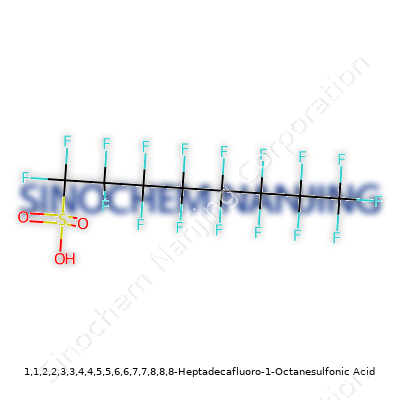
| Names | |
| Preferred IUPAC name | 2,2,3,3,4,4,5,5,6,6,7,7,8,8,8-Pentadecafluorooctane-1-sulfonic acid |
| Other names |
Perfluorooctanesulfonic acid PFOS Heptadecafluorooctanesulfonic acid Perfluorooctylsulfonic acid |
| Pronunciation | /ˌhaɪp.təˌdiː.kəˈfluːə.roʊ wʌn ɒkˈteɪn sʌlˈfɒnɪk ˈæsɪd/ |
| Identifiers | |
| CAS Number | 1763-23-1 |
| Beilstein Reference | 1462308 |
| ChEBI | CHEBI:132350 |
| ChEMBL | CHEMBL3986947 |
| ChemSpider | Chemical structure string (ChemSpider ID) of **1,1,2,2,3,3,4,4,5,5,6,6,7,7,8,8,8-Heptadecafluoro-1-Octanesulfonic Acid**: **String:** 61255 |
| DrugBank | DB11031 |
| ECHA InfoCard | 100.006.962 |
| EC Number | 206-203-2 |
| Gmelin Reference | 65027 |
| KEGG | C19592 |
| MeSH | D069646 |
| PubChem CID | 9554 |
| RTECS number | TT4901500 |
| UNII | K73E20U6BW |
| UN number | UN3077 |
| CompTox Dashboard (EPA) | DTXSID4022152 |
| Properties | |
| Chemical formula | C8HF17O3S |
| Molar mass | 538.133 g/mol |
| Appearance | Colorless or light yellow liquid |
| Odor | Odorless |
| Density | 1.86 g/cm³ |
| Solubility in water | Slightly soluble |
| log P | -1.3 |
| Vapor pressure | 13 mbar (20 °C) |
| Acidity (pKa) | -2.1 |
| Basicity (pKb) | -2.2 |
| Magnetic susceptibility (χ) | -0.66×10⁻⁶ cm³/mol |
| Refractive index (nD) | 1.305 |
| Viscosity | 15 cP (20 °C) |
| Dipole moment | 3.49 D |
| Thermochemistry | |
| Std molar entropy (S⦵298) | 547.6 J·mol⁻¹·K⁻¹ |
| Std enthalpy of formation (ΔfH⦵298) | -1636.7 kJ/mol |
| Std enthalpy of combustion (ΔcH⦵298) | -8022 kJ·mol⁻¹ |
| Pharmacology | |
| ATC code | J06BC01 |
| Hazards | |
| Main hazards | Causes severe skin burns and eye damage. May cause respiratory irritation. |
| GHS labelling | GHS05, GHS07, GHS08, GHS09 |
| Pictograms | GHS05,GHS06,GHS08,GHS09 |
| Signal word | Danger |
| Hazard statements | H301 + H311 + H331: Toxic if swallowed, in contact with skin or if inhaled. H373: May cause damage to organs through prolonged or repeated exposure. |
| Precautionary statements | P261, P262, P264, P273, P280, P301+P330+P331, P302+P352, P304+P340, P305+P351+P338, P312, P321, P314, P362+P364, P405, P501 |
| NFPA 704 (fire diamond) | 3-0-2-Acid |
| Flash point | 145 °C |
| Lethal dose or concentration | LD50 oral rat > 2000 mg/kg |
| LD50 (median dose) | LD50 (median dose): "500 mg/kg (rat, oral) |
| NIOSH | RN:375-73-5 |
| PEL (Permissible) | Not established |
| REL (Recommended) | REL (Recommended): NIOSH REL: 0.01 mg/m³ TWA (as FOSH) |
| IDLH (Immediate danger) | Not established |
| Related compounds | |
| Related compounds |
Perfluorooctanesulfonyl fluoride Perfluorooctanoic acid Perfluorooctanesulfonamide Perfluorohexanesulfonic acid Perfluorobutanesulfonic acid |



