1,1,1-Trifluoroethane: A Down-to-Earth Look
Historical Development
Science doesn’t stand still, and neither has the story of 1,1,1-trifluoroethane. Decades back, people didn’t care much about what went into refrigerants and blowing agents, as long they got cold or kept their sandwich insulation from crumbling. Then folks woke up to the ozone layer problem. Chlorofluorocarbons fell out of favor as the Montreal Protocol rolled out, and researchers started poking at ways to chill drinks, ship vaccines, and puff up foams without wrecking the atmosphere. 1,1,1-trifluoroethane, which ends up on labels as R-143a, hit the scene as part of that wave: a compound offering new possibilities, especially since it doesn’t chew through ozone like old-school CFCs did. As regulations squeezed out dangerous chemicals, companies pushed for alternatives, and this molecule’s importance grew in refrigerant blends and specialist applications, going from chemistry journals into the guts of everyday machines over time.
Product Overview
R-143a didn’t get famous overnight, but step by step, companies began using it where straight HFC-134a or older refrigerants fell short. It typically appears as a component in refrigerant blends, rather than working alone, providing low boiling points and favorable pressure characteristics. This chemical pops up in HVAC systems, supermarket chillers, and even aerosol propellants. Its versatility suits it to several engineering tasks, especially where designers balance thermodynamic needs against environmental rules and safety standards.
Physical & Chemical Properties
Talking properties, 1,1,1-trifluoroethane boils at around -47°C. That sharp drop to vapor forms the backbone for various cooling machines. Clear, colorless, and almost odorless, its molecular structure brings three fluorine atoms locked onto a two-carbon backbone, which makes it stable and hard to break down under normal conditions. This gives it inertia during reactions, though once you throw enough energy at it, or the right reactants, it shows its chemical teeth. The weight, volatility, and resistance to decomposition keep making it handy in thermal cycling and spraying jobs, though its flammability, while lower than straight hydrocarbons, can't be ignored outright.
Technical Specifications & Labeling
Regulators and engineers both lean on numbers and codes. R-143a gets bundled into refrigerant standards set by organizations like ASHRAE, referenced as a pressure-enthalpy value in technical manuals. Labels flag it for its high Global Warming Potential (GWP) despite zero ozone depletion, so every canister or tank must carry the correct safety and environmental symbols. It’s dense vapor, heavier than air—so leaks tend to settle. Safety data sheets underline this, and every cylinder comes with valve color codes and storage instructions demanded by safety agencies.
Preparation Method
Industrial chemists make 1,1,1-trifluoroethane by reacting 1,1-dichloroethane with hydrogen fluoride. The process needs a catalyst and corrosion-resistant gear, given the brutality of the chemicals involved. Tight controls keep the formation of unwanted isomers and byproducts down. Most factories running these setups use continuous processes: feed in the right ratio of starting materials, maintain temperature and pressure, and separate the target molecule through distillation or absorption. This is standard stuff, but tuning reaction conditions can mean the difference between barely scraping by and a safe, efficient operation.
Chemical Reactions & Modifications
Compared to its more reactive cousins, 1,1,1-trifluoroethane stays cool under most conditions. It's not ready to mix with just any household chemical, but in the world of fluorocarbons, that's a plus. You can break it down under high heat or in plasma with intense ultraviolet light—releasing toxic and corrosive products, such as hydrogen fluoride or carbonyl fluoride, so any attempt at decomposition or further modification comes with stiff engineering safeguards. Its main value sits in this inertia, giving it a long shelf life and reliability in demanding environments.
Synonyms & Product Names
This chemical doesn’t just go by 1,1,1-trifluoroethane. On boxes, bottles, and shipping docs, the more familiar R-143a jumps out. Chemists looking for it in papers might see methylfluoroform or trifluoroethane, depending on the era and author. These names matter; knowing all aliases helps technicians avoid crossed wires during inventory, procurement, and troubleshooting. Regulatory filings and customs papers may use CAS number 420-46-2, adding one more layer for folks keeping their paperwork straight.
Safety & Operational Standards
Handling 1,1,1-trifluoroethane means watching for two main dangers: its ability to build up in enclosed spaces and the effects of accidental ignition. Occupational guidelines flag it as an asphyxiant in high concentrations, edging out air if leaked during filling or emptying of tanks. Staff trained on material handling stay clear of ignition sources and make sure detectors and proper ventilation systems back them up. Storage rules lay out requirements for temperature, valve design, and container materials—typically carbon steel or aluminum, always pressure certified. Regulations force frequent inspections and clear record keeping, supporting both worker safety and environmental responsibility.
Application Area
The strongest role of R-143a comes in refrigerant blends, notably R-404A and R-507, where it sits with other HFCs to handle supermarket freezers, industrial chillers, and sometimes in air conditioning for transportation. It serves as a propellant in aerosol packing and, on occasion, works as an intermediate for producing other fluorochemicals or special solvents. Some labs use it in calibration gas mixtures or for studying atmospheric chemistry. The breadth of applications arises because the chemical fits engineering needs in several distinct segments—freezing, pressurizing, and vaporizing with a reliability manufacturers prize.
Research & Development
Researchers in both industry and academia focus hard on ways to lower environmental impact while maintaining performance. Labs compare energy efficiency and emission profiles across dozens of HFCs, with R-143a serving as a test case for how structural tweaks might alter volatility, global warming figure, or reactivity. Simultaneously, R&D teams try to engineer new blends that cut overall GWP or find catalysts and reactor designs flushing away hazardous byproducts, reducing risks during synthesis. As controls on HFCs ratchet tighter, innovation leans towards alternatives, but ongoing studies on trifluoroethane keep it in the conversation. People seek drop-in solutions with less regulatory headache, but every new formula faces its own trade-offs in terms of cost, stability, and safety.
Toxicity Research
Toxicologists have dug deep into the impacts of 1,1,1-trifluoroethane on both people and the environment. Most analysis points to low acute toxicity: short exposures at work levels typically don’t trigger serious symptoms, although dizziness or heart arrhythmias can arise if the atmosphere gets thick with vapor. Long-term studies remain ongoing, especially as data accumulates around workplace monitoring and accidental spills. The big concern centers on the substance’s role as a greenhouse gas. Even without hurting humans directly in low doses, its cumulative contribution to climate change means stricter scrutiny over coming years. Researchers keep testing how it decomposes in soil or water, checking for persistent products that could slip through waste controls. Industry standards demand regular updating of toxicity reference values, putting pressure on producers to stay transparent and on regulators to set honest limits with real-world backing from peer-reviewed science.
Future Prospects
There’s no easy answer to the place of 1,1,1-trifluoroethane in an industry trying to balance cooling demand with responsibility for the planet. As regulatory agencies sharpen the axe on high-GWP substances, producers have to innovate or pivot—sometimes both. New refrigerants and foaming agents built from complex blends or altered chemistries may take center stage, but the engineering lessons learned from R-143a drive advances in containment, leakage prevention, and sustainable manufacture. Environmental advocacy groups and thoughtful companies both keep old chemicals under watch, and the story of this compound could morph depending on how legislation pulls the market or science brings out safer, greener substitutes. The core point is that products like 1,1,1-trifluoroethane push technological progress, but they also serve as a measuring stick for the responsibility industry must show—both to users and to people who never see a refrigeration plant but live with the results of those choices in the broader climate. Until genuinely benign solutions elbow their way in, careful use and ongoing research should shape decisions at every level, from the chemical plant to the supermarket freezer aisle.
What are the primary uses of 1,1,1-Trifluoroethane?
Understanding the Role of This Chemical
1,1,1-Trifluoroethane, often called R-143a, pops up in more places than most folks realize. My first encounter with it came years ago, during a conversation with a neighbor who worked as a refrigeration tech. He treated R-143a like just another tool in the kit, but after digging in, it’s clear this compound holds a bigger place in both industry and daily life.
Refrigeration and Air Conditioning
In the day-to-day world, R-143a pulls a lot of weight as a refrigerant. Many folks don’t know the complexities hiding inside that familiar hum of an air conditioner. R-143a shows up in refrigerant blends that keep food cold, data centers running, and commercial buildings comfortable. For folks running a cooling business, it’s not about just picking any chemical—it’s about matching properties like pressure, boiling point, and safety. R-143a’s low toxicity and moderate operating pressure help it fit the bill, especially in blends like R-404A and R-507, which have been staples in large supermarket freezer aisles.
Refrigeration isn’t the only place where R-143a makes a mark. Anyone handling fire suppression systems in server rooms or on ships might recognize it. Some fire control blends use trifluoroethane for its chemical stability and low flammability. In my experience handling electronics, it’s these little details that keep delicate equipment safe.
Motive Power and Propellants
Aerosol propellants have always faced a double challenge: delivering the product and meeting safety standards set by agencies like the EPA. Folks in the paint or household cleaner industries see R-143a as a solid alternative to older, ozone-damaging chemicals such as CFCs. It offers enough vapor pressure to push things out of a can, but doesn’t send ozone depletion numbers through the roof.
Beyond sprays, R-143a sometimes ends up as a moderate-pressure working gas. I’ve seen it in specialized medical applications—think of asthma inhalers or pharmaceutical sprays. The same characteristics that make it a good refrigerant (non-corrosive, non-flammable under normal conditions, chemically stable) make it suitable in these settings, where safety and reliability really matter.
Challenges and Environmental Concerns
Like any man-made chemical, using R-143a comes with an environmental price. Regulators are looking at its global warming potential (GWP), which is much higher than traditional CO2. From a sustainability angle, advocates are pressing industry to adopt more responsible alternatives. Years ago, everyone talked about the Montreal Protocol’s success in phasing out CFCs because of the ozone hole. Now we face a similar crossroads with high-GWP HFCs like R-143a. Engineers, chemists, and policymakers are being pushed to develop refrigerants that don’t heat up the planet or damage the ozone layer.
Switching out R-143a for newer blends and natural refrigerants takes more than political will. It calls for updated machinery, trained techs, and broad industry buy-in. It also demands regulatory clarity. Companies are experimenting with CO2-based systems, hydrofluoroolefins (HFOs), and even natural coolants like propane. Each option brings trade-offs, and nobody has found a perfect answer just yet, but a strong push from regular folks, scientists, and industry leaders will keep things moving.
Is 1,1,1-Trifluoroethane safe to handle and what precautions should be taken?
Understanding What You’re Handling
1,1,1-Trifluoroethane shows up in more workspaces lately, especially for HVAC jobs and electronics cleaning. The stuff does its job well, replacing chemicals like CFCs that chewed up the ozone layer. It’s colorless, and you probably won’t notice a smell. Some people might assume it’s as harmless as air. That’s a mistake.
Risks That Hide in Plain Sight
Direct contact with 1,1,1-Trifluoroethane rarely causes burning or irritation right at first—at least not on skin. The problem is its gas can knock oxygen levels down in confined or poorly ventilated rooms. Some call this “simple asphyxiation.” You might not even notice the danger until dizziness or headaches creep in. Extended exposure can slow reaction time and muddle your mind.
Breathing high concentrations can knock someone out cold, especially in smaller rooms or basements where fresh air doesn’t move much. In my own time around these chemicals, the temptation to “just get it done quick” kept creeping in, but all it takes is one rushed job for things to go wrong.
On top of that, some people report heart rhythm changes after heavy exposure. According to scientific reports, single high exposures raised adrenaline sensitivity in the heart—so heavy use near anyone with a heart condition isn’t wise. Spills chill skin rapidly enough to cause frostbite because it boils right at room temperature. That caught a couple of coworkers off guard, leaving behind pale, painful patches needing weeks to heal.
Fire Risk? Not Off the Table
1,1,1-Trifluoroethane doesn’t ignite as easily as some cleaning or refrigerant fluids, but it can still burn under the right conditions. High heat or a strong spark close to the liquid creates a fire risk. In halogenated gases, decomposition kicks out poisonous vapors if flames or hot metals contact the chemical. These fumes (like hydrogen fluoride) can bite into lungs and eyes, sending someone running to the doctor.
Precaution Beats Regret
Wearing gloves and eye protection gets skipped in a hurry, especially when hands get sweaty or vision fogs up. Yet several burns and stinging eyes later, people learn to respect even routine chemicals. Always ventilate the work zone. Fans cost a few bucks and can save a trip to the ER. Never work alone. If something happens, someone needs to call for help. Don’t eat or drink near areas where this compound has been sprayed or handled.
It helps to keep a spill kit with absorbent pads and a plan for cleaning up accidental releases. Training shouldn’t stop at that first safety meeting—new folks need reminders and the veterans need refreshers.
Store containers upright in a cool, shaded place. Unloading tanks under sunlight or in hot vehicles builds dangerous pressure. Always double-check labels, too—mistaking it for a different gas can cause all kinds of chaos.
Better Habits, Fewer Accidents
In my experience, safety holds up best when it’s built into daily routines, not just paperwork. Companies who value their workers set clear rules and make sure people follow them—no exceptions for quick fixes. That approach saves bodies and businesses. Local and national regulations push companies toward safer handling, but buy-in at the ground level matters most.
You don't have to fear 1,1,1-Trifluoroethane, but complacency creates the perfect setup for injuries. With respect, planning, and a few extra precautions, risks shrink and the job gets done right every time.
What are the storage and handling requirements for 1,1,1-Trifluoroethane?
Understanding the Gas We Work With
1,1,1-Trifluoroethane, known to a lot of workers as R-143a, pops up in refrigeration, air conditioning, and cleaning electronics. I remember stepping into a small plant on a hot Midwestern day and seeing battered old cylinders stacked near a loading dock. A plant manager told me, “This stuff is great until someone stores it wrong.” His comment stuck with me. Flammable and colorless, R-143a will not give you a warning—one mistake, and the results could be fatal. So, storing it right makes all the difference between a safe workplace and chaos.
The Realities of Storage
Fluorinated gases love cool, dry, shaded areas. Direct sunlight turns cylinders dangerously hot. Keep R-143a in well-ventilated areas to reduce build-up. By law, nearly every country demands metal cylinders durable enough to hold pressurized gases. Never try to “make do” with old containers. I once saw an old acetylene tank used for a “quick fix”—it failed under pressure. The lesson? Don’t get creative. Only certified containers built for fluorinated refrigerants should enter your supply line. Store them upright, and make sure safety caps cover the valves. Chemicals stored horizontally can roll, causing damaged valves or leaky fittings.
Low-lying storage rooms present a problem. Vapors from R-143a are heavier than air and will settle. Poor ventilation turns a minor leak into a big risk. I’ve talked with fire marshals who described walking into chemical closets with stale, heavy air—a clear warning sign. Investing in ventilation keeps your crew breathing clean air and removes flammable vapors before they build up.
Risks Most People Don’t Realize
Most of us understand the flammable symbol. But frostbite? R-143a’s rapid vaporization chills exposed skin or eyes. During a training exercise, I felt the instant cold of escaping gas on my hand. Moments like that push home the importance of thick gloves and basic goggles. Training new staff goes beyond reading a manual. Bring them to the tank farm, show them the cylinders, and walk through what each valve does and how leaks look, sound, and smell. Fire isn’t an idle risk, either. An ignition source like a cigarette, sparking tool, or even static electricity can ignite leaked R-143a. Regulations suggest keeping extinguishers close to the storage area and training all staff on which to use—dry chemical or CO2 types handle refrigerant fires far better than water. A wet towel will not help you here.
Solutions That Don’t Cut Corners
If regulators ask for an updated inventory log, be ready. Track each cylinder—full, used, and empty—with dates, lot numbers, and who checked them in or out. This helps in recalls, audits, and accidental releases. Label all storage clearly. Add signage that makes sense to tired night shift folks, not just high-level safety officers.
I’ve worked on teams that skipped some steps to save a penny, and the resulting spills, fines, and injuries wiped out any short-term gain. For companies handling 1,1,1-Trifluoroethane, up-to-date safety training, certified personal protective equipment, and well-maintained storage areas seem expensive upfront, but injuries and shutdowns cost far more.
My advice? Invest in the basics—proper cylinders, shaded and ventilated storage, and real-world training. Every shift and every worker counts. Get this foundation right, and the risk shrinks fast.
What is the environmental impact of 1,1,1-Trifluoroethane?
Understanding 1,1,1-Trifluoroethane
1,1,1-Trifluoroethane, also known as HFC-143a, often ends up in refrigerants and blowing agents that help keep things cold or give products their structure. In my early days working in facilities maintenance, I’d see techs swap out old refrigerants for versions with a lower impact, believing newer chemicals promised cleaner air and less harm. Companies leaned hard into hydrofluorocarbons like 1,1,1-Trifluoroethane not just because they replaced ozone-depleting substances like CFCs, but also because the technology demanded it.
Greenhouse Gas Concerns
Swapping out CFCs for HFCs helped tackle ozone loss, that much is true. Yet, it traded one problem for another—climate change. 1,1,1-Trifluoroethane brings a Global Warming Potential (GWP) that towers over carbon dioxide. Official numbers tag its GWP at about 4,800 over a century. Compare that to CO2’s score of just 1. That means a single molecule of HFC-143a traps about 4,800 times more heat in the atmosphere than one molecule of CO2. In daily life, escapes happen. From leaky AC units to careless servicing, the chemical finds ways into the air, and with so much heating potential bottled up, even small leaks add up throughout cities and factories.
Longevity in the Atmosphere
Once released, 1,1,1-Trifluoroethane hangs around for roughly 52 years. That sort of lifespan only multiplies the impact. It doesn’t just disappear with the next season’s rain or get scrubbed by trees and oceans the way some other chemicals do. Every molecule floating above us keeps reflecting heat, nudging the world’s temperature upward. In my years following building standards, I’ve watched regulations shift as scientists push for action—not just because of policy trends, but because data from atmospheric monitoring shows these gases accumulating and sticking around.
Policy Efforts and Industry Actions
The Montreal Protocol’s success in cutting out ozone busters set the stage for tighter controls. Global policies now turn to HFCs. The Kigali Amendment, for instance, seeks to phase down production and use of potent HFCs like 1,1,1-Trifluoroethane by almost 80% over the next few decades. Industry sees the writing on the wall. Refrigeration manufacturers shift to alternatives with less climate kick. Substitutes like hydrofluoroolefins (HFOs) and natural refrigerants—think ammonia or CO2—start popping up with more frequency in the products I see shipped and installed today.
Steps for Owners and Technicians
Permanent fixes won’t drop out of the sky. Leaks get caught fastest by diligent maintenance—pressure testing, electronic sniffers, and proper training can make a difference. I see places where teams track refrigerant usage tightly, flagging unusual losses as soon as they happen. Older systems leave a bigger footprint, so swapping them out for models built to use new, climate-friendlier coolants narrows that pathway for pollution. For consumers, pressure to recycle products carefully—especially window ACs and old chillers—keeps less of the chemical from sneaking out during disposal.
Looking Forward
The stakes keep rising as summers get hotter and more buildings rely on refrigeration. Responsibility spreads across supply chains—engineers, maintenance staff, regulators, and users. Alternatives exist. Pushing adoption faster and closing up leaks is more about real choices and effort than waiting for future technology. These steps matter now, not just for policymakers gathering in far-off halls, but for folks repairing rooftop units, hauling away broken freezers, and choosing the next generation of cooling equipment.
Can 1,1,1-Trifluoroethane be used as a refrigerant and what are its properties?
Getting Straight to the Chemistry
1,1,1-Trifluoroethane, known on the label as HFC-143a, carries a pretty simple molecular badge: three fluorine atoms and two carbon atoms, along with plenty of hydrogen. On paper, this mix is designed to keep systems cool. It’s not a new kid in the chemistry club—engineers and scientists have eyed it since the wave of CFC phase-outs pushed everyone to hunt for safer, cheaper alternatives. What sticks out about HFC-143a? The molecule dodges the destruction of atmospheric ozone, which was a huge issue with older types like R-12 and R-22. So, as far as breathing’s concerned, it doesn’t cause the same deep scars as those older compounds did.
Performance in the Real World
In refrigeration, every degree and pressure counts. Chemists and HVAC specialists have poured over trifluoroethane. Its boiling point lives at -47°C, which looks pretty solid on the specs. This lets it absorb heat easily and do the heavy lifting inside machines. But numbers don’t always tell the full story. Using something in a spreadsheet is different from real-world applications. A refrigerant doesn’t just live inside a sealed box. It moves, leaks, gets recycled, and eventually makes its way out one way or another.
Across car air conditioning, vending machine coils, and warehouse coolers, HFC-143a can handle temperatures you’d want your ice cream to see. It doesn’t chew up metal or rubber hoses, either. Compatibility won’t trip up most designs already running on HFC blends like R-404A. Some companies already blend HFC-143a with other gases to tune the cooling curve or drop the cost. It’s already a team player in mixtures like R-404A and R-507A, which keep supermarket freezers humming.
Big Dealing Points: Climate and Regulation
The story takes a sharp turn with global warming. HFC-143a holds onto heat about 4340 times longer than CO2, measured in global warming potential (GWP) over 100 years. If a tank leaks, it sits in the air, trapping heat. Environmental groups—rightly—flag this as a dealbreaker for future applications. Governments aren’t shy about hitting high-GWP gases with taxes or flat-out bans. The European Union’s F-Gas regulations, for example, keep raising the bar on what gets sold and used. HVAC companies and maintenance techs have to track replacement schedules and keep up with new mandates if they want to stay in business.
Tough Choices and Paths Forward
We’ve hit a fork in the road. HFC-143a does what it says on the tin—dependable, tough on materials, and safe around the ozone layer. But its climate baggage is heavy. Every time a cold warehouse leaks, the cost adds up in hotter summers and rising sea levels. Global warming isn’t a problem that cares about profit margins. Techs can recover refrigerant and fix leaky systems, but better containment is never perfect. Companies have started investing in lower GWP alternatives—hydrofluoroolefins (HFOs), blends, even natural refrigerants like CO2 or ammonia. These tend to need new equipment and training, which costs time and money.
Anyone working in refrigeration today faces bigger questions: Do you stick with what you know, or do you jump early to the new tech and spend more now to worry less later? Policy, price, climate, and public trust aren’t going away. Regulators push boundaries, and ordinary folks want both icy drinks and a planet that works for their kids. HFC-143a once looked like a hero. Today, it looks more like a stepping stone. By digging into safer chemistries and closing the loop on leaks, the industry can build tech that solves climate problems instead of making them worse.
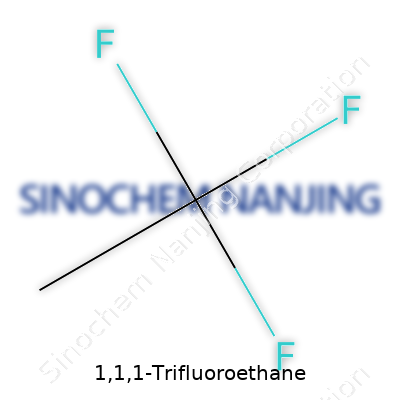
| Names | |
| Preferred IUPAC name | 1,1,1-Trifluoroethane |
| Other names |
R-143a HFC-143a Methylfluoroform Ethane, 1,1,1-trifluoro- UN 2035 |
| Pronunciation | /ˌwaɪˌwʌnˌwʌn traɪˌfluːroʊˈɛθeɪn/ |
| Identifiers | |
| CAS Number | 430-66-0 |
| Beilstein Reference | 633873 |
| ChEBI | CHEBI:42578 |
| ChEMBL | CHEMBL165549 |
| ChemSpider | 7678 |
| DrugBank | DB02052 |
| ECHA InfoCard | 05c42b06-1326-42ba-bd8e-5d65675aa5b6 |
| EC Number | 205-990-2 |
| Gmelin Reference | 10186 |
| KEGG | C19398 |
| MeSH | D019376 |
| PubChem CID | 6388 |
| RTECS number | KJ4000000 |
| UNII | K513225Y7D |
| UN number | UN3337 |
| CompTox Dashboard (EPA) | DTXSID8020356 |
| Properties | |
| Chemical formula | C2H3F3 |
| Molar mass | 102.04 g/mol |
| Appearance | Colorless gas |
| Odor | Faint ethereal odor |
| Density | 1.16 g/cm³ |
| Solubility in water | very slightly soluble |
| log P | 0.91 |
| Vapor pressure | 386 kPa (25 °C) |
| Acidity (pKa) | 15.0 |
| Magnetic susceptibility (χ) | −40.1×10⁻⁶ cm³/mol |
| Refractive index (nD) | 1.241 |
| Viscosity | 0.406 mPa·s (at 25 °C) |
| Dipole moment | 2.49 D |
| Thermochemistry | |
| Std molar entropy (S⦵298) | 292.6 J·mol⁻¹·K⁻¹ |
| Std enthalpy of formation (ΔfH⦵298) | -635.3 kJ/mol |
| Std enthalpy of combustion (ΔcH⦵298) | -1665.6 kJ/mol |
| Pharmacology | |
| ATC code | R03BA07 |
| Hazards | |
| GHS labelling | GHS02, GHS04 |
| Pictograms | GHS02,GHS04 |
| Signal word | Warning |
| Hazard statements | H220, H280 |
| Precautionary statements | P210, P261, P271, P304+P340, P312 |
| NFPA 704 (fire diamond) | 1,1,1-Trifluoroethane NFPA 704: "1-4-0 |
| Flash point | -78 °C |
| Autoignition temperature | 440 °C |
| Explosive limits | 7.6–19.4% (in air) |
| Lethal dose or concentration | LD50 (oral, rat): 1500 mg/kg |
| LD50 (median dose) | 1320 g/m3 (rat, 4 hr) |
| NIOSH | KHD15870F0 |
| PEL (Permissible) | 1000 ppm (8-hour TWA) |
| REL (Recommended) | 10 ppm |
| IDLH (Immediate danger) | 1000 ppm |
| Related compounds | |
| Related compounds |
Chlorotrifluoroethane Chlorodifluoroethane Chlorofluoroethane 1,1,2-Trifluoroethane 1,1,1,2-Tetrafluoroethane 1,1-Difluoroethane |



