DDT: The Story, the Science, and the Search for Balance
Historical Development
1,1,1-Trichloro-2,2-Bis(4-Chlorophenyl)Ethane—much better known by its nickname, DDT—carries a history that shaped both modern agriculture and public health. Paul Hermann Müller first synthesized the compound in 1874, but only in 1939 did scientists recognize its startling insecticidal power. During World War II, troops on several continents used DDT to knock down malaria-carrying mosquitoes and lice spreading typhus. The compound offered a genuine breakthrough for wartime disease control and, in the years following, made its way into fields, forests, and city spraying trucks. For decades, DDT’s ability to kill insects without immediately sickening people or livestock looked like the miracle society needed. Nobody foresaw that relentless spraying would eventually turn into an ecological crisis, with impacts running down the food chain.
Product Overview and Synonyms
Mention DDT and people either picture an invisible shield against malaria or a villain from environmental nightmares. This white, crystalline compound wears many names, including Dichlorodiphenyltrichloroethane and various trade monikers. Its unique chemical toughness helps it linger in the environment longer than most folks expected. That resilience is what made it an effective insecticide and later, a problem harder to clean up than spilled oil. Revisiting the context in which DDT earned its reputation helps us understand how expectations often run ahead of caution, especially in times of crisis.
Physical & Chemical Properties
DDT forms sturdy off-white crystals with a faint chemical odor. It's almost insoluble in water, but dissolves in many organic solvents like fats and oils—one reason it builds up in living tissues. A melting point around 109°C and a knack for sticking around in soil and sediment set DDT apart from other pesticides. Its very stability, once praised for providing lasting protection, soon began to look less like a feature and more like an ecological flaw. All that persistence meant DDT traveled up food chains, concentrating at each step from insects to birds to predators at the top. It wasn’t enough for the substance to work; the aftermath stuck around for generations.
Technical Specifications & Labeling
Back in its heyday, DDT showed up as powders, emulsifiable concentrates, dusts, and tablets. Labels listed concentrations, sometimes as high as 50% active ingredient, and promoted safety—at least as understood at the time. Packaging often emphasized broad-spectrum control with little advice about runoff or animal exposure. Regulatory frameworks evolved slowly. Through experience, researchers and public health officials learned that words on a container matter little if science lags behind in understanding the risks and contexts of use. Even now, the way a chemical is labeled reflects gaps or progress in how societies balance utility, ethics, and uncertainty.
Preparation Method
Production typically starts with chloral, chlorobenzene, and concentrated sulfuric acid. The chemist couples chloral with two molecules of chlorobenzene, leading to DDT plus water as a by-product. It’s a straightforward process, easy to scale up, making large-scale production cheap and quick. This sheer industrial efficiency helped DDT flood global markets; a flood often hard to reverse, especially once economic investment gets involved.
Chemical Reactions & Modifications
When exposed to sunlight, alkaline conditions, or certain microbes, DDT breaks down. Its main breakdown product, DDE, lingers even longer in the soil and animal fat than DDT itself. Both forms carry persistent toxicity. Chemists sought less persistent analogues, tweaking the DDT molecule, but kept running into a wall where reduced persistence often matched with reduced effectiveness. The hubris in thinking every problem has a simple, single-molecule fix left a hard lesson: the best intentions sometimes open the door to new risks before the old ones clear.
Safety & Operational Standards
By the 1960s, cracks appeared in DDT’s safety armor. Rachel Carson’s Silent Spring shone a hard light on bird die-offs and thinning eggshells higher up the food chain. Health workers and farmers regularly inhaled or absorbed DDT, thinking of it as safe; the long-term evidence showed otherwise. Scientists discovered DDT and its by-products in fat, liver, and even breast milk worldwide, regardless of whether people lived on farms or in cities. Regulators like the U.S. Environmental Protection Agency, created partly in response to chemical fallout, started imposing bans and strict guidelines. Today, only a few countries permit DDT for malaria control, under World Health Organization stewardship.
Application Area
At its peak, DDT rolled out across everything from cotton fields and orchards to army barracks and suburban parks. Most malaria programs in the developing world regarded DDT as a frontline defense. In some regions, it helped save untold lives—deaths averted from malaria and typhus far outstripped poisonings ever recorded from the chemical itself. The problem came not from DDT’s effectiveness but from broad, uncontrolled use far outside the bounds of medical need. With birds declining and pesticide resistance growing, whole agricultural sectors scrambled for alternatives.
Research & Development
After DDT’s fall from grace, researchers doubled down on understanding its environmental and human impacts. The pesticide’s fate in soils, sediments, and living bodies drew international focus. Studies probed for safe, targeted compounds while exploring everything from biological controls to genetic modifications in insects. One thing that keeps surfacing: miracle fixes never stand alone. Sustainable pest control blends strategy, local conditions, and ongoing study. That’s a hard sell when budgets run thin or crops face ruin, which speaks louder than warnings from distant labs.
Toxicity Research
Scientists built one of the most detailed case studies in toxicology around DDT. Lab work shows DDT acts as an endocrine disruptor, interfering with hormones in mammals, birds, and fish. Bird populations nose-dived because DDT derivatives thinned eggshells, leading to reproductive failure. In humans, exposure links to developmental delays, neurological issues, and possibly cancer, though conclusive links remain tangled with population and lifestyle factors. DDT forced new ways of thinking about dose response, bioaccumulation, and long-term tracking of chemicals through living things. Live evidence—measured in damaged wildlife and blood residues decades after bans—keeps the lessons front and center for researchers. Experience teaches that risk doesn’t vanish with a law or technical advance; it takes steady vigilance and, sometimes, the humility to admit not knowing everything.
Future Prospects
Some malaria-control advocates argue that targeted DDT spraying still saves lives where alternatives fall short, especially in isolated rural areas plagued by mosquitoes that resist newer pesticides. Others counter that DDT’s environmental legacy and mounting resistance outweigh its short-term benefits. Efforts now center on integrated vector control, including safer chemicals, habitat management, and even genetically modified mosquitoes. Global health agencies watch closely, balancing local needs against potential fallout. The future calls for more open debate, stronger long-term data, and international cooperation—not just technical fixes, but real conversations with the communities most affected by both disease and chemical risk. DDT’s history says that science, policy, and public trust weave together. Building confidence doesn’t rest on promises alone, but on listening, adaptation, and honest reflection on both the costs and the gains.
What is 1,1,1-Trichloro-2,2-Bis(4-Chlorophenyl)Ethane used for?
Tracing Back the Name We All Know: DDT
Most people know 1,1,1-Trichloro-2,2-Bis(4-Chlorophenyl)Ethane by its shorter nickname, DDT. I remember hearing stories from older relatives about men walking through farm fields, spraying a white, hazy mist. That was DDT at work. Back in the 1940s and 50s, farmers reached straight for this substance to fight bugs in crops, and health workers used it to kill mosquitoes spreading diseases such as malaria and typhus.
How Did It Become So Common?
After chemist Paul Hermann Müller discovered its potent effects in 1939, DDT quickly climbed into favor. U.S. soldiers in tropical countries used it during World War II to dodge malaria, and food growers believed the chemical brought tremendous relief from countless blights. Its power to knock down whole populations of insects struck many as nothing short of miraculous. Crop yields rose, and so did the profits.
Trouble Beneath the Surface
People trusted DDT at first, but evidence of harm started to surface as early as the late 1940s. I can picture the surprise on someone’s face after realizing the chemical appeared in drinking water, soil, and animals as far off as the Arctic—places DDT never got sprayed directly. Scientists found that it persists for years instead of breaking down quickly. Traces crept into birds’ eggs, thinning those shells so badly that eagle and falcon populations tanked. Rachel Carson’s Silent Spring in 1962 put a spotlight on these concerns, and public sentiment shifted. DDT’s harms extended beyond insects and began to threaten the natural web, including people.
Where It’s Legal Now
Most countries shut the door on DDT for farming and garden use. For example, the U.S. government banned agricultural applications in 1972 after studies linked DDT to health risks such as cancer and damage to the nervous system and liver. The Stockholm Convention, a global effort to curb dangerous chemicals, named DDT as a chemical to phase out in 2001. But a handful of countries still use it—mainly to control mosquitoes in regions battling malaria outbreaks. Officials across parts of Africa and India argue that the risk from malaria remains too high to take DDT off the table completely.
Why Its Legacy Still Matters
I’ve met people who carry the view that science and history move on—but DDT’s shadow keeps showing up. It lingers in sediments, in some animal fats, and in communities that once relied heavily on its application. Food and water testing today still screens for residues to protect public health. Calls for safer, effective alternatives continue to pop up among health agencies and researchers, which pushes innovation.
What Can Take Its Place?
Biological controls, tighter public health efforts, and better education all play more prominent roles today in fighting insect-borne diseases. Scientists have developed new classes of insecticides, such as pyrethroids, and mosquito nets treated with modern chemicals fill the gap in some malaria-prone areas. Environmental groups call for integrated pest management, which means mixing several smart approaches to keep pests in check while reducing reliance on any one chemical. In the push to move away from broad-spectrum chemicals like DDT, many farmers and health officials look at whole ecosystems, not just isolated problems.
Is 1,1,1-Trichloro-2,2-Bis(4-Chlorophenyl)Ethane hazardous to health?
The story of DDT
Talk to anyone who lived through the 1940s and you’ll hear about DDT. Its long, proper chemical name—1,1,1-Trichloro-2,2-bis(4-chlorophenyl)ethane—meant little to the average farmer or city worker. DDT covered fields to wipe out pests and cleared homes and cities of disease-spreading mosquitoes. But stories have shifted. Today, most folks recognize DDT for what science has revealed about it: the chemical sticks around for years, gets into the food chain, and leaves a trail of health problems that doesn’t just wash away.
Why DDT is still worth attention
Chemical use doesn’t disappear overnight. DDT may have been banned in the United States since the early 1970s, but its mark stays in soil, water, and even fatty tissue in living things. I've worked with environmental groups collecting soil samples near old orchard sites. DDT levels might shock you. Statistically, DDT and its by-products still turn up in more than 80% of human blood samples even decades after the last legal spray. That's not surprising for a molecule engineered to last for years. It doesn’t matter if you’re in the U.S., India, or sub-Saharan Africa; trace amounts keep turning up. Fish in some American lakes still can't be eaten safely because of DDT.
Does DDT harm health?
Stories from the field always bring home what clinical language can’t. One Michigan town near a former pesticide plant saw heightened rates of breast cancer for years. Now studies make it plain: DDT acts as a probable human carcinogen. The science goes deeper than that. Farmers exposed over many years show greater risks of liver disease. Women exposed in early life face higher chances of breast cancer, which is not just theory but proven by studies published in outlets like JAMA and Environmental Health Perspectives. Children exposed before birth or shortly after can experience developmental delays and immune system changes. The danger isn’t only about cancer. DDT messes with hormones, so it’s been tied to fertility problems and miscarriages, too. Honest conversation about the risks matters, since many communities only heard about pest control benefits for decades.
How DDT spreads in the world
Years back, research on the Great Lakes fish got real attention because PCBs and DDT kept showing up. Birds of prey like eagles nearly vanished. DDT caused thinning eggshells, so nests emptied with every new clutch. Rachel Carson’s Silent Spring played a huge part in making this link public. What may surprise people is that DDT doesn’t just affect one corner of the world. Its “stickiness” means it moves up food chains—small fish to big fish, to birds and humans. My own work in river monitoring proved how persistent these legacy chemicals are. Even “clean” sites on the map will raise red flags if you run the right tests.
What helps with the DDT legacy?
Phasing out took laws, not just letters to the editor. Governments stepped in after public pushback and science joined forces. That helped curb new exposure, but cleaning up contaminated sites takes money and years of gritty work. There is no miracle fix: it takes dredging, monitored natural recovery, and support for affected families. Health agencies must continue large-scale testing to spot patterns early. The world also needs to stay alert: in some countries, DDT is still in use because it kills malarial mosquitoes better than most tools. Aid groups and scientists wrestle with balancing disease control and long-term community health. Setting up safe alternatives like insecticide-treated mosquito nets and new chemicals with shorter lifespans helps. Honest information and funding for cleanup still go a long way to protect health. Families, doctors, and farmers deserve access to the facts and the means to push for safer answers in their own backyards.
What are the environmental effects of 1,1,1-Trichloro-2,2-Bis(4-Chlorophenyl)Ethane?
The Lingering Shadow of a Chemicals Legacy
Walking through old farm towns, stories still float around about a chemical once hailed as a miracle. 1,1,1-Trichloro-2,2-Bis(4-Chlorophenyl)Ethane, known by most as DDT, changed the world of agriculture and public health for decades. Before discussing the hazards, it's important to remember that DDT wiped out disease-carrying mosquitoes, reduced crop loss, and boosted post-war farming. Yet every solution brings a price, and DDT's environmental toll carries on, long after official bans shut the doors on its widespread use.
Tenacity in Nature
DDT's chemical structure makes it tough to break down. Once sprayed, it doesn't just fade away. The soil holds onto it. Rivers ferry it to lakes and seas, sometimes thousands of miles from where it landed. Even decades after the ban, traces of DDT show up in environments never meant to encounter it. Studies point out that DDT's persistence results from its low water solubility and high affinity for organic matter. It clings to sediments and builds up in the bodies of living things.
Bioaccumulation and the Food Web
Everyone’s seen those documentaries showing hawks and eagles struggling to hatch young. DDT sits at the root of many of those struggles. The chemical piles up in fish, snakes, and birds, inching up the food chain. Predators pay the steepest price. DDT and its breakdown products weaken eggshells. Entire populations of raptors dwindled, and in some places, vanished for years. This pattern—seen in peregrine falcons, bald eagles, brown pelicans—painted a clear picture that no pesticide acts in isolation.
The Ripple Effect in Water and Soil
Farmers applied DDT to control insects, but runoff didn’t stop at the edge of the fields. Streams fed into lakes, lakes into rivers, rivers into the sea. Along the way, DDT hit organisms never intended to be targets. Research shows that earthworms, crayfish, and insects can carry DDT. Fish eat them, and on upward it goes, ending on the plates of larger birds and animals. Years of testing reveal that this chemical stands out for crossing boundaries, both geographic and biological.
Risks to Human Health
Many folks think the DDT story is ancient history, but traces remain in places where DDT use once ran high. People living near those old farms can still find measurable amounts in dust, soil, and even food. Scientists link DDT exposure to cancer risks, reproductive issues, and problems in developing children. In other countries, where malaria remains relentless and DDT use continues, the debate gets messier: save lives now or weigh the burden placed on future generations.
Paths Forward
Solutions require sticking to science and acknowledging trade-offs. Removing DDT from contaminated soil stands as a massive challenge, but newer techniques—bioremediation, focused clean-ups, use of less persistent alternatives—offer some hope. Monitoring matters, too. Keeping an eye on levels in soil and water, and watching for signs of bioaccumulation in wildlife, guides safer choices down the line. Above all, sharing knowledge—what scientists learn, what farmers discover in their fields, what the next generation needs to understand—keeps the costly lessons of DDT from repeating.
How should 1,1,1-Trichloro-2,2-Bis(4-Chlorophenyl)Ethane be stored and handled?
The Legacy of DDT and Modern Responsibilities
Most people remember DDT’s historical role in fighting malaria, but conversations about this compound rarely move beyond environmental controversies. Yet even decades after the ban in many countries, you’ll still find DDT—more formally known as 1,1,1-Trichloro-2,2-Bis(4-Chlorophenyl)Ethane—turning up in storage rooms, research labs, and, in limited cases, disease control settings. If DDT is anywhere near a building you work in, sensible storage and careful handling aren’t just technical protocols—they’re ethical imperatives. Mishandling risks both personal safety and broad-scale contamination, which carries serious health impacts across communities.
Storing DDT with Safety in Mind
Anyone who has shuffled through a chemical storeroom knows how easy it can be to overlook older, forgotten substances. But DDT can’t blend in; it demands an intentional spot, clearly labeled and away from everything it could interact with. Only solid, airtight containers made of glass or certain plastics will keep it stable over years. Containers need seals that are inspected often, for no one wants a slow leak from a cracked lid gradually spreading DDT through an entire space—factories and academic labs have paid costly fines after inspectors found powdery traces under shelving and on floor edges.
Placement matters just as much as packaging. DDT should rest on low, accessible shelves instead of overhead spaces to avoid spill injuries. Locked, dedicated cabinets become a must, especially if anyone under eighteen works nearby. Many guidelines insist these cabinets have warning labels both in English and any relevant local language. Keep DDT far from heat sources, sunlight, or moisture—a lesson learned the hard way after several storage fires released clouds of toxic substances in developing countries.
Reducing Risk Through Careful Handling
Carrying out any experiment or application with DDT deserves preparation. You want gloves, goggles, and lab coats at a minimum; if powders are involved, a fit-tested respirator and fume hood become necessities. Accidental exposure brings well-documented health consequences: nausea, dizziness, liver strain, and strong evidence links DDT to cancer in humans with chronic contact. Even short-term exposures can carry risks for pregnant workers and developing fetuses, who are especially vulnerable to endocrine-disrupting chemicals.
Never pour DDT down a drain or toss old stocks in trash bins. Across the globe, water treatment plants struggle to cope with persistent organic pollutants like this one. Researchers in my own circles often keep detailed spill kits on hand, including absorbent pads and containers designated for chemical waste. Any spills, big or small, require immediate clean-up, double-bagging contaminated items for hazardous disposal services. Regular staff briefings and honest reporting protect not just your team, but downstream communities whose water sources face real threats from improper waste handling.
Bringing It All Together: Responsibility Over Routine
Taking these steps isn’t about bureaucracy—it’s the only real way to protect both people and the environment from a chemical famous for its resilience and danger. DDT won’t simply fade away on its own. Everyone involved in storage or handling carries a professional and moral duty: minimize exposure, prevent leaks, report issues, and dispose of waste through certified channels. If your habit tilts toward caution, you won’t just follow one more rule—you’ll stand up for human health and the shared future.
Is 1,1,1-Trichloro-2,2-Bis(4-Chlorophenyl)Ethane still legally manufactured or used?
Looking Back at DDT’s Shadow
Most people today know DDT—the shorthand for 1,1,1-Trichloro-2,2-Bis(4-Chlorophenyl)Ethane—from its villain role in “Silent Spring” by Rachel Carson. This pesticide earned notoriety for the damage it did not just to insects but to birds, wildlife, and possibly people. For nearly three decades, DDT helped fight malaria and boost farm yields across the globe. By the 1970s, new research made it clear that DDT doesn’t disappear after use. It clings, trickling through food chains, accumulating in fats, thinning eggshells, and sometimes ending in human milk. By 1972, the U.S. banned it outright.
Still Legal in Pockets of the World
Despite that ban, DDT never fully vanished. Around 70 countries now block both its manufacture and broad use, but a handful keep it in their arsenal for very targeted indoor spraying against malaria. The United Nations Stockholm Convention—the global treaty born to wipe out persistent organic pollutants—made the rules clear. DDT stays off-limits except for controlling disease vectors when no safer options work. India remains the world’s largest producer, still using DDT to limit malaria in at-risk areas. A 2016 UNEP report states annual production runs at several thousand tons, though numbers show a slow drop as other tools step in.
People and Health Take Center Stage
No one wants a return to the 1950s, spraying DDT like water. Studies tie DDT to hormone problems, possible cancers, and learning issues in children. It doesn’t just slip away; residues pop up decades later in soil, rivers, even in umbilical cord blood. Rural communities near old dump sites report higher body burdens, a fact that’s hard to ignore. Watching a whole generation of birds struggle to hatch seemed warning enough.
The Trade-offs and the Traps
There’s a reason DDT still lingers in fight plans against malaria. In places where mosquitoes laugh off bednets and new pills, decision-makers face cruel choices. Malaria still kills hundreds of thousands every year, mostly children. DDT’s ability to reduce mosquito populations, fast and cheap, buys breathing room in emergencies. Stopping all use overnight, without safe and scalable substitutes, invites malaria flare-ups. Regions with stubborn malaria keep coming back to this old chemical, even while searching for eco-friendly controls.
Finding Real Solutions
Some see DDT as a short-term pain reliever, not a cure. Countries need more than temporary fixes—they need support for local innovation and access to new tools. Alternatives, like insecticide-treated nets, newer chemicals, or even gene tech, need money and technical help. The world has watched pilot programs with biopesticides and mosquito sterilization, but scaling up costs real money and patient effort. Governments must prioritize safer choices, regularly track contamination, and educate those most at risk about exposure.
Looking ahead, DDT's story reminds everyone to weigh immediate needs against lasting harm. It shows why sticking with a status quo, even for good cause, often underestimates tomorrow’s consequences. The world owes the most vulnerable people both protection from disease and freedom from toxic leftovers.
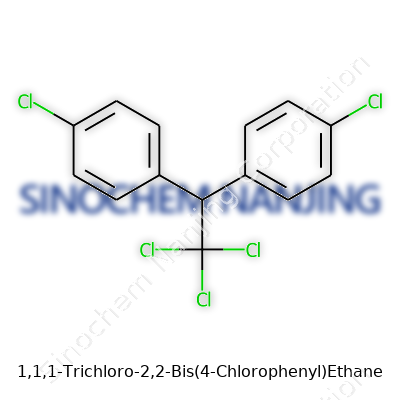
| Names | |
| Preferred IUPAC name | 1,1,1-trichloro-2-(2,2-dichlorophenyl)-2-(4-chlorophenyl)ethane |
| Other names |
p,p’-DDT DDT Chlorophenothane Dichlorodiphenyltrichloroethane Neocid Anofex Cicofol Gesapon Guesapon Dinocide |
| Pronunciation | /ˈwaɪn wʌn wʌn traɪˌklɔːroʊ tuː baɪs ˈfɔːr klɔːrəˌfiːnɪl ˈɛθeɪn/ |
| Identifiers | |
| CAS Number | 50-29-3 |
| Beilstein Reference | 1462178 |
| ChEBI | CHEBI:16130 |
| ChEMBL | CHEMBL21072 |
| ChemSpider | 21106340 |
| DrugBank | DB07715 |
| ECHA InfoCard | 03b0e0cd-35f8-4e44-9afd-1aab8e045bd6 |
| EC Number | 204-825-9 |
| Gmelin Reference | 78638 |
| KEGG | C01433 |
| MeSH | D004935 |
| PubChem CID | 9592 |
| RTECS number | KJ3325000 |
| UNII | YV6MZ9C830 |
| UN number | UN2761 |
| CompTox Dashboard (EPA) | DTXSID2020001 |
| Properties | |
| Chemical formula | C14H9Cl5 |
| Molar mass | 354.49 g/mol |
| Appearance | White crystalline solid |
| Odor | Mild, musty odor |
| Density | 1.65 g/cm³ |
| Solubility in water | Insoluble in water |
| log P | 4.89 |
| Vapor pressure | 1.14E-7 mmHg at 25°C |
| Acidity (pKa) | pKa = 5.02 |
| Basicity (pKb) | 14.7 |
| Magnetic susceptibility (χ) | -74.0·10⁻⁶ cm³/mol |
| Refractive index (nD) | 1.6550 |
| Viscosity | 2.67 mPa·s (25 °C) |
| Dipole moment | 2.53 D |
| Thermochemistry | |
| Std molar entropy (S⦵298) | 348.3 J·mol⁻¹·K⁻¹ |
| Std enthalpy of formation (ΔfH⦵298) | -58.79 kJ/mol |
| Std enthalpy of combustion (ΔcH⦵298) | -5520.7 kJ/mol |
| Pharmacology | |
| ATC code | P03AA01 |
| Hazards | |
| Main hazards | Suspected of causing cancer. Very toxic to aquatic life with long lasting effects. |
| GHS labelling | GHS07,GHS08,GHS09 |
| Pictograms | GHS06, GHS08, GHS09 |
| Signal word | Warning |
| Hazard statements | H302, H351, H372, H400, H410 |
| Precautionary statements | P201, P202, P260, P263, P264, P270, P273, P281, P308+P313, P314, P391, P405, P501 |
| NFPA 704 (fire diamond) | 2-2-0-☢ |
| Flash point | Flash point: >113°C (235°F) |
| Autoignition temperature | 390 °C |
| Lethal dose or concentration | LD50 oral rat 113 mg/kg |
| LD50 (median dose) | LD50 (median dose): 113 mg/kg (oral, rat) |
| NIOSH | SN0875000 |
| PEL (Permissible) | 1 mg/m³ |
| REL (Recommended) | 5 mg/m³ |
| IDLH (Immediate danger) | 500 mg/m3 |
| Related compounds | |
| Related compounds |
DDD DDE |



